
A Helping Place, A Healing Space

Courtesy Photo.

Courtesy Photo.

When Hospice of Santa Barbara was founded in 1974, it was only the second hospice in the United States, dedicated to providing care and easing the pain of dying for both patients and their loved ones.

Now with more than 3,200 programs established in the U.S. and nearly 885,000 people cared for in 2002, it is that same fundamental dedication to compassion that continues to set hospice programs apart from the type of care provided by hospitals and other facilities. According to the Hospice Foundation of America, an umbrella group that provides leadership in the development and application of hospice, “hospice is not a place but a concept of care.”

But fortunately for suffering Central Coast residents, a physical manifestation of the concept has also opened its doors like outstretched arms offering those dealing with painful tribulations a place to find help, understanding, friendship, and peace. And there could not have been a building more perfectly designed for its purpose.

Executive Director Gail Rink describes Hospice of Santa Barbara’s new 6,500-square-foot headquarters as “A place where compassionate care is freely given.” A tranquil, welcoming feeling envelops visitors as they enter what looks more like a high-end health spa than a place designed to deal with death and grief–and in many ways it is. “This office is part office, part spa, part chapel,” says Rink. With an emphasis on humanistic, rather than medical, treatment, the center is focused not just on grief but on healing, and not just on patients, but on their loved ones as well.

Tucked away on a serene hilltop in Santa Barbara’s Riviera area, the facility offers a wide array of supportive services–all 100 percent free-of-charge–for people diagnosed with terminal illness or who are facing the loss of a loved one. Offerings include individual, couples, family and group counseling; educational programs; health and wellness services such as massage, Reiki, yoga, and meditation; community meeting spaces; and of course, a well-stocked kitchen and dining room.

“We feed a lot of families,” laughs Rink. She means that in both a literal and figurative sense. It was the generosity of some of the families nourished by hospice services that helped make this new center a reality.

“One of the things that makes us a highly functional board is the fact that everyone involved has either experienced needing hospice services themselves or within their families … or has someone close to them who has,” says Board President Mary Blair.

The Berkus family was critical to the development of the center. Renowned architect Barry Berkus relied on hospice services when his wife Gail was dying, and designed the building free-of-charge as a testament to her, and as a thank you to hospice for the comfort they provided his family. Paired with his daughter-in-law Dana Berkus’s distinctive interior design, a feeling of peaceful healing practically emanates from the walls of the new headquarters.

Walking in the center feels like getting a big warm hug. “What we want to be able to do is be able to embrace people who need security and help to face their fear and heal their sorrow,” says Rink.

When the organization moved to larger quarters last spring, it had the opportunity to expand some services, like the family and children’s program. Many children were not getting the kind of care they needed during the grieving process. “Children grieve. And adults are awkward when children grieve,” says Rink. “And yet we felt strongly that we needed to start a program that would address the needs especially of grieving children or children who may be anticipating the death of a parent or sibling.”

Starting with support groups for children, hospice then began a mentor program, where children were paired with an adult who had survived a similar experience of losing someone close to them when they were young. Children who “graduated” from the mentor program then formed a mentor associate program so they could help other children who were grieving. The parents of these children also formed a support group just for parents.

“So now our family and children’s program has grown from being a simple support group for grieving children to a more complex program that provides both parents and the children and those who have graduated from the program with things to do to help serve others and help make that relationship stronger. That organic kind of process is very healing,” says Rink.

Hospice recently held its first Children and Family Night, where multiple generations gathered for dinner, then broke into play groups and counseling sessions.

“Think of the reason that they all have in common, the death of a parent, or the death of a sibling or a spouse … it’s amazing that people would gather for such a sensitive reason–and yet, if you create the environment, they thrive,” says Rink. “What we’ve found is with more space and with such a healing and nourishing location, our business has continued to grow and for us. Of course that’s excellent, because we’re reaching more people in the community.”

Other Hospice Services on the Central Coast

“Shiva’s Center for the Human and Animal Bond” supports people who have lost a pet. You can find their information at www.shivascenter.org.

Hospice of San Luis Obispo County offers group meetings devoted to such issues as Widowed Persons, Weekly Suicide Bereavement, Parkinson’s, Perinatal Loss, and Pet Loss. They also offer the following events to support Hospice members. Check their website for specific times and locations: www.hospiceslo.org.

Hospice for the Central Coast: Monterey promotes and supports end-of-life care and services for Monterey and San Benito counties through community education, fundraising, prudent management of assets, and conscientious disbursement of grants to quality, non-profit organizations that provide these services. www.hffcc.org

Originally published in Central Coast Magazine
Cocktails in a secret garden: Breast Cancer Resource Center of Santa Barbara

Breast Cancer Resource CenterThe stunning ocean views and lush backdrop of Cynthia and Eric Spivey‘s Montecito garden were surpassed only by the outpouring of generosity and good will at the Breast Cancer Resource Center of Santa Barbara‘s ninth annual garden party benefit. Chairs Daryl Stegall and Pamela Massey and their hard-working committee outdid themselves this year, raising more than $138,000 to benefit the BCRC, which provides a warm and welcoming place where people with breast cancer, and their loved ones, find a caring network of people (mostly cancer survivors) ready to answer questions, lend an ear, and help them obtain information to make informed decisions.

KTYD DJ Matt McAllister worked his auctioneer’s magic touch through a fabulous bevy of auction items, including a Surfing Photo Safari with Jeff Divine, which sold for $10,000; a one-of-kind custom necklace created by local jeweler Daniel Gibbings just for the event; a Sun Valley Snowboarding Vacation with World Champion and inventor of the snowboard, Tom Sims; and an evening of dinner and poker with Peter Noone, lead singer of Herman’s Hermits. Guests inhaled the smells of gorgeous roses from Rose Story Farm, sampled tasty treats from Ernie Price Catering and enjoyed the new Boomerang Australian Vodka and Wattle Creek wines, but perhaps the afternoon’s most moving moments came when former Assemblywoman Hannah Beth Jackson shared her story of receiving comfort from the BCRC after being diagnosed with breast cancer a year ago.

The Breast Cancer Resource Center celebrated its tenth year of service in Santa Barbara on October 13, helping more than 6,000 clients with in-house services–such as support groups; complimentary massage, Reflexology and Reiki treatments; and mentor programs–as well as community outreach and education programs.

Originally published in Noozhawk

Lionesses of Winter

They Take Pride in Giving Back

It takes passion, money and a lot of hard work for Santa Barbara’s most treasured nonprofit organizations to thrive. This community tradition of giving back by supporting education, caring for those in need, and sharing a love for nature and the arts has an incredibly generous cast of leading ladies at its helm. Not content to simply be the torchbearers, they are also keeping an eye toward the next generation of the philanthropic community.

“I’m trying to spread the circle,” says Shirley Ann Hurley. “I’ve brought young women into my life who care passionately about these sorts of things that I do and they stimulate me and …I love the excitement that is getting to know all of these wonderful people.”

Let’s meet a few of the women who help keep the community alive and well.

The Leading Ladies

Betty Hatch

La Belle Foundation, Granada Theatre, Girl Scouts, Girls Inc., Hospice, CAMA, Cottage Hospital, Council on Drug and Alcohol Abuse, the Arts Fund, Santa Barbara Zoo, Santa Barbara Art Association, Santa Barbara Museum of Art, Foodbank of Santa Barbara County, Santa Barbara Ballet

“My life has been dedicated to the teaching of self-esteem,” says Hatch, founder of La Belle Modeling Agency (1963-1991), and now executive director of the La Belle Foundation, which offers young women free training in self-esteem, self-development and personal and social responsibility.”

“Giving to the community is just a pleasure; it’s a demonstration of our gratitude and our love for everybody here.”

Shirley Ann Hurley
Santa Barbara Scholarship Foundation, Family Service Agency, Santa Barbara Public Education Foundation, CALM, Anti-Defamation League, Santa Barbara Foundation

“The things I’ve wanted to spend my time on are the things that help children and young people become the best that they can be, which means to live up to their full potential … The organization that I have probably put the most years into and time is the Family Service Agency. The concept that we could intervene early in a child’s life and with that child’s family and help them raise a more secure child was what hooked me.”

“People keep saying what do you do for fun. I said everything. All of this is fun. And it is. It’s work, but it’s fun. There’s nothing I like better than working with a group of deeply caring people. It is so exciting. And the fact that you know that together you can make a difference in somebody’s lives and your community is just such a reward.”

Gerd Jordano
Cottage Hospital Building Campaign, Westmont College Foundation, CALM

“Board members are ambassadors for those organizations. They are sort of cheerleaders and are able to sort of talk and share what that organization is and what it’s all about. It’s really an opportunity to educate people about that organization and that gives me great joy to share my passion and my knowledge about that particular organization.”

“I’m a former cheerleader so I continue that same passion, only I’m just not jumping up and down anymore (laughs). But I do get very passionate about what I get involved with and it just brings me a lot of joy.”

Carol Palladini
Santa Barbara Women’s Fund

“The concept of the Santa Barbara Women’s Fund (which will have given away more than $1 million by the end of the year) is making your time and money most effectively used by a lot of women writing checks and putting them together and doing direct fundraising, so that you’re not spending a lot of money to make money… Our umbrella is giving in support of the greater Santa Barbara area; it has to be local, to benefit unmet needs for women, children and families.”

“A lot of the work that I’ve done in the past, on and off boards, has some Heartache mixed in with the joy of it. This has been a pleasure from the beginning.”

Joanne Rapp
Santa Barbara Foundation, Santa Barbara Scholarship Foundation, CALM, Cottage Hospital, Botanic Gardens, Laguna Cottages, Montecito Community Foundation

“I have enjoyed working with organizations that are targeted at helping youth with their educational goals, in particular the Scholarship Foundation and the Santa Barbara Foundation student loan program. Everything that you work on and within the nonprofit community enhances the quality of life and the effectiveness of our community, but helping the students transfers anywhere. … It will strengthen the fabric of whatever community that they land in.”

The Next Generation

Tiffany Foster
Storyteller, Crane Country Day School, Howard School, All Saints by the Sea Parish School, Lotusland, Lobero Theatre, Santa Barbara Museum of Art SMART Families

“When I arrived in Santa Barbara four years ago … it seemed that every fabulous, intelligent person I met was volunteering for either Storyteller or Lotusland. Before I knew it I was in the center of a vibrant group of caring women and men who dedicated their energy, financial resources, and business acumen to help make a difference in our local community.”

“Storyteller Children’s Center provides daycare and preschool to homeless toddlers in Santa Barbara as well as support services for their families. Young children deserve security, safety and a stable environment. … It is difficult to find a more worthy cause.”

Kisa Heyer
Lotusland, Santa Barbara Museum of Art SMART Families, Crane Country Day School, Storyteller, Lobero Theatre, Sarah House, Santa Barbara Museum of Natural History, CAMA

“Even after being involved with Lotusland for so long, I’m still amazed by it–not only with its collections, design, architecture, and programs–but also with the story behind the garden. Madame Ganna Walska’s wonderland is such a benefit to our community. It’s magical to see joy that children (all 4th graders visit) and adults express after visiting the garden, and no surprise, really, that we are becoming world-renowned as a one-of-a-kind experience.”

Jill Levinson
Lotusland, Visiting Nurse and Hospice Care of SB, Storyteller, New Beginnings Counseling Center, Lobero Theatre, All Saints by the Sea Parish School, Santa Barbara Museum of Art SMART Families.

“I think everyone has a need for hospice care for themselves or their loved ones at some point in their life. I just feel like it’s very important to support these organizations because they’re necessary. If they disappeared that would be a travesty for our community. Our community is so fortunate to have so much to offer everyone. I think that’s part of what’s really special about Santa Barbara, it tries to take care of people.”

Laura Shelburne
Storyteller, Crane Country Day School, the Santa Barbara Museum of Art, Stanford University, Lotusland, Santa Barbara Museum of Natural History.

“Winston Churchill once said, ‘We make a living by what we get, but we make a life by what we give.’ I spent a number of years practicing corporate law, working around the clock during the Silicon Valley boom, and I always regretted that I didn’t have enough time to do worthwhile pro bono work. While I was one of those oxymoronic happy lawyers, I have to say that now it is wonderful to be able to choose my own “clients” based on causes I believe in and use my skills and experience to help non-profits. I also feel strongly that I should set an example for my children by doing things for others and for institutions that will outlast us and continue to benefit future generations.

Lisa Wolf
Santa Barbara Ballet, CAMA, Storyteller, Lotusland, Santa Barbara Zoo, Lobero Theatre, Santa Barbara Museum of Art SMART Families, French Heritage Society, Laguna Blanca

“We started a group at the art museum because we had a feeling that the art museum was reaching out really effectively to kids in town, elementary school students and underprivileged kids and it was also a great resource for very very serious art collectors, but there was nothing in the middle. … So we created this group called SMART families (and it’s Santa Barbara Museum of Art, not that we think we’re especially bright) but a really wonderful group.”

“When you know that you’ve helped make it possible for somebody to attend a program or for somebody to be exposed to opera or some great cultural moment, or to just alleviate human suffering, it’s a great privilege to be able to do it.”

Originally published in Santa Barbara Magazine, 2007

Treat Your Children Well

© Kornilovdream | Dreamstime Stock Photos & Stock Free Images

© Kornilovdream | Dreamstime Stock Photos & Stock Free Images

A Look at Some of the Nonprofits Serving Children

What could be a more universal cause than striving to give children a brighter tomorrow and a more fulfilling future? Literally hundreds of opportunities exist to give back to children in the community. Unfortunately, we can’t include them all. Here’s a look at just a few of the many organizations working to on behalf of children’s issues and the solutions to their problems in the areas of at-risk youth; education; arts; and medical, emotional and physical health and safety.

Family Service Agency is Santa Barbara County’s first and oldest non-profit human service agency, offering several programs, including Healthy Start, which connects at-risk families with existing community resources; the Family Build Project, which addresses the needs of families living in government subsidized housing; and a variety of counseling and child guidance programs.

Another veteran organization offering a variety of services to at-risk children and others is the United Boys and Girls Clubs. It has been working with young people in town since 1945, and now has four clubhouses that offer day care, summer camps, and a plethora of programs including sports, art, academics and leadership development. While the organization once emphasized servicing children from disadvantaged backgrounds, “today we’re open to everyone, because all children are at risk,” says Executive Director Sal Rodriguez.

Also serving both at-risk youth and the wider community is the Police Activity League (PAL), which offers opportunities for instruction in art, digital editing, hip hop dance, martial arts, and basketball, as well as a tutoring center and a teen youth leadership council that are open to all children. PAL also has a Campership Alliance Program that collaborates with a number of organizations–including the City of Santa Barbara Parks & Recreation Department, United Boys & Girls Clubs, Santa Barbara Museum of Natural History, Santa Barbara YMCA, Santa Barbara Zoo, Refugio Junior Lifeguard Program, Elings Park Camps and Money Camp for Kids –to provide summer camp scholarships.

Endowment for Youth Committee is another broad-reaching organization, which provides a wide variety of educational, social, cultural and recreational achievement programs for children, with a special emphasis on assisting African American, Native American and Latino youth.

Girls Inc. also offers an expansive array of programs, but with an all-girl atmosphere that emphasizes learning to resist gender stereotypes and encouraging girls to take risks, acquire skills, gain confidence, become self-reliant, and practice leadership. Girls are also front and center for Affirm, another program that works only with girls, in this case focusing on empowerment, education, and identity for teenagers that are in the juvenile correction system.

Kids in trouble are also the focus for Noah’s Anchorage, operated by the YMCA. The group provides a Youth Crisis Shelter, which is the only program in Santa Barbara County that offers year-round 24-hour access to counseling, shelter, referrals, food and clothing for runaways, homeless youth and youth in crisis.

The Big Brothers Big Sisters program, run by Family Service Agency, also targets at risk youth, matching them up with adult mentors who provide positive role models and a one-on-one relationship. Another mentorship-based program is the Wilderness Youth Project, which offers after school, weekend and summer programs that utilize “nature-based mentoring,” where being out in nature facilitates crucial life lessons and connection with the natural world.

Working on the health and wellness front is CALM (Child Abuse Listening and Mediation), which acts to prevent child abuse from occurring and offers professional treatment for the entire family when abuse does occur. CALM works closely with police, the district attorney, child protective services and medical personnel to investigate alleged abuse in a supportive and child-friendly fashion.

The Teddy Bear Cancer Foundation is another organization that works with entire families, endeavoring to ensure that children with cancer receive the undivided comfort of their parents during the treatment and recovery process. Teddy Bear provides financial aid for rent, mortgage, utilities, and car payments, as well as other supportive services, thereby allowing families to focus on their children. “Teddy Bear is unique in that it adapts to each family’s distinct needs. We don’t provide just one service–we do whatever’s needed to help,” said Founder/Executive Director Nikki Katz.

On the education front, the Children’s Project is focused on developing an innovative boarding school and college preparatory academy for foster children and selected youth with mental health or delinquency issues. “People often ask me, ‘Why foster children? So many kids need help.’ While that is true, there is one big difference that separates foster youth from others in need. That is that we not only have a moral obligation to help them…we have a legal obligation. …The moment the judge removes the child from a parent’s care, WE become the parents to that child. We, as the community, step into that role. And I am convinced we can do a better job,” says Founder and CEO Wendy Read.

Another education nonprofit, the Computers for Families program, seeks to eliminate the negative consequences of the Digital Divide by providing students from low-income families with refurbished computers, Internet access and training. Thanks to this innovative program, Santa Barbara will be the first community in the United States to ensure that every child from a low-income family, beginning in the fourth grade, has a computer with Internet access.

For more than 43 years, the Scholarship Foundation of Santa Barbara has helped local students pay for their higher education, giving out more than $7 million in student aid for the last school year.

Emphasizing the arts is Art Walk for Kids, an outreach program that focuses on benefiting special needs, developmentally disabled, at risk, terminally ill youth and adults in their positive environments through a specialized curriculum of art and vocational education. Art Walk projects have benefited a diverse group of nonprofits, including the United Nations, Summit for Danny, United Way, the Red Cross, Sarah House, the Santa Barbara Symphony, the Lobero Theatre, I Madonnari, the Multi-Cultural Dance and Music Festival, Vieja Valley School, Santa Barbara County Juvenile Hall, El Puente School, and Hillside House, among others. Its latest collaboration is with the Patricia Henley Foundation, a new nonprofit that offers unique, free opportunities for students to learn all aspects of theatre arts production and develop their creative talents.

The Family Therapy Institute’s Academy of Healing Arts for Teens (AHA!) also incorporates creative expression into its programs, which emphasize the development of character, imagination, emotional intelligence, and social conscience in teenagers, and helps them learn to set goals, stop bullying and hatred, support their peers, and serve their community.

These excellent organizations are but a small percentage of all of the nonprofits serving children in Santa Barbara. For a more comprehensive list visit the Family Service Agency referral service at www.211sbcounty.org/.

Originally published in Santa Barbara Magazine

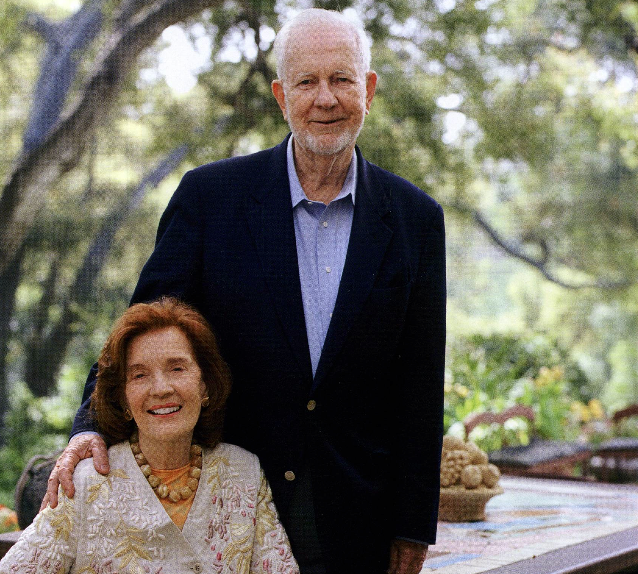
JON AND LILLIAN LOVELACE

Lillian & Jon Lovelace, courtesy Santa Barbara Magazine

Lillian & Jon Lovelace, courtesy Santa Barbara Magazine

SEASONED PHILANTHROPISTS

You won’t find their names plastered on buildings and placards around town, yet, in their quiet, generous way, Jon and Lillian Lovelace give graciously of their time, intellect and millions to a wide range of worthy organizations.

“We’re a little bit camera shy, publicity shy,” Lillian, explains.

Click here to see the story in Santa Barbara Magazine.

“A lot of people seem to do it [donate] to get their names in the paper. We’d like to be helpful without getting our names in the paper,” says Jon.

The arts rank high among their interests. Lillian, whose eclectic collection of modern art and Pacific Island artifacts decorate their Montecito home, was on the board of the Santa Barbara Museum of Art for 20 years and is now a sustaining trustee. In addition to fine art, the Lovelace’s share a love of music, dance and theatre and spend about a third of their time traveling around the world combining philanthropic and cultural endeavors.

Locally they are strong supporters of the Santa Barbara Dance Theatre, Camerata Pacifica, Music Academy of the West, UCSB Arts and Lectures, and the State Street Ballet, as well as having served on the boards of the Museum of Contemporary Art (MOCA) and the Getty Museum in Los Angeles, where Jon served as chairman of the board during the construction of the Getty Center.

“If we can be helpful, when something strikes Lillian’s fancy or something that she’s connected with, as with me, we get involved with that,” says Jon, who is also very supportive of wilderness preservation groups like the Nature Conservancy, the Sierra Club, and the Yosemite Fund.

Jon, Lillian and their four grown children (Jim, Jeff, Rob and Carey) were avid hikers and campers when the kids were young. “The outdoors has always been an interest,” says Jon, who ranked number 354 on Forbes list of the 400 richest Americans and recently retired from the Los Angeles-based Capital Group, one the world’s largest mutual fund management companies. Jim and Rob now work for the Capital Group, which was founded by their grandfather, Jonathan Bell Lovelace, in 1931.

The Lovelace children are also involved in giving back to the community, through organizations such as California Institute of the Arts and Idyllwild Arts Foundation–it’s a tradition of generosity that goes back generations. “My family was very much involved in social action and caring about other people and giving back to the community. They instilled that that was important. Jon’s father was involved with philanthropy and hospitals,” says Lillian.

The Lovelace’s have carried on the legacy of supporting healthcare by donating generously to medical institutes around the world, including Sansum Clinic and Phoenix of Santa Barbara, which provides care for mentally ill adults.

“I think that mental health is an area that is vastly ignored, it’s kind of a scary thing and not something people like to talk about. They used to not talk about cancer but now anybody can say cancer any time they want to but there’s still some avoidance of talking about mental health problems and I think that it needs all the support it can get,” explains Lillian, who majored in psychology at Antioch University, where she is now a sustaining trustee.

While many of the Lovelace’s philanthropic efforts have started with this type of a personal connection, there really is no typical scenario for their involvement. “It depends very much on the situation–there’s no single type of organization or way we try to help,” says Jon.

The Lovelaces–they married 56 years ago and used to celebrate their anniversaries in Santa Barbara until they moved here from Whittier in 1972 after their son Jim developed an allergy to the smog–share a strong interest in travel and the arts, often meeting up with their children to catch a performance or an exhibit somewhere in the world. They like films as well, and were investors in their friend Garrison Kellior’s 2006 movie, A Prairie Home Companion, starring Meryl Streep.

Friends like Kellior are an important part of the Lovelace’s lives.

” We mentioned family but we have so many wonderful friends that we’ve met over the years,” says Lillian.

“Throughout the world, actually,” Jon says.

“We’re recluses that love people,” concludes Lillian. Or perhaps people who love life.

Originally published in Santa Barbara Magazine

The Katherine Harvey Fellows Program

There is no doubt that Santa Barbara has a robust philanthropic community. Last year the National Center for Charitable Statistics reported 1,891 registered nonprofits in the county and more than $2 billion in revenue. But there is also no doubt that these organizations are getting a bit, ahem, gray around the temples.

So how do you ignite young do-gooders in a community where the high cost of housing and the low availability of well-paying jobs make it struggle for many to take care of their own needs, let alone the needs of others? Where will the next generation of charitable leaders come from?

The Santa Barbara Foundation is planting the seeds for future boards with the Katherine Harvey Fellows program, designed to cultivate philanthropic leaders for the community. With graduates like Santa Barbara City Councilwoman Helene Schneider, the Santa Barbara Bowl Foundation’s Scott Brittingham, and the Community Environmental Council’s Sigrid Wright already making their marks around town, the program, established in 1999, is already having an impact.

Funded by the late Katherine Harvey, a former Santa Barbara Foundation trustee, the invitation only fellowship program provides a forum for a select group of young professionals to explore ways to make a significant, lasting impact in the community.

The class of 2006/07–Katya Armistead, Magda Arroyo, Greg Bartholomew, Christine Brooks, Jeff Forster, Geoff Green, Colette Hadley, Nina Johnson, Vincent Martinez, Rachael Steidl, Michael Takahara, and Travis Wilson–began their 18-month journey last year by participating in all aspects of the work of the Santa Barbara Foundation, including agency research, community relations and fundraising.

Class members take turns chairing and organizing the monthly meetings, gaining valuable experience in keeping the lively group on task. Members of the board of trustees also serve as mentors to the “Fellows,” offering leadership, insight, and access on a personal level.

Steidl, founder of SBParent.com and a board member for the Teddy Bear Cancer Foundation, praised her mentor, County Superintendent of Schools Bill Cirone. “They matched me with someone who was a great fit for my business and a great link for my personal interests as well.”

In addition to partnering with board members and sitting in on the foundation’s grant making committees, the “Fellows” also work closely together.

In addition to meeting monthly, they do personal interviews within the group to help develop one-on-one skills, as well as public speaking skills, when they present their interviewees to the group.

“The most valuable aspect of this experience has been meeting people from sectors other than education and sharing with them the passion of philanthropy and making a difference,” says Armistead, a Red Cross board member who runs UCSB’s Visitor Center and is Assistant Director for the Office of Admissions.

After the first year, the education portion of the program winds down a bit and the “Fellows” get to create, implement, and evaluate some grants of their own.

The foundation allocates $30,000 for this purpose, but like the “Fellows” before them, this class has decided to raise additional funds to give away. At press time they had already secured $5,000 in challenge grant funds from the Hutton Foundation and were working on appeal letters to raise even more.

Following a spirited debate about where to give the money, foundation board member and former “Fellow” Ken Saxon offered, “This discussion … is the meat of this program. …(The foundation) could have set up a process about how you make these decisions. We’ve chosen not to, and have decided to let each class struggle with this. It’s hard, it’s frustrating, it’s cool, it’s creative, but it’s not easy.”

“It’s amazing to have put all of these strangers in a room almost a year ago and to see how comfortable everyone has gotten with each other and the dialogue that now takes place with the group,” says Steidl, adding that her fellowship experience has already helped her professionalize her charity work.

“I know that I am now a better board member because of the experience,” says Armistead, who along with her colleagues–who range in age from 27 to 42–are becoming just the kind of young philanthropists that Katherine Harvey had envisioned.

==

To donate or request more information about the Katherine Harvey Fellows program, contact the Santa Barbara Foundation, 1111 Chapala St.., Santa Barbara, CA 93101, 805/963-1873.

Originally published in Coastal Woman

Forward Thinking Farm

Center for Urban Agriculture at Fairview Gardens

Fairview Gardens Story

Fairview Gardens Story

As one of the oldest organic farms in Southern California, Fairview Gardens is often referred to as “the little farm that could,” for its unique diversity of products and as an internationally respected model for small scale urban food production, agricultural land preservation, farm-based education, and the integration of farms and the communities that they serve. The fertile fields — on Fairview Avenue near Cathedral Oaks Road in Goleta — have been chugging along since 1895. But since the farm’s 1997 evolution into the nonprofit Center for Urban Agriculture at Fairview Gardens, lessons in organic farming and sustainable living have been added to the menu.

The produce stand is clearly visible from the street, but a closer look reveals the beginnings of avocados hatching from enormous trees in the “cathedral” orchard and long rows of asparagus poking their heads out of wet soil. Between rows of trees, a variety of squash stand at attention and you can smell the apples blossoming in preparation for the next Farmhouse Cooking Class, where participants will learn canning and preserving, and how to make apple muffins and apple and butternut squash soup.

While most of Goleta’s once fertile fields have been paved over — and indeed the farm is surrounded on all sides by tract homes, shopping malls, and suburban thoroughfares — the Center for Urban Agriculture’s founder/executive director Michael Ableman’s foresight enabled Fairview Gardens to escape that fate. To prevent the land from being turned into housing, he turned the farm into an agricultural conservation easement, and it will remain that way in perpetuity — to continue to delight neighbors with fresh organic fruits and vegetables, and sometimes annoy them with the early morning chicken cacophony and compost cologne.

Ableman chronicled the center’s founding in a book, On Good Land: The Autobiography of an Urban Farm (Chronicle Books, 1998), and Meryl Streep narrated Beyond Organic, a PBS documentary about his work.

While appreciative of the national recognition, much of the center’s efforts are focused on the local community.

About 5,000 school kids come through the farm each year, estimates Administrative Director Matthew Logan. “We just had a Goleta Valley Junior High group come through here and they were amazed that carrots grow in the ground,” he laughs. ” So that’s our main mission in so far as school tours is reconnecting kids with where their food comes from and (the benefits of) farming without chemicals or pesticides.”

The center is open to the public every day for self-guided tours, which highlight the farm’s crops and techniques, and include information on larger agricultural and environmental issues such as biodiversity, soil erosion, and pesticide use.

The use of grey water and compost, growing rows of crops between trees, rotating crops and “disking under” the old crops so that their roots add nutrients to the soil are just a few of the techniques used to maintain the farm in the most environmentally friendly fashion.

Not only is the message getting out to school kids; they’re passing it on to their parents.

“It’s amazing how many of the kids actually bring their parents out here after for at least one visit,” says Logan.

“…We’re growing food, we make enough money to support the farm and be able to pay our employees but we can also put on a number of educational events with the money that we make from the farm. … So our point is … you can farm it wisely so that you can make enough money to sustain yourself. That it can be done.”

Originally published in Santa Barbara Magazine in spring 2006.

Click here to read Giving Back: Fairview Gardens in Santa Barbara Magazine

Direct Relief’s Home Team

A group of Santa Barbara High School grads is having a positive impact on worldwide healthcare while headquartered in their hometown. No less than four SBHS alumni are part of the 24-person staff at Direct Relief International, the locally based global nonprofit agency that provides essential materials to areas hit by disaster.

Annie Maxwell, a 1997 SBHS graduate, was the first in a wave of Dons. She caught wind of the organization in 2002, when CEO Thomas Tighe was on the cover of Santa Barbara Magazine.

Click here to read this story in Santa Barbara Magazine

“My mom, in probably one of her valiant efforts to try to get all of her children close to home, sent it to me at Michigan when I was at school and said, ‘you should work here,'” said Annie, who started as an unpaid intern and is now Chief of Staff.

She’s currently on special assignment in New York, working at the United Nations under former President Bill Clinton, the Special Envoy for Tsunami Recovery.

In a matter of days, “I went from a warehouse in a beach town to a UN high rise with security and dogs sniffing bombs,” said Annie. “I keep waiting for the director to call cut.”

Her longtime friends — Lucy Anderson, Damon Taugher and Brett Williams, all class of 1998 — are also stoked at their good fortune in being able to have a positive impact on relief efforts such as Hurricane Katrina.

The organization’s gotten this great lift from having them here, said Thomas, who praises his young colleagues as hard working, incredibly smart and disarmingly polite.

Plus their affection and respect for each other and for the mission of Direct Relief is contagious.

“It’s great work because the more you do, the more people are directly affected,” said Brett, the warehouse manager, calling from Ecuador, where he detoured from sightseeing to visit potential partners for Direct Relief.

Lucy also took time off from serving as development manager to visit Direct Relief hospitals while vacationing in Nepal. “It was far and away the highlight of my trip, just seeing the difference that one Direct Relief shipment can make was incredible.”

Based on his own vision, Damon is now directing a new program that has provided $12 million in free medicines to clinics throughout California, a new direction for Direct Relief.

“I don’t think anyone when they’re 14 says ‘wow do you think we could be influential in running the largest international aid organization in California in ten years,'” said Annie. “It’s just not something that you usually say over lunch in the quad. … I was more worried about not failing my English quiz and hoping that we’d beat San Marcos.”

How Direct Relief Helps

Hurricanes Katrina and Rita

August 29 and September 24, 2005

At least 37 tons of medical and personal care supplies–soap, toothbrushes, toothpaste, etc.–have been shipped (FedEx did it free of charge) to at least 41 health facilities in the Gulf region. DRI also donated $1.1 million in cash grants to clinics and hospitals there.

India Flood Disaster

July 26, 2005

More than $800,000 of anti-infective and antiparasitic agents, analgesics, rehydration salts and water purification tablets were sent to the Mumbai Public Health Department.

Earthquake/Tsunami in Southeast Asia

December 26, 2004

More than $32 million in cash and supplies–enough to administer full courses of pharmaceutical treatment to at least three million people–were donated to healthcare facilities and nonprofit organizations in the affected countries.

Southern California Wildfires

October 21-November 4, 2003

With a donation from Alcon Laboratories, 6,000 units of eye lubricant were sent to firefighters and public safety officials in San Diego.

To donate, contact Direct Relief International, 27 S. La Patera Lane, Santa Barbara, CA 93117, 805-964-4767, www.directrelief.org.

Originally published in Santa Barbara Magazine in Winter 2006.

Kids in court get support from CASA

Casa logo“When I started I expected nothing for myself,” said Doris Becker, recalling her ten years as a volunteer CASA (Court Appointed Special Advocate), working on behalf of children who are involved in the court system. The program was just starting out in Santa Barbara County when she saw a newspaper ad about the training classes.

“I thought, I love children and I want to volunteer. At the time I didn’t know what the program was. I just really wanted to help.”

Not only has she helped by devoting countless hours to advocating on behalf of her young charges, about four years ago she also got her husband Don into the act.

Don, who also serves on the Board of Directors of Hillside House, said he got involved for two reasons. “It was a good project, but there’s a confidentiality issue and she would come home and want to talk (about her cases).”

As a pharmacist (now retired), Don was used to dealing with confidentiality issues, and decided to become a CASA to help support his wife in her work. While the work is certainly rewarding, both of the Beckers admitted that it can also be emotionally grueling.

“The emotional ups and downs have caused me sleepless nights, so you have to love children,” said Doris. “And you do question yourself; especially if Social Services and you are not pulling in the same direction. Then you go, do I really know what is best for the child?”

You wonder, what do they see that I don’t see, said Don. “There’s some self doubt in there.”

“And then when the judge goes with your recommendation you come out and you should be very excited and you go oh my God, I’m now responsible for what is happening to this little guy, so it is emotional and yeah, you have to really see if you can be totally unbiased, can you really look at it objectively, you know,” said Doris.

Unlike social workers who have enormous case loads and generally try when possible to keep families together, CASAs make their recommendations strictly based on their view of what is best for the child. They evaluate the situation at school when applicable, and at the child’s home, which is often a foster care situation. They also make sure that the children are taken to the doctor for regular checkups.

While situations and needs vary with each case, the Beckers said they try to see their current charge (a little girl) at least once a week.

“She loves the zoo, she loves the ocean. We took her one morning for three hours up and down the ocean. We were both totally worn out,” said Doris, laughing.

“If it is a good situation you might not even see the child every week,” she said, recalling one of her cases, two elementary school age boys who were brothers. “They were so involved in school and other activities that we would have not done any good, we would have been interfering. We would have been disruptive rather than be helpful.”

In the case of another child whose mother had drug problems and was frequently homeless, “I would sometimes see him four or five times a week because he was, at one point, so, so needy — he would be alone. His mom was put away and his sister was moved, so the only person he knew was me,” said Doris.

The children aren’t allowed to come to the volunteers’ homes, so sometimes planning activities can be challenging. CASAs meet regularly with their caseworkers and fellow CASAs who are working with children in the same age group, and often exchange ideas for activities.

Free bowling at Zodo’s in the summer was a big one, as are the various free days at local museums and attractions.

“We have one car that’s our CASA car,” said Don. It’s full of skateboards, kneepads, scooters, helmets, beach toys and more. The Becker’s son, now grown and living in New York City with a family of his own, even gets into the act, sending boxes of books, games, toys and goodies for the children his parents look out for.

One of the most frequently asked questions about the CASA program, is, “Where do you find the time?”

“That always comes up,” said Don. “You find the time, you make yourself find the time.”_”And I’m just amazed how much pleasure we are also getting out of this,” said Doris.

For more information about volunteering to be a Court Appointed Special Advocate, call 879.1735, E-mail info@sbcasa.org or visit www.sbcasa.org.

Originally published in the Goleta Valley Voice in October, 2005.

A Day to Dream

To help celebrate a decade of making dreams come true for terminally ill adults, the Dream Foundation invites the community to spend a whimsical day in Dreamland.

On July 24, the Santa Barbara Zoo will be transformed a fanciful getaway where families can spend quality time together while helping to support the foundation, a national nonprofit that is based in Santa Barbara.

Founder Thom Rollerson’s goal with this event was to do something kid-friendly, that’s very accessible for families and really directly reflects the mission of the Dream Foundation: to enhance the quality of life for individuals and families battling terminal illnesses. He had always wanted to do something that got those people together again with the people in Santa Barbara who made the Dream Foundation a reality, explained Rod Lathim, who is the event coordinator, artistic director and producer of A Day to Dream.

“When you enter Dreamland it’s kind of like going into Disneyland or some place where you can leave your daily worries outside the gate and come in. And when you’re in there you get to do fun things with your friends and your family and your kids,” said Lathim.

The first thing guests will see is a magical tree of dreams, where they can pick “fruit” containing inspirational quotes and action items. “I call them little mini random acts of kindness that you are encouraged to go do and set out and accomplish while you’re in Dreamland,” said Lathim.

They will also be encouraged to answer the question “What are your dreams and wishes for the community?” Selected answers will read on stage by the Youth Host Committee — William Bermant, Justin Bogart, Carly Burnell, Kelsey Cage, Samia Finnerty, Jennifer Gray, Ryan Halsey, Mackenzie McGonegel, Bridget Mitchell, Nathalie Mitchell, Avery Schwartz, Sara Weiner, Claudio Zungri and Jackie Zupsic — as well as sent to Santa Mayor Marty Blum and the City Council for review and hopefully, inspiration.

The youth hosts (ages 8 to 15) have helped shape the event and will act as Ambassadors to the dream recipient families and guests.

The new NBC series “Three Wishes,” hosted by Amy Grant, will also be there, filming a Dream Foundation recipient, a man with brain cancer from South Dakota who has always wanted to take his family to see the Pacific Ocean.

Other celebrity guests include host Brad Garrett, and Bruce Jenner, Elizabeth Peña, and Harry Shearer, among others.

In addition to “a feast of delectable food and sweets,” and a nonstop lineup of theatre and music from Porch Dogs, Dancing Drums and Boxtales Theatre Company, guests will also be able to visit “Swamette,” a seer and interpreter of dreams; the Flower Empower Emporium, which echoes the Dream Foundation’s volunteer program delivering donated flower bouquets to people battling catastrophic illnesses; a Haberdashery where guests can create fanciful hats; and the Dream Journey Pavilion, featuring massages and face painting; as well as learn hip hop moves with MTV choreographer and dancer Cris Judd.

“The cool thing is that once you’re in, the ticket price ($29.50/$15.50) includes everything,” said Lathim.

The sets, inspired in part by Dr. Seuss, also sound very cool.

“I wanted to do something where you walk in and you’re enchanted and enticed and there’s something fun for adults as well as kids,” said Lathim crediting his “great committee (co-chaired by Clay Dickens and Sara Lytle) for really rolling up their sleeves and getting paint under their fingernails.”

The results should be truly dreamy indeed.

Tickets for A Day to Dream, which takes place at the Santa Barbara Zoo on July 24 from 2:00 p.m. to 6:30 p.m., are $29.50 for adults and $15.50 for children 12 and under. Tickets are available at the Lobero Theatre Box Office, 963.0761, until July 23, and then in the lobby of the Mar Monte Hotel (across from the zoo) on the day of the event.

Originally published in South Coast Beacon on July 14, 2005.