County Arts Commission Gives Leadership Award to Connie Rohde-Stanchfield

Connie Rohde-Stanchfield, director of the C Gallery in Los Alamos, addresses the opening night reception crowd at the “That Significant Thing or Moment” exhibition of cell phone photographs. Courtesy photo.

Connie Rohde-Stanchfield, director of the C Gallery in Los Alamos, addresses the opening night reception crowd at the “That Significant Thing or Moment” exhibition of cell phone photographs. Courtesy photo.

Longtime arts advocate, artist and educator Connie Rohde-Stanchfield was recently recognized by the Santa Barbara County Board of Supervisors with a Resolution recognizing the 2013 Leadership in the Arts Award recipient. Third District Supervisor, Doreen Farr presented a Resolution from the Board of Supervisors stating: “On behalf of the Board of Supervisors, I congratulate Connie for her decades of work in the Arts in the North County and her significant role in bringing commerce and visitors to the Santa Ynez Valley, enriching the local arts scene, and supporting local schools.”

“Over the years, the Leadership in Arts award has given the Arts Commission an opportunity to publicly recognize the great achievements realized by exemplary citizens who through their vision, commitment, and dedication continue to infuse our regional arts and culture and increase access to arts in Santa Barbara County,” says Ginny Brush, executive director of the Arts Commission.


Connie Rohde-Stanchfield, photo by Jeffrey Bloom.

Connie Rohde-Stanchfield, photo by Jeffrey Bloom.

Rohde-Stanchfield has been an advocate for arts education for decades, first as the Director of the Family School in Los Olivos and and as the founder of Arts Outreach, a nonprofit organization, which still flourishes today and serves more than 3,000 students a year. It began as a small group of parents volunteering to share their talents in local public schools and through this hugely successful enterprise, has enriched the lives of thousands of local students.

 For more information visit www.sbartscommission.org.

 —Leslie Dinaberg

Originally published in Santa Barbara SEASONS on March 11, 2014.

AB Design Studio Selected as New Architect for Children’s Museum of Santa Barbara

Aerial view of Santa Barbara Children's Museum, courtesy AB Design Studio

Aerial view of Santa Barbara Children’s Museum, courtesy AB Design Studio

The long-wished-for Children’s Museum of Santa Barbara takes another step forward with the selection of architects from AB Design Studio Inc. to complete the building, which was initially designed by the late Barry Berkus.

Affectionately dubbed “the sand castle,” the whimsical design features approximately 15,000 square feet of interactive exhibits including a rooftop sky garden with exhibits and viewing areas. The museum will also house a state-of-the-art theater for video art and a small classroom, as well as a museum store.

Expected to be Santa Barbara’s first LEED-certified museum, the innovative building will highlight its own features such as the use of repurposed blue jeans for insulation and several “kid-powered” exhibits.


Rooftop view of Santa Barbara Children's Museum, courtesy AB Design Studio

Rooftop view of Santa Barbara Children’s Museum, courtesy AB Design Studio

The building will be located at 125 State St. between Hotel Indigo and the Train Depot. According to a recent statement, the project is currently in the permitting stage and will start construction in the summer of 2014 with a plan to be open in 2016.

—Leslie Dinaberg

Originally published in Santa Barbara SEASONS on February 3, 2014.

Santa Barbara Spotlight: Local Photographer/Teacher Judy Duchesne-Peckham Shines a Light on One of Afghanistan’s Bright Spots

A welcome sight, girls returning home from school, Kabul, photo by Judy Duchesne-Peckham

A welcome sight, girls returning home from school, Kabul, photo by Judy Duchesne-Peckham

Though she had traveled extensively around the world, when Judy Duchesne-Peckham first traveled to Afghanistan in 2003, she was amazed at what she saw. “Seriously, it was like being in another planet. … I’ve been to a lot of poor places and I photographed in Vietnam and I kept thinking how can this be different,” says Duchesne-Peckham, taking a short break from her work as a photography and French teacher at San Marcos High School.


“I had never been to a country that was currently at war before and it was very different. I had just never seen so much suffering and trauma in people’s faces,” she says. “But I had never met such a generous and sweet and loving group of people. They were so hospitable.”


Original residents at House of Flowers, photo by Judy Duchesne-Peckham

Original residents at House of Flowers, photo by Judy Duchesne-Peckham

Throughout her multiple trips to Afghanistan, Duchesne-Peckham documented much despair, but also found many images of hope, particularly in a small Montessori-based orphanage school called The House of Flowers, founded by Dr. Mostafa Vaziri and Allison Lide, both of whom contribute essays in the book, along with family therapist Casi Kushel and educators Dr. Inayatullah Majaddiddi, Amanullah Nasrat and Faheem Abrahimi.


It’s this positive light in country of darkness, which Duchesne-Peckham has chosen to spotlight in her new book, Healing Afghanistan: Hope for the Children, a high quality, coffee table photo and essay collection containing the faces and stories of “a small number of people and children who represent the dazzling spirit of this country.” She is donating 100% of the profits from book sales to The House of Flowers orphanage.


The contrast between what she describes as “the prevailing despair in the large government orphanages and the beginning of hope in one small Montessori-based ophanage/school” is what really struck Duchesne-Peckham, who describes her work as documentary photography.


Zacki welcoming visitors to House of Flowers, photo by Judy Duchesne-Peckham

Zacki welcoming visitors to House of Flowers, photo by Judy Duchesne-Peckham


“I always teach my students lessons about what an amazing impact documentary photography has had on the world and how people need to see it. It’s not always easy to see it, but they need to know and a picture is worth a thousand words as they say, so you want your photography to have an impact on people,” she says.


Her work has already had an impact on donations to the school, and she’s just getting started.


“(The House of Flowers) was beautiful and quiet and peaceful. I just fell in love with the kids. If they had let me take them home I probably would have been an instant mother of about seven children. … Everything was just well cared for. All of the kids had jobs to do. They cleaned up and they prepared the meals they roll the tablecloth off the floor and sweep the crumbs up afterward and recite poems by Rumi,” says Duchesne-Peckham. “They are learning English they were learning Farsi and their letters. It was fabulous. I just want to do what I can to help.”


Duchesne-Peckham will sign and discuss Healing Afghanistan: Hope for the Children on Thursday, January 9, at 7:30 p.m. at Granada Books, 1224 State St. For more information about The House of Flowers and its parent nonprofit MEPO (Medical, Education and Peace Organization) visit mepoonline.org.

Originally published in Santa Barbara SEASONS on January 8, 2014.


MCA Santa Barbara Invites Architects To Do Anything But Architecture In New Exhibition


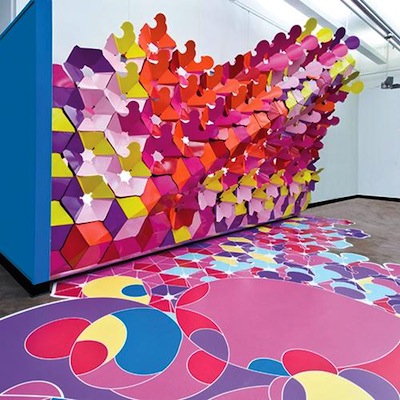
Atelier Manferdini, Arlecchino, December 2010- May 2012, CNC cut wood structure, CNC cut and folded aluminum panels with powder coating finish, and printed vinyl, 12 x16 x 4 ft., Texas A&M University, College Station, TX, Courtesy the Artist

Atelier Manferdini, Arlecchino, December 2010- May 2012, CNC cut wood structure, CNC cut and folded aluminum panels with powder coating finish, and printed vinyl, 12 x16 x 4 ft., Texas A&M University, College Station, TX, Courtesy the Artist

Museum of Contemporary Art Santa Barbara (MCASB) welcomes six prominent Los Angeles-based architects as they present original designs that are anything but architecture. In “Almost Anything Goes: Architecture and Inclusivity,”  Amorphis LA, Atelier Manferdini, Ball Nogues Studio, Design Bitches, DO/SU Studio Architecture and Variate Labs present their work,  embracing cross-fertilization, collaboration and adaptation to create new methodologies for research and implementation in the fields of architecture and beyond.

The exhibition is on view from January 5 –April 13.
The architects are:

Ramiro Diaz Granados, Amorphis LA
Elena Manferdini, Atelier Manferdini
Benjamin Ball and Gaston Nogues,Ball Nogues Studio
Catherine Johnson and Rebecca Rudolph, Design Bitches
Doris Sung,DO/SU Studio Architecture
Miles Kemp, Variate Labs

The opening reception for this exhibit is January 4 from 6–8 p.m. MCASB is located at 653 Paseo Nuevo.

—Leslie Dinaberg


Originally published in Santa Barbara SEASONS on December 31, 2013.

Share the Gift of an Experience

GiftofExperience1-704x400Nothing beats the gift of a memorable experience…except perhaps one that you can share with your loved ones. Here are some holiday gift suggestions that can be appreciated together.

Santa Barbara Beautiful

When it comes to enjoying our gorgeous city, the options truly are endless. One of the best ways to soak in the soul of Santa Barbara is to get out on the water. In the early winter months, Condor Express whale-watching charters follow migrating California Gray Whales as they pass through the channel (805/882-0088, condorexpress.com) and Adventure Sailing Charters (805/794-8703, adventuresailingventura.com)offers boats to the Channel Islands, as well as surf trips.

Landlubbers will love a membership to Lotusland, which provides priority access to 37 acres of spectacular collections of exotic plants (805/969-9990, lotusland.org). Members of Santa Barbara Botanic Garden (805/682-4726, sbbg.org) not only get free entry to this living museum, but also support the garden’s mission of conservation, education and scientific research. Garden lovers, not to mention history buffs and architecture aficionados, will love a tour of the historic Casa del Herrero (805/565-5653, casadelherrero.com), an elegant Montecito estate and National Historic Landmark. For a truly adventurous gift, take to the skies with Santa Barbara Helicopter Tours (805/845-4500, helicoptertoursofsantabarbara.com), offering wine tours, whale watching trips and Channel Islands flights.

Wine and Dine

Oenophiles will appreciate the plethora of tasting and transportation options offered by Wine Canyon Tours (805/453-7047, winecanyontours.com), Sustainable Vine Wine Tours (805/698-3911, sustainablevine.com) and Cloud Climbers Jeep Tours (805/646-3200, ccjeeps.com), among others. Got a sweet tooth? Santa Barbara Adventure Co.’s Tasty Cupcake and Wine Tour (805/884-9283, sbadventureco.com) is simply delicious.

The Show Must Go On

Why not treat that special someone to passes for Santa Barbara International Film Festival, which runs Jan. 30–Feb. 9 (805/963-0023, sbiff.org) and offers a variety of packages that include movie tickets, parties and tributes and awards ceremonies. Classical music aficionados will love series tickets to Santa Barbara Symphony (805/898-9386, thesymphony.org), the “Met Live In HD Series” at Music Academy of the West (805/695-7931, musicacademy.org) or CAMA’s International Series (805/ 966-4324, camasb.org). If the play’s the thing, then the Broadway Series at The Granada is just the ticket (805/899-2222, granadasb.org) for big musical performances, while the black-box intimacy of Center Stage Theater (805/963-8198, centerstagetheater.tix.com) hosts a terrific variety of plays and performances, including the locals’ favorite Speaking of Stories (805/963-0408, speakingofstories.org) reader theater series.

Catch Some Culture

Museum memberships make great gifts. Santa Barbara Museum of Art (805/963-4364, sbma.net) members have access to the museum’s renowned exhibitions, grand opening events and other special activities, as well as a connection to a vibrant community of art lovers. MCASB (805/966-5373, mcasantabarbara.org) also cultivates a unique arts community. Its members form a society of contemporary art lovers, patrons and artists who actively participate in the intellectual and artistic life of the museum. Another great way to catch some culture is via UCSB Arts and Lectures Series (805/893-3535, artsandlectures.sa.ucsb.edu), which has about a dozen terrific ticket series to choose from—or you can build your own.

Get Active

The gift of physical fitness is a gift that keeps on giving. Why not give golf lessons (805/968-1541, sandpipergolf.com), try stand up paddle boarding (805/881-2115, supadventuressb.com), or yoga at Core Power Yoga (805/884-9642, corepoweryoga.com) or Yoga Soup (805/965-8811, yogasoup.com). Los Padres Outfitters offers beach horseback rides, day rides or pack trips for horse lovers (805/331-5961, lospadresoutfitters.com), while Rancho Oso (805/683-5110, rancho-oso.com) in the beautiful Santa Ynez Mountains is a great place for beginning riders to get comfortable with gentle horses and on guided trail rides.

DIY

Learn to paint (and sip local wine) at The Painted Cabernet (805/963-9979, paintedcabernet.com), a perfect place for a date-night gift. Market Forays cooking classes and culinary adventures are also a great gift for someone who would enjoy a guided shopping tour through local farmers’ markets and the fisherman’s market, followed by a hands-on cooking class and five-course feast (805/259-7229, marketforays.com). Brooks Institute Extension (805/690-7629, workshops.brooks.edu) offers a variety of excellent workshops for photographers of every level to improve their skills.

—Leslie Dinaberg

Originally published in the Winter 2013/14 issue of Santa Barbara SEASONS Magazine.

Keeping it Green: Cozy Charm Meets Environmental Friendliness

Photo courtesy Allen Associates

Photo courtesy Allen Associates

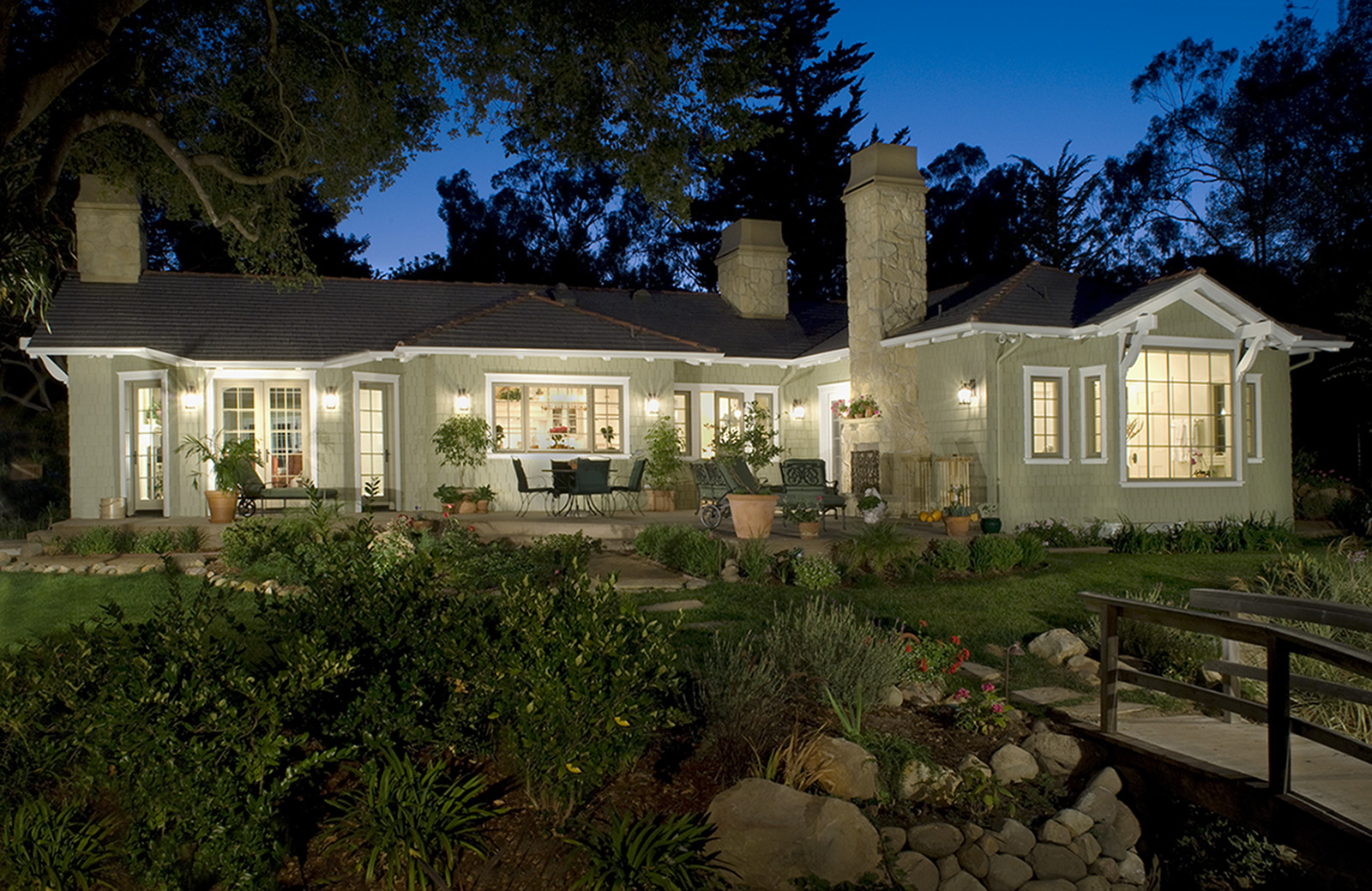
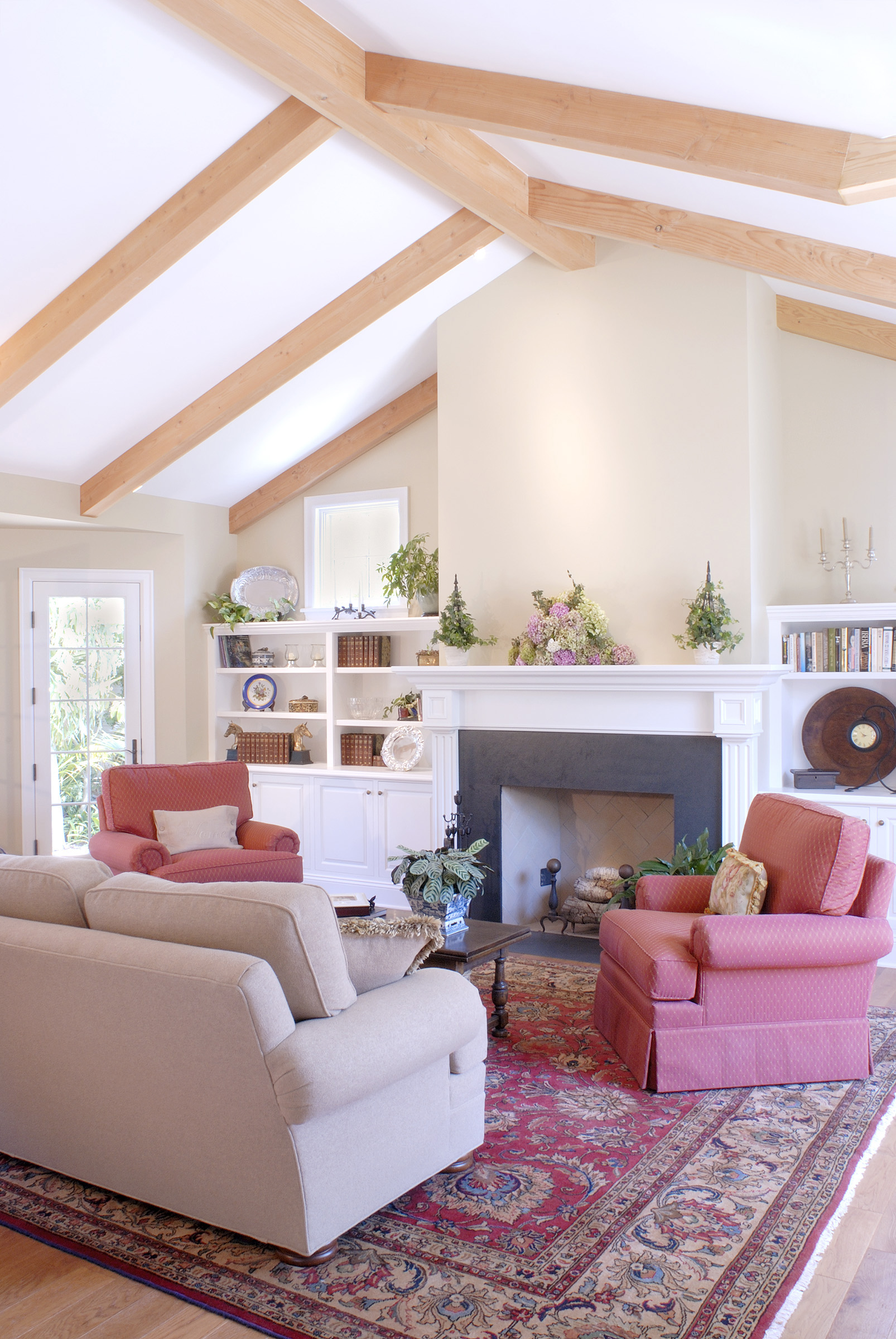
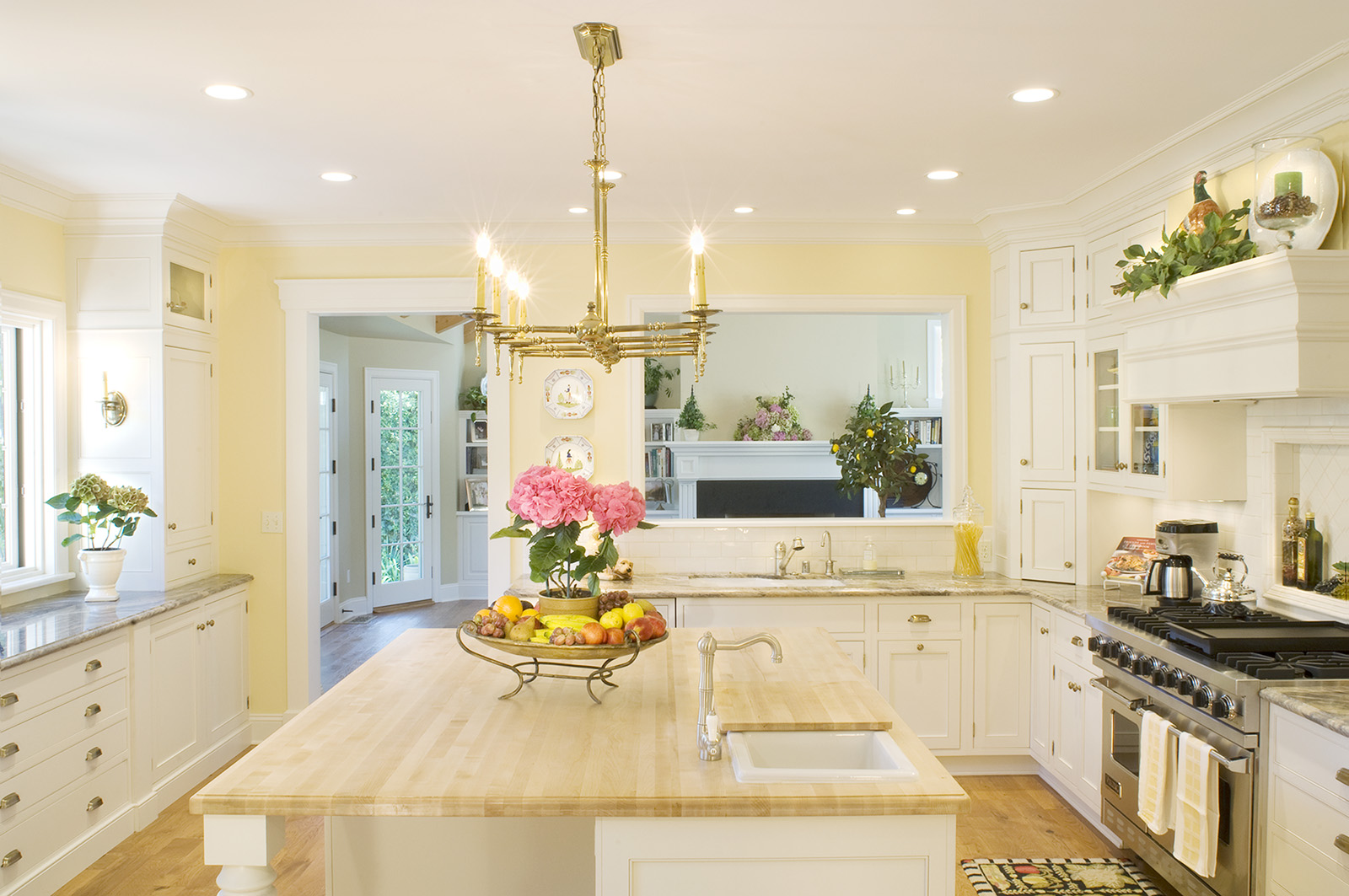
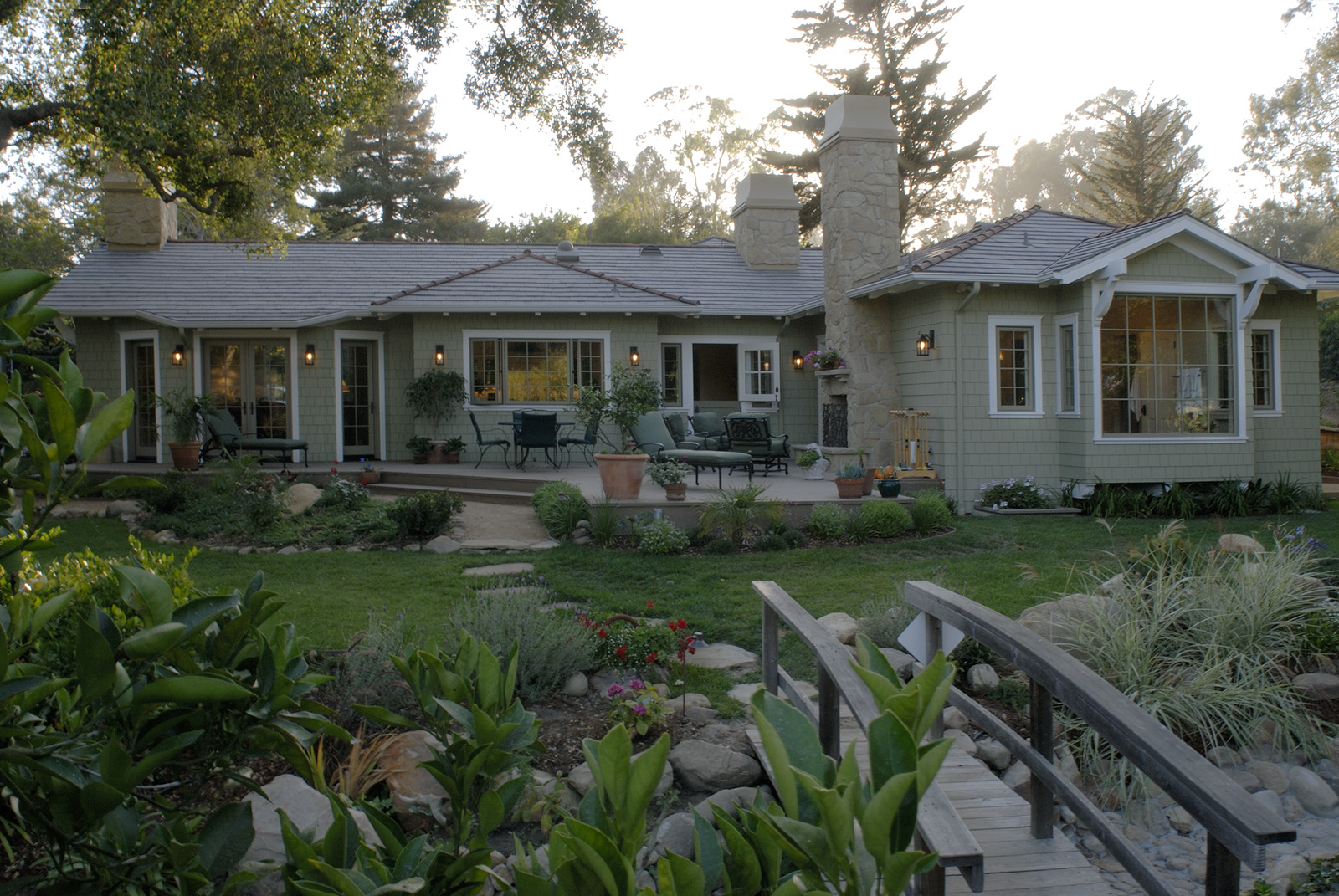
Combining cozy quaintness with modern conveniences was the goal when Linda and Jerry Gutterman decided to remodel their 1930’s cottage. As much as they loved the homey feel of their tiny, 1,086 square foot abode, they wanted more room, and used their remodel as an opportunity to create a greener, healthier and more energy efficient living space.

It was important to Linda that they maintain the cottage’s cozy feeling. “I wanted a real cottage feel when you came up the driveway, “ she says.

Located on a cul de sac off of Schoolhouse Road, the cottage has a long and storied history that Linda and Jerry wanted to make sure they preserved. The property, which runs alongside a creek, originally belonged to the family of Burr and Beverly Barker, Linda’s former husband and his sister.
Photo courtesy Allen Associates

Photo courtesy Allen Associates

Their grandfather, William Barker, purchased the five-acre property in 1895 and it became known as Barker Ranch. William had eight children, six sons and two daughters, who lived in the original farmhouse down the street.

“As they grew up he decided to give his children property on the farm so they could build their homes with their spouses when they married,” says Linda. So the property was divided up and Burr’s father Fred built the original cottage with his brothers in 1932.

When Fred and his wife Jeanne passed away in the late 1970s, Burr (then married to Linda) and his sister Beverly inherited the cottage. They bought Beverly’s share and held onto the property.  In 1994 the property was deeded to Linda and she moved into the family cottage.

Four generations of Barker children have played among the oak trees that frame the backyard of the cottage, which butts against the grounds of the 11-acre Casa del Herrero estate. Designed by the area’s premiere architect, George Washington Smith, Casa del Herrero is noted as one of the finest examples of Spanish Colonial Revival architecture, listed in the National Register of Historic Places, and has been in the hands of its original owners, the Steedman family, since it was first constructed more than 75 years ago.

Photo courtesy Allen Associates

Photo courtesy Allen Associates

“What we wanted to achieve with this house remodel is to make it feel like it’s always been here,” Linda says, citing her love and appreciation for the older home styles found in Montecito and the Upper East Side of Santa Barbara.

Both of the Gutterman’s like traditional style homes that feel like they have a history. They have a special affection for the cottage, where Linda took residence in 1994. She married Jerry in 1999. “I married her for her cottage,” he jokes.

“I loved the cottage and I enjoyed living in it very much. It was very cozy because I had added all my touches. But the house was single wall construction, and it was cold. The windows were single glass paned…the nice leaded glass windowpanes that came from the old Parma Estate, and neat windows, classic leaded glass windows … but it was just drafty,” says Linda.
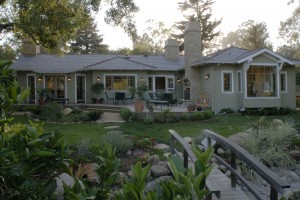
Photo courtesy Allen Associates

Photo courtesy Allen Associates

“They weren’t very energy efficient,” adds Jerry.

“We were burning gas like mad just keeping the house warm,” says Linda.

In addition, the house wasn’t well built. “It wasn’t a home that you could save and remodel. It wasn’t built well enough structurally, because it was built by the kids, by the boys,” she says. Plus, it is located right next to a creek and they had problems with mold and mildew.

“It was almost like it was becoming uninhabitable for health reasons, and so we decided we would build a whole new home. (There was) almost like an underwater lake that was developing under the foundation of the house when you dig down underneath the property,” says Linda.

Jerry explains that the Jell-O-like substance under the house was subsurface water, which had to be excavated in order to rebuild the structure. “We did not want to build over that because we would continue to sustain the same problems,” he says.
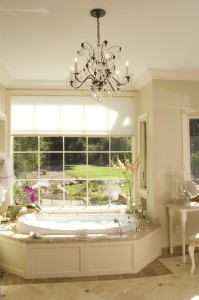
Photo courtesy Allen Associates

Photo courtesy Allen Associates

Working with Allen Associates, a local building contractor that specializes in green construction, the Gutterman’s decided to install a French drain system that collects all of the water runoff from the back of property and the roof and then drains it into the streambed for reuse.

While the Gutterman’s decided to remodel in January 2006, they didn’t actually begin demolition until April of that year. They worked with several architects to come up with a design that would preserve the look and feel of the old cottage while using new materials and technological innovations to go from a 1,086 square foot home to 2,900 square feet. Linda’s father, architect John Roberts, did the initial layout and floor plan.

But because we changed our minds so much, “her father fired us,” laughs Jerry. “Her dad does drafting the old-fashioned way with a pencil and eraser, and with the way Linda and I change our minds, until we figure it out, it was a lot of erasing for him.”

“We became known as Mr. and Mrs. Change,” says Linda. The next architect hired was Melvin Hemmer, who unfortunately passed away before the project was completed. Sophie Calvin took over at that point to complete the plans and get the design through all of the necessary approvals.

While the new home is more than twice the size of the original, from the curb it still looks like a small cottage. “We tried to keep the feel of this home from the front when you drive up to be similar to other homes on the street, to keep that same cottage sense and feeling,” says Jerry.

“When you drive up, it doesn’t look nearly as big as it is,” says Linda. “I kind of like the element of surprise. That is really what I enjoy is coming in to a home and seeing the charming little touches.”

Among the charming touches she preserved are the fireplace mantel from the original cottage, which now graces the master bedroom, and the door of the original 1900s farmhouse from Barker Ranch, which is now the entry to a new garden cottage in the backyard.

“That was important to us to try to keep the traditional integrity as best we could,” says Jerry.

There’s always a concern in older neighborhoods when people hear that there’s a new home going up, says Linda. While she understands the need to update older homes, “what I want is for this street to stay charming as it always has been. ”

Some of the biggest updates were in the area of energy efficiency. Improving insulation is one of the easiest and most cost effective ways to improve the energy efficiency of a house, says Allen Associates Green Resources Manager Karen Feeney. In the Gutterman’s case, they used recycled content non-formaldehyde fiberglass insulation in all of the walls.  They also used energy-efficient windows and ceiling fans to improve circulation. An “on-demand” hot water heating system also improved efficiency, as did new Energy Star appliances.

The Gutterman’s selected innovative structural materials for their remodel as well. They used faux stonework for the outside fireplace, which is less expensive and easier to work with because it’s much lighter than real stone. Their backyard deck is a product called EverGrain, made from plastic and recycled wood fibers. This type of decking is extremely low maintenance and not prone to damage from termites or weather.

Linda says she marvels at the many high substitute materials available now instead of wood.

Fire is also a big concern in Montecito, and the Gutterman’s took this into consideration when choosing the EverGrain decking, which is Class A fire-rated, meaning it has a high resistance to fire and a lower probability of combusting during a fire. They also chose to use fiber cement shingle siding manufactured by CertainTeed and a fiber cement roof product called Firefree to address both their environmental and fire safety concerns.

“They were able to achieve both goals, the green goal as well as putting in materials in their home that were not going to be susceptible to fire, so there’s a win win in both areas,” says Feeney.

Their Isokern fireplaces in the living room, the kitchen, and outside on the deck were all designed for energy efficiency. “A lot of times you’ve got your fireplace and three-fourths of the heat is going up. The way that these are designed is that they are much more fuel-efficient and they radiate the heat back out into the rooms so they are more effective,” says Feeney.

In order to improve the air quality and therefore their health, the Gutterman’s—who had custom dining room and office cabinets built by John Willis and purchased their kitchen and bathroom cabinets from Jack’s Kitchens— used formaldehyde-free shelving and cabinet materials, as well as non-toxic sealants, adhesives and oils and zero/no VOC (no emission) paints and coatings throughout the house.

They also installed PEX plumbing, which is made from cross-linked polyethylene. In addition to the cost saving advantage over traditional copper plumbing, this material is more flexible so it doesn’t require welding, it’s more durable under temperature extremes, and there are no chemical byproducts to get into the water supply. “It’s definitely a cost effective green alternative,” says Feeney.

The Gutterman’s were thrilled to be able to move back into their cozy cottage last April, exactly one year and one week after demolition day. They had a hard time picking a favorite room. Jerry says he had a special affection for his office, the bedroom and the living room, while Linda says she loved both the kitchen and the master bathroom, in part because of their beautiful, park-like views, and of course the memories.

“There’s so much memory here of all our family get-togethers under these trees and of all our picnics and all that, so it’s really a very nostalgic thing for us,” says Linda, whose daughters Bryn and Leah now visit often with their own babies.

The structure may be new, but the rumble of the creek, the swish of the trees, and the history of the house still remain.

Originally published in Montecito Magazine, Spring 2008.



Leslie Dinaberg Sits Down With Gayle Beebe

Gayle Beebe, courtesy Westmont College

Gayle Beebe, courtesy Westmont College

When Gayle Beebe is inaugurated as the eighth president of Westmont College this weekend, he’ll speak on a subject dear to his heart: Global Education. But prior to that, he spoke to us about life at the college, his family, how he’s adapting to Santa Barbara, and Westmont’s facility upgrades.

LD: How did you end up in Santa Barbara?

GB: Years ago I was a consortium exchange student here … I really liked it and it really gave me a great vision for what my life could be. I never dreamed I would come back in this capacity, but quite a way down the road a position opened up. I was in a presidency at Spring Arbor University in Michigan. … I have always been kind of intrigued with Westmont, so it was just a great opportunity to serve others.

LD: Have you always felt you were called to academia?

GB: You know, not initially. I actually started out in ministry. I went to Princeton Theological Seminary after I was a student here and I was a pastor for five years …then did a dual degree in philosophy of religion and theology and business administration and strategic management at Claremont Graduate University.

… In 1992 I started working with Azusa Pacific University (as dean of the graduate school of theology) … that’s when I starting thinking academics and really enjoyed it a ton and then went from being a dean to being the president of Spring Arbor in 2000 and just enjoyed that kind of work.

LD: It’s interesting hearing about your background because it seems like a perfect fit for where you are now.

GB: Westmont has so many great strengths and first and foremost …it’s been a great experience, wonderful faculty, great students and a strong financial base. We need to strengthen the endowment but it’s strong. It’s a beautiful campus, with phase one construction coming, we’re excited to have an even more beautiful campus, great location, you know every constituent really loves Westmont. The community does, the board of trustees does, the alums do. … It’s just neat.

LD: So you’re in phase one of the construction?

GB: The beginning of that. We’re hoping to start construction this October and you know, there’s been litigation. We have a group that’s opposing us and we’re just working through all of that.

LD: Is it basically a facility upgrade as opposed to an expansion?

GB: We are not allowed to add any students. It is truly an effort to get a state-of-the-art campus. It’ll be marvelous but there is no interest, no conversation about raising the enrollment to above 1,200. I would like to long-term see us strengthen our global program because we have had some really unique distinct global programs and I’d just like to see us build those out more, but in terms of what happens in Montecito, we have 1,200 students.

LD: Assuming the lawsuit gets resolved, what visible changes will we be able to see on campus in the near future?

GB: We would like to get Adams Center for visual arts, our art program and studio. There will be a new chapel, the observatory, and a hall for math and science. Those will be additions. And then we’ll also be adding a dorm. We have a couple hundred students right now in triples and so we want to build an additional dorm so that we can have students housed in more conventional two to a room.

LD: Do all the students live here?

GB: Yes, they do. It’s one of our five planks in the mission statement … That residential piece I think is just so critical, it’s really important that the faculty live near the students so that they can have not just the contact during class but the informal contact with them away from class.

LD: Since you’ve taken over at the college, what’s been your biggest surprise so far?

GB: You know there’s no earth shattering surprises. The biggest surprise has been all of the conditions with phase one construction. I believe there are 116 conditions and it’s the way that they work out with each other. …They didn’t all get negotiated at once; they got negotiated over a seven-year period. I mean it’s a true act of perseverance that we got to this point.

LD: Do you have is there a facilities manager that oversees this?

GB: Yes, Randy Jones is our campus architect. The people who were here, Stan Gaede was the president and Ron Cronk was the VP of Finance. Ron really ran point on this and really shepherded it. Cliff Lundberg, the executive vice president has been deeply involved in it and Cliff is still here, and then my new VP of finance, Doug Jones, has really taken major responsibility for the operation of phase one. Doug came with me from Michigan. He’s just a brilliant, guy, great judgment, really hard worker.

LD: That’s a big project to take on.

GB: It is. We did a ton of building at Spring Arbor, we added 14 new buildings and remodeled 11 others and Doug oversaw all of those.

LD: Other than this the construction, what do you see as your biggest challenge?

GB: Every place has unique challenges and I think that there’s no reason to overreact … I think what we have to do is figure out how we’re going to space this so we have enough time to give us the biggest opportunity of raising the money we need and not for so long that one of the problems with building is you get inflation. If you don’t start building, eventually you lose so much from year to year that you will never catch up.

LD: It sounds like you’re very busy working, but what else do you like to do when you’re not working?

GB: Well I love being with my family, my children and being part of their sports and their academics, along with my wife. We enjoy going to the movies and I enjoy golfing. I enjoy going to the beach. … If I can find an excuse to drive Cabrillo along the beach from downtown I will, because I just love driving even that little stretch of East Beach. It’s just so inspiring.

LD: Is there sort of a first lady role for your wife at Westmont?

GB: There is and she helps and is the presence of the college at different events and on boards and committees. That hasn’t started in a huge way yet, but by the time we were done in Michigan that was a huge part of her job. I know her time here will continue to become more and more committed. It’s been great to have her more available this first year. She does a great job and to my benefit she just loves family and she’s great with people. People just love her and she’s great with them.

LD: If you could pick three adjectives to describe yourself, what would they be?

GB: Energetic, fun loving and determined.

LD: If you could be invisible anywhere in Santa Barbara, where would you go and what would you do?

GB: I would probably go to East Beach and read a book

Vital Stats: Gayle Beebe

Born: Born and raised in Eugene, Oregon.

Family: Wife Pam; children Anna, age 15; Elizabeth (Liz), age 13; and Richard (Ricky), age 9.

Civic Involvement: The Channel Club, Santa Barbara Partners in Education.

Professional Accomplishments: President of Westmont College; former President of Spring Arbor University; former Dean of the graduate school of theology at Azusa Pacific University.

Little Known Fact: “I played the cello for seven years, I also play the piano.”

Originally published in Noozhawk on April 7, 2008

A walk with Art Walk’s Founder Kerrie-Kilpatrick Weinberg

Kerrie Kilpatrick-Weinberg, founder of Artwalk for Kids/Adults (courtesy photo)

Kerrie Kilpatrick-Weinberg, found of Artwalk for Kids/Adults (courtesy photo)

“Through positive self-expression the doors of opportunity will open,” is the mission statement for the nonprofit Art Walk for Kids/Adults. It could also be the motto for the life of Art Walk’s founder, Kerrie Kilpatrick-Weinberg.

“Art Walk has opened so many doors for me in Santa Barbara, friendships, the areas I work. It’s amazing how things flow into one another when you’re on that right path,” says Kilpatrick-Weinberg, who trained as a set designer in England before developing Art Walk in Santa Barbara in 2000. The program–which is suitable for all but designed for at risk and special needs students–uses the creation of art projects to teach students other academic skills like math, problem solving, reading and understanding directions.

Working around the schedules of her two sons, Ben (now 15) and Sam (now 10), Kilpatrick-Weinberg–who was then a single mother and met her husband Henry Weinberg through Art Walk–began the program as an informal art camp in her backyard. From there she segued into working with the home schooling community, then Devereux’s developmentally disabled students.

She credits her brother Nigel, who was autistic, for inspiring her work. “The hyperactive, the kids with ADHD, the kids who some people call special needs, I just call creative,” she says. “I’ve always done art with any kid that has a learning difference. That seems to be my area, my gift. I don’t find it challenging, I find it really my normal comfort zone because of Nigel.”

With a full art program soon in place at Devereux, Kilpatrick-Weinberg set her sights on expanding to the Los Prietos Boys Camp, a residential correctional/treatment facility for teens.

With the support of the County Arts Commission and the County Education Office, and some funding from the Fund for Santa Barbara, Kilpatrick-Weinberg began her journey into what she calls “the golden triangle,” of Los Prietos Boys Camp, Juvenile Hall and El Puente School, which serves students who have been expelled or imprisoned and are transitioning back to school.

“I would develop this relationship with a kid in Juvenile Hall, then I would see them at Los Prietos for six months, then if things went well they went back to school and they went back to El Puente, so I would have another relationship with them,” says Kilpatrick-Weinberg.

“Some of those kids I knew two years, from beginning to end. It was great to see how well they were doing because a lot of them had given up on themselves, and I’m not saying it was just Art Walk, but the whole process … was immensely life changing for them.”

That continuity of relationships is important. “A lot of the people we work with don’t like too much change,” she says. When Devereux announced closure of its residential program, Kilpatrick-Weinberg began Chagall House so that her autistic adult students could continue to create art. They meet every Wednesday night, have showings of their work around town, and get together for dinner regularly at the Weinberg house, where they catch up socially and discuss and critique their art. Henry, Ben and Sam all take part.

“These are my friends, they’re not just people I create with. They’ve become part of our family,” says Kilpatrick-Weinberg.

Another important part of the Art Walk family is Brandon Sonntag, an artist and teacher who has been collaborating with Kilpatrick-Weinberg since 2001. “It’s just the two of us. There’s something very nice about having two people who get along, who know how to bring out the best in our clients,” she says.

In addition groups already mentioned Art Walk collaborates with a host of other organizations, including local elementary schools, Hillside House, Patricia Henley Foundation, United Nations, Summit for Danny, United Way, Red Cross, Cancer Hope Foundation, Camp Reach for the Stars, Sarah House, Santa Barbara Symphony, Lobero Theatre, and I Madonnari, among others.

One would think her volunteer plate was overflowing from Art Walk, but Kilpatrick-Weinberg still finds time to help at her sons’ schools, and serve on the board of Sarah House, where she and Henry have hosted an annual Oscar Party benefit for the past three years. For the second year, she is also chairing Sarah House’s annual holiday fundraiser–“Light Up the Night: The Artizan’s Ball”–on December 8 at the Santa Barbara Women’s Club.

But Art Walk has opened the door to so many other things for Kilpatrick-Weinberg–including Sarah House, where she first became involved by creating an Art Walk art tree that was auctioned for “Light Up the Night”– that it’s Art Walk that’s closest to her heart.

“Art Walk is a healing program in many ways, it isn’t just about at risk or special needs; it’s about anybody who wants to create. It’s art walk for kids and adults. What it probably should be is art walk for everyone because that’s what it is,” she says.

==

For more information about Art Walk for Kids/Adults visit http://www.artwalkforkids.org.

Originally published in Coastal Woman, 2007

Education 101

Are Santa Barbara Schools Making the Grade?

Education 101, story from Santa Barbara Magazine

Education 101, from Santa Barbara Magazine

Education 101, from Santa Barbara Magazine

For better or worse, the days when parents would simply whisk their children off to the nearest school are long gone. Discussions of “where are you sending your child?” dominate local parks, pediatrician’s offices and preschool playgrounds. While there’s no such thing as a one-size-fits-all approach to education, luckily we have lots of options in Santa Barbara. In general, our schools are getting better too–a concerted effort is underway to narrow the achievement gap between middle- to upper-class and low-income students. “Our schools are improving,” according to experts including longtime local educator Gerrie Fausett, the current superintendent of the Hope School District and former principal of Santa Barbara Junior High and Washington Elementary School on the Mesa. She says that schools are “doing a better job educating our students, and have particularly improved in their work with students that are not meeting academic expectations. The improvements and the dedication to making sure that kids are learning what they need to learn are moving forward.” Continue reading

Mating in the Millennium

Stuart Miles (Freedigitalphotos.net)

Stuart Miles (Freedigitalphotos.net)

The singles scene is changing fast.

Leslie Dinaberg tags along to dig up the dish on blind dating — 21st-century style.

MAN SEEKING WOMAN: Funny guy with killer body and money to burn seeks woman who doesn’t believe everything she reads.

Eye catching ad, isn’t it? It should be. That’s the online dating promo for professional online personal ad writer Evan Marc Katz, founder of e-cyrano.com, just one of the many Web sites for people who are looking for love in all kinds of interesting places. Continue reading