‘Yachts of Love’ Raises $156,000 for Visiting Nurse & Hospice Care

(L-R) Tom Parker (Chairman of the Charity Regatta), Robyn Parker (Regatta Steering Committee member), Lynda Tanner (President & CEO of Visiting Nurse & Hospice Care), Rick Keith (Executive Director of the Foundation of Visiting Nurse & Hospice Care). Photo by Rhianna Mercier

(L-R) Tom Parker (Chairman of the Charity Regatta), Robyn Parker (Regatta Steering Committee member), Lynda Tanner (President & CEO of Visiting Nurse & Hospice Care), Rick Keith (Executive Director of the Foundation of Visiting Nurse & Hospice Care). Photo by Rhianna Mercier

Friends and supporters of Visiting Nurse & Hospice Care gathered at the Santa Barbara Yacht Club to celebrate the 9th Annual “Yachts of Love” Charity Regatta. The event benefitted Serenity House, and successfully raised $156,000 for the organization’s 18-bed inpatient residential hospice home.

Before the first gun went off to start the race, the Harbor Patrol did a ceremonial ‘Fire Dance’ complete with fire hoses to send the racers on their way. Nearly 30 sailboats competed in this year’s Charity Regatta, and in the end, Prevail came in first for the “A” fleet, captained by Celebrity Skippers Todd Pazier and Hugh Montgomery (both with the Santa Barbara County Fire Department). Jim Rampton, Battalion Chief of the Carpinteria/Summerland Fire Station, steered Bullet into first for the “B” fleet.

After the race, guests made their way back to the Yacht Club for a delicious barbecue dinner, and a final chance to bid on the silent auction items.


Visiting Nurse & Hospice Care is the leading nonprofit provider of comprehensive in-home health care. The mission of Visiting Nurse & Hospice Care is to provide high quality, comprehensive home health, hospice and related services necessary to promote the health and well-being of all community residents, including those unable to pay. It serves the greater Santa Barbara area, and Santa Ynez and Lompoc Valleys and  is one of Santa Barbara’s oldest nonprofit organizations. For more information click here or call 805/965-5555.

—Leslie Dinaberg

Originally published in Santa Barbara SEASONS on November 20, 2013.

PathPoint Wins Legacy Award at Clean Business Awards

Congratulations to PathPoint for winning the Clean Business Investment Summit’s (CBIS) Legacy Award for 2013. The organization—a locally-based nonprofit organization that provides services, programs, and opportunities for people with disabilities and disadvantages since 1964—is the first nonprofit to receive the prestigious award, which honors those who have demonstrated significant contributions to education, leadership, innovation and the development of the entrepreneurial ecosystem to most effectively inspire and build new entrepreneurs while upholding the principals of Clean Business.
The award recognizes PathPoint’s nationally-recognized programs that support people with disabilities and disadvantages through employment, housing, and developmental training—enabling them to become integrated, productive members within communities. Thanks to PathPoint’s programs, more than 2,300 people in California each year are supported in their steps to live productive, independent lives within the five counties of San Luis Obispo, Santa Barbara, Ventura, Los Angeles, and Kern. As a $24 million organization, PathPoint has an annual overhead of only 11% enabling it to give back 89 cents of every dollar that it receives to helping the people and communities it serves.
“This award is a validation to the men and women in our organization who have made it their life-long mission to serve people and communities,” says PathPoint president and CEO Cindy Burton, in her acceptance remarks. “We hope to continue with our work through collaboration with businesses and organizations who share our passion and mission to serve others.”
For extended more information, visit www.pathpoint.org.
—Leslie Dinaberg
Originally published in Santa Barbara SEASONS on November 19, 2013.

Cocktail Corner: Cultivate’s Generous Pour

Dream Walking webA spirited toast to all things alcoholic! by Leslie Dinaberg

The wine industry is a notably generous one—you’ll get a warm and fuzzy buzz just thinking about how much donated wine is poured in the name of loosening checkbooks at local charity events every year!

Now that grape-infused generosity has a new twist with the Cultivate brand.

The brainchild of wine investor Charles Banks (who recently purchased Qupe) and his wife, Ali Banks, Cultivate gives back the first ten cents of every dollar in gross sales to nonprofits supporting education and basic human needs in local communities, and has raised over $430,000 for charities in over 45 communities across the U.S. since its launch in 2011. Another interesting twist is that Cultivate does not direct the funds—instead, nonprofits submit their causes and the brand allows customers to vote on its website with the goal of allowing customers to express their values through their purchases and have a voice in determining where the money goes.

And trust me, the wine is good: the folks at Cultivate have produced more than 20 wines rated 25 points or higher in the last ten years.

I recently spoke with Nat Gunter, Cultivate’s director of winemaking, who travels the world tasting thousands of samples of juice to craft the best wines possible at the best value possible from regions all over the globe.

The Feast webLeslie Dinaberg: What a fun job you must have.

Nat Gunter: It is. It has been tons of fun.

LD: The Cultivate wines include: The Gambler, 100% Malbec, Mendoza, Argentina; Double Blind 100% Pinot Grigio, Veneto, Italy; Wonderlust, 100% Chardonnay, Valle Centrale, Chile; Copa Cabana, 60% Cabernet, 40% Carmenere, Chile; The Feast, 66% Merlot, 34% Cabernet, Alexander Valley and Napa, CA; and Dream Walking, 100% Chardonnay, Mendocino and Sta. Rita Hills, CA.

So tell me about the travel aspect of your work. You’re going to these places, you’re tasting the juice and then are you collaborating in making the wines with these different vineyards?  How does that work?

NG: It’s a little different in every area because different countries and different wine growing regions obviously have different customs and different laws and different ways of doing things. With respect to the two California wines we make now, that is made through me personally blending different sources of wine, different bulk wine lots … and then physically doing the blending, the culturing and modeling ourselves. Whereas obviously in Chile, because the cost of doing everything is a little bit lower, we can actually go from grapes to bottle in Chile. It was really about finding producers that would be the most advantageous for the wine we wanted to make in cellar practices and that are also really fun to work with and to visit three times a year and to be in constant communication with. We go sort of through harvest with them, and go from grapes to bottle and I blend the wine together each year with their winemaker.

Nat Gunter (courtesy photo)

Nat Gunter (courtesy photo)

LD: How many cases are you producing?

NG: We have five wines at the moment: two from Chile, a red and a white, sort of our entry-level price point if you will. And we’re bringing in probably close to 20,000 cases each. … In our middle tier right now we have a Malbec from Argentina, bringing in just shy of 8,000 cases a year of that. In January we’ll launch a Pinot Grigio that will sort of fit alongside the Malbec in our kind of middle tier and maybe our middle range white wine. And we have our two California wines that are sort of our high end wines, if you will, still retailing below $20 a bottle but for the cultivated program they are the high end and we’ve been producing between 5,000 and 7,000 cases a year of those wines.

LD: Is the long-term plan to continue that size of production?

NG: I think in a perfect world we’d like to grow at all levels, because of the business model and with our ten percent give, the more wine we can sell the more money we can put to good use so we definitely don’t want to put any cap on how big we could potentially grow.

… I think because of the way the model is set up we can be very nimble and advantageous in our pursuits and so we knew we wanted to make our value brands … in Chile, and so to be able to find places where I was of a like mind from a winemaking philosophy, and from a viticulture philosophy with the people with whom we would be working is huge.

On the other hand, if someone were to come to Charles and say we would like to produce specifically this type of wine from this place we obviously have within the terroir selections we have sort of family or group intelligence, we have the ability to capitalize on that and make that happen.

LD: Have you always enjoyed the collaborative aspect of winemaking?

NG: I have to say that’s definitely something I have come to only with Cultivate. … It’s only through Cultivate that I’ve really had this much responsibility in terms of style and volume of wine produced. And so I think collaboration has been a necessity and so to know that I can get valuable feedback … and get some honest and candid feedback from people who have been doing what I’m doing, some of them for much longer than I’ve been doing it, but we’re all sort of working with and for the same people and the same goal and it’s really, it’s very gratifying.

LD: I would imagine it keeps you on your toes from a winemaking point of view, but also from just having so many different partners.

NG: Absolutely and sometimes when I find myself stuck, oftentimes you’ll look for really creative solutions when a logical one will do and sometimes you’re looking for a really logical solution when something outside the box will do. And to have different wine makers on different continents with different backgrounds to bounce things off of, I feel like most of the time we sort of more quickly arrive at more solutions than I would certainly individually. I won’t speak for the rest of them.

LD: Are the partnerships intended to be one offs, or is it possible that a few years from now you may go back to the same place?

NG: It’s sort of on a case-by-case basis. With our partnership in Chile, we’re into our third vintage on both the red wine and white wine, with two different partners. I spent a lot of time down in Chile early on visiting tens if not hundreds of producers and then taking time to make the wine incrementally better year after year, which I think happens actively and passively through better understanding and time working with people.

With California wines there are obviously within sort of our group or rolodex there are some contacts we have in the wine world that we trust. Different vintages bring different conditions and different growing regions bring the ability to sort of capitalize on those, to maybe pull more from Mendocino than the Central Coast one year and vice versa, depending on the quality of that vintage I think it’s certainly helpful to our overall quality.

LD: I love the charitable component of Cultivate. Are you involved with that at all?

NG: Yes, absolutely. Everyone in the organization definitely keeps abreast of the different community based nonprofits that we help. Our first give recipient was actually from my home state (South Carolina) and while I wasn’t terribly involved with that organization before, I then struck up a really meaningful friendship with the director of that organization.

It’s a nice reminder from time to time and Ali (Banks) actually is very good about keeping that mission at the forefront and sharing notes that she receives from gift recipients and sort of keeping up with those gift recipients down the road, not just on the day that a check is delivered and finding out not only what our give dollars have helped do but how they are growing.

LD: How much of that, if any, is part of your discussion when you’re looking at vineyards and people to partner with?

NG: I certainly want anyone that we may partner with … to know our mission and our goal and our business model because certainly from a production end if you’re giving away ten percent of your gross, that doesn’t leave a lot of wiggle room for any mistakes really. You really need to get everything right the first time. And because Charles and Ali and the rest of us by extension feel so strongly about that give, it is some added motivation to get it right so making sure that everyone we partner with is aware of that is definitely a big part of it.

LD: What’s your favorite part of your work?

NG: I do think that collaboration is something that is probably the most gratifying to me and I think it comes in many forms. There are two wine festivals throughout the year in which Terroir Selections as a group participates. They are both West Coast, in the spring the Pebble Beach Food & Wine Festival and then in the late summer, the Los Angeles Food & Wine Festival, and more often than not, every winemaker in the portfolio is together. It’s just a great time to sort of taste everyone’s wine with everyone else and then after that just sort of throw it all out there on the table. And I always leave those occasions feeling pretty dialed in and invigorated about winemaking.

Cultivate founders Ali and Charles Banks explain how their journey through the wine world lead to the creation of Cultivate and it’s model of giving away 10% of sales to non-profits. Shot in Andy and Annie Erickson’s backyard, as well as the lab, with the Cultivate team. Filmed and edited by 4 Slow Play.

Cheers!

Originally published in Santa Barbara SEASONS Magazine on November 15, 2013.

Click here for more cocktail corner columns.

Leslie Dinaberg

Leslie Dinaberg

When she’s not busy working as the editor of Santa Barbara SEASONS, Cocktail Corner author Leslie Dinaberg writes magazine articles, newspaper columns and grocery lists. When it comes to cocktails, Leslie considers herself a “goal-oriented drinker.”

Grants in Action: Women’s Fund Members Witness the Power of Their Collective Gifts

Ninth annual site visit highlights the work of local nonprofit organizations benefiting from $525,000 in contributions

Women's Fund members get a firsthand look at a Notes for Notes jam room at the Westside Boys & Girls Club during Thursday's annual site visits to grant recipients. (Peter De Tagyos photo)

Women’s Fund members get a firsthand look at a Notes for Notes jam room at the Westside Boys & Girls Club during Thursday’s annual site visits to grant recipients. (Peter De Tagyos photo)


It’s often said that seeing is believing, and that was certainly the case for more than 150 members of the Women’s Fund of Santa Barbara last Thursday as they toured local nonprofit agencies to see what their most recent $525,000 in grants were doing to help the community. The annual site visit included tours of three nonprofit facilities — Catholic Charities of Santa Barbara, Doctors Without Walls (Transition House) and the Westside Boys & Girls Club — as well as presentations by representatives from Future Leaders of America, Girls Inc. of Carpinteria, Isla Vista Youth Projects, the Youth Violence Prevention Program and Women’s Economic Ventures.

Together these eight charities comprise the most recent recipients of 55 grants totaling $4,125,000 to local nonprofits in Santa Barbara, Goleta and Carpinteria since the Women’s Fund began in 2004.

Always a highlight for members, this ninth annual site visit offered an opportunity for people to observe firsthand how their donations are making a crucial difference in their neighbor’s lives, as well as how powerful their individual gifts can become when they are part of a collective philanthropy group.

Traveling via Santa Barbara Airbus, the site visit included a stop at Catholic Charities of Santa Barbara, which received a $50,000 grant to use for emergency supplemental food and case management to aid low-income families in crisis.

Frank Bognar, regional director, says the facility serves approximately 8,500 people a year. Explaining the various services Catholic Charities offers — which include case management, food distribution, life skills planning, counseling services, operating the Thrifty Shopper store and providing vouchers to clients, medical treatment, grants and referrals, emergency shelter assistance, older adult services and holiday programs — Bognar said, “We try to both provide the fish and teach people how to fish.”

The next stop was the Westside Boys & Girls Club, which received a $75,000 grant for renovation and expansion of its clubhouse to create an educational resource center for teens and pre-teens.

Gina Carbajal, executive director of the United Boys & Girls Clubs of Santa Barbara County, explained that the group provides services to 7,000 children throughout the county, including about 200 per day at the Westside Club. The resource center donated by the Women’s Fund will provide students with a quiet learning space of their own, offering homework help and tutoring.

Development/grant specialist Donna Reeves gave an overview of a typical day at the Westside Boys & Girls Club.

“Getting homework done is the first priority,” she said, explaining that the children are given incentives to get their work done as well as assistance when they need it.

Catholic Charities

Catholic Charities of Santa Barbara was among three sites toured Thursday by members of the Women’s Fund. (Peter De Tagyos photo)

David Lee, regional director of Notes for Notes, an independent nonprofit that has a satellite studio at the club, also gave tours of a very impressive “jam room” where children receive free access to musical instruments, instruction and a recording studio.

The third site toured was Doctors Without Walls-Santa Barbara Street Medicine, which received a two-year Women’s Fund grant for a total of $50,000 for the Women’s Free Homeless Clinic to provide medical care and essential services to unsheltered and marginally sheltered women in a safe, female-only environment. The clinic is located at Transition House, where treasurer Marguerite Sanchez welcomed members.

“The mission of Doctors Without Walls-Santa Barbara Street Medicine is to provide free, volunteer medical care for the most vulnerable, underserved populations in Santa Barbara County, when and where they are in need,” she said. “(The clinic) serves a highly marginalized, at-risk population living in extreme poverty. Many of the women we treat have been victims of domestic violence as well assault, affecting their ability to take adequate care of themselves. … They live in parks, in cars, under freeways, on the beaches and the streets. Many more of our women live in the public shelter system where services have been dropped to an all-time low and sometimes the only hot meal they receive is the one provided at our clinic.”

A tasty sample of one of those hot meals was provided to Women’s Fund members by the Organic Soup Kitchen, which partners with Transition House and the women’s clinic to provide nutritious food. This year they anticipate serving 20,000 meals to needy people in the community, with a need for 30,000 meals anticipated in 2014.

The buses then went to the Santa Barbara Woman’s Club for additional presentations by grant recipients.

“The Women’s Fund site visit is part of the rigorous research process that ensures we have effective, creative programs and agencies from which to select when we cast our votes,” site visit chair Sarah Stokes said. “The progress of our grantees is then followed to confirm the money we’ve donated is being well spent. … Today, we have the opportunity to see firsthand the effective use of our collective funds and hear from the grantees how your money is being put to use and the work we are doing together to change the lives of women, children and families in our community.”

On behalf of Future Leaders of America, which received a $65,000 grant for leadership training and academic support for local high school students, program director Gabriela Rodriguez said, “Due in large part to Women’s Fund support, Future Leaders hosted a weeklong youth leadership camp for 95 new participants (64 of them from Southern Santa Barbara County) at Cal State Channel Islands. During the summer camp, Future Leaders works to create an environment where the ‘Impossible’ becomes the ‘I’m Possible.’ Students learn to effectively express their opinions and ideas, discuss their challenges and fears and develop the necessary skills to advocate for themselves at home, school and in their community.

“The youth we served this summer come from the most marginalized areas of our community. From Santa Barbara alone, 37 percent of the youth come from low and 53 percent come from extremely low-income families. More than one-third come from single-parent homes. This is only important to highlight because I can assure you that the lives we touched are the ones that need our support the most.”

As the recipient of a $50,000 grant to Girls Inc. of Carpinteria to fund Eureka!, which is a dropout prevention and college readiness program designed to encourage young girls to attend college and pursue careers in science, technology, engineering and math, according to Executive Director Victoria Juarez.

“This summer, thanks to your investment in the Eureka! program, Girls Inc. Carpinteria sent 42 eighth- and ninth-grade girls to the UCSB campus, where they spent four weeks learning what it takes to succeed in higher education,” she said. “Many of them will be the first in their family to attend college, and we have had the honor to see them inspired, challenged and sometimes perplexed as they navigated an entirely new environment. They are all, without a doubt, much better prepared to take advantage of the opportunities offered by a college education.”

Board member Dr. Yoni Harris spoke on behalf of Isla Vista Youth Projects, which received $50,000 for capital funds to improve interior and exterior areas, including the playground at the Isla Vista Family Resource Center.

“As you all know, there is no shortage of nonprofit agencies or good causes in Santa Barbara,” Harris said. “The Youth Projects rises to the top of my priority list because of their commitment to an underserved community, depth and breadth of programming, passion of the staff and, most of all, the children and families who come through the door every day.

“The Women’s Fund grant has allowed us to make some much-needed capital and safety improvements to our Family Resource Center, which serves as the service hub for Isla Vista and Goleta families. Although not glamorous work, these improvements were certainly necessary work. The Youth Projects offers a continuum of programming beginning with babies, toddlers and preschoolers who attend the full-day year round Children’s Center. These same children later attend the after-school and summer program at Isla Vista school kindergarten through sixth grade. … Thank you again for your faith in our ability to make a difference in our small part of the county.”

Next up was Melissa Garcia from the Youth Violence Prevention Program, which received $85,000 to provide funding for a female outreach worker helping at-risk girls in Santa Barbara secondary schools.

“Females ages 12 to 19 are the fastest-growing segment in the youth corrections system, and locally, the number of girls entering the probation system has more than doubled over the past eight years,” she said.

Garcia works with about 40 eighth-grade and freshmen girls, with five to seven girls at each school site.

“I pull them out of class once a week, and we talk about different topics that they have chosen that they want to know more about — for example, domestic violence, teen dating, healthy relationships, trust, drug abuse, depression, anger control and better communication,” she said. “I have created a safe environment for these girls to open up. I thought it was going to take a few weeks before the girls really started to talk openly to me, but I was wrong. They want to tell someone what is going on in their lives. They want to be heard. They want someone to be there for them. They want someone to listen without judging them and to help them develop more positive strategies to deal with their situations.

“There is also a great need for us to empower these young women, because if we don’t, they might eventually drop out of school, get involved in unhealthy relationships, become addicted to drugs or even end up pregnant. … All of these young women that I work with have so much potential, and it is my job to help them realize just how much potential they have. Anything is possible in this world, and I am going to do whatever it takes for these girls to see that and start to believing in themselves.”

The final grant recipient was Marsha Bailey, founder and CEO of Women’s Economic Ventures, which received a $100,000 Women’s Fund grant that established a micro-loan fund to assist low-income women in South Santa Barbara County start or expand their own businesses.

“WEV’s mission is to create an equitable and just society through the economic empowerment of women,” she said. “The fact is that the lack of financial resources restricts a woman’s freedom and choices. Period. The truth of this is still seen today: In 2010, only 14 percent of SBA loan dollars went to women. Undercapitalization is the most common reason for business failure. WEV created its Small Business Loan Fund to ensure that low- and moderate-income women could get the money they needed to invest in their businesses until they could become bankable — a process that usually takes at least three years.”

Bailey explained that the $100,000 from the Women’s Fund resulted in a matching grant from the Treasury Department CDFI (Community Development Financial Institution), in effect doubling the grant.

“In fact, Treasury matched the Women’s Fund grant plus $500,000,” Bailey said. “We thank you, the members of the Women’s Fund, that voted for our grant of $100,000. Know that you are helping change the path of poverty in Santa Barbara.”

Steering Committee chair Sallie Coughlin wrapped up the event: “I am happy to report that our membership contributions are on track for this year, which means that when we next meet — at the Presentation Awards, which will be on Monday, April 28 — we expect to award at least $500,000 in grants to local nonprofits.”

About the Women’s Fund of Santa Barbara

The Women’s Fund is a collective donor group that has awarded 55 grants totaling $4,125,000 to local nonprofits in Santa Barbara, Goleta and Carpinteria since it began in 2004. The concept is simple: Women’s Fund members pool their charitable donations, research critical community needs and then vote on which agencies will receive the funds collected during the year. The annual site visit is a midyear progress review that enables Women’s Fund members to see their gifts in action.

Click here for more information about the Women’s Fund of Santa Barbara, or call 805.963.1873.

Originally published on Noozhawk on October 21, 2013.

We’ve got a crush on Coveted Cakery

Treats from Coveted Cakery,Kristine Cramer Photography

Treats from Coveted Cakery,Kristine Cramer Photography

When sweet lady Jessica Burton of Coveted Cakery contacted us and asked if we wanted to sample her fall flavors, we knew we were in for a treat! Awesome autumn flavors include Pumpkin Spice, Salted Carmel and Pistachio Honey, as well as the always-delicious Double Chocolate, Snickerdoodle and (my personal favorite) Chocolate Chip cupcakes with a Chocolate Chip cookie on top!

Whether you want something sweet for a small family gathering, an enormous wedding, or anything in between, Burton will bake up cupcakes to order, made fresh and customized just for you. She also makes beautiful customized cookies, like the ones with the fall issue of Santa Barbara SEASONS. As if we weren’t already putty in the hands of this delicious baking company, aren’t these cookies adorable?

You too can taste these yummy cupcakes this weekend at Taste of the Central Coast on Sunday (Oct. 27), hosted by the Family Care Network at the beautiful Bacara Resort & Spa (8301 Hollister Ave.).

More sweet treats from Coveted Cakery, photo by Leslie Dinaberg

More sweet treats from Coveted Cakery, photo by Leslie Dinaberg

Not only will your tastebuds get a treat, this event is a fundraiser to provide private funding to support the crucial needs of children, youth, and families affected by trauma. Click here to purchase tickets.

For more information all of the sweet treats Burton offers, visit www.covetedcakery.com.

—Leslie Dinaberg

Originally published in Santa Barbara SEASONS on October 23, 2013.

¡Viva el Arte de Santa Bárbara! welcomes Los Vega Son Jarocho

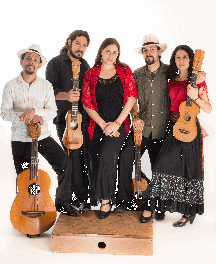
Los-Vega.sm_This week ¡Viva el Arte de Santa Bárbarawelcomes Los Vega Son Jarocho, fifth generation jarocho musicians from Veracruz, Mexico. Carrying on a longstanding family tradition, Los Vega brings a fresh pespective to this distinctive style, playing jaranas (small guitars), percussion, vocals and zapateado (footwork). 

According to the organizers, “for more than five generations the Vega family has contributed to traditional son jarocho, taking on the responsibility of keeping a musical expression alive through the generations. Son jarocho is a style of music with origins in music brought from Spain in the colonial period, melded with indiginous folk music, dynamic Afro-Caribbean beats and wise-cracking wordplay unique to the tropical Veracruz region on the Gulf of Mexico. It is music traditionally played on stringed instruments such as the jarana, a strummed guitar with eight to ten strings, three of which are double, and the requinto, a small four-stringed guitar, and is accompanied by intricate dance or zapateado, often performed on wooden platforms or tarimas.”

They will perform a free family concert at Isla Vista School at 7 p.m. on Friday, October 18 (6875 El Colegio Rd., Goleta, 805/893-5037). On Saturday, October 19, they travel to Guadalupe City Hall for a free family concert at 7:30 p.m. (918 Obispo St., Guadalupe, 805/343-2939), returning to Santa Barbara to perform a free family concert at the Marjorie Luke Theatre at Santa Barbara Jr. High on Sunday, October 20 at 7 p.m. (721 E. Cota St., 805/884-4087 x7).

In addition to these performances, on October 17, La Cumbre Jr. High and the Santa Barbara Westside Association co-host a unique opportunity to learn and practice with the musicians of Los Vega Son Jarocho in a free participatory workshop from 5:30–7 p.m. at La Cumbre Jr. High, 2255 Modoc Rd. Musicians and dancers of all levels are welcome to come play together. Please bring your own instrument —or be ready to sing and dance!

Based on a vision of accessible cultural offerings for Santa Barbara County’s Latino communities, ¡Viva el Arte de Santa Bárbara! brings together diverse audiences at free famly events in neighborhood venues on five weekends each year. The program is a consortium of the Marjorie Luke Theatre, the Guadalupe Cultural Arts & Education Center, Isla Vista School, and UCSB Arts & Lectures, represented by co-ordinators Alíz Ruvalcaba, Graciela Parra and Catherine Boyer. Volunteers from PTAs, the California Youth Corps, UCSB sororities and fraternities, and many others, join together to host and staff the events.  

¡Viva el Arte de Santa Bárbara! is funded by The James Irvine Foundation and the National Endowment for the Arts with additional support from the SAGE, the Santa Barbara Foundation, Incredible Children’s Art Network, the UCSB Office of Education Partnerships, the Santa Barbara County Arts Commission, The Marjorie Luke Theatre’s Dreier Family Rent Subsidy Fund, the Santa Barbara IndependentSanta Barbara Latino, the Santa Maria SUNUnivisión, the Sandman Inn, Best Western South Coast Inn and Ramada Limited. This project is funded in part by the Community Arts Grant Program using funds provided by the City of Santa Barbara, in partnership with the Santa Barbara County Arts CommissionCo-presented by the Marjorie Luke Theatre, the Guadalupe Arts & Education Center and UCSB Arts & Lectures, in collaboration with the Isla Vista School After School Grant.

Originally published in Santa Barbara SEASONS on October 17, 2013.

Cocktail Corner: Drink Pink

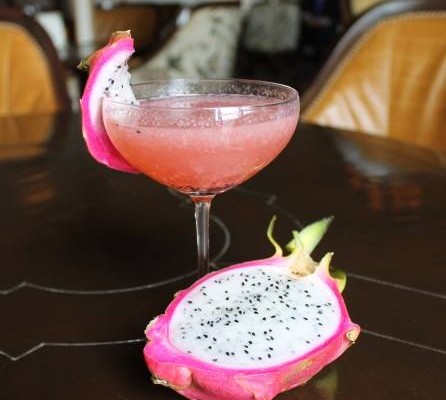
The pink-a-licious "Pink Dragon" at the Biltmore's Ty Lounge (courtesy photo)

The pink-a-licious “Pink Dragon” at the Biltmore’s Ty Lounge (courtesy photo)

A spirited toast to all things alcoholic! by Leslie Dinaberg

October is the perfect time to think pink and drink pink in honor of Breast Cancer Awareness Month.

Why not try the pink-a-licious “Pink Dragon” at the Ty Lounge at the Four Seasons Resort The Biltmore (1260 Channel Dr.)? Made with Casamigos blanco tequila, Trimbach Liqueur Framboise, peach and strawberry shrub and exotic dragon fruit, this pretty-in-pink drink is not just tasty, it’s good for the soul:  10% of your proceeds benefit Cancer Center of Santa Barbara.

Another pink drink option is next weekend’s Crown the Town “Breast Drink” edition.  On Saturday, Oct. 12,  from 3–6 p.m. guests can go on a self-guided quest to find the “breast drink” in town!  Arch Rock Fish (608 Anacapa St.), Eureka! (791 Chapala St. in Paseo Nuevo), Chase Restaurant & Lounge (1012 State St.), Finch & Fork Restaurant (31 W. Carrillo St. in the Canary Hotel), Wildcat Lounge (15 W. Ortega St.) and Blue Agave (20 E. Cota St.) will all be pouring specialty “pink-infused” cocktails in honor of the occasion.  At the final stop guests vote on their favorite pink drink and the winner is crowned.

Sounds like a great girls night out to me! Presale tickets are just $30 and a portion of the proceeds will be donated to Breast Cancer Resource Center of Santa Barbara.

If you know of any other pink drink celebrations in honor of Breast Cancer Awareness Month, please let me know. I’d love to share them with our readers.

Cheers!

Click here for more cocktail corner columns.

Originally appeared in Santa Barbara SEASONS Magazine.

Leslie Dinaberg

Leslie Dinaberg

When she’s not busy working as the editor of Santa Barbara SEASONS, Cocktail Corner author Leslie Dinaberg writes magazine articles, newspaper columns and grocery lists. When it comes to cocktails, Leslie considers herself a “goal-oriented drinker.”

Legacies: They Can, We Can, iCAN

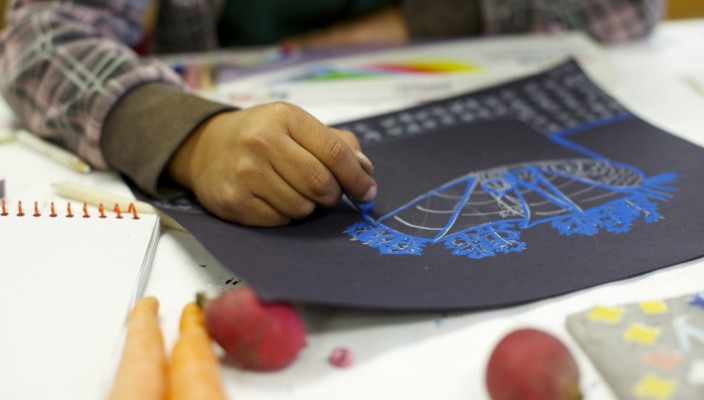
Courtesy iCAN

Courtesy iCAN

The Incredible Children’s Art Network Picks Up Speed
By Leslie Dinaberg

in-cred-i-ble: [in-kred-uh-buhl] adjective
1. so extraordinary as to seem impossible: incredible speed.
2. not credible; hard to believe; unbelievable: The plot of the book is incredible.

Flying mostly under the radar until recently, the art-minded philanthropy of the Incredible Children’s Art Network (iCAN) has been quietly lending support to a handful of local elementary schools since 2005. Now, with a large new facility in the works at 222 E. Canon Perdido St. and an even bigger vision for the future under the direction of new executive director Jeffry Walker, iCAN is set to soar even higher.

Collaboration is a big part of that vision for Walker, a recent transplant from Carmel, whose youthful excitement about iCAN belies his more than 35 years of community arts education leadership.

Looking to the future of iCAN—which currently has visual art programs in place at Adams, Cleveland, Franklin, Harding University Partnership, McKinley and Monroe elementary schools, as well as an afterschool program at Franklin providing free music instruction to 90 students, five days a week—Walker says, “It’s not just around art and music as discrete disciplines, but really around youth development issues and community building issues. We have a pretty wide view on who we think we would work with or be aware of what they’re doing… At this point, it’s fair to say that most of our preliminary conversations are focused on creating a through-line for kids in elementary school and beyond.”

IMG_9853

(iCAN)

Jackson Sierra, whose son Dakotah is a third grader at Franklin (with both the art and music program, which is inspired by Venezuela’s renowned el Sistema model) says, “The program as a whole is awesome… My son has benefited from his music education by being able to read sheet music and write his own music, as well as his love for musical instruments.” In addition, “It has helped him with his math, also with his timing, and helped with his team player skills.”

Indeed, there is overwhelming evidence that involvement in the arts is associated with gains in math, reading, cognitive ability, critical thinking and verbal skills, as well as improvements in motivation, concentration, confidence and teamwork. Unfortunately, nearly a decade of painful budget cuts have decimated funding for these programs in public schools, leaving parents frantically fundraising to fill in the gaps. Not all schools have a population that can do this, which is one of the reasons iCAN was founded: to bring high-quality arts programs to children in Santa Barbara County, particularly to those least likely to receive them.

iCAN also seeks to affect positive social change in the communities it serves, which seems to be working.

“iCAN has really made our school into a more confident and creative place,” says Shannon McCain Jaffe, iCAN art teacher at Franklin. “iCAN has really contributed to change the climate at our school with the art and music…giving the students these kinds of materials and saying, ‘You’re worth this, and you deserve this, and now see where you can take this, where you can go.’ I think iCAN really just planted that seed that they are important, that this is a valuable thing, art, and gave them that opportunity.”

“Plus, it’s wonderful to see the kids delighting in what they know today that they didn’t know yesterday,” says Walker.

“We’ve been lucky enough that all of our principals…have made a point to show their support constantly in any way they can to our program, and that’s not something you necessarily get with nonprofits working with schools. We’ve been really, really lucky,” says Hillary McCall, iCAN communications and development manager.

“So many times…in the arts, we struggle in an environment of scarcity all of the time, not only financial resources but in terms of level of air space that is even given in the community dialogues…So to come into a community where arts education is already on that radar and already worthy of the conversations is pretty brilliant,” says Walker.

“Our project for the next few years will be to realize those aspirations.”

For more information about iCAN, call 805/845-5142 or visit icansbc.org. 

Originally published in the Fall 2013 issue of Santa Barbara SEASONS Magazine.

Party With Foley Food and Wine Society and Support Scholarships


Foley Food and Wine Society Experience (Bacara)

Foley Food and Wine Society Experience (Bacara)

We were so excited when the Bacara’s tasting room opened that we wrote a Cocktail Corner column about it and made it an editor’s pick in the fall issue of Santa Barbara SEASONS. Well guess what? Now they’re having an “official” launch party featuring a select portfolio of Foley Family Wines and, as if that weren’t enough to entice us, proceeds from the event will go to the nonprofit Santa Barbara Culinary Arts group and their endowment in the name of Julia Child for scholarships at the School of Culinary Arts at SBCC.

Wines available include renowned wineries such as Kuleto Estate, Chalk Hill Estate, Sebastiani, Lancaster Estate and Santa Ynez Valley’s Firestone Vineyard, Foley Estates Vineyard & Winery and Eos Estate Winery. The all-inclusive event features a keepsake wine glass for wine tasting as well as various chef stations with mouth-watering cuisine paired with wines. Partygoers will have access to the gorgeous grounds of the Bacara Resort & Spa as well.

Tickets are pretty affordable (Society Member Price: $40, Non-Member Price: $60) and it all takes place on Saturday, September 28 from 3–6 p.m. at the Bacara Resort & Spa, 8301 Hollister Ave. For more information or to purchase tickets email Danielle Maxwell at  concierge@foleyfoodandwinesociety.com, or visit foleyfoodandwinesociety.com.

Originally published in Santa Barbara SEASONS on September 19, 2013. 

Cocktail Corner: Green Drinks

medgreen drinks A spirited toast to all things alcoholic! By Leslie Dinaberg

“Meet Drink Talk Think” is certainly an idea worth toasting. It’s also the slogan for Green Drinks, a fun monthly networking group that combines merriment and making the world a greener (better) place.

This month’s soiree, on Tuesday, September 17 from 6–8 p.m. in the pretty courtyard of the Environmental Defense Center (906 Garden St.), features Marge Cafarelli, the dynamo founder and visionary behind Santa Barbara Public Market, which is opening soon on the corner of Chapala and Victoria streets. With a mouth-watering list of vendors—including Foragers PantryEnjoy CupcakesFlagstone PantryThe Pasta Shoppeil Fustino, Oils and VinegarsRori’s Artisanal CreameryJuiceWell, The Kitchen, Wine + Beer, Green Star CoffeeBelcampo Meat Co. and Crazy Good Bread—we can’t wait for the market to open.

But meanwhile Tuesday’s Happy Hour, which is a benefit for SOL Food Festival (coming up soon on September 28), features hors d’oeuvres from Whole Foods Market and Isabella’s Gourmet Foods, beer from Firestone Walker Brewing Co. and Figueroa Mountain Brew Co. and even juice tastings from the Juice Club.

Filling your mind while you fill your belly is the aim of Green Drinks.

Cafarelli will share the inspiration behind the market, its connection to community building and how it supports local food. Foodbank of Santa Barbara County will also share information. They’ll also be live music by Adam Phillips and a silent auction to benefit SOL Food Festival, featuring opportunities to bid on wine tasting at the Canary, farm tours, dinner at Seagrass and much more.

All are welcome. Come thirsty, bring your friends. Great food and conversation is guaranteed. Just $15 gets you in the door and includes one drink. RSVP at: https://www.facebook.com/events/575355175862793/

Hope to see you there.

Cheers!

Originally published in Santa Barbara SEASONS Magazine on September 13, 2013.

Click here for more cocktail corner columns.

Leslie Dinaberg

Leslie Dinaberg

When she’s not busy working as the editor of Santa Barbara SEASONS, Cocktail Corner author Leslie Dinaberg writes magazine articles, newspaper columns and grocery lists. When it comes to cocktails, Leslie considers herself a “goal-oriented drinker.”