Cocktails in a secret garden: Breast Cancer Resource Center of Santa Barbara

Breast Cancer Resource CenterThe stunning ocean views and lush backdrop of Cynthia and Eric Spivey‘s Montecito garden were surpassed only by the outpouring of generosity and good will at the Breast Cancer Resource Center of Santa Barbara‘s ninth annual garden party benefit. Chairs Daryl Stegall and Pamela Massey and their hard-working committee outdid themselves this year, raising more than $138,000 to benefit the BCRC, which provides a warm and welcoming place where people with breast cancer, and their loved ones, find a caring network of people (mostly cancer survivors) ready to answer questions, lend an ear, and help them obtain information to make informed decisions.

KTYD DJ Matt McAllister worked his auctioneer’s magic touch through a fabulous bevy of auction items, including a Surfing Photo Safari with Jeff Divine, which sold for $10,000; a one-of-kind custom necklace created by local jeweler Daniel Gibbings just for the event; a Sun Valley Snowboarding Vacation with World Champion and inventor of the snowboard, Tom Sims; and an evening of dinner and poker with Peter Noone, lead singer of Herman’s Hermits. Guests inhaled the smells of gorgeous roses from Rose Story Farm, sampled tasty treats from Ernie Price Catering and enjoyed the new Boomerang Australian Vodka and Wattle Creek wines, but perhaps the afternoon’s most moving moments came when former Assemblywoman Hannah Beth Jackson shared her story of receiving comfort from the BCRC after being diagnosed with breast cancer a year ago.

The Breast Cancer Resource Center celebrated its tenth year of service in Santa Barbara on October 13, helping more than 6,000 clients with in-house services–such as support groups; complimentary massage, Reflexology and Reiki treatments; and mentor programs–as well as community outreach and education programs.

Originally published in Noozhawk

Noozhawk Talks: One on One With William Macfadyen

Bill Macfadyen (courtesy photo)

Bill Macfadyen (courtesy photo)

Soft-spoken, with a courtly politeness that seems more Southern than Southern California, William (Bill) Macfadyen doesn’t exactly conjure up images of your typical work-into-the-wee-hours, Red Bull-drinking, pimply-faced Internet entrepreneur. But with this week’s launch of Noozhawk, Santa Barbara’s first comprehensive, free online newspaper, he’s aiming to be the local daily on everybody’s lips–and laptops.

Leslie Dinaberg: Tell me about Noozhawk?

William Macfadyen: It is a community newspaper without the paper. There are two parts to it: it will be professional reporters, like yourself, doing original reporting on news, business, sports, real estate, nonprofits, schools. So there will be original content that we provide on the site, and then the real hook to the site will be to get the community involved through contributions from what I’m calling community contributors.

LD: Do you mean blogs?

WM: No, what we want to do is tie Noozhawk into the community by getting involved with all the networks that exist within Santa Barbara, communities within the community. That would mean a church or a club sports program or a school or a nonprofit or a business even …They can tell the story, submit their stories to Noozhawk and then we can help them get that word out about their organization.

LD: Will there be some way for readers to distinguish whether they are reading something from a member of an organization versus a professionally written and reported story?

WM: Yes, because the consumer needs to know what’s professional objective reporting, and what is a contribution from somebody who has an agenda … when it comes to a small nonprofit group or a school, they’re just really enthusiastic about their mission and want to get that word out. I think a community newspaper is uniquely suited to tell that story and we think Noozhawk will be able to do that in a way that a [printed] community newspaper, with all of its infrastructure, can’t possibly tell or afford.

LD: Explain the economics of that. Why is it easier to do that online?

WM: It’s so much easier to do that online because the Internet is infinite space. It’s basically free. There’s not an artificial or arbitrary limit on paging or a time.

LD: Will there be an editorial page?

WM: Noozhawk itself won’t take editorial positions or make endorsements on candidates or projects, what we want to do is foster debate on community issues that aren’t being covered or serviced anywhere else in town.

Santa Barbara is the greatest community in the world but we do have some really big challenges ahead of us: housing, transportation, the change in demographics, all of those issues are crying out for some kind of community dialogue and it just isn’t there. So what we want to do is offer a place where people can have that debate and discuss those issues and ask the questions that need to be asked, and maybe through that process we can help develop some solutions to some of those challenges.

LD: One of the things that I hear from people that are relying on the Internet now for most of their local news is that “it’s out there but there’s so much other stuff to sift through.”

WM: That’s kind of where this whole concept came in because anecdotally many, many people in town have come up with their own routines to find out what’s going on in their community. …The problem with that is … you’re not trained to go out and search for the news. …You’re not a journalist. And the news delivery really should be brainless … it should just magically show up on your doorstep, in your driveway, in your inbox, wherever, and you shouldn’t have to go looking for it. … What we’re trying to do is pull that all together and then basically be a one stop shop for people to get their news and then move on with their day. … There is no newspaper of record or information source of record. Noozhawk aims to change that.

LD: Where does the name Noozhawk come from?

WM: News hawk is slang for a newspaper reporter, so we just had a little Web 2.0ish fun with the news end of it and named it Noozhawk. Plus hawks are flying everywhere and they see everything.

LD: Why are you personally doing this?

WM: Because I’m not qualified to do anything else.

I’m too old for the Dodgers, although they could use me. I’m personally doing this because I’m very committed to Santa Barbara. I’m proud to live here. I love this community and I don’t like the fact that it’s not being served by its media. I think I know how to put together a quality news product, and I know I know the community, and what I’m trying to do is marry those two and fill a void.

LD: Why will this succeed when other start-up news ventures have failed?

WM: I have no idea what you’re talking about. (Laughs) Henry Ford said, “Failure is an opportunity to start anew only more intelligently.” And that’s what I am doing. I would not have undertaken this endeavor without the Beacon experience and part of that is, I think the Beacon was a fantastic newspaper. Certainly it served its readers very well. … But it failed as a business because we weren’t able to connect with the advertisers quickly enough. And so with Noozhawk, the genesis and evolution of that has been the opposite. I started out talking to advertisers first.

LD: So it feels like they are ready to embrace the Internet?

WM: That’s interesting because when we had the Beacon and we talked about the web part of it, the readership just wasn’t there yet … That dynamic and that whole attitude has changed. What I found in talking to those advertisers is that when I went back to them last fall and started talking to them about this project, their reaction was, “I’m done with print, it no longer works for me, it’s all about the Internet. Internet, Internet, Internet.”

When I first had the idea, older readers, retirees, who had been the core newspaper readers for generations, were resistant to the concept. …Then as time went on, and the Santa Barbara situation kind of deteriorated, I was finding even at the retiree level, the former newspaper reader level, those people were saying, “You know what. I’m actually finding my news online and it’s not that bad. I don’t really miss that routine.” Plus it’s environmentally friendly

LD: Are there any other models or any other communities that are already doing this kind of thing successfully?

WM: Not that I could find with a successful advertising model. … For this to succeed, the business community needs to support it and see it as a worthwhile endeavor that’s effective for their needs.

Without going into the details, I think Santa Barbara has some unique circumstances that are lending themselves to this idea here at this time. That said, I think you need to have some authenticity, and you need to really know the community. And I think we have some advantages in that area. The folks we have involved really know this community. Both Jim Farr (former publisher of the Goleta Valley Voice and Noozhawk’s Operations Manager) and I, obviously, were both community newspaper publishers. We don’t see eye to eye on a lot of things in the political spectrum but we’re both passionate about this community and want the best for it, and I think we have a certain respect and credibility in the community, at least in the business community.

LD: What’s the business model? How will this venture actually make money?

WM: Advertising revenue. It’s advertising supported, it’s free to use. We’re asking people to register for the daily email that goes out, but the idea would be that advertising is paying for the site in most cases.

LD: What about if the people at the table next to us were talking about Noozhawk, what would you want them to be saying?

WM: We want them to be talking about it all the time, like my gosh, it’s the most effective, more informative source for news and Information I’ve ever seen. I think at its heart, we want them to recognize Santa Barbara within Noozhawk’s website, The community that they know, we want to make sure that it’s reflected on the site.

It’s a great community, you know, I know it, everybody knows it, but too often it’s just invisible.

LD: What do you know now that you wish you would have known when you started the Beacon?

WM: You know, I thought when we started the Beacon that I really knew Santa Barbara and I didn’t. I had lived here at that time about 17 years, and just didn’t quite know or appreciate how interconnected everything was. And I think partly through the Beacon and partly through the Goleta Valley Chamber of Commerce, I think I have a great understanding and greater appreciation of how it all works, which is why I’m confident about Noozhawk’s success.

LD: When you’re not working, what do you like to do?

WM: It’s Dodgers Baseball and it’s killing me now.

LD: If you had to sum yourself up with just three adjectives, what would they be?

Persistent

Principled

Confident

LD: Is there anything else you want to tell our readers?

I would say that Noozhawk is as much about them, actually is more about them than it is about our community, and so for them to take ownership of the site and get involved, our community will benefit, because at the end of the day, they have more knowledge about what’s going on in the community collectively than any single news source does individually. We really want their involvement.

Vital Statistics: William M. Macfadyen

Born: Sept. 8, 1960, Chicago

Family: Wife, Missy; children, Will, Colin and Kirsten; one Alaskan malamute

Civic Involvement: Board chairman, Goleta Valley Chamber of Commerce; board secretary, Regional Legislative Alliance; board member, Coastal Housing Coalition and Santa Barbara Community Housing Corp.; past senior warden, All Saints By-the-Sea Episcopal Church

Professional Accomplishments: Co-founded the late South Coast Beacon newspaper, recipient of the California Newspaper Publishers Association’s General Excellence Award in its first year of eligibility; charter member, American Copy Editors Society

Little-Known Fact: Grandfather, Jack Macfadyen, founded the Malibu Times newspaper in the 1940s

Originally published in Noozhawk on October 16, 2007. Here’s the link to the original story.

Lionesses of Winter

They Take Pride in Giving Back

It takes passion, money and a lot of hard work for Santa Barbara’s most treasured nonprofit organizations to thrive. This community tradition of giving back by supporting education, caring for those in need, and sharing a love for nature and the arts has an incredibly generous cast of leading ladies at its helm. Not content to simply be the torchbearers, they are also keeping an eye toward the next generation of the philanthropic community.

“I’m trying to spread the circle,” says Shirley Ann Hurley. “I’ve brought young women into my life who care passionately about these sorts of things that I do and they stimulate me and …I love the excitement that is getting to know all of these wonderful people.”

Let’s meet a few of the women who help keep the community alive and well.

The Leading Ladies

Betty Hatch

La Belle Foundation, Granada Theatre, Girl Scouts, Girls Inc., Hospice, CAMA, Cottage Hospital, Council on Drug and Alcohol Abuse, the Arts Fund, Santa Barbara Zoo, Santa Barbara Art Association, Santa Barbara Museum of Art, Foodbank of Santa Barbara County, Santa Barbara Ballet

“My life has been dedicated to the teaching of self-esteem,” says Hatch, founder of La Belle Modeling Agency (1963-1991), and now executive director of the La Belle Foundation, which offers young women free training in self-esteem, self-development and personal and social responsibility.”

“Giving to the community is just a pleasure; it’s a demonstration of our gratitude and our love for everybody here.”

Shirley Ann Hurley
Santa Barbara Scholarship Foundation, Family Service Agency, Santa Barbara Public Education Foundation, CALM, Anti-Defamation League, Santa Barbara Foundation

“The things I’ve wanted to spend my time on are the things that help children and young people become the best that they can be, which means to live up to their full potential … The organization that I have probably put the most years into and time is the Family Service Agency. The concept that we could intervene early in a child’s life and with that child’s family and help them raise a more secure child was what hooked me.”

“People keep saying what do you do for fun. I said everything. All of this is fun. And it is. It’s work, but it’s fun. There’s nothing I like better than working with a group of deeply caring people. It is so exciting. And the fact that you know that together you can make a difference in somebody’s lives and your community is just such a reward.”

Gerd Jordano
Cottage Hospital Building Campaign, Westmont College Foundation, CALM

“Board members are ambassadors for those organizations. They are sort of cheerleaders and are able to sort of talk and share what that organization is and what it’s all about. It’s really an opportunity to educate people about that organization and that gives me great joy to share my passion and my knowledge about that particular organization.”

“I’m a former cheerleader so I continue that same passion, only I’m just not jumping up and down anymore (laughs). But I do get very passionate about what I get involved with and it just brings me a lot of joy.”

Carol Palladini
Santa Barbara Women’s Fund

“The concept of the Santa Barbara Women’s Fund (which will have given away more than $1 million by the end of the year) is making your time and money most effectively used by a lot of women writing checks and putting them together and doing direct fundraising, so that you’re not spending a lot of money to make money… Our umbrella is giving in support of the greater Santa Barbara area; it has to be local, to benefit unmet needs for women, children and families.”

“A lot of the work that I’ve done in the past, on and off boards, has some Heartache mixed in with the joy of it. This has been a pleasure from the beginning.”

Joanne Rapp
Santa Barbara Foundation, Santa Barbara Scholarship Foundation, CALM, Cottage Hospital, Botanic Gardens, Laguna Cottages, Montecito Community Foundation

“I have enjoyed working with organizations that are targeted at helping youth with their educational goals, in particular the Scholarship Foundation and the Santa Barbara Foundation student loan program. Everything that you work on and within the nonprofit community enhances the quality of life and the effectiveness of our community, but helping the students transfers anywhere. … It will strengthen the fabric of whatever community that they land in.”

The Next Generation

Tiffany Foster
Storyteller, Crane Country Day School, Howard School, All Saints by the Sea Parish School, Lotusland, Lobero Theatre, Santa Barbara Museum of Art SMART Families

“When I arrived in Santa Barbara four years ago … it seemed that every fabulous, intelligent person I met was volunteering for either Storyteller or Lotusland. Before I knew it I was in the center of a vibrant group of caring women and men who dedicated their energy, financial resources, and business acumen to help make a difference in our local community.”

“Storyteller Children’s Center provides daycare and preschool to homeless toddlers in Santa Barbara as well as support services for their families. Young children deserve security, safety and a stable environment. … It is difficult to find a more worthy cause.”

Kisa Heyer
Lotusland, Santa Barbara Museum of Art SMART Families, Crane Country Day School, Storyteller, Lobero Theatre, Sarah House, Santa Barbara Museum of Natural History, CAMA

“Even after being involved with Lotusland for so long, I’m still amazed by it–not only with its collections, design, architecture, and programs–but also with the story behind the garden. Madame Ganna Walska’s wonderland is such a benefit to our community. It’s magical to see joy that children (all 4th graders visit) and adults express after visiting the garden, and no surprise, really, that we are becoming world-renowned as a one-of-a-kind experience.”

Jill Levinson
Lotusland, Visiting Nurse and Hospice Care of SB, Storyteller, New Beginnings Counseling Center, Lobero Theatre, All Saints by the Sea Parish School, Santa Barbara Museum of Art SMART Families.

“I think everyone has a need for hospice care for themselves or their loved ones at some point in their life. I just feel like it’s very important to support these organizations because they’re necessary. If they disappeared that would be a travesty for our community. Our community is so fortunate to have so much to offer everyone. I think that’s part of what’s really special about Santa Barbara, it tries to take care of people.”

Laura Shelburne
Storyteller, Crane Country Day School, the Santa Barbara Museum of Art, Stanford University, Lotusland, Santa Barbara Museum of Natural History.

“Winston Churchill once said, ‘We make a living by what we get, but we make a life by what we give.’ I spent a number of years practicing corporate law, working around the clock during the Silicon Valley boom, and I always regretted that I didn’t have enough time to do worthwhile pro bono work. While I was one of those oxymoronic happy lawyers, I have to say that now it is wonderful to be able to choose my own “clients” based on causes I believe in and use my skills and experience to help non-profits. I also feel strongly that I should set an example for my children by doing things for others and for institutions that will outlast us and continue to benefit future generations.

Lisa Wolf
Santa Barbara Ballet, CAMA, Storyteller, Lotusland, Santa Barbara Zoo, Lobero Theatre, Santa Barbara Museum of Art SMART Families, French Heritage Society, Laguna Blanca

“We started a group at the art museum because we had a feeling that the art museum was reaching out really effectively to kids in town, elementary school students and underprivileged kids and it was also a great resource for very very serious art collectors, but there was nothing in the middle. … So we created this group called SMART families (and it’s Santa Barbara Museum of Art, not that we think we’re especially bright) but a really wonderful group.”

“When you know that you’ve helped make it possible for somebody to attend a program or for somebody to be exposed to opera or some great cultural moment, or to just alleviate human suffering, it’s a great privilege to be able to do it.”

Originally published in Santa Barbara Magazine, 2007

Bleeping Sally Field

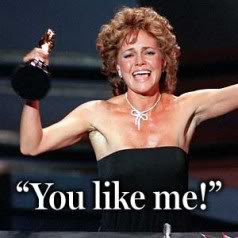
Sally-Field-You-Like-Me-238x238What is it with Sally Field and award show speeches?

Her dorky “you like me, you really like me” gushing from the Academy Awards Show 22 years ago, still ranks as one of the all-time-most-memorable Oscar speeches.

And at Sunday night’s Emmys, she did it again.

OK, so she could have used a better script. And sure, she got flustered, lost her place, and babbled her lines. But somehow Sally Field still managed to deliver the best momologue I’ve heard at an awards show since, well, her Best Actress win back in 1987.

Bleep the delivery, thanks to the Bleeping Fox network, her censored sentiment–“if the mothers ruled the world, there would be no g–damn wars in the first place”–certainly got my attention. There are surely more articulate ways to speak out against the Bleeping war or praise the nonviolent instincts of women, but that’s beside the point.

Thanks to the Bleeping Bleeps at Fox, Gidget–whom a number of web surfers apparently thought rode her way into the sunset 20 years ago–cowabunga-ed her way into a gigantic wave of media attention.

Instead of being just another Hollywood headliner, seizing her 15 forgettable seconds on the soap box, the Flying Nun’s momologue actually inspired some dialogue and debate about war, God, freedom of speech and censorship.

Who knew that a silly Bleeping awards show could end up being so thought provoking?

I have no problem–obviously–with someone using their minute in the spotlight to voice their own personal views.

Most people blow it. Either they thank a bunch of people that work for them and forget to thank their nearest and dearest, or they thank the Almighty and forget to thank the director who made them look so much better than they actually were.

At least Sally Field tried to do something constructive with her few moments in the spotlight.

Not surprisingly, some people had a field day mocking the idea that putting a woman in charge might actually lead to more peaceful solutions, using examples like Indira Gandhi, Golda Meir, and Margaret Thatcher as mothers who went to war.

I think that’s a load of Bleep.

Nothing makes you value human life more than giving birth to a 15-pound baby with a 21-inch-wide head–unless of course you do it without an epidural, in which case you’d happily start bombing Canada just to distract yourself.

In 1870, long before Hallmark even existed, Julia Ward Howe dreamed up Mother’s Day, intending it to be a Mother’s Day for Peace. After nursing the wounded during the American Civil War, she gave a Bleep of a momologue, declaring:

“Arise all women who have hearts, say firmly: Our sons shall not be taken from us to unlearn all that we have been able to teach them of charity, mercy and patience. We women of one country will be too tender of those of another country to allow our sons to be trained to injure theirs. In the name of womanhood and of humanity; take counsel with each other as the means whereby the great human family can live in peace.”

Peace is as patriotic as mom’s apple pie. And so is talking about whatever the Bleep you want to on award shows or anywhere else.

So here’s to bleeping Sally Field. I, for one, really do like her.

Tell us what you think about Sally’s speech, or Leslie’s column for that matter, by emailing email.

Originally appeared in the Santa Barbara Daily Sound on September 21, 2007.

Back to school blues

© Silviaantunes | Dreamstime Stock Photos & Stock Free Images

© Silviaantunes | Dreamstime Stock Photos & Stock Free Images

Slamming the snooze button delays the dreaded alarm clock bell from ringing for three heavenly minutes, then it’s back to reality. Recess is over and it’s time for school to start again.

I know a lot of parents are jumping for joy that summer is over and they can finally escape from their kids–I guarantee you the toasts will be flying at Starbuck’s come Monday morning–but I’m not quite ready to escape from my son. We had such a nice, laid back summer; I’m not ready for it to end.

Maybe after Labor Day. Isn’t that the official end of summer?

It seems ridiculous to be going back to school when the waves have been so perfect and I’ve finally mastered the fine art of carting towels, beach chairs, boogie boards, skim boards, sand toys, sunscreen, hats, clothing changes, reading material, snacks and small children from the parking lot to the beach in a single trip.

What kind of diabolical-powers-that-be traded my summer for extra weeks off at Christmas and Easter? I’m not one to point fingers and call them anti-Semitic, but that is not a fair trade, let me tell you.

I’m not ready to start worrying about bedtime and balanced meals again. I hate the sound of that evil alarm clock in the morning almost as much as I hate going to bed before 1 a.m. so that I won’t have to hear that frigging evil alarm clock.

And you know what I’m really not looking forward to? Homework. I hear third grade’s a lot harder than second, and that they really pile on the homework. And you have to use cursive writing. I’m really worried about that. My son suffers from something called “dysgraphia,” otherwise known as “bad handwriting,” which teachers really hate.

I’m also worried because Koss has another disorder called “wiggle wormitis“–he has a hard time sitting still. It’s pretty common in little boys. In fact, Koss’s teacher last year (who was maybe 12) had been diagnosed with “wiggle wormitis” too, so he was very understanding and let him stand up and wiggle while he read or wrote or drew or whatever he needed to do. Do they let you wiggle in third grade? I’m not so sure.

I’m a little bit worried about those third grade teachers. I hear they can be kind of intimidating. What if they don’t like us? What if we don’t get any of our friends in our class? What if they make us sit still and write in cursive? What if all the other kids make fun of me for being 43 in third grade?

PTA is worrying me too. I didn’t hear anything from them all summer, and then all of a sudden, this week, there were 347 emails and 52 phone calls related to PTA. Oops, make that 53 phone calls. Thank goodness for voicemail. How will I get any actual work done with so much volunteering to do?

Plus there are all those healthy lunches I need to find time to prepare. And the holiday gifts I want to get started on. And of course I’ve got to increase my workouts at the gym, but at the same time I’d really like to get started on that novel I keep wanting to have written. No wonder I’m so stressed. How am I ever going to get everything done?

Koss actually seems excited for school to start. Something about friends, yadda yadda. But what about me? Doesn’t he realize the pressure it’s putting on me?

Sigh. I still have time. It is still August, after all. No matter what the school says, MY summer doesn’t officially end till next month.

When Leslie’s not stressing about school, she can be found soaking up those last rays of summer at the beach, with her trusty laptop in tow. For surf and tide information email email . For more columns visit www.LeslieDinaberg.com.

Originally appeared in the Santa Barbara Daily Sound on August 24, 2007.

Treat Your Children Well

© Kornilovdream | Dreamstime Stock Photos & Stock Free Images

© Kornilovdream | Dreamstime Stock Photos & Stock Free Images

A Look at Some of the Nonprofits Serving Children

What could be a more universal cause than striving to give children a brighter tomorrow and a more fulfilling future? Literally hundreds of opportunities exist to give back to children in the community. Unfortunately, we can’t include them all. Here’s a look at just a few of the many organizations working to on behalf of children’s issues and the solutions to their problems in the areas of at-risk youth; education; arts; and medical, emotional and physical health and safety.

Family Service Agency is Santa Barbara County’s first and oldest non-profit human service agency, offering several programs, including Healthy Start, which connects at-risk families with existing community resources; the Family Build Project, which addresses the needs of families living in government subsidized housing; and a variety of counseling and child guidance programs.

Another veteran organization offering a variety of services to at-risk children and others is the United Boys and Girls Clubs. It has been working with young people in town since 1945, and now has four clubhouses that offer day care, summer camps, and a plethora of programs including sports, art, academics and leadership development. While the organization once emphasized servicing children from disadvantaged backgrounds, “today we’re open to everyone, because all children are at risk,” says Executive Director Sal Rodriguez.

Also serving both at-risk youth and the wider community is the Police Activity League (PAL), which offers opportunities for instruction in art, digital editing, hip hop dance, martial arts, and basketball, as well as a tutoring center and a teen youth leadership council that are open to all children. PAL also has a Campership Alliance Program that collaborates with a number of organizations–including the City of Santa Barbara Parks & Recreation Department, United Boys & Girls Clubs, Santa Barbara Museum of Natural History, Santa Barbara YMCA, Santa Barbara Zoo, Refugio Junior Lifeguard Program, Elings Park Camps and Money Camp for Kids –to provide summer camp scholarships.

Endowment for Youth Committee is another broad-reaching organization, which provides a wide variety of educational, social, cultural and recreational achievement programs for children, with a special emphasis on assisting African American, Native American and Latino youth.

Girls Inc. also offers an expansive array of programs, but with an all-girl atmosphere that emphasizes learning to resist gender stereotypes and encouraging girls to take risks, acquire skills, gain confidence, become self-reliant, and practice leadership. Girls are also front and center for Affirm, another program that works only with girls, in this case focusing on empowerment, education, and identity for teenagers that are in the juvenile correction system.

Kids in trouble are also the focus for Noah’s Anchorage, operated by the YMCA. The group provides a Youth Crisis Shelter, which is the only program in Santa Barbara County that offers year-round 24-hour access to counseling, shelter, referrals, food and clothing for runaways, homeless youth and youth in crisis.

The Big Brothers Big Sisters program, run by Family Service Agency, also targets at risk youth, matching them up with adult mentors who provide positive role models and a one-on-one relationship. Another mentorship-based program is the Wilderness Youth Project, which offers after school, weekend and summer programs that utilize “nature-based mentoring,” where being out in nature facilitates crucial life lessons and connection with the natural world.

Working on the health and wellness front is CALM (Child Abuse Listening and Mediation), which acts to prevent child abuse from occurring and offers professional treatment for the entire family when abuse does occur. CALM works closely with police, the district attorney, child protective services and medical personnel to investigate alleged abuse in a supportive and child-friendly fashion.

The Teddy Bear Cancer Foundation is another organization that works with entire families, endeavoring to ensure that children with cancer receive the undivided comfort of their parents during the treatment and recovery process. Teddy Bear provides financial aid for rent, mortgage, utilities, and car payments, as well as other supportive services, thereby allowing families to focus on their children. “Teddy Bear is unique in that it adapts to each family’s distinct needs. We don’t provide just one service–we do whatever’s needed to help,” said Founder/Executive Director Nikki Katz.

On the education front, the Children’s Project is focused on developing an innovative boarding school and college preparatory academy for foster children and selected youth with mental health or delinquency issues. “People often ask me, ‘Why foster children? So many kids need help.’ While that is true, there is one big difference that separates foster youth from others in need. That is that we not only have a moral obligation to help them…we have a legal obligation. …The moment the judge removes the child from a parent’s care, WE become the parents to that child. We, as the community, step into that role. And I am convinced we can do a better job,” says Founder and CEO Wendy Read.

Another education nonprofit, the Computers for Families program, seeks to eliminate the negative consequences of the Digital Divide by providing students from low-income families with refurbished computers, Internet access and training. Thanks to this innovative program, Santa Barbara will be the first community in the United States to ensure that every child from a low-income family, beginning in the fourth grade, has a computer with Internet access.

For more than 43 years, the Scholarship Foundation of Santa Barbara has helped local students pay for their higher education, giving out more than $7 million in student aid for the last school year.

Emphasizing the arts is Art Walk for Kids, an outreach program that focuses on benefiting special needs, developmentally disabled, at risk, terminally ill youth and adults in their positive environments through a specialized curriculum of art and vocational education. Art Walk projects have benefited a diverse group of nonprofits, including the United Nations, Summit for Danny, United Way, the Red Cross, Sarah House, the Santa Barbara Symphony, the Lobero Theatre, I Madonnari, the Multi-Cultural Dance and Music Festival, Vieja Valley School, Santa Barbara County Juvenile Hall, El Puente School, and Hillside House, among others. Its latest collaboration is with the Patricia Henley Foundation, a new nonprofit that offers unique, free opportunities for students to learn all aspects of theatre arts production and develop their creative talents.

The Family Therapy Institute’s Academy of Healing Arts for Teens (AHA!) also incorporates creative expression into its programs, which emphasize the development of character, imagination, emotional intelligence, and social conscience in teenagers, and helps them learn to set goals, stop bullying and hatred, support their peers, and serve their community.

These excellent organizations are but a small percentage of all of the nonprofits serving children in Santa Barbara. For a more comprehensive list visit the Family Service Agency referral service at www.211sbcounty.org/.

Originally published in Santa Barbara Magazine

Raise Your Hand for Right Hand Rings

© Evaletova | Dreamstime Stock Photos & Stock Free Images

© Evaletova | Dreamstime Stock Photos & Stock Free Images

Your left hand says “we,” your right hand says “me,” according to a recent ad campaign sponsored by the Diamond Trading Company, the world’s leading diamond sales and marketing company. The “women of the world raise your right hand” campaign encourages modern women to buy themselves the diamonds they deserve. According to local jewelers, many of them already are.

“Absolutely, right hand rings are certainly something a lot of women are looking at,” said Scott Harwin, sales associate for Bryant and Sons. “That left hand is kind of reserved for the engagement ring, so that right hand is open.”

“People buy right hand rings all the time for different reasons,” said Laura Givertz Gibbings, owner of Fibula Daniel Gibbings Jewelry. Gibbings said that about 80 percent of her customers are women buying for themselves, while Harwin estimated his sales to be about evenly split between gifts and purchases for self.

“Typically women will buy more of wider band to compliment what they are buying (on the left hand). People tend to put more color on the right hand as well,” said Gibbings.

Her customers do collect rings, “a lot of them,” along with necklaces, bracelets, and ensembles. “Generally they want to get a whole set and they tend to buy in color coordinates.” Emeralds and pink sapphires are very popular, as are golden colors.

Women are buying just about everything, from watches to diamond stud sets to three stone pendants, said Bryant.

In addition to the ad campaign, celebrities are also driving the right hand ring craze. Cynthia Nixon, Debra Messing, Gwen Stefani, Jennifer Garner, Joan Rivers, Maggie Gyllenhaal, Mary Louise Parker, and Sarah Jessica Parker sported right hand bling at the Golden Globes, while music divas Beyonce, Queen Latifah, Madonna, Ashanti, Sharon Osbourne, Patti LaBelle, Faith Hill and Mary J. Blige were among those “raising their right hand” with diamonds at the Grammy’s.

Jewelry trends follow the award shows, according to Gibbings. “Chandelier earrings were very popular (after last year’s Academy Awards show) and Indian jewelry.” She expects this weekend’s Oscars to set some new trends.

“Platinum is not as strong right now. Besides the fact that it’s gotten incredibly expensive, things are just swinging toward a little bit more dramatic statements in jewelry. … And I think people are tending to be more sentimental about their jewelry purchases,” Gibbings said.

Women of the world, raise your right hand.

Why a right hand ring? You’ve earned it!

Your Left Hand Feeds the Family

Your Right Hand Takes the Cake

Your Left Hand Knows the Limits

Your Right Hand Knows no Boundaries

Your Left Hand Holds the Keys

Your Right Hand Drives the Car

Your Left Hand Weeds the Garden

Your Right Hand Picks the Flowers

Treat yourself… you’ve earned it!
– From a generousgems.com advertisement for right hand rings

Originally published in South Coast Beacon

Admission Impossible

© Icyimage | Dreamstime Stock Photos & Stock Free Images

© Icyimage | Dreamstime Stock Photos & Stock Free Images

Part Deux

It used to be that once you got accepted to college you had that last semester or two to relax, slack off a bit, and finally enjoy yourself without all that pressure to get into the school of your choice.

Ah, the good old days. I remember Senioritis running so rampant at my high school that even the teachers stopped showing up those last few weeks. My Biology lab was empty, except for a note on the chalkboard that read: “Gone to Maui. Will the last person in class please turn out the lights?”

I still use some of those stolen beakers for mixing my more exotic cocktails.

Ah, those were the days.

Apparently the good OLD days. There is no more slack for slackers, the Los Angeles Times reported this week. As if conquering Admission Impossible weren’t enough, now students have to remain focused–or face the consequences.

The article said that starting this month, some universities are revoking admission offers to students whose grades were good enough to gain acceptance when they applied, but whose final exams and transcripts took a fourth quarter dive.

For example, my alma mater, UCLA, has begun to send out letters informing some students that their academic record no longer meets the standards for admission.

Oops! Bummer.

I guess these days college admission is not a done deal until those final grades are in. Talk about a harsh cure for Senioritis. When too much partying couples with too little studying–a.k.a. Senioritis–it can actually put your college admission in remission.

Of course, Senioritis has infected the college-bound since, oh, the beginning of time. But with a high-stress admissions process that now begins in kindergarten–at age 7, Koss is already behind, having yet to master a third language or a fifth instrument–today’s seniors may be more tempted than earlier ones to let up once they get in.

And of course colleges have always threatened kids with rescinding their admissions, telling them college acceptance is conditional, they have to keep up with their studies, blah, blah, blah. But until now, it was just an idle threat.

Slackers beware: after hundreds of years of “conditional acceptance,” schools are finally making good on their threats. They really are. In addition to reading the Los Angeles Times article, in order to verify the authenticity I did extensive research on this (asked my dad), reviewed my files (back issues of Oprah Magazine), and consulted my advisors (a small boy named Koss and a turquoise fish named Beta).

It’s a new era. There’ll be no more slacking during your senior year of high school. You may think you’re done. You may have gotten a thick envelope with a relentlessly perky congratulatory letter from the admissions office. Your parents may have even sent in a nonrefundable deposit.

Worse yet, you may have excitedly told strangers on the street where you’re going to college. (How embarrassing!) You may even already be wearing your collegiate colors with pride, having bought out the student store logo wear department.

You’re in. They said you were in. You have the letter encased in an acid free scrapbook to prove it. But remember, you’re not quite done.

It’s the end of an era–no more slack for seniors. High school won’t be the same anymore.

Of course, college isn’t exactly the same either. At an average of more than $20,000 per year for tuition, room and board, it’s enough to make me want to stay poor. I just hope that by the time Koss graduates high school there are scholarships for students who excel in computer games and doing math while twitching. Otherwise I’ll have to win the lottery, sell a kidney–or encourage my son to slack off during his senior year.

Email email if you know anyone who’s had their college admission invitation rescinded. For more of Leslie’s columns visit www.LeslieDinaberg.com.
Originally appeared in the Santa Barbara Daily Sound on June 29, 2007

JON AND LILLIAN LOVELACE

Lillian & Jon Lovelace, courtesy Santa Barbara Magazine

Lillian & Jon Lovelace, courtesy Santa Barbara Magazine

SEASONED PHILANTHROPISTS

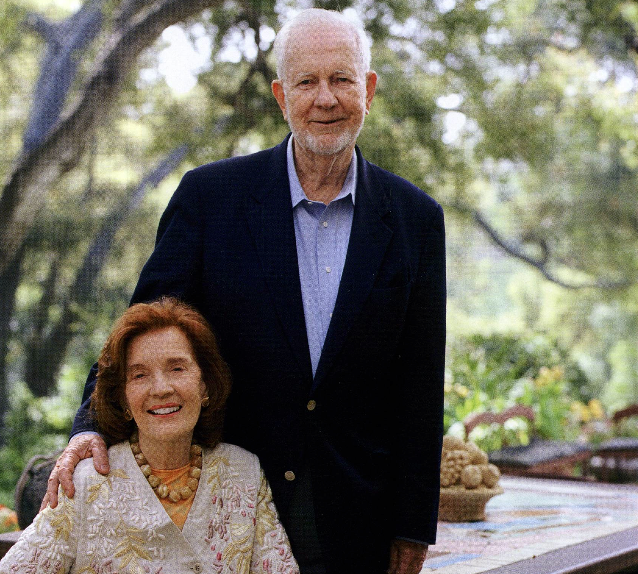
You won’t find their names plastered on buildings and placards around town, yet, in their quiet, generous way, Jon and Lillian Lovelace give graciously of their time, intellect and millions to a wide range of worthy organizations.

“We’re a little bit camera shy, publicity shy,” Lillian, explains.

Click here to see the story in Santa Barbara Magazine.

“A lot of people seem to do it [donate] to get their names in the paper. We’d like to be helpful without getting our names in the paper,” says Jon.

The arts rank high among their interests. Lillian, whose eclectic collection of modern art and Pacific Island artifacts decorate their Montecito home, was on the board of the Santa Barbara Museum of Art for 20 years and is now a sustaining trustee. In addition to fine art, the Lovelace’s share a love of music, dance and theatre and spend about a third of their time traveling around the world combining philanthropic and cultural endeavors.

Locally they are strong supporters of the Santa Barbara Dance Theatre, Camerata Pacifica, Music Academy of the West, UCSB Arts and Lectures, and the State Street Ballet, as well as having served on the boards of the Museum of Contemporary Art (MOCA) and the Getty Museum in Los Angeles, where Jon served as chairman of the board during the construction of the Getty Center.

“If we can be helpful, when something strikes Lillian’s fancy or something that she’s connected with, as with me, we get involved with that,” says Jon, who is also very supportive of wilderness preservation groups like the Nature Conservancy, the Sierra Club, and the Yosemite Fund.

Jon, Lillian and their four grown children (Jim, Jeff, Rob and Carey) were avid hikers and campers when the kids were young. “The outdoors has always been an interest,” says Jon, who ranked number 354 on Forbes list of the 400 richest Americans and recently retired from the Los Angeles-based Capital Group, one the world’s largest mutual fund management companies. Jim and Rob now work for the Capital Group, which was founded by their grandfather, Jonathan Bell Lovelace, in 1931.

The Lovelace children are also involved in giving back to the community, through organizations such as California Institute of the Arts and Idyllwild Arts Foundation–it’s a tradition of generosity that goes back generations. “My family was very much involved in social action and caring about other people and giving back to the community. They instilled that that was important. Jon’s father was involved with philanthropy and hospitals,” says Lillian.

The Lovelace’s have carried on the legacy of supporting healthcare by donating generously to medical institutes around the world, including Sansum Clinic and Phoenix of Santa Barbara, which provides care for mentally ill adults.

“I think that mental health is an area that is vastly ignored, it’s kind of a scary thing and not something people like to talk about. They used to not talk about cancer but now anybody can say cancer any time they want to but there’s still some avoidance of talking about mental health problems and I think that it needs all the support it can get,” explains Lillian, who majored in psychology at Antioch University, where she is now a sustaining trustee.

While many of the Lovelace’s philanthropic efforts have started with this type of a personal connection, there really is no typical scenario for their involvement. “It depends very much on the situation–there’s no single type of organization or way we try to help,” says Jon.

The Lovelaces–they married 56 years ago and used to celebrate their anniversaries in Santa Barbara until they moved here from Whittier in 1972 after their son Jim developed an allergy to the smog–share a strong interest in travel and the arts, often meeting up with their children to catch a performance or an exhibit somewhere in the world. They like films as well, and were investors in their friend Garrison Kellior’s 2006 movie, A Prairie Home Companion, starring Meryl Streep.

Friends like Kellior are an important part of the Lovelace’s lives.

” We mentioned family but we have so many wonderful friends that we’ve met over the years,” says Lillian.

“Throughout the world, actually,” Jon says.

“We’re recluses that love people,” concludes Lillian. Or perhaps people who love life.

Originally published in Santa Barbara Magazine

A Master at Mothering

© Sasanka7 | Dreamstime Stock Photos & Stock Free Images

© Sasanka7 | Dreamstime Stock Photos & Stock Free Images

Mr. Santa Barbara Remembers Jane Crandell

Though she’s been gone for more than 40 years, the memory of his mother still brings a twinkle to the eye of 84-year-old Larry Crandell.

“My best role was not as a father, not as a husband, but as a son. Of all the things I’ve done, I think I did that better from the time I was 15 until my mother died when I was 40-something,” he says, as he recalls his childhood with Jane Crandell, who, for the most part, single-handedly raised Larry and his younger brothers Sam and Marty.

Life in Newark, N.J. was tough for Jane, who provided for her three growing boys by working as a shoe clerk for $19 a week. She had to take two buses to get to her job, but according to Larry, she never complained.

“My father was an alcoholic who ended up in a veterans hospital,” says Larry, explaining that his father lived away from the family from the time he was six years old. “My mother was a third grade dropout.”

The family got by with help from government relief (the precursor to welfare) and Jane’s six days a week selling shoes. “The phrase, living hand to mouth doesn’t do it justice. She literally waited on, took shoes off and put shoes on people all day long,” says Larry.

But even though money was tight, ” I don’t remember my brothers or I ever feeling sorry for ourselves,” he says.

This is probably in part because Jane was so completely devoted to their happiness. “She used to be asked questions like, ‘you know you’re a reasonably attractive woman, why didn’t you date?’ And she always had the same answer: I found everything I could possibly want in life with you three boys,” Larry says.

Despite what was obviously a hard knock life, Jane saw her sons through rose-colored glasses. “She spoiled the daylights out of us. She saw us through the gauze of affection and love and in those days single mothers didn’t keep families together. I’m sure economic times were the cause of families breaking up,” says Larry.

“She had an automatic up-grader, so that whatever we did was that much better. The freedom I gained started with that she thought everything each of us did was perfect. That’s what she said and I never heard artifice from her,” he says. “Her most recurring phrase … ‘not because he’s my son,’ prefaced a million compliments that my mother made about one of us. ‘Not because he’s my son,’ that’s the way I remember her.”

Larry credits his mother for much of his self-esteem. “I really am surprised when people don’t like me–and that I got from her. I know that.”

It was also his mother who encouraged and helped develop Larry’s quick wit, which he regularly brings to Santa Barbara’s stages as master of ceremonies or auctioneer for more than 50 local charity events a year, tirelessly raising money for causes ranging from the YMCA, the Boys & Girls Clubs, Hospice, Hillside House, the Santa Barbara Athletic Round Table and just about every other nonprofit in town.

“We lived in a fourth story walkup with the tenements and I have this vivid recollection of her trudging in with two bundles of groceries and I asked the same joke six days a week. ‘Is dinner ready?’ and she would roar with laughter, every single time,” he says.

The Crandell’s were an affectionate family, thanks in large part to the example set by Jane. “When we went to the candy store to lavish three pennies on candy, it became de rigueur to kiss her goodbye. The candy store was two doors down,” says Larry.

Larry says the only resolution he’s ever kept, since age 15, was inspired by his mother. “I decided that I would never show impatience. … Somehow I had a picture of a woman who worked 10 hours a day, six days a week and carried a sick husband and three little kids on her back … Yet, she was so empathetic and so desirous of us being happy, even for the moment. And so that as I reached adulthood, I vowed not to show impatience.”

In many ways, Larry celebrates his mother’s life every day, but her birthday, October 19, has a special significance. Each year on that date, he tries to spend an or so by himself, just thinking about her and all that she gave to him. “She would have been 111 this past October, but she only lived to be 67,” he says.

“I’m not doing it intentionally, I don’t think, but when I think of her, I smile. … I think the best part of me is like her.”

Originally published in Coastal Woman