A walk with Art Walk’s Founder Kerrie-Kilpatrick Weinberg

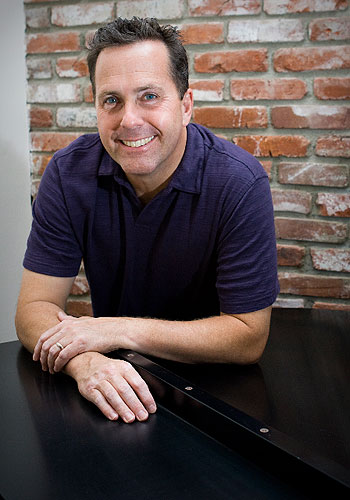
Kerrie Kilpatrick-Weinberg, founder of Artwalk for Kids/Adults (courtesy photo)

Kerrie Kilpatrick-Weinberg, found of Artwalk for Kids/Adults (courtesy photo)

“Through positive self-expression the doors of opportunity will open,” is the mission statement for the nonprofit Art Walk for Kids/Adults. It could also be the motto for the life of Art Walk’s founder, Kerrie Kilpatrick-Weinberg.

“Art Walk has opened so many doors for me in Santa Barbara, friendships, the areas I work. It’s amazing how things flow into one another when you’re on that right path,” says Kilpatrick-Weinberg, who trained as a set designer in England before developing Art Walk in Santa Barbara in 2000. The program–which is suitable for all but designed for at risk and special needs students–uses the creation of art projects to teach students other academic skills like math, problem solving, reading and understanding directions.

Working around the schedules of her two sons, Ben (now 15) and Sam (now 10), Kilpatrick-Weinberg–who was then a single mother and met her husband Henry Weinberg through Art Walk–began the program as an informal art camp in her backyard. From there she segued into working with the home schooling community, then Devereux’s developmentally disabled students.

She credits her brother Nigel, who was autistic, for inspiring her work. “The hyperactive, the kids with ADHD, the kids who some people call special needs, I just call creative,” she says. “I’ve always done art with any kid that has a learning difference. That seems to be my area, my gift. I don’t find it challenging, I find it really my normal comfort zone because of Nigel.”

With a full art program soon in place at Devereux, Kilpatrick-Weinberg set her sights on expanding to the Los Prietos Boys Camp, a residential correctional/treatment facility for teens.

With the support of the County Arts Commission and the County Education Office, and some funding from the Fund for Santa Barbara, Kilpatrick-Weinberg began her journey into what she calls “the golden triangle,” of Los Prietos Boys Camp, Juvenile Hall and El Puente School, which serves students who have been expelled or imprisoned and are transitioning back to school.

“I would develop this relationship with a kid in Juvenile Hall, then I would see them at Los Prietos for six months, then if things went well they went back to school and they went back to El Puente, so I would have another relationship with them,” says Kilpatrick-Weinberg.

“Some of those kids I knew two years, from beginning to end. It was great to see how well they were doing because a lot of them had given up on themselves, and I’m not saying it was just Art Walk, but the whole process … was immensely life changing for them.”

That continuity of relationships is important. “A lot of the people we work with don’t like too much change,” she says. When Devereux announced closure of its residential program, Kilpatrick-Weinberg began Chagall House so that her autistic adult students could continue to create art. They meet every Wednesday night, have showings of their work around town, and get together for dinner regularly at the Weinberg house, where they catch up socially and discuss and critique their art. Henry, Ben and Sam all take part.

“These are my friends, they’re not just people I create with. They’ve become part of our family,” says Kilpatrick-Weinberg.

Another important part of the Art Walk family is Brandon Sonntag, an artist and teacher who has been collaborating with Kilpatrick-Weinberg since 2001. “It’s just the two of us. There’s something very nice about having two people who get along, who know how to bring out the best in our clients,” she says.

In addition groups already mentioned Art Walk collaborates with a host of other organizations, including local elementary schools, Hillside House, Patricia Henley Foundation, United Nations, Summit for Danny, United Way, Red Cross, Cancer Hope Foundation, Camp Reach for the Stars, Sarah House, Santa Barbara Symphony, Lobero Theatre, and I Madonnari, among others.

One would think her volunteer plate was overflowing from Art Walk, but Kilpatrick-Weinberg still finds time to help at her sons’ schools, and serve on the board of Sarah House, where she and Henry have hosted an annual Oscar Party benefit for the past three years. For the second year, she is also chairing Sarah House’s annual holiday fundraiser–“Light Up the Night: The Artizan’s Ball”–on December 8 at the Santa Barbara Women’s Club.

But Art Walk has opened the door to so many other things for Kilpatrick-Weinberg–including Sarah House, where she first became involved by creating an Art Walk art tree that was auctioned for “Light Up the Night”– that it’s Art Walk that’s closest to her heart.

“Art Walk is a healing program in many ways, it isn’t just about at risk or special needs; it’s about anybody who wants to create. It’s art walk for kids and adults. What it probably should be is art walk for everyone because that’s what it is,” she says.

==

For more information about Art Walk for Kids/Adults visit http://www.artwalkforkids.org.
Originally published in Coastal Woman, 2007

A passion for philanthropy

New consulting ventures offer nonprofit groups much more than the sum of their parts

BY LESLIE DINABERG

The fabric of Santa Barbara’s intricately embroidered nonprofit community has some new embellishments in its design, as two consulting groups have recently announced their formations: The Crandell Company and Resource Innovators. Continue reading

Noozhawk Talks: Leslie Dinaberg Sits Down With Suzanne Farwell

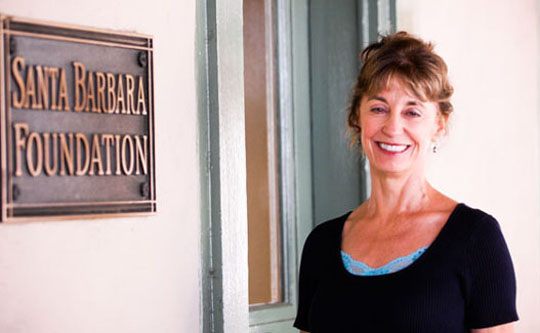
Suzanne Farwell, LaraCooper / Noozhawk photo

Suzanne Farwell, LaraCooper / Noozhawk photo

As Director of Communications, Suzanne Farwell is often the voice for the Santa Barbara Foundation, connecting all of us with information about the good work the foundation is doing in the community. Farwell connects with Leslie Dinaberg
to reflect on her work and her life, as she prepares to retire later this month.

Leslie Dinaberg: What will you miss the most about your job at the Santa Barbara
Foundation?

Suzanne Farwell: The people I work with. One of the reasons I like working there is because I
work with people who are passionate about what they do and helping people.

…The other thing I really like about my job is it has so many facets where I’m
gathering information, so I’m learning about many different things every day. …
I’m learning about different philanthropic groups that pop up through us. It’s the
whole canvas of interesting wonderful things that are positive. …

LD: That’s great. In many ways I think Santa Barbara Foundation seems like an
ideal nonprofit job in that you would never get bored because you’re dealing with
so many different types of things.

SF: And now there’s the added component of a new boss who is coming in (Ron
Gallo replaced Chuck Slosser as CEO this year) with fresh ideas and that’s also
very exciting.

LD: So what made you decide to retire now?

SF: Well a couple of things. The major reason is my daughter has a little boy who
is 14 months old and he is a sweetheart and I don’t get to see him much. And my
son is getting married and in every family there needs to be someone at the
center who doesn’t necessarily actually need to do anything but who is that
center and there’s much I can’t do with this job. … I hope to do some projects for
the foundation that I am intensely interested in, and I’m still young enough to be
able to open my mind to lots of other things and who knows. I’m trying to have a
fertile ground and so as things pop up they take root. But I can’t open it up
without cutting back on the work. But it seems like a good time. I’m also looking
forward to spending more time with my husband at home.

LD: I would imagine that’s its very demanding work.

SF: It is, but that’s what good about it is I use every brain cell.

LD: I know you worked on a lot of great programs while you were at the Santa
Barbara Foundation, but are there any that are particularly near and dear to your
heart?

SF: The first year I was there we were about to celebrate the Foundation’s 75th
anniversary. So there was a book, a history book for the anniversary project to
coordinate and then there was a gala performing arts presentation at the Lobero.
That was fantastic. Then there was a symposium about the future of
philanthropy. That was all in one year. That was really something. …

I think one of my favorites was a book about the blind doctor, Dr. Pearlman. … A
little old lady comes to us and she wants to leave us a million dollars part of the
deal is that we publish her manuscript. Well, you can imagine a little old lady’s
manuscript. What will we do with that? Well, you read it and it turned out to be a
really compelling human story so we shepherded that project, we got a local
publisher; the whole thing was really heartwarming. And it’s always nice to have
tangible evidence of what you’ve done because most of mine is ephemeral.

LD: I’ve seen that project and it’s very, very cool.

SF: Yes, and the idea that we would be following through on the donor’s wishes
which is always very important. And it’s a book that opens people’s eyes to what
it is like to be blind as a society, as a world society we could all that to
understand what it’s like to be in someone else’s shoes.

… It’s fascinating. I get something out of every single project. I know the
foundation’s history better than anybody.

LD: Do you have any trips planned or any immediate plans as soon as you’re
done?

SF: Everybody asks me that. … My husband and I have traveled a lot and I just
plan to stay home for a while and just be there. I live in a wonderful place. I want
to just sit on the porch, watch the birds and just still the mind a little bit because
I’m always thinking about philanthropy and this and that and it’s going to take a
while for that to go away because I’m always going at 60 miles an hour.

LD: What else do you do like to do with your spare time?

SF: Well I love to read. I’ve also been a professional dancer for 30 years and I
still do it two or three times a month. I’ve been with Chef Karim since he
started.

LD: I didn’t know that.

SF: So that’s in my blood. And I love to move, so it would be fun to explore
different forms of dance. I don’t know it’s mainly a stilling of the mind to allow
other things to come up. It sounds like I’m not going to do anything.

LD: You need a break, that’s what it sounds like to me.

SF: So I’m opening doors and letting things in.

LD: How did you get started with belly dancing?

SF: My husband and I were living at Married Student Housing at UCSB because
we were both graduate students. I was getting my masters in French and he was
getting a PhD in counseling psych and a woman moved in who was a belly
dancer, new to town. He was dabbling in photography at the time, she needed
photos, so they made a deal. He said I’ll take photos of you and why don’t you
give Suzanne some lessons. I was very annoyed. I was not consulted. I was
almost insulted.

So I went and I took a couple of lessons and said this is really weird. But then my
teacher put on a show with three other dancers and I went and I was hit in the
head by a bat. That proverbial light bulb was like, ah, that’s what I want. Yes. I
want to be that person on the stage. Because it’s so alluring and beautiful and
that was it I set on a path and my poor husband never imagined that this would
happen. And it became overwhelming. It changed my life because I learned to
relate to people in a different way. I was very British at the time, very shy and I
learned to handle myself. I did Belly Grams for years where I would go to offices,
homes, wherever and do a ten minute dance and congratulate the birthday
person and whatever it was and so I was in mansions in Montecito, barbecues on
Milpas, offices all over, it was fantastic, so I got a look at America that I never
would have had, and it was for me about Americans. A great education… It’s
added a spark to my life.

LD: Keeps you in shape too.

SF: It does. And like anybody else I’ve had experiences and I’ve taken from them
and learned and it’s made me who I am today, and I hope to have many more of
them…

LD: How did you go from getting your masters in French and becoming a belly
dancer to working in the nonprofit world?

SF: I was a stay at home mom and I took that very seriously. I spent a lot of time
with my kids educating them in every way that I could. When our daughter, the
younger of the two, went to high school, my husband said, “well you know, this is
a good time to get a job.” I was panicked because I had not ever really, really had
a job.

I’d worked as a caterer for many years and I worked at Jane Fonda’s ranch. … I
applied for a job at the museum and they hired me and then I thought to myself
as I sat at the desk the first day, what am I doing. This could be the shortest job
in history. Then I calmed down and I just applied the idea that what would I want
to know being Jill Six Pack on the street, because I didn’t know that much about
the museum and I went on from there and it all worked out very nicely.

Vital Stats: Suzanne Farwell

Born: January 30, in London, England to a French mother and a British
father

Family: Husband Larry Farwell; two grown children, Nick, who lives in Seattle,
and Lara, who lives in Palo Alto; and a grandson, Bennett, 14 months.

Professional Accomplishments: Masters Degree in French; Chef/Caterer at Jane
Fonda’s Ranch; Worked in communications for Santa Barbara Museum of
Natural History; Voiceover Artist, now voices the calendar on KDB radio station;
Professional Belly Dancer; Director of Communications for the Santa Barbara
Foundation.

Best Book You’ve Read Recently: Kate Wilhelm’s “Barbara Holloway” series of
mysteries and Orson Scott Card’s “Ender’s Game” series.

Little-Known Fact: “I think I’ve exposed all of the little known facts. The dancing, I
don’t bring that out that much. They are really two separate things. When they
intersect it’s interesting, but it’s not the first thing out of my mouth.”

Originally published in Noozhawk on June 7, 2009. To read it there click here.

Labor of love

SBMA docents often young students’ first exposure to art

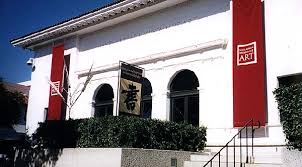
Santa Barbara Museum of Art

Santa Barbara Museum of Art

“The most important thing about learning to look at art is that what you feel about it matters. Your opinion is valid. There is no right answer,” is what Santa Barbara Museum of Art (SBMA) Docent Pat Andersons tells elementary school students before she brings them in for tours.

The very first visitors on SBMA’s opening day in 1941 were schoolchildren. Today the Museum serves about 30,000 children per year through its education program, said Spokeswoman Martha Donelan.

Much of the educational programming is carried out by docents, who collectively volunteer approximately 12,000 hours per year, said Andersons, president of the 79-member group, which includes artists, teachers, a married couple who met through the program (Candice Taylor and Paul McClung) and even a retired rocket scientist (Cliff Hauenstein). Docents undergo nine months of rigorous training, as well as ongoing education. Unlike many museums, which use scripted tours, “One of the things that’s so different about our program is that we do all our own research … we select the pieces … it’s a really personal thing.”

Most docents lead tours for both children and adults, but it’s clearly the kids who’ve captured Andersons’ heart. One of the things that fascinated me when I started touring kids is that “a lot of children have never been to a museum … so the concept of original art … makes them almost giddy,” she said.

Prior to the elementary school field trips — funded entirely by SBMA, including the buses — docents visit the school to give a preparatory talk. “(The school visit) is actually one of the most important aspects of the program because not only does it give the children something to look forward to and get them excited about the program, but they feel more comfortable coming here if they know what to expect,” said Andersons.

“… We have wonderful exhibitions and an outstanding permanent collection, but the education program, and the docent programs in particular, are the ways that we reach out to people and let them know what we have and why it’s interesting and what’s cool about it,” said Donelan.

After children tour the museum, they are given souvenir postcards and free tickets to bring their families back to the Museum. Teachers are also given posters and hands-on activities do back in the classroom. The program — which serves schools from as far away as Lompoc and Hueneme at no cost — is curriculum-based, designed to compliment what teachers are doing in the classroom from K-12.

With art programs in the schools being cut, sometimes we’re it, said Andersons. Admittedly, being a docent is demanding, but infinitely rewarding, said Andersons. “We all think we get back much more than we give,” she said.

For additional information about the docent-training program, call Sue Skenderian at 684.6384.

Originally published in South Coast Beacon

The gift of charity

anankkml, freedigitalphotos.net

anankkml, freedigitalphotos.net

It’s hard to avoid the symptoms. “I want that.” “Mommy/Daddy/Grandma, buy me this and this and this…”

Here are some ways to help prevent your child from coming down with an annual case of “the gimmes,” and maybe even provide a little bit of instruction about the true spirit of the holiday season.

Start in your coat closets. Pull out all the old coats your children have outgrown or you don’t wear anymore and take them to Casa Esperanza (816 Cacique St., 884.8481), Transition House (425 E. Cota St., 966.9668) or the Santa Barbara Rescue Mission (535 E. Yanonoli St., 966.1316).

Or better yet, get your friends in on the act and host a coat party. Have guests bring coats that are used but still in good condition. Put younger kids to work cleaning out pockets and using masking tape to mark areas that need to be mended or buttons that are missing. Help older kids sew buttons and do simple mending. Other kids can decide which coats might need dry cleaning and which are ready to go. It’ll be a celebration sure to give everyone a warm feeling.

Another variation of this is to have a food party. Ask your guests for canned food and have children help pack it up for the FoodBank of Santa Barbara County (4554 Hollister Ave., 967.5741). You also can host toy or book parties along the same lines.

Sponsor a needy child or family. Transition House has more than 130 children to be “adopted” this Christmas, said volunteer coordinator Xochitl Ortiz. Interested sponsors can call her directly at 966.9668 x115 to receive a wish list from a child or visit the shelter at 425 E. Cota St. and pick someone to sponsor from the “Giving Tree,” where ornaments list a child’s name, age, and wish for something he or she would like for the holidays.

“We can definitely use all the Secret Santas that we can get,” Ortiz said. “We have almost twice as many people as we did last year or the year before.”

For those unable to make two trips to Transition House and want to just buy a toy, Ortiz said popular requests this year are Bionicles, Hot Wheels, My Little Pony, Video Now Players and Cabbage Patch kids. Wrapping paper, tape and ribbon are also needed.

You can also sponsor an adult, “by maybe donating a gift card to like Macy’s so that they can get work clothes after the holiday sale,” said Ortiz. “We’re hoping to get everything in by Dec. 20, only because if someone doesn’t get adopted, it gives staff enough time to go out and shop for that family or that individual.”

The Salvation Army (4849 Hollister Ave., 964.3230 x13) also has a similar program, with about 120 more families waiting to be “adopted” for Christmas. Working from a “wish list,” sponsors buy each child in the family a new, wrapped gift, one clothing item for each member of the family and a food or grocery voucher for Christmas dinner.

“You can even request a certain age group of children and we’ll try and match it as closely as possible,” said Lt. Stacy Cross, who asked that all items be brought to the Salvation Army by Dec. 17. There are also “Angel Trees” (similar to the “Giving Trees” described above) at most of the Santa Barbara Bank & Trust branches, La Cumbre Plaza and toy drives at seven of the local Longs Drugs locations.

Another way to give to the Salvation Army is making cash donations to bell ringers. Young children enjoy putting coins in the kettle and it’s a good chance to explain to them that the money goes to help people who are less fortunate.

Laurie Jewell Evans suggested this is also a good opportunity to teach children about budgets. Decide how much money you will donate this year, then put that money into an envelope in small bills and coins and keep it in your purse.

“Then, every time my daughter and I pass a bell-ringer, she can take a coin or bill from the envelope and donate it, until all the money is gone,” she said.

Another way to donate your spare change is through San Marcos High’s annual Penny Drive to benefit Unity Shoppe. Canisters are located at most of the local schools. You can also drop off your dollars and cents at the South Coast Beacon, 15 W. Figueroa St.

Sometimes all it takes is just a reminder of just how fortunate we are to put the holidays into perspective for all of us. Ortiz shared this story from Transition House.

“It’s not an over the top Christmas … when it’s a family as a unit that’s homeless, it can become quite a hard time for them to have to spend at a shelter. The parents get depressed because they feel like they’ve failed. The kids feel discouraged because they have to go back to school and tell their friends what they got for Christmas and they’re worried they might not get anything. And a lot of them don’t tell their friends they are staying at a shelter.

“It’s a really tough time for them, so we try to alleviate that … we surprise them on Christmas morning with all of the gifts. … We can’t do it without the help from the community … as soon as they find out what we need, everyone’s so wonderful as far as being able to provide.”

Originally published in South Coast Beacon

Making their presence felt

Women's Fund of Santa BarbaraWomen’s Fund getting more bang for bucks

Looking for a low-key, high-impact way to tap into the power of collective philanthropy, Carol Palladini was inspired when she read a Los Angeles Times article about the Everychild Foundation. The idea is simple. Take the time, energy, and money spent on mounting and attending elaborate fund raisers and write a single check once a year.

The appeal was also simple: “Many women in the Santa Barbara area feel not only a need, but an obligation to be a powerful force for good in our community,” Palladini wrote in the invitation letter to the inaugural members of the Women’s Fund of Santa Barbara.

A few short months after that initial request, the Women’s Fund awarded its first donations on Jan. 31, giving $105,000 to the Santa Barbara Neighborhood Clinic’s Eastside Family Dental Clinic and $35,000 to two St. Vincent’s programs, PATHS (Program of Affordable Transitional Housing and Services) and Casa Alegria, an infant and toddler care facility.

“A group of women had been meeting at the Santa Barbara Foundation to talk about women and philanthropy,” explained Palladini. That group eventually evolved into a founding committee that included Palladini, Peri Harcourt, Shirley Ann Hurley, Jean Kaplan, Dale Kern, Joanne Rapp, Elna Scheinfeld, Meredith Scott, Anne Smith, Kay Stern, Marsha Wayne and Fritzie Yamin, as well as Raynette Cornejo, the Santa Barbara Foundation liaison.

Their intention was to take a year to develop the plan for the Women’s Fund, “but people started calling and saying ‘when can we write checks?’ which is amazing because usually you have to cajole and pull money out of people,” said Palladini.

“All it took was a letter of invitation to 500 women and the money started coming in,” said Palladini.

Each member contributes a minimum of $2,500 per year, which is then deposited in Donor Advised Fund administered by the Santa Barbara Foundation. At the end of the year, 90 percent of the funds collected are donated to one or more local nonprofit organizations.

“Our umbrella for giving is meeting unmet needs for women, children and families in the greater Santa Barbara area,” said Palladini. “The main goal is not to divvy it up in little tidbits, so that the impact of collective women’s giving is really felt.”

Granting is decided by a simple majority vote of members. Women who wish to ease the cost of dues may form a donor group, which then shares one vote in how the money is spent.

To join, send a check payable to Women’s Fund of Santa Barbara, c/o Santa Barbara Foundation, 15 E. Carrillo St., Santa Barbara 93101. For more information, contact Palladini at 565.0342 or e-mail her at carolpall@earthlink.net.

Originally published in South Coast Beacon in 2007.

Where Silence is Golden

The Immaculate Heart Center for Spiritual Renewal

A feeling of tranquility and peace welcomes visitors as they enter the grounds of Montecito’s historic estate, La Casa de Maria, and head up the oak tree-lined driveway to the grand stone house in the center of the 26-acre nonprofit interfaith retreat and conference center. Once considered holy ground by the Chumash nation, today La Casa de Maria offers a quiet destination for people of all faiths to escape the stress of everyday life and deepen their spirituality through individual and couples retreats in the intimate surroundings of the Immaculate Heart Center for Spiritual Renewal, or in group gatherings throughout La Casa’s campus.

La Casa’s property was originally part of the San Ysidro Ranch; then became El Prado Rancho, the first lemon orchard in the area; then later became Rancho El Bosque, which brought the addition of the estate house, designed by architect Mary Craig. The home, which now houses the Immaculate Heart Center, remains mostly intact today, featuring stone quarried from nearby San Ysidro Creek, hand-carved teak ceilings, distinctive Italian fireplace mantels, and courtyard tiles from Spain.

“It is a very prayerful surrounding,” says Carol Carrig, the center’s director since 1997. Offering a spiritual bed and breakfast getaway, with delicious organic meals made from produce grown on the property and prepared by the Immaculate Heart Community of former nuns, guests often start out visiting for a few days, then come back again for longer retreats. “They realize that they’re getting in getting in touch with the deeper things that are going on within themselves,” says Carrig.

But beneath the peace and solitude of the center lies a long and storied history, not just of faith, but also of integrity, determination, and vision.

In 1943 Novice Mistress Mother Regina McPartlin, along with 12 novice Sisters of the Immaculate Heart of Mary, turned the estate into a Novitiate, where young women train to become nuns. While they pursued religious life on La Casa’s grounds, the peaceful surroundings were also gaining a reputation in Hollywood. Stars such as Irene Dunne, Loretta Young, and Ricardo Montalban came for retreats, holding prayer services in the Novitiate by day, while staying overnight at the Biltmore. In 1955, La Casa de Maria Retreat House formed and became the first retreat center for Catholic married couples. “Every weekend for probably 15 years, 40 married couples came to La Casa. The priests said mass for them, gave them conferences, they renewed their marriage vows, and had wonderful weekends,” says Stephanie Glatt, director of La Casa de Maria.

During the 1960s, there were conflicts between James Francis McIntyre-the Cardinal Archbishop of Los Angeles who oversaw the Immaculate Heart community-and the sisters’ understanding of the Vatican’s directive to update the church for contemporary times. “McIntyre said, ‘either follow what I say or give up your vows,'” recalls Carrig. “So that’s what we decided to do. To remain a community and to follow what we believed should be the right direction-but everybody had to give up their vows.”

The sisters took the revolutionary step of evolving into the Immaculate Heart Community, an ecumenical group of men and women, both single and married. Rather than fall apart, as many predicted, the Immaculate Heart Community has stayed together and thrived, with almost 200 members still active around the world. The community has operated the Immaculate Heart Center for Spiritual Renewal since 1974, opening its doors for private retreats for people of all faiths.

“It feels like a holy land. Not like Christian, I mean it just feels that the meditation, the peace, the quiet there is special,” says author/psychotherapist Alyce Faye Cleese, one of La Casa’s patrons. She calls the sisters “renegade nuns,” adding, “their story, for their day as women, was an extraordinary piece of women’s lib really-their courage and their bravery and their saying, ‘We’re women, we can do this and we will survive.'”

Today La Casa offers a wide array of programs, such as 12 Step Retreats; the Sacred Art of Living and Dying (for caregivers); Kaballah (Jewish Mysticism) (Jewish Mysticism); Waking up on Earth: Spiritual Life in a Time of Crisis; Centering Prayer Practice Retreats; Recovering Religion as a Work of the Imagination; and Capacitar, which combines Tai Chi, meditation and other practices that integrate spirituality and body wisdom.

In 2005, the Immaculate Heart Community bought back the entire property and is now in the process of a $7.7 million capital campaign. In addition to paying off the mortgage, they also plan to renew the conference buildings, preserve the ecology of the site-including the creating a sustainable agricultural site that protects native plants; developing an organic orchard/garden to provide the produce for the dining rooms; and improving the overall health of the citrus orchard and native Coast Live Oak grove-and develop additional La Casa-sponsored programs. “Part of that is our plan to integrate La Casa de Maria with the greater community and have more people understanding what we’re doing and supporting our program,” says capital campaign chair Christine Garvey, a retired banker. “We’ve mobilized a lot of the neighbors.”

One “neighborly” recruit is capital campaign cabinet member Joan Kreiss, a physician who did AIDS research in Africa before moving to town seven years ago. “What I love about La Casa de Maria is its rich sense of history,” she says. “For our family-and this is particularly important for my children-living next door to La Casa de Maria… gives a sense of context, a sense of being part of a historical continuum.”

“It’s kind of like Peter Pan, you have to believe,” says Cleese. “Not in God, just believing in the goodness of people and the goodness of nature and that something (like La Casa de Maria) is worth existing.”

For more information on La Casa de Maria, call Stephanie Glatt at 969.5031 ext. 204 or visit www.lacasademaria.org.

Originally published in Santa Barbara Magazine

Bonding Over Books

Honeymoon-Jenna-McCarthy-214x322Santa Barbara has a lot of great fundraisers, but one of my favorites is the annual CALM (Child Abuse Listening Mediation) Celebrity Authors’ Luncheon.

It’s easy to get excited about buying books, talking about books with other readers and listening to authors talk about books, not to mention a great lunch with a dessert of chocolate ganache and caramel tart with raspberry garnish chocolate ring coulis (they had me at chocolate ganache), and last but foremost on everyone’s mind, a really important and worthy cause.

As I hope most people already know, CALM has led the way in building awareness, providing education and inspiring hope to everyone involved in the effort to prevent child abuse and neglect in the Santa Barbara community for the past 40 years.

Last Saturday was the 26th event of its kind-and the first to be planned by event co- chairs Becky Cohn and Carolyn Gillio. They stepped into the stylin’ stilettos left by former co-chairs Sharon Bifano and Stephanie Ortale, who created and organized CALM’s first Annual Authors’ Luncheon in 1987 and only recently gave up the reins.

Thankfully, they left them in very good hands: the day went off without a hitch.

The theme of the decor was apples-Sunday was Johnny Appleseed Day, and I’m sure you all celebrated by spitting seeds around town: Artist Susan Day’s whimsical artwork, which graced the invitation and program and was raffled off for CALM, showed children reading atop and under an inviting apple tree. The centerpieces were full of apples and the first course was chilled strawberry and apple soup-but spilling the beans felt like the theme of the author interviews.

First up, was actor Joseph Mascalo, who has starred off and on as drug dealing murdering crime lord Stefano DiMera on the soap opera Days of Our Lives since 1982 (and was ostensibly there to talk about the coffee table book Days of Our Lives 45 Years: A Celebration in Photos). He spilled the beans on what it’s really like to work on a series where kidnaping, art theft, assassinations, fake deaths and real long lost evil twins are part of “just another day at the office.” The reality is a whole lot of hard work, as he explained in a charmingly booming voice that had the mostly female audience on the edge of their seats.

Next to spill the beans was Simon Tolkien, author of several British mystery thrillers (including his latest, The King of Diamonds) and a new resident of Santa Barbara. As the grandson of beloved author J.R.R. Tolkien (The Lord of the Rings, The Hobbit) Simon talked movingly about what it was like to grow up with such a famous surname and his bold decision, at the age of 40, to give up his career as a barrister and pursue a career writing novels.

Batting third and definitely leaving no holds barred was Meredith Baxter, an acclaimed actress, who most of us recognize from her years playing Michael J. Fox’s mother on the sitcom Family Ties. What many people didn’t realize, until she notably spilled the beans that she was a lesbian on The Today Show a few years ago, is that she’s also battled breast cancer, survived domestic abuse and has been a sober alcoholic for 19 years. If her book, Untied: A Memoir of Family, Fame, and Floundering, is anything like her frank discussion at the CALM lunch, she definitely has few secrets left to tell.

Last but most definitely funniest, Santa Barbara’s own Jenna McCarthy (who used to banter on KTYD with Matt McAllister in the morning). She elicited nods, laughter and a whole lot of guffaws when she shared insights from her recent book, If It Was Easy They’d Call the Whole Damn Thing a Honeymoon: Living with and Loving the TV- Addicted, Sex-Obsessed, Not-so-handy Man You Married. She spilled the beans on what married life is really like and why sticking with the man (did we really all just marry the same guy?) you’ve got might just be a very good idea after all.

Over the years some of the authors interviewed have included: Sue Grafton, Jane Russell, Barnaby Conrad, Michael Crichton, Julia Child, Ray Bradbury, Fanny Flagg, Maria Shriver and Jonathan Winters. While big names help fill seats and raise money for the child abuse, sexual abuse and incest services and programs at CALM, longtime luncheon goers agree that the “best known celebrity is not always the best interview.” I would have to agree. This year’s panel was among the best I’ve seen.

For more information about CALM visit www.calm4kids.org. For more columns visit www.LeslieDinaberg.com. Originally published in the Santa Barbara Daily Sound on March 16, 2012.

Noozhawk Talks: Paul Freeman Gives Fresh Voice to Santa Barbara Children’s Chorus

Paul Freeman, artistic director of the Santa Barbara Children’s Chorus, says there a number of reasons the community needs a children’s choir opportunity: “We had 60 or 70 kids audition and maybe 10 percent of them could sing well. Here are a bunch of kids who are clearly interested and they had all done musicals. They had all been doing all of the theater programs in town but none of them had been getting vocal training.” (Elite Henenson / Noozhawk photo)

Paul Freeman, artistic director of the Santa Barbara Children’s Chorus, says there a number of reasons the community needs a children’s choir opportunity: “We had 60 or 70 kids audition and maybe 10 percent of them could sing well. Here are a bunch of kids who are clearly interested and they had all done musicals. They had all been doing all of the theater programs in town but none of them had been getting vocal training.” (Elite Henenson / Noozhawk photo)

Revival of program is first step in plan to give kids more chances to sing

The Santa Barbara Children’s Chorus is getting a gleeful reprieve, thanks to local
businessman Paul Freeman. He didn’t even know of the dormant choir’s
existence when he decided, several years ago, that Santa Barbara needed a
better choral program for children and that he should be the one to give it to
them.

“It was a back-of-mind, pet project/goal of mine for years and I’m excited to be
able to finally do it, and do it in a way where I don’t have to worry so much about
making money doing it,” explains Freeman, a UCSB graduate. He was a child
singer and sang and toured with the Golden State Boys Choir, studied voice with
Peggy Norcross and performed with the Santa Barbara Camarata Choir, UCSB
Men’s Chorus and Mixed Choir and the Santa Barbara Symphony.

As president and owner of Professional Development Partners, a business
consulting firm for high tech companies, Freeman is now in a position to give
back to the community, filling what he sees as a void in student’s musical
training. When Freeman and his wife Tracy–who both grew up in town–returned
to Santa Barbara in 2008 with their two sons (Cole, now 13, and Parker, age 9)
he joined long-time theater friend, Clark Sayre, and has been co-directing the
Spring musical at Dos Pueblos High School for the past two seasons, an
experience which further underscored the need for better music education in
town.

“The weakest area for the kids was singing. We had 60 or 70 kids audition and
maybe 10 percent of them could sing well,” says Freeman. “Here are a bunch of
kids that are clearly interested and they had all done musicals. They had all been
doing all of the theater programs in town but none of them had been getting vocal
training.”

He found that while there were many instrument programs in the elementary
schools, there were virtually no singing programs.

“The original plan was to start up a for-profit choir and then turn it into a nonprofit
once we got it up and running,” explains Freeman, who began teaching in 1984
as Assistant Artistic Director of the Santa Barbara Children’s Theater, where he
wrote and directed musicals “for children, by children.” He continued working with
the Children’s Theater after moving to Los Angeles in 1989, where he
established the West Valley Children’s Chorus, which he ran for several
years.

When he began doing research for the Santa Barbara project, Freeman
discovered the Santa Barbara Children’s Chorus, which was no longer active.
The timing to take over the nonprofit was perfect because it was “out of money
and out of momentum,” while Freeman and his team-which consists of himself
as Artistic Director, and Stephanie Hein Muench as Musical Director-were
ready to pick up the ball and run with it.

Winter session auditions for the non-denominational choir will be held between
10 a.m. and 1 p.m. on Saturday, December 11 at the Unitarian Society of Santa
Barbara, 1535 Santa Barbara Street. If children have an audition song they will
be asked to perform it. However, Freeman emphasized that “it’s an inclusive
group, meaning if you sign up you can get in. We want to make music available
to anybody. The audition process is to help us understand what their skill level
is.”

He is looking to target children in grades 4-8, to give them proper vocal training
before they get to high school. “It’s no secret that money for a lot of that stuff has
been cut. The schools that do have choral programs are funded through
fundraising by PTA or some other outside group. There is very little public
funding.”

Freeman applies his management skills to his plans for the chorus. “Long-term
there are three things that we want to do,” he says. “The first is a fee-based
program with scholarships available. The idea is to try to get anybody who comes
in regardless of skill level or economic situation, and the curriculum is a
combination of group singing, solo singing and music theory.”

The students will be exposed to an eclectic array of music. Inspired in part by the
popular TV series “Glee,” Freeman plans to start a performance choir summer
camp to help attract more kids to the program.

Once the classes get up and running, the plan is to start an all schools choir.
“This would be an outreach program to all the schools that are interested in
participating,” he explains. “We would hold in-school auditions and take five or
ten kids per school, depending on how many kids there are, at no cost to them.
… We would have one rehearsal a month during the school year and then put on
a big, all-school concert at a venue like the Santa Barbara Bowl, the Lobero or
the Arlington.”

The third phase of the evolution will be to develop what Freeman describes as a
music franchise program. “This is being done in other big cities, like Chicago
Children’s Choir has this killer program where they put choral teachers in the city
schools and they bring the whole curriculum of the main program into the schools
as little modules.”

This is clearly a project driven by passion for Freeman, a former professional
chef at some of Los Angeles’ top restaurants, who now serves on the Goleta
Valley Junior High PTA Board and coaches and referees AYSO soccer in his
“spare” time. An admittedly very driven and busy guy, he says, “I always get
asked how do I manage to do all that stuff and I don’t always know the answer.”

Freeman says, “These programs are going to take some time to roll out but the
message I want to get across to people is that there’s some meat on this idea of
what to do with the choir. It’s not like we’re just trying to get some classes
running and that’s it. We’d really like to make this more institutional. I have a lot
of attention on getting it to the point where it’s self-sustaining, where it’s not
reliant on one or two people to make the thing happen, because that’s what
happens in these groups. You see it all the time.”

When asked to come up with three adjectives to describe himself, Freeman says
he’s “optimistic, goal-oriented and creative,” all qualities which will serve him well
in his new choir venture. “It’s sort of a puzzle to figure out and I have pretty high
aspirations for it,” he acknowledges. “If I wasn’t running a business that was
dealing in very huge deals it might seem more challenging. A lot of people would
see this as a big project and a lot of challenges, but for me, compared to some of
the other stuff at work I’ve got going on right now, it’s pretty straightforward. I
feel like it’s doable.”

Originally published in Noozhawk on November 22, 2010.

Get Up Close and Personal with Architecture

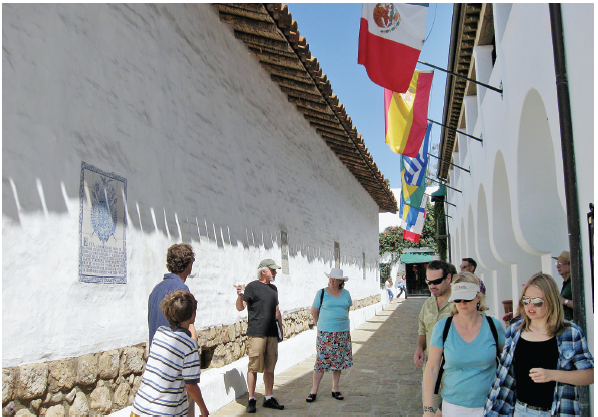
Brian Hofer points out details on the Architectural Foundation tour. Photo by Leslie Dinaberg.

Brian Hofer points out details on the
Architectural Foundation tour. Photo by Leslie Dinaberg.

To experience Santa Barbara architecture in all its glory, there’s nothing like strolling through town with an expert by your side to point out the rich history and international artistic influences that aren’t readily visible to the untrained eye.

Every weekend, trained docents from Architectural Foundation of Santa Barbara (www.afsb.org/tours_m.html, 805/965-6307) take both locals and tourists on walking journeys through the hidden courtyards, secret fountains and original adobes of downtown, focusing on architectural styles, significant and historic buildings, aesthetics and landscape history, as well as details like handmade tiles, wrought iron, stonework, balconies, doorways, archways and plantings.

The Sabado (Saturday) Tour starts in front of city hall and takes guests on a tour of De la Guerra Plaza, historic De la Guerra Adobe, El Paseo, Hill-Carrillo AdobeMeridian Studios, Lobero Theatre and more. The Domingo (Sunday) Tour, which starts at the Central Library, focuses on historic art and architecture of downtown Santa Barbara as it was reborn after the 1925 earthquake, including the library and its famous murals, La Arcada Court, the historic Arlington, The Granada and other architectural delights. You’ll also learn about Santa Barbara’s architectural history and how the Women’s League and Pearl Chase forced us to maintain architectural integrity, beautiful public park spaces and rich landscapes. Both tours start at 10 a.m. and last about 1-1 /2  hours. The foundation asks for a $10 donation per person, and proceeds go toward scholarships and other community programs.

Walking Wednesdays with Santa Barbara Walks is a clever new way to get some after-work exercise and experience the beauty of our local environment. The group, which is a project of COAST (Coalition for Sustainable Transportation, 805/875-3562), meets at 5:30 p.m. on the fourth Wednesday of every month and features a different theme and location each time. One walk included a tour through the upper eastside with architect Anthony Grumbine of Harrison Design Associates, beginning with a walkthrough of the historic Winsor Soule Hodges Residence (currently The Fielding Institute), a 1920s Spanish colonial revival estate, which was once the most expensive home built in Santa Barbara. The expedition also journeyed through a wonderful variety of architecture styles, including a Francis Underhill stripped classicism design, a Richard Neutra mid-century modern, French Norman and Dutch colonial, as well as the many architectural hybrids. Previous walks included an art walk with Ellen Durham, an architectural tour of El Andaluz with Jeff Shelton, trees of Santa Barbara with Bob Muller and a historical tour with Brian Hofer. Walking Wednesdays are free; visit www.coastsantabarbara.org/category/santa-barbarawalks/ for information on monthly locations and themes.

Originally published in Santa Barbara Seasons Magazine, Fall 2010. Cover photo by Jim Bartsch.

Cover photo by Jim Bartsch.

Originally published in Santa Barbara Seasons Magazine, Fall 2010. Cover photo by Jim Bartsch.