Ruth Chris Steak House opens in La Cumbre Plaza

Ruth Chris Steak House (courtesy photo)

Ruth Chris Steak House (courtesy photo)

I got quite a meaty education the other night, when I sat in on an employee training session and menu sampling for the new Ruth’s Chris Steak House in La Cumbre Plaza, which officially opens on Monday, November 19.

If the attention to detail in the training session–conducted by the Irvine restaurant’s general manager Todd Lounsberry, who will serve as a mentor to Santa Barbara’s general manager Chris Goodyear–is any indication, Santa Barbara diners are in for a level of service they haven’t exactly come to expect in our local establishments. Let’s face it: most restaurants here are better known for the beauty of their surroundings and the quality of their food than they are for having staff who go out of their way to make you feel welcome.

With just under 300 seats, the new Ruth Chris Steak House will have to attract a lot of steak lovers to recoup its investment in this location–even at $36.95 for an a la carte filet. A company spokeswoman declined to answer my question about how much was spent on the restaurant build out, but the interiors are lovely, with no expense visibly spared on the heated outdoor patio, roomy bar area, indoor/outdoor fireplaces, two wine cellars (which can be reserved for intimate dinners) and expansive dining room. There also three private rooms, which can be combined to hold about 70 guests, as well as Ruth’s Library, a boardroom type setting that can be used for special events.

Despite the hefty investment and the La Cumbre Plaza location, I wouldn’t bet against Ruth Chris’s record of success. Clearly the company knows something about capturing carnivore customers. Since its 1965 founding in New Orleans by Ruth Fertel (who passed away in 2002), they’ve opened 114 locations worldwide, including Canada, Mexico, Hong Kong, Taiwan, Japan, and now, Santa Barbara.

The excitement level at the training session was palpable, probably in part because the approximately four dozen hosts, servers (who must have a year of fine dining experience), server’s assistants and bar tenders were honored to have been selected out of the more than 500 people who interviewed for their jobs, according to Ruth Chris PR Maven Lanette Jarvis.

The staff was transfixed as Lounsberry showed off various cuts of meat in their raw state and reviewed a gigantic stack of product information cards, including facts about how Ruth Chris buys its meat (“from cows that are fed only corn, which results in richer more flavorful taste”), how the steaks are cooked (“seared at 1,800 degrees, then seasoned with sea salt, black pepper and a touch of parsley, and topped with fresh butter that sizzles on your plate”), and how they’re served (“on a 500 degree plate,” they recited in unison).

According to Lounsberry, all of the meat served at any Ruth Chris Steakhouse (with the exception of the Filets, which aren’t always available in the U.S.) is rated USDA Prime, which means it falls in the top two percent of graded meat. “Ruth Chris takes up almost half of the prime meat available in the U.S. for its restaurants.”

In addition to Filets, those cuts of beef include a Porterhouse (“it has to be a minimum of one and a half inches thick in order to be a Porterhouse”), a Ribeye, a Cowboy Ribeye (includes a bone), a T-Bone, and a New York Strip (“it has that name because it’s shaped like New York”). Seafood, lamb, pork and poultry are also available, but steak is definitely king on this menu.

We tasted bites of the Filet, the New York Strip, the Porterhouse and the Ribeye, each one more mouth-wateringly delicious than the last. “We want our guest to leave Ruth Chris Steak House as raving fans,” said Lounsberry.

So far, so good.

Originally published in Noozhawk

Getting Your Piece of a Beachfront Paradise

courtesy photo

courtesy photo

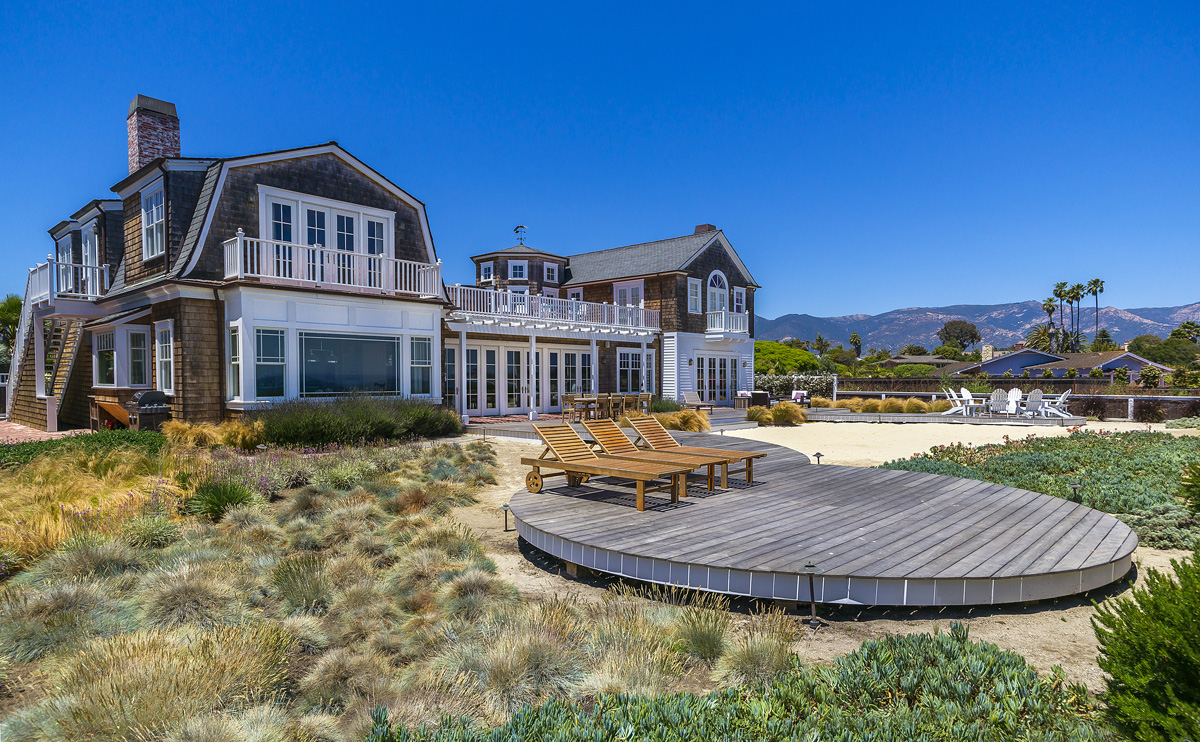
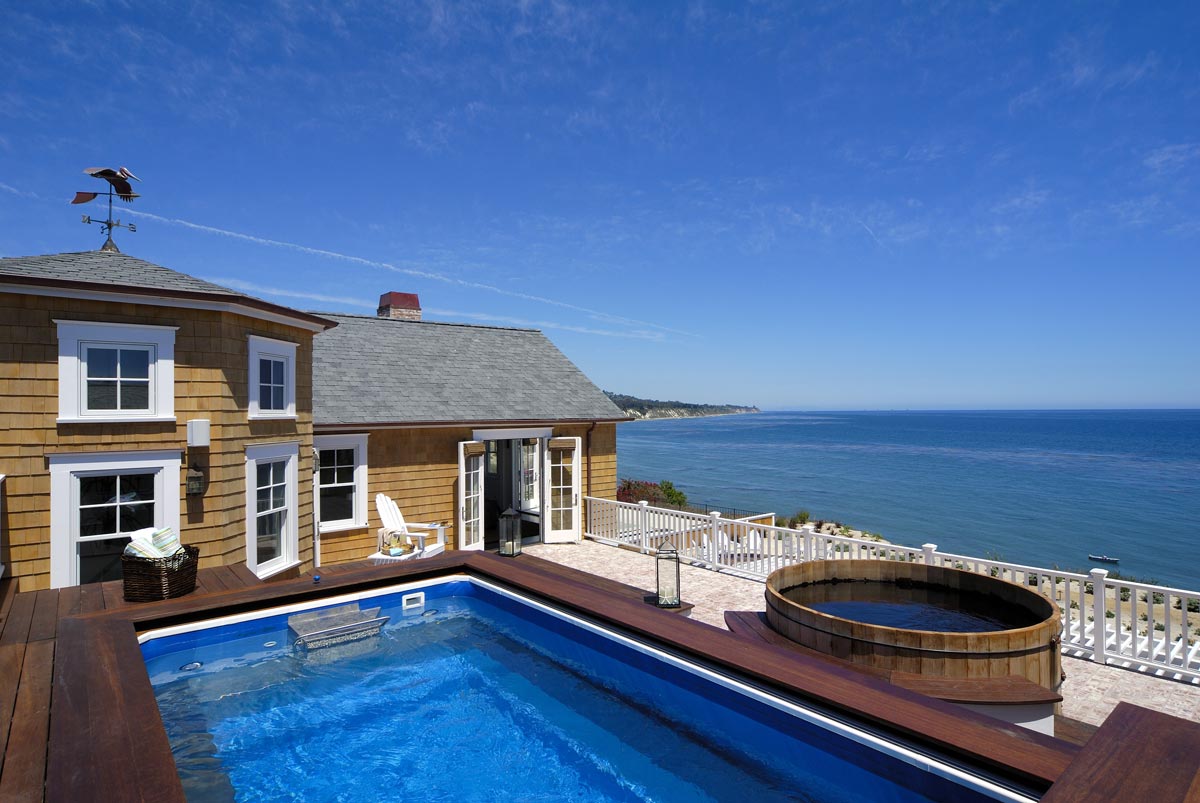
A jaw-dropping view of the Channel Islands, Santa Barbara’s coastline and the San Ynez Mountains adorn the Santa Barbara Beach Club (www.santabarbarabeachclub.com), a new oceanfront estate overlooking More Mesa Beach at the end of Patterson Avenue.

Beachfront properties like this are hard to come by–especially without those pesky freeways and railroad tracks nearby–but Kari Ann and Jay Gerlach are willing to share their dream home with five other families.

“We’re hoping it’s other people’s dream house too. We’re going to find out if we have good taste or not, I guess,” says Jay, who was involved in a number of start up businesses before creating the beach club.

courtesy photo

courtesy photo

Membership in the $13 million, 6,300 square foot, New England style property, will cost approximately $2 million, plus annual expenses. This gets each owner an equity share, plus eight weeks a year in the house, which has five suites and features a private beach cove, gourmet kitchen, gym, handcrafted bar, theatre, billiard lounge, wine cellar, walk-in cigar humidor, library, sauna, pool and Jacuzzi. It even has a hydraulic car elevator to maximize parking space. Concierge services such as an on-call masseuse and private chef will be available to members, and the house will be stocked with everything from the owner’s favorite foods and soaps, to their family pictures.

“If you want, there’s no reason for your guests to know you don’t own the house outright,” says Kari Ann. “It’ll be just like it was when you left it.”

While the technical term for the partnership is “factional ownership,” Jay explains it simply: “If you and I bought a house together and both our names were on title, that’s exactly what we’re doing. It’s called tenants in common … but we will have six owners, each with a percentage.”

The Gerlach’s originally bought the property, an empty lot, to develop their dream house. But like anyone who’s ever tried to build a home can testify, development doesn’t come cheap. As the dream house got dreamier and dreamier, the financial realities became such that they rethought the investment, explains Kari Ann.

As construction progressed on local architect Robert Foley‘s design, they shared the work-in-progress with friends, “We got such great response,” says Kari Ann. “Everybody said, ‘Oh this is great. I wish we had a house like this.’ And my husband said, ‘Why not?'”

“If we can share it with other people and still manage to keep eight weeks for ourselves it would be really great investment for us and still a beach house of our dreams,” she says.

The shared ownership model allowed Kari Ann, who worked with Tuvalu Home (www.tuvaluhome.com), to furnish the house with everything she dreamed of.

Some of her favorite things include chandeliers right out of “The Little Mermaid,” made out of seashells, a settee with quilting inspired by coral, and a custom made curio cabinet. “I didn’t want to be matchy matchy. I wanted it to look more like a collected look over time,” says Kari Ann. She describes the experience of furnishing a house from top to bottom–including every single knob, knick-knack, linen and dish–as “a hellish but wonderful dream.”

“When you’re building a place that luxurious and that large, it just makes more sense to split it with more people,” says Jay. The Gerlach’s already own a beach house in town, and weren’t planning to use the new home full time anyway. They wanted a place where their extended family could come stay, and the estate, at 5277 Austin Road, fit the bill perfectly.

They did a test run over the Fourth of July. “We had multi-generations here and it was kind of fun to see how the house was used,” says Kari Ann. “Women were in the kitchen chatting, the older people were at the table having their coffee, enjoying the main room and the library, and the kids were downstairs, outside, or down the beach in the back. All the men were upstairs in the Jacuzzi (which has a flat screen television tuned to sports to compliment the dolphin and sea lion show on the ocean). … I think this house has something for everybody and something for everybody at the same time.”

When asked about what it’s like to work so closely with his wife for the past three years, Jay laughs. “It’s fun but it also can be very frustrating … everybody’s heard of the old saying that if you can survive a remodel together you’ve got a strong marriage–this was a lot more than a remodel.”

He laughed even harder when asked if he would do a project like this again. “Yes, but not immediately. We need a little time to recover.”

For more information visit www.santabarbarabeachclub.com or call 805.504.0699.

Originally published in Noozhawk

Noozhawk Talks: One on One with Ben Romo

Ben Romo

Ben Romo

As Director of the County Education Office’s Center for Community Education, Ben Romo oversees a variety of different programs designed to serve the needs of foster children, homeless youth, low income students and children that have been neglected for a variety of reasons. He also works closely with the business community as the Executive Director of Partners in Education, a nonprofit organization working to help children succeed in school and in the workforce.

Leslie Dinaberg: How did you go from politics (as the District Representative and Primary Political Consultant for Congressman Walter Capps and Congresswoman Lois Capps) to education?

Ben Romo: In 2005 I had reached a point in my business where I wasn’t really learning anymore… and I realized that the only way I could continue learning was to go to a much higher level like statewide and multiple congressional campaigns, and that would have been just an absolute life-consuming process.

When this opportunity came to be a part of the education office, it was something that was very appealing to me personally, in terms of the work that we do here at the center, but also was appealing to me intellectually. Plus, it brought me back to Santa Barbara where I was born and raised.

LD: Are you enjoying this work?

BR: It’s been eye opening, what I’ve come to learn about public education and particularly the areas of impoverished, neglected and delinquent youth. It’s been really eye opening. I thought I knew a lot about public education and I didn’t. I didn’t know exactly what schools are being forced to deal with and I didn’t fully understand the level of misperception that I think exists in the community about just how daunting those challenges are and how unfair it is for society to expect schools to meet those needs.

LD: It’s very challenging and in our community particularly, because there’s so much wealth, it’s really the haves and have-nots.

BR: We’re losing our middle class. We’re a community out of balance. … Since 1991, our student population went from 34% Hispanics, it’s now 57%; Anglos were 55%, they’re now 32%. There’s just a complete flip-flop. Almost one in five, 17% of children in Santa Barbara County live below the federal poverty line, and the federal poverty level is $19,000 for a family of four. So that’s a federal measurement that has a completely different reality on the ground here in Santa Barbara where $900 a month might get you a one-bedroom or studio apartment.

LD: I know that Computers for Families works on this issue by targeting the digital divide and providing computers and Internet at home for every student in the fourth grade. What else does Partners in Education do?

BR: Partners is a nonprofit. We are not a school, we are not in the business of doing what schools should already be doing themselves, we’re not about supplanting, we are about finding the right role that the community can play to be supportive of schools. But schools are charged with a particular set of things that they should be doing. We’re not here to take that burden off them. That should be their responsibility. We are here to support them, number one, and also to give business a voice in how schools are preparing the next generation of the workforce.

LD: But a lot of the things that should be the school’s responsibility, like for example technology, they just don’t have the dollars to back it up. It’s not that the will isn’t there, but there isn’t the money.

BR: Exactly. We just talked about this in our last board meeting, we’re very clear that we are not going to be in a position to go find all that money. We found a very cost effective way to meet some of the needs that low income kids have in accessing the Internet and technology and we found that that’s really significantly impactful in their ability to achieve academically and in the school’s ability to achieve system wide. …

I don’t think it’s really been clearly stated to educators and the broader community just what technology can bring in key areas that teachers are worried about, student achievement, parent involvement, student engagement in the classroom, and the saving of teacher’s time, which is a huge issue for educators.

LD: In my experience it still comes down to the level of an individual teacher’s engagement and comfort with technology. If they’re into it, they’ll use it and their kids will really benefit from it and if they’re not, it’s not a factor.

BR: And who can blame them when they’re so stressed and so focused on core curriculum areas? It’s difficult for a teacher to take any time away from a student who is below grade level in math and English.

LD: What do you think are some of the biggest challenges that we have in education?

BR: Schools are doing a really good job actually. If you look at student achievement system wide in the state of California, student achievement in every group has gone up. In English learners, in Latinos, in Anglos, in every group, student achievement in math and reading has gone up. The achievement gap is being addressed, but there are societal problems that are being thrust on schools and schools are being forced to deal with these. And I think, in some cases, in a lot of cases, they are unfairly held accountable or they are unfairly expected to do a job that they were never intended to do and that is being a social worker. Teachers are supposed to teach kids how to read and write and how to be good citizens. So I think the biggest challenge in public education are the challenges that society thrusts upon them unfairly.

LD: Switching gears now from society to you, if you could pick three adjectives to describe yourself, what would they be?

BR: Modest, good looking and visionary

LD: That’s the best answer I’ve had to that question–and the fastest.

(Laughter overheard from the office next door): Irritating, annoying, deluded …

BR: (Laughs) OK, I like to have fun, I try to be honest, and sometimes I’m insecure.

Vital Stats: Ben Romo

Born: At Goleta Valley Hospital; August 21, 1973

Family: Wife Geordie and daughter Ruby, 4-1/2 months

Civic Involvement: The Granada, Coastal Housing Coalition, CALM, Nonprofit Support Center, Student Aid Committee of the Santa Barbara Foundation

Professional Accomplishments: Founded Romo & Associates; District Representative and Primary Political Consultant for Walter and Lois Capps

Little-Known Fact: When Ben was a child his nickname was Benny Big Ears; he also went by Benjie the Dog.


Want to know more about Partners in Education?

A breakfast event, featuring State Superintendent of Public Instruction Jack O’Connell, will be held December 7, 2007 at Earl Warren Showgrounds from 7:15-9:00 a.m. If you would like to attend, please RSVP to Ben Romo by emailing benromo@sbceo.org or calling 964.4711 ext 4401.


Originally published in Noozhawk. Click here to read the story on Noozhawk.com.

A Helping Place, A Healing Space

Courtesy Photo.

Courtesy Photo.

When Hospice of Santa Barbara was founded in 1974, it was only the second hospice in the United States, dedicated to providing care and easing the pain of dying for both patients and their loved ones.

Now with more than 3,200 programs established in the U.S. and nearly 885,000 people cared for in 2002, it is that same fundamental dedication to compassion that continues to set hospice programs apart from the type of care provided by hospitals and other facilities. According to the Hospice Foundation of America, an umbrella group that provides leadership in the development and application of hospice, “hospice is not a place but a concept of care.”

But fortunately for suffering Central Coast residents, a physical manifestation of the concept has also opened its doors like outstretched arms offering those dealing with painful tribulations a place to find help, understanding, friendship, and peace. And there could not have been a building more perfectly designed for its purpose.

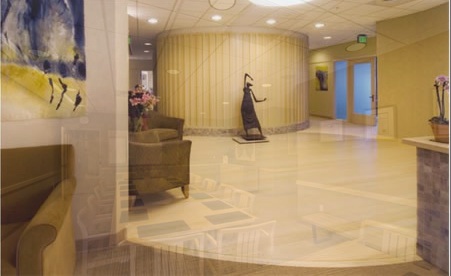
Executive Director Gail Rink describes Hospice of Santa Barbara’s new 6,500-square-foot headquarters as “A place where compassionate care is freely given.” A tranquil, welcoming feeling envelops visitors as they enter what looks more like a high-end health spa than a place designed to deal with death and grief–and in many ways it is. “This office is part office, part spa, part chapel,” says Rink. With an emphasis on humanistic, rather than medical, treatment, the center is focused not just on grief but on healing, and not just on patients, but on their loved ones as well.

Tucked away on a serene hilltop in Santa Barbara’s Riviera area, the facility offers a wide array of supportive services–all 100 percent free-of-charge–for people diagnosed with terminal illness or who are facing the loss of a loved one. Offerings include individual, couples, family and group counseling; educational programs; health and wellness services such as massage, Reiki, yoga, and meditation; community meeting spaces; and of course, a well-stocked kitchen and dining room.

“We feed a lot of families,” laughs Rink. She means that in both a literal and figurative sense. It was the generosity of some of the families nourished by hospice services that helped make this new center a reality.

“One of the things that makes us a highly functional board is the fact that everyone involved has either experienced needing hospice services themselves or within their families … or has someone close to them who has,” says Board President Mary Blair.

The Berkus family was critical to the development of the center. Renowned architect Barry Berkus relied on hospice services when his wife Gail was dying, and designed the building free-of-charge as a testament to her, and as a thank you to hospice for the comfort they provided his family. Paired with his daughter-in-law Dana Berkus’s distinctive interior design, a feeling of peaceful healing practically emanates from the walls of the new headquarters.

Walking in the center feels like getting a big warm hug. “What we want to be able to do is be able to embrace people who need security and help to face their fear and heal their sorrow,” says Rink.

When the organization moved to larger quarters last spring, it had the opportunity to expand some services, like the family and children’s program. Many children were not getting the kind of care they needed during the grieving process. “Children grieve. And adults are awkward when children grieve,” says Rink. “And yet we felt strongly that we needed to start a program that would address the needs especially of grieving children or children who may be anticipating the death of a parent or sibling.”

Starting with support groups for children, hospice then began a mentor program, where children were paired with an adult who had survived a similar experience of losing someone close to them when they were young. Children who “graduated” from the mentor program then formed a mentor associate program so they could help other children who were grieving. The parents of these children also formed a support group just for parents.

“So now our family and children’s program has grown from being a simple support group for grieving children to a more complex program that provides both parents and the children and those who have graduated from the program with things to do to help serve others and help make that relationship stronger. That organic kind of process is very healing,” says Rink.

Hospice recently held its first Children and Family Night, where multiple generations gathered for dinner, then broke into play groups and counseling sessions.

“Think of the reason that they all have in common, the death of a parent, or the death of a sibling or a spouse … it’s amazing that people would gather for such a sensitive reason–and yet, if you create the environment, they thrive,” says Rink. “What we’ve found is with more space and with such a healing and nourishing location, our business has continued to grow and for us. Of course that’s excellent, because we’re reaching more people in the community.”

Other Hospice Services on the Central Coast

“Shiva’s Center for the Human and Animal Bond” supports people who have lost a pet. You can find their information at www.shivascenter.org.

Hospice of San Luis Obispo County offers group meetings devoted to such issues as Widowed Persons, Weekly Suicide Bereavement, Parkinson’s, Perinatal Loss, and Pet Loss. They also offer the following events to support Hospice members. Check their website for specific times and locations: www.hospiceslo.org.

Hospice for the Central Coast: Monterey promotes and supports end-of-life care and services for Monterey and San Benito counties through community education, fundraising, prudent management of assets, and conscientious disbursement of grants to quality, non-profit organizations that provide these services. www.hffcc.org

Originally published in Central Coast Magazine

Menorrhagia: The Body Out of Balance

Most women will experience a heavy menstrual period at some point in her reproductive life. For some women, heavy periods are even the norm. “But if there is a change in heaviness get it evaluated,” says Dr. Carrie Ann Terrell, a specialist in women’s health. If you are soaking a pad or tampon within one to two hours for longer than one day, you should seek medical attention, she advises. It could be Menorrhagia, which the National Women’s Health Resource Center (NWHRC) defines as soaking a pad and/or tampon every hour or less during each menstrual cycle.

While Menorrhagia–which affects an estimated 10 to 20 percent of premenopausal women in the United States–can strike at any time, it is most likely to occur during puberty and the years just before menopause, when reproductive hormones are erratic.

“Women learn about periods, pregnancy and menopause but are unprepared for what happens in between. The fact is, pelvic health conditions can happen at any age, particularly after a woman’s had a baby,” explains Elizabeth Battaglino Cahill, RN, executive director of the NWHRC.

The condition can cause fatigue and anemia and restrict a woman’s personal and professional activities. Menorrhagia can also be indicative of more serious medical conditions.

According to the Mayo Foundation for Medical Education and Research, some common causes of Menorrhagia include: hormonal imbalance; uterine fibroids; polyps; dysfunction of the ovaries; adenomyosis; an intrauterine device malfunction; pregnancy complications; pelvic inflammatory disease, thyroid problems, endometriosis, and liver or kidney disease. In addition, certain drugs, including anti-inflammatory medications and anticoagulants (to prevent blood clots), can contribute to heavy or prolonged menstrual bleeding. In rare cases, uterine cancer, ovarian cancer and cervical cancer can cause excessive menstrual bleeding.

Ice packs, vitamin C, vitamin E and iron supplements can help reduce bleeding, but you should always check with your health care professional before taking any medication, even herbs and nutritional supplements, according to the NWHRC.

Medical treatment options for Menorrhagia continue to evolve.

“We think the sheer magnitude of how many Baby Boomer women are affected matters because such a large group will have the power to set new expectations for pelvic health, driving more women to seek treatment,” says Cahill. “Think back to when the default treatment for breast cancer was a total mastectomy. Those rates have dramatically declined primarily because women advocated for more minimally invasive treatment options. The same needs to be true for pelvic health.”

Currently, progestin–which works by reducing the effects of estrogen in your body, slowing growth of the uterine lining–is the most-prescribed medication for Menorrhagia, with studies finding that it can reduce bleeding up to 15 percent. However side effects, including weight gain, headaches, swelling and depression, lead many women to quit using this option.

Doctors may also prescribe nonsteroidal anti-inflammatory drugs such as Aleve, Motrin, Cataflam or Ponstel, which work by reducing levels of hormone-like chemicals that interfere with blood clotting. Studies find they can reduce blood flow an average of 25 to 35 percent. Oral contraceptives can also reduce menstrual bleeding up to 60 percent by preventing ovulation and thinning the endometrium.

Gonadotropin-releasing hormone agonists are drugs that are used only on a short-term basis because of their high cost and severe side effects. Basically, they temporarily send a woman into menopause, complete with hot flashes. However, they are very effective in reducing menstrual blood flow. But because they interfere with the activity of estrogen in your body, long-term use could lead to osteoporosis.

Doctors may also prescribe Danazol, is a form of the male hormone testosterone that blocks the action of estrogen in your body. It causes your period to stop in about four to six weeks, but can have side effects, including acne and reduced breast size.

Some physicians may also recommend using an intrauterine device such as Mirena, which releases a progestin called levonorgestrel, to help control the bleeding. The main side effect of this treatment can be some light bleeding between periods, particularly in the first three months.

Women with Menorrhagia may elect to have an outpatient procedure, endometrial ablation, in which the lining of the uterus is destroyed. In extremely severe cases, women with Menorrhagia may also opt for surgical procedures such as removal of the uterus through a hysterectomy. Other surgical procedures, including myomectomy and uterine artery embolization, may be used if fibroids are the cause behind the bleeding.

“Treatment for this condition is broadly available. What’s critical is that women and their health-care provider discuss menstruation as part of a routine physical exam,” says Amy Niles, President and CEO of NWHRC. “Beginning a dialogue about this vastly under-diagnosed condition and available treatment options– both between a woman and her doctor and among national health-care leaders– is the first step toward helping women live healthier more enjoyable lives.”

Questions to Ask Your Health Care Professional about Menorrhagia

1. Is the amount of menstrual bleeding I’m experiencing abnormal?

2. What tests do you need to conduct to diagnose my Menorrhagia, and why are you doing them?

3. Is this heavy bleeding affecting my iron levels? What can I do about that?

4. Why are you recommending this particular treatment option for my heavy bleeding? If that doesn’t work, what do you recommend next?

5. What are the disadvantages and risks associated with each recommended treatment?

6. Even if you find a problem like fibroids causing my abnormal uterine bleeding, is it possible to avoid a hysterectomy?

7. How many endometrial ablations of this type have you performed in the past year? What is your success rate? What kind of complications have you encountered?

– Source: National Women’s Health Resource Center

Originally published in Coastal Woman

One on one with Rachael Steidl

Rachael Steidl (courtesy photo)

Rachael Steidl (courtesy photo)

Recognizing the need for a centralized place for parenting information in Santa Barbara, Rachel Steidl created SBParent.com, which quickly became an indispensable resource for parents when it launched in 2002. Part Internet portal, part calendar and part bulletin board, today her business not only serves locals, it’s also the model for 18 other cities that have licensed the ParentClick.com technology.

Leslie Dinaberg: How did SBParent start?

Rachael Steidl: I was watching the frustration of how much work it was for parents to find resources. When I looked into it and tried to find out why it was so hard to get information, one of the things I realized was that advertising is so expensive and most businesses can’t afford to do it. My goal was to bring all of that word-of-mouth information under one central spot by making it affordable for businesses and nonprofits.

LD: How is ParentClick different than SBParent?

RS: Prior to (starting ParentClick) we were getting a lot of inquiries from people wanting to know how to get something like this going in their community. So we looked at what we had done over the last three years and decided that we could help fast forward them getting to where SBParent has gotten to by not having to do so much of the learning. So we created ParentClick. What we do is provide service agreements to these territory owners, which builds the technology for them, the website, gives them training and ongoing support, but they are in actuality their own business.

LD: So is it a franchise?

RS: It’s not a franchise in the sense that they have their own business name, their own business model, they set their own pricing. … We’ve also expanded services … for people who don’t have it in their city …we added travel with kids, children’s book and movie reviews, the recipe club and articles.

LD: Have you found that the other sites are different from Santa Barbara?

RS: It’s up to each territory whether they want it to make money and if they’re going to do sales, but to me, no matter what–and I have committed to this since the day I started, whether I was getting a check or not–is there will always be information for parents so that it’s not a waste of their time. Some territories are definitely stronger than others in terms of the consistency with which they are posting information.

But on SBParent, new information is going up every single day. When I was in Greece this summer I was posting information … we just don’t ever stop, because to me it’s a business, but we always look at it from the parent perspective.

… I would rather talk a potential owner out of doing the site than take a check from them for the wrong reasons.

LD: Is it still mostly a solo operation?

RS: Locally Julie Sorenson helps me, and she is really a huge, huge part of SBParent. But ParentClick has been solo. But we’re hiring.

… My daughter said to me the other day, “Mommy,” because she always told me she’s going to do my site when she grows up. She says, “I don’t know if I’m going to do SBParent.com when I grow up. I just think it’s too much work.”

LD: How and when do you work?

RS: My standard working hours, now that all my kids are in school, are really 9 a.m. to 2 p.m. I’ve gotten really disciplined, even though I still work out of the home, at not working on anything going on in the home–just working.

From 2 p.m. to 8 p.m. are my mom hours and then from 8 p.m. to midnight are usually work hours again. … My kids’ biggest complaint is my pulling up to pick them up from school on my cell phone, because I am literally doing calls until I pick them up. One of the things I tell a lot of the territory owners, as wonderful as it is working from home and as wonderful as it is being your own boss, it’s no less work–actually I think it’s a lot more juggling–it’s just that you get to control what those hours are.

I would not change it for the world because I get to be at all my kids’ things. … To me it’s worth working at night to be able to have that time with the kids during the day.

LD: Do you ever think it would be easier to have a job with set hours?

RS: Sure, but the funny thing is that even on my worst day where I’ll look at the big picture and go, did I make a mistake growing the company, did I make a mistake starting a business, I look at how it’s affected people and the emails we get or the great conversations with some of our territories, and I think you know what–I love what I do.

Vital Stats: Rachael Ross Steidl

Birthdate and place: 7/17/70, Los Angeles

Family: Twins Ashley and Whitney (9) and Emily (5); husband Jamie.

Civic Involvement: Teddy Bear Cancer Foundation, Board President; Women’s Fund of Santa Barbara, Oversight Committee; Santa Barbara Foundation, Katherine Harvey Fellows; Junior Philanthropists, Fund for Santa Barbara; Hope School PTA.

Professional Accomplishments: Goleta Chamber of Commerce Small Business of the Year, 2007; 40 under 40, Pacific Coast Business Times; ParentClick.com is now licensed in 18 cities, with more on the way.

Little known fact: Rachael’s parents had a great cookware store in Santa Barbara in the late 70s-80s called D. Crosby Ross, which was a cross between a Pottery Barn and a Williams Sonoma.

Originally published in Noozhawk

Noozhawk Talks: One on One With William Macfadyen

Bill Macfadyen (courtesy photo)

Bill Macfadyen (courtesy photo)

Soft-spoken, with a courtly politeness that seems more Southern than Southern California, William (Bill) Macfadyen doesn’t exactly conjure up images of your typical work-into-the-wee-hours, Red Bull-drinking, pimply-faced Internet entrepreneur. But with this week’s launch of Noozhawk, Santa Barbara’s first comprehensive, free online newspaper, he’s aiming to be the local daily on everybody’s lips–and laptops.

Leslie Dinaberg: Tell me about Noozhawk?

William Macfadyen: It is a community newspaper without the paper. There are two parts to it: it will be professional reporters, like yourself, doing original reporting on news, business, sports, real estate, nonprofits, schools. So there will be original content that we provide on the site, and then the real hook to the site will be to get the community involved through contributions from what I’m calling community contributors.

LD: Do you mean blogs?

WM: No, what we want to do is tie Noozhawk into the community by getting involved with all the networks that exist within Santa Barbara, communities within the community. That would mean a church or a club sports program or a school or a nonprofit or a business even …They can tell the story, submit their stories to Noozhawk and then we can help them get that word out about their organization.

LD: Will there be some way for readers to distinguish whether they are reading something from a member of an organization versus a professionally written and reported story?

WM: Yes, because the consumer needs to know what’s professional objective reporting, and what is a contribution from somebody who has an agenda … when it comes to a small nonprofit group or a school, they’re just really enthusiastic about their mission and want to get that word out. I think a community newspaper is uniquely suited to tell that story and we think Noozhawk will be able to do that in a way that a [printed] community newspaper, with all of its infrastructure, can’t possibly tell or afford.

LD: Explain the economics of that. Why is it easier to do that online?

WM: It’s so much easier to do that online because the Internet is infinite space. It’s basically free. There’s not an artificial or arbitrary limit on paging or a time.

LD: Will there be an editorial page?

WM: Noozhawk itself won’t take editorial positions or make endorsements on candidates or projects, what we want to do is foster debate on community issues that aren’t being covered or serviced anywhere else in town.

Santa Barbara is the greatest community in the world but we do have some really big challenges ahead of us: housing, transportation, the change in demographics, all of those issues are crying out for some kind of community dialogue and it just isn’t there. So what we want to do is offer a place where people can have that debate and discuss those issues and ask the questions that need to be asked, and maybe through that process we can help develop some solutions to some of those challenges.

LD: One of the things that I hear from people that are relying on the Internet now for most of their local news is that “it’s out there but there’s so much other stuff to sift through.”

WM: That’s kind of where this whole concept came in because anecdotally many, many people in town have come up with their own routines to find out what’s going on in their community. …The problem with that is … you’re not trained to go out and search for the news. …You’re not a journalist. And the news delivery really should be brainless … it should just magically show up on your doorstep, in your driveway, in your inbox, wherever, and you shouldn’t have to go looking for it. … What we’re trying to do is pull that all together and then basically be a one stop shop for people to get their news and then move on with their day. … There is no newspaper of record or information source of record. Noozhawk aims to change that.

LD: Where does the name Noozhawk come from?

WM: News hawk is slang for a newspaper reporter, so we just had a little Web 2.0ish fun with the news end of it and named it Noozhawk. Plus hawks are flying everywhere and they see everything.

LD: Why are you personally doing this?

WM: Because I’m not qualified to do anything else.

I’m too old for the Dodgers, although they could use me. I’m personally doing this because I’m very committed to Santa Barbara. I’m proud to live here. I love this community and I don’t like the fact that it’s not being served by its media. I think I know how to put together a quality news product, and I know I know the community, and what I’m trying to do is marry those two and fill a void.

LD: Why will this succeed when other start-up news ventures have failed?

WM: I have no idea what you’re talking about. (Laughs) Henry Ford said, “Failure is an opportunity to start anew only more intelligently.” And that’s what I am doing. I would not have undertaken this endeavor without the Beacon experience and part of that is, I think the Beacon was a fantastic newspaper. Certainly it served its readers very well. … But it failed as a business because we weren’t able to connect with the advertisers quickly enough. And so with Noozhawk, the genesis and evolution of that has been the opposite. I started out talking to advertisers first.

LD: So it feels like they are ready to embrace the Internet?

WM: That’s interesting because when we had the Beacon and we talked about the web part of it, the readership just wasn’t there yet … That dynamic and that whole attitude has changed. What I found in talking to those advertisers is that when I went back to them last fall and started talking to them about this project, their reaction was, “I’m done with print, it no longer works for me, it’s all about the Internet. Internet, Internet, Internet.”

When I first had the idea, older readers, retirees, who had been the core newspaper readers for generations, were resistant to the concept. …Then as time went on, and the Santa Barbara situation kind of deteriorated, I was finding even at the retiree level, the former newspaper reader level, those people were saying, “You know what. I’m actually finding my news online and it’s not that bad. I don’t really miss that routine.” Plus it’s environmentally friendly

LD: Are there any other models or any other communities that are already doing this kind of thing successfully?

WM: Not that I could find with a successful advertising model. … For this to succeed, the business community needs to support it and see it as a worthwhile endeavor that’s effective for their needs.

Without going into the details, I think Santa Barbara has some unique circumstances that are lending themselves to this idea here at this time. That said, I think you need to have some authenticity, and you need to really know the community. And I think we have some advantages in that area. The folks we have involved really know this community. Both Jim Farr (former publisher of the Goleta Valley Voice and Noozhawk’s Operations Manager) and I, obviously, were both community newspaper publishers. We don’t see eye to eye on a lot of things in the political spectrum but we’re both passionate about this community and want the best for it, and I think we have a certain respect and credibility in the community, at least in the business community.

LD: What’s the business model? How will this venture actually make money?

WM: Advertising revenue. It’s advertising supported, it’s free to use. We’re asking people to register for the daily email that goes out, but the idea would be that advertising is paying for the site in most cases.

LD: What about if the people at the table next to us were talking about Noozhawk, what would you want them to be saying?

WM: We want them to be talking about it all the time, like my gosh, it’s the most effective, more informative source for news and Information I’ve ever seen. I think at its heart, we want them to recognize Santa Barbara within Noozhawk’s website, The community that they know, we want to make sure that it’s reflected on the site.

It’s a great community, you know, I know it, everybody knows it, but too often it’s just invisible.

LD: What do you know now that you wish you would have known when you started the Beacon?

WM: You know, I thought when we started the Beacon that I really knew Santa Barbara and I didn’t. I had lived here at that time about 17 years, and just didn’t quite know or appreciate how interconnected everything was. And I think partly through the Beacon and partly through the Goleta Valley Chamber of Commerce, I think I have a great understanding and greater appreciation of how it all works, which is why I’m confident about Noozhawk’s success.

LD: When you’re not working, what do you like to do?

WM: It’s Dodgers Baseball and it’s killing me now.

LD: If you had to sum yourself up with just three adjectives, what would they be?

Persistent

Principled

Confident

LD: Is there anything else you want to tell our readers?

I would say that Noozhawk is as much about them, actually is more about them than it is about our community, and so for them to take ownership of the site and get involved, our community will benefit, because at the end of the day, they have more knowledge about what’s going on in the community collectively than any single news source does individually. We really want their involvement.

Vital Statistics: William M. Macfadyen

Born: Sept. 8, 1960, Chicago

Family: Wife, Missy; children, Will, Colin and Kirsten; one Alaskan malamute

Civic Involvement: Board chairman, Goleta Valley Chamber of Commerce; board secretary, Regional Legislative Alliance; board member, Coastal Housing Coalition and Santa Barbara Community Housing Corp.; past senior warden, All Saints By-the-Sea Episcopal Church

Professional Accomplishments: Co-founded the late South Coast Beacon newspaper, recipient of the California Newspaper Publishers Association’s General Excellence Award in its first year of eligibility; charter member, American Copy Editors Society

Little-Known Fact: Grandfather, Jack Macfadyen, founded the Malibu Times newspaper in the 1940s

Originally published in Noozhawk on October 16, 2007. Here’s the link to the original story.

Lionesses of Winter

They Take Pride in Giving Back

It takes passion, money and a lot of hard work for Santa Barbara’s most treasured nonprofit organizations to thrive. This community tradition of giving back by supporting education, caring for those in need, and sharing a love for nature and the arts has an incredibly generous cast of leading ladies at its helm. Not content to simply be the torchbearers, they are also keeping an eye toward the next generation of the philanthropic community.

“I’m trying to spread the circle,” says Shirley Ann Hurley. “I’ve brought young women into my life who care passionately about these sorts of things that I do and they stimulate me and …I love the excitement that is getting to know all of these wonderful people.”

Let’s meet a few of the women who help keep the community alive and well.

The Leading Ladies

Betty Hatch

La Belle Foundation, Granada Theatre, Girl Scouts, Girls Inc., Hospice, CAMA, Cottage Hospital, Council on Drug and Alcohol Abuse, the Arts Fund, Santa Barbara Zoo, Santa Barbara Art Association, Santa Barbara Museum of Art, Foodbank of Santa Barbara County, Santa Barbara Ballet

“My life has been dedicated to the teaching of self-esteem,” says Hatch, founder of La Belle Modeling Agency (1963-1991), and now executive director of the La Belle Foundation, which offers young women free training in self-esteem, self-development and personal and social responsibility.”

“Giving to the community is just a pleasure; it’s a demonstration of our gratitude and our love for everybody here.”

Shirley Ann Hurley
Santa Barbara Scholarship Foundation, Family Service Agency, Santa Barbara Public Education Foundation, CALM, Anti-Defamation League, Santa Barbara Foundation

“The things I’ve wanted to spend my time on are the things that help children and young people become the best that they can be, which means to live up to their full potential … The organization that I have probably put the most years into and time is the Family Service Agency. The concept that we could intervene early in a child’s life and with that child’s family and help them raise a more secure child was what hooked me.”

“People keep saying what do you do for fun. I said everything. All of this is fun. And it is. It’s work, but it’s fun. There’s nothing I like better than working with a group of deeply caring people. It is so exciting. And the fact that you know that together you can make a difference in somebody’s lives and your community is just such a reward.”

Gerd Jordano
Cottage Hospital Building Campaign, Westmont College Foundation, CALM

“Board members are ambassadors for those organizations. They are sort of cheerleaders and are able to sort of talk and share what that organization is and what it’s all about. It’s really an opportunity to educate people about that organization and that gives me great joy to share my passion and my knowledge about that particular organization.”

“I’m a former cheerleader so I continue that same passion, only I’m just not jumping up and down anymore (laughs). But I do get very passionate about what I get involved with and it just brings me a lot of joy.”

Carol Palladini
Santa Barbara Women’s Fund

“The concept of the Santa Barbara Women’s Fund (which will have given away more than $1 million by the end of the year) is making your time and money most effectively used by a lot of women writing checks and putting them together and doing direct fundraising, so that you’re not spending a lot of money to make money… Our umbrella is giving in support of the greater Santa Barbara area; it has to be local, to benefit unmet needs for women, children and families.”

“A lot of the work that I’ve done in the past, on and off boards, has some Heartache mixed in with the joy of it. This has been a pleasure from the beginning.”

Joanne Rapp
Santa Barbara Foundation, Santa Barbara Scholarship Foundation, CALM, Cottage Hospital, Botanic Gardens, Laguna Cottages, Montecito Community Foundation

“I have enjoyed working with organizations that are targeted at helping youth with their educational goals, in particular the Scholarship Foundation and the Santa Barbara Foundation student loan program. Everything that you work on and within the nonprofit community enhances the quality of life and the effectiveness of our community, but helping the students transfers anywhere. … It will strengthen the fabric of whatever community that they land in.”

The Next Generation

Tiffany Foster
Storyteller, Crane Country Day School, Howard School, All Saints by the Sea Parish School, Lotusland, Lobero Theatre, Santa Barbara Museum of Art SMART Families

“When I arrived in Santa Barbara four years ago … it seemed that every fabulous, intelligent person I met was volunteering for either Storyteller or Lotusland. Before I knew it I was in the center of a vibrant group of caring women and men who dedicated their energy, financial resources, and business acumen to help make a difference in our local community.”

“Storyteller Children’s Center provides daycare and preschool to homeless toddlers in Santa Barbara as well as support services for their families. Young children deserve security, safety and a stable environment. … It is difficult to find a more worthy cause.”

Kisa Heyer
Lotusland, Santa Barbara Museum of Art SMART Families, Crane Country Day School, Storyteller, Lobero Theatre, Sarah House, Santa Barbara Museum of Natural History, CAMA

“Even after being involved with Lotusland for so long, I’m still amazed by it–not only with its collections, design, architecture, and programs–but also with the story behind the garden. Madame Ganna Walska’s wonderland is such a benefit to our community. It’s magical to see joy that children (all 4th graders visit) and adults express after visiting the garden, and no surprise, really, that we are becoming world-renowned as a one-of-a-kind experience.”

Jill Levinson
Lotusland, Visiting Nurse and Hospice Care of SB, Storyteller, New Beginnings Counseling Center, Lobero Theatre, All Saints by the Sea Parish School, Santa Barbara Museum of Art SMART Families.

“I think everyone has a need for hospice care for themselves or their loved ones at some point in their life. I just feel like it’s very important to support these organizations because they’re necessary. If they disappeared that would be a travesty for our community. Our community is so fortunate to have so much to offer everyone. I think that’s part of what’s really special about Santa Barbara, it tries to take care of people.”

Laura Shelburne
Storyteller, Crane Country Day School, the Santa Barbara Museum of Art, Stanford University, Lotusland, Santa Barbara Museum of Natural History.

“Winston Churchill once said, ‘We make a living by what we get, but we make a life by what we give.’ I spent a number of years practicing corporate law, working around the clock during the Silicon Valley boom, and I always regretted that I didn’t have enough time to do worthwhile pro bono work. While I was one of those oxymoronic happy lawyers, I have to say that now it is wonderful to be able to choose my own “clients” based on causes I believe in and use my skills and experience to help non-profits. I also feel strongly that I should set an example for my children by doing things for others and for institutions that will outlast us and continue to benefit future generations.

Lisa Wolf
Santa Barbara Ballet, CAMA, Storyteller, Lotusland, Santa Barbara Zoo, Lobero Theatre, Santa Barbara Museum of Art SMART Families, French Heritage Society, Laguna Blanca

“We started a group at the art museum because we had a feeling that the art museum was reaching out really effectively to kids in town, elementary school students and underprivileged kids and it was also a great resource for very very serious art collectors, but there was nothing in the middle. … So we created this group called SMART families (and it’s Santa Barbara Museum of Art, not that we think we’re especially bright) but a really wonderful group.”

“When you know that you’ve helped make it possible for somebody to attend a program or for somebody to be exposed to opera or some great cultural moment, or to just alleviate human suffering, it’s a great privilege to be able to do it.”

Originally published in Santa Barbara Magazine, 2007

A Master at Mothering

© Sasanka7 | Dreamstime Stock Photos & Stock Free Images

© Sasanka7 | Dreamstime Stock Photos & Stock Free Images

Mr. Santa Barbara Remembers Jane Crandell

Though she’s been gone for more than 40 years, the memory of his mother still brings a twinkle to the eye of 84-year-old Larry Crandell.

“My best role was not as a father, not as a husband, but as a son. Of all the things I’ve done, I think I did that better from the time I was 15 until my mother died when I was 40-something,” he says, as he recalls his childhood with Jane Crandell, who, for the most part, single-handedly raised Larry and his younger brothers Sam and Marty.

Life in Newark, N.J. was tough for Jane, who provided for her three growing boys by working as a shoe clerk for $19 a week. She had to take two buses to get to her job, but according to Larry, she never complained.

“My father was an alcoholic who ended up in a veterans hospital,” says Larry, explaining that his father lived away from the family from the time he was six years old. “My mother was a third grade dropout.”

The family got by with help from government relief (the precursor to welfare) and Jane’s six days a week selling shoes. “The phrase, living hand to mouth doesn’t do it justice. She literally waited on, took shoes off and put shoes on people all day long,” says Larry.

But even though money was tight, ” I don’t remember my brothers or I ever feeling sorry for ourselves,” he says.

This is probably in part because Jane was so completely devoted to their happiness. “She used to be asked questions like, ‘you know you’re a reasonably attractive woman, why didn’t you date?’ And she always had the same answer: I found everything I could possibly want in life with you three boys,” Larry says.

Despite what was obviously a hard knock life, Jane saw her sons through rose-colored glasses. “She spoiled the daylights out of us. She saw us through the gauze of affection and love and in those days single mothers didn’t keep families together. I’m sure economic times were the cause of families breaking up,” says Larry.

“She had an automatic up-grader, so that whatever we did was that much better. The freedom I gained started with that she thought everything each of us did was perfect. That’s what she said and I never heard artifice from her,” he says. “Her most recurring phrase … ‘not because he’s my son,’ prefaced a million compliments that my mother made about one of us. ‘Not because he’s my son,’ that’s the way I remember her.”

Larry credits his mother for much of his self-esteem. “I really am surprised when people don’t like me–and that I got from her. I know that.”

It was also his mother who encouraged and helped develop Larry’s quick wit, which he regularly brings to Santa Barbara’s stages as master of ceremonies or auctioneer for more than 50 local charity events a year, tirelessly raising money for causes ranging from the YMCA, the Boys & Girls Clubs, Hospice, Hillside House, the Santa Barbara Athletic Round Table and just about every other nonprofit in town.

“We lived in a fourth story walkup with the tenements and I have this vivid recollection of her trudging in with two bundles of groceries and I asked the same joke six days a week. ‘Is dinner ready?’ and she would roar with laughter, every single time,” he says.

The Crandell’s were an affectionate family, thanks in large part to the example set by Jane. “When we went to the candy store to lavish three pennies on candy, it became de rigueur to kiss her goodbye. The candy store was two doors down,” says Larry.

Larry says the only resolution he’s ever kept, since age 15, was inspired by his mother. “I decided that I would never show impatience. … Somehow I had a picture of a woman who worked 10 hours a day, six days a week and carried a sick husband and three little kids on her back … Yet, she was so empathetic and so desirous of us being happy, even for the moment. And so that as I reached adulthood, I vowed not to show impatience.”

In many ways, Larry celebrates his mother’s life every day, but her birthday, October 19, has a special significance. Each year on that date, he tries to spend an or so by himself, just thinking about her and all that she gave to him. “She would have been 111 this past October, but she only lived to be 67,” he says.

“I’m not doing it intentionally, I don’t think, but when I think of her, I smile. … I think the best part of me is like her.”

Originally published in Coastal Woman

Reaching Out: UCSB a vibrant source for community spirit, partnership and pride

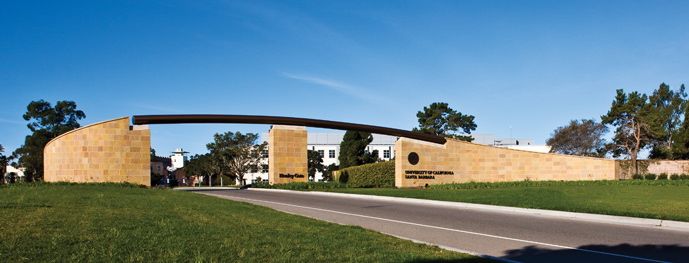
UCSB (courtesy photo)

UCSB (courtesy photo)

Goleta’s proximity to UCSB helps enrich the community in a myriad of ways. As Santa Barbara County’s largest employer, with almost 10,000 people on staff, the University obviously brings tremendous financial resources to the area. UCSB provides at least five percent of the county’s economy and more than eight percent of the South Coast’s economy, according to Bill Watkins, Executive Director of the UCSB Economic Forecast Project.

A critical point about the dollars that UCSB brings to the community, Watkins says, is that “it’s not a volatile source of economic activity… Agriculture can be volatile, certainly manufacturing can, lots of industries can be very cyclical, and for the most part this is not particularly cyclical and it also has a fair number of pretty well-paying jobs.”

But the dollars UCSB brings in are just a small part of its contributions to Goleta.

“In addition to being a leading research university recognized around the world, UC Santa Barbara is an integral part of our community,” says Chancellor Henry Yang. ” Our public service mission includes working with our local partners to develop programs and projects to enhance the quality of life in this region. Our reach extends into many areas of activity, from educational outreach and economic forecasting to community health and technology transfer.”

Yang continues: “We feel fortunate to be located in such a special, beautiful place, and our community is very supportive of our mission. In return we offer community members a rich variety of activities to sample and enjoy, from lectures and performances to athletic events, recreational programs and facilities, extension courses, and personal development classes.”

As Vice Chancellor John M. Wiemann explains, “We are part of this community. We’re here, we’re your neighbors, just like you’re our neighbors…we breathe the same air, drive on the same roads, our kids go to the same schools. So we’re really part of the community. We’re people who coach Little League teams, participate in PTA’s, do all the things that everybody else does who have other jobs, we just happen to work at the University.”

Wiemann continues, “… probably the best thing we do is we bring 20,000 really smart, interesting kids here every year that contribute in a variety of ways to the local area, just by being who they are. They volunteer here. …Students also provide a work force for local businesses, especially local merchants and hotels.”

UCSB also brings wonderful cultural resources to the community. Itzak Perlman, Jon Stewart, Gary Trudeau, Bobby McFerrin, Amy Tan, and Yo Yo Ma are just a few of the talents who will perform this year as part of the UCSB Arts & Lectures series.

“It is just a stunning list of people that otherwise wouldn’t be in Santa Barbara,” says Wiemann. “No matter what your intellectual interest is, you can find somebody at UCSB talking about it every month…”

In addition, the University and the UCSB Affiliates bring a wealth of enrichment out into the community. Recent programs include: Health Care, Mortality, and Obesity” “Nuclear Nations,” “Sustainability,” and visits to the Los Angeles Opera.

Sports are also a big draw for the public, with thousands of fans cheering UCSB on to winning the national championship NCAA Division 1 title for men’s soccer in November. The school also fields teams in women’s soccer and softball, and men’s and women’s basketball, cross country, golf, swimming, tennis, track & field, volleyball and water polo, as well as men’s golf and baseball. Along with the full spectrum of spectator sports, the UCSB Recreation Center is the workout site of choice for many Goleta residents with its swimming pools, gymnasiums, weight rooms, squash courts, racquetball courts and climbing wall. The University also runs several after-school and summer recreation programs for children, including community athletic coaching, aquatics classes, gymnastics school, junior lifeguards and surf & kayak camp.

With all of the vibrancy, energy and resources that UCSB brings to Goleta, the University also shares in one of the community’s biggest challenges–the high cost of housing.

“The most pressing issue for the campus is the issue of faculty and staff housing, explains Marc Fisher, Associate Vice Chancellor for Campus Design and Facilities. “We are anticipating about 400 retirements over the next 10 years …of course we’ll have some new hires as well. But that’s a big number.”

“If you think about the housing situation in Santa Barbara and Goleta, when those faculty members retire or go on to another position, the house that they purchased when they purchased it would be unaffordable to incoming faculty. We need to have a supply of housing that’s available for faculty and staff that is affordable so we can make sure that we can continue to retain high quality faculty and staff,” he says.

” It’s a recruiting issue,” agrees Wiemann. “Just like any other company in town will tell you, it’s tough to recruit people into a community where the median house price is over a million dollars.”

With the goal of affordable housing for employees in mind, Fisher and his team of architects, designers and planners have developed an extensive long-term plan for potential housing sites at the University.

The primary goal is “to use campus properties effectively to assist in resolving some of the University’s most pressing problems: the need for affordable work-force housing for faculty and staff, and for expansion of the stock of housing for students,” explains the document, which goes on to acknowledge that booming regional real estate prices have made it “extremely difficult for the University to recruit and retain high quality faculty and staff” so long as employees alone bear the housing burden.

The principles that will guide future housing decisions include: building affordable housing to recruit and retain faculty and staff; building diverse housing types (including for-sale single-family houses, condos, and townhouses, and for-rent apartments) for faculty, staff, and students; incorporating principles of sustainability so that new buildings will meet or exceed LEED (Leadership in Energy and Environmental Design) Silver Standards; building neighborhoods, not projects; preserving and celebrating the environment; and minimizing car dependency.

“I think the thing that this study showed is that we have quite a bit of additional capacity on site and that before we really went out and purchased property we would try to use what we have already,” says Fisher. “We think it’s the most sustainable model.”

Fisher continues” There’s a wonderful term, self-mitigating, you know the way that lets the campus be here and work very closely with the community but lets the campus keep a lot of its impacts very close to the community. We think that actually has the potential to turn into a very rich academic community in and around the campus.”

The Coastal Commission (which has to approve all construction projects on the UCSB campus) recently approved one such housing project. The North Campus faculty and Sierra Madre family housing developments will eventually supply a total of 323 units. The two projects are north and east of Ocean Meadows Golf Course.

Currently under construction is an additional student housing project, San Clemente Housing. Graduate students will be the first ones eligible to live in one of the 327 apartments along El Colegio Road. “We’ll be occupying that in summer 2008,” says Fisher.

While Goleta has had its share of arguments about growth, Fisher says the community has been generally supportive of the University’s need to create more housing. “I think because it is very thoughtful. The idea that you’re building close to work, we’re not building on open space or building on areas that aren’t already developed, we’re not taking the agricultural lands, all the things the community seems to want to do, preserve most of the open space, preserve and protect agricultural land, build on existing sites at higher densities, all those things. And plus the housing is really close to work, so it’s kind of an ideal model in terms of development … I think it’s going to be a very strong community, frankly. There has been generally a pretty good reaction to it.”

He adds, “I think it’s good for the students too because it brings in faculty and staff with the student population, and its going to make it a richer environment, a more traditional college town.”

Also popping up soon–in March 2007–is the new Moser Alumni House. “I think it’s going to be a fantastic building,” says Fisher. Designed by local architect Barry Berkus–a former UCSB student who was named by Residential Architect Magazine as one of the 10 top residential architects of the twentieth century–the project takes full advantage of its spectacular location at the formal entrance to the campus on Mesa Road. “On the roof of that building it has 180 degree views, you can look down to Hope Ranch, you can see the ocean, you can see the bluffs from one direction, and you look around to the north edge and then the west and you can see the full sweep of the mountains all the way out to Gaviota. … It’s pushed out so far from the north edge of campus that it really has sweeping views. It’s quite striking,” says Fisher.

Expected to break ground in February is the first fully donor-funded complex at UCSB, the new Carsey-Wolf Center for Film, Television and New Media. It will be connected with two new academic other buildings, a social science building and the Gevirtz graduate school of education. Located right across from Robb Gym in parking lots 20 and 21, those three buildings constitute about $100 million worth of work, according to Fisher.

There are also several projects nearing completion on Pardall Road, including a parking structure on the west side of campus, a student resource building and a new theatre and dance building, says Fisher.

“The master plan really tries to build buildings in a very logical fashion,” he explains. It tries to build better social breezes between the buildings and a much richer landscape, and I think we’ve done that. There’s a nice open plaza we just put in, and it’s a much different entry sequence from Isla Vista into the campus now. Now you come in it’s not just a parking lot, it’s actually a very pleasant walkway into campus.”

He adds, “starting next fall we’re going to make an addition to the engineering two building. … We have about $870 million worth of work on the campus. It’s quite a package of construction.”

Indeed it is a lot of construction. There are also some renovations of existing buildings taking place, with UCSB’s strong commitment to environmentalism leading the charge behind the University’s recent agreement with the U.S. Green Building Council to use the LEED standards for Existing Building rating system in 25 of its existing buildings over the next five years. LEED is the national benchmark for high performance green buildings.

UCSB has already completed one successful LEED for Existing Building project in Girvetz Hall, and plans to eventually make all of its existing buildings LEED certified. Not only does the University have a strong commitment to the environment, but also “the Chancellor is hugely supportive of this,” says Fisher.

Bren Hall, home of the Donald Bren School of Environmental Science and Management, is a leading example of sustainable architecture and is the only laboratory building in the country to receive the U.S. Green Building Council’s Platinum Leadership in Energy and Environmental Design accreditation. It sets the highest standard for sustainable buildings for the future and is being used as a model for facilities and operations throughout the state.

The Marine Sciences Building is UCSB’s second LEED for New Construction certified building. It features ultra low water use fixtures, preserves natural landscapes and habitat, and is 25 percent more energy efficient than mandated by California’s strict building codes. The Student Resource Building, which is nearing completion, will also be LEED certified.

Within those buildings, the University’s connection to its environment is even more evident.

“The local environment presents us with some really interesting teaching and research opportunities and we try to take advantage of that,” says Wiemann. “We have a very strong marine science program, strong ecology in various places all over the campus, the students, like the rest of our community, are very concerned about the environment and so we have a lot of environmental programs.”

He continues, “We try to take advantage of environment, and take advantage of the unique opportunities that the channel islands and the channel specifically presents for researchers. It’s interesting and in some way, unique geologically, and in terms of the ocean currents and the like it presents some really good research opportunities…we have built a very strong undergraduate environmental studies program. We have the Bren, School which is one of the three best in country.”

Explains Wiemann, “The Bren School was started by a group of scientists and biologists in different departments who were interested in environmental issues and they wanted to create a professional school that was training people at the master’s level to go and work in environmental areas, giving them the training and credentials to work either for government or nonprofits or industry.”

Many of UCSB’s professors are also involved in Goleta’s local industries, particularly the high tech sector. “We have a very entrepreneurial faculty,” says Wiemann, ” especially in science and engineering.” Many of them have started companies or developed technologies that have gone out and been commercialized.”

Indeed UCSB Faculty, Staff, Students and Alumni have been fundamental in the development of the Central Coast Region’s high technology economy. According to the Technology Management Program, which is a business program within the College of Engineering, more than $650 Million in venture capital funding for UCSB spin-offs has been generated in the past 36 months and during that same time period more than $7 billion in mergers and acquisitions has come from UCSB spin-offs. More than 30 percent of the UCSB engineering faculty are entrepreneurs and more than 175 UCSB alumni or faculty have founded high tech companies, primarily in Goleta and adjacent areas.

Thanks to its academic, environmental, athletic and entrepreneurial accomplishments, UCSB is becoming more and more prestigious all over the world. “People are recognizing the quality of this place,” says Wiemann. “It’s always been very good, but our reputation is catching up with our reality.”

“I think it’s fair to say that UC Santa Barbara’s presence is a vital part of this region’s well-deserved reputation as one of the most desirable living and working environments in the country,” says Chancellor Yang.


Originally published in Goleta Magazine