First Time Home Buyers: Adventures in Home Buying

Image by phanlop88 freedigitalimages.net

Image by phanlop88 freedigitalimages.net

Sometimes the first house you have your heart set on isn’t the one that you’re meant to have. That was the lesson Gloria Herrera and Martin Ibarra learned during their recent home-buying adventure.

After losing bids on several homes, the couple, who share a home with their daughter and Ibarra’s mother, was ready to compromise on their dream house. While they really wanted to stay in Santa Barbara, they also looked at properties in San Ynez and Buellton. Plus, they needed at least three bedrooms and they didn’t want a condominium.

This market is very competitive and difficult, said their Realtor Nicole Dinkelacker, who’s with Remax in Goleta. “It’s a lot more complicated than just finding a property.”

In the case of Herrera and Ibarra, Dinkelacker was ready with the check for a “compromise house,” when she found out that another property they had bid on earlier was available for an additional $5,000.

“Usually $5,000 you’re like oh my God, $5,000,” said Herrera. “At this point, $5,000 was like $5 to me … for a bigger property and an extra room.” Herrera said she thought the fact that she and Ibarra are both native Santa Barbarans (who met at Santa Barbara High School) was what sealed the deal for the home they eventually purchased for $700,000.

The four-bedroom, two-bathroom home on a 900 square foot lot on Noma Street in Carpinteria was a good buy, compared to what was available in Santa Barbara. “We lucked out,” said Herrera, noting that in addition to more square footage, most of the house had new carpet and had been newly painted.

Regarding making home improvements, “It’s not like you have much money left after buying the house. You pay your bills and you pay your mortgage and then … Home Depot,” said Herrera.

“Yeah, we tend to be at Home Depot a lot more, that’s for sure,” laughed Ibarra.

“When we first got the house, it wasn’t as pretty. I put in palm trees and flowers. … I think a year from now it will definitely be a lot more how we envisioned it. …You only have the weekend to really do much.”

Although fixing up the house is an ongoing project, Herrera said she’s ready to relax and enjoy the house for a while. “Even though it’s a very tight budget, … you kind of spend your weekends here at home. Sometimes it’s by choice and other times because you really have no other form of entertainment you can afford. But at least it’s yours and you know that little by little, it will get easier. … We have something that a lot of people have a hard time trying to obtain.”

“I know she had her heart set on the first house … and I know when that didn’t come through she got down. But like I told her, it’s either meant to be or not,” said Ibarra. “(I told her) we’re going to find something down the road that’s going to be much better. And soon we were able to find this.”

Originally published in South Coast Beacon

First Time Home Buyers: There’s Nothing Like the First Time

Image by phanlop88 freedigitalimages.net

Image by phanlop88 freedigitalimages.net

Here on the South Coast — where multiple bidders compete to buy $1 million generic tract houses that “need work” — first time homebuyers are definitely in the minority. But a surprising number of working professionals are getting into the market via some very creative configurations, both in terms of financing and sometimes even living situations.

“It’s a lot more complicated than just finding a property,” said Nicole Dinkelacker, a realtor with RE/MAX’s Goleta office who’s been in the business for 20 years. “Anybody with less than ten percent down, it’s very competitive and difficult.”

Difficult, but not impossible.

“You can get 100 percent financing. You have to have beautiful credit, of course, but it isn’t like you have to come up with a huge amount of money, or at least you should talk to a realtor before you decide that,” said Rebekah Mulder, a realtor with Prudential California Realty in Santa Barbara.

A former teacher and principal at Cold Springs School, who got out of education to become a financial planner and real estate agent, Mulder said she still finds a lot of her job involves educating her clients about the tax advantages of investing in real estate, as well as the many creative ways to make buying a house possible in the Santa Barbara market.

One of the unique financing methods she often teaches first-time buyers about is equity sharing, where a parent, an employer or a third party will invest in buying a house in partnership with the person who will live there.

Recently, Steen Hudson (the Director of the Rescue Mission) and his wife Trina entered into an equity share agreement with his employers, said Mulder. “The mission is realizing money on its investment and if the Hudson’s so choose they can steadily buy the mission out. It’s a great way for employers to help out their employees and make an investment as well.”

“Equity sharing is a great investment. You pair up older people who really don’t want to go out and buy an apartment house or something. Most people are unaware that if you own a residential income property, you can depreciate that property. Even if its actually appreciating, the tax code allows you depreciate it, which then shelters that much of your earned income from any taxes at all,” said Mulder. The IRS allows you to treat one physical property as both a residential property and a residential income property (divided proportionately), she explained.

Rather than asking parents or others to “help” with a down payment, Mulder advises approaching it like a business opportunity and will often make the presentation to parents as a neutral party. “We have (37-page) contracts where you negotiate every horrible thing that could happen.”

“Another thing that piggybacks on that is that buying a property with a rental on it is really good option, especially for someone that’s maybe got high income but maybe no money down, said Sharol Mulder, Rebekah’s daughter and business partner.

“A lot of times if we have people with a lot of money down, it’s a better bottom line if they buy a more expensive property with a rental on it. So let’s say they could go buy a $600,000 condo, they could probably buy a $900,000 house with a rental on it and actually come out paying less per month,” said Sharol, who recently made this type of deal with buyers Dave and Eliza Reed and Kate Russell (Eliza’s sister). “They bought a neat old turn of the century Craftsman plus an additional duplex on West Sola. … They rent out the main house for maximum income.”

In addition to financing options, first-time homebuyers often need to be educated on the basics about realtors. “There are a lot of people out there who don’t know how realtors get paid. We’re seeing people walk into open houses and work with the realtor who’s there without a recommendation. … As a buyer you’re not going to pay the realtor’s commission but you really need a good realtor, so you need a good recommendation. … It’s a great benefit to you as a buyer that the seller is going to pay your realtor’s commission but it doesn’t take away the responsibility that you have to find someone who’s really good to represent you,” said Sharol.

Having professional, experienced representation is even more important with the current climate of multiple offers being made for any given listing. “Houses are going really quickly,” said Gloria Herrera, one of Dinkelacker’s clients who recently purchased a home in Carpinteria after making an offer on another. “The whole thing has really been a learning experience.”

There’s nothing like the first time … starting next week, our South Coast Homes section will feature case studies of local first time buyers. We’ll go inside their homes to see what they were able to buy and how they were able to do it.

Originally published in South Coast Beacon

First Time Home Buyers: Going Condo

Image by phanlop88 freedigitalimages.net

Image by phanlop88 freedigitalimages.net

The quest to buy a condominium on the South Coast can be grueling on the nerves. “It was crazy. You’d go out and at every open house … you’d see all the same people all the time,” said Cari Thomas, who recently purchased a San Roque condo with her husband Sam. “They started looking like your competition. Like you didn’t want to smile at anybody.”

“I think our biggest surprise was the amount of demand and the fact that there were multiple offers over the asking price,” said Sam. The Thomases looked at dozens of condos and were outbid on six different places before purchasing their new home at 3663 San Remo Drive for $560,000.

We feel like we lucked out, said Cari.

“Once you get a firm understanding of the market, your standards change a little bit. There were places the first weekend we looked that were significantly less money that were not as nice, but a month and a half later we were wishing we would have made offers on those ones that we saw early on,” said Sam.

As is the case with many first-time homebuyers, the two-bedroom, two-bath place the Thomases purchased was more expensive than what they originally budgeted for. When their realtor, Judith McDermott from Village Properties, urged them to “Just drive by and see what you can get for that amount,” they immediately liked it enough to call their loan broker and make the arrangements to make an offer.

“We put five percent down and are using an interest only loan. Some of the money was from savings, some was from a previous 401K plan, and some was an investment from friends,” said Sam.

Part of what sold them on the condo was its immediate livability. “The paint, it’s amazing what paint and color can do. And it was decorated really nicely and the mountain view was pretty,” said Cari. She also liked the fact that the condo overlooks a pool and the rooms were pretty spacious compared to other condominiums.

“It definitely felt modern and we liked how they redid all the architecture on the outside,” said Sam, noting that the kitchen appliances were upgraded three years ago when the complex was converted from apartments to condominiums.

The fact that the association fees were comparatively low was also a plus for the Thomases. Another advantage was the location, close to downtown and their workplace, Cima Management.

At the time of their purchase, they simply saw the Hope School District location as a plus for the condominium’s resale value. However, the Thomases have since learned they’re expecting their first child in November.

“It (the school district) wasn’t something we were searching for initially, but now it worked out great,” Cari said.

Originally published in South Coast Beacon

First Time Home Buyers: Lowered Expectations

Image by phanlop88 freedigitalimages.net

Image by phanlop88 freedigitalimages.net

Like many first time homebuyers, Jennifer Cartwright and Bob Freed had to lower their expectations a bit when they set out to buy something on the South Coast. When they originally saw their condominium at 235 Aspen Way in Santa Barbara, they didn’t like it. “After seeing what was out there and the locations and prices, that’s where everything kind of just clicked that this had pretty much everything we wanted,” said Freed of the two bedroom, one and a half bath condo they recently purchased for $453,000.

Price was definitely part of what influenced the purchase, said Cartwright. In October, the then-engaged couple (who wed in late April) were “just kind of investigating options” with realtor/friend Bob Curtis. “We didn’t care if it was a house or a condo. We didn’t think we would be able to afford anything in the first place,” she said.

“It was all timing. What we basically wanted to do is stop paying the man. It’s just a different way of looking at savings,” said Freed.

The money for their down payment was an inheritance from Cartwright’s grandmother. “We got really lucky,” said Freed, who was sharing a house with roommates at the time, while Cartwright lived in a studio apartment. The condo had been recently painted and carpeted and didn’t need much work.

The couple also gave a lot of credit to their realtor. “Bob is an excellent real estate agent. He really took the time to kind of teach us all there was to learn about,” said Freed.

“And we had a lot of questions. Poor Bob, we were calling him daily almost,” added Cartwright. “Before we even looked at things, he set us up with Metro City Mortgage, which was our mortgage broker and told us all the right things to do. … Then when we went out to go look, we knew what we could afford. We weren’t in the dark,” she said.

The condo they purchased had been on the market for several months, unusual in Santa Barbara. “It was overpriced … It was on the market for 180 days or something like that. People were thinking that it was a lemon because no one had bought it right away, but that was because they listed it way too high,” said Cartwright.

The sellers lowered the price and Cartwright and Freed took the plunge and made an offer — after looking at places for only about a week. “I asked Bob at that time, I said are we moving too fast and what if we wait until the wedding,” said Freed. “Bob said, ‘You know, my gut instinct, if you wait, you’re going to pay $30,000 to $40,000 more.’ And actually condos of this size and this location are going for about 500 now,” said Freed.

While clubhouse amenities weren’t much of an attraction for the couple, who both work for the YMCA, what appealed to them about the condo was its secluded feel and location within the complex. “It’s off the street, further away … with the creek in the back, you’re guaranteed no one’s going to build,” said Cartwright.

“I feel more relaxed when I get home, I don’t know how I’m going to explain this but it’s like you’re really going home,” said Freed. “It’s just a neat feeling.”

Originally published in South Coast Beacon

Noozhawk Talks: Leslie Dinaberg Sits Down With Suzanne Farwell

Suzanne Farwell, LaraCooper / Noozhawk photo

Suzanne Farwell, LaraCooper / Noozhawk photo

As Director of Communications, Suzanne Farwell is often the voice for the Santa Barbara Foundation, connecting all of us with information about the good work the foundation is doing in the community. Farwell connects with Leslie Dinaberg
to reflect on her work and her life, as she prepares to retire later this month.

Leslie Dinaberg: What will you miss the most about your job at the Santa Barbara
Foundation?

Suzanne Farwell: The people I work with. One of the reasons I like working there is because I
work with people who are passionate about what they do and helping people.

…The other thing I really like about my job is it has so many facets where I’m
gathering information, so I’m learning about many different things every day. …
I’m learning about different philanthropic groups that pop up through us. It’s the
whole canvas of interesting wonderful things that are positive. …

LD: That’s great. In many ways I think Santa Barbara Foundation seems like an
ideal nonprofit job in that you would never get bored because you’re dealing with
so many different types of things.

SF: And now there’s the added component of a new boss who is coming in (Ron
Gallo replaced Chuck Slosser as CEO this year) with fresh ideas and that’s also
very exciting.

LD: So what made you decide to retire now?

SF: Well a couple of things. The major reason is my daughter has a little boy who
is 14 months old and he is a sweetheart and I don’t get to see him much. And my
son is getting married and in every family there needs to be someone at the
center who doesn’t necessarily actually need to do anything but who is that
center and there’s much I can’t do with this job. … I hope to do some projects for
the foundation that I am intensely interested in, and I’m still young enough to be
able to open my mind to lots of other things and who knows. I’m trying to have a
fertile ground and so as things pop up they take root. But I can’t open it up
without cutting back on the work. But it seems like a good time. I’m also looking
forward to spending more time with my husband at home.

LD: I would imagine that’s its very demanding work.

SF: It is, but that’s what good about it is I use every brain cell.

LD: I know you worked on a lot of great programs while you were at the Santa
Barbara Foundation, but are there any that are particularly near and dear to your
heart?

SF: The first year I was there we were about to celebrate the Foundation’s 75th
anniversary. So there was a book, a history book for the anniversary project to
coordinate and then there was a gala performing arts presentation at the Lobero.
That was fantastic. Then there was a symposium about the future of
philanthropy. That was all in one year. That was really something. …

I think one of my favorites was a book about the blind doctor, Dr. Pearlman. … A
little old lady comes to us and she wants to leave us a million dollars part of the
deal is that we publish her manuscript. Well, you can imagine a little old lady’s
manuscript. What will we do with that? Well, you read it and it turned out to be a
really compelling human story so we shepherded that project, we got a local
publisher; the whole thing was really heartwarming. And it’s always nice to have
tangible evidence of what you’ve done because most of mine is ephemeral.

LD: I’ve seen that project and it’s very, very cool.

SF: Yes, and the idea that we would be following through on the donor’s wishes
which is always very important. And it’s a book that opens people’s eyes to what
it is like to be blind as a society, as a world society we could all that to
understand what it’s like to be in someone else’s shoes.

… It’s fascinating. I get something out of every single project. I know the
foundation’s history better than anybody.

LD: Do you have any trips planned or any immediate plans as soon as you’re
done?

SF: Everybody asks me that. … My husband and I have traveled a lot and I just
plan to stay home for a while and just be there. I live in a wonderful place. I want
to just sit on the porch, watch the birds and just still the mind a little bit because
I’m always thinking about philanthropy and this and that and it’s going to take a
while for that to go away because I’m always going at 60 miles an hour.

LD: What else do you do like to do with your spare time?

SF: Well I love to read. I’ve also been a professional dancer for 30 years and I
still do it two or three times a month. I’ve been with Chef Karim since he
started.

LD: I didn’t know that.

SF: So that’s in my blood. And I love to move, so it would be fun to explore
different forms of dance. I don’t know it’s mainly a stilling of the mind to allow
other things to come up. It sounds like I’m not going to do anything.

LD: You need a break, that’s what it sounds like to me.

SF: So I’m opening doors and letting things in.

LD: How did you get started with belly dancing?

SF: My husband and I were living at Married Student Housing at UCSB because
we were both graduate students. I was getting my masters in French and he was
getting a PhD in counseling psych and a woman moved in who was a belly
dancer, new to town. He was dabbling in photography at the time, she needed
photos, so they made a deal. He said I’ll take photos of you and why don’t you
give Suzanne some lessons. I was very annoyed. I was not consulted. I was
almost insulted.

So I went and I took a couple of lessons and said this is really weird. But then my
teacher put on a show with three other dancers and I went and I was hit in the
head by a bat. That proverbial light bulb was like, ah, that’s what I want. Yes. I
want to be that person on the stage. Because it’s so alluring and beautiful and
that was it I set on a path and my poor husband never imagined that this would
happen. And it became overwhelming. It changed my life because I learned to
relate to people in a different way. I was very British at the time, very shy and I
learned to handle myself. I did Belly Grams for years where I would go to offices,
homes, wherever and do a ten minute dance and congratulate the birthday
person and whatever it was and so I was in mansions in Montecito, barbecues on
Milpas, offices all over, it was fantastic, so I got a look at America that I never
would have had, and it was for me about Americans. A great education… It’s
added a spark to my life.

LD: Keeps you in shape too.

SF: It does. And like anybody else I’ve had experiences and I’ve taken from them
and learned and it’s made me who I am today, and I hope to have many more of
them…

LD: How did you go from getting your masters in French and becoming a belly
dancer to working in the nonprofit world?

SF: I was a stay at home mom and I took that very seriously. I spent a lot of time
with my kids educating them in every way that I could. When our daughter, the
younger of the two, went to high school, my husband said, “well you know, this is
a good time to get a job.” I was panicked because I had not ever really, really had
a job.

I’d worked as a caterer for many years and I worked at Jane Fonda’s ranch. … I
applied for a job at the museum and they hired me and then I thought to myself
as I sat at the desk the first day, what am I doing. This could be the shortest job
in history. Then I calmed down and I just applied the idea that what would I want
to know being Jill Six Pack on the street, because I didn’t know that much about
the museum and I went on from there and it all worked out very nicely.

Vital Stats: Suzanne Farwell

Born: January 30, in London, England to a French mother and a British
father

Family: Husband Larry Farwell; two grown children, Nick, who lives in Seattle,
and Lara, who lives in Palo Alto; and a grandson, Bennett, 14 months.

Professional Accomplishments: Masters Degree in French; Chef/Caterer at Jane
Fonda’s Ranch; Worked in communications for Santa Barbara Museum of
Natural History; Voiceover Artist, now voices the calendar on KDB radio station;
Professional Belly Dancer; Director of Communications for the Santa Barbara
Foundation.

Best Book You’ve Read Recently: Kate Wilhelm’s “Barbara Holloway” series of
mysteries and Orson Scott Card’s “Ender’s Game” series.

Little-Known Fact: “I think I’ve exposed all of the little known facts. The dancing, I
don’t bring that out that much. They are really two separate things. When they
intersect it’s interesting, but it’s not the first thing out of my mouth.”

Originally published in Noozhawk on June 7, 2009. To read it there click here.

Labor of love

SBMA docents often young students’ first exposure to art

Santa Barbara Museum of Art

Santa Barbara Museum of Art

“The most important thing about learning to look at art is that what you feel about it matters. Your opinion is valid. There is no right answer,” is what Santa Barbara Museum of Art (SBMA) Docent Pat Andersons tells elementary school students before she brings them in for tours.

The very first visitors on SBMA’s opening day in 1941 were schoolchildren. Today the Museum serves about 30,000 children per year through its education program, said Spokeswoman Martha Donelan.

Much of the educational programming is carried out by docents, who collectively volunteer approximately 12,000 hours per year, said Andersons, president of the 79-member group, which includes artists, teachers, a married couple who met through the program (Candice Taylor and Paul McClung) and even a retired rocket scientist (Cliff Hauenstein). Docents undergo nine months of rigorous training, as well as ongoing education. Unlike many museums, which use scripted tours, “One of the things that’s so different about our program is that we do all our own research … we select the pieces … it’s a really personal thing.”

Most docents lead tours for both children and adults, but it’s clearly the kids who’ve captured Andersons’ heart. One of the things that fascinated me when I started touring kids is that “a lot of children have never been to a museum … so the concept of original art … makes them almost giddy,” she said.

Prior to the elementary school field trips — funded entirely by SBMA, including the buses — docents visit the school to give a preparatory talk. “(The school visit) is actually one of the most important aspects of the program because not only does it give the children something to look forward to and get them excited about the program, but they feel more comfortable coming here if they know what to expect,” said Andersons.

“… We have wonderful exhibitions and an outstanding permanent collection, but the education program, and the docent programs in particular, are the ways that we reach out to people and let them know what we have and why it’s interesting and what’s cool about it,” said Donelan.

After children tour the museum, they are given souvenir postcards and free tickets to bring their families back to the Museum. Teachers are also given posters and hands-on activities do back in the classroom. The program — which serves schools from as far away as Lompoc and Hueneme at no cost — is curriculum-based, designed to compliment what teachers are doing in the classroom from K-12.

With art programs in the schools being cut, sometimes we’re it, said Andersons. Admittedly, being a docent is demanding, but infinitely rewarding, said Andersons. “We all think we get back much more than we give,” she said.

For additional information about the docent-training program, call Sue Skenderian at 684.6384.

Originally published in South Coast Beacon

It’s all about hue!

Image by gubgib freedigitalphotos.net

Image by gubgib freedigitalphotos.net

Gone are the days of a one-color-fits-all approach to decorating. Now homeowners are choosing colors to illicit a mood and perk up a room’s decor.

Wall color is one of the easiest and least expensive ways to add some color to your home, said Pat Musarra, owner of Affordable One-Day Design.

Ralph Lauren even offers Color Testers, a new product line that allows you to sample the complete palette. Each Color Tester packet provides paint coverage in a satin finish for 2-foot by 2-foot sections of wall, retails for $3.99, and may be purchased online at www.rlhome.polo.com.

Even if you’re leery of paint, with so many varieties of home accessories available, it’s easy to start small and experiment boldly with color on items like throw pillows, vases, candles, slipcovers, candy dishes, sheets and towels and table linens.

“New lighting is very important. Just changing lampshades can have an enormous impact,” said Musarra, who also recommended taking a look down at your floors. “Area rugs or maybe pulling up wall-to-wall carpeting and laying down a hardwood floor or some kind of new laminate floor … Especially if the wall-to-wall carpeting is old or the color’s outdated.”

In addition to freshening your home’s look, colors can be used to create a mood.

“Red will wake up a room,” said interior designer Rosemary Sadez Friedmann. “It should be used as an accent in accessories, part of a pattern in upholstery or one impressive chair or bench. Red is a good color to have in a nursery because it stimulates and aids the development of neural connections in an infant’s brain.”

Musarra said she’s seen red — and other bright colors — used a lot as a kitchen accent color, with coffee makers, mixers and other small appliances now available in a wide variety of colors.

Orange is another color that is “uplifting, stimulating and enlivening,” according to Barbara Richardson, director of color marketing for ICI Paints. “It has the ability to raise our spirits and to make us feel optimistic — a quality that is in high demand right now.”

“Yellow would be a good color for a workout room, particularly if aerobics were involved. It’s also a good color for a game room, study or office because it helps to keep you attentive. A yellow bathroom will take the chill out of the air,” said Friedmann.

Whatever color you choose to update your home’s look, experts advise you start small, with maybe a few throw pillows or some new kitchen linens.

“It’s amazing how many inexpensive ways there are to update your home,” said Musarra, who specializes in quick and cost effective design strategies.

Musarra charges a flat fee of $200 for her services, which include a two-hour home consultation, followed up with a written design plan.

“I also restyle the room for you while I’m there,” she said. “Move furniture in, move some out, re-hang artwork, re-group accessories, and give a room a whole new makeover, using basically what the client has and at the same time, offering suggestions as to what she or he should buy to complete the look they’re trying to achieve.”

What colors are hot

“It” is either Violet Tulip, Coraly Orange, Full Bloom (a Salmony Pink) or Turquoise Blue, depending on which expert you ask about the “it color” in home decorating this year.

“I’m seeing a lot of pinks and salmon and turquoise and brown, not my favorites, but I am seeing a lot of those colors,” said Pat Musarra, owner of Affordable One-Day Design.

Pantone – the company that crowned violet tulip as this year’s queen – has even created a new color system called Colorstrology, which “infuses elements of astrology and numerology with the spirituality of color.”

According to Michele Bernhardt, creator of Colorstrology, 2005 will resonate with spirituality and healing.

“The year will begin with a heavy influence in regard to foreign affairs, education, religion and sports. Peace, balance and cooperation in all types of relationships will be a major theme and can also be a major challenge. Violet tulip can help us see past our differences while dissolving our feelings of separateness,” said Bernhardt.

At www.colorstrology.com, you’ll find your personal birth color, along with a personality profile and advice on your color vibe. September, for example, is Baja Blue, “a divine and alluring color that resonates with beauty, purity and wisdom.” This color “can help ease tension and promote tranquility,” making it an ideal choice for a bedroom or a yoga studio.

Taking the color horoscope a step further, a Virgo born on Sept. 8 would have Etruscan Red as their personal color for the year, a color that “corresponds with depth, vitality and passion.”

According to the site, “wearing, meditating or surrounding yourself with Etruscan Red inspires you to move through life with energy and wisdom.”

Sounds like a good color to decorate the office.

What color is your mood?

Here are some color guidelines based on the type of mood you want to create.

RED__Use red for excitement. It is associated with power, passion, dominance, activity and heat. It represents youthfulness, impulse and intensity. Red is also a grounding color and can make you feel secure.

ORANGE__Orange represents excitement and can be stimulating. It can make you feel like hurrying and that is why it’s usually a color used in fast-food places and quick mart-type stores. They want you in and out quickly. Happiness, liveliness, exuberance and boldness are also associated with orange.

BLACK__Use black to evoke drama, elegance, power, sophistication and mystery. Black is also associated with death, fright, aloofness, fatigue, cold, darkness and bereavement.

YELLOW __Yellow is eye-catching, inspirational and raises ones spirits. It is also said to aid digestion, communication and sharpen memory. Design experts advise you treat yellow like sunlight. You want it around for the happiness it produces but you don’t want it to be overpowering.

GRAY__Gray is said to be steady, resigned, stable, deliberate, guarded, dignified, indecisive, disciplined, protected, cool and neutral.

PURPLE__Purple can be used to increase spirituality and enlightenment. It evokes feelings of elegance, restfulness, supremacy, creativity, royalty and reverence. Purple is also said to promote peace, quiet overactive glands and lower blood pressure.

BLUE__Blue is a breath of fresh air, evoking feelings of openness, tranquility, serenity, restoration and well being. It is also said to lower respiratory rates, promote relaxation and increase healing.

BROWN__Brown reminds us of nature and the earth. It is also said to be restful, rich, casual, tranquil, safe, homespun, reliable, stable, sturdy and simultaneously cool and warm.

GREEN__Green reminds us of harmony, balance, compassion, wealth, security and growth. It is said to promote relaxation and refresh the spirit. Green is also a good color to promote health, although it may not reflect well on all skin tones.

WHITE__White evokes feelings of cleanliness, simplicity, safety, purity, enlightenment, individualism, idealism, optimism, joy, innocence, hope and reflection.

Want to find the real hue?

Take this completely unscientific quiz to find out which color (or colors) suit your inner self.

Check off all of the descriptions that apply to you, then count how many A, B, C, D, E and F personality traits you had. That’s your true hue.

B. I frequently rearrange my furniture and repaint my walls.

B. I love jury duty.

E. I always tell the truth, even if it hurts.

D. I often engage complete strangers in conversation.

E. I feel overwhelmingly compelled to pipe up during city council meetings.

B. I burn the midnight oil at work and volunteer for extra tasks.

F. I am a back-seat driver.

D. I would rather shop at a farmers’ market than a mall.

C. The hardest part of throwing a party is deciding the menu.

F. I am the boss, or I should be.

F. I feel good about me, especially when I compare myself with others.

B. I love details.

D. I define myself by my parenting skills.

A. I was never good at sharing.

B. Someday I’m going to chuck it all and go live in the wilderness.

C. Home is the center of my world.

D. When friends call, I can be counted on to help.

E. Winning isn’t everything; it’s the only thing.

A. My friends and family say I’m stubborn. What do they know?

F. Some might find me arrogant.

A. Hallmark commercials make me cry.

A. I’m the first to volunteer for charity functions and luncheons.

C. Pushover doesn’t even begin to describe how easy it is to talk me into things.

Your True Hue

A. Seeing green.

You are confident and caring, and would feel good in a room of sage, basil or celadon. The new greens for 2005 will lean toward the seashore tones. Botanical-inspired greens remain popular.

B. Yellow fellows.

You will feel energized in a room with buttery walls and mahogany furniture. Let in the light with minimal window coverings. The new yellows for 2005 will lean toward ochre and gold.

C. Purple people.

Forget practicality; celebrate your spirit with shades of violet, lavender and silver. Use eggplant or plum as an accent.

D. Orange you glad.

You love food, home and entertaining. Surround yourself with pumpkin, copper or muted auburn. Orange will bring cheerfulness and order to your home.

E. Blue you.

Your dependable, serene nature will feel at ease in rooms washed in shades of gray-blue and soft turquoise — both popular colors for 2005. Definitely use blue in bedrooms for a peaceful night’s sleep.

F. Red hot.

You like to be in charge. Choose red for accents: think floral arrangements rather than carpets. Or start small in the kitchen with a new fire engine red coffee maker.

Originally published in South Coast Beacon (2003)

Life lessons

Courtesy Photo

Courtesy Photo

For some it’s all about the sweets, but the practical experience of selling can turn a girl into one smart cookie

Along with the taste of Thin Mints, Samoas and Tag-a-longs, local Girl Scouts are also savoring the sweet smell of success while learning how to set goals, be persistent, organize their schedules and other valuable skills.

“I don’t really have a secret; my mom and I, we just go everywhere, door to door (selling cookies),” said Tiondra Flynn, an 8th grader at Carpinteria Middle School who is one of the top sellers in the area. “Last year I made a goal for myself of 2,000 boxes and I’m at 2,002 right now.”

Goal setting is one of the most important skills learned selling cookies. “(They ask themselves) what do I need to do to accomplish an end result benefit? It might be the reward (that motivates the girls) but to get there requires specific behavior,” said Jeff Blackman, author of five books for sales professionals, including the recent Amazon bestseller Stop Whining, Start Selling.

The girls set pretty high goals and figure out very creative ways of reaching them, said Mary Hernandez of the local Girl Scouts of Tres Condados Council. “If they don’t reach that goal that’s another life lesson.”

The girls and adult volunteers select all of the incentives; they’re not preplanned, said Hernandez.

Last year Valerie Vampola sold more than 1,000 boxes and earned a free week at summer camp. “I want to see if I can do it again,” said the St. Raphael School 7th grader.

“They give us prizes for every hundred (boxes) or so, but if we reach 1,000 we get to go to Camp Tecuya for free. I’ve been going for like five years, it’s a really cool place,” said Flynn.

Along with summer camp, t-shirts, backpacks and beach towels can be earned. Some of the girls are motivated by college scholarships. “The reason why I’m still selling cookies, they have a scholarship program. If I’m a Girl Scout all the way through high school, I get a scholarship of 35 cents per box,” said Flynn, who said she’s really fond of animals and someday wants to train killer whales “like they do at Sea World.”

“By setting goals you give yourself a road map of what to follow rather than aimlessly pursuing the task,” said Maura Schreier-Fleming, president of Best@selling.

It’s important to set realistic goals, said Steve Waterhouse, president of the Waterhouse Group. And also to have a process tied to that goal. The girls should figure out how many houses to visit if they want to sell a certain number of cookies. “If you want to sell 50 boxes you can’t go out for just half an hour.”

While some pros said persistence is critical, Jacques Werth, author of High Probability Selling, disagrees. “We’ve studied what the top sales people do in 23 different industries on three continents. You shouldn’t spend more than one minute with people who don’t want to buy,” said Werth. “It’s all about dealing with people on the basis of mutual trust and respect. When you refuse to take no for an answer that’s not showing respect.”

“I’ve definitely learned how to take a no for answer,” said Flynn, who’s been in scouting for almost eight years. “If they just say ‘no,’ then I just say ‘thanks,’ then I just leave. When I was first starting out as a Brownie, I didn’t understand why they didn’t want any. I would be like ‘Oh, how come?’ ”

“In reality, getting a NO from a prospect is just as valuable as a YES. … Because while you are wasting your time hounding someone to get them to buy, Lord knows how many prospects, who would be much easier to sell, are getting away from you?” said Jim Labadie, owner of Howtogetmoreclients.com.

“(You have to) not be afraid to ask people. You never know who will buy and who won’t,” said Vampola. “And then sometimes if they say no, sometimes I try to encourage them to buy.”

Parental support is an important ingredient in the girl’s success. “My parents help me out. They bring (sign-up) sheets to their jobs and I go door to door, and then when cookies are finally out I try to go to booth sales as often as I can and stay there as much time as I can,” said Vampola, whose mother Irma is her troop leader and father Mark is the cookie chairman as well as the booth chairman for the region.

Flynn’s mother Pete is also her troop leader and an expert in the up-sell technique, according to her daughter. “If they give us $20, she’ll say ‘you can buy five with that’ rather than immediately giving them change,” said Flynn.

Another technique that works well for Girls Scouts is called “assumptive selling.” When author Blackman’s daughter Brittney was about 7 or 8, their town endured a really cold winter, and it was tough to sell cookies door to door. Rather than give up, Brittney simply picked up the phone and called every single person who bought from her the previous year. Her pitch: “Would you like to order the same number of boxes as last year or should I put you down for even more?”

Sounds like one smart cookie indeed.

Originally published in South Coast Beacon

First Time Home Buyers: Vintage Charm

Google maps image

Google maps image

Entering the threshold of their new life together, couple opts for classic over contemporary

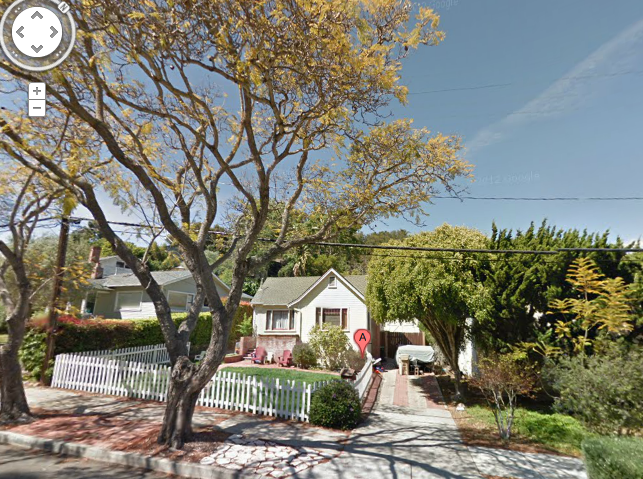
There are two kinds of first-time homebuyers: those that go for the modern amenities and those that go for the charm. Susan Bosse and Erik Vasquez definitely went for the charm, or at least the potential charm of their new home on 1242 W. Valerio St.

The house was built in 1925 and suffered from what Vasquez generously called “deferred maintenance.” Still, the character of the house, which still had many of its original built-ins and fixtures, attracted them.

The bones were good, the potential was there, but the old girl definitely needed a face-lift and some new internal organs.

“The thing that I think scared most people were the termites. But it was funny, the termite guys were the ones all bidding on the house so they weren’t too worried,” said Vasquez.

The inspection package was thick, said Bosse. Besides the termite damage and some water damage, the house needed to be brought up to code with a new roof and modern wiring, including new electrical and heating systems. There were also a few walls the couple decided to remove to improve the floor plan.

“We gave Susan a sledgehammer last week. I can show you the little video,” laughed Vasquez.

“It was pretty fun. I mean when else am I going to get a chance to hit a wall and knock it down,” said Bosse. It was also a good stress reliever for Bosse, who was planning her May 30 wedding to Vasquez at the time.

While some of original hardwood floors were in good shape, some needed to be redone, along with the bathroom and kitchen. “There was still food in the refrigerator,” said Bosse.

Despite the extensive improvements, Vasquez was pleased by the speedy progress his crew was making and prepared for the expense. They got estimates for the repairs up front, before deciding they could afford the house.

“The thing is we found is the cost is the people, the labor, it’s not the materials,” said Vasquez. “The materials are nothing, so if they’re in here (working), might as well make it exactly how you want because it’s not any more expensive to make it boring as it is to make it more interesting.”

Originally published in South Coast Beacon

First Time Home Buyers: The American Dream … the South Coast Reality

Google maps photo

Google maps photo

Breaking into the local real estate market is tough but not impossible. Leslie Dinaberg explores who’s buying for the first time and how.

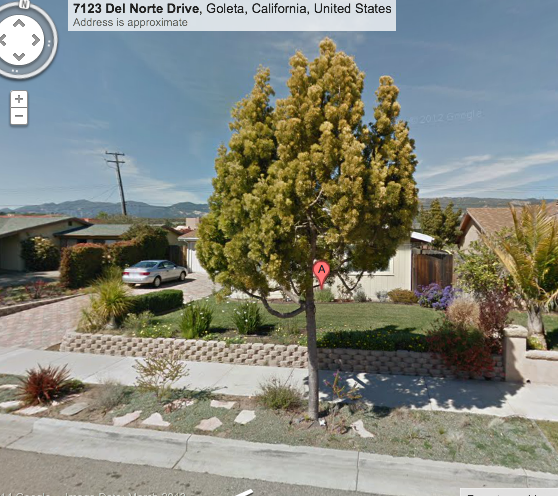
Practicality, frugality and focus were the key values that got Jonathan and Kara Rocque into their first home, at 7126 Del Norte Dr. in Goleta. Both UCSB graduates, the Rocques lived in a one-bedroom apartment and didn’t really upgrade their lifestyle much after college in order to save money for a house.

They started making offers right after they married, about 2-1/2 years ago, but Jonathan said he wasn’t really ready to buy until recently. “People always say ‘get in as soon as you can,’ but … at the same time, I really have no regrets not getting in any sooner because I wasn’t ready.” An engineer, he said he worked for a start-up company and was worried about job stability.

“I think I got to the point where I gained more confidence in myself and that things were going to be okay,” said Jonathan, who now works for Indigo Systems, which recently merged with FLIR Systems.

When he felt really ready to buy, Jonathan had the willing assistance of his father, John Rocque, a realtor and mortgage broker in San Dimas.

Another factor that kept the Rocques from buying quickly was their expectation of what they would be able to afford. “We started thinking that we wanted our dream home out of the shoot, and I think that’s what delayed our purchase, probably,” said Jonathan.

The three-bedroom two and a half-bathroom home the Rocques eventually bought this year for $659,500 has a studio apartment (garage conversion) on the property, a big selling point. “We were looking at these two-bedroom one-bath cottages and went, I just can’t do it. There’s got to be something out there that’s better because it doesn’t leave us the flexibility to grow,” said Jonathan. “When we saw this place with the studio I just thought ‘Oh God, couldn’t be better.’ I could give up the garage and take the extra income that will definitely help.”

Kara noted the backyard had a shed for storage, making it easier for her to give up the garage space. Being able to have a vegetable garden was also important to her, as was the school district. “Basically any school in Goleta, I’m totally comfortable with,” said Kara, who teaches first grade at La Patera.

The Rocques also knew what they didn’t want: no condos and no commuting. “The whole reason we live in Santa Barbara is the lifestyle,” said Jonathan. “I ride my bike. I love the mountains. I love riding by the ocean. I love the weather. I value my time … I’m not going to drive an hour each way to work. I’d go somewhere else where I could live close,” he said.

“I don’t think either one of us ever wants to move into one of the new developments because they’re so crunched together,” added Kara. “Yeah they look pretty, they’re nice and new, but to me this has more character than those houses. You can paint it whatever color you want to paint it; you can do whatever you want with your yard.”

While the Rocques would eventually like to move to a larger house, they are fixing up their yard and treating the house like a home.

“It’s not short term, but it’s not forever,” said Kara.

“This house easily gets us ten years,” said Jonathan. “If we wanted to, at some point we’ll refinance and we could reclaim that space (the studio).”

And as for the realities of being able to afford to stay on the South Coast, they credit much of their success to Patrick Flood, the financial consultant Jonathan began working with when he graduated from college. The Rocques said they feel both blessed and proud to be able to get into the housing market

“I like taking on challenges too. I took a major in college … that was challenging. And staying in Santa Barbara was a big challenge, but I was going to do it. I was really, really happy that we could,” said Jonathan.

Added Kara: “If we can do it here then we can do it anywhere.”

Originally published in South Coast Beacon