
Generation BMX

Young racers test their mettle with their pedals

Faster, higher and often younger than you might imagine, BMX racers are tearing up the dirt at Elings Park every Friday night.

Elings Park BMX (courtesy photo)

Elings Park BMX (courtesy photo)

The sport, which first became popular in the 1970s, is one of the fastest-growing competitions in the country, partially due to the popularity of the X Games and BMX-inspired DVDs, video and computer games. BMX (bicycle motocross) is scheduled to become an Olympic sport in 2008 and, according to Dale Bowers, track director of Santa Barbara BMX, there are three or four local bikers who “could be peaking” at that time.

Several local BMX racers will be competing in the National Bicycle League NBL Grands in Louisville, Ky., this weekend, including Logan Beebe, Chris Burke, Austin Davis, Michael Davis, Austin Hamilton, Jarrett Kolich Kolich, Amber Melgoza, Brianna Wiley and Jason Wiley.

While the level of expertise in Santa Barbara is high, Bowers emphasized that there’s a BMX skill level race for everyone, including beginners — and grownups. If you can ride a bike, you can BMX, which means there are some pretty impressive 5- and 6-year-olds out there.

Racers work their way up, depending on their age and how good they are, said Scott Berry, a 13-year-old La Colina Junior High student.

“I saw commercials on TV and really wanted to try it … we came up on a Friday night and just watched,” he said. “I just liked what I saw and wanted to try it.”

Bowers recommended that interested families follow Scott’s lead: just come to the track and check it out. “It doesn’t cost anything to come in and watch. Not much you can do for free on a Friday night, and its exciting entertainment.”

For participants, too, BMX is very affordable, said Scott’s mother, Debbie Carder.

It costs $45 per year to join the NBL, with a 30-day trial membership available for $30 (which is credited toward the full membership). Races, which take place most Fridays beginning at 6 p.m., are $8, and practices, at 6 p.m. Wednesdays, are $5.

“They’re so helpful, too,” emphasized Carder. “Even the older kids … they take the time to help the little ones. They go out of their way. They’re not snotty. They just take them under their wing … without being asked. It’s kind of like a family in a way.”

Originally published in South Coast Beacon

Bungalow Haven

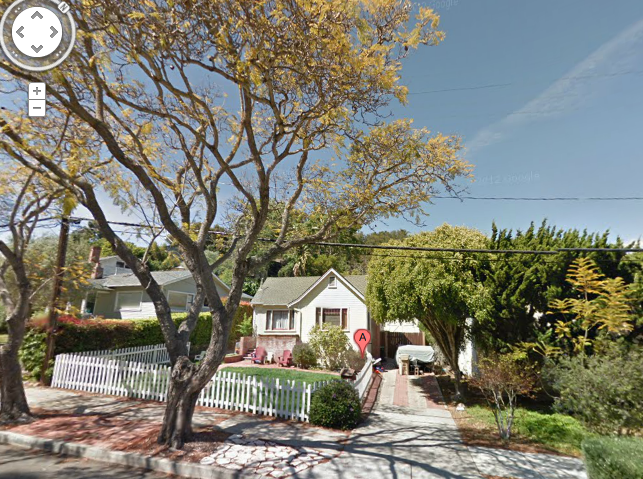
mapWhat started out as a simple opportunity to socialize with neighbors and get to know a little more about American bungalow style architecture and restoration has quickly morphed the Bungalow Haven Neighborhood Association into a vibrant, politically active neighborhood watchdog group.

Bungalow Haven was formed about two years ago by neighbors Dee Duncan and her husband Steve Dowty, and Judy and Sayre Macneil.

“The original intent was social,” said Cheri Rae, another member of the association. Rae said the group has a couple of hundred members representing about 125 households and meets once a month at Duncan and Dowty’s home. They also have an active email list and several subcommittees, including a political action committee that is currently reviewing its position on the proposed development of the former St. Francis Medical Center property.

The Bungalow Haven neighborhood — roughly bounded by Alta Vista, Laguna, Anapamu and Micheltorena streets — began to mobilize when they learned of a plan to construct 18 new units on the 1400 block of Laguna Street and relocate five bungalows. The project — developed by Capital Pacific Holding LLC and designed by architect Detlev Peikert — was well underway before the neighbors really became aware of it. However, at least in part from their efforts (including numerous appearances before the planning commission and the architectural board of review) the project has been scaled back to retain three of the existing bungalows on the property, along with plans to build the 15 new units in craftsman style rather than the originally planned red tile roofs.

“We’ve shown up 50 at a time and I think that was part of why we’ve been so successful. People were so amazed to see such a large bunch of people who were very articulate,” said Rae, who has been sharing strategies with other neighborhood associations.

Mike Jogoleff, who has lived in Bungalow Haven since childhood, fears continued encroachment by developers would ruin the neighborhood’s character. “If somebody’s working against us like these big development companies, they just come in and screw everybody,” he said.

One of the steps the neighborhood association is taking to prevent more “condo mania” is working to establish Bungalow Haven as a Historic Landmark District. Regarding the Laguna Street project, Rae said, “… we’ve all had a steep learning curve on what the rules are, and we want to prevent it from ever happening again.”

To obtain historic status, the group must first finish a neighborhood survey cataloguing the historic elements throughout the approximately 300 homes in the neighborhood. “We’re modeling our approach on the El Pueblo Viejo and the Brinkerhoff Districts. They are (the) only two historic districts in the town so far, so we’re doing the same thing that they did,” she said.

Rae admitted, “It’s a little ironic when we say with disdain, ‘they’re putting in million dollar condos’ when our houses are creeping up toward million dollar houses. It’s just (that) what you get for your money is not stucco and brand-new efficient appliances, but you get some charm.”

Jogoleff is also keenly aware that the working-class neighborhood he grew up in has changed. ” As my neighbor says, the people that buy our houses are not going to be painters and teachers. It’s going to be lawyers, doctors, accountants.”

While development projects have been catalysts, they aren’t the primary reason for the group. “The group is to preserve this style of life, simple and kind of a calmer way of life. None of us chose to go live in a tract house in Goleta. That’s just not what we wanted. … We’re not out there recruiting members. … The whole idea is for peaceful coexistence and neighborhood protection,” Rae said.

“We’re not anti-development … it’s just within reason and it’s within scale and size and having respect for the neighborhoods that are already here. It makes no sense whatsoever to develop for new people who come in when you ignore the neighbors that are already here and have built Santa Barbara to be what it is. … We feel like we’re part of the fabric of this town and we want to be able to stay here and not be run out because we can’t have the kind of life that we want to have here,” Rae said.

Originally published in South Coast Beacon

Where Silence is Golden

The Immaculate Heart Center for Spiritual Renewal

A feeling of tranquility and peace welcomes visitors as they enter the grounds of Montecito’s historic estate, La Casa de Maria, and head up the oak tree-lined driveway to the grand stone house in the center of the 26-acre nonprofit interfaith retreat and conference center. Once considered holy ground by the Chumash nation, today La Casa de Maria offers a quiet destination for people of all faiths to escape the stress of everyday life and deepen their spirituality through individual and couples retreats in the intimate surroundings of the Immaculate Heart Center for Spiritual Renewal, or in group gatherings throughout La Casa’s campus.

La Casa’s property was originally part of the San Ysidro Ranch; then became El Prado Rancho, the first lemon orchard in the area; then later became Rancho El Bosque, which brought the addition of the estate house, designed by architect Mary Craig. The home, which now houses the Immaculate Heart Center, remains mostly intact today, featuring stone quarried from nearby San Ysidro Creek, hand-carved teak ceilings, distinctive Italian fireplace mantels, and courtyard tiles from Spain.

“It is a very prayerful surrounding,” says Carol Carrig, the center’s director since 1997. Offering a spiritual bed and breakfast getaway, with delicious organic meals made from produce grown on the property and prepared by the Immaculate Heart Community of former nuns, guests often start out visiting for a few days, then come back again for longer retreats. “They realize that they’re getting in getting in touch with the deeper things that are going on within themselves,” says Carrig.

But beneath the peace and solitude of the center lies a long and storied history, not just of faith, but also of integrity, determination, and vision.

In 1943 Novice Mistress Mother Regina McPartlin, along with 12 novice Sisters of the Immaculate Heart of Mary, turned the estate into a Novitiate, where young women train to become nuns. While they pursued religious life on La Casa’s grounds, the peaceful surroundings were also gaining a reputation in Hollywood. Stars such as Irene Dunne, Loretta Young, and Ricardo Montalban came for retreats, holding prayer services in the Novitiate by day, while staying overnight at the Biltmore. In 1955, La Casa de Maria Retreat House formed and became the first retreat center for Catholic married couples. “Every weekend for probably 15 years, 40 married couples came to La Casa. The priests said mass for them, gave them conferences, they renewed their marriage vows, and had wonderful weekends,” says Stephanie Glatt, director of La Casa de Maria.

During the 1960s, there were conflicts between James Francis McIntyre-the Cardinal Archbishop of Los Angeles who oversaw the Immaculate Heart community-and the sisters’ understanding of the Vatican’s directive to update the church for contemporary times. “McIntyre said, ‘either follow what I say or give up your vows,'” recalls Carrig. “So that’s what we decided to do. To remain a community and to follow what we believed should be the right direction-but everybody had to give up their vows.”

The sisters took the revolutionary step of evolving into the Immaculate Heart Community, an ecumenical group of men and women, both single and married. Rather than fall apart, as many predicted, the Immaculate Heart Community has stayed together and thrived, with almost 200 members still active around the world. The community has operated the Immaculate Heart Center for Spiritual Renewal since 1974, opening its doors for private retreats for people of all faiths.

“It feels like a holy land. Not like Christian, I mean it just feels that the meditation, the peace, the quiet there is special,” says author/psychotherapist Alyce Faye Cleese, one of La Casa’s patrons. She calls the sisters “renegade nuns,” adding, “their story, for their day as women, was an extraordinary piece of women’s lib really-their courage and their bravery and their saying, ‘We’re women, we can do this and we will survive.'”

Today La Casa offers a wide array of programs, such as 12 Step Retreats; the Sacred Art of Living and Dying (for caregivers); Kaballah (Jewish Mysticism) (Jewish Mysticism); Waking up on Earth: Spiritual Life in a Time of Crisis; Centering Prayer Practice Retreats; Recovering Religion as a Work of the Imagination; and Capacitar, which combines Tai Chi, meditation and other practices that integrate spirituality and body wisdom.

In 2005, the Immaculate Heart Community bought back the entire property and is now in the process of a $7.7 million capital campaign. In addition to paying off the mortgage, they also plan to renew the conference buildings, preserve the ecology of the site-including the creating a sustainable agricultural site that protects native plants; developing an organic orchard/garden to provide the produce for the dining rooms; and improving the overall health of the citrus orchard and native Coast Live Oak grove-and develop additional La Casa-sponsored programs. “Part of that is our plan to integrate La Casa de Maria with the greater community and have more people understanding what we’re doing and supporting our program,” says capital campaign chair Christine Garvey, a retired banker. “We’ve mobilized a lot of the neighbors.”

One “neighborly” recruit is capital campaign cabinet member Joan Kreiss, a physician who did AIDS research in Africa before moving to town seven years ago. “What I love about La Casa de Maria is its rich sense of history,” she says. “For our family-and this is particularly important for my children-living next door to La Casa de Maria… gives a sense of context, a sense of being part of a historical continuum.”

“It’s kind of like Peter Pan, you have to believe,” says Cleese. “Not in God, just believing in the goodness of people and the goodness of nature and that something (like La Casa de Maria) is worth existing.”

For more information on La Casa de Maria, call Stephanie Glatt at 969.5031 ext. 204 or visit www.lacasademaria.org.

Originally published in Santa Barbara Magazine

Labor of love

SBMA docents often young students’ first exposure to art

Santa Barbara Museum of Art

Santa Barbara Museum of Art

“The most important thing about learning to look at art is that what you feel about it matters. Your opinion is valid. There is no right answer,” is what Santa Barbara Museum of Art (SBMA) Docent Pat Andersons tells elementary school students before she brings them in for tours.

The very first visitors on SBMA’s opening day in 1941 were schoolchildren. Today the Museum serves about 30,000 children per year through its education program, said Spokeswoman Martha Donelan.

Much of the educational programming is carried out by docents, who collectively volunteer approximately 12,000 hours per year, said Andersons, president of the 79-member group, which includes artists, teachers, a married couple who met through the program (Candice Taylor and Paul McClung) and even a retired rocket scientist (Cliff Hauenstein). Docents undergo nine months of rigorous training, as well as ongoing education. Unlike many museums, which use scripted tours, “One of the things that’s so different about our program is that we do all our own research … we select the pieces … it’s a really personal thing.”

Most docents lead tours for both children and adults, but it’s clearly the kids who’ve captured Andersons’ heart. One of the things that fascinated me when I started touring kids is that “a lot of children have never been to a museum … so the concept of original art … makes them almost giddy,” she said.

Prior to the elementary school field trips — funded entirely by SBMA, including the buses — docents visit the school to give a preparatory talk. “(The school visit) is actually one of the most important aspects of the program because not only does it give the children something to look forward to and get them excited about the program, but they feel more comfortable coming here if they know what to expect,” said Andersons.

“… We have wonderful exhibitions and an outstanding permanent collection, but the education program, and the docent programs in particular, are the ways that we reach out to people and let them know what we have and why it’s interesting and what’s cool about it,” said Donelan.

After children tour the museum, they are given souvenir postcards and free tickets to bring their families back to the Museum. Teachers are also given posters and hands-on activities do back in the classroom. The program — which serves schools from as far away as Lompoc and Hueneme at no cost — is curriculum-based, designed to compliment what teachers are doing in the classroom from K-12.

With art programs in the schools being cut, sometimes we’re it, said Andersons. Admittedly, being a docent is demanding, but infinitely rewarding, said Andersons. “We all think we get back much more than we give,” she said.

For additional information about the docent-training program, call Sue Skenderian at 684.6384.

Originally published in South Coast Beacon

Mixed Messages

Television by Salvatore Vuono (freedigitalphotos.net)

Television by Salvatore Vuono (freedigitalphotos.net)

Be careful — what your kids watch may be hazardous to their health and your wallet.

If TV is “chewing gum for the eyes,” as Architect Frank Lloyd Wright once said, it may be causing more than tooth decay in children — TV may also be making them fat, according to two new studies.

“The more than 1,000 hours that the average school child will spend in front of the television this year will harm him or her far more than the one second of Janet Jackson’s breast,” said TV-Turnoff Network Executive Director Frank Vespe.

The typical child sees about 40,000 ads a year on TV and the majority of ads targeted to kids are for candy, cereal, soda and fast food, a report by the Kaiser Family Foundation found. In addition, many of the ad campaigns enlist children’s favorite TV and movie characters — Spongebob Cheez-Its, Scooby-Doo Cereal, Teletubbies Happy Meals, to name a few — to pitch products.

Apparently the $12 billion per year spent on advertising to youth works. “Commercials make people want to buy things, like Cox high speed internet,” said 4-year-old Sophia Bordofsky.

Indeed, a series of studies examining product choices found that children recalled content from ads they’d seen, and their preference for a product occurred with as little as a single commercial exposure and grew stronger with repeated exposures, found a recent report by the American Psychological Association. The Kaiser study also found that exposure to food advertising affects children’s food choices and requests for products in the supermarket.

While there’s no doubt that advertisers are selling to children, not everyone is buying. Many parents restrict their children’s viewing. “They do have to do their homework first and they have to take turns picking a show,” said Misty Bordofsky, Santa Barbara mother of four children aged 4 to 13. “Usually they’ll leave the room and go do something else if it’s the show another kid picked,” she said.

Numerous parents may limit their children to watching videos and commercial-free television and a rare few don’t let their kids watch TV at all.

“I am appalled by marketing that targets children with ads for junk food and toys. Young children are not able to understand the inherent bias of an advertisement. They are easy targets,” said Charla Bregante, a Goleta mother of two who is in that 2 percent demographic that does not own a television.

“Most of the advertising during children’s programming is for junk food such as candy, chips, and sugared cereals. Kids are given the message that these foods are desirable and nag their parents to buy them. In addition, children tend to snack more while they are watching TV. Turning off the TV is one of the best ways to fight obesity in children. Almost any other activity will use more energy than sitting in front of a television,” said Bregante.

“While older children and adults understand the inherent bias of advertising, younger children do not, and therefore tend to interpret commercial claims and appeals as accurate and truthful information,” said psychologist Dale Kunkel, a professor of communication at UCSB and senior author of the APA report, which recommends restricting ads targeting children under the age of 8.

“I can tell you that my children rarely nag me for a specific toy or food item. I believe this is because they are not exposed to television advertising and the consumer culture promoted in television programming,” said Bregante, who encouraged families to participate in TV-Turnoff Week, April 19-25 (www.tvturnoff.org).

Is there anything positive for kids on television? Yes, according to Professor Kunkel: “There are lots of positive influences that may result from children’s viewing of certain pro-social or educational programs. The problem is that parents have to mine the media landscape pretty hard to find those occasional nuggets.”

Television is an (almost) inescapable part of modern culture. “With the recent explosion in satellite and digital specialty channels, we now have access to a plethora of both good quality and inappropriate TV content. In this crowded television environment, the key for parents is to search out high quality TV programs for their kids, and whenever possible, enjoy them together as a family,” recommends the Media Awareness Network, a nonprofit organization that focuses on media literacy.

For parents who don’t want to opt out completely, David Kleeman, Director of the American Center for Children and Media, recommends that parents ask the following questions to select viewing that is good for children:

Does the program actively engage my child, physically or intellectually? Television watching doesn’t have to be passive. It can prompt questions, kindle curiosity, or teach activities to pursue when the set is off.

Does my child see others like himself or herself on television? Young children believe that television reflects the real world. To not see people like themselves — in race, ethnicity, or physical ability, for example — may diminish their self-worth. A lack of role models should spark discussion about how TV portrays different types of people.

Do I respect this program? Parents don’t have to like every show their children choose — in fact, young people need their own district culture. But parents should trust that a program’s creators understand and respect how children grow and learn.

Originally published in South Coast Beacon

Making their presence felt

Women's Fund of Santa BarbaraWomen’s Fund getting more bang for bucks

Looking for a low-key, high-impact way to tap into the power of collective philanthropy, Carol Palladini was inspired when she read a Los Angeles Times article about the Everychild Foundation. The idea is simple. Take the time, energy, and money spent on mounting and attending elaborate fund raisers and write a single check once a year.

The appeal was also simple: “Many women in the Santa Barbara area feel not only a need, but an obligation to be a powerful force for good in our community,” Palladini wrote in the invitation letter to the inaugural members of the Women’s Fund of Santa Barbara.

A few short months after that initial request, the Women’s Fund awarded its first donations on Jan. 31, giving $105,000 to the Santa Barbara Neighborhood Clinic’s Eastside Family Dental Clinic and $35,000 to two St. Vincent’s programs, PATHS (Program of Affordable Transitional Housing and Services) and Casa Alegria, an infant and toddler care facility.

“A group of women had been meeting at the Santa Barbara Foundation to talk about women and philanthropy,” explained Palladini. That group eventually evolved into a founding committee that included Palladini, Peri Harcourt, Shirley Ann Hurley, Jean Kaplan, Dale Kern, Joanne Rapp, Elna Scheinfeld, Meredith Scott, Anne Smith, Kay Stern, Marsha Wayne and Fritzie Yamin, as well as Raynette Cornejo, the Santa Barbara Foundation liaison.

Their intention was to take a year to develop the plan for the Women’s Fund, “but people started calling and saying ‘when can we write checks?’ which is amazing because usually you have to cajole and pull money out of people,” said Palladini.

“All it took was a letter of invitation to 500 women and the money started coming in,” said Palladini.

Each member contributes a minimum of $2,500 per year, which is then deposited in Donor Advised Fund administered by the Santa Barbara Foundation. At the end of the year, 90 percent of the funds collected are donated to one or more local nonprofit organizations.

“Our umbrella for giving is meeting unmet needs for women, children and families in the greater Santa Barbara area,” said Palladini. “The main goal is not to divvy it up in little tidbits, so that the impact of collective women’s giving is really felt.”

Granting is decided by a simple majority vote of members. Women who wish to ease the cost of dues may form a donor group, which then shares one vote in how the money is spent.

To join, send a check payable to Women’s Fund of Santa Barbara, c/o Santa Barbara Foundation, 15 E. Carrillo St., Santa Barbara 93101. For more information, contact Palladini at 565.0342 or e-mail her at carolpall@earthlink.net.

Originally published in South Coast Beacon in 2007.

CAMA’s Masterseries presents The Kalichstein-Laredo-Robinson Trio


THE KALICHSTEIN-LAREDO-ROBINSON TRIO, photo by Christian Steiner (courtesy photo)

THE KALICHSTEIN-LAREDO-ROBINSON TRIO, photo by Christian Steiner (courtesy photo)

CAMA’s 2014 Masterseries at the newly restored Lobero Theatre (33 E. Canon Perdido St.) opens with a concert by The Kalichstein-Laredo-Robinson Trio on Saturday, January 11 at 8 p.m. Three and a half decades after its debut at the White House, The Kalichstein-Laredo-Robinson Trio remains America’s Premier Piano Trio, featuring Joseph Kalichstein on piano, Jaime Laredo on violin and Sharon Robinson on cello.

Carnegie Hall commemorated their 30th Anniversary in 2007 with a concert in Stern Auditorium. One of today’s most beloved ensembles, these three artists share their passion for music with audiences worldwide. Tickets are on sale now at the Lobero Theatre Box Office; call 805/963-0761 or visit lobero.com.

Program:

Franz Schubert: Notturno (Adagio) in E-flat Major, Op.148 (D.897)
Felix Mendelssohn: Piano Trio No.2 in C minor, Op.66
Johannes Brahms: Trio in B Major, Op.8, rev.1891

—Leslie Dinaberg

Originally published in Santa Barbara SEASONS on December 30, 2013

Jungle Mom

Photo by Sura Nualpradid freedigitalphotos.net

Photo by Sura Nualpradid freedigitalphotos.net

I pity the first girl who stomps on my son’s heart.

I realized something about myself recently and it’s not very pretty. I may be an anti-violent, NPR-supporting, bleeding heart pacifist in theory, but when it comes right down to it-I would kill to prevent my son from suffering heartache.

I may not be a tiger mother, but I’m a jungle mom nonetheless. It stuns me how quickly I turn into Mama Bear when something threatens my cub.

When he was younger, I was mostly fixated on doing everything in my power to help my son avoid physical pain. Implanting a GPS tracking device and a boundary collar always sounded perfectly reasonable to me. It was only my husband’s mockery that prevented me from sending Koss out to play in full body armor. I would have wrapped him in Charmin from head to toe, like that kid in the old commercial who goes out to play football and practically tips over from all that cushiony padding.

I was always jealous of the mom in that commercial.

My imagination splinters into a million fearful little pieces whenever I think about anything bad happening to my son.

But now that Koss has successfully survived enough banged up knees and bruised elbows to keep the Band-Aid and Bactine business booming for years to come, it’s his emotional pain that keeps me up at night.

The fact is we’re still warming up to puberty, so at this point his hurt feelings dig much deeper into my overactive imagination than they do into his psyche. I will often still be reeling over some playground slight or hurt from weeks back when Koss wants to invite that very same kid I’ve been mentally murdering over to play.

Pesky old reality is no match for the mind of a mother.

Just thinking about the prospect of his many broken hearts to come is enough to make me growl.

I can’t help myself. Just thinking about that future girl who will someday make him cry drives me nuts. I want to kill her. I want to rip her to shreds. The mere thought of that girl transforms me into every single awful parent-of-an-only-child stereotype, though some might call me a murderous lunatic.

Gee, I hope his future girlfriends never read this column. That would be awful. Just awful.

Karma’s a bitch, and I certainly had my moments. As a former teenage girl, I know just how mean they can be.

Plus the fact that my genetic eggs are in this one and only one precious basket makes me guard it all the more zealously.

But here’s the rub. As a parent I’ve found that it’s almost impossible to try to comfort someone and develop their character at the time. With girlfriends and husbands, your job is just to listen and be supportive and hate whomever they hate at that moment. In those cases it’s easy to blame it on the other guy.

But when you’re comforting a child you sometimes have to fess up to the fact that it’s not always the other guy’s fault. Human relationships are complicated and they’re only just beginning.

Kind of makes me wish for the good old days when I would dream up tactical scenarios of how I would jump into the lion’s cage at the zoo to rescue my son.

When Leslie’s not busy cocooning her son in bubble wrap she can be reached at Leslie@LeslieDinaberg.com. For more columns visit www.LeslieDinaberg.com.  Originally published in the Santa Barbara Daily Sound on July 20, 2012.

Olympic Gold Medalist Todd Rogers: Hometown Hero Hopes To Bring Home Another Gold From London

By Leslie Dinaberg

Leslie Dinaberg: The 2012 Summer Olympics in London will be your second Olympics. How is it different preparing this time around?

Olympian Todd Rogers, photo by Mitchell Haaseth/NBC

Todd Rogers: I wouldn’t say it feels different.  … As far my training and that kind of thing go, its business as usual. There’s no real reason for us to change anything dramatically. The only thing that I try and always keep in mind is that I’m getting older, so just being intelligent about stretching and icing and just taking care of my body because I’m not as durable as I was four years ago.

LD: What percentage of your training is running and lifting versus actually playing volleyball?

TR: The majority these days is probably more running and lifting. I start lifting in November and from mid-October I’ll be doing some kind of running or some kind of exercise that has a cardio component. We (Rogers and partner Phil Dalhausser) really don’t start hitting the ball around until late January early February, there’s just not much reason to do so at a really early stage. The season gets started in April but for us the Olympics are not until August.


I hear of people hitting the ball around in November and I go, “Are you crazy?” But to each his or her own, I guess. I’m kind of a burnout athlete, I’ve discovered that about myself. I just can’t do that much, otherwise I will be sick of the sport.

LD: But you still travel and compete in other places before you go to London.

(Editor’s note: since this interview in April, Rogers/Dalhausser won their third straight gold at the 2012 Brasilia Open and retained their Shanghai Grand Slam title. They are currently competing in Beijing. For a complete tournament schedule click here.)

When you are doing all of that traveling, how much of those places are you getting to see? Are you getting to play tourist at all?

Olympian Todd Rogers, photo by Mitchell Haaseth/NBC

TR: At some of them we have. A lot of them are re-stops, so for example I’ve been to  Klagenfurt, Austria, which is probably the best tournament in the world, probably ten times. I’ve done well most of the time but not all the time, and when I haven’t done well I’ve gone out and checked out the city. It’s on a lake so I’ve gone on boats and whatnot… When we were in Berlin I made it a point to just kind of check out the surrounding area. There have been a few stops where I stay a couple of days extra just because it’s a really cool place. Like in Prague, there are some just really neat areas in Prague that are really old and I make a point of making sure that I get to those and check them out and try to find something new in those areas.

LD: I know you grew up in Santa Barbara and went to San Marcos High School and UCSB. Growing up near the beach is so unique. When you are playing volleyball internationally is it different playing on an actual beach versus some place where they bring sand in?

TR: I would say yes, absolutely. On an actual beach, if you know the beach, you have a consistent wind. The sand tends, not always, but tends to be deeper. When they bring in the man made court they are looking at trying to save money and it costs money to bring sand so they are going to put really the minimal amount of sand they can put in to save costs … it’s much more of a jumper’s sand.

There’s definitely a difference and especially if you’re in a city between buildings. The winds are really weird. It could be going one way and then ten minutes later it could be going the other way because just the way it goes through the buildings can change dramatically really quickly. Whereas on the beach, if you’re at East Beach, most of the time the wind in the afternoon blows out of the northwest. I know that.

LD: When did you start playing beach volleyball?

TR: When I was at San Marcos High School. John Lee was the coach there for the volleyball team; he’s also an English teacher.  He encouraged all of us freshman boys, actually pretty much all of his volleyball protégées to just go down to East Beach and play. He said, “You’ll become a much better indoor player if you go and play on the beach.”

It’s a lot of fun. We were all 14-year-old boys. You’ve got lots of girls in bikinis down there, you’ve got your shirt off, you’re running around in your shorts—it was a pretty easy sell for us! 

So a bunch of us just started going down there after my freshman year and I was 14-years-old and I fell in love with it right away. And I haven’t stopped playing. I didn’t stop playing when I was in college and just kept going with it.

LD: I know you have a son and a daughter (Nate, age 11 and Hannah, age 13). Are they volleyball players?

TR: My daughter loves it; she actually particularly loves beach volleyball. My son enjoys playing beach volleyball but he’s not super into it. We have a court in our backyard (Rogers and his wife Melissa live in Solvang) so we actually play a fair amount of family volleyball. It used to be kind of even, but my daughter at 13 has gotten a lot better in the last year. My son at almost 11 has not. So it’s kind of getting to an unfair level, but he’ll still play. It’s a fun family activity.

LD: You must have other people come and use your court.

TR:We always have people over and I usually have one or two foreign teams that are friends of ours that

Olympian Todd Rogers, photo by Mitchell Haaseth/NBC

play on the international tour and they come to California to train and we’ll come up here. We’ll have a little barbecue after and just kind of hang out, have a few beers, that kind of thing.

We have some friends in town that kind of hang out, their kids come over and play with our kids there or we’ll set up a few trainings with some of the kids and there’s a couple of adults that like to come over and hack it, have a good time. Usually it involves a couple of beers, though. (Laughs)

LD: I know you and Phil have already qualified for the Olympics, but assuming other Americans qualify, then you also could conceivably be competing against those people. What’s that like?

TR: It is a little different because it’s really funky the way they do it. There’s a four year window, say after the Olympics, you have your following next two years when you’re just playing on the international tour and that’s how you qualify and everyone is kind of cheering for each other. I’m always cheering for other Americans of course, unless I’m playing.

Then all of a sudden January 1, 2011 comes along and now, as happens every four years, all of a sudden you are competing against those people just to make the Olympics. So you still want them to win because they are your friends, but at the same time you want to make sure that you are doing a lot better.

Phil and have been very fortunate in that we have done well right away where we have kind of separated ourselves from our competitors …They are fighting it out amongst each other and we just are watching it. We’re pretty much already in. … now the other two teams that are fighting for the spot they’re super close and they can’t catch us so it’s like we can just sit back and just enjoy it. I’ll cheer for them, unless we’re playing against each other.

In the Olympics it’s the same kind of thing. It’s like I want to see them do well, so I’m cheering for them, but at the same time I want to ultimately win the gold medal over them if that’s what it comes down to.

LD: At this point in your career, what percentage of your skill is physical versus mental?

TR: At this point it’s almost all just a mental game for me. Keeping my body healthy, no doubt, that’s the number one thing on the physical side of things and then the rest of it is just I know what I’ve got to do, I know what I need to accomplish and most of that’s just mental. In fact Coach Lee always used to tell me and other players that the game of volleyball is 90% mental and 10% physical. That might be an extreme but it’s pretty darn close. It’s definitely more of a mental game than a physical game.

As I’ve aged and as I’ve seen my kids play and I’ve coached at UCSB and whatnot and I’ve come to realize that he’s absolutely correct. There are kids that are just jumping out of the gym and are amazing athletes and yet they’re just not very good because in the mental part they just break down they make a lot of foolish errors that are really mental errors and not physical errors. They are jumping eight inches higher than the other kids but the other kids are consistent, play smart, using their eyes and their brain and thinking okay I need to do this rather than this, whereas a lot of those exceptional athletes will just use their athleticism and at some point in their careers they are going to meet someone who’s relatively close or maybe even better than them that can’t get past that because they haven’t really developed their mental game.

So I’m fortunate in that I was able to develop that mental game and have decent physical skills, not as great as a lot of other people’s but definitely the mental side of things is so important. I am fortunate that I have that.

LD: Has volleyball always been your favorite sport?

TR: No, not really. It was actually soccer. I played soccer since I was four or five years old. I always thought that was my sport and I loved it. Even into high school when I started playing volleyball and beach volleyball, soccer was always my sport, my first love.

Coach Lee was always like, “man you’ve got to play club volleyball.” And I was always like, “No man, soccer is my sport, I’m not going to stop playing soccer.”

Then my senior year I was trying to get scholarships to play soccer and it wasn’t really happening, I could have walked on a couple of places. But some volleyball teams were recruiting me and so I ended up playing at UCSB on the volleyball team. I still went out for the soccer team and made the soccer team my freshman year but after that season I had to recognize that I’m better at volleyball than I am at soccer. And at a collegiate level, soccer is just, these guys are so fast and so quick it’s like they could run forever. I’m reasonably fast and reasonably quick but they just seem like a different type of athlete than me. In high school and below and in volleyball I was right there, one of the better players pretty much all of the time. I just realized that my upside in volleyball was much greater than it was in soccer.

LD: That’s really interesting. To me volleyball and soccer seem like such different sports.

TR: They are, but there is actually a fair amount of crossover. Like for me, trying to stay with a smaller quicker, faster guy, I had to use perfect footwork and everything had to be on balance and all that kind of stuff. I found that actually correlated really well over to particularly playing defense on the beach. Having good balance, recognizing what’s going on, what’s going to happen and being able to anticipate, which was what I had to do in soccer just to essentially stay alive. It became a trick for me on the beach court.

LD: I’ve heard the announcers call you “the professor” before, and I’m getting a little of that from our conversation. What’s that about?

TR: A lot of people said I kind of have a mental black book on everyone, as far what their tendencies are, so one of the announcers, Chris “Geeter” McGee, about ten years ago, he started calling me the professor. I like it. It actually kind of suits. I always looked at the way I play as more of a cerebral game and whenever I’m out there I want to make it into more of a cat and mouse kind of game, because that’s where my strengths lie. I’m not the biggest jumper; I’m not the biggest guy; I’m not the quickest guy. I’m reasonable on all of those areas but I knew that I would be stronger on the cerebral side of things, so it kind of fits me as a person aside from just a nickname.

LD: If you weren’t a professional athlete, what would you be doing?

TR: There’s a good shot that I would be coaching. I really enjoy coaching. I started coaching basically right out of high school, coaching junior high teams, club teams, even some high school ball. I’ve actually continued to kind of coach through my children a little bit on the volleyball but a lot on the AYSO soccer stuff and I’ve enjoyed it.

I do think that kids and people in general have changed a lot and I’ve noticed that as I’ve coached more and more it’s changed in a way that’s a lot harder to coach now. So I’m not as gung ho on it, but I could have seen myself 20 years ago being pretty focused on coaching. Other than that it’s hard to say.

… I’ve gotten into some business stuff and have kind of started to enjoy that as well, and that’s something that I’m going to be seriously looking at and trying to get my hand into some different cookie jars, if you will, so that when I retire, which is right around the corner in the next couple of years or so, I’ve got some active things going that will provide me with income and hopefully that I will enjoy.

LD: So you’re thinking about retirement a little bit?

TR: Yeah, I’m 38 and I turn 39 on September 30, so it’s just the reality of the situation. I’ve really never wanted to play much into my 40s. All of these guys … that have played into their 40s, it seems like their bodies kind of started to break down. They were all still having a lot of fun with it, which obviously in my opinion would be the number one thing, but again, I don’t want to have my body be completely breaking down. It’s hard enough to do a workout and being sore.

Essentially from January to June I feel like I’m sore all of the time because I’m working out hard and I’m playing in tournaments and my body just hurts and I’ve got to get deep tissue and ice and all that stuff. It didn’t seem like it used to be that way.

LD: Do you worry more about injuries more than you used to?

TR: Honestly, I’ve never worried about injuries per se, it’s more taking care of the little things like stretching, icing, getting those deep tissue massages, even soaking in the cold ocean after a long workout, getting up to my weight and soaking my legs. Those kinds of things I’m more cognizant of now, and I do a lot more of. … People will say, “How can you go snowboarding? that could ruin your career.”  But you know what, you could step off a sidewalk and get something wrong and your leg locks out and you blow your ACL. I’ve seen it happen before. I just think I’m going to live my life not worried about those kinds of things. I’m not going to do anything extraordinarily stupid, but I’m still going to surf, I’m still going to do the things I enjoy and if I get hurt doing those things then I’m just not going to concern myself with it.

LD: Will your family go with you to London?

TR: That’s the plan … I did not take the kids to Beijing because it was just not very conducive for children. … My wife did come over for the last week so she was there when we won the gold medal and that was very cool. But I figure In London they speak English, there’s a ton of things that are really relevant to our history as Americans having basically a lot of people that started our country coming from Great Britain and London in particular. And there are just so many cool sights to see there.

LD: We’ll all be rooting for you from Santa Barbara. Good luck.

TR: Thanks.

Both men’s and women’s Olympic Beach Volleyball competition starts play in London on July 28. Click here for the complete schedule and more information as items as added.  

Look for Leslie Dinaberg’s interview with another Santa Barbara Olympian, water polo player Kami Craig, in the summer issue of Santa Barbara Seasons Magazine, out June 1.

Originally published in Santa Barbara SEASONS on May 18, 2012.

Eat, Drink and Be Married

Photo by Vichaya Kiatying-Angsulee, freedigitalphotos.net

Photo by Vichaya Kiatying-Angsulee, freedigitalphotos.net

Chatting with Author Rebecca Bloom

“What is it about wedding preparations that makes the ordinary tasks usually taking a woman from bed to bath, to bra, to base, to bagel, to bag, to butt-on-the-seat-of- the-car in 28 minutes flat, suddenly expand, exhale and evolve into hours upon hours of careful mirror observations and highly scrutinized tinkering?” writes Rebecca Bloom in her new novel, “Eat, Drink, and Be Married.”

I’m giggling as I read these words (So very true!) and laughing even more as I speak to their author, who is sneaking in our phone call during the precious naptime of her two-year-old son. Along with some of the laugh-out-loud-in-recognition scenes in her book, this is yet another thing about Rebecca Bloom that I can relate to.

Expecting her second child in the fall, Rebecca chats easily about writing, kids, tequila and the birth of “Eat, Drink, and Be Married,” her third novel. Here are some highlights:

Leslie Dinaberg: I really enjoyed the book. What was your inspiration?

Rebecca Bloom: I had been going to a lot of weddings and I was noticing that there is so much else that goes on around the wedding. There’s such a heightened sense of emotions for everybody. I wanted to write something that explored not just what the bride and groom were going through but what the guests themselves were going through. Weddings bring out a lot of different kinds of things for people and I wanted to explore those things.

LD: I was really struck by the coming together of the college friends who got back into their old dynamic so quickly and reverted to their old selves. Was that your experience?

RB: With my girlfriends from college, we have this shorthand that it doesn’t matter how long it has been since we’ve talked or how much has happened, the minute we’re together there’s not a lag, we don’t really have to catch up. There’s an instant repartee and there’s an instant sort of comfort and camaraderie. I wanted to put that in the book because I do think that in college you form such intense bonds because you’re with people 24/7 and you don’t really have time past college to ever really do that. … I wanted to capture that because I think it’s the case for a lot of people that the old friends sometimes are the ones that know you the best.

LD: A while back my husband and I were in that wedding a weekend phase and we sort of became the wedding critics. What do you think makes a really good wedding or a really not so good wedding?

RB: It is funny, when you write a wedding book everyone thinks you’re an expert on weddings but it’s sort of just your own opinion.

I think the best weddings are the weddings that really represent the bride and groom and you can tell that they really planned it for themselves and not for their moms and their friends. It’s really all about them. And those are often the most fun.

Our wedding had a lot of tequila and that really made it fun (Laughs). … I think the ones that are the best are the most relaxed and represent the couple-not just the bride.

LD: Were you married when you wrote this book?

RB: Actually I wrote this book, the first draft of it, when I was single. I wrote this wedding book and then I met my husband. So we’re sort of like that movie “Field of Dreams,” where the whole thing is like if you build it he will come. (Laughs)

LD: And now you have a husband, a young son and another on the way. How do you write and juggle all of that?

RB: Not as well as I would like. I am trying to start writing something new and it’s just hard. It’s hard to find the balance. … You just do the best you can. I can’t do everything all the time. And I can’t do it very well. My kids right now are the most important and that’s okay for me for right now.

LD: Not only are weddings fraught with drama, they’re also a huge business. Was that sort of marketing angle in your mind when you developed the story?

RB: I definitely knew … that there might be more avenues open maybe for publicity or marketing but I didn’t really think about that when I was writing it.

As I’ve gotten older though and as I end up starting my next book I’m thinking about that more because I want to make a living and I want it to sell and so I’m letting that come in a little bit. I have a bunch of ideas, so I am thinking which one is the most marketable and I’ll go with that.

But I’m not writing about zombies or anything (Laughs).

LD: I don’t know, a vampire, shades of grey, zombie wedding book with a historical twist could be huge.

For more information about Rebecca Bloom, visit www.rebeccabloom.com. For more columns visit www.LeslieDinaberg.com.  Originally published in the Santa Barbara Daily Sound on June 8, 2012.