Talk about a walk

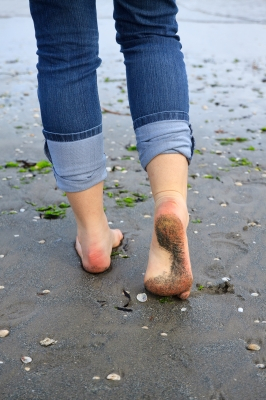
Photo by graur razvan ionut (freedigitalphotos.net)

Photo by graur razvan ionut (freedigitalphotos.net)

After 27 years, these ladies think they’ve hit their stride

It’s been said that walking a mile in someone’s shoes fuels greater understanding — so just imagine what walking three miles together, five days a week, for 27 years, will fuel.

In the case of walking partners Judy Bernstein, Beverley Brier, Natalie Gaynes, Barbara Mizes, Blanca Presser and Phyllis Cox (who joined the group in 1998), they’ve shared laughter, friendship, triumph and sorrow. They’ve also seen how the South Coast has changed in the Patterson Avenue/Kellogg School neighborhood they’ve walked for so many years.

“We have been through the many travails all these years, starting with young children, teenagers, college entrance exams, weddings and now grandchildren…” Brier said. “One gentleman who has seen us walking for years said we look like Pacman, the mouths are all going a mile-a-minute.”

The mouths may be moving quickly, but so are the legs. Even our 20-something photographer was huffing and puffing as we took an early morning walk with these dynamos.

Presser and Gaynes started walking together and the others quickly joined in. Bernstein said she started out trying to get in shape for her first trip to Europe, adding that having a group of friends to exercise with is very motivating.

“It’s so long and so boring and so tiring and when you talk, you don’t notice it,” Bernstein said.

“We solve the world’s problems on our walks,” Brier said.

“But most of them are personal,” Bernstein added.

Cox recalled that she joined the group the year before her daughter got married, and had her friends help guide her through the planning. Last week, Mizes was planning her father’s funeral and Brier was helping with a memorial for a close friend.

While the ladies have serious discussions during their walks, sometimes inspired by their lives and sometimes by the changes they see, they also have fun.

Not only have the women formed friendships among themselves, they’ve gotten to know the neighbors. The men at a residential care home wave each morning and let them know if they’re running late, while the neighborhood dogs expect a pat on the head.

“I cannot tell you how many people that I meet at a dinner party who say, ‘Do I see you walking?'” Mizes said.

The sweat is pouring but the banter stays lively throughout our walk.

Some of their husbands wonder how they have so much to say to each other, but Brier said they’re never at a loss.

“If you want to say something you have to jump in,” said Mizes, who once recruited a member (Ginny Alexander, who has since moved) on a flight to London. She even tried to get the Beacon staffers to join.

“We’ll get you through all of the trials and tribulations,” she said. “Every time you think you’ve got a problem, by the time you go through us giving you input you’ll feel better.”

Thanks. We already do.

Originally published in South Coast Beacon

Got an hour? Get up and go to …

num_skyman, freedigitalphotos.net

num_skyman, freedigitalphotos.net

We all agree the South Coast is paradise, but sometimes it’s nice to get away for the day. Here are a few favorite destinations for when you’re looking to get the heck out of Dodge, and the best part is, they’re all less than an hour’s drive away — weather permitting.

Just off Highway 154 north are Painted Cave, with its stunning rock art, and Knapp Castle, which can be reached from a path off East Camino Cielo. The “castle” is actually a ghostly scattering of rock ruins of a mountain lodge that burned in a 1940 wildfire, overlooking incredible views of the Santa Ynez Valley.

Further north is Lake Cachuma, which is not only our primary water source, it’s also a great place for fishing, boating, hiking, horseback riding and camping. From November to February, hundreds of bald eagles winter here and you often can see them on a two-hour guided boat ride aboard the Osprey. From March through October, the cruise takes a look at area wildlife, wildflowers and resident birds along the shore. The cost is $15 for adults and $7 for children. Call 686.5050 for reservations.

A little further north the charms of Los Olivos beckon, with wonderful shopping, galleries and wine tasting just a short drive away. Stop by the always delightful boutique Persnickety (2900 Grand Ave.; 686.8955) for a fabulous selection of gift items, including vintage linens, birdhouses, ladies’ dresses and more. The Arthur Earl tasting room (2921 Grand Ave.; 693.1771) is also highly recommended.

Also nearby is the Chumash Casino (3400 E. Highway 246), with free live music every Friday and Saturday night, as well as a new resort hotel and spa (call 1.877.248.6274 for reservations).

Don’t forget Solvang, “the Danish capital of America,” where no visit is complete without an aebleskiver, available at any of the many bakeries in town. For theater fans, the PCPA features a wonderful outdoor venue. Call 922.8313 for ticket information and showtimes.

A short distance down Solvang’s Alisal Road is Nojoqui Falls where Upper Nojoqui Creek falls about 80 feet over a sandstone cliff and into a mossy haven, surrounded by Venus maidenhair ferns. The falls end in a shallow pool that’s fun to wade in or just watch the water insect show.

You could also head into the wine country. Try the Foxen Canyon Trail where you will encounter a series of excellent wineries including Firestone Vineyard, Curtis Winery, Fess Parker Winery, Zaca Mesa Winery, Bedford Thompson Winery, Foxen Winery, Rancho Sisquoc, Cambria Winery and Cottonwood Canyon Vineyard.

Heading west, Jalama Beach lies at the end of Jalama Road that turns off Highway 1 south of Lompoc. The beachside park offers camping, a playground, windsurfing and a snack bar serving the famous Jalamaburger. Just remember to get a lot of napkins: these puppies are messy.

You could also head south from Santa Barbara to Ojai, located inland between Santa Barbara and Ventura. Nestled in a scenic deep valley, Ojai is surrounded by steep mountains that soar to 6,000 feet. Ojai is known as an artist’s community, which is reflected by a number of unique galleries and shops.

Going further south, Old Town Ventura is quite charming, with a wealth of shops and restaurants. Also worth checking out is Mission San Buenaventura, (211 E. Main St., 643.4318) the ninth and last California mission founded by Father Junipero Serra. There are also several yacht harbors in Ventura, which offer seafood restaurants, shops, boating, fishing and bay cruises.

Of course, you could always head home and be a tourist in your own town. Not many locals have done the self-guided Red-Tile Walking Tour, which begins at the Courthouse. And when was the last time you went to the Santa Barbara Museum of Natural History, the Santa Barbara Mission, the Courthouse, the Botanic Garden, Stearns Wharf or the zoo? Sometimes the best getaway can be found right in your own backyard.

Originally published in South Coast Beacon

Mixed Messages

Television by Salvatore Vuono (freedigitalphotos.net)

Television by Salvatore Vuono (freedigitalphotos.net)

Be careful — what your kids watch may be hazardous to their health and your wallet.

If TV is “chewing gum for the eyes,” as Architect Frank Lloyd Wright once said, it may be causing more than tooth decay in children — TV may also be making them fat, according to two new studies.

“The more than 1,000 hours that the average school child will spend in front of the television this year will harm him or her far more than the one second of Janet Jackson’s breast,” said TV-Turnoff Network Executive Director Frank Vespe.

The typical child sees about 40,000 ads a year on TV and the majority of ads targeted to kids are for candy, cereal, soda and fast food, a report by the Kaiser Family Foundation found. In addition, many of the ad campaigns enlist children’s favorite TV and movie characters — Spongebob Cheez-Its, Scooby-Doo Cereal, Teletubbies Happy Meals, to name a few — to pitch products.

Apparently the $12 billion per year spent on advertising to youth works. “Commercials make people want to buy things, like Cox high speed internet,” said 4-year-old Sophia Bordofsky.

Indeed, a series of studies examining product choices found that children recalled content from ads they’d seen, and their preference for a product occurred with as little as a single commercial exposure and grew stronger with repeated exposures, found a recent report by the American Psychological Association. The Kaiser study also found that exposure to food advertising affects children’s food choices and requests for products in the supermarket.

While there’s no doubt that advertisers are selling to children, not everyone is buying. Many parents restrict their children’s viewing. “They do have to do their homework first and they have to take turns picking a show,” said Misty Bordofsky, Santa Barbara mother of four children aged 4 to 13. “Usually they’ll leave the room and go do something else if it’s the show another kid picked,” she said.

Numerous parents may limit their children to watching videos and commercial-free television and a rare few don’t let their kids watch TV at all.

“I am appalled by marketing that targets children with ads for junk food and toys. Young children are not able to understand the inherent bias of an advertisement. They are easy targets,” said Charla Bregante, a Goleta mother of two who is in that 2 percent demographic that does not own a television.

“Most of the advertising during children’s programming is for junk food such as candy, chips, and sugared cereals. Kids are given the message that these foods are desirable and nag their parents to buy them. In addition, children tend to snack more while they are watching TV. Turning off the TV is one of the best ways to fight obesity in children. Almost any other activity will use more energy than sitting in front of a television,” said Bregante.

“While older children and adults understand the inherent bias of advertising, younger children do not, and therefore tend to interpret commercial claims and appeals as accurate and truthful information,” said psychologist Dale Kunkel, a professor of communication at UCSB and senior author of the APA report, which recommends restricting ads targeting children under the age of 8.

“I can tell you that my children rarely nag me for a specific toy or food item. I believe this is because they are not exposed to television advertising and the consumer culture promoted in television programming,” said Bregante, who encouraged families to participate in TV-Turnoff Week, April 19-25 (www.tvturnoff.org).

Is there anything positive for kids on television? Yes, according to Professor Kunkel: “There are lots of positive influences that may result from children’s viewing of certain pro-social or educational programs. The problem is that parents have to mine the media landscape pretty hard to find those occasional nuggets.”

Television is an (almost) inescapable part of modern culture. “With the recent explosion in satellite and digital specialty channels, we now have access to a plethora of both good quality and inappropriate TV content. In this crowded television environment, the key for parents is to search out high quality TV programs for their kids, and whenever possible, enjoy them together as a family,” recommends the Media Awareness Network, a nonprofit organization that focuses on media literacy.

For parents who don’t want to opt out completely, David Kleeman, Director of the American Center for Children and Media, recommends that parents ask the following questions to select viewing that is good for children:

Does the program actively engage my child, physically or intellectually? Television watching doesn’t have to be passive. It can prompt questions, kindle curiosity, or teach activities to pursue when the set is off.

Does my child see others like himself or herself on television? Young children believe that television reflects the real world. To not see people like themselves — in race, ethnicity, or physical ability, for example — may diminish their self-worth. A lack of role models should spark discussion about how TV portrays different types of people.

Do I respect this program? Parents don’t have to like every show their children choose — in fact, young people need their own district culture. But parents should trust that a program’s creators understand and respect how children grow and learn.

Originally published in South Coast Beacon

First Time Home Buyers: There’s Nothing Like the First Time

Image by phanlop88 freedigitalimages.net

Image by phanlop88 freedigitalimages.net

Here on the South Coast — where multiple bidders compete to buy $1 million generic tract houses that “need work” — first time homebuyers are definitely in the minority. But a surprising number of working professionals are getting into the market via some very creative configurations, both in terms of financing and sometimes even living situations.

“It’s a lot more complicated than just finding a property,” said Nicole Dinkelacker, a realtor with RE/MAX’s Goleta office who’s been in the business for 20 years. “Anybody with less than ten percent down, it’s very competitive and difficult.”

Difficult, but not impossible.

“You can get 100 percent financing. You have to have beautiful credit, of course, but it isn’t like you have to come up with a huge amount of money, or at least you should talk to a realtor before you decide that,” said Rebekah Mulder, a realtor with Prudential California Realty in Santa Barbara.

A former teacher and principal at Cold Springs School, who got out of education to become a financial planner and real estate agent, Mulder said she still finds a lot of her job involves educating her clients about the tax advantages of investing in real estate, as well as the many creative ways to make buying a house possible in the Santa Barbara market.

One of the unique financing methods she often teaches first-time buyers about is equity sharing, where a parent, an employer or a third party will invest in buying a house in partnership with the person who will live there.

Recently, Steen Hudson (the Director of the Rescue Mission) and his wife Trina entered into an equity share agreement with his employers, said Mulder. “The mission is realizing money on its investment and if the Hudson’s so choose they can steadily buy the mission out. It’s a great way for employers to help out their employees and make an investment as well.”

“Equity sharing is a great investment. You pair up older people who really don’t want to go out and buy an apartment house or something. Most people are unaware that if you own a residential income property, you can depreciate that property. Even if its actually appreciating, the tax code allows you depreciate it, which then shelters that much of your earned income from any taxes at all,” said Mulder. The IRS allows you to treat one physical property as both a residential property and a residential income property (divided proportionately), she explained.

Rather than asking parents or others to “help” with a down payment, Mulder advises approaching it like a business opportunity and will often make the presentation to parents as a neutral party. “We have (37-page) contracts where you negotiate every horrible thing that could happen.”

“Another thing that piggybacks on that is that buying a property with a rental on it is really good option, especially for someone that’s maybe got high income but maybe no money down, said Sharol Mulder, Rebekah’s daughter and business partner.

“A lot of times if we have people with a lot of money down, it’s a better bottom line if they buy a more expensive property with a rental on it. So let’s say they could go buy a $600,000 condo, they could probably buy a $900,000 house with a rental on it and actually come out paying less per month,” said Sharol, who recently made this type of deal with buyers Dave and Eliza Reed and Kate Russell (Eliza’s sister). “They bought a neat old turn of the century Craftsman plus an additional duplex on West Sola. … They rent out the main house for maximum income.”

In addition to financing options, first-time homebuyers often need to be educated on the basics about realtors. “There are a lot of people out there who don’t know how realtors get paid. We’re seeing people walk into open houses and work with the realtor who’s there without a recommendation. … As a buyer you’re not going to pay the realtor’s commission but you really need a good realtor, so you need a good recommendation. … It’s a great benefit to you as a buyer that the seller is going to pay your realtor’s commission but it doesn’t take away the responsibility that you have to find someone who’s really good to represent you,” said Sharol.

Having professional, experienced representation is even more important with the current climate of multiple offers being made for any given listing. “Houses are going really quickly,” said Gloria Herrera, one of Dinkelacker’s clients who recently purchased a home in Carpinteria after making an offer on another. “The whole thing has really been a learning experience.”

There’s nothing like the first time … starting next week, our South Coast Homes section will feature case studies of local first time buyers. We’ll go inside their homes to see what they were able to buy and how they were able to do it.

Originally published in South Coast Beacon

First Time Home Buyers: The American Dream … the South Coast Reality

Google maps photo

Google maps photo

Breaking into the local real estate market is tough but not impossible. Leslie Dinaberg explores who’s buying for the first time and how.

Practicality, frugality and focus were the key values that got Jonathan and Kara Rocque into their first home, at 7126 Del Norte Dr. in Goleta. Both UCSB graduates, the Rocques lived in a one-bedroom apartment and didn’t really upgrade their lifestyle much after college in order to save money for a house.

They started making offers right after they married, about 2-1/2 years ago, but Jonathan said he wasn’t really ready to buy until recently. “People always say ‘get in as soon as you can,’ but … at the same time, I really have no regrets not getting in any sooner because I wasn’t ready.” An engineer, he said he worked for a start-up company and was worried about job stability.

“I think I got to the point where I gained more confidence in myself and that things were going to be okay,” said Jonathan, who now works for Indigo Systems, which recently merged with FLIR Systems.

When he felt really ready to buy, Jonathan had the willing assistance of his father, John Rocque, a realtor and mortgage broker in San Dimas.

Another factor that kept the Rocques from buying quickly was their expectation of what they would be able to afford. “We started thinking that we wanted our dream home out of the shoot, and I think that’s what delayed our purchase, probably,” said Jonathan.

The three-bedroom two and a half-bathroom home the Rocques eventually bought this year for $659,500 has a studio apartment (garage conversion) on the property, a big selling point. “We were looking at these two-bedroom one-bath cottages and went, I just can’t do it. There’s got to be something out there that’s better because it doesn’t leave us the flexibility to grow,” said Jonathan. “When we saw this place with the studio I just thought ‘Oh God, couldn’t be better.’ I could give up the garage and take the extra income that will definitely help.”

Kara noted the backyard had a shed for storage, making it easier for her to give up the garage space. Being able to have a vegetable garden was also important to her, as was the school district. “Basically any school in Goleta, I’m totally comfortable with,” said Kara, who teaches first grade at La Patera.

The Rocques also knew what they didn’t want: no condos and no commuting. “The whole reason we live in Santa Barbara is the lifestyle,” said Jonathan. “I ride my bike. I love the mountains. I love riding by the ocean. I love the weather. I value my time … I’m not going to drive an hour each way to work. I’d go somewhere else where I could live close,” he said.

“I don’t think either one of us ever wants to move into one of the new developments because they’re so crunched together,” added Kara. “Yeah they look pretty, they’re nice and new, but to me this has more character than those houses. You can paint it whatever color you want to paint it; you can do whatever you want with your yard.”

While the Rocques would eventually like to move to a larger house, they are fixing up their yard and treating the house like a home.

“It’s not short term, but it’s not forever,” said Kara.

“This house easily gets us ten years,” said Jonathan. “If we wanted to, at some point we’ll refinance and we could reclaim that space (the studio).”

And as for the realities of being able to afford to stay on the South Coast, they credit much of their success to Patrick Flood, the financial consultant Jonathan began working with when he graduated from college. The Rocques said they feel both blessed and proud to be able to get into the housing market

“I like taking on challenges too. I took a major in college … that was challenging. And staying in Santa Barbara was a big challenge, but I was going to do it. I was really, really happy that we could,” said Jonathan.

Added Kara: “If we can do it here then we can do it anywhere.”

Originally published in South Coast Beacon

First Time Home Buyers: Lowered Expectations

Image by phanlop88 freedigitalimages.net

Image by phanlop88 freedigitalimages.net

Like many first time homebuyers, Jennifer Cartwright and Bob Freed had to lower their expectations a bit when they set out to buy something on the South Coast. When they originally saw their condominium at 235 Aspen Way in Santa Barbara, they didn’t like it. “After seeing what was out there and the locations and prices, that’s where everything kind of just clicked that this had pretty much everything we wanted,” said Freed of the two bedroom, one and a half bath condo they recently purchased for $453,000.

Price was definitely part of what influenced the purchase, said Cartwright. In October, the then-engaged couple (who wed in late April) were “just kind of investigating options” with realtor/friend Bob Curtis. “We didn’t care if it was a house or a condo. We didn’t think we would be able to afford anything in the first place,” she said.

“It was all timing. What we basically wanted to do is stop paying the man. It’s just a different way of looking at savings,” said Freed.

The money for their down payment was an inheritance from Cartwright’s grandmother. “We got really lucky,” said Freed, who was sharing a house with roommates at the time, while Cartwright lived in a studio apartment. The condo had been recently painted and carpeted and didn’t need much work.

The couple also gave a lot of credit to their realtor. “Bob is an excellent real estate agent. He really took the time to kind of teach us all there was to learn about,” said Freed.

“And we had a lot of questions. Poor Bob, we were calling him daily almost,” added Cartwright. “Before we even looked at things, he set us up with Metro City Mortgage, which was our mortgage broker and told us all the right things to do. … Then when we went out to go look, we knew what we could afford. We weren’t in the dark,” she said.

The condo they purchased had been on the market for several months, unusual in Santa Barbara. “It was overpriced … It was on the market for 180 days or something like that. People were thinking that it was a lemon because no one had bought it right away, but that was because they listed it way too high,” said Cartwright.

The sellers lowered the price and Cartwright and Freed took the plunge and made an offer — after looking at places for only about a week. “I asked Bob at that time, I said are we moving too fast and what if we wait until the wedding,” said Freed. “Bob said, ‘You know, my gut instinct, if you wait, you’re going to pay $30,000 to $40,000 more.’ And actually condos of this size and this location are going for about 500 now,” said Freed.

While clubhouse amenities weren’t much of an attraction for the couple, who both work for the YMCA, what appealed to them about the condo was its secluded feel and location within the complex. “It’s off the street, further away … with the creek in the back, you’re guaranteed no one’s going to build,” said Cartwright.

“I feel more relaxed when I get home, I don’t know how I’m going to explain this but it’s like you’re really going home,” said Freed. “It’s just a neat feeling.”

Originally published in South Coast Beacon

First Time Home Buyers: Vintage Charm

Google maps image

Google maps image

Entering the threshold of their new life together, couple opts for classic over contemporary

There are two kinds of first-time homebuyers: those that go for the modern amenities and those that go for the charm. Susan Bosse and Erik Vasquez definitely went for the charm, or at least the potential charm of their new home on 1242 W. Valerio St.

The house was built in 1925 and suffered from what Vasquez generously called “deferred maintenance.” Still, the character of the house, which still had many of its original built-ins and fixtures, attracted them.

The bones were good, the potential was there, but the old girl definitely needed a face-lift and some new internal organs.

“The thing that I think scared most people were the termites. But it was funny, the termite guys were the ones all bidding on the house so they weren’t too worried,” said Vasquez.

The inspection package was thick, said Bosse. Besides the termite damage and some water damage, the house needed to be brought up to code with a new roof and modern wiring, including new electrical and heating systems. There were also a few walls the couple decided to remove to improve the floor plan.

“We gave Susan a sledgehammer last week. I can show you the little video,” laughed Vasquez.

“It was pretty fun. I mean when else am I going to get a chance to hit a wall and knock it down,” said Bosse. It was also a good stress reliever for Bosse, who was planning her May 30 wedding to Vasquez at the time.

While some of original hardwood floors were in good shape, some needed to be redone, along with the bathroom and kitchen. “There was still food in the refrigerator,” said Bosse.

Despite the extensive improvements, Vasquez was pleased by the speedy progress his crew was making and prepared for the expense. They got estimates for the repairs up front, before deciding they could afford the house.

“The thing is we found is the cost is the people, the labor, it’s not the materials,” said Vasquez. “The materials are nothing, so if they’re in here (working), might as well make it exactly how you want because it’s not any more expensive to make it boring as it is to make it more interesting.”

Originally published in South Coast Beacon

First Time Home Buyers: Going Condo

Image by phanlop88 freedigitalimages.net

Image by phanlop88 freedigitalimages.net

The quest to buy a condominium on the South Coast can be grueling on the nerves. “It was crazy. You’d go out and at every open house … you’d see all the same people all the time,” said Cari Thomas, who recently purchased a San Roque condo with her husband Sam. “They started looking like your competition. Like you didn’t want to smile at anybody.”

“I think our biggest surprise was the amount of demand and the fact that there were multiple offers over the asking price,” said Sam. The Thomases looked at dozens of condos and were outbid on six different places before purchasing their new home at 3663 San Remo Drive for $560,000.

We feel like we lucked out, said Cari.

“Once you get a firm understanding of the market, your standards change a little bit. There were places the first weekend we looked that were significantly less money that were not as nice, but a month and a half later we were wishing we would have made offers on those ones that we saw early on,” said Sam.

As is the case with many first-time homebuyers, the two-bedroom, two-bath place the Thomases purchased was more expensive than what they originally budgeted for. When their realtor, Judith McDermott from Village Properties, urged them to “Just drive by and see what you can get for that amount,” they immediately liked it enough to call their loan broker and make the arrangements to make an offer.

“We put five percent down and are using an interest only loan. Some of the money was from savings, some was from a previous 401K plan, and some was an investment from friends,” said Sam.

Part of what sold them on the condo was its immediate livability. “The paint, it’s amazing what paint and color can do. And it was decorated really nicely and the mountain view was pretty,” said Cari. She also liked the fact that the condo overlooks a pool and the rooms were pretty spacious compared to other condominiums.

“It definitely felt modern and we liked how they redid all the architecture on the outside,” said Sam, noting that the kitchen appliances were upgraded three years ago when the complex was converted from apartments to condominiums.

The fact that the association fees were comparatively low was also a plus for the Thomases. Another advantage was the location, close to downtown and their workplace, Cima Management.

At the time of their purchase, they simply saw the Hope School District location as a plus for the condominium’s resale value. However, the Thomases have since learned they’re expecting their first child in November.

“It (the school district) wasn’t something we were searching for initially, but now it worked out great,” Cari said.

Originally published in South Coast Beacon

We’ll save you money in 30 Steps

Follow these tips to keep money in your pockets

Who isn’t looking for ways to save some cash? Here’s a month’s worth of money-saving tips — some big, some not so big — to start developing good financial habits.

1. Pay off credit weekly. Credit-card companies accrue interest daily, so if the minimum amount due is $100, send $25 weekly instead of paying at the end of the month to save money on interest.

2. Claim the child tax credit on your return, advises Babytalk Finance Guide. Depending on your income, this credit can shave as much as $1,000 from your taxes.

3. Get a “family share” cell-phone plan. A regular 400-minute plan is about $40 a month, but share an 800-minute plan with your spouse for just $70 and you save $10.

4. Hector A. Jimenez of West Coast Mortgage recommends comparing points, costs and interest rates when refinancing. “You may have to pay a higher interest rate over the life of the loan if you get a ‘no point’ loan,” he said. “Always ask your broker if rebate pricing is involved on your loan.”

5. When searching for the cheapest airline tickets, shop early in the morning. According to Consumer Credit Counseling Service, most airlines and travel sites introduce their promotional fares in the middle of the night.

6. CCCS also suggests you consider adjusting your withholding allowances to cover what you owe and no more. The average income tax refund in 2003 was more than $2,000, so Uncle Sam got to use that $166 each month instead of you.

7. To shave years off of your mortgage and save thousands of dollars in interest, send in one extra principal payment each year, advises CCCS. Or, divide your monthly payment by 12, and add that amount to each payment, noting that it is for principal only.

8. Want to transfer your tax basis under Proposition 60, but the home you’re buying is more than your current residence? Jon Mahoney of Coldwell Banker suggests paying all or part of real estate commissions separately, thereby reducing the purchase amount. “This can save you thousands of dollars every year,” he said.

9. The online forum, wwww.savingadvice.com, recommends participating in a child-care flexible spending account if your employer has one. This is a special Internal Revenue Service account that allows you to set aside money for child-care expenses with pre-tax dollars.

To save money on college expenses, savingadvice.com offers these tips:

10. Although application deadlines for most college scholarships aren’t due until senior year, start searching for grants and scholarships freshman year. By finding potential awards when your child begins high school, he or she can choose classes and participate in activities that will provide a better chance of getting free cash.

11. Education IRAs (Coverdell Education Savings Accounts) are no longer just for college. You may contribute up to $2,000 a year per beneficiary, and the money may now be used for elementary and secondary school costs as well as college expenses.

12. Reduce your college expenses by earning as many college credits outside the classroom as possible. Advanced Placement tests, internships, public service and job- training programs are a few examples of ways you can trim tuition costs by earning college credit outside the classroom.

13. There are some 750,000 college scholarships available to qualified students. While many of these are financial need- and grade-based, many others aren’t. Don’t let household income or grades stop you from searching for scholarships.

14. You’re allowed to pay any amount for an unlimited number of people’s college tuitions — not room and board or school supplies — without owing any gift taxes. For the tuition payments to qualify, you must pay the tuition directly to the college.

15. Signing up for a 401(k)? “Be sure to review the company benefit, and if there is a match, contribute the full amount necessary to take full advantage,” recommended Rich Schuette, senior advisor for TS Capital Group. “If you don’t, it’s like leaving free money on the table and can cost you tens of thousands of dollars over your working career.”

16. Consider a high deductible health insurance plan if available and save the difference in premium into an HSA (health savings account), advises Schuette. The money is tax deductible and will grow tax deferred, giving you the possibility of paying for many medical needs with tax-free money.

17. If you own rental property, consider working for your own property management company and start an additional retirement plan for yourself, lowering your tax liability and growing your retirement assets, suggests Schuette.

18. Pat Veretto of Frugal Living recommends: “Raise your auto insurance deductible and your premium will drop. If you now have $100 deductible, raise it to $500 or even $1,000 if you can do it and your insurance company allows it. Put that amount in a savings account and leave it to earn interest. If you don’t have an accident, it’ll still be yours and you’ll be making a little money on it. Even if you do have an accident, you’ll have the money to pay up. You won’t have lost anything because the difference in the premium will probably already have made up for any amount you have to pay on your own.”

19. Go digital. If you take 48 pictures a month, a digital camera can save you $20 a month, plus you don’t have all those not-up-to-par prints sitting around in boxes.

20. If you don’t keep good records, you’re probably not claiming all of your allowable income tax deductions and credits, advises Deborah Fowles in Your Guide to Financial Planning. “Set up a system now and use it all year. It’s much easier than scrambling to find everything at tax time, only to miss items that might have saved you money.”

21. “You’ve probably heard of the famous real estate mantra ‘location, location, location,’ but do you know the financial mantra ‘tracking, tracking, tracking?’ It is the single most important thing you can do — and the first step — to put you in the driver’s seat of your own life,” according to Linda Starr of Budget-Tools-and-Tips.com.

22. You may lower the price of a round-trip airfare by as much as two-thirds by making certain you stay over a Saturday evening, and by purchasing the ticket in advance, recommends Starr.

23. In these days of rising gas prices, she also suggests you can save money on gas by keeping your engine tuned and your tires inflated to their proper pressure.

Don’t just look to the present when it comes to finance, Candace Bahr and Ginita Wall, authors of It’s More Than Money-It’s Your Life: The New Money Club for Women, advise teaching children about financial decision-making by:

24. Starting allowances early, around age 5 or 6. Don’t let your children get in the habit of asking you for cash rather than choosing responsibly how to save and spend their own money.

25. Teach children how credit cards work. If children know how the cards work before they get one, they may be able to handle the responsibility better than teens who get a card and know nothing about them.

26. Starting a family Money Club. Your older teens may benefit from being included in a Money Club where they can report to other family members about money issues and help make group decisions.

Save money at the grocery store with these tips from www.grocerysavingstips.com.

27. When a product is on sale like “two for $5” you can almost always purchase just one of the items for the sale price (which in this case would be $2.50). In other words, you do not have to purchase two, or three, or four, or whatever else the sale sign says.

28. Don’t be brand loyal. Try to buy only what’s on sale. Sometimes a name brand can even be on sale for the same price as the store brand, or less, so read those tags carefully.

29. If you have a magazine you tend to keep picking up each month while you’re at the grocery just subscribe to the darn thing and save yourself $20!

30. In case these financial tips are coming a little too late and you need to file for bankruptcy, Ira and Linda Distenfield recently published We The People’s Guide to Bankruptcy, which helps consumers file for bankruptcy as affordably and painlessly as possible, before new federal laws go into effect in October.

Beacon intern Katherine Manning contributed to this report.

Originally published in the South Coast Beacon.

First Time Home Buyers: Adventures in Home Buying

Image by phanlop88 freedigitalimages.net

Image by phanlop88 freedigitalimages.net

Sometimes the first house you have your heart set on isn’t the one that you’re meant to have. That was the lesson Gloria Herrera and Martin Ibarra learned during their recent home-buying adventure.

After losing bids on several homes, the couple, who share a home with their daughter and Ibarra’s mother, was ready to compromise on their dream house. While they really wanted to stay in Santa Barbara, they also looked at properties in San Ynez and Buellton. Plus, they needed at least three bedrooms and they didn’t want a condominium.

This market is very competitive and difficult, said their Realtor Nicole Dinkelacker, who’s with Remax in Goleta. “It’s a lot more complicated than just finding a property.”

In the case of Herrera and Ibarra, Dinkelacker was ready with the check for a “compromise house,” when she found out that another property they had bid on earlier was available for an additional $5,000.

“Usually $5,000 you’re like oh my God, $5,000,” said Herrera. “At this point, $5,000 was like $5 to me … for a bigger property and an extra room.” Herrera said she thought the fact that she and Ibarra are both native Santa Barbarans (who met at Santa Barbara High School) was what sealed the deal for the home they eventually purchased for $700,000.

The four-bedroom, two-bathroom home on a 900 square foot lot on Noma Street in Carpinteria was a good buy, compared to what was available in Santa Barbara. “We lucked out,” said Herrera, noting that in addition to more square footage, most of the house had new carpet and had been newly painted.

Regarding making home improvements, “It’s not like you have much money left after buying the house. You pay your bills and you pay your mortgage and then … Home Depot,” said Herrera.

“Yeah, we tend to be at Home Depot a lot more, that’s for sure,” laughed Ibarra.

“When we first got the house, it wasn’t as pretty. I put in palm trees and flowers. … I think a year from now it will definitely be a lot more how we envisioned it. …You only have the weekend to really do much.”

Although fixing up the house is an ongoing project, Herrera said she’s ready to relax and enjoy the house for a while. “Even though it’s a very tight budget, … you kind of spend your weekends here at home. Sometimes it’s by choice and other times because you really have no other form of entertainment you can afford. But at least it’s yours and you know that little by little, it will get easier. … We have something that a lot of people have a hard time trying to obtain.”

“I know she had her heart set on the first house … and I know when that didn’t come through she got down. But like I told her, it’s either meant to be or not,” said Ibarra. “(I told her) we’re going to find something down the road that’s going to be much better. And soon we were able to find this.”

Originally published in South Coast Beacon