Mixed Messages

Television by Salvatore Vuono (freedigitalphotos.net)

Television by Salvatore Vuono (freedigitalphotos.net)

Be careful — what your kids watch may be hazardous to their health and your wallet.

If TV is “chewing gum for the eyes,” as Architect Frank Lloyd Wright once said, it may be causing more than tooth decay in children — TV may also be making them fat, according to two new studies.

“The more than 1,000 hours that the average school child will spend in front of the television this year will harm him or her far more than the one second of Janet Jackson’s breast,” said TV-Turnoff Network Executive Director Frank Vespe.

The typical child sees about 40,000 ads a year on TV and the majority of ads targeted to kids are for candy, cereal, soda and fast food, a report by the Kaiser Family Foundation found. In addition, many of the ad campaigns enlist children’s favorite TV and movie characters — Spongebob Cheez-Its, Scooby-Doo Cereal, Teletubbies Happy Meals, to name a few — to pitch products.

Apparently the $12 billion per year spent on advertising to youth works. “Commercials make people want to buy things, like Cox high speed internet,” said 4-year-old Sophia Bordofsky.

Indeed, a series of studies examining product choices found that children recalled content from ads they’d seen, and their preference for a product occurred with as little as a single commercial exposure and grew stronger with repeated exposures, found a recent report by the American Psychological Association. The Kaiser study also found that exposure to food advertising affects children’s food choices and requests for products in the supermarket.

While there’s no doubt that advertisers are selling to children, not everyone is buying. Many parents restrict their children’s viewing. “They do have to do their homework first and they have to take turns picking a show,” said Misty Bordofsky, Santa Barbara mother of four children aged 4 to 13. “Usually they’ll leave the room and go do something else if it’s the show another kid picked,” she said.

Numerous parents may limit their children to watching videos and commercial-free television and a rare few don’t let their kids watch TV at all.

“I am appalled by marketing that targets children with ads for junk food and toys. Young children are not able to understand the inherent bias of an advertisement. They are easy targets,” said Charla Bregante, a Goleta mother of two who is in that 2 percent demographic that does not own a television.

“Most of the advertising during children’s programming is for junk food such as candy, chips, and sugared cereals. Kids are given the message that these foods are desirable and nag their parents to buy them. In addition, children tend to snack more while they are watching TV. Turning off the TV is one of the best ways to fight obesity in children. Almost any other activity will use more energy than sitting in front of a television,” said Bregante.

“While older children and adults understand the inherent bias of advertising, younger children do not, and therefore tend to interpret commercial claims and appeals as accurate and truthful information,” said psychologist Dale Kunkel, a professor of communication at UCSB and senior author of the APA report, which recommends restricting ads targeting children under the age of 8.

“I can tell you that my children rarely nag me for a specific toy or food item. I believe this is because they are not exposed to television advertising and the consumer culture promoted in television programming,” said Bregante, who encouraged families to participate in TV-Turnoff Week, April 19-25 (www.tvturnoff.org).

Is there anything positive for kids on television? Yes, according to Professor Kunkel: “There are lots of positive influences that may result from children’s viewing of certain pro-social or educational programs. The problem is that parents have to mine the media landscape pretty hard to find those occasional nuggets.”

Television is an (almost) inescapable part of modern culture. “With the recent explosion in satellite and digital specialty channels, we now have access to a plethora of both good quality and inappropriate TV content. In this crowded television environment, the key for parents is to search out high quality TV programs for their kids, and whenever possible, enjoy them together as a family,” recommends the Media Awareness Network, a nonprofit organization that focuses on media literacy.

For parents who don’t want to opt out completely, David Kleeman, Director of the American Center for Children and Media, recommends that parents ask the following questions to select viewing that is good for children:

Does the program actively engage my child, physically or intellectually? Television watching doesn’t have to be passive. It can prompt questions, kindle curiosity, or teach activities to pursue when the set is off.

Does my child see others like himself or herself on television? Young children believe that television reflects the real world. To not see people like themselves — in race, ethnicity, or physical ability, for example — may diminish their self-worth. A lack of role models should spark discussion about how TV portrays different types of people.

Do I respect this program? Parents don’t have to like every show their children choose — in fact, young people need their own district culture. But parents should trust that a program’s creators understand and respect how children grow and learn.

Originally published in South Coast Beacon

A girlfriend’s guide to Santa Barbara parenting

Rachael Steidl (courtesy photo)

Rachael Steidl (courtesy photo)

A Web site devoted just to harried parents offers information 24/7

Many stay-at-home moms dream of starting a business, but Rachael Steidl actually went out and did it. Working from 8 p.m. until midnight most nights, and squeezing in an additional 20 hours a week when her three daughters are otherwise occupied, Santa Barbara Parent Source (SBParent.com) has become an indispensable resource for parents just a year after launching.

Part Internet portal and part bulletin board, the site is a centralized place for all things related to parenting in Santa Barbara. Need an activity for your son’s birthday? There are two pages of listings, with descriptions, contact information and links to Web sites. That’s in addition to resource links for catering, invitations, locations, party coordinators and supplies, plus tips on gift ideas and thank you notes.

Want the skinny on camp signups? It’s all there, as is information on taxes, a calendar of kid-related events and a whole lot more. Parents want bullet points, said Steidl.

“As a mom … I’m tired of looking in phone books and just getting a name and a number,” she said. “I want information.”

Steidl said she first thought about writing a book of resources for parents, but abandoned the idea. Things change too quickly.

“I literally update stuff every single day on the Web site,” she said. “The other thing (that makes the Web ideal) is parents look for information at the most random times. You’ve got one parent who’s looking for preschool a month before they need it, and you’ve got one parent looking while they’re pregnant.

“What I’ve told businesses from the get-go is that people need to have this information year round, so that they know that they can find the information anytime they feel like going and looking for it.”

The site is supported 100 percent by advertising, which keeps it free to parents.

“What I really try to encourage businesses to do, and some have been very supportive of this, is that by listing on the site you’re giving parents choices,” she said. “You may not need the business, but there’s parents who want to know about your program and may not be talking to the right people to find out about it.”

The company also publishes an e-newsletter twice a month, which Steidl said is catching on quickly. In addition to listing upcoming events, the newsletter features articles of interest to parents and philanthropic opportunities for families. Giving back to the community is an important value for Steidl. Recently she co-sponsored the first annual Mother’s Day 5K and Family Festival, in partnership with Jamie Allison from Moms in Motion, and part of the proceeds went to Domestic Violence Solutions.

“Both Jamie and I share a very similar philosophy to support moms and women and taking care of themselves and staying connected with people,” she said.

To connect with Steidl and Santa Barbara Parent Source visit www.sbparent.com or call 448.2426.

Originally published in South Coast Beacon (2005)

It’s all about hue!

Image by gubgib freedigitalphotos.net

Image by gubgib freedigitalphotos.net

Gone are the days of a one-color-fits-all approach to decorating. Now homeowners are choosing colors to illicit a mood and perk up a room’s decor.

Wall color is one of the easiest and least expensive ways to add some color to your home, said Pat Musarra, owner of Affordable One-Day Design.

Ralph Lauren even offers Color Testers, a new product line that allows you to sample the complete palette. Each Color Tester packet provides paint coverage in a satin finish for 2-foot by 2-foot sections of wall, retails for $3.99, and may be purchased online at www.rlhome.polo.com.

Even if you’re leery of paint, with so many varieties of home accessories available, it’s easy to start small and experiment boldly with color on items like throw pillows, vases, candles, slipcovers, candy dishes, sheets and towels and table linens.

“New lighting is very important. Just changing lampshades can have an enormous impact,” said Musarra, who also recommended taking a look down at your floors. “Area rugs or maybe pulling up wall-to-wall carpeting and laying down a hardwood floor or some kind of new laminate floor … Especially if the wall-to-wall carpeting is old or the color’s outdated.”

In addition to freshening your home’s look, colors can be used to create a mood.

“Red will wake up a room,” said interior designer Rosemary Sadez Friedmann. “It should be used as an accent in accessories, part of a pattern in upholstery or one impressive chair or bench. Red is a good color to have in a nursery because it stimulates and aids the development of neural connections in an infant’s brain.”

Musarra said she’s seen red — and other bright colors — used a lot as a kitchen accent color, with coffee makers, mixers and other small appliances now available in a wide variety of colors.

Orange is another color that is “uplifting, stimulating and enlivening,” according to Barbara Richardson, director of color marketing for ICI Paints. “It has the ability to raise our spirits and to make us feel optimistic — a quality that is in high demand right now.”

“Yellow would be a good color for a workout room, particularly if aerobics were involved. It’s also a good color for a game room, study or office because it helps to keep you attentive. A yellow bathroom will take the chill out of the air,” said Friedmann.

Whatever color you choose to update your home’s look, experts advise you start small, with maybe a few throw pillows or some new kitchen linens.

“It’s amazing how many inexpensive ways there are to update your home,” said Musarra, who specializes in quick and cost effective design strategies.

Musarra charges a flat fee of $200 for her services, which include a two-hour home consultation, followed up with a written design plan.

“I also restyle the room for you while I’m there,” she said. “Move furniture in, move some out, re-hang artwork, re-group accessories, and give a room a whole new makeover, using basically what the client has and at the same time, offering suggestions as to what she or he should buy to complete the look they’re trying to achieve.”

What colors are hot

“It” is either Violet Tulip, Coraly Orange, Full Bloom (a Salmony Pink) or Turquoise Blue, depending on which expert you ask about the “it color” in home decorating this year.

“I’m seeing a lot of pinks and salmon and turquoise and brown, not my favorites, but I am seeing a lot of those colors,” said Pat Musarra, owner of Affordable One-Day Design.

Pantone – the company that crowned violet tulip as this year’s queen – has even created a new color system called Colorstrology, which “infuses elements of astrology and numerology with the spirituality of color.”

According to Michele Bernhardt, creator of Colorstrology, 2005 will resonate with spirituality and healing.

“The year will begin with a heavy influence in regard to foreign affairs, education, religion and sports. Peace, balance and cooperation in all types of relationships will be a major theme and can also be a major challenge. Violet tulip can help us see past our differences while dissolving our feelings of separateness,” said Bernhardt.

At www.colorstrology.com, you’ll find your personal birth color, along with a personality profile and advice on your color vibe. September, for example, is Baja Blue, “a divine and alluring color that resonates with beauty, purity and wisdom.” This color “can help ease tension and promote tranquility,” making it an ideal choice for a bedroom or a yoga studio.

Taking the color horoscope a step further, a Virgo born on Sept. 8 would have Etruscan Red as their personal color for the year, a color that “corresponds with depth, vitality and passion.”

According to the site, “wearing, meditating or surrounding yourself with Etruscan Red inspires you to move through life with energy and wisdom.”

Sounds like a good color to decorate the office.

What color is your mood?

Here are some color guidelines based on the type of mood you want to create.

RED__Use red for excitement. It is associated with power, passion, dominance, activity and heat. It represents youthfulness, impulse and intensity. Red is also a grounding color and can make you feel secure.

ORANGE__Orange represents excitement and can be stimulating. It can make you feel like hurrying and that is why it’s usually a color used in fast-food places and quick mart-type stores. They want you in and out quickly. Happiness, liveliness, exuberance and boldness are also associated with orange.

BLACK__Use black to evoke drama, elegance, power, sophistication and mystery. Black is also associated with death, fright, aloofness, fatigue, cold, darkness and bereavement.

YELLOW __Yellow is eye-catching, inspirational and raises ones spirits. It is also said to aid digestion, communication and sharpen memory. Design experts advise you treat yellow like sunlight. You want it around for the happiness it produces but you don’t want it to be overpowering.

GRAY__Gray is said to be steady, resigned, stable, deliberate, guarded, dignified, indecisive, disciplined, protected, cool and neutral.

PURPLE__Purple can be used to increase spirituality and enlightenment. It evokes feelings of elegance, restfulness, supremacy, creativity, royalty and reverence. Purple is also said to promote peace, quiet overactive glands and lower blood pressure.

BLUE__Blue is a breath of fresh air, evoking feelings of openness, tranquility, serenity, restoration and well being. It is also said to lower respiratory rates, promote relaxation and increase healing.

BROWN__Brown reminds us of nature and the earth. It is also said to be restful, rich, casual, tranquil, safe, homespun, reliable, stable, sturdy and simultaneously cool and warm.

GREEN__Green reminds us of harmony, balance, compassion, wealth, security and growth. It is said to promote relaxation and refresh the spirit. Green is also a good color to promote health, although it may not reflect well on all skin tones.

WHITE__White evokes feelings of cleanliness, simplicity, safety, purity, enlightenment, individualism, idealism, optimism, joy, innocence, hope and reflection.

Want to find the real hue?

Take this completely unscientific quiz to find out which color (or colors) suit your inner self.

Check off all of the descriptions that apply to you, then count how many A, B, C, D, E and F personality traits you had. That’s your true hue.

B. I frequently rearrange my furniture and repaint my walls.

B. I love jury duty.

E. I always tell the truth, even if it hurts.

D. I often engage complete strangers in conversation.

E. I feel overwhelmingly compelled to pipe up during city council meetings.

B. I burn the midnight oil at work and volunteer for extra tasks.

F. I am a back-seat driver.

D. I would rather shop at a farmers’ market than a mall.

C. The hardest part of throwing a party is deciding the menu.

F. I am the boss, or I should be.

F. I feel good about me, especially when I compare myself with others.

B. I love details.

D. I define myself by my parenting skills.

A. I was never good at sharing.

B. Someday I’m going to chuck it all and go live in the wilderness.

C. Home is the center of my world.

D. When friends call, I can be counted on to help.

E. Winning isn’t everything; it’s the only thing.

A. My friends and family say I’m stubborn. What do they know?

F. Some might find me arrogant.

A. Hallmark commercials make me cry.

A. I’m the first to volunteer for charity functions and luncheons.

C. Pushover doesn’t even begin to describe how easy it is to talk me into things.

Your True Hue

A. Seeing green.

You are confident and caring, and would feel good in a room of sage, basil or celadon. The new greens for 2005 will lean toward the seashore tones. Botanical-inspired greens remain popular.

B. Yellow fellows.

You will feel energized in a room with buttery walls and mahogany furniture. Let in the light with minimal window coverings. The new yellows for 2005 will lean toward ochre and gold.

C. Purple people.

Forget practicality; celebrate your spirit with shades of violet, lavender and silver. Use eggplant or plum as an accent.

D. Orange you glad.

You love food, home and entertaining. Surround yourself with pumpkin, copper or muted auburn. Orange will bring cheerfulness and order to your home.

E. Blue you.

Your dependable, serene nature will feel at ease in rooms washed in shades of gray-blue and soft turquoise — both popular colors for 2005. Definitely use blue in bedrooms for a peaceful night’s sleep.

F. Red hot.

You like to be in charge. Choose red for accents: think floral arrangements rather than carpets. Or start small in the kitchen with a new fire engine red coffee maker.

Originally published in South Coast Beacon (2003)

Labor of love

SBMA docents often young students’ first exposure to art

Santa Barbara Museum of Art

Santa Barbara Museum of Art

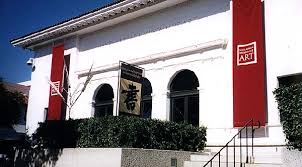
“The most important thing about learning to look at art is that what you feel about it matters. Your opinion is valid. There is no right answer,” is what Santa Barbara Museum of Art (SBMA) Docent Pat Andersons tells elementary school students before she brings them in for tours.

The very first visitors on SBMA’s opening day in 1941 were schoolchildren. Today the Museum serves about 30,000 children per year through its education program, said Spokeswoman Martha Donelan.

Much of the educational programming is carried out by docents, who collectively volunteer approximately 12,000 hours per year, said Andersons, president of the 79-member group, which includes artists, teachers, a married couple who met through the program (Candice Taylor and Paul McClung) and even a retired rocket scientist (Cliff Hauenstein). Docents undergo nine months of rigorous training, as well as ongoing education. Unlike many museums, which use scripted tours, “One of the things that’s so different about our program is that we do all our own research … we select the pieces … it’s a really personal thing.”

Most docents lead tours for both children and adults, but it’s clearly the kids who’ve captured Andersons’ heart. One of the things that fascinated me when I started touring kids is that “a lot of children have never been to a museum … so the concept of original art … makes them almost giddy,” she said.

Prior to the elementary school field trips — funded entirely by SBMA, including the buses — docents visit the school to give a preparatory talk. “(The school visit) is actually one of the most important aspects of the program because not only does it give the children something to look forward to and get them excited about the program, but they feel more comfortable coming here if they know what to expect,” said Andersons.

“… We have wonderful exhibitions and an outstanding permanent collection, but the education program, and the docent programs in particular, are the ways that we reach out to people and let them know what we have and why it’s interesting and what’s cool about it,” said Donelan.

After children tour the museum, they are given souvenir postcards and free tickets to bring their families back to the Museum. Teachers are also given posters and hands-on activities do back in the classroom. The program — which serves schools from as far away as Lompoc and Hueneme at no cost — is curriculum-based, designed to compliment what teachers are doing in the classroom from K-12.

With art programs in the schools being cut, sometimes we’re it, said Andersons. Admittedly, being a docent is demanding, but infinitely rewarding, said Andersons. “We all think we get back much more than we give,” she said.

For additional information about the docent-training program, call Sue Skenderian at 684.6384.

Originally published in South Coast Beacon

Where Silence is Golden

The Immaculate Heart Center for Spiritual Renewal

A feeling of tranquility and peace welcomes visitors as they enter the grounds of Montecito’s historic estate, La Casa de Maria, and head up the oak tree-lined driveway to the grand stone house in the center of the 26-acre nonprofit interfaith retreat and conference center. Once considered holy ground by the Chumash nation, today La Casa de Maria offers a quiet destination for people of all faiths to escape the stress of everyday life and deepen their spirituality through individual and couples retreats in the intimate surroundings of the Immaculate Heart Center for Spiritual Renewal, or in group gatherings throughout La Casa’s campus.

La Casa’s property was originally part of the San Ysidro Ranch; then became El Prado Rancho, the first lemon orchard in the area; then later became Rancho El Bosque, which brought the addition of the estate house, designed by architect Mary Craig. The home, which now houses the Immaculate Heart Center, remains mostly intact today, featuring stone quarried from nearby San Ysidro Creek, hand-carved teak ceilings, distinctive Italian fireplace mantels, and courtyard tiles from Spain.

“It is a very prayerful surrounding,” says Carol Carrig, the center’s director since 1997. Offering a spiritual bed and breakfast getaway, with delicious organic meals made from produce grown on the property and prepared by the Immaculate Heart Community of former nuns, guests often start out visiting for a few days, then come back again for longer retreats. “They realize that they’re getting in getting in touch with the deeper things that are going on within themselves,” says Carrig.

But beneath the peace and solitude of the center lies a long and storied history, not just of faith, but also of integrity, determination, and vision.

In 1943 Novice Mistress Mother Regina McPartlin, along with 12 novice Sisters of the Immaculate Heart of Mary, turned the estate into a Novitiate, where young women train to become nuns. While they pursued religious life on La Casa’s grounds, the peaceful surroundings were also gaining a reputation in Hollywood. Stars such as Irene Dunne, Loretta Young, and Ricardo Montalban came for retreats, holding prayer services in the Novitiate by day, while staying overnight at the Biltmore. In 1955, La Casa de Maria Retreat House formed and became the first retreat center for Catholic married couples. “Every weekend for probably 15 years, 40 married couples came to La Casa. The priests said mass for them, gave them conferences, they renewed their marriage vows, and had wonderful weekends,” says Stephanie Glatt, director of La Casa de Maria.

During the 1960s, there were conflicts between James Francis McIntyre-the Cardinal Archbishop of Los Angeles who oversaw the Immaculate Heart community-and the sisters’ understanding of the Vatican’s directive to update the church for contemporary times. “McIntyre said, ‘either follow what I say or give up your vows,'” recalls Carrig. “So that’s what we decided to do. To remain a community and to follow what we believed should be the right direction-but everybody had to give up their vows.”

The sisters took the revolutionary step of evolving into the Immaculate Heart Community, an ecumenical group of men and women, both single and married. Rather than fall apart, as many predicted, the Immaculate Heart Community has stayed together and thrived, with almost 200 members still active around the world. The community has operated the Immaculate Heart Center for Spiritual Renewal since 1974, opening its doors for private retreats for people of all faiths.

“It feels like a holy land. Not like Christian, I mean it just feels that the meditation, the peace, the quiet there is special,” says author/psychotherapist Alyce Faye Cleese, one of La Casa’s patrons. She calls the sisters “renegade nuns,” adding, “their story, for their day as women, was an extraordinary piece of women’s lib really-their courage and their bravery and their saying, ‘We’re women, we can do this and we will survive.'”

Today La Casa offers a wide array of programs, such as 12 Step Retreats; the Sacred Art of Living and Dying (for caregivers); Kaballah (Jewish Mysticism) (Jewish Mysticism); Waking up on Earth: Spiritual Life in a Time of Crisis; Centering Prayer Practice Retreats; Recovering Religion as a Work of the Imagination; and Capacitar, which combines Tai Chi, meditation and other practices that integrate spirituality and body wisdom.

In 2005, the Immaculate Heart Community bought back the entire property and is now in the process of a $7.7 million capital campaign. In addition to paying off the mortgage, they also plan to renew the conference buildings, preserve the ecology of the site-including the creating a sustainable agricultural site that protects native plants; developing an organic orchard/garden to provide the produce for the dining rooms; and improving the overall health of the citrus orchard and native Coast Live Oak grove-and develop additional La Casa-sponsored programs. “Part of that is our plan to integrate La Casa de Maria with the greater community and have more people understanding what we’re doing and supporting our program,” says capital campaign chair Christine Garvey, a retired banker. “We’ve mobilized a lot of the neighbors.”

One “neighborly” recruit is capital campaign cabinet member Joan Kreiss, a physician who did AIDS research in Africa before moving to town seven years ago. “What I love about La Casa de Maria is its rich sense of history,” she says. “For our family-and this is particularly important for my children-living next door to La Casa de Maria… gives a sense of context, a sense of being part of a historical continuum.”

“It’s kind of like Peter Pan, you have to believe,” says Cleese. “Not in God, just believing in the goodness of people and the goodness of nature and that something (like La Casa de Maria) is worth existing.”

For more information on La Casa de Maria, call Stephanie Glatt at 969.5031 ext. 204 or visit www.lacasademaria.org.

Originally published in Santa Barbara Magazine

Making their presence felt

Women's Fund of Santa BarbaraWomen’s Fund getting more bang for bucks

Looking for a low-key, high-impact way to tap into the power of collective philanthropy, Carol Palladini was inspired when she read a Los Angeles Times article about the Everychild Foundation. The idea is simple. Take the time, energy, and money spent on mounting and attending elaborate fund raisers and write a single check once a year.

The appeal was also simple: “Many women in the Santa Barbara area feel not only a need, but an obligation to be a powerful force for good in our community,” Palladini wrote in the invitation letter to the inaugural members of the Women’s Fund of Santa Barbara.

A few short months after that initial request, the Women’s Fund awarded its first donations on Jan. 31, giving $105,000 to the Santa Barbara Neighborhood Clinic’s Eastside Family Dental Clinic and $35,000 to two St. Vincent’s programs, PATHS (Program of Affordable Transitional Housing and Services) and Casa Alegria, an infant and toddler care facility.

“A group of women had been meeting at the Santa Barbara Foundation to talk about women and philanthropy,” explained Palladini. That group eventually evolved into a founding committee that included Palladini, Peri Harcourt, Shirley Ann Hurley, Jean Kaplan, Dale Kern, Joanne Rapp, Elna Scheinfeld, Meredith Scott, Anne Smith, Kay Stern, Marsha Wayne and Fritzie Yamin, as well as Raynette Cornejo, the Santa Barbara Foundation liaison.

Their intention was to take a year to develop the plan for the Women’s Fund, “but people started calling and saying ‘when can we write checks?’ which is amazing because usually you have to cajole and pull money out of people,” said Palladini.

“All it took was a letter of invitation to 500 women and the money started coming in,” said Palladini.

Each member contributes a minimum of $2,500 per year, which is then deposited in Donor Advised Fund administered by the Santa Barbara Foundation. At the end of the year, 90 percent of the funds collected are donated to one or more local nonprofit organizations.

“Our umbrella for giving is meeting unmet needs for women, children and families in the greater Santa Barbara area,” said Palladini. “The main goal is not to divvy it up in little tidbits, so that the impact of collective women’s giving is really felt.”

Granting is decided by a simple majority vote of members. Women who wish to ease the cost of dues may form a donor group, which then shares one vote in how the money is spent.

To join, send a check payable to Women’s Fund of Santa Barbara, c/o Santa Barbara Foundation, 15 E. Carrillo St., Santa Barbara 93101. For more information, contact Palladini at 565.0342 or e-mail her at carolpall@earthlink.net.

Originally published in South Coast Beacon in 2007.

Generation BMX

Young racers test their mettle with their pedals

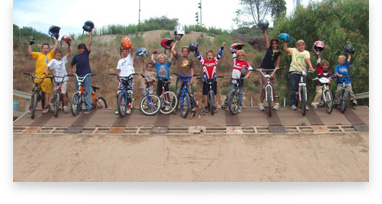
Faster, higher and often younger than you might imagine, BMX racers are tearing up the dirt at Elings Park every Friday night.

Elings Park BMX (courtesy photo)

Elings Park BMX (courtesy photo)

The sport, which first became popular in the 1970s, is one of the fastest-growing competitions in the country, partially due to the popularity of the X Games and BMX-inspired DVDs, video and computer games. BMX (bicycle motocross) is scheduled to become an Olympic sport in 2008 and, according to Dale Bowers, track director of Santa Barbara BMX, there are three or four local bikers who “could be peaking” at that time.

Several local BMX racers will be competing in the National Bicycle League NBL Grands in Louisville, Ky., this weekend, including Logan Beebe, Chris Burke, Austin Davis, Michael Davis, Austin Hamilton, Jarrett Kolich Kolich, Amber Melgoza, Brianna Wiley and Jason Wiley.

While the level of expertise in Santa Barbara is high, Bowers emphasized that there’s a BMX skill level race for everyone, including beginners — and grownups. If you can ride a bike, you can BMX, which means there are some pretty impressive 5- and 6-year-olds out there.

Racers work their way up, depending on their age and how good they are, said Scott Berry, a 13-year-old La Colina Junior High student.

“I saw commercials on TV and really wanted to try it … we came up on a Friday night and just watched,” he said. “I just liked what I saw and wanted to try it.”

Bowers recommended that interested families follow Scott’s lead: just come to the track and check it out. “It doesn’t cost anything to come in and watch. Not much you can do for free on a Friday night, and its exciting entertainment.”

For participants, too, BMX is very affordable, said Scott’s mother, Debbie Carder.

It costs $45 per year to join the NBL, with a 30-day trial membership available for $30 (which is credited toward the full membership). Races, which take place most Fridays beginning at 6 p.m., are $8, and practices, at 6 p.m. Wednesdays, are $5.

“They’re so helpful, too,” emphasized Carder. “Even the older kids … they take the time to help the little ones. They go out of their way. They’re not snotty. They just take them under their wing … without being asked. It’s kind of like a family in a way.”

Originally published in South Coast Beacon

Handmade cards help to say you care

Looking for that perfect card to tell your Valentine how much you care? Local artist Emily Chan’s handmade cards, Twinkle Toes Greetings, could score you big points in the romantic thoughtfulness category.

Shy and introverted as a child, Chan said she started making handmade cards to express gratitude and appreciation to people who did nice things for her.

“It started when I was really young. They just mean so much more when you take the time to make a card,” she said.

“Now I’m really glad that I get to share this thing I love to do with more people. It’s fun. Each card, I always try to make it a little bit better than the last one.”

Chan makes every card by hand, with a sharp eye for color and texture and an impressive attention to detail. In addition to Valentine’s Day greetings, Twinkle Toes has a large selection of design themes, including baby, birthday, flowers, friends, get well, graduation, holiday and seasonal, insects, kids, thank you, religious, remembrances and more.

Cards can be customized for include prewritten messages inside, like “my thoughts are with you,” “I love you” or “hang in there.”

Expanding on the theme of thoughtfulness, Twinkle Toes is offering to donate 25 percent of all proceeds made through February to the La Conchita Mudslide Memorial Fund.

“With so much tragedy in our world, Twinkle Toes strives to always make a positive difference,” Chan said.

Reasonably priced, the cards start at about $6.50 and can be ordered on the Web site, www.TwinkleToesCards.com, by writing to Twinkle Toes, P.O. Box 2392, Santa Barbara 93120 or by e-mailing contact@twinkletoescards.com.

Originally published in South Coast Beacon on January 20, 2005.

Neighborhood at odds

Planning Commission hears concerns on converting St. Francis into Cottage employee housing

Almost 150 people packed the hearing room at City Hall on Thursday, no small feat the week before Christmas. In the hot seat was Cottage Hospital’s plan to develop condominiums on the old St. Francis Medical Center property.

“No one at Cottage Hospital ever imagined that we would have to build houses to fulfill our mission, but we have to do just that,” said Cottage Health Systems‘ CEO Ron Werft, in presenting the project to the Planning Commission. It costs roughly $40,000-$50,000 to recruit and train an employee, said Cottage spokesperson Janet O’Neill, so part of the hospital’s motivation is to retain employees.

Describing the proposal to build 116 units on the site — 70 percent of which will be affordable or “workforce housing” for employees — Marshall Rose, chairman of the nonprofit’s housing task force, anticipated objections from neighbors. “This is not about ruining a neighborhood; it is about replacing a once vital healthcare organization with an even greater need,” he said.

The crowd was split on the project’s merits. Expressing empathy for the difficulty Cottage has recruiting and retaining top talent in this expensive housing market and applauding its efforts to provide housing were top officials from UCSB, Santa Barbara City College and Westmont. One neighbor against the project commented afterward, “They really brought in the suits. But our opinions are just as important.”

Criticism mostly centered on neighborhood compatibility concerns. While Cottage and city officials held two neighborhood meetings, the general consensus among those who live nearby was that their concerns weren’t being accommodated. “The comments have neither given the neighbors much hope or much confidence,” was Steven Doty’s written response to the plan.

“I don’t think it’s a matter of fear, I think it’s a matter of trust. I don’t think it’s been earned,” said Joan Marshall, another neighbor.

“We’re all for workforce housing,” said Dee Duncan, who works closely with Bungalow Haven neighborhood association. “But protecting and preserving is equally important to the people who live here.”

Cheri Rae, also from the Bungalow Haven group, expressed dismay after the hearing. “It sounds like the employees are pitted against the neighbors. That’s not true. We are workforce people. We just don’t want to lose the quality of life that has attracted us to Santa Barbara.”

Several in the audience and on the commission said they thought the concurrent Cottage Hospital remodel project should be planned in parallel and suggested that some of the existing St. Francis Medical Center facility (set to be demolished) could be put to medical use, with workforce housing put in the neighborhood near Cottage. Other concerns were how long the property would remain affordable, the number of market rate units, a lack of green space on the property and that there was too much parking, since Cottage said it plans to run a shuttle to its facilities in Santa Barbara in Goleta.

The meeting was an initial concept review, so the commission took no formal action on the project other than to provide feedback.

Originally published in South Coast Beacon

Engineered for Success

“What do you want to be when you grow up?” is one of the first questions Ed Ware asks his computer engineering students at Dos Pueblos High.

A software engineering department manager at Raytheon for 23 years, Ware offers students a view of engineering from the workplace, rather than the classroom. With the support of his employer, Ware spends three mornings a week allowing students to “try on engineering and see if it’s something they really like.”

Clearly engineering is something Ware really likes.

“A rewarding part is being able to take a subject matter that I love and convey it to somebody else through teaching,” said Ware, who is beginning his second year with DPHS’ Engineering Academy.

“Ed is an unbelievably fantastic teacher,” said Dos Pueblos principal David Cash. “He knows students well and relates well to them.”

It’s selfish really, said Ware, the father of two daughters (one at DPHS and the other at Goleta Valley Junior High).

“I enjoy being on campus, especially when I have a daughter … I think we’re a lot closer. I understand what her life is like … and she’s not ashamed of me,” he laughed.

“It’s just been a great partnership all around,” said Cash.

The idea for the engineering academy started about four years ago. An essential part of getting funding for the program was being able to demonstrate active partners in the business community. Raytheon — which had already adopted DPHS through the county Partners In Education Program — was the first business the school went to talk to, said Cash.

Raytheon responded by getting involved in the engineering academy in a big way.

“It’s just a perfect avenue for us,” said spokesman Ron Colman. “Our big community involvement push is math and science education. This is a great way for us to impact the community via the schools, also a great way for us to, in effect, recruit future employees.”

Ware described his teaching experience as being very rewarding.

“I love the old Wide World of Sports ‘the thrill of victory, the agony of defeat’ slogan (as an analogy for) watching the students with their first project,” he said.

When students start his class, “they’re great end users,” said Ware. “But they don’t know what’s inside the box, how it works, or what’s behind the screen.”

In his last class Ware had the students tear apart a computer to really understand what the CPU is.

“We learned how to program, we learned the language of computers,” said senior Karla Ortiz, who is participating in the engineering academy for her second year.

Raytheon views the program as a good way to light the imaginations of students, such as women and minorities, who wouldn’t always be exposed to engineering opportunities.

“I think it’s an awesome program because I think a lot of girls didn’t know that much about computer networking,” said Ortiz, whose father is an engineer.

Ortiz particularly enjoyed a field trip to Ware’s office. “It was a really great experience to see how the environment works at Raytheon,” she said.

Ortiz was also a fan of the guest speakers.

“He brought this girl engineer named Candy (software engineer Candy Lou) into class. It’s a really great program because it’s advocating for girls that ‘hey, it’s not just a guy thing,'” said Ortiz.

“I give them a thumbs up for Raytheon to actually put that program out there,” said Ortiz, who is considering a career in engineering or medicine.

And when Ware grows up?

“I think I want to be a software engineer,” he said.

Originally published in South Coast Beacon (2003)