Enterprising Women Make Connection

Stockimages (freedigitalphotos.net)

Stockimages (freedigitalphotos.net)

N.E.W. helps budding business owners balance networking and families

By LESLIE DINABERG

SOUTH COAST BEACON

Hanging out with the women of N.E.W. you get a great sense of energy, optimism and, dare I say it, sisterhood. This is indeed a network of enterprising women.

The 13 members — all of whom market their services to families on the South Coast and beyond — have met informally for the past year and a half to network and share information, and now they have a new enterprise, a quarterly newsletter called the Parent Connection.

The second issue of the Parent Connection comes out this week. Filled with useful information for parents — such as etiquette tips from Tara Stockton of Mind Your Manners, as well as discount coupons from member businesses — the newsletter is free and can be found at local libraries, doctors’ offices and family-oriented businesses.

Rachael Steidl, who owns sbparent.com, an Internet portal that caters to local families, said she started N.E.W. because she had met so many women who, like her, were balancing families and business ownership, and thought it would be a neat opportunity to connect people with similar goals.

Surprisingly, at that first meeting, almost none of the women knew each other even though they were targeting the same demographic, Steidl said.

“Being part of N.E.W is so valuable to me because we are all women with businesses that may be different but the joys and stresses of owning a business are the same,” said Jennifer Caesar, who owns My Gym Children’s Fitness Center. “The understanding, support and advice of other women who are going through the same ups and downs is so helpful.”

“It’s great to discuss ideas on topics such as networking, marketing and advertising with other business owners, and with this group of creative women we come up with some great ideas for each other’s businesses,” said Dr. Trevor Holly Cates of the Santa Barbara Center for Natural Medicine.

Another important element of the group is fostering good corporate citizenship.

“We strategize on how to make our community better through fund raising, awareness and donating to great causes,” said Michelle Bexelius, who owns Homegrown Photos.

“I wish more businesses were not just networking but supporting things,” said Steidl, who is teaming up with Moms In Motion founder — and fellow N.E.W. member — Jamie Allison to present the second annual Mother Day 5K & Family Festival on May 7, as a benefit for Village Properties Realtors’ Teacher’s Fund and Postpartum Education for Parents (PEP).

In addition to the philanthropic aspect, N.E.W. members’ supportiveness of each other distinguishes the group from other business organizations.

“Bryn Evans (co-owner of Hopscotch and the lone man in the group) made a comment — if this had been men it would have been so different, you’re so supportive, so enthusiastic,” Steidl recalled.

Some of the adjectives members used to describe their colleagues included generous, intelligent, committed, humorous, inspirational, creative and innovative.

“It takes a lot of creativity and guts to start your own business and manage it well. These women inspire me to continue working hard to grow my business,” Cates said.

In addition to sbparent.com, Mind Your Manners, My Gym, Santa Barbara Center for Natural Medicine, Homegrown Photos, Moms In Motion and Hopscotch, group members include Kim Clark of Baby Boot Camp, Sonia Diaz-Ebadi of Pizza Mizza, Marietta Jablonka of A Stork Was Here, Danielle Kling of The Dining Car, Suzanne Shea of Envirobaby and Carol Tricase of PEP.

For more information on N.E.W., visit www.sbparent.com.

Originally published in South Coast Beacon on May 5, 2005.

Bungalow Haven

mapWhat started out as a simple opportunity to socialize with neighbors and get to know a little more about American bungalow style architecture and restoration has quickly morphed the Bungalow Haven Neighborhood Association into a vibrant, politically active neighborhood watchdog group.

Bungalow Haven was formed about two years ago by neighbors Dee Duncan and her husband Steve Dowty, and Judy and Sayre Macneil.

“The original intent was social,” said Cheri Rae, another member of the association. Rae said the group has a couple of hundred members representing about 125 households and meets once a month at Duncan and Dowty’s home. They also have an active email list and several subcommittees, including a political action committee that is currently reviewing its position on the proposed development of the former St. Francis Medical Center property.

The Bungalow Haven neighborhood — roughly bounded by Alta Vista, Laguna, Anapamu and Micheltorena streets — began to mobilize when they learned of a plan to construct 18 new units on the 1400 block of Laguna Street and relocate five bungalows. The project — developed by Capital Pacific Holding LLC and designed by architect Detlev Peikert — was well underway before the neighbors really became aware of it. However, at least in part from their efforts (including numerous appearances before the planning commission and the architectural board of review) the project has been scaled back to retain three of the existing bungalows on the property, along with plans to build the 15 new units in craftsman style rather than the originally planned red tile roofs.

“We’ve shown up 50 at a time and I think that was part of why we’ve been so successful. People were so amazed to see such a large bunch of people who were very articulate,” said Rae, who has been sharing strategies with other neighborhood associations.

Mike Jogoleff, who has lived in Bungalow Haven since childhood, fears continued encroachment by developers would ruin the neighborhood’s character. “If somebody’s working against us like these big development companies, they just come in and screw everybody,” he said.

One of the steps the neighborhood association is taking to prevent more “condo mania” is working to establish Bungalow Haven as a Historic Landmark District. Regarding the Laguna Street project, Rae said, “… we’ve all had a steep learning curve on what the rules are, and we want to prevent it from ever happening again.”

To obtain historic status, the group must first finish a neighborhood survey cataloguing the historic elements throughout the approximately 300 homes in the neighborhood. “We’re modeling our approach on the El Pueblo Viejo and the Brinkerhoff Districts. They are (the) only two historic districts in the town so far, so we’re doing the same thing that they did,” she said.

Rae admitted, “It’s a little ironic when we say with disdain, ‘they’re putting in million dollar condos’ when our houses are creeping up toward million dollar houses. It’s just (that) what you get for your money is not stucco and brand-new efficient appliances, but you get some charm.”

Jogoleff is also keenly aware that the working-class neighborhood he grew up in has changed. ” As my neighbor says, the people that buy our houses are not going to be painters and teachers. It’s going to be lawyers, doctors, accountants.”

While development projects have been catalysts, they aren’t the primary reason for the group. “The group is to preserve this style of life, simple and kind of a calmer way of life. None of us chose to go live in a tract house in Goleta. That’s just not what we wanted. … We’re not out there recruiting members. … The whole idea is for peaceful coexistence and neighborhood protection,” Rae said.

“We’re not anti-development … it’s just within reason and it’s within scale and size and having respect for the neighborhoods that are already here. It makes no sense whatsoever to develop for new people who come in when you ignore the neighbors that are already here and have built Santa Barbara to be what it is. … We feel like we’re part of the fabric of this town and we want to be able to stay here and not be run out because we can’t have the kind of life that we want to have here,” Rae said.

Originally published in South Coast Beacon

Life lessons

Courtesy Photo

Courtesy Photo

For some it’s all about the sweets, but the practical experience of selling can turn a girl into one smart cookie

Along with the taste of Thin Mints, Samoas and Tag-a-longs, local Girl Scouts are also savoring the sweet smell of success while learning how to set goals, be persistent, organize their schedules and other valuable skills.

“I don’t really have a secret; my mom and I, we just go everywhere, door to door (selling cookies),” said Tiondra Flynn, an 8th grader at Carpinteria Middle School who is one of the top sellers in the area. “Last year I made a goal for myself of 2,000 boxes and I’m at 2,002 right now.”

Goal setting is one of the most important skills learned selling cookies. “(They ask themselves) what do I need to do to accomplish an end result benefit? It might be the reward (that motivates the girls) but to get there requires specific behavior,” said Jeff Blackman, author of five books for sales professionals, including the recent Amazon bestseller Stop Whining, Start Selling.

The girls set pretty high goals and figure out very creative ways of reaching them, said Mary Hernandez of the local Girl Scouts of Tres Condados Council. “If they don’t reach that goal that’s another life lesson.”

The girls and adult volunteers select all of the incentives; they’re not preplanned, said Hernandez.

Last year Valerie Vampola sold more than 1,000 boxes and earned a free week at summer camp. “I want to see if I can do it again,” said the St. Raphael School 7th grader.

“They give us prizes for every hundred (boxes) or so, but if we reach 1,000 we get to go to Camp Tecuya for free. I’ve been going for like five years, it’s a really cool place,” said Flynn.

Along with summer camp, t-shirts, backpacks and beach towels can be earned. Some of the girls are motivated by college scholarships. “The reason why I’m still selling cookies, they have a scholarship program. If I’m a Girl Scout all the way through high school, I get a scholarship of 35 cents per box,” said Flynn, who said she’s really fond of animals and someday wants to train killer whales “like they do at Sea World.”

“By setting goals you give yourself a road map of what to follow rather than aimlessly pursuing the task,” said Maura Schreier-Fleming, president of Best@selling.

It’s important to set realistic goals, said Steve Waterhouse, president of the Waterhouse Group. And also to have a process tied to that goal. The girls should figure out how many houses to visit if they want to sell a certain number of cookies. “If you want to sell 50 boxes you can’t go out for just half an hour.”

While some pros said persistence is critical, Jacques Werth, author of High Probability Selling, disagrees. “We’ve studied what the top sales people do in 23 different industries on three continents. You shouldn’t spend more than one minute with people who don’t want to buy,” said Werth. “It’s all about dealing with people on the basis of mutual trust and respect. When you refuse to take no for an answer that’s not showing respect.”

“I’ve definitely learned how to take a no for answer,” said Flynn, who’s been in scouting for almost eight years. “If they just say ‘no,’ then I just say ‘thanks,’ then I just leave. When I was first starting out as a Brownie, I didn’t understand why they didn’t want any. I would be like ‘Oh, how come?’ ”

“In reality, getting a NO from a prospect is just as valuable as a YES. … Because while you are wasting your time hounding someone to get them to buy, Lord knows how many prospects, who would be much easier to sell, are getting away from you?” said Jim Labadie, owner of Howtogetmoreclients.com.

“(You have to) not be afraid to ask people. You never know who will buy and who won’t,” said Vampola. “And then sometimes if they say no, sometimes I try to encourage them to buy.”

Parental support is an important ingredient in the girl’s success. “My parents help me out. They bring (sign-up) sheets to their jobs and I go door to door, and then when cookies are finally out I try to go to booth sales as often as I can and stay there as much time as I can,” said Vampola, whose mother Irma is her troop leader and father Mark is the cookie chairman as well as the booth chairman for the region.

Flynn’s mother Pete is also her troop leader and an expert in the up-sell technique, according to her daughter. “If they give us $20, she’ll say ‘you can buy five with that’ rather than immediately giving them change,” said Flynn.

Another technique that works well for Girls Scouts is called “assumptive selling.” When author Blackman’s daughter Brittney was about 7 or 8, their town endured a really cold winter, and it was tough to sell cookies door to door. Rather than give up, Brittney simply picked up the phone and called every single person who bought from her the previous year. Her pitch: “Would you like to order the same number of boxes as last year or should I put you down for even more?”

Sounds like one smart cookie indeed.

Originally published in South Coast Beacon

Mothers in arms

Photostock (freedigitalphotos.net)

Photostock (freedigitalphotos.net)

Lifelong friendships begin with bonding over their children

Motherhood has a secret code. It’s something only those who have struggled with 3 a.m. feedings or juggled a car seat, a purse, a diaper bag, a bag of groceries and a baby or two can understand. While it sometimes feels like those needy little creatures rule your life, among the unparalleled joys of parenthood, many moms say their kids have provided them with wonderful friendships with other mothers.

“I just really cherish all the friendships I’ve made from my kids,” said Susan Manzo, who has a group of women she’s been close to since her son, Nick, was in kindergarten at Monte Vista with their daughters. The moms have remained close. Now Nick’s a sophomore at San Marcos, and instead of complaining, “can’t you be friends with moms of boys instead of girls,” he’s in love with all the cute girls at the group’s annual ski trip, Manzo said.

When the girls were in the fifth grade they started a mother-daughter book club. “Our girls have these great relationships with these other women who aren’t their moms,” said Nancy Lorenzen, who participates monthly with her daughter Kirsten, Manzo and seven other mother-daughter pairs. “We all really enjoy getting together. I think it’s easier to get together with people in a similar life situation or life phase,” said Lorenzen.

That urge to bond with others in the same phase of life is part of what drove the founding of PEP (post partum education for parents) 25 years ago, said board member Jennifer Brannon. In addition to offering support and advice via a 24-hour “warm” line and monthly expectant parent classes, the nonprofit group also has weekly groups, starting from when babies are about six weeks old. “Once that class has been meeting about 12 weeks, they spin out in their own groups and meet at parks. There are kids that are 14 and 15 and the PEP groups still meet,” said Brannon.

“I’ve always been amazed at how much your kids dictate who your friends are,” said Rachael Steidl, the mother of Emily and twins Ashley and Whitney. When her twins were born, Steidl joined both Mothers of Multiples and PEP. While her initial motivation was education, she also made friends. “I really cherish the friendships for the time. … I was one of the first of my close friends to have kids and my relationships for that first year and a half probably changed drastically. … I felt really inadequate because of the fact that I wasn’t working, that I didn’t really have anything interesting to talk about. I mean how many times do they want to hear how many diapers I’ve changed and how many loads of laundry I’ve folded.”

While the closeness shared in those early days can fizzle, many women become bonded for life. Now a grandmother, Fran Davis met seven of her dearest friends more than 30 years ago as a parent at Starr King Preschool. “I thank my stars that I found Starr King. It was the core of all my friendships. (It) was a window or a door to the world for me, and I have never looked back.”

Davis believes the cooperative preschool tended to attract like individuals. The group has been through divorces, remarriages and the death of a spouse. “We’ve shared all stages, which is pretty amazing.”

Over the years there have been camping trips, weekend getaways and other excursions, with and without their extended families. “When our kids were little we would go down to Toys ‘R Us,” Davis said. As their lives have changed, so have their activities. The women now meet regularly as a book group. “Half of our book group is devoted to talking about what’s going on with ourselves and what’s going on in our lives. Right now we’re talking about a lot about the situation in the United States and how distressed we are.”

The group has even discussed some kind of communal living situation, “for when we get really old,” Davis said. “We were pretty much all stay-at-home mothers. … I think that’s a really sad thing that women who have to work these days don’t have opportunities to spend the time that it takes to make good friends.”

Indeed, finding that balance between work and family is a big topic of discussion among today’s mothers. “For a long time I didn’t know what anyone had done in my (PEP) group. It’s like ‘Oh, that’s right, we all had careers before this, I forgot,’ ” said Steidl, who founded her business, Santa Barbara Parent Source, partially based on input from her fellow mothers. “I remember when those issues first started coming up and it was so interesting to hear what people had done and see them in the light of a woman and not just a mom.”

Originally published in South Coast Beacon

Talk about a walk

Photo by graur razvan ionut (freedigitalphotos.net)

Photo by graur razvan ionut (freedigitalphotos.net)

After 27 years, these ladies think they’ve hit their stride

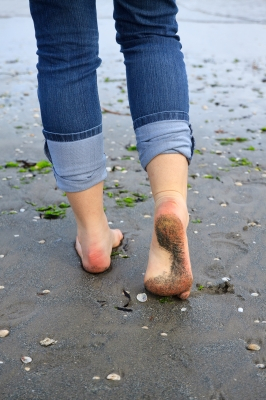
It’s been said that walking a mile in someone’s shoes fuels greater understanding — so just imagine what walking three miles together, five days a week, for 27 years, will fuel.

In the case of walking partners Judy Bernstein, Beverley Brier, Natalie Gaynes, Barbara Mizes, Blanca Presser and Phyllis Cox (who joined the group in 1998), they’ve shared laughter, friendship, triumph and sorrow. They’ve also seen how the South Coast has changed in the Patterson Avenue/Kellogg School neighborhood they’ve walked for so many years.

“We have been through the many travails all these years, starting with young children, teenagers, college entrance exams, weddings and now grandchildren…” Brier said. “One gentleman who has seen us walking for years said we look like Pacman, the mouths are all going a mile-a-minute.”

The mouths may be moving quickly, but so are the legs. Even our 20-something photographer was huffing and puffing as we took an early morning walk with these dynamos.

Presser and Gaynes started walking together and the others quickly joined in. Bernstein said she started out trying to get in shape for her first trip to Europe, adding that having a group of friends to exercise with is very motivating.

“It’s so long and so boring and so tiring and when you talk, you don’t notice it,” Bernstein said.

“We solve the world’s problems on our walks,” Brier said.

“But most of them are personal,” Bernstein added.

Cox recalled that she joined the group the year before her daughter got married, and had her friends help guide her through the planning. Last week, Mizes was planning her father’s funeral and Brier was helping with a memorial for a close friend.

While the ladies have serious discussions during their walks, sometimes inspired by their lives and sometimes by the changes they see, they also have fun.

Not only have the women formed friendships among themselves, they’ve gotten to know the neighbors. The men at a residential care home wave each morning and let them know if they’re running late, while the neighborhood dogs expect a pat on the head.

“I cannot tell you how many people that I meet at a dinner party who say, ‘Do I see you walking?'” Mizes said.

The sweat is pouring but the banter stays lively throughout our walk.

Some of their husbands wonder how they have so much to say to each other, but Brier said they’re never at a loss.

“If you want to say something you have to jump in,” said Mizes, who once recruited a member (Ginny Alexander, who has since moved) on a flight to London. She even tried to get the Beacon staffers to join.

“We’ll get you through all of the trials and tribulations,” she said. “Every time you think you’ve got a problem, by the time you go through us giving you input you’ll feel better.”

Thanks. We already do.

Originally published in South Coast Beacon

We’ll save you money in 30 Steps

Follow these tips to keep money in your pockets

Who isn’t looking for ways to save some cash? Here’s a month’s worth of money-saving tips — some big, some not so big — to start developing good financial habits.

1. Pay off credit weekly. Credit-card companies accrue interest daily, so if the minimum amount due is $100, send $25 weekly instead of paying at the end of the month to save money on interest.

2. Claim the child tax credit on your return, advises Babytalk Finance Guide. Depending on your income, this credit can shave as much as $1,000 from your taxes.

3. Get a “family share” cell-phone plan. A regular 400-minute plan is about $40 a month, but share an 800-minute plan with your spouse for just $70 and you save $10.

4. Hector A. Jimenez of West Coast Mortgage recommends comparing points, costs and interest rates when refinancing. “You may have to pay a higher interest rate over the life of the loan if you get a ‘no point’ loan,” he said. “Always ask your broker if rebate pricing is involved on your loan.”

5. When searching for the cheapest airline tickets, shop early in the morning. According to Consumer Credit Counseling Service, most airlines and travel sites introduce their promotional fares in the middle of the night.

6. CCCS also suggests you consider adjusting your withholding allowances to cover what you owe and no more. The average income tax refund in 2003 was more than $2,000, so Uncle Sam got to use that $166 each month instead of you.

7. To shave years off of your mortgage and save thousands of dollars in interest, send in one extra principal payment each year, advises CCCS. Or, divide your monthly payment by 12, and add that amount to each payment, noting that it is for principal only.

8. Want to transfer your tax basis under Proposition 60, but the home you’re buying is more than your current residence? Jon Mahoney of Coldwell Banker suggests paying all or part of real estate commissions separately, thereby reducing the purchase amount. “This can save you thousands of dollars every year,” he said.

9. The online forum, wwww.savingadvice.com, recommends participating in a child-care flexible spending account if your employer has one. This is a special Internal Revenue Service account that allows you to set aside money for child-care expenses with pre-tax dollars.

To save money on college expenses, savingadvice.com offers these tips:

10. Although application deadlines for most college scholarships aren’t due until senior year, start searching for grants and scholarships freshman year. By finding potential awards when your child begins high school, he or she can choose classes and participate in activities that will provide a better chance of getting free cash.

11. Education IRAs (Coverdell Education Savings Accounts) are no longer just for college. You may contribute up to $2,000 a year per beneficiary, and the money may now be used for elementary and secondary school costs as well as college expenses.

12. Reduce your college expenses by earning as many college credits outside the classroom as possible. Advanced Placement tests, internships, public service and job- training programs are a few examples of ways you can trim tuition costs by earning college credit outside the classroom.

13. There are some 750,000 college scholarships available to qualified students. While many of these are financial need- and grade-based, many others aren’t. Don’t let household income or grades stop you from searching for scholarships.

14. You’re allowed to pay any amount for an unlimited number of people’s college tuitions — not room and board or school supplies — without owing any gift taxes. For the tuition payments to qualify, you must pay the tuition directly to the college.

15. Signing up for a 401(k)? “Be sure to review the company benefit, and if there is a match, contribute the full amount necessary to take full advantage,” recommended Rich Schuette, senior advisor for TS Capital Group. “If you don’t, it’s like leaving free money on the table and can cost you tens of thousands of dollars over your working career.”

16. Consider a high deductible health insurance plan if available and save the difference in premium into an HSA (health savings account), advises Schuette. The money is tax deductible and will grow tax deferred, giving you the possibility of paying for many medical needs with tax-free money.

17. If you own rental property, consider working for your own property management company and start an additional retirement plan for yourself, lowering your tax liability and growing your retirement assets, suggests Schuette.

18. Pat Veretto of Frugal Living recommends: “Raise your auto insurance deductible and your premium will drop. If you now have $100 deductible, raise it to $500 or even $1,000 if you can do it and your insurance company allows it. Put that amount in a savings account and leave it to earn interest. If you don’t have an accident, it’ll still be yours and you’ll be making a little money on it. Even if you do have an accident, you’ll have the money to pay up. You won’t have lost anything because the difference in the premium will probably already have made up for any amount you have to pay on your own.”

19. Go digital. If you take 48 pictures a month, a digital camera can save you $20 a month, plus you don’t have all those not-up-to-par prints sitting around in boxes.

20. If you don’t keep good records, you’re probably not claiming all of your allowable income tax deductions and credits, advises Deborah Fowles in Your Guide to Financial Planning. “Set up a system now and use it all year. It’s much easier than scrambling to find everything at tax time, only to miss items that might have saved you money.”

21. “You’ve probably heard of the famous real estate mantra ‘location, location, location,’ but do you know the financial mantra ‘tracking, tracking, tracking?’ It is the single most important thing you can do — and the first step — to put you in the driver’s seat of your own life,” according to Linda Starr of Budget-Tools-and-Tips.com.

22. You may lower the price of a round-trip airfare by as much as two-thirds by making certain you stay over a Saturday evening, and by purchasing the ticket in advance, recommends Starr.

23. In these days of rising gas prices, she also suggests you can save money on gas by keeping your engine tuned and your tires inflated to their proper pressure.

Don’t just look to the present when it comes to finance, Candace Bahr and Ginita Wall, authors of It’s More Than Money-It’s Your Life: The New Money Club for Women, advise teaching children about financial decision-making by:

24. Starting allowances early, around age 5 or 6. Don’t let your children get in the habit of asking you for cash rather than choosing responsibly how to save and spend their own money.

25. Teach children how credit cards work. If children know how the cards work before they get one, they may be able to handle the responsibility better than teens who get a card and know nothing about them.

26. Starting a family Money Club. Your older teens may benefit from being included in a Money Club where they can report to other family members about money issues and help make group decisions.

Save money at the grocery store with these tips from www.grocerysavingstips.com.

27. When a product is on sale like “two for $5” you can almost always purchase just one of the items for the sale price (which in this case would be $2.50). In other words, you do not have to purchase two, or three, or four, or whatever else the sale sign says.

28. Don’t be brand loyal. Try to buy only what’s on sale. Sometimes a name brand can even be on sale for the same price as the store brand, or less, so read those tags carefully.

29. If you have a magazine you tend to keep picking up each month while you’re at the grocery just subscribe to the darn thing and save yourself $20!

30. In case these financial tips are coming a little too late and you need to file for bankruptcy, Ira and Linda Distenfield recently published We The People’s Guide to Bankruptcy, which helps consumers file for bankruptcy as affordably and painlessly as possible, before new federal laws go into effect in October.

Beacon intern Katherine Manning contributed to this report.

Originally published in the South Coast Beacon.

Noozhawk Talks: Leslie Dinaberg Sits Down With Suzanne Farwell

Suzanne Farwell, LaraCooper / Noozhawk photo

Suzanne Farwell, LaraCooper / Noozhawk photo

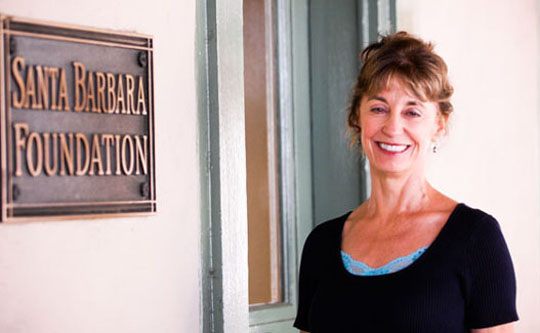
As Director of Communications, Suzanne Farwell is often the voice for the Santa Barbara Foundation, connecting all of us with information about the good work the foundation is doing in the community. Farwell connects with Leslie Dinaberg
to reflect on her work and her life, as she prepares to retire later this month.

Leslie Dinaberg: What will you miss the most about your job at the Santa Barbara
Foundation?

Suzanne Farwell: The people I work with. One of the reasons I like working there is because I
work with people who are passionate about what they do and helping people.

…The other thing I really like about my job is it has so many facets where I’m
gathering information, so I’m learning about many different things every day. …
I’m learning about different philanthropic groups that pop up through us. It’s the
whole canvas of interesting wonderful things that are positive. …

LD: That’s great. In many ways I think Santa Barbara Foundation seems like an
ideal nonprofit job in that you would never get bored because you’re dealing with
so many different types of things.

SF: And now there’s the added component of a new boss who is coming in (Ron
Gallo replaced Chuck Slosser as CEO this year) with fresh ideas and that’s also
very exciting.

LD: So what made you decide to retire now?

SF: Well a couple of things. The major reason is my daughter has a little boy who
is 14 months old and he is a sweetheart and I don’t get to see him much. And my
son is getting married and in every family there needs to be someone at the
center who doesn’t necessarily actually need to do anything but who is that
center and there’s much I can’t do with this job. … I hope to do some projects for
the foundation that I am intensely interested in, and I’m still young enough to be
able to open my mind to lots of other things and who knows. I’m trying to have a
fertile ground and so as things pop up they take root. But I can’t open it up
without cutting back on the work. But it seems like a good time. I’m also looking
forward to spending more time with my husband at home.

LD: I would imagine that’s its very demanding work.

SF: It is, but that’s what good about it is I use every brain cell.

LD: I know you worked on a lot of great programs while you were at the Santa
Barbara Foundation, but are there any that are particularly near and dear to your
heart?

SF: The first year I was there we were about to celebrate the Foundation’s 75th
anniversary. So there was a book, a history book for the anniversary project to
coordinate and then there was a gala performing arts presentation at the Lobero.
That was fantastic. Then there was a symposium about the future of
philanthropy. That was all in one year. That was really something. …

I think one of my favorites was a book about the blind doctor, Dr. Pearlman. … A
little old lady comes to us and she wants to leave us a million dollars part of the
deal is that we publish her manuscript. Well, you can imagine a little old lady’s
manuscript. What will we do with that? Well, you read it and it turned out to be a
really compelling human story so we shepherded that project, we got a local
publisher; the whole thing was really heartwarming. And it’s always nice to have
tangible evidence of what you’ve done because most of mine is ephemeral.

LD: I’ve seen that project and it’s very, very cool.

SF: Yes, and the idea that we would be following through on the donor’s wishes
which is always very important. And it’s a book that opens people’s eyes to what
it is like to be blind as a society, as a world society we could all that to
understand what it’s like to be in someone else’s shoes.

… It’s fascinating. I get something out of every single project. I know the
foundation’s history better than anybody.

LD: Do you have any trips planned or any immediate plans as soon as you’re
done?

SF: Everybody asks me that. … My husband and I have traveled a lot and I just
plan to stay home for a while and just be there. I live in a wonderful place. I want
to just sit on the porch, watch the birds and just still the mind a little bit because
I’m always thinking about philanthropy and this and that and it’s going to take a
while for that to go away because I’m always going at 60 miles an hour.

LD: What else do you do like to do with your spare time?

SF: Well I love to read. I’ve also been a professional dancer for 30 years and I
still do it two or three times a month. I’ve been with Chef Karim since he
started.

LD: I didn’t know that.

SF: So that’s in my blood. And I love to move, so it would be fun to explore
different forms of dance. I don’t know it’s mainly a stilling of the mind to allow
other things to come up. It sounds like I’m not going to do anything.

LD: You need a break, that’s what it sounds like to me.

SF: So I’m opening doors and letting things in.

LD: How did you get started with belly dancing?

SF: My husband and I were living at Married Student Housing at UCSB because
we were both graduate students. I was getting my masters in French and he was
getting a PhD in counseling psych and a woman moved in who was a belly
dancer, new to town. He was dabbling in photography at the time, she needed
photos, so they made a deal. He said I’ll take photos of you and why don’t you
give Suzanne some lessons. I was very annoyed. I was not consulted. I was
almost insulted.

So I went and I took a couple of lessons and said this is really weird. But then my
teacher put on a show with three other dancers and I went and I was hit in the
head by a bat. That proverbial light bulb was like, ah, that’s what I want. Yes. I
want to be that person on the stage. Because it’s so alluring and beautiful and
that was it I set on a path and my poor husband never imagined that this would
happen. And it became overwhelming. It changed my life because I learned to
relate to people in a different way. I was very British at the time, very shy and I
learned to handle myself. I did Belly Grams for years where I would go to offices,
homes, wherever and do a ten minute dance and congratulate the birthday
person and whatever it was and so I was in mansions in Montecito, barbecues on
Milpas, offices all over, it was fantastic, so I got a look at America that I never
would have had, and it was for me about Americans. A great education… It’s
added a spark to my life.

LD: Keeps you in shape too.

SF: It does. And like anybody else I’ve had experiences and I’ve taken from them
and learned and it’s made me who I am today, and I hope to have many more of
them…

LD: How did you go from getting your masters in French and becoming a belly
dancer to working in the nonprofit world?

SF: I was a stay at home mom and I took that very seriously. I spent a lot of time
with my kids educating them in every way that I could. When our daughter, the
younger of the two, went to high school, my husband said, “well you know, this is
a good time to get a job.” I was panicked because I had not ever really, really had
a job.

I’d worked as a caterer for many years and I worked at Jane Fonda’s ranch. … I
applied for a job at the museum and they hired me and then I thought to myself
as I sat at the desk the first day, what am I doing. This could be the shortest job
in history. Then I calmed down and I just applied the idea that what would I want
to know being Jill Six Pack on the street, because I didn’t know that much about
the museum and I went on from there and it all worked out very nicely.

Vital Stats: Suzanne Farwell

Born: January 30, in London, England to a French mother and a British
father

Family: Husband Larry Farwell; two grown children, Nick, who lives in Seattle,
and Lara, who lives in Palo Alto; and a grandson, Bennett, 14 months.

Professional Accomplishments: Masters Degree in French; Chef/Caterer at Jane
Fonda’s Ranch; Worked in communications for Santa Barbara Museum of
Natural History; Voiceover Artist, now voices the calendar on KDB radio station;
Professional Belly Dancer; Director of Communications for the Santa Barbara
Foundation.

Best Book You’ve Read Recently: Kate Wilhelm’s “Barbara Holloway” series of
mysteries and Orson Scott Card’s “Ender’s Game” series.

Little-Known Fact: “I think I’ve exposed all of the little known facts. The dancing, I
don’t bring that out that much. They are really two separate things. When they
intersect it’s interesting, but it’s not the first thing out of my mouth.”

Originally published in Noozhawk on June 7, 2009. To read it there click here.

First Time Home Buyers: The American Dream … the South Coast Reality

Google maps photo

Google maps photo

Breaking into the local real estate market is tough but not impossible. Leslie Dinaberg explores who’s buying for the first time and how.

Practicality, frugality and focus were the key values that got Jonathan and Kara Rocque into their first home, at 7126 Del Norte Dr. in Goleta. Both UCSB graduates, the Rocques lived in a one-bedroom apartment and didn’t really upgrade their lifestyle much after college in order to save money for a house.

They started making offers right after they married, about 2-1/2 years ago, but Jonathan said he wasn’t really ready to buy until recently. “People always say ‘get in as soon as you can,’ but … at the same time, I really have no regrets not getting in any sooner because I wasn’t ready.” An engineer, he said he worked for a start-up company and was worried about job stability.

“I think I got to the point where I gained more confidence in myself and that things were going to be okay,” said Jonathan, who now works for Indigo Systems, which recently merged with FLIR Systems.

When he felt really ready to buy, Jonathan had the willing assistance of his father, John Rocque, a realtor and mortgage broker in San Dimas.

Another factor that kept the Rocques from buying quickly was their expectation of what they would be able to afford. “We started thinking that we wanted our dream home out of the shoot, and I think that’s what delayed our purchase, probably,” said Jonathan.

The three-bedroom two and a half-bathroom home the Rocques eventually bought this year for $659,500 has a studio apartment (garage conversion) on the property, a big selling point. “We were looking at these two-bedroom one-bath cottages and went, I just can’t do it. There’s got to be something out there that’s better because it doesn’t leave us the flexibility to grow,” said Jonathan. “When we saw this place with the studio I just thought ‘Oh God, couldn’t be better.’ I could give up the garage and take the extra income that will definitely help.”

Kara noted the backyard had a shed for storage, making it easier for her to give up the garage space. Being able to have a vegetable garden was also important to her, as was the school district. “Basically any school in Goleta, I’m totally comfortable with,” said Kara, who teaches first grade at La Patera.

The Rocques also knew what they didn’t want: no condos and no commuting. “The whole reason we live in Santa Barbara is the lifestyle,” said Jonathan. “I ride my bike. I love the mountains. I love riding by the ocean. I love the weather. I value my time … I’m not going to drive an hour each way to work. I’d go somewhere else where I could live close,” he said.

“I don’t think either one of us ever wants to move into one of the new developments because they’re so crunched together,” added Kara. “Yeah they look pretty, they’re nice and new, but to me this has more character than those houses. You can paint it whatever color you want to paint it; you can do whatever you want with your yard.”

While the Rocques would eventually like to move to a larger house, they are fixing up their yard and treating the house like a home.

“It’s not short term, but it’s not forever,” said Kara.

“This house easily gets us ten years,” said Jonathan. “If we wanted to, at some point we’ll refinance and we could reclaim that space (the studio).”

And as for the realities of being able to afford to stay on the South Coast, they credit much of their success to Patrick Flood, the financial consultant Jonathan began working with when he graduated from college. The Rocques said they feel both blessed and proud to be able to get into the housing market

“I like taking on challenges too. I took a major in college … that was challenging. And staying in Santa Barbara was a big challenge, but I was going to do it. I was really, really happy that we could,” said Jonathan.

Added Kara: “If we can do it here then we can do it anywhere.”

Originally published in South Coast Beacon

The gift of charity

anankkml, freedigitalphotos.net

anankkml, freedigitalphotos.net

It’s hard to avoid the symptoms. “I want that.” “Mommy/Daddy/Grandma, buy me this and this and this…”

Here are some ways to help prevent your child from coming down with an annual case of “the gimmes,” and maybe even provide a little bit of instruction about the true spirit of the holiday season.

Start in your coat closets. Pull out all the old coats your children have outgrown or you don’t wear anymore and take them to Casa Esperanza (816 Cacique St., 884.8481), Transition House (425 E. Cota St., 966.9668) or the Santa Barbara Rescue Mission (535 E. Yanonoli St., 966.1316).

Or better yet, get your friends in on the act and host a coat party. Have guests bring coats that are used but still in good condition. Put younger kids to work cleaning out pockets and using masking tape to mark areas that need to be mended or buttons that are missing. Help older kids sew buttons and do simple mending. Other kids can decide which coats might need dry cleaning and which are ready to go. It’ll be a celebration sure to give everyone a warm feeling.

Another variation of this is to have a food party. Ask your guests for canned food and have children help pack it up for the FoodBank of Santa Barbara County (4554 Hollister Ave., 967.5741). You also can host toy or book parties along the same lines.

Sponsor a needy child or family. Transition House has more than 130 children to be “adopted” this Christmas, said volunteer coordinator Xochitl Ortiz. Interested sponsors can call her directly at 966.9668 x115 to receive a wish list from a child or visit the shelter at 425 E. Cota St. and pick someone to sponsor from the “Giving Tree,” where ornaments list a child’s name, age, and wish for something he or she would like for the holidays.

“We can definitely use all the Secret Santas that we can get,” Ortiz said. “We have almost twice as many people as we did last year or the year before.”

For those unable to make two trips to Transition House and want to just buy a toy, Ortiz said popular requests this year are Bionicles, Hot Wheels, My Little Pony, Video Now Players and Cabbage Patch kids. Wrapping paper, tape and ribbon are also needed.

You can also sponsor an adult, “by maybe donating a gift card to like Macy’s so that they can get work clothes after the holiday sale,” said Ortiz. “We’re hoping to get everything in by Dec. 20, only because if someone doesn’t get adopted, it gives staff enough time to go out and shop for that family or that individual.”

The Salvation Army (4849 Hollister Ave., 964.3230 x13) also has a similar program, with about 120 more families waiting to be “adopted” for Christmas. Working from a “wish list,” sponsors buy each child in the family a new, wrapped gift, one clothing item for each member of the family and a food or grocery voucher for Christmas dinner.

“You can even request a certain age group of children and we’ll try and match it as closely as possible,” said Lt. Stacy Cross, who asked that all items be brought to the Salvation Army by Dec. 17. There are also “Angel Trees” (similar to the “Giving Trees” described above) at most of the Santa Barbara Bank & Trust branches, La Cumbre Plaza and toy drives at seven of the local Longs Drugs locations.

Another way to give to the Salvation Army is making cash donations to bell ringers. Young children enjoy putting coins in the kettle and it’s a good chance to explain to them that the money goes to help people who are less fortunate.

Laurie Jewell Evans suggested this is also a good opportunity to teach children about budgets. Decide how much money you will donate this year, then put that money into an envelope in small bills and coins and keep it in your purse.

“Then, every time my daughter and I pass a bell-ringer, she can take a coin or bill from the envelope and donate it, until all the money is gone,” she said.

Another way to donate your spare change is through San Marcos High’s annual Penny Drive to benefit Unity Shoppe. Canisters are located at most of the local schools. You can also drop off your dollars and cents at the South Coast Beacon, 15 W. Figueroa St.

Sometimes all it takes is just a reminder of just how fortunate we are to put the holidays into perspective for all of us. Ortiz shared this story from Transition House.

“It’s not an over the top Christmas … when it’s a family as a unit that’s homeless, it can become quite a hard time for them to have to spend at a shelter. The parents get depressed because they feel like they’ve failed. The kids feel discouraged because they have to go back to school and tell their friends what they got for Christmas and they’re worried they might not get anything. And a lot of them don’t tell their friends they are staying at a shelter.

“It’s a really tough time for them, so we try to alleviate that … we surprise them on Christmas morning with all of the gifts. … We can’t do it without the help from the community … as soon as they find out what we need, everyone’s so wonderful as far as being able to provide.”

Originally published in South Coast Beacon

Make Mother’s Day Special

Give mom what she really deserves this year, a weekend of rest and relaxation at one of the Central Coast’s unforgettable resorts, bed and breakfasts or hotels.

Villa Toscana Bed & Breakfast

Fulfilling owner David Weyrich’s vision for a “quintessential wine country retreat,” this Tuscan-style village sits smack in the middle of the Martin & Weyrich vineyard in Paso Robles. Each of the eight suites (named after the vineyard’s wines) has unique Tuscan-inspired decor, and all have huge baths with whirlpool tubs, spacious sitting areas, and balconies overlooking the vineyard. Spa treatments can be arranged in your suite. For the ultimate pampering, rent the Winemaker’s Residence: a 3,500-square-foot apartment with a full kitchen and a private balcony with hot tub. For more information call 238.5600 or visit www.myvillatoscana.com.

Courtesy The Carlton

Courtesy The Carlton

The Carlton Hotel

For a completely different kind of getaway, take mom to the newly restored historic Carlton Hotel in downtown Atascadero. It has a big-city luxury hotel feel (think San Francisco, Boston or Washington, D.C.) without the long flight or parking hassles. The 52 tastefully designed guest rooms reflect the charm of yesterday but have all of the amenities of today, including spectacular spa tubs, 24-hour concierge services, a gym, several excellent restaurants and a roof terrace garden to enjoy. For more information, call 461.5100 or visit www.the-carlton.com.

Suite Edna Bed & Breakfast

Located in San Luis Obispo County’s wine country, this charming restored farmhouse is the perfect B&B for people who aren’t necessarily B&B people. There’s no forced socializing, you have the entire house to yourself, with the option to bring up to six people total (three rooms) in your group. Mom can make herself at home with a good book on one of the two delightful porches and end her day with a relaxing massage in a private garden cottage that’s just steps away. Owner Pattea Torrence is an antiques aficionado, and her attention to detail will please even the most meticulous moms. For more information call 544.8062 or visit www.oldedna.com.

Post Ranch Inn

This luxurious, 30-room Big Sur retreat, designed exclusively “for adults to relax, rejuvenate and nurture relationships,” features a series of redwood guesthouses with views of the sea or the mountains, blended almost invisibly into a wooded cliff 1,200 feet above the Pacific. On-site offerings include everything from yoga to star gazing, with the whole experience designed to preserve a sense of serenity. Known for its oneness with nature, Post Ranch Inn has been described as a “luxury resort that is a playground for the soul.” For more information call 1.831.667.2200 or visit www.postranchinn.com.

Sycamore Mineral Springs Resort

These hot mineral springs, which bubble up amid gorgeous oak and sycamore trees, have rejuvenated thousands of spa guests since 1897. An environment dedicated to healing and renewal, each room and suite has its own private balcony with a hot tub and about half of the rooms have mineral water piped into the tubs.

The treatment center offers an array of hands-on healing therapies, while the yoga institute offers classes in yoga, Pilates, meditation and associated wellness disciplines. The beautiful gardens, labyrinth, walking/hiking trails, and the communal hot springs are also wonderful places for mom to relax and refresh herself. For more information call 595.7302 or visit www.sycamoresprings.com.

Ventana Inn & Spa

Nestled in the heart of Los Padres National Forest in Big Sur, the romantic Ventana resort is a perfect getaway. In fact, when celebrities like Oprah Winfrey, Robert DeNiro, Johnny Depp and Keanu Reeves want to get away from it all, they visit these 243-acres of tranquil forest overlooking the Pacific.

The rooms are so gorgeous — with ocean and mountain views, spa tubs, flat-screen televisions and porches equipped with private Jacuzzis and peaceful hammocks — mom may never want to leave. If she does venture out, she can sunbathe, walk or ride horses in the nearby hills, do yoga or tai chi, take a photography lesson or a painting class, or pamper herself with spa treatments.

“There’s nothing that we won’t do for our guests, period,” said general manager Paul O’Dowd.

No wonder the stars like this place. For more information call 1.800. 628.6500 or visit www.ventanainn.com.

Originally published in South Coast Beacon