History + Harvest in the Santa Rita Hills

Hibbits Grove, courtesy Land Trust for Santa Barbara County

Hibbits Grove, courtesy Land Trust for Santa Barbara County

Hosted by the Land Trust for Santa Barbara County on July 27 from 10:30 a.m. to 2 p.m., this excursion starts with a private, docent led tour through the grounds of La Purisima Mission. Founded in 1787, there is much to learn about its history, community, restoration, and preservation—a treasure not to be missed!

After the tour, you’ll go to Hibbits Family Ranch, less than one mile west of the Mission, for a farm to table lunch including a sample of Hibbits’ walnuts and wines and a talk about local walnut harvesting by Ranch owner, Art Hibbits. You will wrap up the afternoon with a casual walk through the orchards and vineyards with exceptional views of the valley.

The Hibbits family, long standing advocates for local agriculture, decided to protect the scenic and agricultural value of their land through a voluntary conservation agreement with the Land Trust for Santa Barbara County. The Hibbits Ranch is the largest single landholding within a 2000-acre block of fertile farmland bordered by the City of Lompoc, La Purisima Mission State Historic Park, the Santa Ynez River and Santa Rosa Hills.

La Purisima Mission is located at 2295 Purisima Rd., Lompoc.

About the Land Trust for Santa Barbara County

Since 1985, The Land Trust has worked with willing landowners, public and private grant agencies and other community organizations to protect, restore and manage open space, wildlife habitat and agricultural land in Santa Barbara County by:

• Acquiring land and conservation easements through negotiation with willing private property owners, through charitable donation and purchase.
• Creating conservation plans, restoration projects and incentives for landowners. Raising private donations and grants from government, foundations and  corporations to support land conservation.
• Promoting the preservation, stewardship and restoration of wildlife habitat and watershed resources on the land we protect.
• Educating both children and adults about ecology, agriculture and conservation through programs and events at Land Trust preserves. To date, The Land Trust has protected 23,000 acres of land and has completed or is underway on close to twenty habitat restoration, open space and trail projects.

Originally published in Santa Barbara SEASONS on July 23, 2014.

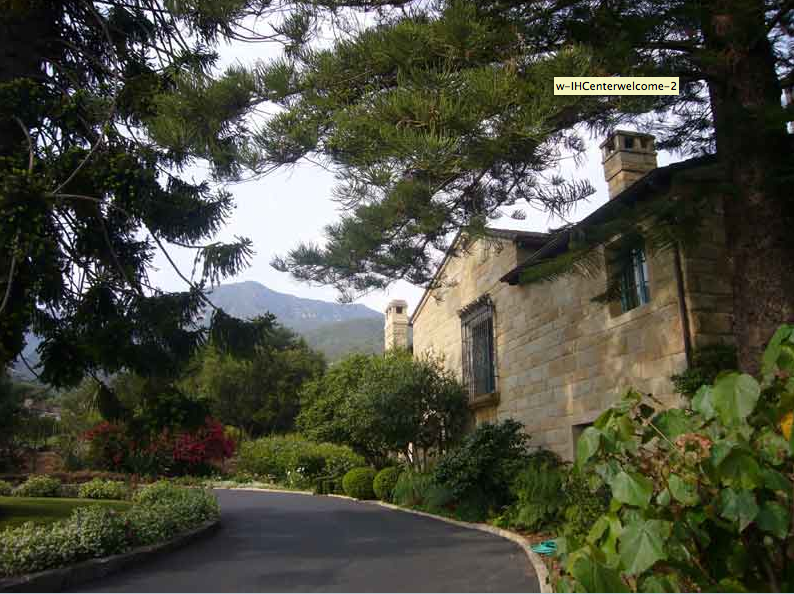
If these walls could talk: The hallowed history of La Casa de Maria’s stone house

Photo courtesy immaculateheartcenter.org.

Photo courtesy immaculateheartcenter.org.

In the Montecito hills, off of El Bosque Road, sits a bastion of peace and serenity in today’s busy world. Heading up the oak tree-lined driveway to the grand stone house at the center of La Casa de Maria, one can’t help but be overcome with feelings of calm and tranquility, as if driving into the distance brought one back to a quieter, simpler time.

This property was originally part of the San Ysidro Ranch, owned by Taylor Goodrich and John Harleigh Johnston. Richard Hogue, of Montana, purchased 20 acres of the ranch in 1886, and named it El Prado Rancho (the meadow). At the time there was an orange orchard on the property, but a few years later Hogue obtained road access and water rights and created the first lemon orchard in the area. Some of those old lemon trees can still be seen in front of the stone estate house that now resides on the property.

In 1924, Hogue sold the property to Emmor J. Miley, a building contactor and one of the pioneers in Kern County oil development. As an oilman, Miley made a sizeable fortune, some of which he planned to show off in his new estate.

Renaming the property Rancho El Bosque (the woodlands), Miley hired architectural designer Mary Craig to design a showpiece house.

Craig was the widow of architect James Osborne Craig, who succumbed to tuberculosis in 1922 at the age of 33. In his short career Mr. Craig played a large role in the development of Spanish Colonial architecture in Santa Barbara, including designs for El Paseo downtown and the Bernard Hoffmann House on the Riviera. Though she did not have any formal design training, Mary had worked at her husband’s side and took over his practice when he died, going on to become a notable architect in her own right, designing Plaza Rubio, the group of cottages below the Santa Barbara Mission; the W.C. Logan Building arcade (222 E. Carrillo Street); the Anacapa Annex to El Paseo; and many private homes in the area.

The 13,000 square-foot Miley home, which remains mostly intact today, features hand-carved teak ceilings, nine distinctive Italian stone fireplace mantels, and courtyard tiles from Spain and Czechoslovakia. It was Miley who put in the monkey tree and star pine tree that now highlight the entrance to the property, and most notably, it was Miley who commissioned hand hewn stone quarried from the fields and banks of nearby San Ysidro Creek for the house and walls around the estate.

“ Mr. Miley used to come up every weekend to see how the work was progressing,” recalls Mary Skewes-Cox, daughter of Mary and James Osborne Craig. “We would go to church on Sunday morning and then from church we went to the Miley’s. They were living in a house on the property and we would go and have breakfast with them and then my mother would go over the work with Mr. Miley. I was just a little girl at the time,” says Skewes-Cox, who is now 87.

“I remember driving around the property. They quarried all that stone for the house on the property. But all of the stonework came right off of that land,” she says.

According to Maria Herold of the Montecito History Committee, “You will see in the inside hall that there are vertical striations of stone. On the inside staircase is where you can see it best. This is a very time-consuming and therefore very expensive treatment of stone that you don’t really need to do, but they went to all the trouble of doing this very special treatment. And of course, the outside is spectacular because of the way the stone is cut. It’s a masterpiece.”

“The beautiful stonework in which the local sandstone was quarried from the place and cut by hand was not done by any particular firm of stone masons, Instead it was done by individuals and very fine stone masons engaged by (building contractors) Snook and Kenyon,” according to a 1985 letter from John de Blois Wack, who later purchased the property.

Pamela Skewes-Cox, the granddaughter of Mary and James Osborne Craig, is working on a book about their lives, along with co-author Robert Sweeney, an architectural historian. In researching Mary Craig, Skewes-Cox found that “she wasn’t outspoken and she didn’t advertise herself in an aggressive way at all, she sort of just kept her nose to the grindstone and she met people and she was very social and people liked her. But it was unusual for a woman in that time to be professionally-oriented.”

She continues, “My mother remembers going up to property with her mother to discuss building this very, very elegant house. They had no lack of money at the time that they were discussing the design and she had free reign to do this elaborate and very expensive home and they were not nervous about it at all because they had money and money to spend and they really wanted a showplace.”

Unfortunately, Miley ran into financial difficulties with the stock market crash and the onset of the Great Depression in 1929, and he was forced to sell the estate before his dream house was completed.

“He literally had to just stop construction,” says Pamela Skewes-Cox. “Fortunately Mary Craig had a mechanic’s lien on the property which meant that if Miley forfeited she and her draftsman, Ralph Armitage, owned the property until they were paid for their work.”

In 1932 John and Ethel de Blois Wack purchased the estate for $100,000.  John was a successful Wall Street investor who had come to the area to raise horses and play polo at the Bartlett field in Montecito and the Fleischmann fields in Carpinteria. He later became president of the Santa Barbara Polo Association. His father was the co-founder of Field and Stream magazine and as a young man he was an editor there. John and Ethel were both avid aviators who flew their private plane all over North America, often checking in on their cattle operation in Arizona.

Soon after the purchase, the Wack’s hired architect Chester L. Carjola to finish the estate house. There has been some debate over how “finished” the house was at this point.

Pamela Skewes-Cox would like to set the record straight. “We have determined by looking at the drawings, my co-author and I, that the great majority of the house was completed, even though the Miley’s had not moved in yet. The working drawings that were done later for Mr. Wack by the architect Carjola, those show basically a finished house and you can see on the drawing where it says unfinished. We studied those pretty carefully and so a great deal of the detail, even the ceilings, were conceived by Mary Craig with Mr. Miley’s input. A lot of people say, ‘well it wasn’t finished and Carjola finished it.’ It’s Mary Craig’s house, there’ s absolutely no hesitancy in my saying that.”

Mr. de Blois Wack’s 1985 letter also states, “it is my feeling that Mrs. Craig should be looked upon as the architect.”

“Mary Craig wasn’t asked by the Wack’s to finish it, for whatever reason, but she was friends with the Wack’s,” says Pamela Skewes-Cox.

When the house was completed in 1933, the property included a swimming pool and tennis courts, as well as additional structures, including a little cottage for Mr. Wack’s mother, Mrs. Lillian Wack, which is now called Santa Teresita; the Browning house for Mr. Wack’s piano accompanist and his family; a garage, stables, and a gardener’s cottage later named the Bayberry House. There was also a large studio called the study, which has since burned, where Mrs. Wack, an accomplished artist, painted portraits in oil.

The Wack’s plunged into the local social scene with gusto and became known for their parties. They were music aficionados—Mr. Wack had even done some professional singing—and one of the wings looking out on the rear court was used as a music room with stone walls, high-beamed ceilings and balcony for an orchestra.  Many famous musicians performed at the Wack’s parties, including conductor Leopold Stokowski, who did Walt Disney’s Fantasia;  Ozzie Nelson and his swing band; Victor Trucco, assistant conductor of the Metropolitan Opera, and the great baritone John Charles Thomas, who served for a year as director at the Music Academy of the West.

Mary Skewes-Cox recalls grand parties at the Wack’s house. “I was in my teens when the Wack’s owned it. They had a coming out party for their daughter Ethel and it was a lovely, lovely party with things going on all throughout the house. I remember the tables were set up on the tennis court and there was music and dancing and it was a wonderful party.”

Held in August of 1941, Ethel Wack’s debutante party had 700 guests; the Royal Hawaiian Orchestra played on the tennis court, which was converted into a terrace for dining and dancing; Ozzie Nelson’s band was in the art studio for more dancing; and there was a sit-down dinner for all of the guests.

The estate was also a site for Pearl Chase’s garden tours. In addition to the citrus orchards and spacious lawns, both Miley and Wack had imported many exotic plants. There was also a “sun garden” with rose and camellia bushes, and a “shade garden” with begonias and ferns.

After a decade in the house, Mr. Wack found that his growing numbers of thoroughbred horses didn’t have enough room on the estate, and the grounds were too rocky for his horses, so in 1942 he put the place up for sale and moved to Hope Ranch to open Yolo Breeding Stables on a 42-acre parcel.

Meanwhile, Mother Eucharia, Mother Superior of the Sisters of the Immaculate Heart in Hollywood, asked her cousin, realtor Charles Dunn, to help her find a quiet place for a novitiate, to train their novice nuns. Dunn first looked at the estate ,which later became Marymount School on the Riviera before recommending the Wack estate in Montecito, which the sisters purchased in December of 1942. Because it was during World War II and many estates were up for sale, the sisters were able to purchase the estate for $32,500. On Easter Monday 1943, four sisters moved in, one of them sister Regina McPartlin, and 12 aspiring novices.

They made the upstairs of the main house into a dormitory by dividing the rooms up with freestanding metal frames and curtains, thus the walls and hardwood floors were never marred. “When we stayed in those rooms, because we just had those little cells, we never saw what the whole room looked like. Even though in the morning after we got up and made our beds and got dressed we were supposed to open the cell curtains, when you were in there your curtain was closed. It was really funny because many years later we returned and the cell curtains had all been removed and everything. People were like, ‘Whoa, look at that beautiful ceiling. Was that there when we were here?’ And that was kind of a common experience. All of those teak ceilings,” says Stephanie Glatt, a former novice who is now the director of La Casa de Maria.

“I guess we were busy learning to be nuns and being spiritual and praying and we didn’t spend a lot of time in there. It’s just that it was so strange because everybody felt like the house had been remodeled and it hadn’t, it was just our perception.”

All of the novices (aspiring nuns) and postulants (aspiring novices) had chores assigned to them. Glatt recalls working on the vegetable porch. “There was a big cutting board out there … and of course, we’re supposed to be working in silence. They used to bring the vegetables in newspapers and at that time we’re supposed to be totally sequestered from the world, so we weren’t supposed to read the newspapers. … They would always put the newspapers upside down so we couldn’t read them. It was kind of funny because your eye would catch a part of a headline and you’d kind of try to see what’s going on out there, and then somebody would read the headline and say, ‘Did you see that?’ (Laughs) when we were all supposed to be working in silence.”

The number of postulants and novices continued to increase and under the guidance of Sister Regina the stables were renovated with two dormitories upstairs and two downstairs. A two-story extension was added to the art studio (which burned in 1972) with a recreation and sewing room upstairs and two classrooms downstairs.

The basement entertainment room was transformed into a refectory, where the women would eat all of their meals. “On feast days we decorated tables. Decoration meant the tables, which had blue linoleum tops, and we would get rolls of white butcher paper and roll the roll down and tape it on the underneath side, and then put flowers on. I’m sure every year some group was asked to decorate the tables and every year some group went out and cut poison oak, not knowing it was poison oak because of the lovely color,” laughs Glatt. “They would put it in vases and then someone would go, ‘Oh my god, you got poison oak.’”

The ballroom became a chapel and the musician’s balcony became a choir loft. “You should have heard 90 of us singing in there,” says Glatt. “The choir loft that was pointless because there were 90 of us in the chapel. But the sisters that taught at Mount Carmel lived there and some other visitors would come and they couldn’t fit in the chapel, so they all kind of huddled up there.”

While the aspiring nuns pursued religious life on La Casa’s grounds, the peaceful surroundings were also gaining a reputation in Hollywood. Stars like Irene Dunne, Loretta Young, and Ricardo Montalban came for retreats, holding prayer services in the Novitiate by day, while staying overnight at the Biltmore. In 1955, La Casa de Maria Retreat House formed on the property and became the first retreat center for Catholic married couples.

During the 1960s, there were conflicts between James Francis McIntyre, the Cardinal Archbishop of Los Angeles who oversaw the Immaculate Heart community and the sisters. They eventually shed their habits in 1970 and became the Immaculate Heart Community, an ecumenical group of men and women. Since 1974, the community has operated the Immaculate Heart Center for Spiritual Renewal in the historic old stone house, opening its doors for private retreats for people of all faiths.

With its long and storied history, the grand house still has new stories to tell. “I always feel that somehow that spirit is still there, you know that all those prayers everybody said there weren’t lost,” says Glatt. “It’s like they’re still hanging out.”

=

Special thanks to Pamela Skewes-Cox and Maria Herold of the Montecito History Committee for their assistance in researching this story.

Originally published in Montecito Magazine, Fall 2008.

Cocktail Corner: Sublime Summer Sips

Courtesy Santa Barbara Polo & Racquet Club

Courtesy Santa Barbara Polo & Racquet Club

A spirited toast to all things alcoholic! By Leslie Dinaberg

Sublime Summer Sips are on the menu with a variety of opportunities to wine down on those long summer days.

Pony up for Happy Hour at Santa Barbara Polo & Racquet Club. The club now welcomes visitors to take in the excitement of world-class polo competition combining the beauty and speed of thoroughbred horses with the thrill and skill of team competition on Friday nights, as well as every Sunday during the summer. Santa Barbara Polo & Racquet Club, 3375 Foothill Rd., Carpinteria, 805/684-5819, sbpolo.com.

Les Marchands is the place to be on Tuesday June 24, when “the King of Rheingau Riesling,” Johannes Leitz, will sit down to dinner and pour four of his wines.  The German winemaker is considered a modern master by people in the know, and Chef Weston Richards will pair stunning Riesling-friendly dishes such as crispy pig ear salad with frisee, avocado and herbs;crab bisque, red curry and puffed rice; housemade ramen, pork belly, spicy garlic pork broth, brussel sprouts and scallions; and pittig aged gouda, lavender honey and apricots for dessert. Space is limited, so click here for reservations. Les Marchands, 131 Anacapa St. 805/284-0380, lesmarchandswine.com.

Santa Barbara Wine Festival on Saturday, June 28, is a wonderful way to appreciate being out in nature underneath the oaks along Mission Creek at the museum, while enjoying more than 50 tantalizing wines from the Central Coast’s premier wineries—everyone from Alma Rosa to Zaca Mesa is there, often with the winemakers themselves pouring and chatting up the crowd—complemented by fitting pairings of savory and sweet delights from local chefs, caterers, bakers and restaurateurs. Santa Barbara Museum of Natural History, 2559 Puesta de Sol, 805/682-4711, sbnature.org.

Local winemaker and owner of Larner Vineyards and Winery, Michael Larner is teaming up with Chef Jason Paluska at The Lark for a Local Treasures dinner, which should be amazing! Expect a complete six-course dining experience, pairing locally sourced ingredients with wines from Ballard Canyon in the Santa Ynez Valley. Seating is limited, so please contact mkremzar@thelarksb.com for reservations. The Lark, 131 Anacapa St., 805/284-0370, thelarksb.com.

Tickets must be purchased by June 22 for the 29th annual Central Coast Wine Classic, a weekend in Avila Beach (July 10-13) centered around fine wine and cuisine that features local wineries and restaurants, and draws crowds from across the country and around the world. Many charities on the Central Coast will be awarded gifts, including the Rona Barrett Foundation, a local nonprofit that seeks to provide a solution to affordable housing and supportive services for seniors in need with the development of the Golden Inn & Village, where seniors may access a variety of care that meets their needs as they age in place. Various Avila Beach locations, centralcoastwineclassic.org.

Cheers!

Click here for more cocktail corner columns.

Leslie Dinaberg

Leslie Dinaberg

When she’s not busy working as the editor of Santa Barbara SEASONS, Cocktail Corner author Leslie Dinaberg writes magazine articles, newspaper columns and grocery lists. When it comes to cocktails, Leslie considers herself a “goal-oriented drinker.”

Nonprofits Wow and Woo at Fast Pitch SB

(L-R) Chief Energy Officer Seth Streeter, Mayor Helene Schneider, Fast Pitch SB Winner Bethany Markee of Solvang Viking Kitchen, Jose Hutton of Hub 81, courtesy photo

(L-R) Chief Energy Officer Seth Streeter, Mayor Helene Schneider, Fast Pitch SB Winner Bethany Markee of Solvang Viking Kitchen, Jose Hutton of Hub 81, courtesy photo

Organizers from Social Venture Partners say inaugural event will become an annual opportunity for local nonprofits to gain exposure, refine messages and win money.

Thursday night’s inaugural Fast Pitch SB—a Shark Tank style competition for nonprofits to make three-minute pitches to a panel of judges and a live audience for cash awards was an exciting, successful event for all concerned, but Solvang Viking Cafe was the big winner of the night. Founder Bethany Markee—a former professional chef who took over the lunch program at the local elementary school cafeteria at Solvang School—now has an additional $26,000 in prizes to expand her program to feed more students.

Social Venture Partners Santa Barbara (SVPSB) chose the ten finalists out of  a field of more than 100 applications from nonprofits looking to receive personal coaching and communications training from experts in the field.

Enthusiastic Fast Pitch audience, courtesy photo

Enthusiastic Fast Pitch audience, courtesy photo


The award winners are:

$5,000 Mission Award: Angels Foster Care

$5,000 State Award: A Different Point of View

$10,000 Audience Award: Solvang Viking Café

$15,000 Grand Prix Award: Solvang Viking Café

Plus, each of the ten finalists received a $1,000 SVP Award:

A Different Point of View

AHA!

Angels Foster Care of Santa Barbara

Talented teen Jamey Geston entertained the crowd. Photo by Leslie Dinaberg

Talented teen Jamey Geston entertained the crowd. Photo by Leslie Dinaberg

CASA of Santa Barbara County

Museum of Contemporary Art Santa Barbara

Santa Ynez Fruit and Vegetable Rescue (“Veggie Rescue”)

Sarah House Santa Barbara

Solvang Elementary School’s Viking Cafe

The Center for Urban Agriculture at Fairview Gardens

Sanctuary Centers of Santa Barbara

For more information about the program click here.

—Leslie Dinaberg

Originally published in Santa Barbara SEASONS on May 17, 2014.

Honoring Moms at Visiting Nurse & Hospice Care’s Mother’s Day Luncheon

Thomas Rollerson, courtesy VNHC

Thomas Rollerson, courtesy VNHC

Visiting Nurse & Hospice Care (VNHC) hosted its 13th Annual Mother’s Day Luncheon last week at the Four Seasons Resort The Biltmore Santa Barbara. Each year the nonprofit organization honors two mothers—one living and one in memory—and celebrates their lives and acknowledges their contributions to the community.

This year’s luncheon raised a record sum—nearly $350,000—which will directly benefit VNHC’s mission to provide high quality, comprehensive home health, hospice, and related services necessary to promote the health and well being of all community residents, including those unable to pay.

The event honored mother and local philanthropist Jill Levinson. Guests enjoyed several tributes from her husband, VNHC Board Member Neil Levinson, as well as from their children. Jill has devoted herself to many  local organizations and causes, including the Santa Barbara Children’s Museum, Crane Country Day School  and Lotusland, among many others.

Shirin Rajaee and Andrew Firestone, courtesy, VNHC

Shirin Rajaee and Andrew Firestone, courtesy, VNHC

Also honored in memory was Barbara Ward Rollerson, who passed away in 1977. Barbara is the mother of Thomas Rollerson, founder & recently-retired president of Dream Foundation. Thomas shared a video and loving reflections about his mother, who passed away at age 44, and will always be remembered for her unconditional love she had for her five children.  As a longtime supporter of VNHC, Rollerson says that the Mother’s Day Luncheon has always been his favorite event because he didn’t have a place to go on Mother’s Day.  “Being in a room with amazing mothers, staff and board members, I’ve always left here feeling like I had spent the day with my mother.”

VHNC Fashion Show, photo by Leslie Dinaberg

VHNC Fashion Show, photo by Leslie Dinaberg

Co-Chairs Jodi Fishman-Osti and Pamela Dillman Haskell welcomed almost 400 guests to the event, which also included the first-ever fashion show. Shirin Rajaee, Fashion Show Mistress of Ceremonies welcomed guests and showcased the latest spring trends from local boutiques, which included styles from Allora by Laura, Bonita, Giuliana Haute Couture, Indian Summers, Lana Marmé, Lola Boutique and Lolë.

Master of Ceremonies Andrew Firestone opened the luncheon program with a warm welcome and introduced Lynda Tanner, President & CEO of VNHC, who then recognized the many supporters and sponsors of the event, including Premier Rose Sponsors Irma and Morrie Jurkowitz and Union Bank.

Established in 1908, Visiting Nurse & Hospice Care is one of Santa Barbara’s oldest nonprofit organizations. For more information on Visiting Nurse & Hospice Care, click here or call 805/965-5555.

—Leslie Dinaberg

Originally published in Santa Barbara SEASONS on May 17, 2014.


Local Chefs Pay it Forward for SBCC Culinary Arts School

Santa Barbara Culinary ArtsIf last weekend’s show of support at the launch party for SANTA BARBARA CULINARY ARTS A Taste of Santa Barbara’s Culinary Bounty,a new cookbook featuring 62 recipes from Santa Barbara County chefs, caterers and food purveyors, is any indication, our towns’ future chefs will be graduating into a very welcoming culinary community.

Chefs from Opal, Fresco and Sly's were out to support the nonprofit Santa Barbara Culinary Arts. Photo by Leslie Dinaberg

Chefs from Opal, Fresco and Sly’s were out to support the nonprofit Santa Barbara Culinary Arts. Photo by Leslie Dinaberg

Local chefs were out in full force to support the cookbook, which is a special project of the nonprofit Santa Barbara Culinary Arts. The group raises money to endow the Santa Barbara Culinary Arts Scholarship in Honor of Julia Child for students at the School of Culinary Arts at SBCC.

“We love to support the community,” says executive pastry chef Julia San Bartolome of Sweet Arleen’s.Sweet Arleen’s, which primarily sells via food truck, has plans in the works to open a storefront in Santa Barbara. “We’ve scouted out Santa Barbara as key market,” says San Bartolome. “Ideally we’ll open something in 2015.”

SBCC Culinary Student Angela Hernandez. Photo by Leslie Dinaberg

SBCC Culinary Student Angela Hernandez. Photo by Leslie Dinaberg

Culinary student Angela Hernandez was one of many who staffed the event, held  on May 3 at the Gourmet Dining Room at Santa Barbara City College (SBCC). Handing out delicious samples from Via Maestra 42, Hernandez says the program has really taught her the principles of cooking and really given her a good foundation. “My end goal is to be involved in baking,” says Hernandez, who currently has a part time job at Panera Bread. “My first semester we did a lot of baking, but I really get to do a lot outside of school.”

Alicia and Laurie of Nimita's Cuisine were out to support the nonprofit Santa Barbara Culinary Arts. Photo by Leslie Dinaberg

Alicia and Laurie of Nimita’s Cuisine were out to support the nonprofit Santa Barbara Culinary Arts. Photo by Leslie Dinaberg

The School of Culinary Arts at SBCC also has brings in local chefs as guest speakers, many of whom contributed recipes and were on hand to sign books. Tama Takahashi edited and designed the cookbooks, with photography  by Linda BlueSANTA BARBARA CULINARY ARTS A Taste of Santa Barbara’s Culinary Bounty is available for sale at local bookstores and other supporting venues.

—Leslie Dinaberg

Originally published in Santa Barbara SEASONS on May 12, 2014.


Women’s Fund of Santa Barbara Marks Decade of Changing Lives Together

The organization distributes $550,000 in grants to nine local nonprofits, with members’ contributions to date totaling $4.7 million

From left, Melissa Gough, Nancy Harter, Sallie Coughlin and Sarah Stokes at the Women's Fund's 10th annual Presentation of Funds Luncheon on Monday. Gough and Stokes chaired the luncheon, and Harter and Coughlin will co-chair the organization for 2014. (Peter de Tagyos photo)

From left, Melissa Gough, Nancy Harter, Sallie Coughlin and Sarah Stokes at the Women’s Fund’s 10th annual Presentation of Funds Luncheon on Monday. Gough and Stokes chaired the luncheon, and Harter and Coughlin will co-chair the organization for 2014. (Peter de Tagyos photo)

By Leslie Dinaberg, Noozhawk Contributing Writer |

The Women’s Fund of Santa Barbara marked a decade of “changing lives together” at its 10th annual Presentation of Funds Luncheon on Monday, doling out $550,000 to support the work of nine local nonprofits. These new grants bring the total contributions by the Women’s Fund to the community to $4.7 million. “The Women’s Fund is proud to mark it first decade — 10 years of commitment to improving the lives of women, children and families in our community,” said Sallie Coughlin, Women’s Fund chairwoman. “The grants our members selected this year focus on two broad categories: programs that protect and nurture women and families in crisis, and programs that enrich and educate young children.”

Santa Barbara Mayor Helene Schneider and Santa Barbara County Supervisor Janet Wolf were among the more than 300 people who gathered at Fess Parker’s DoubleTree Resort for the event.

“The Women’s Fund is based on a simple, creative model — women combining our charitable donations so we can make a larger impact in the community than most of us would be able to do on our own,” Coughlin said. “Our grants are focused on programs that address the critical needs of women, children and families in southern Santa Barbara County.”

The organizations receiving funds include Casa Esperanza, Domestic Violence Solutions, the Legal Aid Foundation of Santa Barbara County, Peoples’ Self-Help Housing, Posse Program: Opening Doors to College, SBCC’s Single Parent Achievement Program, the Santa Barbara Rape Crisis Center, Storyteller Children’s Center and Youth Interactive Santa Barbara.

“You can’t imagine the joy and satisfaction in assisting the most vulnerable of our population achieve a new level of self-sufficiency,” said Interim Executive Director Bob Bogle, accepting a $50,000 grant on behalf of Casa Esperanza. “(With this money), we will be able to provide funding for six beds for a year, dedicated to supporting the women of Santa Barbara County as they transition from homelessness to housing.”

A $50,000 grant also went to Domestic Violence Solutions to provide a security system upgrade and a safe playground surface for families who’ve faced domestic violence.

“The research suggests that the younger the child the greater the impact of trauma, which is why a safe playground and toys for children that have few words to express their fear can be therapeutic and even life changing,” Associate Executive Director Marsha Marcoe said.

Womens Fund

Women’s Fund founder Carol Palladini addresses Monday’s luncheon. (Peter de Tagyos photo)

Accepting a $75,000 grant to provide a domestic violence attorney for women and children was Saji Gunawardane, acting executive director for the Legal Aid Foundation of Santa Barbara County.

He spoke eloquently, stating, “Know that when we say thank you for your support, we are saying much more. We are speaking for many of the most vulnerable and voiceless women, children and families in our community who, until they arrive at our door for help, have been completely voiceless. It is through your support that we can finally give these once-silent victims not only safety and zealous protection, but one of the most empowering gifts of all: A voice.”

John Fowler, the new president and CEO of Peoples’ Self-Help Housing, accepted a $50,000 grant from the Women’s Fund, which will provide after-school and summer educational enhancement programs for children of low-income families onsite at their affordable apartment complexes, where they will serve 120 kindergarten through fifth-grade students.

The Posse Program, an innovative collaboration between La Cumbre Junior High School and San Marcos High School, received an award for $75,000 for what La Cumbre Principal JoAnn Caines described as “a model program developed to support high achieving low income Latinos into high level classes in high school and through college. … The results from the first three years are beyond impressive: 100 percent passage of the high school exit exam in 10th grade by all of the Posse students, success in Honors and Advanced Placement classes where La Cumbre Latino students had been severely underrepresented, and successful students and future college graduates.”

San Marcos junior Jessica Zamora — a straight-A student with an impressive load of AP classes — shared her experiences as part of the first Posse group of 25 students who will apply to colleges next year: “You’re guaranteed to know someone in all of the hard AP classes, but we also all go together to La Cumbre after school every day and just work on our school work together, with City College students available and other mentors who are there to support us.”

“I think the main thing that is unique is having this set of students have their friends (their Posse) be in the same upper level classes with them,” San Marcos Principal Ed Behrens said. “One of the things that we heard before from the students is that they didn’t feel comfortable in the classes because they didn’t know anyone. So I think that it’s really making a big difference.”

An award of $90,000 went to SBCC’s Single Parent Achievement Program to provide child-care support for low-income single mothers allowing them to attend college. Vanessa Patterson, executive director of the Foundation for Santa Barbara City College, said, “On behalf of the single moms and their children whose lives are forever going to be changed because of your support, thank you!  You are their champions and are providing a gateway to higher education that will be the catalyst for lifting them and their children out of poverty and into a future of possibilities and opportunities most never even dreamed of.”

Elsa Granados, Executive Director of Santa Barbara Rape Crisis Center, accepted a $50,000 grant that will be used to provide crisis intervention and long-term counseling services to victims of sexual assault, telling a very moving story about how the Santa Barbara Rape Crisis Center provides survivors with avenues to transform their lives after a traumatic experience.

Also receiving a $50,000 grant was Storyteller Children’s Center. Executive Director Terri Allison said the funds would be used to continue the nutrition program for 100 of the community’s most vulnerable children each year.

The final grant of the day was for $60,000 and went to Youth Interactive Santa Barbara to provide entrepreneurial and job skills programs for underserved youth.

President Nathalie Gensac explained, “We have started several micro businesses, which are great vehicles for our youth to learn how to be productive, understand the value of teamwork and the connection between hard work, the classroom and the rewards of business enterprise. We have now developed a successful formula, which empowers disengaged youth by allowing them to keep their profits. …It’s a formula that is starting to pay great dividends. We have helped high school dropouts return to school, we have transformed graffiti artists into responsible commissioned artists who have painted murals funded by the city and much more.  Before today we were at a crossroads with excellent results but still struggling for funds. Your grant is truly transformational.”

Incoming Women’s Fund co-chairwoman Nancy Harter ended the program with a vivid description of collective giving efforts from Ana Oliviera, President of the New York Women’s Foundation: “You are one grain of rice. You come together with other grains, and it becomes a bowl of rice, and that is how we feed.”

Click here for more information about the Women’s Fund of Santa Barbara.

Originally published in Noozhawk on April 28, 2014.

Women’s Fund of Santa Barbara Awards $550,000 to Nine Local Nonprofits

Women's Fund of Santa Barbara included, from left to right: Bob Bogle, Executive Director, Casa Esperanza; Elizabeth Diaz, Domestic Violence Attorney, Legal Aid Foundation of SB; Elsa Granados, Executive Director, Santa Barbara Rape Crisis Center; Jo Ann Caines, Principal, La Cumbre JHS, Posse Program: Opening Doors to College; Vanessa Patterson, Executive Director, Foundation for SBCC: Single Parent Achievement Program; Terri Allison, Executive Director, Storyteller Children's Center; Marsha Marcoe, Associate Executive Director, Domestic Violence Solutions; Nathalie Gensac, President, Youth Interactive Santa Barbara; and John Fowler, President/CEO, Peoples' Self-Help Housing.

Women’s Fund of Santa Barbara included, from left to right: Bob Bogle, Executive Director, Casa Esperanza; Elizabeth Diaz, Domestic Violence Attorney, Legal Aid Foundation of SB; Elsa Granados, Executive Director, Santa Barbara Rape Crisis Center; Jo Ann Caines, Principal, La Cumbre JHS, Posse Program: Opening Doors to College; Vanessa Patterson, Executive Director, Foundation for SBCC: Single Parent Achievement Program; Terri Allison, Executive Director, Storyteller Children’s Center; Marsha Marcoe, Associate Executive Director, Domestic Violence Solutions; Nathalie Gensac, President, Youth Interactive Santa Barbara; and John Fowler, President/CEO, Peoples’ Self-Help Housing. Courtesy photo.

Last week the Women’s Fund of Santa Barbara awarded grants totaling $550,000 to nine local nonprofit agencies at its 10th Annual Presentation of Funds Luncheon.  This luncheon celebrates the end of the annual Women’s Fund grant cycle, and recognizes and honors its newest grantees, voted on by the membership of nearly 600 women.

Since it began in 2004, the Women’s Fund of Santa Barbara has awarded grants now totaling $4.7 million to 64 local nonprofit programs impacting more than 83,000 local women, children and families in Santa Barbara, Goleta and Carpinteria.

The nonprofits receiving 2013-2014 Women’s Fund awards are: Casa Esperanza – $50,000 for shelter and support to transition women out of homelessness; Domestic Violence Solutions – $50,000 for a security systems upgrade and a safe playground surface; Legal Aid Foundation of SB – $75,000 for a domestic violence attorney for women and children; Peoples’ Self-Help Housing – $50,000 for after-school/summer educational enhancement programs for children of low-income families; Posse Program: Opening Doors to College – $75,000 for a tutorial and mentoring partnership for high-achieving low-income students; SBCC: Single Parent Achievement Program – $90,000 for childcare support for low-income single mothers allowing them to attend college; Santa Barbara Rape Crisis Center – $50,000 for crisis intervention and long-term counseling services; Storyteller Children’s Center – $50,000 for a food program for low-income preschool children; and Youth Interactive Santa Barbara – $60,000 for entrepreneurial and job skills programs for underserved youth. (Click here to read a SEASONS Magazine story about Youth Interactive Santa Barbara.)

“When we began ten years ago, we were inspired by a new concept in women’s philanthropy: giving large and well-researched local grants without spending money on recruiting and fundraising,” said Carol Palladini, Women’s Fund Founding Chair. “In 2004, a small group of women said there had to be a better way to make a difference in our local community.  We were weary of planning and attending fundraisers.  We wanted to make a bigger impact than most of us felt we were doing alone.  And we wanted to celebrate the strength and generosity of women.”

(Click here to read a SEASONS Magazine story about Women’s Fund of Santa Barbara.)

 For additional information about the Women’s Fund, visit womensfundsb.org.

—Leslie Dinaberg

Originally published in Santa Barbara SEASONS Magazine on May 4, 2014.

Town Hall for the Local Arts Community

Jayna Swartzman-Brosky at the 9th Annual Santa Barbara County Symposium for the Arts, photo by Leslie Dinaberg

Jayna Swartzman-Brosky at the 9th Annual Santa Barbara County Symposium for the Arts, photo by Leslie Dinaberg

Last week’s arts symposium, an annual event sponsored by The Santa Barbara County Arts Commission, served as a lively town hall of sorts for the local arts community.  Arts advocates, arts educators and youth advocates, arts administrators, foundations, arts and city and county officials (and yours truly) packed the meeting rooms at the Canary Hotel for a day packed full of presentations and opportunities for the arts community to discuss issues that impact the arts in Santa Barbara.

Talented Goleta Valley Junior High student Mary-Grace Langhorne, the 2014 Teen Star (one of many youth-centric arts programs supported by the Arts Commission) awed the crowd with a beautiful song, followed by a short welcome from Ginny Brush, executive director of the Arts Commission. Next up was Santa Barbara Mayor Helene Schneider, who led us in a rain dance of sorts. If only I had a video camera … Santa Barbara Poet Laureate Chryss Yost read a moving poem by the city’s first Poet Laureate, the recently-deceased Barry Spacks. This was especially fitting since April is National Poetry Month.

This year’s focus for the arts symposium was “Expanding Advocacy, Community Engagement and Investment in the Arts,” and keynote speaker Kerry Adams Hapner, executive director of the Office of Cultural Affairs for the City of San Jose, gave an excellent presentation spotlighting what San Jose has done to bring the arts to the forefront of that city’s economic development program.

ArtsCommisionlogo-RGBBasically, the San Jose model outlined ten goals for ten years. Number one was to support the resident’s personal participation in arts and culture. Number two: to support availability of diverse cultural spaces and places throughout the community. Number three was to strengthen downtown San Jose as the creative and cultural center of the region. Number four: integrate public art and urban design throughout the community. Number five: expand residents’ access. Number six was to foster destination quality events in San Jose. Number seven: strengthen marketing and engagement. Number eight was to enhance support for creative entrepreneurs and the commercial creative sector. Number nine, to strengthen the cultural community’s infrastructure. And finally, number ten, to increase funding.

What Hapner described as “working the plan” involved a number of partnerships and strategic investments from the tech companies that define the Silicon Valley region, creating a creative industries incentive fund to attract that type of business and allocating 1% of the city capital improvement projects to public art, among other strategies.

The second presentation was by Jayna Swartzman-Brosky, program director for the Center for Cultural Innovation. One of the programs she oversees is NextGen Arts, a grant program of which provides professional development grants and resources for emerging California arts leaders between the ages of 18-35. She also manages the Creative Capacity Fund Quick Grant Program, which provides reimbursement funds to nonprofit organizations and individual artists to enroll in workshops, attend conferences, and to work with consultants and coaches to build administrative and business skills and strengthen the economic sustainability of an organization or arts practice. The organization offers a number of low cost entrepreneurial workshops, practical publications and resources for artists and arts organizations, with loads of information available online as well.

Afternoon sessions were divided into smaller breakout groups to stimulate community dialogue and included a more in-depth discussion with Swartzman-Brosky, a panel on promoting arts education advocacy, a group focused on expanding Santa Barbara’s cultural footprint through collaborative marketing/promotion and a discussion of advocacy for artists/innovators.

All in all it was an invigorating and interesting day. For more information visit sbartscommission.org.

—Leslie Dinaberg

Originally published in Santa Barbara SEASONS on April 22, 2014. 

SANTA BARBARA CULINARY ARTS Cookbook Supports Future Chefs

Santa Barbara Culinary ArtsSANTA BARBARA CULINARY ARTS A Taste of Santa Barbara’s Culinary Bounty, a brand new cookbook featuring 62 recipes from Santa Barbara County chefs, caterers and food purveyors, will debut on May 3 with a launch party from 1-3 p.m. at the Gourmet Dining Room at Santa Barbara City College (SBCC), 721 Cliff Dr.

The cookbook is a special project of the nonprofit Santa Barbara Culinary Arts, which endows the Santa Barbara Culinary Arts Scholarship in Honor of Julia Child for students at the School of Culinary Arts at SBCC.

600_348110802The organization enjoys great support from local chefs like Greg Murphy of bouchon, who says,“bouchon restaurant enjoys supporting the scholarship program at the School of Culinary Arts at SBCC, but the benefits derive to just a couple of students each year.  By participating in the Santa Barbara Culinary Arts cookbook I felt I could contribute in a more ‘across-the-board’ way.  I also felt a collaborative effort that involved chefs from all over Santa Barbara would be a fun way to bookmark this point in time, almost like a yearbook, and I look forward to holding on to my copy for many years to come.”

Add executive pastry chef Julia San Bartolome of Sweet Arleen’s,”Sweet Arleen’s is dedicated to creating consistently happy experiences, being able to do that through participation in a book benefiting my first culinary school, well that was just icing on the cupcake!”

600_348111032The first edition of the cookbook will be on sale at the event for $25 and many of the chefs featured in the book will be on hand to sign them, including Michael Blackwell (Montecito Country Club), James Sly (Sly’s), Greg Murphy (Bouchon), Alessandro Cartumini (Bella Vista at the Biltmore), Randy Bublitz (head of the School of Culinary Arts) and many more.

In addition to the chance to mingle with local chefs, guests will also taste local wines from Westerly Winery and  Refugio Ranch, as well as delicious appetizers prepared by the esteemed faculty and students of the School of Culinary Arts, plus selected chefs featured in the cookbook. Dishes include Lobster Terrine, Salmon en Croute, Pan-Seared Duck Breast, Praline Bread Pudding and many others.

Tama Takahashi edited and designed the cookbooks, with gorgeous photography  by Linda Blue . It will be available at the event for purchase and ll proceeds go towards our scholarship endowment for culinary students at SBCC.The event ticket price of $25 provides you with food and wine tasting and access to chefs for questions and cookbook signing.

To reserve your spot click here.

—Leslie Dinaberg

Originally published in Santa Barbara SEASONS on April 15, 2014.