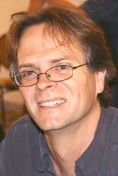
Goleta Native Has a New Story to Tell in Remote China

Sipping green tea while schmoozing in Mandarin with Chinese Communist Party officials is a long way from shooting the breeze with buddies after surfing the waves at UCSB’s Campus Point, but it’s all in a day’s work for John Wood.

A former Peace Corps volunteer, Wood and his wife Lousia recently started the Tree House Scholarship for university students in rural, northwestern China. In addition to assisting students with their education costs, these scholarships will also help fund post-graduate travel for students who would not otherwise have the resources to explore their own country. These students, who are studying to become teachers, will be lucky to earn about $25 a month if they secure jobs when they graduate.

Writing about their experiences is another component of the program. The students come from incredible poverty. One tells the story of the deep bloody cracks in his father’s hands from collecting trash, while another writes of being raised in a cave house by a grandmother with bound feet. “They have phenomenal stories to tell,” says Wood, now 30

The stories of rural China in the 20th and 21st centuries remain largely unknown, both inside China and abroad, but Wood is aiming to change that by improving his students’ abilities to communicate and helping to get their stories out to the world.

“Because of the way that the government is structured and with the way people relate with each other, a lot of those stories haven’t been told,” he says. Even within families. For example, Wood tells the story of a student saying she felt uncomfortable asking her parents to talk about their backgrounds. “She went so far as to tell me that she didn’t even know her mother’s given name, she only knew her as mother.”

Using their “crazy foreign teacher” as a scapegoat, students came back with fascinating accounts of their lives. “These are really remarkable stories that we’ll publish and distribute to donors,” Wood says. “The idea is that people who are interested in China or just people that are philanthropic in general will be interested to read these first-hand accounts of what it’s like in rural China.” (http://www.thetreehousescholarship.org/students.html)

It’s no surprise that these stories struck a strong chord in him. Growing up in Goleta, Wood had passions for both writing and social justice from a very young age. “When I was going to La Patera Elementary School I remember I wrote an editorial (on gun control) for the ‘Goleta Sun,’ says Wood, who went on to graduate from Dos Pueblos High School and UC Santa Cruz.

He began his professional life teaching high school in South Central Los Angeles, and worked as a journalist in London, Santa Barbara and Santa Monica before joining the Peace Corps, where he was assigned to teach at Long Dong University in the eastern portion of Gansu Province. “Despite the sophisticated timbre of its name, Long Dong University actually has nothing to do with the entertainment industry,” says Wood. Gansu is one of the poorest provinces in China, and it is regarded among Chinese people as a dusty and barren frontier land, a “backwards” place best to be avoided.

The newlyweds arrived in China in June 2005 with assignments to teach English to Chinese students studying to be teachers. “There are more people studying English in China right now than there are native English speakers in the rest of the world combined,” Wood says. “It’s incredible; everybody in China, every single student is studying English. It’s just wild.”

Considered development work, Wood explains that he was primarily “in a classroom with future teachers and working with them to improve their English and improve their teaching skills. Most of our students had extremely basic grasp of English…we found ourselves spending a lot of time on basic pronunciation, on classroom presence, on building vocabulary, just really basic, basic stuff. When people think, ‘Oh John was a University Professor in China,’ what they have in their mind is probably not exactly how it was.”

And what’s it like being a 6′ 4,” Santa Barbara surfer dude in China? “There is absolutely no blending in,” laughs Wood. When visitors ask what kind of clothes to pack, he says, “you could bring a pink tuxedo and wear that down the street and you would not be anymore out of place than you are already going to be.”

Even though he’s stared at everywhere he goes, Wood says, “One of the things I love about China and Chinese people, there’s so little apathy and so much interesting curiosity and enthusiasm because here is a country that’s been closed to the outside world for so long…people know very little about Western China, and Western Chinese people know very little about the rest of the world and so it’s really a fascinating place to be.”

While China is booming, it’s the China of the eastern seaboard, of Shanghai and Beijing, Hong Kong and Guangzhou that most westerners read about. Wood says, “The reality is that the vast majority of Chinese people do not live in these eastern hubs. Some two-thirds of the population (estimated at 1.3 to 1.5 billion) still works the land. Most of the rest live in cities scattered across the vast provinces, earning very little and enjoying few freedoms.”

One of the freedoms not enjoyed in China is access to the news. “We call it the great firewall of China,” Wood says. “The Communist Party spends an inordinate amount of money on controlling Internet news sites…it’s not the news, it’s the good news.” Wood says he will sometimes be in the middle of reading a breaking news story online, only to find it censored (access removed) before his very eyes.

Despite the challenges of navigating such a different culture, the Woods are definitely making the most of their time in China. Last summer they volunteered with the 2007 Special Olympics World Summer Games in Shanghai. With their Peace Corps service now complete, Louisa works as the Communications Director for the Special Olympics East Asia, and John does translations and works export an extremely fast-growing, sustainable type of soft wood developed to reduce the demand on old-growth cedar and redwood.

Prior to founding the Tree House Scholarship, they also helped to establish “the Tree House,” at Long Dong University, an English library, study and discussion room, complete with all sorts of books, magazines and reference materials, as well as movies, music and board games to help students master the English language. A team of about 24 student volunteers keeps the Tree House running, and the materials–almost all which were donated by foreign teachers, their friends and families–in order. For information about how to donate books visit http://www.thetreehousescholarship.org/donors.html

He’s excited about the initial response to the Tree House Scholarship: “It was huge…a dozen or more people have already said they’re sending in checks and we’re already getting donations people who want to contribute pro bono services. It’s exciting.”

The new scholarship program isn’t the only exciting thing going on in Wood’s life. Louisa is expecting their first child, due to be born in a very modern Western style hospital in China, on Cinco de Mayo, which seems very fitting for this adventurous pair.

“We always joke about how nothing western seems foreign anymore. Europe used to seem so exotic, and interesting … now if I see an Italian news story and I see a police car and it says “polizia,” I just say to myself what could that possibly mean, as opposed to scribble scribble dot dot dash circle,” laughs Wood.

“Coming to China was a very intimidating thing to begin with, but we really just committed ourselves to it and it’s paid off hugely,” he says. “Martin Luther King Jr. once said that injustice everywhere is a threat to justice everywhere. We feel something similar could be said of poverty. Poverty anywhere is a threat to wealth everywhere. There are no national borders. And while there are those in the United States who suffer very real hardships, all of them have some degree of mobility, some degree of access to support networks, however humbling or hard to obtain those may be. The same is not true in China. The Chinese poor live in a tightly controlled and politically charged environment, with shockingly little power to change their futures.”
Originally published in Noozhawk on January 8, 2008.

Leslie Dinaberg Sits Down With Nathan Rundlett

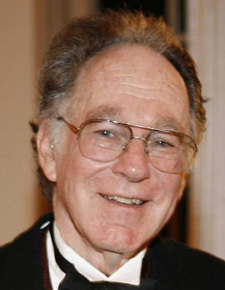
Nathan S. Rundlett, courtesy photo

Nathan S. Rundlett, courtesy photo

Sharing his passion for classical music is a labor of love for Nathan Rundlett. In 1994, he and his wife Marilyn Gilbert brought opera to town by founding the nonprofit Opera Santa Barbara. An accomplished baritone, now retired from his dual careers as a singer/high school chemistry teacher, Rundlett devotes much of his time these days to working with the nonprofit Santa Barbara Music Club, a group that presents free concerts and workshops to the community and provides musical education scholarships to young people.

Leslie Dinaberg: How did you get involved with the Santa Barbara Music Club?

Nathan Rundlett: I got interested in the club because it fulfilled a need that I felt when I moved to Santa Barbara (in 1981). I had sort of lost touch with my musical connections, which were in Los Angeles. Here was a great opportunity to perform the music that I loved. I wasn’t working as a musician anymore formally, so this was a great chance just once in a while to get something nice together and present it to an audience. …This club has been in existence, I think, 38 years.

LD: Prior to moving here, where did you perform in Los Angeles?

NR: … I sang in operas and shows and I taught and I sang in a large Methodist church. I also sang for a large Jewish synagogue. I also sang for an Italian restaurant. … We decided to come up to Santa Barbara and I just sort of cut all those ties and started going in a different direction. And got involved in the music club and did a few other odd little things, a few little shows and plays…Then my wife and I decided to fund the opera company.

There was no opera, there was no opera audience– so we created it. We raised money and set up a board, set up a 501(c) 3, gave it a name. Opera Santa Barbara was our baby. And after six years of running it we left it.

LD: So your wife, Marilyn Gilbert, is a singer as well?

NR: Yes, she’s a very fine singer.

LD: Is that how you met?

NR: Yes. I met her singing at Temple Sinai on Wilshire Boulevard. We met over the high holidays. … She is also an attorney, semi-retired now. She has sung has sung in music club, often, and we have sung together in the music club, duet programs and so on. It’s been very enjoyable.

LD: What are your responsibilities for the music club?

NR: My responsibility so far has been trying to pick up loose ends … what I want to do, as Vice President is development. Go into new areas, involve young people more and form better connections with schools. And also focus a lot more on the scholarship program. I think it’s our strong suit.

LD: Tell me about that.

NR: Our scholarship program has been there since almost the beginning. And we had some…distinguished, elderly music lovers, benefactors, teachers and lovers of music. One of them died and left us money and the other one just gave a lot of money and so we built up this nice fund to do scholarships with and now I’m hoping–this is just a wild idea–to turn it into an endowment, so we can live off the principal and keep it for many, many years… But I think that the scholarship program is one of the strongest things that we do, because that brings music ahead, classical music particularly, we’re interested in classical music. It brings it forward into the future and involves young people.

LD: And the scholarships go specifically toward instruction?

NR: Yes, it’s only instruction and the teacher and the student have to be residents of Santa Barbara County, so it’s local local, it’s only local which I like.

LD: What is your musical training?

NR: I was trained in college…I became interested in opera singing, briefly considered a career in it, and so I took private lessons in LA from an Italian teacher and I got involved in singing small productions and so on. I went to several coaches… I didn’t take a formal musical training. I wasn’t a music major or music minor. I was actually a chemistry major and a math minor.

LD: Oh wow, that’s probably very unusual, right?

NR: Yeah. But I love performing and I’ve done a lot of singing and acting.

LD: So have you always made your living in the arts or did you do something else?

NR: I taught high school chemistry for 30 years and I did all this other music kind of on the side.

LD: Where did you teach?

NR: I taught in Los Angeles, Granada Hills, Mission Hills, and in Camarillo.

LD: And you were performing at the same time?

NR: Yes, it worked out to be ideal because my school day was finished early and there were lots of rehearsals that didn’t start until late afternoon or evening … then the summers were free and the holidays, a lot of free time to do my music. For a while there I was making about equal amount of money teaching school and singing.

LD: Other than your performances with the music club, do you perform anywhere else in town?

NR: Ever since we left the opera company what we’ve been doing is putting on fundraisers. We put on a couple of Spanish operas for the Legal Aid Foundation… My wife and I did a series of two-person plays last year … For the Anti Defamation League we did performance of “Trial by Jury” by Gilbert and Sullivan. We did also Gilbert and Sullivan for the Santa Barbara Legal Aid Foundation. That was amazing. We did a big performance in the courthouse … the play is about a courtroom trial, so we did the trial in the courtroom …

LD: What else do you like to do?

NR: Well my second passion besides music is woodworking. I like making fine furniture, and cabinet making is my main passion. I took up carving recently and attended several seminars in Williamsburg, VA related to period furniture. …

LD: Do you have a favorite song or a favorite piece of music?

NR: My favorite piece of music to sing, of all time, was the prologue from the opera “Pagliacci.”

LD: How would you describe yourself?

NR: I love music and I love music performance. I enjoy life

I enjoy my family, particularly my great relationship with my wife. We have a wonderful marriage. So those are the important things I guess to me, music, life and my family and my wife.

Vital Stats: Nathan Rundlett

Born: Somerville, Mass; February 23, 1938

Family: Wife Marilyn Gilbert, children Anne, Kirsten, Steven, and Elisabeth (all in their 40s), 14 grandchildren

Civic Involvement: Santa Barbara Music Club, Legal Aid, Anti-Defamation League

Professional Accomplishments: Taught chemistry for 30 years, and developed new programs in field of education. Third place winner in Metropolitan Opera auditions for the west coast of the United States. Founder of Opera Santa Barbara.

Little-Known Fact: “At one time my passion was running, maybe nobody would know that looking at me now but in high school and college, track and field was a passion.”

Originally published in Noozhawk on January 7, 2008.

Designing Woman

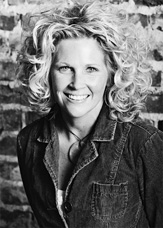
DeNai Jones, courtesy photo

DeNai Jones, courtesy photo

Some girls dream of being princesses, but DeNai Jones dreamed of being a bag lady.

Piercing aquamarine eyes peeking through a wild tumble of blonde curls are the first things that strike you about DeNai Jones. From the funky flare of her vintage dress to the toes of her Betty Boop shoes, she looks every inch the fashion designer that she is, known in chic circles for her combinations of bold, sophisticated color and unusual textures and textiles.

It’s no surprise that her bags grace the arms of A-list stars like Julia Roberts, Kate Hudson, Salma Hayek, Gwen Stefani and Heidi Klum–but they’re more likely to be found wearing them on the playground than the haute couture runways. DeNai has won over the shoulders of women all over the world with her stylish line of diaper bags.

When DeNai–who wasn’t yet a mom at the time–set out to find a gift for a pregnant friend and found shelves full of “pastel colors, teddy bears and cutesy stuff,” she recognized a market for high-end, fashionable diaper bags. She sewed the first prototypes in her parents’ garage in Ventura, and paid homage to her father’s childhood nickname for her by naming the venture Petunia Pickle Bottom.

DeNai started her career as a kindergarten teacher, but says, “I was always sketching and painting. The arts were always my passion.” Her parents encouraged her to choose a more stable career path, but part of her attraction to teaching kindergarten was getting to do so many fun art projects in class.

Her husband, Braden Jones, dreamed of starting his own companies. Driving up the coast to Ventura from San Luis Obispo, where he had recently graduated from Cal Poly, the young couple had a heart-to-heart talk, and DeNai confided that she had always wanted to be a designer.

“It was kind of one of those ideas that you just carry in your mind with you,” she says. “We decided to travel a bit. We just started having those kinds of conversations. If you could do anything what would you do? We didn’t have a mortgage, we didn’t have children, no commitments besides ourselves.”

Braden encouraged DeNai to go after her dreams. She quit teaching to focus on developing her first samples. Within six to eight months, her bags were on the shelves of local stores.

The business quickly grew and they turned to DeNai’s best friend from Ventura High School, Korie Conant, for help. I was completely stunned,” when DeNai invited me to her parent’s cabin in Mammoth and showed me the bags, says Conant. She came on as a partner, taking on responsibility for marketing and brand development. Since then, the company has grown exponentially, with moms all over the world carrying their diapers Petunia-style.

Jones says that it’s still exciting to walk down the street and see someone carrying one of her bags. “I still kind of panic, my breath gets taken away and I usually will hide a little bit and … and follow them a little bit,” she says. “It’s still just as exciting as it was the first time I saw a bag on the street.”

Little details like the filigree on a staircase or a carved wooden pattern from a church eave inspire DeNai’s designs. Travel is high on her list for both relaxation and design inspiration. “I love to travel so much and experience all the different cultures that are out there. The world can be very small if you let it be,” she says.

Costa Rica is a favorite place for family time with Braden and their son Sutton, age two. They’re expecting another baby (it’s a boy) in March, and DeNai now has the flexibility–and additional staff–to focus on her children and come into the office just two days a week to concentrate primarily on design.

Living in Ventura, where she can walk to her salvaged brick office on Kalorama Street from her home downtown, helps to keep things real for DeNai. “I do love when we go out to New York for trade show and we come back it’s like, ‘Oh a breath of fresh air.’ It’s good to go for inspiration and shopping and looking around. All of those things are definitely imperative to developing the product. But I do really appreciate that we are kind of in our own microclimate here. We’re protected from a lot of the vindictive nature you see in the fashion world.”

And what’s it like to be in business with your best friend and her husband? “It’s easy actually. We all have different talents that we bring to the table with a common thread of creativity,” says Conant, who became a mom to Beckett in October. “There are no egos in the room which helps us survive. Ultimately, we are friends first, business partners second. We make it a practice to spend time with each other outside of the office on a weekly basis, that’s one of the keys to our business relationship–we truly are the best of friends.”

Braden says he’s learned a lot being in business with his wife. “Because we have a relationship on many levels, she never ceases to surprise me. … Although she considers herself risk adverse compared to me, she really does take every risk needed to be successful in life and business. However, she would probably be modest and tell you otherwise. It’s really the best of both worlds to share success on every level with the love of your life.”

“I love being at work with my husband and being able to see him in the office. Korie’s been my best friend since high school. It’s always nice for the three of us, even when we have to go to trade shows or take trips for the company, that we actually enjoy being together. It’s really been a dream, ” says DeNai.

A very sweet dream indeed.

Originally published in Ventana Monthly. Read the article here.

Leslie Dinaberg Sits Down With Janet Wolf

Janet Wolf, courtesy photo

Janet Wolf, courtesy photo

Issues like the environment, housing, transportation and social services usually top the agendas of county government, but women’s health is also high on the list of concerns for Second District Supervisor Janet Wolf, who celebrates her first year in office in January.

Leslie Dinaberg: I know health is a big concern of yours since you had a heart attack (in December of 2004). How do you manage to stay healthy with such a busy job?

Janet Wolf: I try to continue my daily exercise routine and eat healthy foods. I started a “walk and talk” program, so instead of meeting some people for lunch they would come and we would do a walk and talk downtown. I didn’t want to get into the habit of eating out all the time, so I kicked off this idea at the American Heart Association Wear Red Day last year.

LD: That’s a great idea.

JW: We’re going to do it again in February for the Heart Association.

LD: So you’ve become a heart health advocate partially in response to your own experiences.

JW: Yes. I went through a physical rehabilitation program and changed my diet. I went to a five-day program offered through the Mayo Clinic called Woman-Heart. Women who’ve experienced heart disease, not necessarily heart attacks but a whole myriad, were trained to become spokespersons for women and heart disease.

…I made a commitment that I was going to speak about it and talk about my experiences. They wanted women who did not have a medical background, so they could easily relate to other women about their experiences.

When I returned from the program I was incredibly motivated to get the word out because, as I’m sure you know, heart attacks are the number one killer of women.

… Lois Capps was the co-sponsor of a bill–Heart Disease Education, Research and Analysis, and Treatment (HEART) for Women Act–I was honored to be asked to go to Washington and testify for this bill. In a lot of ways it’s been a way for me to just speak out about something that I’m so passionate about. Talking to women who are moms about heart disease, diet and exercise can also have positive impacts on their children.

LD: Prior to your heart attack, had you ever been told to watch anything by your doctor?

JW: No. Everything was fine. …When this all happened, it just threw us all for a loop.

LD: I can imagine.

JW: I just felt extremely lucky to, first of all, live in Santa Barbara and get really top-notch care when I was in the hospital. But I think the thing and the message to women is prevention and then to know that when you feel that something is not right, don’t wait–take the initiative to get to the doctor or get to the emergency room.

LD: What did it feel like? It doesn’t sound like the dramatic thing that you see on TV.

JW: No. My husband said that, “you didn’t clench your heart and fall over.” It happened over time. I was having what felt like indigestion … (for several days) … I called my doctor… he prescribed medicine for indigestion, so I went and got the prescription filled and it didn’t help. … In the middle of the night I woke up and the pain was incredibly intense.

… By the time I got to the hospital I was having a massive heart attack. By that time the main artery was 100% occluded.

LD: I know this is a stereotype, but do you think that women are more likely to ignore their symptoms because they’re taking care of their families?

JW: I think that is partly true. When I was at the Mayo Clinic there was a woman who said she was having angina while she was at her son’s soccer game but she didn’t want to miss the soccer game. I am grateful that most women know about getting mammograms and colonoscopies … but we need to work harder about the letting people know about the increase of heart disease among women. We must be proactive.

LD: Switching gears a little bit, what’s like to be on the Board of Supervisors?

JW: It’s very exciting; it’s very challenging and rewarding.

LD: I know you served on the Goleta School Board for 12 years, how is it different?

JW: The obvious difference is that this is a full time job and the issues are broader, but I think a lot of the same skill set transfers over … For me it’s just really important to be prepared and on top of my game. And I find the meeting’s fascinating and engaging and it’s very interesting to deal with such a variety of issues. … Trying to have a really positive impact in our community. And that’s the rewarding part. And also meeting some incredible people. I’ve been very lucky to have a great staff.

… I think … we’ve taken care of outstanding issues that the county was dealing with like uniform rules, sphere of influence, and we have some issues that are coming before us like Goleta Beach and we’re also starting the Eastern Goleta PAC that’s going to be the planning document for our community. … I’ve got a great group of colleagues too to work with. Even though we certainly …don’t agree on everything and philosophically I have a point of view they may not share, but I think there is a mutual respect.

LD: That’s always good to hear. What do you think our biggest challenges are right now as a county?

JW: Right now I think it’s aligning our budget with our priorities or our fiscal challenges with our priorities.

LD: I keep hearing at the state level the budget is going to be so bad, how does it look in the county?

JW: There have been very conservative estimates on the impact on the county budget and because of the potential there’s been certain budget principles that have been put into place that are a little troubling to me. I think we will be impacted but there are also ways on the revenue side to try and enhance that. I have requested that the board hold a budget workshop in late February or early March to review the preliminary budget so that we can have input earlier on in the process.

… It’s certainly not a rosy picture but I also don’t think it’s total a bleak picture either. … If you have to make cuts, in my opinion, you look at the whole picture and you make them timely and wisely.

Vital Stats: Janet Wolf

Born: Los Angeles, May 17, 1954

Family: Husband Harvey, three daughters, Jessica (27), Stephanie (24), and Kim (20)

Civic Involvement: Alpha Resource Center, Planned Parenthood, National Charity League, League of Women Voters, Women’s Heart Health Advocate

Professional Accomplishments: Worked as a vocational rehabilitation counselor for more than 20 years; served on the Goleta School Board for 12 years; current member of the County Board of Supervisors

Little-Known Fact: “I love making necklaces. It’s a new hobby. I just discovered it.”

Originally published in Noozhawk on December 31, 2007.

Leslie Dinaberg Sits Down with Steven Crandell

Steven Crandell courtesy photo

Steven Crandell courtesy photo

Between his calming Kiwi accent and his towering 6-foot-6-inch presence, working with the Nuclear Age Peace Foundation for the abolishment of nuclear weapons seems a natural fit for Steven Crandell. There’s something soothing about spending time with this former Stanford basketball team captain, journalist, biographer and fund-raising consultant, who now devotes his days to working for peace.

Leslie Dinaberg: Tell me about the Nuclear Age Peace Foundation.

Steven Crandell: The Nuclear Age Peace Foundation has been working on the abolition of nuclear weapons for 25 years and it has a great reputation. (President and founder) David Krieger is well known; he has international relationships and reputation and yet the question that always comes back is, “What do you do?”

LD: So you’ve created this DVD about nuclear weapons to help explain. What are the main things you want to communicate?

SC: I have this story of three numbers, and if you know them you can take a big step toward awareness about nuclear issues.

How many nuclear weapons are there in the world? And the answer is 26,000. Most people don’t know that. Most people are pretty surprised that it’s that many.

The second question is how many nuclear weapons are on high alert, which means they can be fired in moments? 3,500 can be fired in moments.

OK, we’ve got two numbers: 26,000 nuclear weapons and 3,500 on high alert.

How many does it take to kill a million people? One.

And I think those numbers tell the story probably better than anything. We’ve got a weapon that’s so terrible it’s impossible to imagine it being used.

LD: Now of those 26,000, how many belong to the United States?

SC: About 10,000. Russia has a few more than we do and I think it’s around 90 percent are Russian or American.

LD: You have said previously that three-fourths of Americans are against nuclear weapons. What can we do to stop them?

SC: The first thing they can do is get informed … (We have a) new local program which is Santa Barbara Peace Community, and the basic goal of that is to train peace leaders in Santa Barbara. They’ll watch our DVD, and next year we’re adding a simple quiz so you’ll have the right answers. We’ll ask people to sign a pledge that says what we want the U.S. to take leadership for de-alerting weapons and no first use, getting back to working with other nations working toward the goal of a nonproliferation act and using the money, the billions of dollars — the U.S. alone spends $6 billion a year on nuclear weapons. Another step is e-mail five of your friends and ask them to watch the DVD, that’s something you can do right now on our Web site, which is www.wagingpeace.org. And the fifth step is you give to us. The sixth step is actually coming in here … they’ll get trained on how to present things to people and also more background information about nuclear weapons. And seventh is a very important step, especially for today’s peace leaders: They’ll come up with their own individual plan for who they want to approach.

… It’s kind of like a personal journey of development, if you like, except you are developing your knowledge about nuclear weapons and your ability to actually be involved and make a difference.

LD: I understand the work obviously is very admirable, but why did you choose this particular job?

SC: I’ve got four reasons and their names are Isaac, Luke, Josette and Nathaniel, my children. And I don’t try to, I’m far from an expert on nuclear weapons, but I don’t think you have to be. I think this is a legacy issue and by that I mean it’s an issue about what do we give to our kids, what world do we leave to them.

LD: Were you actively looking to go from being a consultant for a bunch of different organizations to working for a single organization?

SC: I think that was always a temptation. I had a great, great time as a consultant with my dad, we had our little company, the Crandell Company, the highlight was of course the book (Silver Tongue), which you’ve heard a lot about, which in itself was a fund raiser. But one of the things I felt as a consultant is that … fund raising is so strongly connected to the program, and when you get people who will give the time so that you can present the case, they want to know that you know it in and out and you believe in it. I think that makes a difference. And it’s not that I didn’t believe in the other charities I was helping, but I was helping a number of them and I was a consultant. Now there’s no question what I’m about and which team I’m on, and that makes my job easier in the end because I think that’s one of the things that I do probably better than other things, which is just speak from the heart.

LD: What do you like to do when you’re not working?

SC: I play the guitar and sing. I’ve been running with my brother, Michael, who is a marathoner. I can’t run that far but just to get away at lunch and go for a run by the beach is great. That’s the advantage of Santa Barbara. And I’ve got two little kids — 2 and 5 — who I spend a lot of time parenting when I’m not working.

LD: If you could be invisible anywhere in Santa Barbara, where would you go and what would you do?

SC: The whole invisibility thing isn’t all that attractive to me so. … I guess I’ve gained a lot of humility through life in various different ways, and I have a real sense of my own clay feet, so I don’t mind being myself. There’s an acceptance that has come with that, an acceptance of my foibles and more glaring faults as well, not as an excuse, just that I’m going to disappoint people in some ways somehow. But that’s not really the point of life. This point is, and I actually said this. John Zant interviewed me, or Mark Patton, when I was 18 and I was going away on a basketball scholarship and the headlines said, “He just wants to enjoy life.” … This is still me. I want to enjoy my life.

Vital Stats: Steven Crandell

Born: Feb. 15, 1959 in Harrisburg, Pa. Moved to Santa Barbara in 1960

Family: Wife Kathleen, children Nathaniel, 2; Josette, 5; Luke, 14; and Isaac, 18

Civic Involvement: “I do my best to my limited capability as a father and I think that, in the end, fathers and mothers are the key to community health. We don’t all have children but we all are children, all sons and daughters, and so that relationship is the key and often colors the relationships we choose for ourselves, how we approach life. My thought is if I’m going to invest time in anything I’m going to invest time in my kids.”

Professional Accomplishments: Author of Silver Tongue, about the life of his father, Larry Crandell; producer of the national news in New Zealand for 15 years; director of development/public affairs, the Nuclear Age Peace Foundation

Originally published in Noozhawk on December 24, 2007.

One on one with Kate Parker

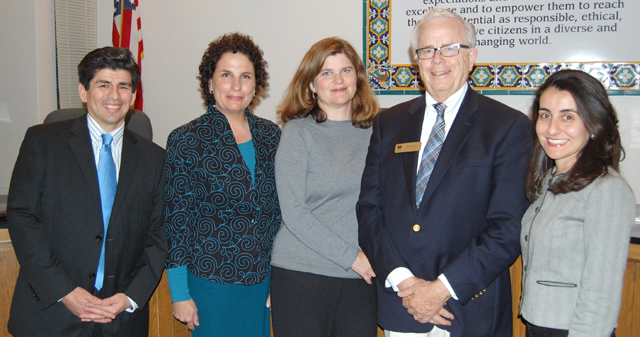
left to right): Santa Barbara School Board members Dr. Pedro Paz, Gayle Eidelson, Kate Parker, Ed Heron, Monique Limon (courtesy photo)

left to right): Santa Barbara School Board members Dr. Pedro Paz, Gayle Eidelson, Kate Parker, Ed Heron, Monique Limon (courtesy photo)

Coming up on the tail end of what she calls one of the most “fascinating and stressful years of her life,” the newest member of the Santa Barbara School Districts Board of Education, Kate Parker, took some rare time off to share her experiences.

Leslie Dinaberg: What’s it like to be on the Santa Barbara School Board? Are you the only elementary parent?

Kate Parker: I am. It’s a lot of meetings. It’s hard because I really feel like it’s important to have parents serve on our school boards. They can offer a really unique perspective, especially in Santa Barbara (where the secondary and elementary boards are combined) … but it’s really hard when you have young kids. … I couldn’t do it if my mother (Jan Wharton) didn’t help.

But … I’ve learned so much. I feel like I’m really contributing to our community and it’s just been a fascinating year, and it’s also been the most stressful year of my life.

LD: I would imagine it’s more challenging as the parent at an elementary school because it’s a smaller community.

KP: Once you get on the board, you really quickly get the perspective of the whole district, rather than me being just an Adams parent … when I came on it was really the toughest teacher negotiations that the district had in decades, and I was the only school board member that was on a campus every day picking up kids. So I was having a lot of direct contact with teachers, who are always so kind and respectful of me, but also had lots of questions and concerns.

LD: Did you feel like you knew what you were getting yourself into?

KP: I went to most meetings for two years, so … I understood the business of the board; I understood the way the board ran. What I didn’t anticipate, I think, is how emotional these issues are to so many people and so many people come to the board when there’s a problem. … We do have celebrations … there’s so many great things going on that people will come just for that moment and celebrate, but when they come to speak to the board it’s because they have a concern. … They come in with a lot of misconceptions, and that part I didn’t anticipate. … These people are really upset and I can’t make a decision that’s going to please everybody.

I have to always keep in mind what is best for the students even though that may make everybody unhappy. And so that has been the biggest challenge for me.

LD: There’s a vast difference in the resources that the different schools can bring with parent volunteers and fundraising, especially at the elementary level. Is the board involved in that?

KP: Right now it’s a site level thing, but we certainly have been looking at it, and I think that is a discussion for the coming year.

… You’re starting to create these schools that have very different feels to them. … For me personally it’s starting to feel quite uncomfortable to see this developing and seeing situations where parents will say I’m going to choose that school because look at how much money that they raise. … I don’t like to see that kind of disparity in this community but I’m not sure what the solution is at this point. It’s time to start that discussion.

LD: It’s very challenging, and I can see as an administration not wanting to discourage the generosity of families.

KP: No you don’t want to. What I would personally like to see is more going to the district level to be sure that students throughout Santa Barbara are able to have the same educational opportunities. It is hard enough for us to see because we have these Basic Aid Districts (where school dollars are tied directly to property values) in elementary level right next to us: Cold Spring, Montecito Union and Goleta, Hope District’s about to go. The interesting thing is Santa Barbara is also about to go, we’re probably about three years away from becoming Basic Aid, and that will be nice, but we’re never going to catch up to Montecito.

LD: What do you think are the biggest challenges right now for the district?

KP: For me I’m always trying to keep an eye on what are the goals of the district. The over-arching goal is an excellent education for students. The biggest issue that I see that we’re working with right now, and I feel like we’re working with it quite positively, is our budget. It’s hard enough to be in declining enrollment, but this has been an incredibly difficult year for me to come on the board and see that our business services department has a lot of problems and the budget was not accurate. I feel like I will feel so much better in January. Right now we’re going through a fiscal review with a company called School Services of California … I’m feeling so much better that this review is going on.

LD: What do you feel like has been your biggest accomplishment on the board so far?

KP: Everything feels like it’s so in process right now. That’s one of the things I’ve learned is that it’s actually really slow to make reform happen. … Pushing for the junior high electives to be restored once we knew that there was some money back … I really wanted to make sure that there were services in place for kids this year and not have them be completely eliminated and then we attempt to restore it the next year. … I’m glad that I was able to work with the rest of the board to restore elementary music.

LD: If you could be invisible anywhere in Santa Barbara, where would you go and what would you do?

KP: I would love to be invisible in a closed session of the City Council, see what’s really going on behind the closed doors.

Vital Stats: Kate Parker

Born: June 23, 1967, Clark Air Force Base, the Philippines

Family: Husband Ian, Adam (11), Simon (7) and Nicola (3)

Civic Involvement: Former Adams School PTA President; Current Board of Education Member, Santa Barbara School Districts

Professional Accomplishments: Assistant Librarian, Cate School

Little-Known Fact: Her father was in the Air Force and she lived in Taiwan for five years when she was in elementary school.


Originally published in Noozhawk on December 17, 2007: http://www.noozhawk.com/article/noozhawk_talks_leslie_dinaberg_sits_down_with_kate_parker/

One on one with Paige Shields

After being a stay-at-home mom for several years, Paige Shields was looking for a way to use her extensive computer skills to reenter the workforce in a child-friendly, flexible and sociable way. Not finding an existing job that fit the bill, in 2005 she created Whiz Kidz computer gaming and education center.

Leslie Dinaberg: When you started out, had you ever seen anything like Whiz Kidz?

Paige Shields: Not really. But there was a shoe store downtown (Global Kids), … they had these game cubes and (my then three-year-old son) Hayden would just turn on like fire when he saw those games, and he didn’t even know what they were. I got to where I would go once a week so he could play the games, but I would guiltily buy the cheapest pair of shoes I could find.

… So much of my life centered on technology that, when he was a baby, I thought I don’t even want him to see a computer until he’s 30. … I wanted him to be a surfer poet and have no computer skills whatsoever… we had a separate office, we tried to keep the door closed all the time, but he was a smart baby. And every time I left that door open he was in my chair at the keyboard.

LD: I remember you told me that he learned his ABC’s easily from playing a Spiderman game, after you spent months trying to teach him the old-fashioned way.

PS: Then I started experimenting with other games, asking him what he liked. … I would help him and he would get frustrated and I would get frustrated. … he would say “Mommy leave me alone. Just let me try.” So, I would walk away for 20-30 minutes, get distracted and I’d come back and he’s passed a level. …I was amazed at that. So that was our first big training lesson at Whiz Kidz: don’t hover over kids.

LD: When you’re learning anything that has to do with computers or technology it’s so hands-on, it’s different than passively sitting in a classroom.

PS: And that’s one reason I think that we can teach our classes to considerably younger kids, is that they don’t even have to be able to read for about 70% of our classes, not that it doesn’t help.

LD: But kids are so much more advanced, the schools keep needing to adjust the technology standards higher.

PS: I think that’s the challenge at Whiz Kidz and computer education in general. One of the reasons it’s so expensive is that it changes so fast, and you’re trying to stay up-to-date. We’re at a slight advantage probably over the schools simply because we are only doing computer education. And I can bring in any expert I think can teach the latest thing … Nine times out of 10 the people who even consider coming to do a class at Whiz Kidz are amazingly great people. … When I ask, “Why are you doing this?” They usually say, “I just think this is a great thing. This is so cool, I wish this existed when I was a kid.” We’re the anti-boredom, anti-testing center. That’s our other name.

LD: Does Whiz Kidz still have a focus on education?

PS: Yeah, absolutely. Now that we’ve expanded (taking over the Captain Video space in the Turnpike Shopping Center), even more so. … The first year was mostly about gaming and birthday parties … then after our first spring break and certainly our second summer when we sold out almost every class, which was phenomenal. …we offered enrichment programs after school for the first time and only one class didn’t fill up in our second session. And that was with almost no advertising because I couldn’t afford it because we were paying for so much new equipment.

LD: What about the film classes? Most kids I know like to make movies of doing dangerous skateboard tricks or blowing things up.

PS: Yes, we’re all over that. That’s what half of the Whiz Kidz movies are, that’s what happens. The first year the film festival came out we took some heat because there were kids playing soldier in their back yard and they had put in realistic sound effects to the water guns … but our only rule was it had to be PG-rated … Mainly our focus is … are you telling a story, are you learning how the program works, how the camera works, how the lighting works … the result is often potty humor or whatever kids do …If you want to know what’s going on in a 9-year-old’s mind, watch the film festival reel.

In the first film class … the very first question… “So what do you use for blood? Jam or ketchup? Do they teach you that in film school?” Oh man. Very first question.

LD: And that tells you a lot. What are the most popular games?

PS: Lego Star Wars is still really, really popular. World of Warcraft, every Star Wars game really, Battlefield 2, Call of Duty and Super Smash Brothers.

LD: What are some of your favorite moments at Whiz Kidz?

PS: My favorite time is when kids are all playing a game together …ten kids all playing the same game at the same time and they just are screaming, you killed me, I’m going to get you. It’s almost chase in your backyard but on computers. I just really love it when they’re so happy and having so much fun and doing something they cannot do anywhere else. It’s awesome.

LD: If you could pick three adjectives to describe yourself, what would they be?

PS: Crazy, jiggly, softhearted, kind of a pushover.

LD: Don’t tell the kids that.

PS: I think they know. I think Whiz Kidz is based on those three qualities (laughs).

LD: If you could be invisible anywhere in Santa Barbara, where would you go and what would you do?

PS: I would probably jump into the ocean naked–I’ve always wanted to do that.

Vital Stats: Paige Shields

Born: Oklahoma City, January 26

Family: Husband John, son Hayden (6)

Civic Involvement: CHADD (Children and Adults with Attention Deficit/Hyperactivity Disorder), Robo Challenge robotics competition

Professional Accomplishments: Worked for the Department of Defense as a political scientist and database expert in the field of nuclear non-proliferation; computer and database consultant for the private sector; founded Whiz Kidz in 2005

Little-Known Fact: “The thing that the kids are always most shocked about is that I used to work for the Department of Defense and that I have a top-secret clearance. They always go, ‘Wow, were you a spy?'”


Originally published in Noozhawk on December 10, 2007

One on one with Wendy Read

Wendy Read, courtesy CEC

Wendy Read, courtesy CEC

Santa Barbara County faces huge challenges with foster children, especially as they reach their teenage years and it becomes almost impossible to find homes for them. Funded by a grant from the Santa Barbara Foundation, Founder/CEO Wendy Read and her team have been working to create the Children’s Project, which will be the state’s first residential charter school, located on 60 acres of oak-studded hills north of Los Alamos.

Leslie Dinaberg: How did the Children’s Project get started?

Wendy Read: When I was 20 years old, I … was a volunteer with foster kids. I followed a young boy from the time he was six to the time he was 18, … to 27 different placements, including prison, where he spent the last six years of his life.

I was an actress at the time (appearing on TV shows such as “A Team,” “Knight Rider,” and the “North & South” miniseries)… but I realized that my real passion wasn’t acting, it was advocating for change in the foster system. That’s what drove me to go to law school. … There’s really not a day that goes by that I don’t think of that boy and … what would have made his life different. What could we do that would change the trajectory of people like him that are now following through the system.

LD: How did the idea for a boarding school come about?

WR: We received funding from the Orfaela Family Foundation which allowed us to start the steering company and we met once a month … it was all of us sitting around the table saying who are these kids, why are we sending them out of county and how do we bring them what they need.

LD: So at that point there was no specific agenda to build a school for foster kids?

WR: Oh no. … We just said who are the kids, why are we sending them out of town and how do we bring them home.

… We were surprised at how many times our kids moved and how many times they moved out of town, and how many times they were separated from their siblings… We were surprised at how many referrals were made … it made us say we don’t just want to bring them home. We want to bring them home and do a better job of raising them than their parents were.

LD: Why foster children?

WR: There are so many kids to be helped in the county, but there’s a big difference between foster kids and at risk kids and homeless kids or kids that need help. Maybe it’s because I’m an attorney that I see it that way, but we elected the judge that sits on the bench and says to a parent, “You know what, you’re not doing a good job of parenting your children. Based on the values that we as a society have created, you’re not doing a good job. We’re going to take your children away from you and care for them ourselves until you clean up your act.” And in that moment, we not only have a moral responsibility to care for these kids, but we have a legal responsibility to care for them. …We become the parents … fewer than 50% of them graduate from high school nationwide, so we’re doing a pretty bad job of parenting.

LD: Are there other models for this type of school?

WR: A program in San Diego called San Pasqual Academy (www.sanpasqualacademy.org/), which is a boarding school for foster youth, opened our eyes to what is possible. We asked for their advice, and they said they would start in 7th grade, so you could do two full years of remedial work. They talked about starting it as a charter school … to have the flexibility to say if you get reunited with your family or you get adopted, you can still be a day student. The charter school gives us that flexibility.

LD: What about the idea that being in a home is best?

WR: All we’re trying to do is provide an option for some kids that don’t want to be in a foster home or can’t be placed in a foster home, they can’t reunify with their families and would like to get a great education.

…Right now the judge has to say to a parent, “You have six months or a year to clean up your act and you get your child back,” it’s either/or. You clean up and you get your child back 24/7 or you fail and all rights are terminated. We really feel like one of the advantages of the campus is that a parent can start the healing process and still maintain a connection to the child … which is best for the kid if he wants to be connected, but not having the responsibility of having the child live with them, which is what caused those problems in the first place.

My whole thing is I want to stop arguing about where the pillow is at night and make sure the desk is in the same place every day.

LD: What’s the timetable for opening?

WR: With an aggressive timeline, we’re hoping to open in September of 2010.

LD: And the idea is to raise them up through better education?

WR: Exactly. Some of these families, it never occurs to them that the kids could go to college. You start talking about these things and it changes the whole family dynamic and then it changes the whole community dynamic. And then we talk about the ripple effects of this campus …I think this is really an opportunity for the entire community of Santa Barbara to do something that’s going to change things on a national level. That’s what seems to be appealing to people. … The idea is education being a way to solve a problem that we all know is there.

Vital Stats: Wendy Kilbourne Read

Born: June 29, 1964, Hollywood, CA

Family: Husband James, son Jackson (16), daughter Sydney (12)

Civic Involvement: Founder/CEO The Children’s Project; Cate Parents Organization, Current President; Katherine Harvey Fellow at Santa Barbara Foundation 2004

Professional Accomplishments: Cover of T.V. Guide in 1985; Passed the CA Bar 2002; Junior League Woman of the Year 2007

Little-Known Fact: Wendy has her Private Pilot’s License


Originally published in Noozhawk December 3, 2007.

With Open Arms: Sarah House

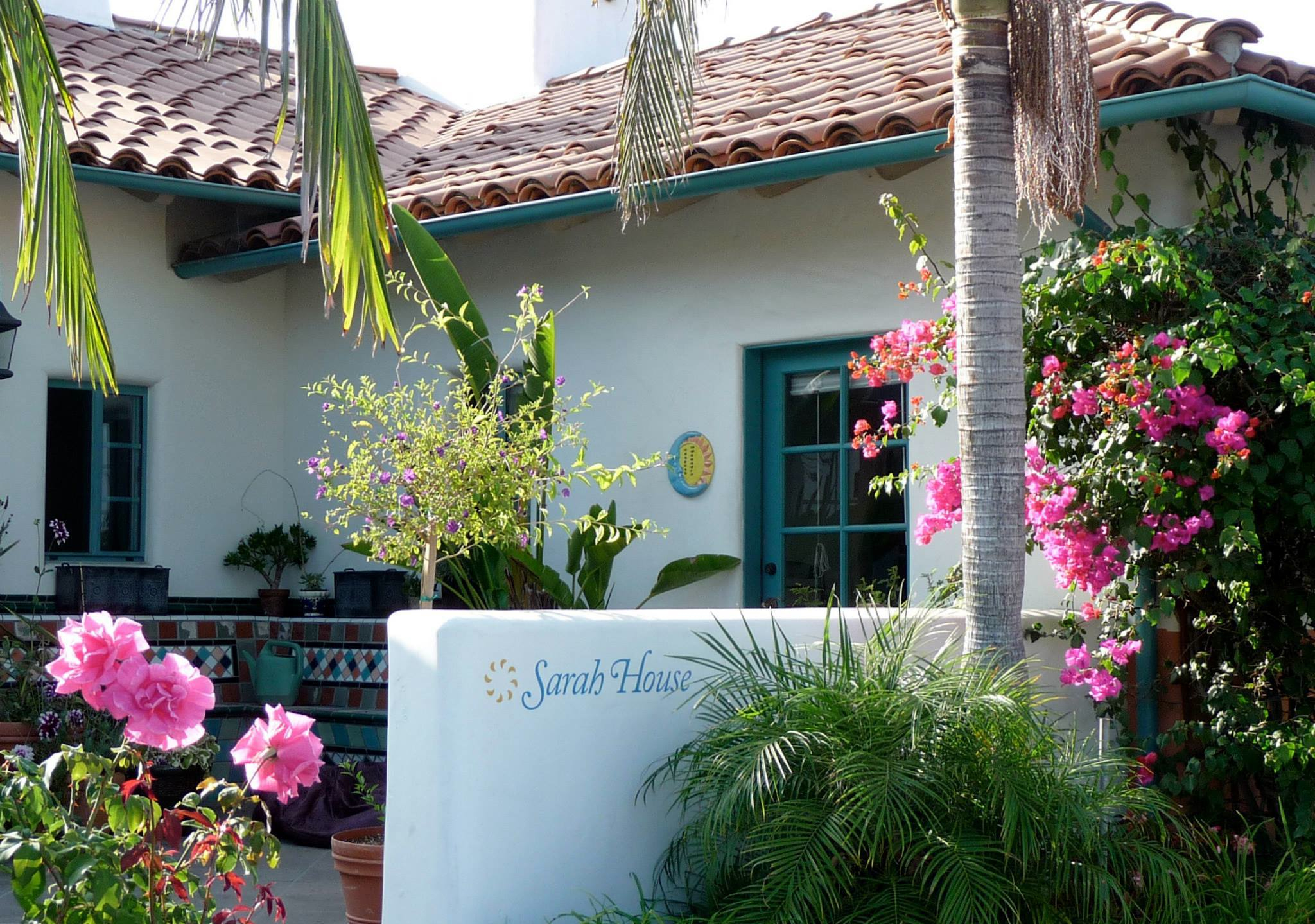
Sarah House (courtesy photo)

Sarah House (courtesy photo)

While the image of a residential care facility for people who are sick and dying doesn’t exactly conjure uplifting images, a visit to Sarah House is more inspiring than depressing.

“Sarah House is a place where you live your life until the last breath. It’s a celebration of your life,” says Kerrie Kilpatrick-Weinberg, board member of the nonprofit, which opened in 1994 as a home for people with AIDS, and has expanded its mission in recent years to focus on end-of-life care. “You have your family and the things that mean so much to you around. This is important and sometimes gets overlooked when you’re in a larger setting such as a hospital.”

According to executive director Randy Sunday, throughout the past year, 85 percent of Sarah House’s occupancy was for hospice care and only 15 percent for people with AIDS. While anyone designated as “low income” (making less than $27,000 per year) is eligible for care, about 40 percent of the people who live there were previously living on the streets, with no income at all. “These numbers have picked up because awareness has increased in the community,” he says. People often ask if there are conflicts with having formerly homeless people living alongside low-income people, but Sunday says “when you’re sitting in the living room in pajamas, it doesn’t arise; there’s a great quality about that.” He describes the atmosphere at Sarah House as, “not a luxury bed and breakfast, but there are always muffins or fresh granola. For the homeless, it might be the home that they never had. For everyone else, it’s just inspiring. The element of hospitality is something we always want to keep. The unit of care isn’t just the residents, it’s their families and friends as well.”

Working closely with the other end-of-life care agencies in town–such as Visiting Nurse & Hospice Care of Santa Barbara, Doctors Without Walls, Hospice of Santa Barbara, and Cottage Hospital’s Palliative Care Unit–who provide referrals, medical services and counseling, Sarah House offers a warm home for people to live out their days in a caring, extended family atmosphere. Named for the late Sarah Shoresman–her daughter, Linda Lorenzen-Hughes, remains active on the board of directors–Sarah House offers the highest level of medical care in an intimate, eight-bed setting, rather than a sterile hospital environment. “There’s such a need. It’s a special place, and we’re able to offer something to a group of people that may otherwise be forgotten,” says board president Jay Albert.

“We are committed to teaching people to see this as a natural journey, and this is a place to take that journey along with your friends and loved ones,” says board member Nancy Lynn. Part of that community education involves participating in special course on caring for those approaching death. “A lot of people come to the class, it’s not just caregivers but folks who think they might become caregivers at some point and people who have lost someone and want to understand more,” says Sunday.

Sarah House, which doesn’t receive funding from Medicare or Medi-Cal, raises about half a million dollars each year from private sources, individuals, foundations, and special events in order to provide all of its services at low or no cost to residents. The annual events–which include Light Up the Night, an annual holiday party where gorgeous holiday trees designed by local artists and celebrities are auctioned off; an Oscar Party, which celebrates the Academy Awards; and Second Seating Dinner Parties, where members of the community are invited to Sarah House to sit among the residents and learn about the program, among others–are designed not only to raise money but also to help educate people about the organization. “You have to have fun,” says Kilpatrick-Weinberg. “And it’s not making light of the situation. Sarah House is not about dying, it’s about celebrating and living your life right to the very end.”

For Sarah House’s annual holiday fundraiser–“Light Up The Night: The Artizan’s Ball”–on December 8 at the Santa Barbara Women’s Club, dress as your favorite artist or work of art and enjoying live music and special cocktails such as Cosmo Van Gogh. The Oak Group artists will be creating paintings on the spot, to be auctioned off, and many other unique works of art will be available for purchase, along with the traditional holiday trees, designed by local artists and celebrities. Tickets: $100 suggested donation. For more information, call 882-1192 or visit sarahhousesb.org.

Originally published in Santa Barbara Magazine on December 1, 2007.

Noozhawk Talks: One on one with David Starkey

David Starkey (courtesy photo)

David Starkey (courtesy photo)

Spending five minutes chatting with David Starkey is enough to make any writer feel like a slacker. The Poet-Playwright-Nonfiction Author-Editor-Santa Barbara City College Professor-Television Show Host is a busy guy. It’s no wonder that family members–he is a father/stepfather to eight children–mime him typing on a keyboard when they play Charades.

Leslie Dinaberg: What are you doing these days?

David Starkey: Right now I’m working on a book length memoir. … I just finished writing a creative writing textbook, which combines four genres, poetry, drama, fiction, and nonfiction. I have three books of poetry out in the last year and a book, Living Blue in the Red States … that I edited. It’s about progressives living in conservative parts of the country.

LD: Are you able to incorporate it into your teaching at City College?

DS: I haven’t yet. If we had a class on political writing or something like that I might. … I wrote a play about Alzheimer’s. We had a stage reading at this little theatre in Ojai, Theatre 150. …. It is called Crossing the Bar.

LD: Do you have somebody in your family that has Alzheimer’s?

DS: No. I read an article in the LA Times about this camp outside San Francisco where people who are caretakers take their loved ones who live with them up for a weekend so they can get a break, because it’s so overwhelming. … The caregivers are together, the Alzheimer’s patients are together and they finally join up at the end. And a hidden conflict is that this woman has made a deal with her husband that if she finally goes too far she wants him to kill her. So the play is him trying to make up his mind whether or not to go through with it.

LD: Sounds really interesting.

DS: It seemed to me like there was a kind of crazy poetry in a lot of the ways that you hear people with Alzheimer’s speaking. It sounds almost like avant-garde poetry. …

LD: Are you still hosting the Creative Community Show (on Santa Barbara TV Channel 21)?

DS: Yeah, we just won another award. There’s a body that all the community and educational access stations belong to, nationwide, and they submit shows and the last two years it’s won the best talk show in the country.

LD: Congratulations.

DS: Yeah. I’m not sure what the competition is, but it’s a neat thing. … What I enjoy about this is meeting interesting people and getting a chance to talk to them.

LD: Coming from Chicago to Santa Barbara, what’s your take on the cultural arts scene here?

DS: … I think it’s pretty lively for a small town. It’s extraordinary. I know that some of the artists that I speak with say that we’re a community that claims to embrace the arts and yet ultimately it’s more lip service than not. I don’t know. As a poet I don’t really expect to get much money anyway, so it’s not that big a deal to me. There happen to be a lot of people to interview for my TV show, so that’s nice. But I do think that we have a pretty thriving community and even if there are problems.

LD: How do you do all these different things? Do you just never sleep?

DS: I guess I get enthusiastic about things, and I think I’m pretty good at finishing off. So if I have an idea that kicks around with me for a while, I’ll just look for ways to make sure it happens.

LD: Just the fact that you’re showing me these four books that you’ve had published in the last year and the play and you’re in a band (with poet Barry Spacks) and you’re teaching and you have a pretty young daughter, it’s impressive. That’s a lot to get done.

DS: I guess I feel when I get enthusiastic about something I just follow it. And I guess I get enthusiastic about a lot of different things.

LD: That’s great.

DS: And you know a lot of the things that I do are things that can be accomplished in real time in a relatively short span of time. So for instance, to write a poem and to revise it, you can do that in small chunks of time. … I try to make sure that I get a little something done every day. I think that’s important when you’re working on a really long project. When I wrote that creative writing textbook I tried to do that. School inevitably gets in the way, grading papers and stuff like that.

LD: I know how hard it is to work with kids in the house. The idea of writing something where your deadlines are self-inflicted is very impressive to me.

DS: You sort of feel like you want to finish it so badly, because if you don’t do it now you know you never will … there’s obviously gender issues involved in this. When I was with my first wife she worked and I was at home a lot with the kids and while they would ask me for things a little, I think I was able to ignore them in a way that a mom can’t. Or to address them more quickly … I guess that’s partly the way that my mind works. It can focus really intently on a task and then switch off and then switch back on, and I know that some others don’t work that way.

LD: What do you like to do when you’re not working?

(Loud laugh from wife Sandy in the other room) Work.

DS: To me that’s not work. Since I was a little kid, I wanted to be a writer. So that’s what I want to do, that’s my thing. And it might seem like work or it might seem like a way to get me out of this family (laughs).

LD: So seriously, what else do you like to do?

DS: I spent a lot of time on the City College Creative Writing Program where he is the director). I got some release time this year, so we have a website, http://creativewriting.sbcc.edu/ if you could put that in your story I’d be grateful. … I’ve been Fundraising for that. We’ve got some generous donors that put some money in to bring writers to campus to fund contests. …

LD: What kinds of students are in the creative writing program?

DS: There’s a real community college profile–you’ve got the person with the PhD in English literature and the person who’s never written anything who’s just signed up because it fit into their class schedule. It’s always interesting that way.

Vital Stats: David Starkey

Born: June 28, 1962, in Sacramento, CA

Family: wife Sandy, children Elizabeth (23), Carly (21), Stephen (15), Miranda (6) and stepchildren, Serena (24), Andrea (20), Julia (17) and John (10)

Civic Involvement: Creative Community Show, SBCC Creative Writing Program

Professional Accomplishments: Seven small press books of poems, editor and contributor, four full length plays produced, three plays with staged readings, five 10 minute plays, professor of English and Director of Creative Writing program at SBCC

Little-Known Fact: That he has so many children and step children (8 in total)

Originally published in Noozhawk on November 28, 2007