Noozhawk Talks: Leslie Dinaberg Sits Down With Steven Lovelace

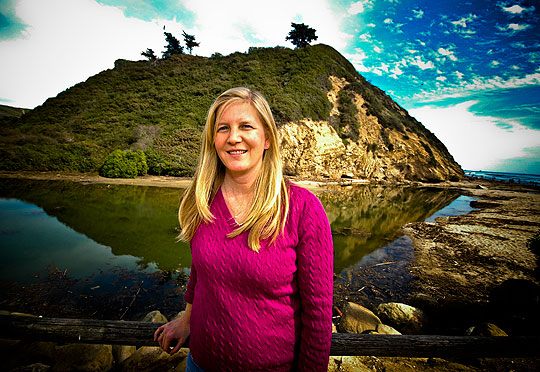
Steven Lovelace (Michelle J. Wong / Noozhawk photo)

Steven Lovelace (Michelle J. Wong / Noozhawk photo)

As the owner/director of Santa Barbara Dance Arts (with partner Alana
Tillim), Steven Lovelace has his dance card full guiding the jazz hands and pirouettes of more than 400 young students. Here, he takes a brief intermission to talk to Noozhawk.

Leslie Dinaberg: So Arts Alive! which shared your space, is now gone, sadly. But I hear Santa
Barbara Dance Arts is expanding.

Steven Lovelace: Yes. Now my rent just doubled which is pretty scary. But Alana and I … we’re
a very good mix, she’s definitely a great artist and does wonderful choreography
and really good with the kids. She’s a great teacher … I know that it will be good
for us in the long run …

LD: I know a lot of kids that take classes from you and just love it.

SL: They do. We have 400 kids here. Are they going to do it as a profession? I’ve
got a few kids that could be able to do it. Are they talented enough, absolutely,
but you know it also takes intelligence and hard work. …

Some of it here at my studio is social. I know the girls enjoy dancing, I know they
enjoy what I do in the class, but they also enjoy coming in and being a part of this
group … they interface and they interact and it feels good.

LD: I also think you can’t discount just the physical part of dancing. I think as a
parent you realize that your kids need to run around and burn off energy and they
can’t learn if they don’t do that.

SL: And they don’t learn this in school. This doesn’t happen in school. The level
of dancing or the level of vocal coaching that goes on here of the acting classes,
that is not the same, … Before I started this I have worked in practically every
darn school in the city doing independent things.

LD: Will there be changes at your studio now that you have the entire
space?

SL: Now we’re going to really transform this into a performing arts center. …
We’ve got Kindermusik here that’s very successful. … We’ve still got a gallery
space down there. The performing arts need the visual arts anyway because
somebody’s got to build the set to put on the show. I’m about to do two musicals
in the summertime, so this is all individual artists, costumers are individual artists,
they’re not performing artists, so I work with set designers, costumers.

LD: With this transition, is the name of the whole place going to be Santa
Barbara Dance Arts?

SL: Yes. Arts Alive! doesn’t belong to me. … The Arts Mentorship Program is the
nonprofit part of it. That is our scholarship program and our dance companies,
our performing groups, and a lot of internship stuff. We do everything from teach
them to teach classes, we mentor them to choreograph. They are producing their
own things. … The kids right now they are producing their own student
choreography showcase that will be April 26th at 3 p.m. The senior dance
company produces it under our direction, they put the program together, and they
do auditions and do the ticket sales. They do everything.

LD: That’s great. That’s really good experience.

SL: Yes, it’s great. It’s for 14-18 year old kids. They put their own recordings
together, they edit the music for the kids, they do all that. They outreach to the
kids at the dance school. … They can’t walk out of here just being dancers. It
takes more than that to make it in the dance world and we know that, so I’m
teaching kids to teach. You know one girl, she went out of here, she didn’t want
to be a dance major but she taught dance on the side because she could make
20 bucks an hour teaching dance instead of slinging hash and trying to scrape
tips together so that she could help support herself in school. So that’s a really
nice little skill to walk out of here with.

I’ve got one girl in her senior year in high school she choreographed two
musicals in the school. It pays a couple of grand for her to go in and choreograph
eight dances for a musical. She’s so good at it. So she’s working on
choreography and making some money. I’m hiring her this summer to help me
choreograph my musicals because I can’t do everything. She works here in the
summertime; she’s great with teaching. She’s 19.

LD: How long have you been dancing?

SL: I started when I was 21. I actually was doing aerobics up at Nautilus, and the
gal that was running it there who is now one of my moms.

LD: Cindy Elster?

SL: Yes … she pegged me right away in class. I was very coordinated. … I would
be right up in there in the front just going for it, and I moved really well and she
said, “you know, I think you should become a teacher. You should teach. Half the
class is following you anyway.”

So she started having me come up with her on the thing and do the routines with
her and she was really basically training me to teach. (Then she said) “Why
don’t you go up to City College and take a couple of jazz classes? You’ll get all
that.”

So I went to City College and took Kay Fulton’s jazz class. It was actually an
intermediate class and … at the end of the class she lined up half a dozen of us
and she said, “You need to take ballet, you need to take ballet or modern,” she
got up to me and she says, “you can stay.” So I got to stay in the class. And that
was the beginning of dance for me.

LD: That’s kind of wild, it’s late in life, most people start dancing so
young.

SL: It is late, but it’s more common for men. Men can start late. … They get an
accelerated training. I was up in a community college. I wasn’t in a dance studio
hidden away, I was up in a community college where everybody could see me so
within six months somebody from UCSB saw me and called Alice Contadina who
was the department head at the time and she sent one of the teachers out to a
class to observe me and she said “why don’t you come out here and take some
lessons free of charge?” So I went out to UCSB and I danced out there for a year
and then they offered me a spot in their company. By that time I had quit my day
job and had gotten a job at Julie McLeod’s Dance Warehouse. So that’s my
whole history around here. Julie taught me how to teach.

LD: What’s it like to work with all those little girls?

SL: Well, there’s a lot of different ways I could answer that. … I think it’s really
important to be a place where girls can be empowered, which is one of the big
reasons we want to mentor girls and give them social skills because every time
they don’t make that audition it’s a skill to know how to take that rejection of not
getting what they want. The first time you don’t get into the college that you want,
if you don’t get that job that you think you’re perfect for that they give to someone
else.

… We really, really feel strongly that we’re providing a service, not just in giving
excellence in dance training or contemporary dances but we’re giving your kids a
community that they can feel good about. And the kids love being here.

… And I know that some of that is because it’s a great experience for them to be
here, but I have to say we provide this forum where they can be seen at
whatever talent level they are at or whatever their interest in dance is. Whether
they are just here for an after school class or they have an aspiration to go on
and go to Broadway and be in music videos or be a director or whatever. It’s here
for them and we want to be there. We take them all seriously. We don’t talk down
to the kids here. We really believe in that.

LD: If you could pick three adjectives to describe yourself, what would they
be?

SL: Holistic, resourceful, appreciative

Vital Stats: Steven Lovelace

Born: Santa Barbara, on June 6, 1957

Family: Partner Gary Clark

Civic Involvement: Santa Barbara’s Summer Solstice, Lit Moon Theatre
Company; Santa Barbara Dance Alliance: Arts Mentorship Program; Fund for
Santa Barbara

Professional Accomplishments: Co-owner/director Santa Barbara Dance Arts;
Co-owner/director Stage Left Productions; Teacher at Arts at Laguna; Former
Artistic Director and Artist in Residence with Santa Barbara’s Summer Solstice;
Dancer with Repertory-West Dance Company, Santa Barbara Dance Theatre,
Santa Barbara Civic Light Opera, Bill Evans Dance Company, and Nora
Reynolds Dance.

Best Book You’ve Read Recently: (laughs) “Twilight. It’s not like they are the
best-written books in the world but there’s something very engaging about those
characters.”

Little-Known Fact: “I like to be alone.”

Originally published in Noozhawk on April 12, 2009. Click here to read the story on that site.

The “W’s” of Working Out

stockimages, freedigitalphotos.net

stockimages, freedigitalphotos.net

The symphony of treadmills and weight machines always gets a little louder this time of year-whether it’s a New Year’s resolution to lose weight, a few too many latkes or too much eggnog, or the gift of a gym membership-getting fit is one of the most popular goals at the start of each year. Here are some options to suit every workout style.

Who: The Gym Rat

What: Santa Barbara Athletic Club has awesome equipment and a vast variety of workout options, including Pilates, Spinning, indoor and outdoor weight rooms, swimming, squash and racquetball.

When: Monday – Thursday: 5:00 am – 10:30 pm; Friday: 5:00 am – 10:00 pm; Saturday: 6:00 am – 8:00 pm and Sunday: 7:00 am – 8:00 pm.

Where: 520 Castillo Street.

Wear: For a guilt-free, post workout treat, head to the new supplement/protein bar at Montecito Athletic Club (40 Los Patos Way, Montecito).

Who: The Mom

What: Enlist with “General” Stacey Cooper on a BootyCampSB mission to “raise your fitness level and your booty to new heights.”

When: Kids work out for free at the Parent-Child Booty Camp every Monday from 4:30 to 5:30 p.m.

Where: Girsh Park, 7050 Phelps Road, Goleta.

Wear: Head to Eddie Bauer (130 S. Hope Ave., La Cumbre Plaza) for the “essential daypack bottle” loaded with all the gear you’ll need to survive a day with the kids.

Who: The Beach Babe

What: Try Moms in Motion’s Stand Up Paddle Board team for “the most fun you can have on the water-while improving your balance, upper body and core strength.”

When: Sundays at 8 a.m.

Where: Leadbetter Beach, Shoreline Drive and Loma Alta.

Wear: You can rent equipment or splurge on a Kialoa -Nalu Stand Up Surf Paddle from Paddle Sports of Santa Barbara (Santa Barbara Harbor).

Who: The Couch Potato

What: Try a Jazz Dance or Hip Hop Class at Santa Barbara Dance Arts (formerly Santa Barbara Jazz Dance Academy). You’ll have so much fun you won’t even realize you’re working out till the pounds start sweating off.

When: Jazz Mondays at 6:45 p.m.; Beginning/Intermediate Hip Hop Wednesdays at 7 p.m.; Advanced Hip Hop Thursdays at 7 p.m.

Where: 1 N. Calle Cesar Chavez #100.

Wear: Pick up your dancing shoes at Harlequin’s Theatrical Supply (17 W. Gutierrez St.).

Who: The Yogini

What: Yoga Soup has a fun variety of classes, with owner Eddie Ellner’s good karma philosophy of “pay what you can,” for his eclectic “soupy mix” of classes.

When: Tuesdays at 5 p.m.; Tuesdays; Wednesdays, Thursdays and Fridays at 6:30 p.m.; Saturdays at 10:30 a.m.; and Sundays at 8:30 a.m. and 5:30 p.m.

Where: 28 Parker Way.

Wear: Head to Drishti (130 E. Canon Perdido St.) for a Manduka eKO eco-friendly yoga mat and a comfy pair of their “Beyond Yoga” pants or capris that are so stylish you’ll want to wear them all day long.

Who: The Jock

What: At Dr. Bob Wilcher’s Killer B Fitness, this Chiropractor/Personal Trainer will whip-we mean motivate-you into shape whether your goal is to run a marathon or sweat off a few sizes in his few frills, no mercy private gym.

When: By appointment, call 805-448-2222 for information.

Where: 126 Powers Ave.

Wear: Lucy (3825 State St., La Cumbre Plaza) offers a new “core power collection” of tops stay soft, comfortable and dry, no matter how much you sweat.

Who: The Hiker

What: The Santa Barbara Sierra Club offers a variety of hikes for every fitness level from the occasional hiker to the diehard backpackers.

When: Hikers meet weekly on Wednesday nights at 6:30 p.m. and Friday nights at 6:15 p.m., destination are chosen at the meeting points.

Where: Santa Barbara Mission, Laguna and Los Olivos Streets. Also visit www.santabarbarahikes.com for additional hikes scheduled every weekend from a variety of locations and terrains.

Wear: Head to Santa Barbara Oufitters (1200 State St.) to pick up one of Ex Officio’s “Insect Repellent” hats, which are great for those sunny, buggy hikes on the beach. Plus, rain or shine, you can take a trek up their indoor climbing wall.

Originally published in Santa Barbara Magazine in 2009.

Noozhawk Talks: Leslie Dinaberg Sits Down With Kendre Sanborn

Kendre Sanborn, pausing for a quick reflection at Arroyo Burro Beach, is about as an involved school parent as one can be. (Michelle J. Wong / Noozhawk photo)

Kendre Sanborn, pausing for a quick reflection at Arroyo Burro Beach, is about as an involved school parent as one can be. (Michelle J. Wong / Noozhawk photo)

As president of both the Santa Barbara Area PTA Council and the Hope School
District Educational Foundation, not to mention the busy mother of three children,
Kendre Sanborn certainly has her hands full. Here she tells Leslie Dinaberg
about how she juggles it all.

Leslie Dinaberg: How did you get involved with the area council PTA?

Kendre Sanborn: When I was the Vieja Valley PTA president I hadn’t been on the board before. I knew nothing but wanted to get involved. I thought the best way to learn about PTA was to go through all the trainings that PTA offers and so I kept
seeing the same volunteers over and over again. And when there were issues
going on with our PTA they were really helpful and came to my aid whenever I
needed anything.

LD: And now you’re heading up the whole thing. What area does that
include?

KS: There are 27 schools currently, from Montecito all the way to Goleta. I don’t
know everything that it entails yet because I’m still kind of learning everything,
but we basically meet to make sure that everyone is up to their standards, …
they have all these criteria that they need to follow to be in good standing. It’s our
board’s job to make sure that all those groups are in good standing. Then
another thing the area council does is send out information to the presidents
about legislation that is going on. There are a lot of areas that we cover; we’re
giving information constantly to these PTA presidents.

LD: Is there anything interesting legislatively that is going on?

KS: Right now they are really pushing that the governor doesn’t cut budgets to
schools. They’re also looking at the stimulus package and they’re really keeping
an eye on that, because if each individual state gets money then PTA really
wants to make sure that the schools get money.

LD: You’re also president of the Hope School District Educational Foundation.
What does that group do? (Laughs) <Editor’s Note: Leslie Dinaberg is also on the
board of the Hope School District Educational Foundation>

KS: We do fundraising to enrich the educational programs at Hope, Monte Vista
and Vieja Valley Elementary Schools. And we also work to encourage
collaboration and communication among the three campuses. Right now we’re
working on our Fourth Annual Golf Classic, which will be held May 15th at Glenn
Annie Golf Course.

LD: And what is that fundraiser for?

KS: Well, the state and federal budget cuts have forced our school district to cut
funding for our library program in half. So the golf tournament money will be
used to help restore the library program.

LD: Great cause. Now you also volunteer at your kids’ schools, right?

KS: Yes, my two older kids go to Santa Barbara Middle School and I volunteer
once a week to help serve lunch and then I was helping as an ambassador,
where we talk to potential parents.

LD: What do you do at Vieja Valley?

KS: Wow talking about the things I do makes me realize I have a lot on my
plate. I count and deposit PTA money, volunteer in the classroom once a week,
and I’m on the committee for the honorary service awards. We will soon be in the
process of finding people to honor at our school.

LD: What about the area council event?

KS: The area council usually has a Reflections reception, which is a really neat
thing. They usually put on a reception for all the winners for our area. (The
National PTA Reflections Program is an arts recognition and achievement
program for students, which provides opportunities for students to express
themselves creatively and to receive positive recognition for original works of art.)
Then there’s also an honorary service award event held once a year. This is an
event for all the volunteers who are recognized at their schools to also be
recognized at a community level.

And also with Reflections, if you’re a winner for the area, then the district has a
reception as well, so all of those people attend, and it’s really neat to be
recognized.

LD: Let’s shift a little bit to talk about you. I know you’re really busy with volunteer
work now, but what did you do professionally before you had kids?

KS: I finished my master’s in clinical psychology and I was working on my hours,
you have to complete a certain amount of hours to be certified. During that time I
got married and had my first child. I was fortunate enough to be able to stay
home with him. I really wanted to stay home and be with my baby. So from then
on I stayed home.

LD: I know you’ve traveled a lot. What are some of your favorite trips?

KS: Africa. And more specifically I really like Kenya and Tanzania; also going to
the Artic was really neat. We’ve been to Japan, which was pretty cool. Next week
we’re on our way to Antarctica. I haven’t been before but that’s one of my
husband’s favorite places. … We took Andrew on his first international trip to
Australia and New Zealand when he was 14 months old, and he traveled so well
it made me realize, “wow, we can take him anywhere.” Then the other two just
grew up doing it. They learned how to behave on a plane.

LD: And so do you guys take a big trip every summer?

KS: Yeah. … The funniest thing. Eric was traveling a lot for business at one point
and he had a lot of miles, and he was taking Andrew to some places to help gain
a lot of miles. During the early 90s, a lot of airlines said if you fly here you get
triple the miles, so he would take Andrew to Japan for the weekend just to get
miles, and of course to see Japan. He ended up acquiring a lot of miles.

One time Andrew and I were on a trip and we were coming through Atlanta on
our way home and I was checking in at the counter and the agent said, “Okay our
flight is really full but we can upgrade Andrew, but you’ll be in coach.” And I said,
“okay fine, as long as I’m kind of close to first class.” And they said “fine, so
where is Andrew? And I said, “He’s down here.” He was seven or something and
he was so low to the ground they couldn’t see him. The agent was laughing
saying “oh my gosh; the flight attendants are going to love this. Will he be okay
by himself?” And I said, “oh absolutely”. Our kids have traveled a lot.

… For spring break we’re going to go to Bhutan and Nepal.

LD: Is there any place you’ve never been that you’ve always wanted to go
to?

KS: Yeah, I want to go to India.

LD: Do you guys totally have it down in terms of what to pack? Five people is a
lot of people.

KS: You would be shocked. When we check into hotels people are like “oh, is
this everything?” And we say yes and they are amazed. We totally have it down.
Usually we travel with about two suitcases.

LD: That would impress my husband.

KS: And two backpacks. Now it took a while to get to that (laughs) but when you
start traveling a lot you learn a lot of tricks. For instance you only pack for about a
week, and then you learn to find a place to do laundry and obviously you want to
find the least expensive places to do your laundry, especially with five people.
But sometimes you have to pay high prices but it’s a great way to not over pack. I
definitely miss my shoes when I’m gone.

Vital Stats: Kendre Sanborn

Born: December 5, Santa Monica, California

Family: Husband Eric, children Andrew (13), Emily (11) and Claira (9)

Civic Involvement: Area council PTA President, HSDEF President, Volunteer
Vieja Valley School, Santa Barbara Middle School

Professional Accomplishments: “I’ve definitely seen how organizations work
and what it is like going into an organization and being able to know what I need
to do and get it done. And also being able to get along with people and be
respectful of their issues.”

Best Book You’ve Read Recently: “I love to read. I’m reading ‘The Shack.’ It’s
really interesting because it’s kind of religious but not in a dominating way, it is
not pushing one particular religion. It’s about a way to live your life and relate to
other people.”

Little-Known Fact: “My husband and I have made more than 2,000 loans to
individuals and their families all around the world who are in less fortunate
circumstances than our own – mostly through KIVA.org, a San Francisco based
micro lender.”

Originally published in Noozhawk on February 17, 2009. Click here to read the article on that site.

Noozhawk Talks: Leslie Dinaberg Sits Down With Teri Coffee McDuffie

When it comes to women’s self-defense, you can’t beat confidence — and a well-timed poke under the Adam’s apple.

Teri Coffee McDuffie, courtesy photo

Teri Coffee McDuffie, courtesy photo

“One of the most important things women need to know about their safety is that there are ways you can help avoid being picked as an intended victim,” says Teri Coffee McDuffie, owner and founder of Santa Barbara Women’s Self-Defense. McDuffie talks with Leslie Dinaberg about how she learned to be capable, confident and in control-and how she’s teaching others to do the same thing.

Leslie Dinaberg: How did you get started with Santa Barbara Women’s Self-Defense?

Teri Coffee McDuffie: I’ve been training in martial arts for 26 years. After about five or six years, I realized that the majority around me were men … and I thought, why is that? Women need it far more than men … so why aren’t more women doing this?

I realized it’s because we have much more commitment in life to family, to our husbands, to what’s going on with children and life. Fulltime careers kind of envelop us, and there’s not much time to fully commit to martial arts.

So I thought, how can I take this program that I’m doing in martial arts and take snippets of the best of what I’m learning and create a small program that will be basic and simple and make it something they can do in a short period of time? I designed it about 20 years ago.

LD: Obviously safety is the number one thing, but what about physical fitness?

TCM: Anybody can do it. … We’ve trained people that are 87 years old, kids that are ten years old; we’ve done people with physical disabilities in every way.

… At the Braille Institute because we are teaching the senior citizens over there and some of the people do have sight disability. …. In the fall, we had a class of ten and we’re going back in the springtime. And we volunteer there, that is a lot of fun.

LD: How long is the course?

TCM: In general we have an eight-hour course, and it’s divided numerous ways for people’s convenience.

LD: It sounds like you’re working with a wide variety of ages.

TCM: Yes, but the most frequent group that comes in here are in their 40s and 50s because they seem to be the group that truly understands the need for it in their lives in terms of feeling more completely and fully balanced.

… It’s really hard to get actually the target group for victimization, which is the college age. …We can’t get them to recognize that they can be one of those victims.

LD: I think in the college atmosphere the perception of strangers is different than anywhere else too.

TCM: Absolutely. … But 90 percent of people that are attacked, it’s done by somebody that they’ve met or know.

LD: Really?

TCM: It’s a friend or somebody that they’ve been acquainted with, like somebody bumping into them every day, saying hello, somebody that drops off their mail, somebody that they meet in the grocery store that’s bagging their groceries, that says hi to them, that they have some comfort level with.

LD: That totally flies against my assumptions, because you would think I would know where to find that person and identify them.

TCM: It has to be somebody that’s going to have that kind of vulnerability and the more vulnerable people are going to not react when they are attacked, they are going to be more fearful, they are going to be the victim.

… Everybody can be a target. It’s not about how cute you look. They’re looking for attitude, appearance and how you’re walking around. It’s about how you’re presenting yourself out there in terms of vulnerability. That’s what they’re looking for. It can be anybody.

LD: There’s such a fine line, as a parent, you want to teach your children to be strong and self-confident and cautious, but at the same time you don’t want them to be completely scared of every stranger that talks to them.

TCM: Great, now what you just said right there is what we battle against because we have so many mothers out there saying, “I’m not sure if I can have my daughter take your course because what I’m worried about is she’s going to end up paranoid.”

And we say “No, if your daughter takes this course, she will feel so much more in control because instead of feeling fearful that things will happen to her, she’s going to reverse that and take control of more of her life and take control of situations so things don’t happen to her.

LD: What are some of the things you teach?

TCM: We tell people they have so many different choices. What we start out doing is just showing just a simple strategy. If someone walks up to them and they feel uncomfortable because they’ve violated their space, we give them an option such as saying, “stop” in a big voice, or they just step back instead of stepping forward and put their hands up and use their voice.

LD: How long does it typically take for people until it the strategies become instinctual?

TCM: I think very quickly because we do it frequently during the class.

LD: There’s certain element, at least in my own thought process, of embarrassment. What if that person wasn’t really walking toward me?

TCM: We talk about that it’s okay to be embarrassed and be wrong but be safe. Listen to your instincts, it’s important, and if you’re wrong you’re safe.

… When you’re choked, this one is just a good one to know, you find someone’s Adam’s apple and then right under the Adam’s apple you just take your fingers and expand it straight in. It doesn’t hurt them, but it does make them extremely uncomfortable. No matter how powerful they are, no matter how big they are, they will back off to that. It doesn’t take any strength whatsoever.

LD: That’s also not intimidating. I think some people can’t picture themselves jumping around, but poking someone in the Adam’s apple seems doable.

TCM: Yeah and if somebody jumped on you and all of a sudden they’re choking you, you can reach out in the dark and find the Adam’s apple. We do different scenarios like that. … The things that scare you in your mind, that are so big in your mind and you can have a visual release from that.

LD: You mentioned doing some mobile training where you go into businesses?

TCM: We go into places of business and we do whatever structure works for them. … It’s really good for the employees in terms of morale boosting, because they feel better getting in their cars at night and it’s just a safer environment for everybody.

LD: Do you go to martial arts competitions?

TCM: Yes. I go to national competitions all the time. … It’s wonderful because you get to meet people from all around … year after year you become bonded with those people. We’re one huge family. …I’m going to Korea this year to test for sixth degree in the fall.

LD: If you could be invisible anywhere in Santa Barbara, where would you go and what would you do?

TCM: When the women leave here and have taken the course-if I was invisible, so I didn’t have to be a voyeur-I would like to follow them around a little bit and see how they’re walking around in terms of their attitude and empowerment. How they are looking out in the world.

LD: Can you recognize from the posture of somebody that has been trained in self-defense?

TCM: You bet. From the first day they’ve been in this course to the last day they’ve been in this course, they are like night and day … it’s just amazing.

Vital Stats: Teri Coffee McDuffie

Born: San Francisco, CA; November 13, 1959

Family: Husband, Ian McDuffie

Civic Involvement: Braille Institute, Obama Campaign

Professional Accomplishments: Owner/founder of Santa Barbara Women’s Self-Defense; Five-time national champion, fifth degree black belt; Certified martial arts instructor.

Best Book You’ve Read Recently: Gift of Fear by Gavin DeBecker.

Little-Known Fact: “I’m very shy. A lot of people wouldn’t think I’m very shy but that’s probably what has really driven me to do all of these other things that I’ve done is because I am moving in the opposite direction of what I want to do, which is just curl up and hide in the corner, which is absolutely what I want to help people not do.”

Originally published in Noozhawk on February 15, 2009.

Noozhawk Talks: Leslie Dinaberg sits down with Maria Herold

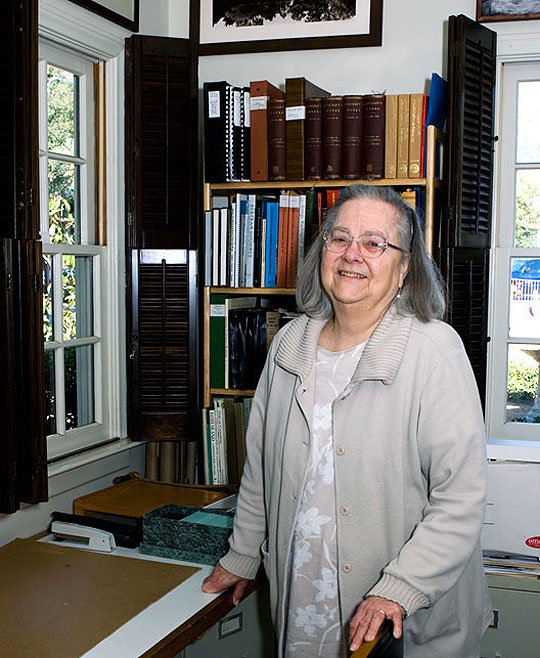
Maria Herold, longtime curator of the Montecito Association’s history committee, is an enthusiastic resource for those conducting obscure research or exploring land-use background. (Elite Henenson / Noozhawk photo)

Maria Herold, longtime curator of the Montecito Association’s history committee, is an enthusiastic resource for those conducting obscure research or exploring land-use background. (Elite Henenson / Noozhawk photo)

As longtime curator of the Montecito History Committee, Maria Herold knows-
literally-where the bodies are buried and the tales behind some of the most
storied families and legendary estates. Here she sits down with Leslie Dinaberg
to discuss some of her own history.

Leslie Dinaberg: How did you get involved with the Montecito History Committee?

Maria Herold: When I retired I decided that I would like to do something useful and I looked
around. I first looked into Recording for the Blind and Dyslexic, and I wasn’t quite
ready for their structure. I had heard that somebody was needed up here, so I
dropped in and have been here ever since. (Laughs) I just showed up!

LD: And when was that?

MH: I think about 1991.

LD: What did you retire from before that?

MH: Well, immediately before that I took care of babies … I wasn’t looking for a
job, but people asked me to take care of their babies because the hours were
perfect, my husband was a teacher and most of the people who asked me to
take care of their babies were teachers.

LD: Has history always been an interest of yours?

MH: Absolutely, because of the fact that my family has been involved with the
history of California and that has always been in the back of my mind. My
grandfather immigrated to America in 1873 and first worked in Sonoma County
and then settled in Northern Santa Barbara County and worked as a supervisor
on an old Spanish land grant.

He went back to Switzerland after he had worked here for 30 years. I was born in
Switzerland, and then I came to America when I was 16. He came when he was
15 and I came when I was 16. He came walking over the Isthmus of Panama and
I came on a freighter through the Panama Canal-so that’s history.

LD: Did you come with your family?

MH: Yes. The whole family came. … (My father) decided that instead of going to
the Santa Maria area, where he was born … he looked for the nearest place that
had a college and at that time there was a little college up on the Riviera so we
came here because of the college on the Riviera. I was the oldest child and he
wanted to be able to send me to college locally.

LD: You have an interesting history so I can see where your interest comes from.
What kinds of things do people come to the Montecito History Committee to
research?

MH: Everything from what is the story of my house or who is the architect or how
come my house is the way it is, to I heard about the Para Grande, or I heard
about the San Ysidro Ranch. Or I heard about somebody from New York who is
following a history of a person who started out in Europe, went to New York and
then ended up dying in Santa Barbara and inspiring a story of the ghost of a
countess in a local house. It gets that elaborate.

Then, of course, people who want to know the history of a street or of a property
that they want to buy. Or there is a legislation or development and, if they’re
smart, they come here and see what the history is. There are very few people
who are smart, but they manage to keep me busy, very, very busy.

I wish more people would come in because it is always ignorance that causes
problems, legal and otherwise. And in the community it creates a great deal of
problems where people are really not well informed on the history of Montecito.
And the same thing in Santa Barbara, the same thing in Goleta. If people knew
the histories there would be much less confrontation.

LD: Do you have a favorite project you’ve been involved with?

MH: I love it that the Pearl Chase Society once gave a mandate to a lady that
they were giving grants to look into part of the history of Montecito. And they
funded this lady, not me because I’m a volunteer, I don’t take money, except for
as a gift to the History Committee. But they funded this lady to work with me in
putting together a history of a particular section. We picked this section of
Montecito and looked into it in detail, starting with a map from 1871 and then
following the history of that section up to the present time. It was a fascinating
project. It took us months and literally months and months but it ended up in two
ring books of information with lots of pictures and everything else.

LD: What part of Montecito did you look at?

MH: We looked at the area between Jameson Lane (south), San Ysidro Road
(west), Hixson Road and Santa Rosa Lane (east) and Santa Rosa Lane (north).
That encompassed old farmland that had been well known farms in the 1870s
and 1880s and 1890s and also included one of the two most historic parts of
Montecito, which is Romero Hill. So we got all kinds of background with Romero
Hill and with the farming community and now having developments, so we have
everything there on how it developed since 1871.

LD: Do the other local libraries know about your resources?

MH: It depends on who they talk to at the library … I do know that UCSB is
aware of us, the Santa Barbara Historical Society sends us people all the time,
people who come into the library and say what should I do to find out about this
and that and something else, the librarians here (at the Montecito Library) send
me people all the time. So between the Santa Barbara Historical Society and the
local library we have a lot of referrals. Also there seems to be somehow people
seem to have become aware somewhere on the Internet of our existence
because I’ve had calls from all over the continent.

LD: What is the oldest structure in Montecito?

MH: What they call the Monsignor Adobe, which is a misnomer, but everybody
calls it the Monsignor Adobe. It’s a two-story Monterey and was built long before
the Monterey Adobe was built … The Monsignor Adobe is the most classic
building, I adore it. And yet it is the oldest building that’s still excellent.

LD: And what street is it on?

MH: It’s on the bottom of Sheffield Lane where Sheffield runs into North Jameson
Lane and it’s a land marked house.

LD: This sounds like very fun and very interesting work for you.

MH: Yes, but a lot of work. I would dearly adore having a helper.

LD: It seems like there should be a college student that would be
interested.

MH: Well, you know, people keep telling me that I should get involved with
Westmont students, etc. but the thing is they leave after a year, so all that is lost.
The continuity is shot down. What I need is an apprentice who will take over
because I’m not going to last forever.

LD: You’re still going strong, though.

MH: I’m 76 years old. Start counting (laughs).

LD: What else do you do like to do when you’re not volunteering at the historic
committee?

MH: For a long while I worked at Recording for the Blind and Dyslexic, which I
adored, just adored. But I can’t do it anymore. I’ve had several operations for
cancer so this is quite a trip. I used to work hours and hours over there and I just
loved it, but I can’t do it anymore. Then I’m involved with music all the time, I
always have been. I’ve been an accompanist and stuff like that. I’m still a
member of a choir, I sing with a group every Sunday but this is strictly amateur
music, but I’ve always done music.

LD: So is your group you sing with a church choir?

MH: No, it’s just a group that gets together, we all can read music, we get
together and we sing what is called early music, a capella early music and we
don’t perform, we do it for the fun of exploring early music.

LD: That’s really fun. That’s a great little local activity. If you could pick three
adjectives to describe yourself, what would they be?

MH: Old-fashioned, excitable, and enthusiastic.

Vital Stats: Maria Herold

Born: August 14, 1932, in Zurich, Switzerland.

Family: Husband George Herold; six grown children, Ann Herold, Matthew
Herold, Tina DaRos, Mark Herold, Monica Christensen, and Joseph Herold; eight
grandchildren and one great grandchild.

Civic Involvement: Volunteer curator with the Montecito History Committee, very
active with Mount Carmel Church, former volunteer for Recording the Blind and
Dyslexic.

Professional Accomplishments: Runs the Montecito History Committee archives;
formerly took care of babies in her home.

Best Book You’ve Read Recently: The Zookeeper’s Wife, by Diane
Ackerman.

Originally published in Noozhawk on January 12, 2009. Click here to read the story on that site.

Giving Back: Chuck Slosser

Chuck Slosser (courtesy photo)

Chuck Slosser (courtesy photo)

With the same engaging grin and focused attention that have pried philanthropic purse strings loose since he came to town in 1981, Chuck Slosser says he’s excited to tackle retirement after 18 years as executive director of the Santa Barbara Foundation.

What an amazing ride it has been. When Slosser, now 66 took the helm of the Santa Barbara Foundation–Santa Barbara County’s largest private source of funding for nonprofit programs–it had a staff of three, roughly $30 million in assets, and was giving out a few million in scholarships and grants a year.

Compare that to today’s foundation–under Slosser’s leadership, it now has a staff of 23, more than $300 million in assets, and donates about $27 million each year. He’s justifiably proud, but still ready for a slower pace, saying, “I thoroughly enjoyed the foundation and the work that we’ve done here and the great things that have happened in the community as a result. I’ve never objected to the 9 to 5, but it’s really the 5 to 9.”

Slosser and his wife of almost 38 years, Stephanie, who retired from UC Santa Barbara’s biology department three years ago, plan to travel, play golf and do yoga. He’s also interested in playing more basketball (he’s got a regular game at the Boys and Girls Club), taking Spanish lessons, picking up a guitar and a dissertation that have been collecting dust, and perhaps doing some consulting. He smiles. “I really do feel like a kid in a candy store. I want to do that, and I want to do that, and I can’t wait.”

Clearly, Slosser is a man with many interests, which is why the diverse Santa Barbara Foundation was “a dream job come true.” With an infinite variety of grant recipients–Music Academy of the West, Page Youth Center, Special Olympics, Council on Alcoholism & Drug Abuse, Santa Barbara Neighborhood Clinics, Red Cross, St. Vincent’s, Legal Aid, Transition House, Girls Inc. and Wildlife Care Network, to name a few — the foundation was a perfect place for this Renaissance man.

Originally published in Santa Barbara Magazine in January 2009.

Noozhawk Talks: Leslie Dinaberg Sits Down With Lynn Montgomery

Lynn Montgomery (courtesy photo)

Lynn Montgomery (courtesy photo)

Children’s book author sees the beauty in every opportunity.

Award-winning documentary producer and television writer Lynn Montgomery
recently turned her talents to Butt Ugly, a children’s picture book that tells the
story of a loveable little green mutt who needs a home. Not only does this heart-
warming story teach children important lessons about self-esteem, the book was
printed in a 100% green manner.

Leslie Dinaberg: How did you go from writing television to writing your book, “Butt
Ugly?”

Lynn Montgomery: When I was writing television I was working 100 hours a week and didn’t
have children … I stayed in television for about 10 years, the amount of money
that they give you to write for television is obscene. And I was never doing it
really for the money, I was doing it because I loved to write and I loved to write
more than I loved to get all this money, so eventually the love of writing went out
for me in television and I decided that I would just write features and continue
with writing some books that I had started.

LD: So you’re working on both picture books and young adult books. Are they all
comedic?

LM: Well I have a comedic voice. … My goal is to make you laugh and make you
cry and if I accomplish both of those then I am really happy.

LD: How did you decide to incorporate the green aspects into the book?

LM: I have always been passionate about the environment. … In writing a
children’s book, this was an opportunity to make it as green as possible. The
story is for children that is an uplifting important story about self-esteem with the
name-calling, but also is a way to educate the children about the environment
and about recycling. This book is made 100% recycled- the paper is 100%
recycled, the paper is not bleached, so it doesn’t produce any dioxins in the
bleaching processing, … most ink is petroleum-based ink, this ink is vegetable
based ink and then I even was able to go a step further. It was printed in the U.S.
because most four-color children’s books … the vast majority of four-color
children’s books are printed in Asia, in Singapore and China, and there are no
environmental standards. Ancient forests being cut down to print children’s books
where we tell stories about preserving the environment. It makes no sense to me.
So this was printed in the U.S. and it was printed by a printer in St. Louis that
runs on wind power.

LD: Wow.

1117-Butt_Ugly-540LM: I just did as much research as I possibly could to find out how could I make
this as green as green can be. … Then after the book was printed, I found out
about this new wonderful organization called Eco Libris … it’s a tree offset
company … when you make a contribution to them a tree will be planted in a
developing company. … So not only is the book green and no trees were cut
down to create this book, but also trees are being planted if you buy this
book.

LD: That’s great. That’s really a nice give back.

LM: So you can feel good about buying the book.

LD: How does that pencil out in terms of the cost of the book?

LM: It’s twice as expensive to publish a book this way, but we have to start. I’m
not going to make a lot of money on this book, but what I’m trying to do is start a
conversation within the publishing world.

LD: And you are also donating some money from the book to CALM.

LM: Yes, some of the proceeds are going to CALM. I used to be on the board of
CALM … also some of the proceeds will go to animal rescue
organizations.

LD: Are you working on another children’s book?

LM: Yes, there’s another on in the series which is called Butt Ugly Love, he falls
in love with the most beautiful dog he every saw. She’s absolutely perfect and
he’s smitten at first sight. It’s about true love and you find out on the last page as
they are strutting off into the sunset that she only has three legs. Of course he
never saw that and it didn’t matter he’s in love and she’s perfect she’s
beautiful.

LD: That’s very sweet.

LM: … Then there’s a third in the series,Butt Uglier, and that’s of course when
they have puppies. And then that’s it.

LD: So where are you with the books?

LM: Butt Ugly Love will be out around Christmas 09, the story is written and the
illustrator is working on the illustrations and right now she’s at the point of trying
to conceptualize what this beautiful dog that he falls in love with will look like.

LD: Is the illustrator someone you had a connection to?

LM: The illustrator is Terrie Redding, she was from Santa Barbara and she
moved to Dallas, Texas a couple of years ago. … Then my husband does all the
coloration and then the layout. I had no idea what a huge aspect of book
publishing art direction would be.

LD: What’s your husband’s name?

LM: Richard Kriegler. He is an Art Director, Matte Painter and Concept Artist and
he’s done scores of movies, and children’s films, he’s done Stuart Little and
Pinocchio and Thomas and the Magic Railroad and he also did Contact and
What Dreams May Come.

LD: That was a beautiful looking movie.

LM: What Dreams May Come, what inspired him, he did the concept work for
that movie, and do you remember the art that he disappeared into? Those were
inspired by Richard’s paintings that are hanging in our house.

LD: Oh, those are gorgeous.

LM: So I always say thank goodness I’m married to Richard because otherwise I
never would have been able to afford him … He’s also the art director for one of
the top selling videos games in the world. So I tell him that this is his penance he
has to pay for taking children away from reading, he has to art direct all of my
children’s books.

LD: How long have you been in town?

LM: We’ve been here going on 11 years. I first moved here, our big entree into
Santa Barbara, this big old run down house that had been on the market for four
years, I think. And then when we bought it somebody told me about CALM and
how they do the designer showcase house. And we had done houses before and
renovated them but never one quite this large and never one where we had two
small children. Hannah was six months old at the time. So we put the house up
to be a design showcase house … so it’s like we came into town and opened our
home to thousands of people. So I am always running into people that say, “Oh
yeah, do you still have that train bed in your son’s room?” (Laughs) Everybody in
town has been in our house.

LD: What else do you do when you’re not working?

LM: Well I love to garden, I love to go on walks through beautiful Santa Barbara,
and I mean we’re so lucky to live here. I explore areas up the coast, I love to
hike. To take care of my chickens. I love to watch the chickens in the garden. I
always feel like I’m looking at an old painting, just watching the chickens walk
through and free range in the garden, it’s so beautiful and peaceful. I think it must
lower your blood pressure.

… I’m always working on some cause. Right now it’s to the send the fifth graders
at Roosevelt to Astronomy Camp. … We need to raise $15,000 to send the kids,
and I happened to raise my hand at the meeting and said I’ll take that
on.

LD: It’s supposed to be a great camp.

LM: … Our fundraiser is going to be a Chicken Coop Tour, Loupe de Coop on
March 22.

LD: That sounds really fun.

Vital Stats: Lynn Montgomery

Born: Upland, CA, on April 24th

Family: Husband Richard Kriegler; daughter Hannah, 10; and son Austin,
15

Civic Involvement: CALM, Roosevelt School, Pearl Chase Society

Professional Accomplishments: Won a Writer’s Guild Award Adapting Mrs. Piggle
Wiggle for Showtime and Universal; won an LA Emmy award for writing and
producing a documentary that dealt with the failures of the child abuse protective
system in Los Angeles; produced a 100% green children’s four-color children’s
picture book, Butt Ugly.

Best Book You’ve Read Recently: “The Story of Edgar Sawtelle, It was
wonderful for getting inside the head of a dog; there are some chapters in there
that I will re-read many times in my life, but they’ll always make me cry.”

Little-Known Fact: “I have never had a beer in my life, but I love wine.”

Originally published in Noozhawk on November 16, 2008. Click here to read it.

Leslie Dinaberg Sits Down With Erika Carter

Artist Erika Carter (courtesy photo)

Artist Erika Carter (courtesy photo)

Downtown Santa Barbara’s 1st Thursday events have grown into a popular hive of art, music and wine, and few spots are buzzier than Erika Carter’s Studio 3 East gallery, (http://www.erikacarter.com/) located at 3 East De La Guerra Street above Starbuck’s. Here Carter, a Santa Barbara native, talks with Leslie Dinaberg about living an artful life.

Leslie Dinaberg: What are you working on now?

Erika Carter: It’s a holiday show. It will be the third annual show for Donna Asycough and myself … this one is “Arbol de Vida” which is the “Tree of Life.” … The paintings I do are all retablos; those are the little tin devotional paintings, folk art. …This year I’ll be doing 100 of them.

LD: Wow.

EC: Yeah, I know. It’s a lot of work. Donna and I are both just very passionate about Mexico. We can’t get enough of it.

LD: How do you psych up to do 100 paintings?

EC: It’s insane. I get all the tins out; I prep them all at the same time. Most of them are collage transfers, so I take photographs, transfer them, and do some things. … This is all collage, this is all photo transfer, and then I paint on it too as well, so it’s a mixture. I’ll go and I’ll photograph like crazy and then I’ll come back and start looking at my images, start laying them out and then I get to a point where they all get started. They’ll all be to a point where there will be 100 of them sitting there and I’ll start cranking and it will be 10 hour days.

LD: And do you primarily paint here in the studio?

EC: This is it, so it will be a mess in November. It’s very sad for the artist (Melissa Gill) showing here in November.

LD: There’s something kind of cool about that because most gallery space isn’t studio space.

EC: No. This was originally a studio space, that’s all it was, and for me to survive and have a studio space which of course wasn’t as big as it is now, was to start doing shows to help pay the rent, which has been really great. I would do a show, have a few friends, and hang some artwork for the weekend. Then people started hearing about the gallery space and it grew and now I’m booked through 2009.

LD: Wow. That’s awesome.

EC: Well it’s awesome and it’s not awesome because it’s a lot of responsibility for the next year. It’s a little scary because of economic times. … We break even; no one is getting rich up here, it just pays for itself. When I have my shows I make money. I’m lucky because my stuff sells, but that’s when I make money because I keep my 50 percent. So I try to do two to three shows a year and that kind of pays me, then the rest of the year the shows that we have up pay for the space, and sometimes it does pay more.

LD: Do you also do events? It’s such a cool space.

EC: Yes, we’ve done lots of private birthday parties here and stuff like that, so that’s great. On 1st Thursdays we have a liquor license too, so we sell lots of wine–that helps.

LD: So have 1st Thursdays helped your business?

EC: Yes. I think it’s great exposure. It’s definitely daunting at times because you know how fast three weeks goes by. I’ve got to take down a show, put up a show, it’s really hectic. It gets really crazy. And I just signed up for another year of it.

LD: So you’re obligated to be open.

EC: Yes. We’re open Tuesday through Saturday 12 to 5 and obligated just to the artists that have shows here. They’re all painting right now for their upcoming shows. It’s kind of a scary time. It’s like wow, I hope we sell something.

LD: Maybe people should stop investing in the stock market and buy art.

EC: Well it’s funny; I was just talking to somebody about that. … It is where people should invest. I mean it’s a good investment compared to the stock market.

LD: The pieces are one of a kind.

EC: Yeah, exactly. It exists, it is what it is, and it usually almost always holds its value. And you’re enhancing your living space, or your attic. Whatever.

… (Running the gallery) it’s been great, what I’ve learned is invaluable. Every aspect, working with groups of artists, getting to know all of the artists in Santa Barbara, being part of that. That’s a hard thing to break into.

LD: But you’ve been an artist in Santa Barbara for a really long time.

EC: I have. But it’s really easy for me to just close my doors and sit in front of my canvas and not talk to anybody for weeks. Even though I’ve been painting here forever and ever, it’s very easy to get locked into your own little world and talk to maybe two artists. You know of all the other artists but you’re not really communicating. It’s much different when you actually have created a space and now you can actually show their work. They just come to you and it’s been great. I mean the art I’ve seen and the people, it’s all been really great.

LD: Prior to this did you have a studio somewhere else?

EC: No. I’ve been here almost 20 years. … When I moved in here this was lower State Street. Paseo Nuevo did not exist. When I moved in here everything was shut down around us, everything was boarded up, my rent was $250 and it was that little teeny room over there. … Nicole Strasburg (http://www.nicolestrasburg.com/ ) was in the unit over there and Liz Brady (http://www.lizbradyart.com/ ) was here too, she had my little space and some tattoo artist had been there. When I moved in the room was tattooed, the ceilings and beer cans, it was so hideous.

LD: It’s totally cool now and has a very different feel from most galleries.

EC: That was kind of the point too. I don’t like walking into galleries. I never have. I’ve always felt that they’re too reserved; it’s just a little too snooty or elitist. I don’t have that problem now, but when I was much younger I just felt really intimidated. For a long time I just used to show in coffee shops, which is still great. I still encourage people to do that. Just hang your art wherever you can in this town.

LD: Have you always wanted to be an artist?

EC: No. Isn’t that funny. I never thought I was talented enough to be an artist. I don’t even really call myself that now. It’s kind of a stretch. It’s not a stretch because that’s what people need to title you something, but it’s definitely something you’re always trying to achieve. You’re hopefully always getting better and getting more secure with your work. Some paintings you make and you’re like wow, I did that. I can’t believe I did that it’s amazing and then other stuff you can spend two weeks on something and go holy sh*t I can’t paint. What was I thinking?

Vital Stats: Erika Carter

Born: Santa Barbara (St. Francis Hospital) on October 25, 1962.

Family: Husband Dr. David Dart; son Carter, age 20; five adult stepchildren and their six children.

Civic Involvement: ” I look at it as my civic duty is that I am showing local artists and allowing them to either start their careers or continue them.”

Professional Accomplishments: Artist, owner of Studio 3 East gallery.

Little-Known Fact: “I’m not high energy at all (laughs). A lot of people think that I am. They think that I’ve just got tons of energy and I’m not. I fight for my energy, definitely. I love a good nap in the middle of the day.”

Originally published in Noozhawk in October 2008. Click here to read the story on that site.

Leslie Dinaberg Sits Down with Leslie Westbrook

Leslie Westbrook

Leslie Westbrook

Building on her lifelong interests in travel, fine art, and antiques, longtime local writer and editor Leslie Westbrook recently went public with her treasures, opening up a storefront, Leslie A. Westbrook, Art & Antiques, in Montecito’s upper village.

Leslie Dinaberg: Tell me about your new business venture?

Leslie Westbrook: I used to have an antique shop 20 years ago on Coast Village Road (Basement Antiques). So when I travel, I’ve been a travel writer for a long time, I’ve bought things and brought them back and sold them, sort of to supplement my income, but not in a big way.

LD: So you took your air miles and went to Brazil.

LW: I thought I’ll go down and I’ll buy some stuff and I’ll bring it back and I can sell it to collectors and/or consign it or sell it to shops. My area of interest and emphasis has always been art, but from South American “Santos,” because I’ve always liked them and been interested in them. So I went down there, I spent four days going to flea markets and a couple of antique dealers down there that I know and I bought a bunch of stuff. And I have a friend, sort of like my Brazilian son, he speaks Portuguese and helps me. Then I went off to Argentina and I said “here’s the money, ship this off DHL.”

LD: Now I know you and Miguel Fairbanks (who runs a wedding, event and portrait photography business in the back studio) are old friends.

LW: Yes and I just happened to say to him, “what are you doing with this space?” And he said, “You know, I need to rent it. Do you want to rent it?” … I wrote a check.

Three days later customs went on strike and held all of my goods and they’re still down there. … All of the sudden I had an empty shop, so I thought, I’d better get creative. I had a few pieces from the previous shipment…. and then I have more art than I have wall space in my house, so I brought in a Toulouse Lautrec and a Manet and I sort of started tearing things off the walls. Then I looked for a couple of contemporary artists who were local but who weren’t really showing here, like sculptor Jim Martin (www.jimmartinsculpture.com) and mixed media artist Barbara Bouman Jay (www.barbaraboumanjay.com and Ed Lister, who is an English artist who lives in Montecito but still doesn’t show here. … And then I took some things on consignment so and I bought a few other things. But I’m still waiting for my stuff to come from Brazil.

LD: How is business?

LW: Little by little the word is getting out. It’s picking up. What is really good for me is the decorators and designers are discovering me.

LD: That’s great. It seems like this is kind of antiques area in the upper village. How does this business fit in with your writing?

LW: Well, interestingly enough, I’ve been writing for California Home for about ten years and I also contribute to Traditional Homes and I wrote years ago for Art and Antique newspaper, I was the west coast editor, so I’ve always had an interest in art and antiques and design and I spent years scouting houses and writing about people’s gorgeous houses, so that ties in nicely. I am very open if someone is either decorator or they have a beautiful home and they want to bring me a disk of photos to look at for submission because I actually sit here and write all day. I’m here with my laptop and pity the poor customer if I’m lost in reverie, I have to tear myself away and become a salesperson. But it’s really kind of like a writing studio with a lot of stuff around me for sale is what it’s kind of turned into. And it’s nice to be writing here as opposed to being home alone–here I have more human contact. People come by which is really nice. So I have a shingle.

LD: I can definitely see where that would work. Do you think you’re still going to be traveling for your writing?

LW: I kind of tied myself down here. It’s a little bit of a dilemma. All of a sudden life I went oops, but I will have to go on buying trips if and when things get here and I have to replace them so in that event I’ll either get someone to sit here or I’ll close the door for a week and say gone buying. So right now I don’t have any travel plans but probably in October I’ll go back down to South America.

I wish I could clone myself so I could travel and be here. It’s a shift. Or if I do well enough at some point I could hire someone. I’m not in that position yet.

LD: When did you come to Santa Barbara?

LW: About 35 years ago. I came here to live on a hippie farm; Lambert Farm There’s a story I wrote about it in the new Carpinteria Magazine (http://carpinteriamagazine.com/). It was about 1973.

…. I grew up in Santa Monica but I used to come here in the summers. My best friend, her grandparents had Stewart Orchids, so we used to come up and stay at her grandparents’ house in Hope Ranch and that was when I was about 11 or 12,and then I met this boy at the Renaissance Faire and he lived on a farm called Lambert Farm with Kenny and Kathy Bortolazzo, they were married, and all these other people, so I moved up to live with him on this farm. It was this really cool place and it was all artisans and everybody had their own little Hobbity houses, outdoor bathrooms.

The romance was a summer romance but I fell in love with Santa Barbara and the love affair lasted with Santa Barbara.

LD: Were you always a writer?

LW: I always wrote. When I was first here after the hippie thing I worked as a cook on this estate and I made a documentary film and tried a lot of different things and I worked in advertising, and did headline writing and copywriting and then I turned into a travel writer. … I was an art major in college. I never finished school but I always loved to write and just 25 years later here I am, journalist, girl reporter. It’s fun to be interviewed though because I know when I’m interviewing people sometimes I want to share stories too.

LD: If you could pick three adjectives to describe yourself, what would they be?

LW: Gregarious or outgoing, compassionate, and honest.

LD: If you could be invisible anywhere in Santa Barbara, where would you go and what would you do?

LW: I would probably want to be in Oprah’s house (laughs), see what she needs and see where I could fill in a few holes.

Vital Stats: Leslie Westbrook

Born: Pasadena, June 14.

Family: “Mom, sister, dad, I don’t have a husband, I’m single, I don’t have any children, however I’m a fairy godmother.”

Civic Involvement: “I like to volunteer for different organizations every year, most recently I worked with Recording for the Blind and Dyslexic and the Art Museum Council. Lately I’ve been looking into bipolar people and working with FACT (families advocating for compassionate treatment).”

Professional Accomplishments: Journalist for 25 years; owns and operates Leslie A. Westbrook, Art & Antiques at 1482 East Valley Road, Suite 36, Montecito (805-969-4442).

Best Book You’ve Read Recently: Truth and Beauty by Ann Patchett

Little-Known Fact: “The men in my life all died, dumped me or went to jail!”

Originally published in Noozhawk on August 3, 2008. Click here to read the story on that site.

Leslie Dinaberg Sits Down With Larry Kreider

Larry Kreider (Noozhawk photo)

Larry Kreider (Noozhawk photo)

Beer is more than just a passion for Larry Kreider; it’s also a business. Before he discovered the pleasures of fine craft made beer, Kreider had endless campfire debates over the superiority of Budweiser to Miller and Coors. Now he’s spreading the joys of pairing homemade food with handcrafted hops at Goleta’s Hollister Brewing Company.

Leslie Dinaberg: When did you first develop an interest in beer?

Larry Kreider: It was kind of an epiphany. I was working as a manager for Home Depot in Torrance, and I had to approve checks. I kept approving these checks that said Manhattan Beach Brewing Company, and I finally asked the guy, “What’s the Manhattan Beach Brewing Company? Do you make coffee, soda, what do you do?” He said, “No, we brew beer.”

… I had never heard of that before. It was close by, so I went and visited it and it was just oh my God, this is like nirvana.

… For a couple of years I was just so pissed at Budweiser that they had brainwashed me into thinking that that was the best beer. … But then after I started brewing some beer myself, you start having an appreciation for the technologically perfect beer that they are able to make, especially with breweries located in different parts of the country.

So I’ve kind of come full circle. To their credit, they do take a big part in getting people to drink more beer period. … For the past three or four years the growth of beer consumption has been pretty stagnant, but craft brewed beer has earned double digit increases in consumption.

LD: How did you get started in the restaurant business?

LK: I moved to Santa Barbara in 1995 with the intent of opening up the Santa Barbara Brewing Company. I had some partners from the South Bay area … the three of us were middle-aged bachelors, had never worked in a restaurant, never brewed beer before but we knew someone in common that had opened other brew pubs and could help us. … Our naivete kind of helped us. …That’s right when lower State Street was starting to become a little gentrified. … We were in the right place at the right time

… That’s where I met my current partner, Eric Rose. I hired him to be a part-time brewer assistant. … We worked together there for about four years and then I sold my interest in the brewing company to my partners who are still there and still doing well. I moved on and at that time I was becoming involved with Elements.

I knew, from the very first week I met Eric that at some point in his life he was going to open up a brewpub on his own, professionally. We stayed in contact for four years in that interim where I was trying to get Elements off the ground, and he was still at the brewing company perfecting his profession, brewing better beers.

(Eventually) Eric and his father (Marshall Rose) started putting together a business plan, and they contacted me and wanted to know if I was still interested in doing a project. And I said, “absolutely.”

LD: Even though there are a lot of restaurants, it still feels like Goleta has room for more.

LK: People have been extremely supportive and we’re flattered and humbled by the response that we got when we came out here. There was a pent up desire for people to go to locally owned and operated restaurants without having to go downtown.

LD: Is the beer you brew only sold here?

LK: We have the ability with our type of license to self distribute beer. But not to sound smug or anything, but we’ve been so busy trying to keep up with the demand here that we haven’t pursued that avenue yet. We have beer on tap at one place and it’s the Hungry Cat. We’ve developed a nice relationship with the chefs that work there, and they’re willing to put different beers of ours on tap and then create dishes around it.

LD: Can people buy beer to take home?

LK: We have the growlers only; we don’t sell it in kegs.

LD: Do you have a favorite beer?

LK: The one that’s in front of me. (Laughs)

LD: I know you’re here full time but you still own part of Elements?

LK: Yes, but it has nothing to do with the partnership that owns Hollister Brewing Company. That’s just me personally. My partner there, Andy, knew that at some point I was going to get back in the beer business. Fortunately for me my wife Tina is able to keep our interest going in Elements.

LD: She mentioned to me that you guys get a little competitive.

LK: Yes we do. We check sales with each other on a daily basis and see who is doing what. We’ve even tried to get some synergy a little bit out of it, if they need employees or if we need employees we’ll see if they have people available, stuff like that. But it’s a completely separate entity.

LD: Does whether or not UCSB is in session affect your crowd very much?

LK: Everyone said when we were building the place, “oh brew pub right by a university, that’s going to be busy,” and people had this pre-conceived notion it would be filled with these undergrad students drinking beer. We’re not that kind of a place. We make a craft made product so it’s a little more expensive.

.. I think anyone would be naïve to say that the university doesn’t affect every business in Goleta. It does; there’s a huge population increase, but we’ve been able to keep to our core demographic of the people who live and work here in Goleta and not just the students who tend to be a little more transient from year to year.

… It’s so funny, the three busiest weekends that we have are graduation, move-in and parents visitor’s week. So for 49 weeks a year the students go to Albertsons, and whatever is on sale they buy, but the three weekends that mom and dad are in town they bring them in here to foot the bill (Laughs).

LD: What else do you do when you’re not working?

LK: As you know, I have two young kids, so that takes up pretty much all of the time that I’m not here. I have to give credit to Tina — you know, trying to run two restaurants with two young kids is not the easiest thing to do and we’ve been able to. Our partners are very cognizant of that also … I try to take Sunday off regardless of what’s going on and that’s kind of our family day.

LD: Looking down the road, would you ever want to open another Hollister Brewing Co.?

LK: I could see opening a different variation of this. This was our first shot together and most of the menu design, the beer design, the food pairings, came from Eric. He’s got the most sophisticated palate. This site lends itself more toward the volume that we have to do and we’ve been very fortunate that we have that, but if you really want to get into a palate driven place you need a little bit smaller place. So we can see doing that at some point in the future. Maybe a smaller venue where we could still supply it from here, not necessarily brew it there, but have a really nice palate-driven, food-driven, foodie place with really nice wines, really good beers, pairing with more entrée-type foods and things like that.

LD: It sounds like an amalgamation of your two businesses.

LK: Exactly. Something like that maybe sometime but there’s no immediate plan. I mean, we’re still pounding the turf here and trying to get this going. But we’re well ahead of what our scheduled business plan said. Thank you to the people in Goleta that they have been very supportive, and we do thank the people from Santa Barbara, too, who come all the way out here to Goleta. (Laughs) I swear people think they have to cancel their newspaper subscription and cancel their mail just to go to Goleta.

Vital Stats: Larry Kreider

Born: Aug. 30, 1958, in Martinsburg, Pa., “with a population of more cows than people.”

Family: Wife Tina, son Jake (8) and daughter Claire (4)

Civic Involvement: Santa Barbara MissionWashington School

Professional Accomplishments: Manager at Home Depot; co-owner of Santa Barbara Brewing Co.; current co-owner of Hollister Brewing Co. and Elements.

Little-Known Fact: “People look at me as the beer person since I’m out here, but I mean, If I go into a restaurant and I don’t like the beer selection they have, I’ll order a Budweiser … It’s the best of that style of beer. … We just don’t like the fact that they market to get people to think that that’s the only style of beer there is.”

Originally published in Noozhawk on September 7, 2008.