
Keeping it in the Family

Alyce and Janelle Parsons Give Traditional Apprenticeship a Woman’s Touch

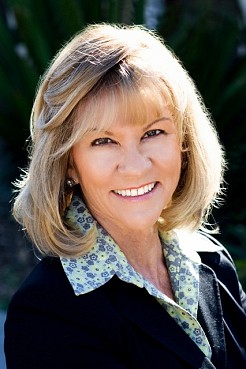
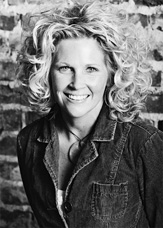
Entrepreneurial genes run deep in the Parsons family. “All of the kids got our MBAs at the dinner table,” says Janelle Parsons.

“And that is literal, we weren’t the kind of family that left our jobs at the door. We just worked it out at the dinner table every night,” laughs Alyce Parsons, President and Chief Operating Officer of Parsons Group Inc., a Santa Barbara-based company, which owns and manages independent and assisted-living communities around the country.

Janelle–the oldest of Alyce’s four children and her only daughter– manages Parsons Group’s three properties in Texas and oversees marketing for the company, which also includes a property in Arizona, as well as the nonprofit Garden Court in downtown Santa Barbara, the nonprofit Friendship Manor in Goleta, and The Gables of Ojai, a swanky retirement community nestled in the foothills of the Santa Ynez mountains.

Alyce says her daughter was destined to go into business. “Janelle didn’t play with dolls, she played office. She said, ‘No dolls, give me a tablet!'” When Janelle was in sixth grade she opened a candy store at the Carrillo Hotel, a low-income senior housing project, which the Parsons owned until it was demolished and replaced by Hotel Andalucia in downtown Santa Barbara (now Canary Hotel).

“When all four kids lived at home we’d have a family meeting every morning. We called it ‘Logistics.’ Janelle would chair the meeting, figuring out who was going to be where when,” says Alyce.

Alyce says she views her business relationship with Janelle as similar to men that have traditionally had sons as apprentices. “I happen to be her mother and she happens to be my daughter but the dynamics of the relationship are very similar in the sense that I have a responsibility to my business to produce an employee that has the skills necessary to do the job. From a business perspective I have to be able to be a leader to Janelle, I have to be a mentor to her. I have to be developing her as an employee to take on a pretty big responsibility. Guys have been doing that since the beginning of time.”

“The family rule is you have to prove yourself outside of the company in order to be invited in,” says Janelle, who worked elsewhere for six years before her mom invited her in, “after she saw I could do it somewhere else.”

“I just feel privileged to be able to be a woman in that position to be able to give her really the skills at a pretty high level. I mean we’re a $24 million company. … It’s not pretend, it’s real and to be able to do that for my daughter, it’s so exciting to be able to share it with her,” says Alyce. “Not only from a professional standpoint but also from a work standpoint. I mean she grew up with me being a fulltime worker woman. So she knows how to do that too.”

While Janelle and her husband Kevin Nimmons don’t have children, they plan to have them someday. When they do, “I’m going to work,” she says. “My mom worked the whole time when we were growing up and we’re not worse for the wear because of it. It worked out really well because we all are part of the business because of it, so I feel like I can do that too.”

The Parsons have managed to combine business with family very successfully. Janelle’s father Bob (Alyce’s husband) runs the real estate development side of the business and her brother Blake will come on board this year.

” I think that if you go into a family business you just have to be prepared to work twice as hard as everybody else because there is that stigma, you’re the daughter, there’s a lot of stuff that goes with that, so you need to prove to everyone that you’re there because of what you can offer the company, not because of who you are,” says Janelle.

The younger Parsons sons, Gavin and Cameron, are still in college, but Alyce says they may be interested in coming on board someday and she wants them to be prepared. “I want everybody to at least understand the business because at this point, they’re stockholders. They need to be able to make intelligent long-term decisions as stockholders, so they need to know the business from that perspective. Whether or not they contribute professionally is really up to them. They may or may not have the skill set.”

Even when they’re not working side by side in their Victoria Street office, Alyce and Janelle talk several times a day. And yes, sometimes they do disagree.

“Janelle has her way of telling me, ‘Look I’ve had enough of that subject, drop it,'” laughs Alyce. “Then that’s followed sometimes by tears and then we go into mother daughter mode.”

Janelle says the hardest part is having a bad day at work. Normally you might call your mom to vent about work. “…You hear your mom’s voice and then you immediately start crying because it’s your mom and then you think gosh, I shouldn’t be crying in front of you.”

Switching between work and family mode can be pretty funny sometimes. “She’ll call me and say, ‘you haven’t been my mom for a week now. Will you just be my mom? Can we just talk?'” says Alyce.

Janelle says it’s a balancing act. “There are a few different hats that my mom and have to have the whole time. So it’s mom, I need you to be my mom right now. Mom I need you to be my mentor. Mom can you be my boss? And we preempt everything with those labels and we’ve learned the balance and the dance, I guess, that it is to work together.”

While the Parsons women are all work when they need to be, they also manage to fit in some play. “Sometimes when we go on the road we’ll be a little bit deviant and we’ll plan a shopping trip,” says Alyce. “We love shopping at the Galleria in Houston so we’ll go a half day early and shop for the afternoon. I don’t think men do that.”
Originally published in Coastal Woman on June 1, 2008.

Leslie Dinaberg Sits Down With Renee Grubb

Renee Grubb

Renee Grubb

When Renee Grubb and Ed Edick founded Village Properties in 1996, they strove to create a community-conscious real estate agency. Part of that dedication to Santa Barbara involved creating the Teacher’s Fund, a nonprofit that makes it easy for teachers to get much-needed financial support for schools. Now Grubb is paying that community-minded spirit forward even further. As the new chair of the Santa Barbara Chamber of Commerce, she has already begun raising scholarship money for at-risk students.

LD: Let’s start with real estate. How is the market right now? Is it a good time to buy?

RG: Well the market is good. I’ve been busy because the number of sales has increased, but this in the last two and a half weeks. … One of our agents yesterday in the meeting gave a number of how many properties went this year so far, and that’s back from January, and three quarters of them went in the last two and a half weeks. So all of the sellers and the buyers who have been, rightly so, a little nervous about the market, are definitely getting off of that and making offers.

LD: So does that mean it’s a good time to buy right now because prices are lower?

RG: Yes. There are deals and the time to buy is when somebody isn’t already making an offer on a property or something, A lot of people they say, “Oh I want to go back and see it three or four times,” and then by the time they go back and see it the third or fourth time there’s either an offer on it or it’s gone. But we’re seeing more multiple offers. There was a property on Sea Ranch, just outside of Hope Ranch. They put it on the market for $1,990,000. It was kind of a fixer and it had something like 12 offers. It went for $300,000 over the asking. I was like what was that all about. We’re starting to see some of that happening again.

LD: Have you always worked in real estate?

RG: No. Before I got into real estate I was pretty much just raising my children but before that I was in the medical industry. I was actually an assistant for an ophthalmologist.

LD: How did you come to start the Teacher’s Fund? I always thought you must have been a teacher before you went into real estate.

RG: Not me, but teachers can make the best real estate agents because they’re already attuned to service and caring … The Teacher’s Fund started in 2002. When we started Village we made a decision that we were going to pretty much support children and children’s causes because you know, you get so many requests. …What happened was we were doling out money for this and that $50 for that and $500 for that … and then one day we hired a PR person. It was really her idea. Her son had come home from kindergarten and he had this long list of things that he had to bring to school. So she said to this teacher … “How do kids bring all of this if their parents can’t afford it?” The teacher said, “Well I make sure every child has the same. I buy it.” So that’s where the idea came from.

… We started out doing just pretty much South County elementary schools, kindergarten through sixth grade, and we were being able to manage that but we weren’t getting very many donations. We did a couple of fundraisers but then Orfalea Family Foundation actually saw in the South Coast Beacon, that wonderful editorial on the Teacher’s Fund, and they called us and they said “Hey we’re interested in that.” I will be forever grateful for that.

LD: That’s wonderful that Orfalea is working with you.

RG: Since Orfalea came aboard we have gone countywide and we’ve gone to junior high, so we are really covering a lot of classrooms … As of this year, I didn’t count the last month, but we have funded $450,000 to 1,090 classrooms since we started and we’ll definitely hit the $500,000 mark this year.

LD: You’re chairing the Chamber of Commerce too.

RG: I’ve been on the board for four years … a lot of people come and ask for endorsements. … This year we are trying to be supportive of the city with the green awareness we’re trying to inform business people so that they are aware of the different ways that they can do that within their businesses and their homes. So we’re kind of pushing that a little bit, I am also trying to support as many of the new businesses in town as possible.

At my installation on January 31st, we decided that we were going to try to raise some funds for at-risk students. The scholarship is called “Chance for Change,” and we set it up with the Santa Barbara Scholarship Foundation, … it’s basically for students … who choose the better path, rather than going into a gang. … We had a speaker, we had a young man who, his brother is in jail and his dad left him when they were kids, you know pretty typical thing, he was raised by his mom and his sister… so he’s being sent through school by a scholarship and he came and spoke.

We had decided that we would try to raise $20,000, which would send five young people to City College for two years. We talked about it and had this young man speak and raised $114,000 that night.

…. It’s just been amazing. It was 250 people in the room and we had donations from as high as $20,000 down to $100, and it felt like almost everybody in the room gave something. It was great. It was an amazing evening.

LD: He must be a great speaker.

RG: I’m telling you, he was so sincere and you knew and his mom was there. It was very exciting. They were just like in amazement that we were able to do that in one evening, but that just shows the generosity in this town.

LD: If you could be invisible anywhere in Santa Barbara, where would you go and what would you do?

RG: Well this is going to sound silly, but I love movies and if I see movies a year in a theatre I’m lucky, so I would love to be able to go to the movies and not have to worry about my cell phone and in the middle day. I would love to do that. That would be just a real treat for me.

Vital Stats: Renee Grubb

Born: January 22, Long Beach, CA

Family: Husband Ed, Daughters Erin and Natalie, and grandchildren Sydney (6), Kelsey (3), Hope (2) and Luke (18 months)

Civic Involvement: Chair of Chamber of Commerce, Founder of the Teacher’s Fund, Montecito Union Education Foundation, Business and Technology Awards Committee, California Association of Realtors Director, Budget and Finance Committee for Santa Barbara Association of Realtors, City of Santa Barbara Infrastructure Financing Task Force.

Professional Accomplishments: Co-Founder and Owner of Village Properties, has sold real estate in Santa Barbara since 1983.

Little-Known Fact: “My husband and I have been married 37 years and we’ve lived in 32 homes. So we fixed and flipped. And I’ve been in my current house ten years, so you can imagine how many houses we lived in.”

Originally published in Noozhawk on March 10, 2008.

Designing Woman

DeNai Jones, courtesy photo

DeNai Jones, courtesy photo

Some girls dream of being princesses, but DeNai Jones dreamed of being a bag lady.

Piercing aquamarine eyes peeking through a wild tumble of blonde curls are the first things that strike you about DeNai Jones. From the funky flare of her vintage dress to the toes of her Betty Boop shoes, she looks every inch the fashion designer that she is, known in chic circles for her combinations of bold, sophisticated color and unusual textures and textiles.

It’s no surprise that her bags grace the arms of A-list stars like Julia Roberts, Kate Hudson, Salma Hayek, Gwen Stefani and Heidi Klum–but they’re more likely to be found wearing them on the playground than the haute couture runways. DeNai has won over the shoulders of women all over the world with her stylish line of diaper bags.

When DeNai–who wasn’t yet a mom at the time–set out to find a gift for a pregnant friend and found shelves full of “pastel colors, teddy bears and cutesy stuff,” she recognized a market for high-end, fashionable diaper bags. She sewed the first prototypes in her parents’ garage in Ventura, and paid homage to her father’s childhood nickname for her by naming the venture Petunia Pickle Bottom.

DeNai started her career as a kindergarten teacher, but says, “I was always sketching and painting. The arts were always my passion.” Her parents encouraged her to choose a more stable career path, but part of her attraction to teaching kindergarten was getting to do so many fun art projects in class.

Her husband, Braden Jones, dreamed of starting his own companies. Driving up the coast to Ventura from San Luis Obispo, where he had recently graduated from Cal Poly, the young couple had a heart-to-heart talk, and DeNai confided that she had always wanted to be a designer.

“It was kind of one of those ideas that you just carry in your mind with you,” she says. “We decided to travel a bit. We just started having those kinds of conversations. If you could do anything what would you do? We didn’t have a mortgage, we didn’t have children, no commitments besides ourselves.”

Braden encouraged DeNai to go after her dreams. She quit teaching to focus on developing her first samples. Within six to eight months, her bags were on the shelves of local stores.

The business quickly grew and they turned to DeNai’s best friend from Ventura High School, Korie Conant, for help. I was completely stunned,” when DeNai invited me to her parent’s cabin in Mammoth and showed me the bags, says Conant. She came on as a partner, taking on responsibility for marketing and brand development. Since then, the company has grown exponentially, with moms all over the world carrying their diapers Petunia-style.

Jones says that it’s still exciting to walk down the street and see someone carrying one of her bags. “I still kind of panic, my breath gets taken away and I usually will hide a little bit and … and follow them a little bit,” she says. “It’s still just as exciting as it was the first time I saw a bag on the street.”

Little details like the filigree on a staircase or a carved wooden pattern from a church eave inspire DeNai’s designs. Travel is high on her list for both relaxation and design inspiration. “I love to travel so much and experience all the different cultures that are out there. The world can be very small if you let it be,” she says.

Costa Rica is a favorite place for family time with Braden and their son Sutton, age two. They’re expecting another baby (it’s a boy) in March, and DeNai now has the flexibility–and additional staff–to focus on her children and come into the office just two days a week to concentrate primarily on design.

Living in Ventura, where she can walk to her salvaged brick office on Kalorama Street from her home downtown, helps to keep things real for DeNai. “I do love when we go out to New York for trade show and we come back it’s like, ‘Oh a breath of fresh air.’ It’s good to go for inspiration and shopping and looking around. All of those things are definitely imperative to developing the product. But I do really appreciate that we are kind of in our own microclimate here. We’re protected from a lot of the vindictive nature you see in the fashion world.”

And what’s it like to be in business with your best friend and her husband? “It’s easy actually. We all have different talents that we bring to the table with a common thread of creativity,” says Conant, who became a mom to Beckett in October. “There are no egos in the room which helps us survive. Ultimately, we are friends first, business partners second. We make it a practice to spend time with each other outside of the office on a weekly basis, that’s one of the keys to our business relationship–we truly are the best of friends.”

Braden says he’s learned a lot being in business with his wife. “Because we have a relationship on many levels, she never ceases to surprise me. … Although she considers herself risk adverse compared to me, she really does take every risk needed to be successful in life and business. However, she would probably be modest and tell you otherwise. It’s really the best of both worlds to share success on every level with the love of your life.”

“I love being at work with my husband and being able to see him in the office. Korie’s been my best friend since high school. It’s always nice for the three of us, even when we have to go to trade shows or take trips for the company, that we actually enjoy being together. It’s really been a dream, ” says DeNai.

A very sweet dream indeed.

Originally published in Ventana Monthly. Read the article here.

One on one with Paige Shields

After being a stay-at-home mom for several years, Paige Shields was looking for a way to use her extensive computer skills to reenter the workforce in a child-friendly, flexible and sociable way. Not finding an existing job that fit the bill, in 2005 she created Whiz Kidz computer gaming and education center.

Leslie Dinaberg: When you started out, had you ever seen anything like Whiz Kidz?

Paige Shields: Not really. But there was a shoe store downtown (Global Kids), … they had these game cubes and (my then three-year-old son) Hayden would just turn on like fire when he saw those games, and he didn’t even know what they were. I got to where I would go once a week so he could play the games, but I would guiltily buy the cheapest pair of shoes I could find.

… So much of my life centered on technology that, when he was a baby, I thought I don’t even want him to see a computer until he’s 30. … I wanted him to be a surfer poet and have no computer skills whatsoever… we had a separate office, we tried to keep the door closed all the time, but he was a smart baby. And every time I left that door open he was in my chair at the keyboard.

LD: I remember you told me that he learned his ABC’s easily from playing a Spiderman game, after you spent months trying to teach him the old-fashioned way.

PS: Then I started experimenting with other games, asking him what he liked. … I would help him and he would get frustrated and I would get frustrated. … he would say “Mommy leave me alone. Just let me try.” So, I would walk away for 20-30 minutes, get distracted and I’d come back and he’s passed a level. …I was amazed at that. So that was our first big training lesson at Whiz Kidz: don’t hover over kids.

LD: When you’re learning anything that has to do with computers or technology it’s so hands-on, it’s different than passively sitting in a classroom.

PS: And that’s one reason I think that we can teach our classes to considerably younger kids, is that they don’t even have to be able to read for about 70% of our classes, not that it doesn’t help.

LD: But kids are so much more advanced, the schools keep needing to adjust the technology standards higher.

PS: I think that’s the challenge at Whiz Kidz and computer education in general. One of the reasons it’s so expensive is that it changes so fast, and you’re trying to stay up-to-date. We’re at a slight advantage probably over the schools simply because we are only doing computer education. And I can bring in any expert I think can teach the latest thing … Nine times out of 10 the people who even consider coming to do a class at Whiz Kidz are amazingly great people. … When I ask, “Why are you doing this?” They usually say, “I just think this is a great thing. This is so cool, I wish this existed when I was a kid.” We’re the anti-boredom, anti-testing center. That’s our other name.

LD: Does Whiz Kidz still have a focus on education?

PS: Yeah, absolutely. Now that we’ve expanded (taking over the Captain Video space in the Turnpike Shopping Center), even more so. … The first year was mostly about gaming and birthday parties … then after our first spring break and certainly our second summer when we sold out almost every class, which was phenomenal. …we offered enrichment programs after school for the first time and only one class didn’t fill up in our second session. And that was with almost no advertising because I couldn’t afford it because we were paying for so much new equipment.

LD: What about the film classes? Most kids I know like to make movies of doing dangerous skateboard tricks or blowing things up.

PS: Yes, we’re all over that. That’s what half of the Whiz Kidz movies are, that’s what happens. The first year the film festival came out we took some heat because there were kids playing soldier in their back yard and they had put in realistic sound effects to the water guns … but our only rule was it had to be PG-rated … Mainly our focus is … are you telling a story, are you learning how the program works, how the camera works, how the lighting works … the result is often potty humor or whatever kids do …If you want to know what’s going on in a 9-year-old’s mind, watch the film festival reel.

In the first film class … the very first question… “So what do you use for blood? Jam or ketchup? Do they teach you that in film school?” Oh man. Very first question.

LD: And that tells you a lot. What are the most popular games?

PS: Lego Star Wars is still really, really popular. World of Warcraft, every Star Wars game really, Battlefield 2, Call of Duty and Super Smash Brothers.

LD: What are some of your favorite moments at Whiz Kidz?

PS: My favorite time is when kids are all playing a game together …ten kids all playing the same game at the same time and they just are screaming, you killed me, I’m going to get you. It’s almost chase in your backyard but on computers. I just really love it when they’re so happy and having so much fun and doing something they cannot do anywhere else. It’s awesome.

LD: If you could pick three adjectives to describe yourself, what would they be?

PS: Crazy, jiggly, softhearted, kind of a pushover.

LD: Don’t tell the kids that.

PS: I think they know. I think Whiz Kidz is based on those three qualities (laughs).

LD: If you could be invisible anywhere in Santa Barbara, where would you go and what would you do?

PS: I would probably jump into the ocean naked–I’ve always wanted to do that.

Vital Stats: Paige Shields

Born: Oklahoma City, January 26

Family: Husband John, son Hayden (6)

Civic Involvement: CHADD (Children and Adults with Attention Deficit/Hyperactivity Disorder), Robo Challenge robotics competition

Professional Accomplishments: Worked for the Department of Defense as a political scientist and database expert in the field of nuclear non-proliferation; computer and database consultant for the private sector; founded Whiz Kidz in 2005

Little-Known Fact: “The thing that the kids are always most shocked about is that I used to work for the Department of Defense and that I have a top-secret clearance. They always go, ‘Wow, were you a spy?'”


Originally published in Noozhawk on December 10, 2007

Getting Your Piece of a Beachfront Paradise

courtesy photo

courtesy photo

A jaw-dropping view of the Channel Islands, Santa Barbara’s coastline and the San Ynez Mountains adorn the Santa Barbara Beach Club (www.santabarbarabeachclub.com), a new oceanfront estate overlooking More Mesa Beach at the end of Patterson Avenue.

Beachfront properties like this are hard to come by–especially without those pesky freeways and railroad tracks nearby–but Kari Ann and Jay Gerlach are willing to share their dream home with five other families.

“We’re hoping it’s other people’s dream house too. We’re going to find out if we have good taste or not, I guess,” says Jay, who was involved in a number of start up businesses before creating the beach club.

courtesy photo

courtesy photo

Membership in the $13 million, 6,300 square foot, New England style property, will cost approximately $2 million, plus annual expenses. This gets each owner an equity share, plus eight weeks a year in the house, which has five suites and features a private beach cove, gourmet kitchen, gym, handcrafted bar, theatre, billiard lounge, wine cellar, walk-in cigar humidor, library, sauna, pool and Jacuzzi. It even has a hydraulic car elevator to maximize parking space. Concierge services such as an on-call masseuse and private chef will be available to members, and the house will be stocked with everything from the owner’s favorite foods and soaps, to their family pictures.

“If you want, there’s no reason for your guests to know you don’t own the house outright,” says Kari Ann. “It’ll be just like it was when you left it.”

While the technical term for the partnership is “factional ownership,” Jay explains it simply: “If you and I bought a house together and both our names were on title, that’s exactly what we’re doing. It’s called tenants in common … but we will have six owners, each with a percentage.”

The Gerlach’s originally bought the property, an empty lot, to develop their dream house. But like anyone who’s ever tried to build a home can testify, development doesn’t come cheap. As the dream house got dreamier and dreamier, the financial realities became such that they rethought the investment, explains Kari Ann.

As construction progressed on local architect Robert Foley‘s design, they shared the work-in-progress with friends, “We got such great response,” says Kari Ann. “Everybody said, ‘Oh this is great. I wish we had a house like this.’ And my husband said, ‘Why not?'”

“If we can share it with other people and still manage to keep eight weeks for ourselves it would be really great investment for us and still a beach house of our dreams,” she says.

The shared ownership model allowed Kari Ann, who worked with Tuvalu Home (www.tuvaluhome.com), to furnish the house with everything she dreamed of.

Some of her favorite things include chandeliers right out of “The Little Mermaid,” made out of seashells, a settee with quilting inspired by coral, and a custom made curio cabinet. “I didn’t want to be matchy matchy. I wanted it to look more like a collected look over time,” says Kari Ann. She describes the experience of furnishing a house from top to bottom–including every single knob, knick-knack, linen and dish–as “a hellish but wonderful dream.”

“When you’re building a place that luxurious and that large, it just makes more sense to split it with more people,” says Jay. The Gerlach’s already own a beach house in town, and weren’t planning to use the new home full time anyway. They wanted a place where their extended family could come stay, and the estate, at 5277 Austin Road, fit the bill perfectly.

They did a test run over the Fourth of July. “We had multi-generations here and it was kind of fun to see how the house was used,” says Kari Ann. “Women were in the kitchen chatting, the older people were at the table having their coffee, enjoying the main room and the library, and the kids were downstairs, outside, or down the beach in the back. All the men were upstairs in the Jacuzzi (which has a flat screen television tuned to sports to compliment the dolphin and sea lion show on the ocean). … I think this house has something for everybody and something for everybody at the same time.”

When asked about what it’s like to work so closely with his wife for the past three years, Jay laughs. “It’s fun but it also can be very frustrating … everybody’s heard of the old saying that if you can survive a remodel together you’ve got a strong marriage–this was a lot more than a remodel.”

He laughed even harder when asked if he would do a project like this again. “Yes, but not immediately. We need a little time to recover.”

For more information visit www.santabarbarabeachclub.com or call 805.504.0699.

Originally published in Noozhawk

Noozhawk Talks: One on One With William Macfadyen

Bill Macfadyen (courtesy photo)

Bill Macfadyen (courtesy photo)

Soft-spoken, with a courtly politeness that seems more Southern than Southern California, William (Bill) Macfadyen doesn’t exactly conjure up images of your typical work-into-the-wee-hours, Red Bull-drinking, pimply-faced Internet entrepreneur. But with this week’s launch of Noozhawk, Santa Barbara’s first comprehensive, free online newspaper, he’s aiming to be the local daily on everybody’s lips–and laptops.

Leslie Dinaberg: Tell me about Noozhawk?

William Macfadyen: It is a community newspaper without the paper. There are two parts to it: it will be professional reporters, like yourself, doing original reporting on news, business, sports, real estate, nonprofits, schools. So there will be original content that we provide on the site, and then the real hook to the site will be to get the community involved through contributions from what I’m calling community contributors.

LD: Do you mean blogs?

WM: No, what we want to do is tie Noozhawk into the community by getting involved with all the networks that exist within Santa Barbara, communities within the community. That would mean a church or a club sports program or a school or a nonprofit or a business even …They can tell the story, submit their stories to Noozhawk and then we can help them get that word out about their organization.

LD: Will there be some way for readers to distinguish whether they are reading something from a member of an organization versus a professionally written and reported story?

WM: Yes, because the consumer needs to know what’s professional objective reporting, and what is a contribution from somebody who has an agenda … when it comes to a small nonprofit group or a school, they’re just really enthusiastic about their mission and want to get that word out. I think a community newspaper is uniquely suited to tell that story and we think Noozhawk will be able to do that in a way that a [printed] community newspaper, with all of its infrastructure, can’t possibly tell or afford.

LD: Explain the economics of that. Why is it easier to do that online?

WM: It’s so much easier to do that online because the Internet is infinite space. It’s basically free. There’s not an artificial or arbitrary limit on paging or a time.

LD: Will there be an editorial page?

WM: Noozhawk itself won’t take editorial positions or make endorsements on candidates or projects, what we want to do is foster debate on community issues that aren’t being covered or serviced anywhere else in town.

Santa Barbara is the greatest community in the world but we do have some really big challenges ahead of us: housing, transportation, the change in demographics, all of those issues are crying out for some kind of community dialogue and it just isn’t there. So what we want to do is offer a place where people can have that debate and discuss those issues and ask the questions that need to be asked, and maybe through that process we can help develop some solutions to some of those challenges.

LD: One of the things that I hear from people that are relying on the Internet now for most of their local news is that “it’s out there but there’s so much other stuff to sift through.”

WM: That’s kind of where this whole concept came in because anecdotally many, many people in town have come up with their own routines to find out what’s going on in their community. …The problem with that is … you’re not trained to go out and search for the news. …You’re not a journalist. And the news delivery really should be brainless … it should just magically show up on your doorstep, in your driveway, in your inbox, wherever, and you shouldn’t have to go looking for it. … What we’re trying to do is pull that all together and then basically be a one stop shop for people to get their news and then move on with their day. … There is no newspaper of record or information source of record. Noozhawk aims to change that.

LD: Where does the name Noozhawk come from?

WM: News hawk is slang for a newspaper reporter, so we just had a little Web 2.0ish fun with the news end of it and named it Noozhawk. Plus hawks are flying everywhere and they see everything.

LD: Why are you personally doing this?

WM: Because I’m not qualified to do anything else.

I’m too old for the Dodgers, although they could use me. I’m personally doing this because I’m very committed to Santa Barbara. I’m proud to live here. I love this community and I don’t like the fact that it’s not being served by its media. I think I know how to put together a quality news product, and I know I know the community, and what I’m trying to do is marry those two and fill a void.

LD: Why will this succeed when other start-up news ventures have failed?

WM: I have no idea what you’re talking about. (Laughs) Henry Ford said, “Failure is an opportunity to start anew only more intelligently.” And that’s what I am doing. I would not have undertaken this endeavor without the Beacon experience and part of that is, I think the Beacon was a fantastic newspaper. Certainly it served its readers very well. … But it failed as a business because we weren’t able to connect with the advertisers quickly enough. And so with Noozhawk, the genesis and evolution of that has been the opposite. I started out talking to advertisers first.

LD: So it feels like they are ready to embrace the Internet?

WM: That’s interesting because when we had the Beacon and we talked about the web part of it, the readership just wasn’t there yet … That dynamic and that whole attitude has changed. What I found in talking to those advertisers is that when I went back to them last fall and started talking to them about this project, their reaction was, “I’m done with print, it no longer works for me, it’s all about the Internet. Internet, Internet, Internet.”

When I first had the idea, older readers, retirees, who had been the core newspaper readers for generations, were resistant to the concept. …Then as time went on, and the Santa Barbara situation kind of deteriorated, I was finding even at the retiree level, the former newspaper reader level, those people were saying, “You know what. I’m actually finding my news online and it’s not that bad. I don’t really miss that routine.” Plus it’s environmentally friendly

LD: Are there any other models or any other communities that are already doing this kind of thing successfully?

WM: Not that I could find with a successful advertising model. … For this to succeed, the business community needs to support it and see it as a worthwhile endeavor that’s effective for their needs.

Without going into the details, I think Santa Barbara has some unique circumstances that are lending themselves to this idea here at this time. That said, I think you need to have some authenticity, and you need to really know the community. And I think we have some advantages in that area. The folks we have involved really know this community. Both Jim Farr (former publisher of the Goleta Valley Voice and Noozhawk’s Operations Manager) and I, obviously, were both community newspaper publishers. We don’t see eye to eye on a lot of things in the political spectrum but we’re both passionate about this community and want the best for it, and I think we have a certain respect and credibility in the community, at least in the business community.

LD: What’s the business model? How will this venture actually make money?

WM: Advertising revenue. It’s advertising supported, it’s free to use. We’re asking people to register for the daily email that goes out, but the idea would be that advertising is paying for the site in most cases.

LD: What about if the people at the table next to us were talking about Noozhawk, what would you want them to be saying?

WM: We want them to be talking about it all the time, like my gosh, it’s the most effective, more informative source for news and Information I’ve ever seen. I think at its heart, we want them to recognize Santa Barbara within Noozhawk’s website, The community that they know, we want to make sure that it’s reflected on the site.

It’s a great community, you know, I know it, everybody knows it, but too often it’s just invisible.

LD: What do you know now that you wish you would have known when you started the Beacon?

WM: You know, I thought when we started the Beacon that I really knew Santa Barbara and I didn’t. I had lived here at that time about 17 years, and just didn’t quite know or appreciate how interconnected everything was. And I think partly through the Beacon and partly through the Goleta Valley Chamber of Commerce, I think I have a great understanding and greater appreciation of how it all works, which is why I’m confident about Noozhawk’s success.

LD: When you’re not working, what do you like to do?

WM: It’s Dodgers Baseball and it’s killing me now.

LD: If you had to sum yourself up with just three adjectives, what would they be?

Persistent

Principled

Confident

LD: Is there anything else you want to tell our readers?

I would say that Noozhawk is as much about them, actually is more about them than it is about our community, and so for them to take ownership of the site and get involved, our community will benefit, because at the end of the day, they have more knowledge about what’s going on in the community collectively than any single news source does individually. We really want their involvement.

Vital Statistics: William M. Macfadyen

Born: Sept. 8, 1960, Chicago

Family: Wife, Missy; children, Will, Colin and Kirsten; one Alaskan malamute

Civic Involvement: Board chairman, Goleta Valley Chamber of Commerce; board secretary, Regional Legislative Alliance; board member, Coastal Housing Coalition and Santa Barbara Community Housing Corp.; past senior warden, All Saints By-the-Sea Episcopal Church

Professional Accomplishments: Co-founded the late South Coast Beacon newspaper, recipient of the California Newspaper Publishers Association’s General Excellence Award in its first year of eligibility; charter member, American Copy Editors Society

Little-Known Fact: Grandfather, Jack Macfadyen, founded the Malibu Times newspaper in the 1940s

Originally published in Noozhawk on October 16, 2007. Here’s the link to the original story.

An Interview with Arcelia “Chello” Gladden

Home ownership means the fulfillment of a dream for many, but for Arcelia “Chello” Gladden, buying her first home also gave her an injection of self-confidence.

“I’m so pleased with myself, because I did it on my own. I didn’t have a husband. So I really did this on my own and with all the help of Coastal Housing Partnership (CHP) and my work,” she says. At the time she bought her first home in Lompoc, in 2003, Gladden had been working at Raytheon in Goleta for 29 years and renting the same home in Santa Barbara for 15 years.

Her rental unit was sold and the new landlord raised the rent considerably, which made Gladden think that it might be time for her to become a homeowner.

She went to an employer-sponsored CHP seminar and came away convinced that it was time for her to take the plunge. “I listened to them and they just put a bug in my ear. I just thought to myself, I’ve got to do something. I’m going to end up probably homeless. Because we weren’t getting any raises and my rent was going up, up, up. It was not a good thing,” she says.

Gladden looked around, but she was reluctant to move to Lompoc, even though it was more affordable than Santa Barbara. “I hated the idea, but I needed to invest my money.”

CHP sent her to speak with a loan officer at Santa Barbara Bank and Trust, who helped lead the way. Gladden used her pension money to purchase the four-bedroom home for “a little under $300,000.” Shortly after her first seminar with CHP, Gladden, her recently divorced daughter and grandchildren moved in.

Two years later, in 2005, the house’s value had increased by more than $100,000. Now an enthusiastic believer in real estate investments, Gladden refinanced the house using CHP benefits and used that money to buy a second house in Lompoc that she rents to her daughter.

Gladden has nothing but praise for CHP and frequently urges her colleagues to take advantage of their services. “I found them very, very helpful to me. I wouldn’t have done it without them.”

Originally published in the Coastal Housing Partnership Newsletter

An Interview with Jonathan and Kathy Abad

The third time may be the charm for most people, but Jonathan and Kathy Abad had to go through eight unclosed escrows on different houses in order to finally buy their home in Goleta last year with the help of Coastal Housing Partnership (CHP).

Unlike many first-time homebuyers, the Abads had some real estate experience when they came to CHP for assistance, having purchased, upgraded and sold several mobile homes in the area while building up equity to buy a house of their own.

Since 1987, we would move just about every two years to maximize our profits, explained Kathy, who works for Hispanic Business Inc. Once they felt they had built up enough capital, they looked at homes for about a year and a half before finally purchasing their home.

“We basically wanted the biggest amount of property for our buck,” said Kathy. Plus, as parents of two young children, they wanted at least three bedrooms, plus a den to use as a home office.

“We saved a good 12 grand (working with CHP),” said Jonathan. The Abads worked with realtor Kristiann Wightman, (who owns Presidio Properties, a Homebuyers Assistance Program Participating Organization, which offers buyers back 40% of the broker commission) and though they didn’t get a mortgage loan through CHP, they got a discounted loan from a friend who matched the price of CHP’s discount.

In addition to the cost savings from CHP, the Abads were impressed with the educational services offered.

“If we would have known about them five years earlier, it would have really helped us out to learn faster than we would have on our own,” said Jonathan, who works for the Housing Authority of the City of Santa Barbara. “They are there to really answer your questions and you’re not learning from a specific realtor that has a vested interest …you are getting a lot of point of views from people at these kind of workshops.”

He added, “I wish I knew about this six, seven years ago when we started doing this. It would have saved us so much work.”

Originally published in the Coastal Housing Partnership Newsletter

Can the Homeless and the Business Community Coexist?

An update on some of the latest efforts

California conjures images of endless summers filled with surf, sun and sand, but increasingly, those beach bum images of the past are being replaced by those of an entirely differently type of bum: aggressive panhandlers. After all, if you had to spend the winter on the streets, wouldn’t you rather be in San Diego than Detroit? While the attractiveness of the state’s mild weather is understandable, it comes at a high cost. Panhandling can have significant negative economic impacts on the surrounding businesses. Here’s a brief look at what some communities are doing to combat the problem.

Many cities are using legislation to crack down on homeless persons living in public spaces. According to the latest U.S. Conference of Mayors Hunger and Homelessness report, despite an overall increase in unmet needs for emergency shelter, there has been an increase in criminalization of the homeless between an initial survey in 2002 and a 2005 survey of 224 American cities. For example, the survey found a 12 percent increase in laws prohibiting begging in certain public places and an 18 percent increase in laws that prohibit aggressive panhandling–bringing the total number of cities prohibiting aggressive panhandling to 45 percent, while 21 percent have prohibitions on begging of any kind.

There was also a 14 percent increase in laws prohibiting sitting or lying in certain public spaces and a 3 percent increase in laws prohibiting loitering, loafing, or vagrancy–bringing the total number of cities prohibiting camping in particular public places to 28 percent, with 39 percent prohibiting loitering in particular public areas.

In addition to legal efforts, business organizations are working to educate the public about how to handle panhandling. For example, the downtown Chico Business Association is actively encouraging business owners, employees, residents and visitors “to redirect their generosity to the institutions best suited to helping the homeless and struggling citizens.” The organization provides a list of such institutions and encourages people to donate to them, rather than directly rewarding those people who beg on the street. Similar efforts are also underway in Santa Barbara, San Luis Obispo and Santa Maria.

Most effective are a combination of two very different strategies, according to strategic planning firm Civic Strategies, Inc. One is a carrot-and-stick approach, which works best for the “temporarily homeless” that are down on their luck. In this instance, cities crack down on aggressive panhandling and other quality of life violations while offering easily accessible alternatives, such as 24-hour gateway centers that direct homeless people to shelters, job training and drug treatment.

The other strategy is aimed at the “chronically homeless,” people with serious mental illnesses, physical ailments, drug addictions or all three. The strategy that works for these people, who are the most disruptive groups of homeless people and most expensive (because they are frequently arrested and often end up in emergency rooms) is to give them access to decent housing, intensive health care and drug treatment facilities and accept that they’ll be long-term wards of the city.

Other constructive alternatives to criminalization include coordinated outreach efforts, where police and social workers or volunteers work together to place people in shelters and provide mental and physical health assistance, as well as job advice and training. The Pasadena Police Department and the Los Angeles Department of Health have partnered to form the Homeless Outreach Psychiatric Evaluation (HOPE) Team to work in this way.

There’s also another strategy that’s just taking shape: an end to “dumping.” In Los Angeles, officials discovered that police from other jurisdictions were driving homeless people from their jails to downtown L.A. and letting them out there because downtown had the services, and the suburbs didn’t. This has led to a demand that suburban areas take care of their own homeless problems, backed by a recent survey in the L.A. area that found there were as many people living on the streets and in the parks of the San Fernando and San Gabriel valleys as in the central city.

In Northern California, officials are also realizing that the homeless are not just an urban phenomenon. The Association of Bay Area Governments is working to attack the problem regionally, by tracking the homeless across the region to see how they move through institutions (soup kitchens, work programs, jails, hospitals, shelters, etc.) and among localities, with an aim to better understand the problem and design programs that work.

“If you want people to shop in your community, to come to your community, you have to address this problem so the homeless are not a barrier,” Berkeley’s Mayor Tom Bates said. “We can’t do this alone. We have to do it together.”

Originally published in California Centers Magazine on July 1, 2006.

Courting Families

Dubai Mall by Nishat Khan, courtesy Flickr https://www.flickr.com/photos/nishatkhan/12033808253

Dubai Mall by Nishat Khan, courtesy Flickr https://www.flickr.com/photos/nishatkhan/12033808253

Special Events Attract the Family Market

Parents hunting for great places to go hang out with friends, grab a bite, shop a bit, or entertain their kids for a few hours, need look no further than their local shopping center. While malls are usually thought to be family friendly, some centers are pulling out all the stops to foster that image.

“In general, the entire industry recognizes the value of being family friendly,” says Alice Love, Senior Manager, Marketing for Pacific View Mall in Ventura and La Cumbre Plaza in Santa Barbara. But her centers, both owned by the Macerich Company, go the extra mile to court the family market.

For example, La Cumbre Plaza’s weekly Certified Farmers Market — which already drew hundreds of visitors in search of fresh organic produce, flowers and other gourmet goods– recently ran a promotion inviting children to experience the farmers market by offering them a special tour each week.

“They would stop at the different vendors and learn how that particular fruit or vegetable is grown,” says Love.

Upon completing the tour, they were taken into a store that happened to specialize in children’s furniture, where they got to do an art project. They created their own placemat, which was then laminated so they could take it home to use. Each child was also given a token to purchase something from the farmers market.

San Luis Obispo, has taken the farmers market concept a step further, regularly drawing crowds of 10,000 downtown during the summertime, and about half that during the winter. People of all ages flock to the downtown shopping area where the streets are blocked off every Thursday night for barbecued ribs, fresh strawberries, local wines, and of course, kid-friendly entertainment like puppet shows, balloon animals and live music.

Some very lively music, the clanging of budding young percussionists and drummers, can be heard at Ventura’s Pacific View Mall’s “Kids View” gathering. Children and their parents gather at the food court each week for what Love calls, “educational entertainment.”

The playbill varies. “One week it might be entertainment with marionettes, then we may have someone that comes in with musical instruments and all the kids get to play with them, which is quite a racket,” she says.

While programs like “Kids View” cater to the preschool crowd, who need parental supervision, other centers are finding that drop-off educational programs like SCORE!, Sylvan Learning Center, Kumon Math & Reading Center, and California Learning Center offer the perfect opportunity for kids to work their brains while mom gets her shopping done, unencumbered.

Working with nonprofit community groups is also a great way to bring families to a center, and engender goodwill for your business. La Cumbre Plaza recently drew large crowds when it hosted the local Girl Scouts’ Amazing Cookie Kick-Off event. In addition to cookie relays and games, there was a cookie rally where some of Santa Barbara’s top restaurants and chefs showcased creative desserts made with Girl Scout cookies that were then judged by a panel of local celebrities. The winning recipes were showcased at the restaurant, on television, and in the local newspaper, thus supplying loads of free publicity for both the Girl Scouts and the mall.

Signature family events can help create new community traditions, like Pacific View Mall’s annual Lemon Fest, held the weekend after Labor Day. Tying into the center’s heritage as a lemon grove in the 1920s, the festival features live entertainment, a kids play area, arts and crafts booths, and food booths.

“There’s something for everybody in the family to do,” says Love, whose team has been successfully running the Lemon Fest for the past five years.

Also drawing on their agricultural heritage for festival inspiration — and additional retail traffic — are downtown Watsonville, with its Main Street Watsonville Annual Strawberry Festival, and Carpinteria’s annual Avocado Festival.

Finally, there’s nothing like annual holiday events to bring out the kids and their parents. La Cumbre Plaza, Pacific View Mall, Main Street in Huntington Beach, and the Pismo Beach Pier are among the many shopping areas that feature in-store trick or treating. And it would be a challenge to find a mall that doesn’t have a photo-friendly Santa available the day after Thanksgiving.

While family friendly holiday activities abound in December, Pacific View Mall offers something unique, at least in California. The first Saturday in December brings “Holiday Traditions, Ventura Style” to the region, trucking in 30 tons of snow for the annual celebration, which concludes with fireworks, and Santa lighting the community Christmas tree.

It’s wet, it’s messy, and it’s incredibly fun, says one regular attendee.

Sounds a lot like parenting, doesn’t it.

Originally published in California Centers Magazine on June 1, 2006.