Leslie Dinaberg Sits Down with Laura Inks

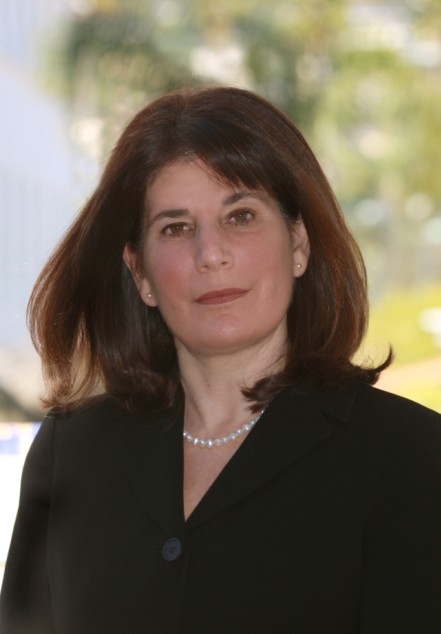
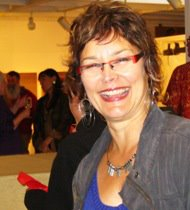
Laura Inks (courtesy photo)

Laura Inks (courtesy photo)

New years are all about reflecting on the past, the present and the future, and Laura Inks was in a particularly reflective mode when we caught up with her this week. With the ink barely dry on her divorce papers, Inks had also just ended another era as she completed the sale of her “baby,” ARTS ALIVE! Creativity Center, to its new owners Anthony Parisi and Laura Eliseo.

Leslie Dinaberg: So are the new owners planning to keep ARTS ALIVE relatively intact?

Laura Inks: Yes. They are both artists. … They’re building an art center in Kaui and so their plan is to have some synergy between Kaui and Santa Barbara and kind of live in both places and even have artists maybe go back and forth as like an artist exchange program or something, which would be really cool.

LD: What a great gig that would be.

LI: I know…she’s a dancer and … he is a glass artist … they’ve hired Jeanine Richards, her son was J.R. Richards of Santa Barbara High, he passed away a couple years ago. And she had Camp Lorr in Montecito for like 25 years. … She’s going to be running the ARTS ALIVE camps. Her husband just died, like last week, and so she’s thrilled to have a project to sink her teeth into.

LD: Wow, so you’re not going to be part of the new team?

LI: No. You know it’s so hard to create something and then raise it. It’s like a child, and then to turn it over to somebody. But I feel really good about this couple. They believe in my whole dream. The mission is to have a space where people can come and create and express themselves and especially for children and adults too. So they are going to continue to that. And Jeanine I’m just thrilled that she’s going to continue that.

LD: Well congratulations for you. I know you were concerned about the future of ARTS ALIVE!

LI: Well I didn’t know what was going to happen; I just knew that financially I couldn’t do it anymore. I was married for 17 years and that kind of helped cushion my starting a new business while I still had food and shelter and then with the separation that changed.

LD: Do you know what you’re going to do now?

LI: I don’t know. I’m really excited. I’ve had some really good job interviews and nothing’s panned out quite yet.

LD: Are you trying to stay in the arts field?

LI: Well I don’t know. I consider myself to be an art educator/social activist. One of my strongest skills is networking and getting the word out and meeting people and connecting people, so it could be with a nonprofit, helping them get the word out about programs and projects. I’m still the president of the Arts Mentorship Program, which is a nonprofit that’s under the umbrella of Community School Inc. … The project I’ve been working on is the Graffiti Project.

LD: What is that?

LI: It’s taking teens and young adults who do graffiti and giving them a controlled environment to create in … then to find venues for exhibiting their work. We’ll have a show in the gallery at ARTS ALIVE! of the kids graffiti artwork (through January 31st).

The idea is that first of all, the people that come here and paint on the boards and canvases that we give them are not painting on the street. We’ve had four events so far where we have music and a barbecue and a big event where they can come and spray paint. We provide them with paints and boards and everything … kids from about 14 to about 26 and some amazing artists.

Kids have already gotten jobs from them being here and doing their work and people coming up and saying, “Wow I’d like something like this on the inside of my dojo,” or, “I’d really like this on the side of my building.”

LD: That’s exciting.

LI: Yeah, it is. Also I want to expose them to other types of street art where they can move into some type of field where they can make a living…We just got a $5,000 grant from the fund for Santa Barbara to cover the cost of what we’re calling the junior organizers. I’m kind of like the head organizer but I can’t do it alone.

…Every time we have an event we have between 100-150 people show up to paint or support the kids who are painting. And we also, this is really cool, the last time we had an event, the kids from the teen center who have been making music, who have been singing over at Chapala, like they are rappers and what they call DJs … they came and performed.

…I’m trying to just give them a space to be creative and an outlet for their art form, which I think is very valid. A lot of people don’t think that graffiti art is art but that’s because it’s vandalism and they are out there on the streets doing it. So I’m trying to direct their energy into something that’s more positive and is more community-based.

We have had kids here from all different gangs…but it’s been so peaceful. It’s like the kids that are the artists, they really get what I’m doing and they’re respectful of it, which is amazing and it’s really cool.

LD: And I’m sure it’s in part because you are showing them respect for what they’re doing.

LI: Exactly. It’s a two-way street.

LD: Does it seem like the kids think of themselves as artists?

LI: Oh yes. They absolutely do. They are very serious. They have color palettes, they have sketchbooks, they’re not just coming here tagging, these are artists that need a big venue to work in and unfortunately they take to the streets because they don’t have opportunities like what it is I’m trying to create, I am creating. It’s pretty cool. And I especially like being around all the young people because it keeps me young, it keeps me hip. Even though my teenage kids don’t think I’m hip (laughs).

LD: There’d be something wrong if they did.

LI: Absolutely that would be abnormal. But their friends think I’m cool. It takes a village. Like I’m taking somebody else’s kids and getting them in some positive direction and hopefully someone will do that with my kids.

LD: That’s a really cool project. How do people contact you now if they want to contribute or get involved?

LI: Just email LauraInks@cox.net.

LD: You talked about applying for jobs now. Have you lost the urge to run your own business?

LI: Yeah. I kind of just want a paycheck. I don’t want to have sleepless nights anymore. When you have your own business there’s really no down time. … I’m at the age now, I’m going to be 50 this coming year, where I feel like I really don’t want to do something I’m not passionate about. I don’t want to just go punch a clock somewhere…I’m just going to not stress it and be open to receive the direction of the universe. Not to sound airy-fairy but I think everything happens for a reason and there’s good energy out there and the right thing is going to come along.

Vital Stats: Laura Inks

Born: : Pittsburgh, PA, November 20, 1958

Family: : Children Camdon (14), Olivia (16), Amanda (25), and Shawn (31) and two granddaughters, Alonnah and Ashlee.

Professional Accomplishments: : Founded ARTS ALIVE! Creativity Center; Award winning art teacher; Real Estate salesperson and Rookie of the Year; Women’s Economic Ventures Entrepreneur of the Year

Civic Involvement: : Community School Inc, Arts Mentorship Program; Santa Barbara Education Foundation, Keep the Beat

Little-Known Fact: : “Probably that I have so many kids and that I adopted my two older kids.”
Originally published in Noozhawk on January 21. 2008. Click here to read the article on Noozhawk’s site.

Leslie Dinaberg Sits Down with Dr. Alois Zauner

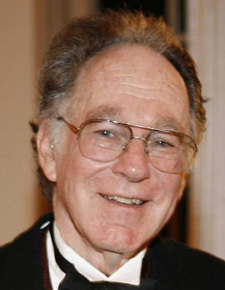
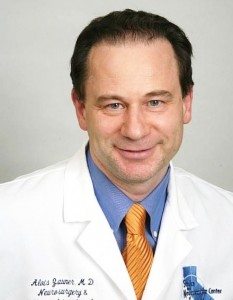
Dr. Alois Zauner (courtesy photo)

Dr. Alois Zauner (courtesy photo)

Strokes can be paralyzing and debilitating: There are 4.5 million strokes every year in the United States, making them the third leading cause of death and the number one cause of disability. But thanks to the addition of a new Neurovascular Center at Cottage Hospital, under the leadership of Dr. Alois Zauner, swift and less invasive treatment for strokes and other brain illnesses is now available right here in Santa Barbara.

Leslie Dinaberg: Tell me about the new Neurovascular Center at Cottage Hospital?

Alois Zauner: The idea is really to build up a Neuroscience Center. The first aspect was really the most difficult, to build the neurovascular service. It is like trauma service, your head injury needs to be treated right away and the same for stroke. …

The problem for this region is that centers are in Los Angeles (UCLA or USC or Cedars) and then the next places are in San Francisco (UCSF or Stanford) and basically for 500 miles there is nothing. … So frequently in the past a patient, let’s say in Ventura or Oxnard, has a bleeding aneurism or a stroke, and does not get on time to UCLA or some other place.

The idea is really to build, in partnership with other hospitals, a Neurovascular Center for this region, not just for Santa Barbara. …And also help some other hospitals to provide service, because not everybody has to come here. Some stroke patients can be treated in smaller hospitals.

LD: Is it more about having the doctors with the skills to perform those surgeries or is it also about having the equipment?

AZ: It’s kind of both. The key issue is that it’s the upfront investment in what is called a Neuro-angiography suite and also … the material we use is very expensive. So you need to have a certain infrastructure and tools to really do it and then you need the ICU critical care units. It takes quite a lot of infrastructure…Building the new hospital some of the focus is on the neurosciences and the neurovascular unit is the first major step towards that direction. We already do spine surgery, there is neurology here, but some other programs will be new. There will be treatment for Parkinson’s and we’ll do brain tumors and also child development and things like that.

LD: That’s interesting.

AZ: …One reason for me to come here me is also a closer collaboration with USCB, especially the neuroscience research institute.

LD: So they have a research institute even though they don’t have a medical school?

AZ: Yes, UCSB has a neuroscience research institute and they do have very fine engineering and a lot of what they’re working on is related to pre-clinical science. …We’re doing the fundraising right now. …

LD: Did the hospital have this vision and then go out and find you to run the center or did you come in with a vision and they’re now creating the center?

AZ: Very good questions. I think when I was a fellow at UCLA there was always the talk that Santa Barbara was unserved … that a lot of the patients don’t make it on time to the right place when they had a stroke… Then I think Cottage had a consulting company, … (they were making) a major investment and had to be sure that they were targeting what’s needed for this region. So they were told neurosciences and then somehow I got involved.

I think the initial vision of Cottage was more to have a stroke center, but you know I think it merges more with what neurosurgeons do; you cannot just have a stroke center because you have strokes but also the aneurisms … and a full spectrum of vascular diseases.

LD: It makes sense with our aging population.

AZ: Yes, in town but also everywhere, it’s not just for Santa Barbara, it’s for this region…One of things we’re doing is using a Robot in the ER and they can communicate with the people here. The Robots are made by a company here in SB called InTouch Health (www.intouchhealth.com), we have them here in the ICU … right now we have this at home, but the idea is that we’re partnering with other hospitals so they will have this in emergency rooms and assist the physicians who is not expert in say neuro, and discuss the films and can ask the patient questions and we can then decide how to treat them. … Critical care is also very important and I’ve spent a lot of time the last six months to work with the nurses and technicians because we do so much more to monitor the brain so that’s very important.

LD: How far away is the center from completion?

AZ: The neurovascular is in place, basically, but I think that the neuroscience center, that will take a while. …

LD: Can you explain the new minimally invasive techniques you are using?

AZ: A traditional way to treat an aneurism is do open surgery. So you do a craniotomy (where you surgically open the skull) and we go into your brain… we still do about 15-20% like that because the minimally invasive technology with the things we have right now we cannot do 100%, maybe 85%. In the case of neuroendovascular surgery a tiny little catheter goes into the brain…and we pull out the clot.

LD: In addition to being less invasive is there less chance of other complications?

AZ: … Less invasive does not mean that there’s less risk. Yes there’s less pain involved, they get to go home much quicker, the ICU care is much easier, like the aneurism we had today can go home in a few days. So yes, patients have less pain but it’s not always less risks.

LD: Is there a specific person that you’re working with at UCSB to make all this happen?

AZ: Matthew Tirrell is the Dean of Engineering. I think he’s the person who is really the key.

LD: Why did you choose to come to Santa Barbara to build this center?

AZ: What I wish is that we really can build this up, that we make a difference in the community. …It’s also I think very important for us to really be connected to UCSB to develop a center, because really what we do is so new that I think you cannot completely separate it from research or new ideas and I do hope that in a smaller hospital we can also work with researchers. It’s easier than in a big medical facility.

Vital Stats: Dr. Alois Zauner

Born: Austria

Family: Wife Teresa, son Alexander, age 10 (“they’ve only been here six weeks)

Professional Accomplishments: Medical degree from the University of Vienna; surgical internship and neurosurgical residency training at the Medical College of Virginia; combined fellowship in neuroendovascular surgery and diagnostic and interventional Radiology at UCLA; one of only 50 Neurosurgeons in the U.S. with training in neurointerventional radiology and endovascular techniques; director of Neuroendovascular Services at the University of Miami in Florida, and Assistant Professor in the Department of Neurological Surgery and Radiology; working to establish a new Neurovascular Center at Santa Barbara Cottage Hospital.

Little-Known Fact: “My family would like to have me back in Austria.”

Originally published in Noozhawk on January 14, 2008. Click here to read it on that site.

Goleta Native Has a New Story to Tell in Remote China

Sipping green tea while schmoozing in Mandarin with Chinese Communist Party officials is a long way from shooting the breeze with buddies after surfing the waves at UCSB’s Campus Point, but it’s all in a day’s work for John Wood.

A former Peace Corps volunteer, Wood and his wife Lousia recently started the Tree House Scholarship for university students in rural, northwestern China. In addition to assisting students with their education costs, these scholarships will also help fund post-graduate travel for students who would not otherwise have the resources to explore their own country. These students, who are studying to become teachers, will be lucky to earn about $25 a month if they secure jobs when they graduate.

Writing about their experiences is another component of the program. The students come from incredible poverty. One tells the story of the deep bloody cracks in his father’s hands from collecting trash, while another writes of being raised in a cave house by a grandmother with bound feet. “They have phenomenal stories to tell,” says Wood, now 30

The stories of rural China in the 20th and 21st centuries remain largely unknown, both inside China and abroad, but Wood is aiming to change that by improving his students’ abilities to communicate and helping to get their stories out to the world.

“Because of the way that the government is structured and with the way people relate with each other, a lot of those stories haven’t been told,” he says. Even within families. For example, Wood tells the story of a student saying she felt uncomfortable asking her parents to talk about their backgrounds. “She went so far as to tell me that she didn’t even know her mother’s given name, she only knew her as mother.”

Using their “crazy foreign teacher” as a scapegoat, students came back with fascinating accounts of their lives. “These are really remarkable stories that we’ll publish and distribute to donors,” Wood says. “The idea is that people who are interested in China or just people that are philanthropic in general will be interested to read these first-hand accounts of what it’s like in rural China.” (http://www.thetreehousescholarship.org/students.html)

It’s no surprise that these stories struck a strong chord in him. Growing up in Goleta, Wood had passions for both writing and social justice from a very young age. “When I was going to La Patera Elementary School I remember I wrote an editorial (on gun control) for the ‘Goleta Sun,’ says Wood, who went on to graduate from Dos Pueblos High School and UC Santa Cruz.

He began his professional life teaching high school in South Central Los Angeles, and worked as a journalist in London, Santa Barbara and Santa Monica before joining the Peace Corps, where he was assigned to teach at Long Dong University in the eastern portion of Gansu Province. “Despite the sophisticated timbre of its name, Long Dong University actually has nothing to do with the entertainment industry,” says Wood. Gansu is one of the poorest provinces in China, and it is regarded among Chinese people as a dusty and barren frontier land, a “backwards” place best to be avoided.

The newlyweds arrived in China in June 2005 with assignments to teach English to Chinese students studying to be teachers. “There are more people studying English in China right now than there are native English speakers in the rest of the world combined,” Wood says. “It’s incredible; everybody in China, every single student is studying English. It’s just wild.”

Considered development work, Wood explains that he was primarily “in a classroom with future teachers and working with them to improve their English and improve their teaching skills. Most of our students had extremely basic grasp of English…we found ourselves spending a lot of time on basic pronunciation, on classroom presence, on building vocabulary, just really basic, basic stuff. When people think, ‘Oh John was a University Professor in China,’ what they have in their mind is probably not exactly how it was.”

And what’s it like being a 6′ 4,” Santa Barbara surfer dude in China? “There is absolutely no blending in,” laughs Wood. When visitors ask what kind of clothes to pack, he says, “you could bring a pink tuxedo and wear that down the street and you would not be anymore out of place than you are already going to be.”

Even though he’s stared at everywhere he goes, Wood says, “One of the things I love about China and Chinese people, there’s so little apathy and so much interesting curiosity and enthusiasm because here is a country that’s been closed to the outside world for so long…people know very little about Western China, and Western Chinese people know very little about the rest of the world and so it’s really a fascinating place to be.”

While China is booming, it’s the China of the eastern seaboard, of Shanghai and Beijing, Hong Kong and Guangzhou that most westerners read about. Wood says, “The reality is that the vast majority of Chinese people do not live in these eastern hubs. Some two-thirds of the population (estimated at 1.3 to 1.5 billion) still works the land. Most of the rest live in cities scattered across the vast provinces, earning very little and enjoying few freedoms.”

One of the freedoms not enjoyed in China is access to the news. “We call it the great firewall of China,” Wood says. “The Communist Party spends an inordinate amount of money on controlling Internet news sites…it’s not the news, it’s the good news.” Wood says he will sometimes be in the middle of reading a breaking news story online, only to find it censored (access removed) before his very eyes.

Despite the challenges of navigating such a different culture, the Woods are definitely making the most of their time in China. Last summer they volunteered with the 2007 Special Olympics World Summer Games in Shanghai. With their Peace Corps service now complete, Louisa works as the Communications Director for the Special Olympics East Asia, and John does translations and works export an extremely fast-growing, sustainable type of soft wood developed to reduce the demand on old-growth cedar and redwood.

Prior to founding the Tree House Scholarship, they also helped to establish “the Tree House,” at Long Dong University, an English library, study and discussion room, complete with all sorts of books, magazines and reference materials, as well as movies, music and board games to help students master the English language. A team of about 24 student volunteers keeps the Tree House running, and the materials–almost all which were donated by foreign teachers, their friends and families–in order. For information about how to donate books visit http://www.thetreehousescholarship.org/donors.html

He’s excited about the initial response to the Tree House Scholarship: “It was huge…a dozen or more people have already said they’re sending in checks and we’re already getting donations people who want to contribute pro bono services. It’s exciting.”

The new scholarship program isn’t the only exciting thing going on in Wood’s life. Louisa is expecting their first child, due to be born in a very modern Western style hospital in China, on Cinco de Mayo, which seems very fitting for this adventurous pair.

“We always joke about how nothing western seems foreign anymore. Europe used to seem so exotic, and interesting … now if I see an Italian news story and I see a police car and it says “polizia,” I just say to myself what could that possibly mean, as opposed to scribble scribble dot dot dash circle,” laughs Wood.

“Coming to China was a very intimidating thing to begin with, but we really just committed ourselves to it and it’s paid off hugely,” he says. “Martin Luther King Jr. once said that injustice everywhere is a threat to justice everywhere. We feel something similar could be said of poverty. Poverty anywhere is a threat to wealth everywhere. There are no national borders. And while there are those in the United States who suffer very real hardships, all of them have some degree of mobility, some degree of access to support networks, however humbling or hard to obtain those may be. The same is not true in China. The Chinese poor live in a tightly controlled and politically charged environment, with shockingly little power to change their futures.”

Originally published in Noozhawk on January 8, 2008.

Leslie Dinaberg Sits Down With Nathan Rundlett

Nathan S. Rundlett, courtesy photo

Nathan S. Rundlett, courtesy photo

Sharing his passion for classical music is a labor of love for Nathan Rundlett. In 1994, he and his wife Marilyn Gilbert brought opera to town by founding the nonprofit Opera Santa Barbara. An accomplished baritone, now retired from his dual careers as a singer/high school chemistry teacher, Rundlett devotes much of his time these days to working with the nonprofit Santa Barbara Music Club, a group that presents free concerts and workshops to the community and provides musical education scholarships to young people.

Leslie Dinaberg: How did you get involved with the Santa Barbara Music Club?

Nathan Rundlett: I got interested in the club because it fulfilled a need that I felt when I moved to Santa Barbara (in 1981). I had sort of lost touch with my musical connections, which were in Los Angeles. Here was a great opportunity to perform the music that I loved. I wasn’t working as a musician anymore formally, so this was a great chance just once in a while to get something nice together and present it to an audience. …This club has been in existence, I think, 38 years.

LD: Prior to moving here, where did you perform in Los Angeles?

NR: … I sang in operas and shows and I taught and I sang in a large Methodist church. I also sang for a large Jewish synagogue. I also sang for an Italian restaurant. … We decided to come up to Santa Barbara and I just sort of cut all those ties and started going in a different direction. And got involved in the music club and did a few other odd little things, a few little shows and plays…Then my wife and I decided to fund the opera company.

There was no opera, there was no opera audience– so we created it. We raised money and set up a board, set up a 501(c) 3, gave it a name. Opera Santa Barbara was our baby. And after six years of running it we left it.

LD: So your wife, Marilyn Gilbert, is a singer as well?

NR: Yes, she’s a very fine singer.

LD: Is that how you met?

NR: Yes. I met her singing at Temple Sinai on Wilshire Boulevard. We met over the high holidays. … She is also an attorney, semi-retired now. She has sung has sung in music club, often, and we have sung together in the music club, duet programs and so on. It’s been very enjoyable.

LD: What are your responsibilities for the music club?

NR: My responsibility so far has been trying to pick up loose ends … what I want to do, as Vice President is development. Go into new areas, involve young people more and form better connections with schools. And also focus a lot more on the scholarship program. I think it’s our strong suit.

LD: Tell me about that.

NR: Our scholarship program has been there since almost the beginning. And we had some…distinguished, elderly music lovers, benefactors, teachers and lovers of music. One of them died and left us money and the other one just gave a lot of money and so we built up this nice fund to do scholarships with and now I’m hoping–this is just a wild idea–to turn it into an endowment, so we can live off the principal and keep it for many, many years… But I think that the scholarship program is one of the strongest things that we do, because that brings music ahead, classical music particularly, we’re interested in classical music. It brings it forward into the future and involves young people.

LD: And the scholarships go specifically toward instruction?

NR: Yes, it’s only instruction and the teacher and the student have to be residents of Santa Barbara County, so it’s local local, it’s only local which I like.

LD: What is your musical training?

NR: I was trained in college…I became interested in opera singing, briefly considered a career in it, and so I took private lessons in LA from an Italian teacher and I got involved in singing small productions and so on. I went to several coaches… I didn’t take a formal musical training. I wasn’t a music major or music minor. I was actually a chemistry major and a math minor.

LD: Oh wow, that’s probably very unusual, right?

NR: Yeah. But I love performing and I’ve done a lot of singing and acting.

LD: So have you always made your living in the arts or did you do something else?

NR: I taught high school chemistry for 30 years and I did all this other music kind of on the side.

LD: Where did you teach?

NR: I taught in Los Angeles, Granada Hills, Mission Hills, and in Camarillo.

LD: And you were performing at the same time?

NR: Yes, it worked out to be ideal because my school day was finished early and there were lots of rehearsals that didn’t start until late afternoon or evening … then the summers were free and the holidays, a lot of free time to do my music. For a while there I was making about equal amount of money teaching school and singing.

LD: Other than your performances with the music club, do you perform anywhere else in town?

NR: Ever since we left the opera company what we’ve been doing is putting on fundraisers. We put on a couple of Spanish operas for the Legal Aid Foundation… My wife and I did a series of two-person plays last year … For the Anti Defamation League we did performance of “Trial by Jury” by Gilbert and Sullivan. We did also Gilbert and Sullivan for the Santa Barbara Legal Aid Foundation. That was amazing. We did a big performance in the courthouse … the play is about a courtroom trial, so we did the trial in the courtroom …

LD: What else do you like to do?

NR: Well my second passion besides music is woodworking. I like making fine furniture, and cabinet making is my main passion. I took up carving recently and attended several seminars in Williamsburg, VA related to period furniture. …

LD: Do you have a favorite song or a favorite piece of music?

NR: My favorite piece of music to sing, of all time, was the prologue from the opera “Pagliacci.”

LD: How would you describe yourself?

NR: I love music and I love music performance. I enjoy life

I enjoy my family, particularly my great relationship with my wife. We have a wonderful marriage. So those are the important things I guess to me, music, life and my family and my wife.

Vital Stats: Nathan Rundlett

Born: Somerville, Mass; February 23, 1938

Family: Wife Marilyn Gilbert, children Anne, Kirsten, Steven, and Elisabeth (all in their 40s), 14 grandchildren

Civic Involvement: Santa Barbara Music Club, Legal Aid, Anti-Defamation League

Professional Accomplishments: Taught chemistry for 30 years, and developed new programs in field of education. Third place winner in Metropolitan Opera auditions for the west coast of the United States. Founder of Opera Santa Barbara.

Little-Known Fact: “At one time my passion was running, maybe nobody would know that looking at me now but in high school and college, track and field was a passion.”

Originally published in Noozhawk on January 7, 2008.

Leslie Dinaberg Sits Down With Janet Wolf

Janet Wolf, courtesy photo

Janet Wolf, courtesy photo

Issues like the environment, housing, transportation and social services usually top the agendas of county government, but women’s health is also high on the list of concerns for Second District Supervisor Janet Wolf, who celebrates her first year in office in January.

Leslie Dinaberg: I know health is a big concern of yours since you had a heart attack (in December of 2004). How do you manage to stay healthy with such a busy job?

Janet Wolf: I try to continue my daily exercise routine and eat healthy foods. I started a “walk and talk” program, so instead of meeting some people for lunch they would come and we would do a walk and talk downtown. I didn’t want to get into the habit of eating out all the time, so I kicked off this idea at the American Heart Association Wear Red Day last year.

LD: That’s a great idea.

JW: We’re going to do it again in February for the Heart Association.

LD: So you’ve become a heart health advocate partially in response to your own experiences.

JW: Yes. I went through a physical rehabilitation program and changed my diet. I went to a five-day program offered through the Mayo Clinic called Woman-Heart. Women who’ve experienced heart disease, not necessarily heart attacks but a whole myriad, were trained to become spokespersons for women and heart disease.

…I made a commitment that I was going to speak about it and talk about my experiences. They wanted women who did not have a medical background, so they could easily relate to other women about their experiences.

When I returned from the program I was incredibly motivated to get the word out because, as I’m sure you know, heart attacks are the number one killer of women.

… Lois Capps was the co-sponsor of a bill–Heart Disease Education, Research and Analysis, and Treatment (HEART) for Women Act–I was honored to be asked to go to Washington and testify for this bill. In a lot of ways it’s been a way for me to just speak out about something that I’m so passionate about. Talking to women who are moms about heart disease, diet and exercise can also have positive impacts on their children.

LD: Prior to your heart attack, had you ever been told to watch anything by your doctor?

JW: No. Everything was fine. …When this all happened, it just threw us all for a loop.

LD: I can imagine.

JW: I just felt extremely lucky to, first of all, live in Santa Barbara and get really top-notch care when I was in the hospital. But I think the thing and the message to women is prevention and then to know that when you feel that something is not right, don’t wait–take the initiative to get to the doctor or get to the emergency room.

LD: What did it feel like? It doesn’t sound like the dramatic thing that you see on TV.

JW: No. My husband said that, “you didn’t clench your heart and fall over.” It happened over time. I was having what felt like indigestion … (for several days) … I called my doctor… he prescribed medicine for indigestion, so I went and got the prescription filled and it didn’t help. … In the middle of the night I woke up and the pain was incredibly intense.

… By the time I got to the hospital I was having a massive heart attack. By that time the main artery was 100% occluded.

LD: I know this is a stereotype, but do you think that women are more likely to ignore their symptoms because they’re taking care of their families?

JW: I think that is partly true. When I was at the Mayo Clinic there was a woman who said she was having angina while she was at her son’s soccer game but she didn’t want to miss the soccer game. I am grateful that most women know about getting mammograms and colonoscopies … but we need to work harder about the letting people know about the increase of heart disease among women. We must be proactive.

LD: Switching gears a little bit, what’s like to be on the Board of Supervisors?

JW: It’s very exciting; it’s very challenging and rewarding.

LD: I know you served on the Goleta School Board for 12 years, how is it different?

JW: The obvious difference is that this is a full time job and the issues are broader, but I think a lot of the same skill set transfers over … For me it’s just really important to be prepared and on top of my game. And I find the meeting’s fascinating and engaging and it’s very interesting to deal with such a variety of issues. … Trying to have a really positive impact in our community. And that’s the rewarding part. And also meeting some incredible people. I’ve been very lucky to have a great staff.

… I think … we’ve taken care of outstanding issues that the county was dealing with like uniform rules, sphere of influence, and we have some issues that are coming before us like Goleta Beach and we’re also starting the Eastern Goleta PAC that’s going to be the planning document for our community. … I’ve got a great group of colleagues too to work with. Even though we certainly …don’t agree on everything and philosophically I have a point of view they may not share, but I think there is a mutual respect.

LD: That’s always good to hear. What do you think our biggest challenges are right now as a county?

JW: Right now I think it’s aligning our budget with our priorities or our fiscal challenges with our priorities.

LD: I keep hearing at the state level the budget is going to be so bad, how does it look in the county?

JW: There have been very conservative estimates on the impact on the county budget and because of the potential there’s been certain budget principles that have been put into place that are a little troubling to me. I think we will be impacted but there are also ways on the revenue side to try and enhance that. I have requested that the board hold a budget workshop in late February or early March to review the preliminary budget so that we can have input earlier on in the process.

… It’s certainly not a rosy picture but I also don’t think it’s total a bleak picture either. … If you have to make cuts, in my opinion, you look at the whole picture and you make them timely and wisely.

Vital Stats: Janet Wolf

Born: Los Angeles, May 17, 1954

Family: Husband Harvey, three daughters, Jessica (27), Stephanie (24), and Kim (20)

Civic Involvement: Alpha Resource Center, Planned Parenthood, National Charity League, League of Women Voters, Women’s Heart Health Advocate

Professional Accomplishments: Worked as a vocational rehabilitation counselor for more than 20 years; served on the Goleta School Board for 12 years; current member of the County Board of Supervisors

Little-Known Fact: “I love making necklaces. It’s a new hobby. I just discovered it.”

Originally published in Noozhawk on December 31, 2007.

My Big Fat Carbon Footprint

hand holding earth by jannoon028 at freedigitalphotos.net

hand holding earth by jannoon028 at freedigitalphotos.net

The weight of my carbon footprint has been keeping me up at night.

I sure do miss the good old days when I’d be overjoyed to find a public bathroom stocked with toilet paper and soap. Show me a recently cleaned floor and seat covers and you’ll see me doing a little “happy dance” as an encore to the “I have to pee dance” I’m usually doing on my way in.

But on a recent visit to the movies, I confronted yet another in a growing number of environmental dilemmas. The facilities were fine, but after I washed my hands I stood stunned by indecision, paralyzed by choices: Should I dry my hands with a paper towel or use the air hand dryer?

“Dryers help protect the environment,” a sign proclaimed. “They save trees from being used for paper towels. They eliminate paper towel waste.” They also suck down electricity and dry out my skin, which increases my hand lotion consumption considerably. Nobody ever considers the Nivea trees.

I also vaguely recall reading something about hand dryers increasing the amount of bacteria in the air, because they suck up your germs then spew them back out onto the next customer. Eww! Just the thought of that is enough to make me resort to my son’s preferred drying method–wiping his wet hands off on my jeans.

“Paper or plastic?” I must have a mental shopping block, because somehow I only remember to bring my canvas bags to Trader Joes, not Vons. I guess I could shop exclusively at Trader Joes, but my husband insists on Kellogg’s Raisin Bran and Tropicana Orange Juice, neither of which TJ’s stocks. Besides, don’t I get some carbon offset credits for reading Star Magazine and the Enquirer in line at Vons and not actually paying for any dead trees that put Britney or Paris on the cover? I suppose if nobody ever read about either of those girls, we might just save the planet. But would such a planet really be worth saving?

I try to do my part. I wish Vons would do theirs, by just charging me for the stupid paper bags (which I always intend to reuse for wrapping paper), so I wouldn’t be embarrassed to leave Ben and Jerry melting in the cart while I run outside to get my canvas bags.

Of course I’m environmentally embarrassed when I do go out to my gigantic gas guzzling Mercury Grand Marquis to get the totes for my melted Stephen Colbert’s Americone Dream.

Here’s the thing: I can’t afford a Prius. Plus I’m not a great driver. Tooling around town in a big safe American car that makes people steer clear of that 80-year-old granny driving is really a safety gesture of good will for the whole community. Seems like I should get some kind of carbon credit for that.

If nothing else, I know I get big carbon points for just being poor. Thanks to our frugal packrat of a landlord, everything in our house is recycled, from the carpet remnants on the floor to the river rock on the walls. Even most of our furniture is family heirlooms, i.e. old junk rescued from the dumpster. Yes, this is quite the P.C. household. Our landlord once spent three hours trying to repair a florescent light that I eventually replaced at Home Depot for $5.99.

My greatest virtue is that rather than succumb to the consumerist temptation to “trade up” a model, I’ve made a commitment to stick to the same old husband. Not only does that cut out the environmental impact of maintaining two separate households, think of all that drive time and paper we’re saving for the lawyers. When you add in the extra showers I’d be taking if I were single, and the hydrocarbons from the hair spray I’d be using if I were dating, I can kick off those heavy carbon shoes entirely. Better hang on tight to your peace prize, Al Gore: I’ll be wearing my carbon halo tonight.

When Leslie’s not agonizing over her carbon footprint, she’s usually on email at email. For more columns visit www.LeslieDinaberg.com.
Originally appeared in the Santa Barbara Daily Sound on November 23, 2007.

Noozhawk Talks: One on One with Ben Romo

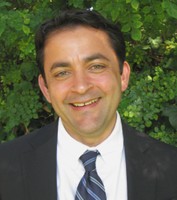
Ben Romo

Ben Romo

As Director of the County Education Office’s Center for Community Education, Ben Romo oversees a variety of different programs designed to serve the needs of foster children, homeless youth, low income students and children that have been neglected for a variety of reasons. He also works closely with the business community as the Executive Director of Partners in Education, a nonprofit organization working to help children succeed in school and in the workforce.

Leslie Dinaberg: How did you go from politics (as the District Representative and Primary Political Consultant for Congressman Walter Capps and Congresswoman Lois Capps) to education?

Ben Romo: In 2005 I had reached a point in my business where I wasn’t really learning anymore… and I realized that the only way I could continue learning was to go to a much higher level like statewide and multiple congressional campaigns, and that would have been just an absolute life-consuming process.

When this opportunity came to be a part of the education office, it was something that was very appealing to me personally, in terms of the work that we do here at the center, but also was appealing to me intellectually. Plus, it brought me back to Santa Barbara where I was born and raised.

LD: Are you enjoying this work?

BR: It’s been eye opening, what I’ve come to learn about public education and particularly the areas of impoverished, neglected and delinquent youth. It’s been really eye opening. I thought I knew a lot about public education and I didn’t. I didn’t know exactly what schools are being forced to deal with and I didn’t fully understand the level of misperception that I think exists in the community about just how daunting those challenges are and how unfair it is for society to expect schools to meet those needs.

LD: It’s very challenging and in our community particularly, because there’s so much wealth, it’s really the haves and have-nots.

BR: We’re losing our middle class. We’re a community out of balance. … Since 1991, our student population went from 34% Hispanics, it’s now 57%; Anglos were 55%, they’re now 32%. There’s just a complete flip-flop. Almost one in five, 17% of children in Santa Barbara County live below the federal poverty line, and the federal poverty level is $19,000 for a family of four. So that’s a federal measurement that has a completely different reality on the ground here in Santa Barbara where $900 a month might get you a one-bedroom or studio apartment.

LD: I know that Computers for Families works on this issue by targeting the digital divide and providing computers and Internet at home for every student in the fourth grade. What else does Partners in Education do?

BR: Partners is a nonprofit. We are not a school, we are not in the business of doing what schools should already be doing themselves, we’re not about supplanting, we are about finding the right role that the community can play to be supportive of schools. But schools are charged with a particular set of things that they should be doing. We’re not here to take that burden off them. That should be their responsibility. We are here to support them, number one, and also to give business a voice in how schools are preparing the next generation of the workforce.

LD: But a lot of the things that should be the school’s responsibility, like for example technology, they just don’t have the dollars to back it up. It’s not that the will isn’t there, but there isn’t the money.

BR: Exactly. We just talked about this in our last board meeting, we’re very clear that we are not going to be in a position to go find all that money. We found a very cost effective way to meet some of the needs that low income kids have in accessing the Internet and technology and we found that that’s really significantly impactful in their ability to achieve academically and in the school’s ability to achieve system wide. …

I don’t think it’s really been clearly stated to educators and the broader community just what technology can bring in key areas that teachers are worried about, student achievement, parent involvement, student engagement in the classroom, and the saving of teacher’s time, which is a huge issue for educators.

LD: In my experience it still comes down to the level of an individual teacher’s engagement and comfort with technology. If they’re into it, they’ll use it and their kids will really benefit from it and if they’re not, it’s not a factor.

BR: And who can blame them when they’re so stressed and so focused on core curriculum areas? It’s difficult for a teacher to take any time away from a student who is below grade level in math and English.

LD: What do you think are some of the biggest challenges that we have in education?

BR: Schools are doing a really good job actually. If you look at student achievement system wide in the state of California, student achievement in every group has gone up. In English learners, in Latinos, in Anglos, in every group, student achievement in math and reading has gone up. The achievement gap is being addressed, but there are societal problems that are being thrust on schools and schools are being forced to deal with these. And I think, in some cases, in a lot of cases, they are unfairly held accountable or they are unfairly expected to do a job that they were never intended to do and that is being a social worker. Teachers are supposed to teach kids how to read and write and how to be good citizens. So I think the biggest challenge in public education are the challenges that society thrusts upon them unfairly.

LD: Switching gears now from society to you, if you could pick three adjectives to describe yourself, what would they be?

BR: Modest, good looking and visionary

LD: That’s the best answer I’ve had to that question–and the fastest.

(Laughter overheard from the office next door): Irritating, annoying, deluded …

BR: (Laughs) OK, I like to have fun, I try to be honest, and sometimes I’m insecure.

Vital Stats: Ben Romo

Born: At Goleta Valley Hospital; August 21, 1973

Family: Wife Geordie and daughter Ruby, 4-1/2 months

Civic Involvement: The Granada, Coastal Housing Coalition, CALM, Nonprofit Support Center, Student Aid Committee of the Santa Barbara Foundation

Professional Accomplishments: Founded Romo & Associates; District Representative and Primary Political Consultant for Walter and Lois Capps

Little-Known Fact: When Ben was a child his nickname was Benny Big Ears; he also went by Benjie the Dog.


Want to know more about Partners in Education?

A breakfast event, featuring State Superintendent of Public Instruction Jack O’Connell, will be held December 7, 2007 at Earl Warren Showgrounds from 7:15-9:00 a.m. If you would like to attend, please RSVP to Ben Romo by emailing benromo@sbceo.org or calling 964.4711 ext 4401.


Originally published in Noozhawk. Click here to read the story on Noozhawk.com.

A Helping Place, A Healing Space

Courtesy Photo.

Courtesy Photo.

When Hospice of Santa Barbara was founded in 1974, it was only the second hospice in the United States, dedicated to providing care and easing the pain of dying for both patients and their loved ones.

Now with more than 3,200 programs established in the U.S. and nearly 885,000 people cared for in 2002, it is that same fundamental dedication to compassion that continues to set hospice programs apart from the type of care provided by hospitals and other facilities. According to the Hospice Foundation of America, an umbrella group that provides leadership in the development and application of hospice, “hospice is not a place but a concept of care.”

But fortunately for suffering Central Coast residents, a physical manifestation of the concept has also opened its doors like outstretched arms offering those dealing with painful tribulations a place to find help, understanding, friendship, and peace. And there could not have been a building more perfectly designed for its purpose.

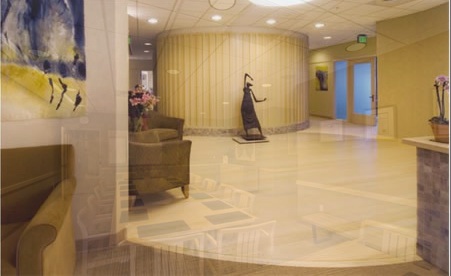
Executive Director Gail Rink describes Hospice of Santa Barbara’s new 6,500-square-foot headquarters as “A place where compassionate care is freely given.” A tranquil, welcoming feeling envelops visitors as they enter what looks more like a high-end health spa than a place designed to deal with death and grief–and in many ways it is. “This office is part office, part spa, part chapel,” says Rink. With an emphasis on humanistic, rather than medical, treatment, the center is focused not just on grief but on healing, and not just on patients, but on their loved ones as well.

Tucked away on a serene hilltop in Santa Barbara’s Riviera area, the facility offers a wide array of supportive services–all 100 percent free-of-charge–for people diagnosed with terminal illness or who are facing the loss of a loved one. Offerings include individual, couples, family and group counseling; educational programs; health and wellness services such as massage, Reiki, yoga, and meditation; community meeting spaces; and of course, a well-stocked kitchen and dining room.

“We feed a lot of families,” laughs Rink. She means that in both a literal and figurative sense. It was the generosity of some of the families nourished by hospice services that helped make this new center a reality.

“One of the things that makes us a highly functional board is the fact that everyone involved has either experienced needing hospice services themselves or within their families … or has someone close to them who has,” says Board President Mary Blair.

The Berkus family was critical to the development of the center. Renowned architect Barry Berkus relied on hospice services when his wife Gail was dying, and designed the building free-of-charge as a testament to her, and as a thank you to hospice for the comfort they provided his family. Paired with his daughter-in-law Dana Berkus’s distinctive interior design, a feeling of peaceful healing practically emanates from the walls of the new headquarters.

Walking in the center feels like getting a big warm hug. “What we want to be able to do is be able to embrace people who need security and help to face their fear and heal their sorrow,” says Rink.

When the organization moved to larger quarters last spring, it had the opportunity to expand some services, like the family and children’s program. Many children were not getting the kind of care they needed during the grieving process. “Children grieve. And adults are awkward when children grieve,” says Rink. “And yet we felt strongly that we needed to start a program that would address the needs especially of grieving children or children who may be anticipating the death of a parent or sibling.”

Starting with support groups for children, hospice then began a mentor program, where children were paired with an adult who had survived a similar experience of losing someone close to them when they were young. Children who “graduated” from the mentor program then formed a mentor associate program so they could help other children who were grieving. The parents of these children also formed a support group just for parents.

“So now our family and children’s program has grown from being a simple support group for grieving children to a more complex program that provides both parents and the children and those who have graduated from the program with things to do to help serve others and help make that relationship stronger. That organic kind of process is very healing,” says Rink.

Hospice recently held its first Children and Family Night, where multiple generations gathered for dinner, then broke into play groups and counseling sessions.

“Think of the reason that they all have in common, the death of a parent, or the death of a sibling or a spouse … it’s amazing that people would gather for such a sensitive reason–and yet, if you create the environment, they thrive,” says Rink. “What we’ve found is with more space and with such a healing and nourishing location, our business has continued to grow and for us. Of course that’s excellent, because we’re reaching more people in the community.”

Other Hospice Services on the Central Coast

“Shiva’s Center for the Human and Animal Bond” supports people who have lost a pet. You can find their information at www.shivascenter.org.

Hospice of San Luis Obispo County offers group meetings devoted to such issues as Widowed Persons, Weekly Suicide Bereavement, Parkinson’s, Perinatal Loss, and Pet Loss. They also offer the following events to support Hospice members. Check their website for specific times and locations: www.hospiceslo.org.

Hospice for the Central Coast: Monterey promotes and supports end-of-life care and services for Monterey and San Benito counties through community education, fundraising, prudent management of assets, and conscientious disbursement of grants to quality, non-profit organizations that provide these services. www.hffcc.org

Originally published in Central Coast Magazine

Menorrhagia: The Body Out of Balance

Most women will experience a heavy menstrual period at some point in her reproductive life. For some women, heavy periods are even the norm. “But if there is a change in heaviness get it evaluated,” says Dr. Carrie Ann Terrell, a specialist in women’s health. If you are soaking a pad or tampon within one to two hours for longer than one day, you should seek medical attention, she advises. It could be Menorrhagia, which the National Women’s Health Resource Center (NWHRC) defines as soaking a pad and/or tampon every hour or less during each menstrual cycle.

While Menorrhagia–which affects an estimated 10 to 20 percent of premenopausal women in the United States–can strike at any time, it is most likely to occur during puberty and the years just before menopause, when reproductive hormones are erratic.

“Women learn about periods, pregnancy and menopause but are unprepared for what happens in between. The fact is, pelvic health conditions can happen at any age, particularly after a woman’s had a baby,” explains Elizabeth Battaglino Cahill, RN, executive director of the NWHRC.

The condition can cause fatigue and anemia and restrict a woman’s personal and professional activities. Menorrhagia can also be indicative of more serious medical conditions.

According to the Mayo Foundation for Medical Education and Research, some common causes of Menorrhagia include: hormonal imbalance; uterine fibroids; polyps; dysfunction of the ovaries; adenomyosis; an intrauterine device malfunction; pregnancy complications; pelvic inflammatory disease, thyroid problems, endometriosis, and liver or kidney disease. In addition, certain drugs, including anti-inflammatory medications and anticoagulants (to prevent blood clots), can contribute to heavy or prolonged menstrual bleeding. In rare cases, uterine cancer, ovarian cancer and cervical cancer can cause excessive menstrual bleeding.

Ice packs, vitamin C, vitamin E and iron supplements can help reduce bleeding, but you should always check with your health care professional before taking any medication, even herbs and nutritional supplements, according to the NWHRC.

Medical treatment options for Menorrhagia continue to evolve.

“We think the sheer magnitude of how many Baby Boomer women are affected matters because such a large group will have the power to set new expectations for pelvic health, driving more women to seek treatment,” says Cahill. “Think back to when the default treatment for breast cancer was a total mastectomy. Those rates have dramatically declined primarily because women advocated for more minimally invasive treatment options. The same needs to be true for pelvic health.”

Currently, progestin–which works by reducing the effects of estrogen in your body, slowing growth of the uterine lining–is the most-prescribed medication for Menorrhagia, with studies finding that it can reduce bleeding up to 15 percent. However side effects, including weight gain, headaches, swelling and depression, lead many women to quit using this option.

Doctors may also prescribe nonsteroidal anti-inflammatory drugs such as Aleve, Motrin, Cataflam or Ponstel, which work by reducing levels of hormone-like chemicals that interfere with blood clotting. Studies find they can reduce blood flow an average of 25 to 35 percent. Oral contraceptives can also reduce menstrual bleeding up to 60 percent by preventing ovulation and thinning the endometrium.

Gonadotropin-releasing hormone agonists are drugs that are used only on a short-term basis because of their high cost and severe side effects. Basically, they temporarily send a woman into menopause, complete with hot flashes. However, they are very effective in reducing menstrual blood flow. But because they interfere with the activity of estrogen in your body, long-term use could lead to osteoporosis.

Doctors may also prescribe Danazol, is a form of the male hormone testosterone that blocks the action of estrogen in your body. It causes your period to stop in about four to six weeks, but can have side effects, including acne and reduced breast size.

Some physicians may also recommend using an intrauterine device such as Mirena, which releases a progestin called levonorgestrel, to help control the bleeding. The main side effect of this treatment can be some light bleeding between periods, particularly in the first three months.

Women with Menorrhagia may elect to have an outpatient procedure, endometrial ablation, in which the lining of the uterus is destroyed. In extremely severe cases, women with Menorrhagia may also opt for surgical procedures such as removal of the uterus through a hysterectomy. Other surgical procedures, including myomectomy and uterine artery embolization, may be used if fibroids are the cause behind the bleeding.

“Treatment for this condition is broadly available. What’s critical is that women and their health-care provider discuss menstruation as part of a routine physical exam,” says Amy Niles, President and CEO of NWHRC. “Beginning a dialogue about this vastly under-diagnosed condition and available treatment options– both between a woman and her doctor and among national health-care leaders– is the first step toward helping women live healthier more enjoyable lives.”

Questions to Ask Your Health Care Professional about Menorrhagia

1. Is the amount of menstrual bleeding I’m experiencing abnormal?

2. What tests do you need to conduct to diagnose my Menorrhagia, and why are you doing them?

3. Is this heavy bleeding affecting my iron levels? What can I do about that?

4. Why are you recommending this particular treatment option for my heavy bleeding? If that doesn’t work, what do you recommend next?

5. What are the disadvantages and risks associated with each recommended treatment?

6. Even if you find a problem like fibroids causing my abnormal uterine bleeding, is it possible to avoid a hysterectomy?

7. How many endometrial ablations of this type have you performed in the past year? What is your success rate? What kind of complications have you encountered?

– Source: National Women’s Health Resource Center

Originally published in Coastal Woman

Cocktails in a secret garden: Breast Cancer Resource Center of Santa Barbara

Breast Cancer Resource CenterThe stunning ocean views and lush backdrop of Cynthia and Eric Spivey‘s Montecito garden were surpassed only by the outpouring of generosity and good will at the Breast Cancer Resource Center of Santa Barbara‘s ninth annual garden party benefit. Chairs Daryl Stegall and Pamela Massey and their hard-working committee outdid themselves this year, raising more than $138,000 to benefit the BCRC, which provides a warm and welcoming place where people with breast cancer, and their loved ones, find a caring network of people (mostly cancer survivors) ready to answer questions, lend an ear, and help them obtain information to make informed decisions.

KTYD DJ Matt McAllister worked his auctioneer’s magic touch through a fabulous bevy of auction items, including a Surfing Photo Safari with Jeff Divine, which sold for $10,000; a one-of-kind custom necklace created by local jeweler Daniel Gibbings just for the event; a Sun Valley Snowboarding Vacation with World Champion and inventor of the snowboard, Tom Sims; and an evening of dinner and poker with Peter Noone, lead singer of Herman’s Hermits. Guests inhaled the smells of gorgeous roses from Rose Story Farm, sampled tasty treats from Ernie Price Catering and enjoyed the new Boomerang Australian Vodka and Wattle Creek wines, but perhaps the afternoon’s most moving moments came when former Assemblywoman Hannah Beth Jackson shared her story of receiving comfort from the BCRC after being diagnosed with breast cancer a year ago.

The Breast Cancer Resource Center celebrated its tenth year of service in Santa Barbara on October 13, helping more than 6,000 clients with in-house services–such as support groups; complimentary massage, Reflexology and Reiki treatments; and mentor programs–as well as community outreach and education programs.

Originally published in Noozhawk