
About lesliedinaberg

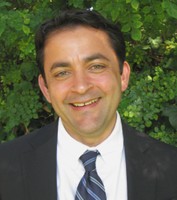
When she's not busy working as an editor on a variety of magazine and book projects, Leslie Dinaberg writes feature articles, columns and grocery lists.

My Big Fat Carbon Footprint

hand holding earth by jannoon028 at freedigitalphotos.net

hand holding earth by jannoon028 at freedigitalphotos.net

The weight of my carbon footprint has been keeping me up at night.

I sure do miss the good old days when I’d be overjoyed to find a public bathroom stocked with toilet paper and soap. Show me a recently cleaned floor and seat covers and you’ll see me doing a little “happy dance” as an encore to the “I have to pee dance” I’m usually doing on my way in.

But on a recent visit to the movies, I confronted yet another in a growing number of environmental dilemmas. The facilities were fine, but after I washed my hands I stood stunned by indecision, paralyzed by choices: Should I dry my hands with a paper towel or use the air hand dryer?

“Dryers help protect the environment,” a sign proclaimed. “They save trees from being used for paper towels. They eliminate paper towel waste.” They also suck down electricity and dry out my skin, which increases my hand lotion consumption considerably. Nobody ever considers the Nivea trees.

I also vaguely recall reading something about hand dryers increasing the amount of bacteria in the air, because they suck up your germs then spew them back out onto the next customer. Eww! Just the thought of that is enough to make me resort to my son’s preferred drying method–wiping his wet hands off on my jeans.

“Paper or plastic?” I must have a mental shopping block, because somehow I only remember to bring my canvas bags to Trader Joes, not Vons. I guess I could shop exclusively at Trader Joes, but my husband insists on Kellogg’s Raisin Bran and Tropicana Orange Juice, neither of which TJ’s stocks. Besides, don’t I get some carbon offset credits for reading Star Magazine and the Enquirer in line at Vons and not actually paying for any dead trees that put Britney or Paris on the cover? I suppose if nobody ever read about either of those girls, we might just save the planet. But would such a planet really be worth saving?

I try to do my part. I wish Vons would do theirs, by just charging me for the stupid paper bags (which I always intend to reuse for wrapping paper), so I wouldn’t be embarrassed to leave Ben and Jerry melting in the cart while I run outside to get my canvas bags.

Of course I’m environmentally embarrassed when I do go out to my gigantic gas guzzling Mercury Grand Marquis to get the totes for my melted Stephen Colbert’s Americone Dream.

Here’s the thing: I can’t afford a Prius. Plus I’m not a great driver. Tooling around town in a big safe American car that makes people steer clear of that 80-year-old granny driving is really a safety gesture of good will for the whole community. Seems like I should get some kind of carbon credit for that.

If nothing else, I know I get big carbon points for just being poor. Thanks to our frugal packrat of a landlord, everything in our house is recycled, from the carpet remnants on the floor to the river rock on the walls. Even most of our furniture is family heirlooms, i.e. old junk rescued from the dumpster. Yes, this is quite the P.C. household. Our landlord once spent three hours trying to repair a florescent light that I eventually replaced at Home Depot for $5.99.

My greatest virtue is that rather than succumb to the consumerist temptation to “trade up” a model, I’ve made a commitment to stick to the same old husband. Not only does that cut out the environmental impact of maintaining two separate households, think of all that drive time and paper we’re saving for the lawyers. When you add in the extra showers I’d be taking if I were single, and the hydrocarbons from the hair spray I’d be using if I were dating, I can kick off those heavy carbon shoes entirely. Better hang on tight to your peace prize, Al Gore: I’ll be wearing my carbon halo tonight.


When Leslie’s not agonizing over her carbon footprint, she’s usually on email at email. For more columns visit www.LeslieDinaberg.com.
Originally appeared in the Santa Barbara Daily Sound on November 23, 2007.

Ruth Chris Steak House opens in La Cumbre Plaza

Ruth Chris Steak House (courtesy photo)

Ruth Chris Steak House (courtesy photo)

I got quite a meaty education the other night, when I sat in on an employee training session and menu sampling for the new Ruth’s Chris Steak House in La Cumbre Plaza, which officially opens on Monday, November 19.

If the attention to detail in the training session–conducted by the Irvine restaurant’s general manager Todd Lounsberry, who will serve as a mentor to Santa Barbara’s general manager Chris Goodyear–is any indication, Santa Barbara diners are in for a level of service they haven’t exactly come to expect in our local establishments. Let’s face it: most restaurants here are better known for the beauty of their surroundings and the quality of their food than they are for having staff who go out of their way to make you feel welcome.

With just under 300 seats, the new Ruth Chris Steak House will have to attract a lot of steak lovers to recoup its investment in this location–even at $36.95 for an a la carte filet. A company spokeswoman declined to answer my question about how much was spent on the restaurant build out, but the interiors are lovely, with no expense visibly spared on the heated outdoor patio, roomy bar area, indoor/outdoor fireplaces, two wine cellars (which can be reserved for intimate dinners) and expansive dining room. There also three private rooms, which can be combined to hold about 70 guests, as well as Ruth’s Library, a boardroom type setting that can be used for special events.

Despite the hefty investment and the La Cumbre Plaza location, I wouldn’t bet against Ruth Chris’s record of success. Clearly the company knows something about capturing carnivore customers. Since its 1965 founding in New Orleans by Ruth Fertel (who passed away in 2002), they’ve opened 114 locations worldwide, including Canada, Mexico, Hong Kong, Taiwan, Japan, and now, Santa Barbara.

The excitement level at the training session was palpable, probably in part because the approximately four dozen hosts, servers (who must have a year of fine dining experience), server’s assistants and bar tenders were honored to have been selected out of the more than 500 people who interviewed for their jobs, according to Ruth Chris PR Maven Lanette Jarvis.

The staff was transfixed as Lounsberry showed off various cuts of meat in their raw state and reviewed a gigantic stack of product information cards, including facts about how Ruth Chris buys its meat (“from cows that are fed only corn, which results in richer more flavorful taste”), how the steaks are cooked (“seared at 1,800 degrees, then seasoned with sea salt, black pepper and a touch of parsley, and topped with fresh butter that sizzles on your plate”), and how they’re served (“on a 500 degree plate,” they recited in unison).

According to Lounsberry, all of the meat served at any Ruth Chris Steakhouse (with the exception of the Filets, which aren’t always available in the U.S.) is rated USDA Prime, which means it falls in the top two percent of graded meat. “Ruth Chris takes up almost half of the prime meat available in the U.S. for its restaurants.”

In addition to Filets, those cuts of beef include a Porterhouse (“it has to be a minimum of one and a half inches thick in order to be a Porterhouse”), a Ribeye, a Cowboy Ribeye (includes a bone), a T-Bone, and a New York Strip (“it has that name because it’s shaped like New York”). Seafood, lamb, pork and poultry are also available, but steak is definitely king on this menu.

We tasted bites of the Filet, the New York Strip, the Porterhouse and the Ribeye, each one more mouth-wateringly delicious than the last. “We want our guest to leave Ruth Chris Steak House as raving fans,” said Lounsberry.

So far, so good.

Originally published in Noozhawk

San Marcos High to Celebrate 50th

San MarcosSan Marcos High School alumni and supporters are planning a gala event to celebrate the school’s 50th anniversary in 2008. Anyone who is interested in helping to plan the event, or would like to be on the mailing list for invitations and updates should email Cara Gamberdella (Class of 1990) at cara@villagesite.com or call her at 683.7336.

“I am committed to giving back as a proud alumna and community supporter,” says Gamberdella, a former SMHS English and journalism teacher. “San Marcos has been a very important part of my life and my family’s life here in Santa Barbara.

The committee, headed by Assistant principal Ed Behrens , also includes Debbie Keys Thomas, Diane Dodwell, Holly Eubank, Joan Cotich, Shawn Ricci, Helen Murdoch, Aaron Solis, Sadie Hall and Susan Kipp.

The date of the celebration –which will be an evening of dinner, dancing, entertainment and Royals’ nostalgia and will be open to all former students, staff and community supporters–is not yet determined, but the party is slated for February or March of 2008.

Originally published in Noozhawk

Sarah House Lights Up The Night with “The Artizans’Ball”

Sarah House Artizans Ball 2010

Sarah House Artizans Ball 2010

Noted artists Hank Pitcher, Rick Schloss, Matti Berglund, Jane Sun, Brad Nack, Michael Drury, Tom Henderson, Kathleen Elsey, Anthony Ocone, Larry Iwerks and Barnaby Conrad are but a few of the more than 100 artists who have donated their work to assist Sarah House and AIDS Housing Santa Barbara at their annual holiday Light Up The Night benefit at the Santa Barbara Woman’s Club on Saturday, December 8, from 6 to 10 p.m.

Sarah House is the only “social model” home in the nation offering hospice care for low-income or homeless individuals who are in need of a place to die with appropriate care and dignity. Named for the late Sarah Shoresman, whose daughter, Linda Lorenzen-Hughes, remains active on the board of directors, Sarah House does not receive government funding, but relies instead on donations to keep the facility open for those in need.

This year’s fundraiser theme is “The Artizans’ Ball,” which centers on the silent auction of works of art and tabletop holiday trees and wreaths, as well as spectacular vacations in Tuscany, Hawaii, and Careyes, Mexico. This is a different twist for the 16th annual Light up the Night, which has traditionally auctioned off holiday trees designed by local artists and supporters.

“We feel like it’s always good to reinvent yourself,” says chair Kerrie Kilpatrick-Weinberg, who is herself an artist and the founder of Artwalk for Kids. “We’ve done Light up the Night for several years and there’s other people doing trees now, so what this will be is a ball, music, lovely food and drinks, but more importantly art everywhere…It’s very much an auction centered around art energy in Santa Barbara, with the artistic community donating to Sarah House.

The only thing that will be silent will be the auction. The evening includes entertainment by Cats’ N’ Dogs with Lois Mahalia, Tom & Gabe Lackner; the national award-winning San Marcos Madrigals choir; the Living Muses, Buddy Winston, and a surprise or two. Food will be from New West caterers, with local wines from Buttonwood Farm Winery and Alma Rosa Winery and a special bar featuring original concoctions by the Wildcat Lounge, such as a Cosmo Van Gogh and Warhol-on-the-Rocks.

Costumes are optional but everyone is encouraged to come dressed as their favorite artist or in something inspired by a work of art. Tickets are $100 suggested donation. To purchase tickets call 882.1192 or visit www.Sarahhousesb.org

Originally published in Noozhawk

Getting Your Piece of a Beachfront Paradise

courtesy photo

courtesy photo

A jaw-dropping view of the Channel Islands, Santa Barbara’s coastline and the San Ynez Mountains adorn the Santa Barbara Beach Club (www.santabarbarabeachclub.com), a new oceanfront estate overlooking More Mesa Beach at the end of Patterson Avenue.

Beachfront properties like this are hard to come by–especially without those pesky freeways and railroad tracks nearby–but Kari Ann and Jay Gerlach are willing to share their dream home with five other families.

“We’re hoping it’s other people’s dream house too. We’re going to find out if we have good taste or not, I guess,” says Jay, who was involved in a number of start up businesses before creating the beach club.

courtesy photo

courtesy photo

Membership in the $13 million, 6,300 square foot, New England style property, will cost approximately $2 million, plus annual expenses. This gets each owner an equity share, plus eight weeks a year in the house, which has five suites and features a private beach cove, gourmet kitchen, gym, handcrafted bar, theatre, billiard lounge, wine cellar, walk-in cigar humidor, library, sauna, pool and Jacuzzi. It even has a hydraulic car elevator to maximize parking space. Concierge services such as an on-call masseuse and private chef will be available to members, and the house will be stocked with everything from the owner’s favorite foods and soaps, to their family pictures.

“If you want, there’s no reason for your guests to know you don’t own the house outright,” says Kari Ann. “It’ll be just like it was when you left it.”

While the technical term for the partnership is “factional ownership,” Jay explains it simply: “If you and I bought a house together and both our names were on title, that’s exactly what we’re doing. It’s called tenants in common … but we will have six owners, each with a percentage.”

The Gerlach’s originally bought the property, an empty lot, to develop their dream house. But like anyone who’s ever tried to build a home can testify, development doesn’t come cheap. As the dream house got dreamier and dreamier, the financial realities became such that they rethought the investment, explains Kari Ann.

As construction progressed on local architect Robert Foley‘s design, they shared the work-in-progress with friends, “We got such great response,” says Kari Ann. “Everybody said, ‘Oh this is great. I wish we had a house like this.’ And my husband said, ‘Why not?'”

“If we can share it with other people and still manage to keep eight weeks for ourselves it would be really great investment for us and still a beach house of our dreams,” she says.

The shared ownership model allowed Kari Ann, who worked with Tuvalu Home (www.tuvaluhome.com), to furnish the house with everything she dreamed of.

Some of her favorite things include chandeliers right out of “The Little Mermaid,” made out of seashells, a settee with quilting inspired by coral, and a custom made curio cabinet. “I didn’t want to be matchy matchy. I wanted it to look more like a collected look over time,” says Kari Ann. She describes the experience of furnishing a house from top to bottom–including every single knob, knick-knack, linen and dish–as “a hellish but wonderful dream.”

“When you’re building a place that luxurious and that large, it just makes more sense to split it with more people,” says Jay. The Gerlach’s already own a beach house in town, and weren’t planning to use the new home full time anyway. They wanted a place where their extended family could come stay, and the estate, at 5277 Austin Road, fit the bill perfectly.

They did a test run over the Fourth of July. “We had multi-generations here and it was kind of fun to see how the house was used,” says Kari Ann. “Women were in the kitchen chatting, the older people were at the table having their coffee, enjoying the main room and the library, and the kids were downstairs, outside, or down the beach in the back. All the men were upstairs in the Jacuzzi (which has a flat screen television tuned to sports to compliment the dolphin and sea lion show on the ocean). … I think this house has something for everybody and something for everybody at the same time.”

When asked about what it’s like to work so closely with his wife for the past three years, Jay laughs. “It’s fun but it also can be very frustrating … everybody’s heard of the old saying that if you can survive a remodel together you’ve got a strong marriage–this was a lot more than a remodel.”

He laughed even harder when asked if he would do a project like this again. “Yes, but not immediately. We need a little time to recover.”

For more information visit www.santabarbarabeachclub.com or call 805.504.0699.

Originally published in Noozhawk

Noozhawk Talks: One on One with Ben Romo

Ben Romo

Ben Romo

As Director of the County Education Office’s Center for Community Education, Ben Romo oversees a variety of different programs designed to serve the needs of foster children, homeless youth, low income students and children that have been neglected for a variety of reasons. He also works closely with the business community as the Executive Director of Partners in Education, a nonprofit organization working to help children succeed in school and in the workforce.

Leslie Dinaberg: How did you go from politics (as the District Representative and Primary Political Consultant for Congressman Walter Capps and Congresswoman Lois Capps) to education?

Ben Romo: In 2005 I had reached a point in my business where I wasn’t really learning anymore… and I realized that the only way I could continue learning was to go to a much higher level like statewide and multiple congressional campaigns, and that would have been just an absolute life-consuming process.

When this opportunity came to be a part of the education office, it was something that was very appealing to me personally, in terms of the work that we do here at the center, but also was appealing to me intellectually. Plus, it brought me back to Santa Barbara where I was born and raised.

LD: Are you enjoying this work?

BR: It’s been eye opening, what I’ve come to learn about public education and particularly the areas of impoverished, neglected and delinquent youth. It’s been really eye opening. I thought I knew a lot about public education and I didn’t. I didn’t know exactly what schools are being forced to deal with and I didn’t fully understand the level of misperception that I think exists in the community about just how daunting those challenges are and how unfair it is for society to expect schools to meet those needs.

LD: It’s very challenging and in our community particularly, because there’s so much wealth, it’s really the haves and have-nots.

BR: We’re losing our middle class. We’re a community out of balance. … Since 1991, our student population went from 34% Hispanics, it’s now 57%; Anglos were 55%, they’re now 32%. There’s just a complete flip-flop. Almost one in five, 17% of children in Santa Barbara County live below the federal poverty line, and the federal poverty level is $19,000 for a family of four. So that’s a federal measurement that has a completely different reality on the ground here in Santa Barbara where $900 a month might get you a one-bedroom or studio apartment.

LD: I know that Computers for Families works on this issue by targeting the digital divide and providing computers and Internet at home for every student in the fourth grade. What else does Partners in Education do?

BR: Partners is a nonprofit. We are not a school, we are not in the business of doing what schools should already be doing themselves, we’re not about supplanting, we are about finding the right role that the community can play to be supportive of schools. But schools are charged with a particular set of things that they should be doing. We’re not here to take that burden off them. That should be their responsibility. We are here to support them, number one, and also to give business a voice in how schools are preparing the next generation of the workforce.

LD: But a lot of the things that should be the school’s responsibility, like for example technology, they just don’t have the dollars to back it up. It’s not that the will isn’t there, but there isn’t the money.

BR: Exactly. We just talked about this in our last board meeting, we’re very clear that we are not going to be in a position to go find all that money. We found a very cost effective way to meet some of the needs that low income kids have in accessing the Internet and technology and we found that that’s really significantly impactful in their ability to achieve academically and in the school’s ability to achieve system wide. …

I don’t think it’s really been clearly stated to educators and the broader community just what technology can bring in key areas that teachers are worried about, student achievement, parent involvement, student engagement in the classroom, and the saving of teacher’s time, which is a huge issue for educators.

LD: In my experience it still comes down to the level of an individual teacher’s engagement and comfort with technology. If they’re into it, they’ll use it and their kids will really benefit from it and if they’re not, it’s not a factor.

BR: And who can blame them when they’re so stressed and so focused on core curriculum areas? It’s difficult for a teacher to take any time away from a student who is below grade level in math and English.

LD: What do you think are some of the biggest challenges that we have in education?

BR: Schools are doing a really good job actually. If you look at student achievement system wide in the state of California, student achievement in every group has gone up. In English learners, in Latinos, in Anglos, in every group, student achievement in math and reading has gone up. The achievement gap is being addressed, but there are societal problems that are being thrust on schools and schools are being forced to deal with these. And I think, in some cases, in a lot of cases, they are unfairly held accountable or they are unfairly expected to do a job that they were never intended to do and that is being a social worker. Teachers are supposed to teach kids how to read and write and how to be good citizens. So I think the biggest challenge in public education are the challenges that society thrusts upon them unfairly.

LD: Switching gears now from society to you, if you could pick three adjectives to describe yourself, what would they be?

BR: Modest, good looking and visionary

LD: That’s the best answer I’ve had to that question–and the fastest.

(Laughter overheard from the office next door): Irritating, annoying, deluded …

BR: (Laughs) OK, I like to have fun, I try to be honest, and sometimes I’m insecure.

Vital Stats: Ben Romo

Born: At Goleta Valley Hospital; August 21, 1973

Family: Wife Geordie and daughter Ruby, 4-1/2 months

Civic Involvement: The Granada, Coastal Housing Coalition, CALM, Nonprofit Support Center, Student Aid Committee of the Santa Barbara Foundation

Professional Accomplishments: Founded Romo & Associates; District Representative and Primary Political Consultant for Walter and Lois Capps

Little-Known Fact: When Ben was a child his nickname was Benny Big Ears; he also went by Benjie the Dog.


Want to know more about Partners in Education?

A breakfast event, featuring State Superintendent of Public Instruction Jack O’Connell, will be held December 7, 2007 at Earl Warren Showgrounds from 7:15-9:00 a.m. If you would like to attend, please RSVP to Ben Romo by emailing benromo@sbceo.org or calling 964.4711 ext 4401.


Originally published in Noozhawk. Click here to read the story on Noozhawk.com.

Menorrhagia: The Body Out of Balance

Most women will experience a heavy menstrual period at some point in her reproductive life. For some women, heavy periods are even the norm. “But if there is a change in heaviness get it evaluated,” says Dr. Carrie Ann Terrell, a specialist in women’s health. If you are soaking a pad or tampon within one to two hours for longer than one day, you should seek medical attention, she advises. It could be Menorrhagia, which the National Women’s Health Resource Center (NWHRC) defines as soaking a pad and/or tampon every hour or less during each menstrual cycle.

While Menorrhagia–which affects an estimated 10 to 20 percent of premenopausal women in the United States–can strike at any time, it is most likely to occur during puberty and the years just before menopause, when reproductive hormones are erratic.

“Women learn about periods, pregnancy and menopause but are unprepared for what happens in between. The fact is, pelvic health conditions can happen at any age, particularly after a woman’s had a baby,” explains Elizabeth Battaglino Cahill, RN, executive director of the NWHRC.

The condition can cause fatigue and anemia and restrict a woman’s personal and professional activities. Menorrhagia can also be indicative of more serious medical conditions.

According to the Mayo Foundation for Medical Education and Research, some common causes of Menorrhagia include: hormonal imbalance; uterine fibroids; polyps; dysfunction of the ovaries; adenomyosis; an intrauterine device malfunction; pregnancy complications; pelvic inflammatory disease, thyroid problems, endometriosis, and liver or kidney disease. In addition, certain drugs, including anti-inflammatory medications and anticoagulants (to prevent blood clots), can contribute to heavy or prolonged menstrual bleeding. In rare cases, uterine cancer, ovarian cancer and cervical cancer can cause excessive menstrual bleeding.

Ice packs, vitamin C, vitamin E and iron supplements can help reduce bleeding, but you should always check with your health care professional before taking any medication, even herbs and nutritional supplements, according to the NWHRC.

Medical treatment options for Menorrhagia continue to evolve.

“We think the sheer magnitude of how many Baby Boomer women are affected matters because such a large group will have the power to set new expectations for pelvic health, driving more women to seek treatment,” says Cahill. “Think back to when the default treatment for breast cancer was a total mastectomy. Those rates have dramatically declined primarily because women advocated for more minimally invasive treatment options. The same needs to be true for pelvic health.”

Currently, progestin–which works by reducing the effects of estrogen in your body, slowing growth of the uterine lining–is the most-prescribed medication for Menorrhagia, with studies finding that it can reduce bleeding up to 15 percent. However side effects, including weight gain, headaches, swelling and depression, lead many women to quit using this option.

Doctors may also prescribe nonsteroidal anti-inflammatory drugs such as Aleve, Motrin, Cataflam or Ponstel, which work by reducing levels of hormone-like chemicals that interfere with blood clotting. Studies find they can reduce blood flow an average of 25 to 35 percent. Oral contraceptives can also reduce menstrual bleeding up to 60 percent by preventing ovulation and thinning the endometrium.

Gonadotropin-releasing hormone agonists are drugs that are used only on a short-term basis because of their high cost and severe side effects. Basically, they temporarily send a woman into menopause, complete with hot flashes. However, they are very effective in reducing menstrual blood flow. But because they interfere with the activity of estrogen in your body, long-term use could lead to osteoporosis.

Doctors may also prescribe Danazol, is a form of the male hormone testosterone that blocks the action of estrogen in your body. It causes your period to stop in about four to six weeks, but can have side effects, including acne and reduced breast size.

Some physicians may also recommend using an intrauterine device such as Mirena, which releases a progestin called levonorgestrel, to help control the bleeding. The main side effect of this treatment can be some light bleeding between periods, particularly in the first three months.

Women with Menorrhagia may elect to have an outpatient procedure, endometrial ablation, in which the lining of the uterus is destroyed. In extremely severe cases, women with Menorrhagia may also opt for surgical procedures such as removal of the uterus through a hysterectomy. Other surgical procedures, including myomectomy and uterine artery embolization, may be used if fibroids are the cause behind the bleeding.

“Treatment for this condition is broadly available. What’s critical is that women and their health-care provider discuss menstruation as part of a routine physical exam,” says Amy Niles, President and CEO of NWHRC. “Beginning a dialogue about this vastly under-diagnosed condition and available treatment options– both between a woman and her doctor and among national health-care leaders– is the first step toward helping women live healthier more enjoyable lives.”

Questions to Ask Your Health Care Professional about Menorrhagia

1. Is the amount of menstrual bleeding I’m experiencing abnormal?

2. What tests do you need to conduct to diagnose my Menorrhagia, and why are you doing them?

3. Is this heavy bleeding affecting my iron levels? What can I do about that?

4. Why are you recommending this particular treatment option for my heavy bleeding? If that doesn’t work, what do you recommend next?

5. What are the disadvantages and risks associated with each recommended treatment?

6. Even if you find a problem like fibroids causing my abnormal uterine bleeding, is it possible to avoid a hysterectomy?

7. How many endometrial ablations of this type have you performed in the past year? What is your success rate? What kind of complications have you encountered?

– Source: National Women’s Health Resource Center

Originally published in Coastal Woman

A Helping Place, A Healing Space

Courtesy Photo.

Courtesy Photo.

When Hospice of Santa Barbara was founded in 1974, it was only the second hospice in the United States, dedicated to providing care and easing the pain of dying for both patients and their loved ones.

Now with more than 3,200 programs established in the U.S. and nearly 885,000 people cared for in 2002, it is that same fundamental dedication to compassion that continues to set hospice programs apart from the type of care provided by hospitals and other facilities. According to the Hospice Foundation of America, an umbrella group that provides leadership in the development and application of hospice, “hospice is not a place but a concept of care.”

But fortunately for suffering Central Coast residents, a physical manifestation of the concept has also opened its doors like outstretched arms offering those dealing with painful tribulations a place to find help, understanding, friendship, and peace. And there could not have been a building more perfectly designed for its purpose.

Executive Director Gail Rink describes Hospice of Santa Barbara’s new 6,500-square-foot headquarters as “A place where compassionate care is freely given.” A tranquil, welcoming feeling envelops visitors as they enter what looks more like a high-end health spa than a place designed to deal with death and grief–and in many ways it is. “This office is part office, part spa, part chapel,” says Rink. With an emphasis on humanistic, rather than medical, treatment, the center is focused not just on grief but on healing, and not just on patients, but on their loved ones as well.

Tucked away on a serene hilltop in Santa Barbara’s Riviera area, the facility offers a wide array of supportive services–all 100 percent free-of-charge–for people diagnosed with terminal illness or who are facing the loss of a loved one. Offerings include individual, couples, family and group counseling; educational programs; health and wellness services such as massage, Reiki, yoga, and meditation; community meeting spaces; and of course, a well-stocked kitchen and dining room.

“We feed a lot of families,” laughs Rink. She means that in both a literal and figurative sense. It was the generosity of some of the families nourished by hospice services that helped make this new center a reality.

“One of the things that makes us a highly functional board is the fact that everyone involved has either experienced needing hospice services themselves or within their families … or has someone close to them who has,” says Board President Mary Blair.

The Berkus family was critical to the development of the center. Renowned architect Barry Berkus relied on hospice services when his wife Gail was dying, and designed the building free-of-charge as a testament to her, and as a thank you to hospice for the comfort they provided his family. Paired with his daughter-in-law Dana Berkus’s distinctive interior design, a feeling of peaceful healing practically emanates from the walls of the new headquarters.

Walking in the center feels like getting a big warm hug. “What we want to be able to do is be able to embrace people who need security and help to face their fear and heal their sorrow,” says Rink.

When the organization moved to larger quarters last spring, it had the opportunity to expand some services, like the family and children’s program. Many children were not getting the kind of care they needed during the grieving process. “Children grieve. And adults are awkward when children grieve,” says Rink. “And yet we felt strongly that we needed to start a program that would address the needs especially of grieving children or children who may be anticipating the death of a parent or sibling.”

Starting with support groups for children, hospice then began a mentor program, where children were paired with an adult who had survived a similar experience of losing someone close to them when they were young. Children who “graduated” from the mentor program then formed a mentor associate program so they could help other children who were grieving. The parents of these children also formed a support group just for parents.

“So now our family and children’s program has grown from being a simple support group for grieving children to a more complex program that provides both parents and the children and those who have graduated from the program with things to do to help serve others and help make that relationship stronger. That organic kind of process is very healing,” says Rink.

Hospice recently held its first Children and Family Night, where multiple generations gathered for dinner, then broke into play groups and counseling sessions.

“Think of the reason that they all have in common, the death of a parent, or the death of a sibling or a spouse … it’s amazing that people would gather for such a sensitive reason–and yet, if you create the environment, they thrive,” says Rink. “What we’ve found is with more space and with such a healing and nourishing location, our business has continued to grow and for us. Of course that’s excellent, because we’re reaching more people in the community.”

Other Hospice Services on the Central Coast

“Shiva’s Center for the Human and Animal Bond” supports people who have lost a pet. You can find their information at www.shivascenter.org.

Hospice of San Luis Obispo County offers group meetings devoted to such issues as Widowed Persons, Weekly Suicide Bereavement, Parkinson’s, Perinatal Loss, and Pet Loss. They also offer the following events to support Hospice members. Check their website for specific times and locations: www.hospiceslo.org.

Hospice for the Central Coast: Monterey promotes and supports end-of-life care and services for Monterey and San Benito counties through community education, fundraising, prudent management of assets, and conscientious disbursement of grants to quality, non-profit organizations that provide these services. www.hffcc.org

Originally published in Central Coast Magazine

Spirited Women Come Out to Play

Image courtesy of freedigitalpics.net by Ambro.

Image courtesy of freedigitalpics.net by Ambro.

I spent a recent Saturday hanging out with some new gal pals. The “Spirited Woman of Enoughness” was there. So was the “Yes-I-Will, Yes-I-Will Matadora,” the “Self-Trusting Guruess,” and the “Diva of Humanitarians.” We played dress up, we danced, we laughed, we cried and we ate chocolate.

No, it wasn’t a 10-year-old girl’s birthday party. And no, it wasn’t an acid trip.

This was a different kind of journey entirely. One that involved immersing myself into a circle of spirited women, an inspirational group that has grown like gangbusters since founder Nancy Mills put up her first flyer in a downtown Santa Barbara restaurant five years ago.

Let me back up a minute and say that I have a love-hate relationship with the whole notion of self-improvement. I’m addicted to browsing the tables of contents of self-help books–it’s physically hard for me to walk by a self-help book without taking a dip inside. If a book is really good, I’ll spend an entire afternoon nursing a latte at Borders so I can actually read the entire thing from cover to cover without forking over $24.99 plus tax for titles like “How to Pee Standing Up: Tips for Hip Chicks,” “I’m with Stupid: One Man. One Woman. 10,000 Years of Misunderstanding Between the Sexes Cleared Right Up,” and “How to Be Happy, Dammit: A Cynic’s Guide to Spiritual Happiness,” any of which would be greeted by pure mockery if they were to find a place on my bedside table.

Given my tendency toward skepticism, I have to admit, I was a little apprehensive as I made my way to the Spirited Woman Workshop. But Nancy advertised it as being a “fantastic combination of creative playfulness, empowerment, and fun that reinforces that you are enough as you are.” Plus, I heard there might be chocolate, so I figured it was worth a shot.

And I knew I could get a column out of it.

I had Nancy pegged from the moment she greeted me at the door of a private home on the Mesa. She’s one of those people who is so genuinely herself, so obviously comfortable in her own skin, and so ready and willing to make an absolute fool of herself in front of complete strangers that the gamer in me won out over the cynic almost immediately.

I was completely charmed and about 87% ready to be enveloped in whatever the day might bring.

First, it brought dancing. A little “Celebration” on the CD player to loosen us up. Once I got over my self-consciousness–I don’t often dance these days unaided by alcohol or instructions from my 8-year-old son–I started tapping in time with the music and getting in touch with the “Dancin’, Shakin’, Rockin’ Woman” that Nancy says we all have inside of us.

I have to admit, I was having fun. And the other women were fascinating. When else would I ever have the opportunity to be in a room with three psychics? By the way, none of them wore turbans and there wasn’t a crystal ball in sight.

What there was instead was a lot of heartfelt sharing and conversation, with the whole focus on looking inside to find the strengths we already have inside ourselves rather than looking outside, or to the future, to find ways we can improve.

As Nancy says, “I am a Dancin’, Shakin’, Rockin’ Woman. I am alive with my spirit, I am the birthday girl of the universe, I wear a party hat, and most importantly, I am enough as I am, I am enough as I am, I am enough as I am.”

Did I mention she wears a pink feather boa when she says this?

Then she laughs, along with the “Spirited Woman of Enoughness,” the “Yes-I-Will, Yes-I-Will Matadora,” the “Self-Trusting Guruess,” the “Diva of Humanitarians,” and me, the “Formerly Cynical Columnist.” I laugh too–and I’m pretty sure it wasn’t just the chocolate talking.

The next Spirited Woman Workshop in Santa Barbara will be held on Saturday, February 23. For more information visit www.thespiritedwoman.com or call 888.428.1234 or email NancyMills@thespiritedwoman.com. For more of Leslie’s columns visit www.LeslieDinaberg.com.

Originally appeared in the Santa Barbara Daily Sound on November 9, 2007.

Leslie Dinaberg Watches a Game With John Maloney

Courtesy Freeimages.net by Naypong

Courtesy Freeimages.net by Naypong

Think herding cats is tough? Try organizing 2,900 kids into 268 teams, then dispersing them among 25 fields for games and practices each week. Once the kids are settled, then try keeping their parents in line. Sound like a challenge? It’s all in a day’s volunteer work for AYSO Commissioner John Maloney.

Leslie Dinaberg: When did you start volunteering with AYSO?

John Maloney: I started as a referee a long time ago, when I was 12.

I grew up around soccer. I played in college (at Lehigh University in Bethlehem, PA) and then when my youngest daughter Meghan started playing I started to ref and just went on from there, so that’s 12-13 years.

LD: And what was it like then?

JM: We had about 2,500 kids back then…we used to practice all over town and games were all over town. We didn’t have UCSB back then, Girsh Park didn’t exist, so on a given Saturday you had kids (all over town). You would have about one or two fields per location so it was tough getting goals set up and making sure we had refs at each field.

LD: What a huge logistic nightmare.

JM: We probably have actively involved over 20 people to help make things happen. Each age group has administrators that run it.

LD: How do people begin as volunteers?

JM: They start out coaching, and then they say “Have you guys ever thought of …” and we say, “No, how would you like to…” Suggestion is a great foot in the door to being a volunteer.

…We’ve got referee administrators for both genders. Making sure we have refs. …(There’s our) picture day coordinator, our volunteer coordinator, ….our party angels, that run the volunteer party at the end of the year. … People find things they like, you get them doing it and you try to get them to do it for five or six years so you get some consistency, and it helps.

LD: Do people generally stay for the life of their child’s involvement?

JM: Generally but … we get a lot of people who stick around after their kids grow up.

LD: What are the biggest challenges you face?

JM: There aren’t enough fields … we’re by far the largest youth sports organization in town. And for most kids it’s just from the week after school starts until the week after Thanksgiving, but for the talented kids that want to keep playing we have all-stars and that goes all the way to June or July.

LD: After all these years of involvement, do you think the girls and boys teams behave differently?

JM: Oh, absolutely. I’ve coached both and yeah, there’s a difference. You motivate them differently. In AYSO you don’t yell at kids, you try to keep it positive, but you can discipline a boy differently than a girl. … But both are really rewarding, especially this age group (8-10) because you see so much improvement throughout the year. You look at the first game and the last game and there’s a huge improvement. I just love to see kids when it starts to click for them.

LD: Do you have any tips for parents to be a better soccer/sports parent?

JM: Just watch. Every year we have problems with parents … the cheering stuff is good, but the parents that try to get into coaching that aren’t coaches … we get some that stand behind the goal and talk to the kids. We get some that counteract what the coach is trying to tell them to do. That’s kind of frustrating sometimes.

LD: I assume you’re not going to be the commissioner forever and ever and ever.

JM: Not if my wife has anything to say about it.

LD: What kind of advice would you give to your successor?

JM: Get a lot of people to help you, and don’t let things get to you. We’ve talked about mostly good stuff, but there’s stuff that I have to deal with every year that’s not too pleasant. We’re dealing with almost 3,000 kids, and 6,000 parents, and we’ve got divorces, restraining orders, one parent on the other, child protection issues come up.

LD: What’s your favorite thing about AYSO?

JM: What everybody says on the board is, “If I got paid I’d quit. You couldn’t pay me enough to ref this game with some of these parents. It’s a good thing I do it for free.” The board members get a really rough time at time. We’ve had these new coaches get hit with some of these parents who are just high maintenance…

For every little bad thing there’s like 20 good things. There’s so much. When you watch these kids just having a blast and get so excited at the end of the game is the best.

Name: John Maloney

Born: New London, Connecticut

Family: Wife Valerie and daughters Meghan, 17, and Carleigh, 14.

Civic Involvement: AYSO Commissioner; Sunday School Teacher at Holy Cross Church; runs the Society of Professional Engineers’ Math Counts Program for Santa Barbara and Ventura Counties

Professional Accomplishments: Electrical Engineer, owner of JMPE Electrical Engineering and Lighting Design with offices in Santa Barbara and Bakersfield.

Little-Known Fact: John’s first job after college was as a Ringling Bros. and Barnum & Bailey clown.

Originally published in Noozhawk