Where Silence is Golden

The Immaculate Heart Center for Spiritual Renewal

A feeling of tranquility and peace welcomes visitors as they enter the grounds of Montecito’s historic estate, La Casa de Maria, and head up the oak tree-lined driveway to the grand stone house in the center of the 26-acre nonprofit interfaith retreat and conference center. Once considered holy ground by the Chumash nation, today La Casa de Maria offers a quiet destination for people of all faiths to escape the stress of everyday life and deepen their spirituality through individual and couples retreats in the intimate surroundings of the Immaculate Heart Center for Spiritual Renewal, or in group gatherings throughout La Casa’s campus.

La Casa’s property was originally part of the San Ysidro Ranch; then became El Prado Rancho, the first lemon orchard in the area; then later became Rancho El Bosque, which brought the addition of the estate house, designed by architect Mary Craig. The home, which now houses the Immaculate Heart Center, remains mostly intact today, featuring stone quarried from nearby San Ysidro Creek, hand-carved teak ceilings, distinctive Italian fireplace mantels, and courtyard tiles from Spain.

“It is a very prayerful surrounding,” says Carol Carrig, the center’s director since 1997. Offering a spiritual bed and breakfast getaway, with delicious organic meals made from produce grown on the property and prepared by the Immaculate Heart Community of former nuns, guests often start out visiting for a few days, then come back again for longer retreats. “They realize that they’re getting in getting in touch with the deeper things that are going on within themselves,” says Carrig.

But beneath the peace and solitude of the center lies a long and storied history, not just of faith, but also of integrity, determination, and vision.

In 1943 Novice Mistress Mother Regina McPartlin, along with 12 novice Sisters of the Immaculate Heart of Mary, turned the estate into a Novitiate, where young women train to become nuns. While they pursued religious life on La Casa’s grounds, the peaceful surroundings were also gaining a reputation in Hollywood. Stars such as Irene Dunne, Loretta Young, and Ricardo Montalban came for retreats, holding prayer services in the Novitiate by day, while staying overnight at the Biltmore. In 1955, La Casa de Maria Retreat House formed and became the first retreat center for Catholic married couples. “Every weekend for probably 15 years, 40 married couples came to La Casa. The priests said mass for them, gave them conferences, they renewed their marriage vows, and had wonderful weekends,” says Stephanie Glatt, director of La Casa de Maria.

During the 1960s, there were conflicts between James Francis McIntyre-the Cardinal Archbishop of Los Angeles who oversaw the Immaculate Heart community-and the sisters’ understanding of the Vatican’s directive to update the church for contemporary times. “McIntyre said, ‘either follow what I say or give up your vows,'” recalls Carrig. “So that’s what we decided to do. To remain a community and to follow what we believed should be the right direction-but everybody had to give up their vows.”

The sisters took the revolutionary step of evolving into the Immaculate Heart Community, an ecumenical group of men and women, both single and married. Rather than fall apart, as many predicted, the Immaculate Heart Community has stayed together and thrived, with almost 200 members still active around the world. The community has operated the Immaculate Heart Center for Spiritual Renewal since 1974, opening its doors for private retreats for people of all faiths.

“It feels like a holy land. Not like Christian, I mean it just feels that the meditation, the peace, the quiet there is special,” says author/psychotherapist Alyce Faye Cleese, one of La Casa’s patrons. She calls the sisters “renegade nuns,” adding, “their story, for their day as women, was an extraordinary piece of women’s lib really-their courage and their bravery and their saying, ‘We’re women, we can do this and we will survive.'”

Today La Casa offers a wide array of programs, such as 12 Step Retreats; the Sacred Art of Living and Dying (for caregivers); Kaballah (Jewish Mysticism) (Jewish Mysticism); Waking up on Earth: Spiritual Life in a Time of Crisis; Centering Prayer Practice Retreats; Recovering Religion as a Work of the Imagination; and Capacitar, which combines Tai Chi, meditation and other practices that integrate spirituality and body wisdom.

In 2005, the Immaculate Heart Community bought back the entire property and is now in the process of a $7.7 million capital campaign. In addition to paying off the mortgage, they also plan to renew the conference buildings, preserve the ecology of the site-including the creating a sustainable agricultural site that protects native plants; developing an organic orchard/garden to provide the produce for the dining rooms; and improving the overall health of the citrus orchard and native Coast Live Oak grove-and develop additional La Casa-sponsored programs. “Part of that is our plan to integrate La Casa de Maria with the greater community and have more people understanding what we’re doing and supporting our program,” says capital campaign chair Christine Garvey, a retired banker. “We’ve mobilized a lot of the neighbors.”

One “neighborly” recruit is capital campaign cabinet member Joan Kreiss, a physician who did AIDS research in Africa before moving to town seven years ago. “What I love about La Casa de Maria is its rich sense of history,” she says. “For our family-and this is particularly important for my children-living next door to La Casa de Maria… gives a sense of context, a sense of being part of a historical continuum.”

“It’s kind of like Peter Pan, you have to believe,” says Cleese. “Not in God, just believing in the goodness of people and the goodness of nature and that something (like La Casa de Maria) is worth existing.”

For more information on La Casa de Maria, call Stephanie Glatt at 969.5031 ext. 204 or visit www.lacasademaria.org.
Originally published in Santa Barbara Magazine

First Time Home Buyers: The American Dream … the South Coast Reality

Google maps photo

Google maps photo

Breaking into the local real estate market is tough but not impossible. Leslie Dinaberg explores who’s buying for the first time and how.

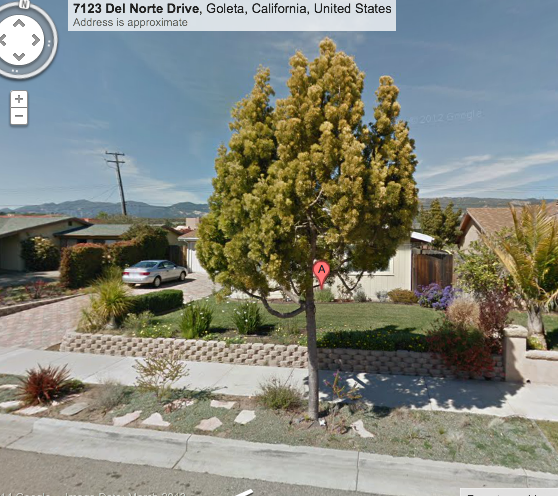
Practicality, frugality and focus were the key values that got Jonathan and Kara Rocque into their first home, at 7126 Del Norte Dr. in Goleta. Both UCSB graduates, the Rocques lived in a one-bedroom apartment and didn’t really upgrade their lifestyle much after college in order to save money for a house.

They started making offers right after they married, about 2-1/2 years ago, but Jonathan said he wasn’t really ready to buy until recently. “People always say ‘get in as soon as you can,’ but … at the same time, I really have no regrets not getting in any sooner because I wasn’t ready.” An engineer, he said he worked for a start-up company and was worried about job stability.

“I think I got to the point where I gained more confidence in myself and that things were going to be okay,” said Jonathan, who now works for Indigo Systems, which recently merged with FLIR Systems.

When he felt really ready to buy, Jonathan had the willing assistance of his father, John Rocque, a realtor and mortgage broker in San Dimas.

Another factor that kept the Rocques from buying quickly was their expectation of what they would be able to afford. “We started thinking that we wanted our dream home out of the shoot, and I think that’s what delayed our purchase, probably,” said Jonathan.

The three-bedroom two and a half-bathroom home the Rocques eventually bought this year for $659,500 has a studio apartment (garage conversion) on the property, a big selling point. “We were looking at these two-bedroom one-bath cottages and went, I just can’t do it. There’s got to be something out there that’s better because it doesn’t leave us the flexibility to grow,” said Jonathan. “When we saw this place with the studio I just thought ‘Oh God, couldn’t be better.’ I could give up the garage and take the extra income that will definitely help.”

Kara noted the backyard had a shed for storage, making it easier for her to give up the garage space. Being able to have a vegetable garden was also important to her, as was the school district. “Basically any school in Goleta, I’m totally comfortable with,” said Kara, who teaches first grade at La Patera.

The Rocques also knew what they didn’t want: no condos and no commuting. “The whole reason we live in Santa Barbara is the lifestyle,” said Jonathan. “I ride my bike. I love the mountains. I love riding by the ocean. I love the weather. I value my time … I’m not going to drive an hour each way to work. I’d go somewhere else where I could live close,” he said.

“I don’t think either one of us ever wants to move into one of the new developments because they’re so crunched together,” added Kara. “Yeah they look pretty, they’re nice and new, but to me this has more character than those houses. You can paint it whatever color you want to paint it; you can do whatever you want with your yard.”

While the Rocques would eventually like to move to a larger house, they are fixing up their yard and treating the house like a home.

“It’s not short term, but it’s not forever,” said Kara.

“This house easily gets us ten years,” said Jonathan. “If we wanted to, at some point we’ll refinance and we could reclaim that space (the studio).”

And as for the realities of being able to afford to stay on the South Coast, they credit much of their success to Patrick Flood, the financial consultant Jonathan began working with when he graduated from college. The Rocques said they feel both blessed and proud to be able to get into the housing market

“I like taking on challenges too. I took a major in college … that was challenging. And staying in Santa Barbara was a big challenge, but I was going to do it. I was really, really happy that we could,” said Jonathan.

Added Kara: “If we can do it here then we can do it anywhere.”

Originally published in South Coast Beacon

Java Joys

Courtesy Daily Grind

Courtesy Daily Grind

Ah, that rich, strong aroma of coffee. For some of us it’s the only thing that makes getting out of bed worthwhile. Even if you’re more interested in soaking up the atmosphere than the caffeine, it’s fun to know the 411 on local coffee houses.

Here’s my two cents. I’m sure others will disagree, and I’d be happy to debate them, as long as it’s over a latte.

Best overall

Red’s (211 Helena) – the “anti-Starbucks” in the heart of the Funk Zone, this place gets an A+ for funky ambiance and friendly staff. Red’s has an individual’s vision and personality written all over it, with eclectic art pieces, jewelry and purses for sale. Red’s serves lattes in handmade ceramic cups that are as individual as this fun new hangout. They also serve breakfast and lunch, as well as wines by the glass. This homey spot attracts an artsy neighborhood crowd that makes for interesting people watching. If only the chairs were a little more comfortable I would never want to leave.

Good Cup (1819 Cliff Dr.) – this coffee house reflects the upscale, healthy, family-oriented neighborhood the Mesa has become. In additional to first-rate coffee, they also offer gelato, smoothies, sandwiches and a great-looking quiche. The halo over the logo and the “good karma” tip jar gives you a taste of Good Cup’s spiritual bent. They offer a cool selection of things to buy with a bit of a new age/feminist bent, including a “smart women thirst for knowledge” cup and a Virgin Mary beach bag. The crowd is a mix of Mesa moms (think cute kids and Yoga pants), students and professionals from both the white and blue-collar crowd.

Best lattes

Northstar Coffee (918 State St.) – their foam is indeed a work of art. A little more expensive, but this is the place to go if you want to really treat yourself. Unfortunately, the decor is upscale generic and the place is mostly packed with tourists. Just close your eyes and pretend you’re in Italy.

Muddy Waters (508 E. Haley St.) – the service is “pierced and tattooed with attitude” and the decor is straight outta Santa Cruz, but the lattes are among the best in town. Not a bad people watching spot either.

Good strong, cups of Joe

Peet’s Coffee & Tea (3905 State St.) – Peet’s is almost a religion in the Bay Area, but here on the South Coast we tend to prefer our coffee with a little foam, and our coffee houses with a few more amenities, which is probably why there’s only one of the Peet’s chain in this area. The beans are excellent and other than at 8 a.m., there’s almost never a line.

Jeannine’s Bakery (1253 Coast Village Rd., 3607 State St. and inside Gelson’s at 3305 State St.) – also serves Peet’s coffee, along with the best carrot cake in town.

Santa Barbara Roasting Company (607 Paseo Nuevo and 321 Motor Way) – ROCO has gentrified its look with a new Paseo Nuevo store but the coffee still gets an old-school A+. It’s strong, hot and rich. On weekends I prefer the locals-only crowd on Motor/Lower State, which fills up with adorable young ballerinas (and their parents) from the nearby Gustafson Dance School.

Best ice blended drinks

The Coffee Bean & Tea Leaf (3052 De la Vina St., 811 State St. and 5745 Calle Real) – this is where the iced blended mocha trend started and they still make the best. Plus, the staff on State Street is goofily friendly and the De la Vina and Calle Real chains are great places to run into old friends.

Best people watching and eavesdropping

Coffee Cat (1201 Anacapa St.) – it’s cattycorner from the courthouse and right across the street from the county staff offices. Need I say more?

Starbuck’s (1046 Coast Village Rd.) – the only place in town where you simultaneously see Hollywood types discuss the latest hot screenplay with the same passion that Westmont students discuss “the word.” For some strange reason, this Starbuck’s is also a great place to see unusual breeds of dogs.

Hot Spots Espresso Company (36 State St.) – not only is this the only 24-hour coffee house in town, it’s also a living, breathing student UN. Definitely the only place in town you can routinely hear French, German, Russian and Chinese spoken simultaneously.

Vices and Spices (3558 State St.) – one of the oldest coffee places in town, this is a great place to run into old friends and find out the latest San Roque gossip. People still play checkers, read books and write in journals here, as opposed to talking on their cell phones and scanning the headlines.

Friendliest service

Mojo Coffee (7127 Hollister Ave.) – When the Beacon was in Goleta, Mojo Coffee was right downstairs. I started every day with good Mojo thanks to the friendly smiles of Chris and his staff, the only college students without attitude in town.

Espresso Roma (1101 State St.) – while the one near De la Guerra Plaza has closed, the one near the Beacon is still thriving, thanks in part to the truly nice people that brew these beans. The staff is always ready with a smile, and a fast cup of good, strong, reasonably priced coffee. Plus they make their own delicious muffins, croissants and cookies and sell them for half price at the end of the day.

Starbuck’s (Five Points Center) – Starbuck’s coffee and the decor might be consistent throughout the known universe, but the staff in Five Points is truly a notch above the others in the chain. If only it weren’t so hard to park …

Best lunch

The Daily Grind (2001 De la Vina St.) – their sandwiches are delicious and big enough to split. They also make really good soups; don’t miss the chicken and dumpling. Goleta Coffee Company (177 S. Turnpike Rd.) has the same menu but the San Marcos High School crowd and strip mall location gives it a totally different vibe.

Best breakfast

Jeannine’s Bakery (1253 Coast Village Rd., 3607 State St.) – fabulous baked goods, impeccable presentation. They have a full, cooked breakfast menu, as opposed to just muffins and burritos, and the coffee’s pretty darn good too.

Neighborhoods most in need of a coffee house

Cabrillo Boulevard – it’s hard to believe that this tourist Mecca lacks even a Starbucks, but the closest coffee house is at Hot Spots on lower State.

Milpas Street – sure there are donut and bagel places, but there’s not a single coffee house to be found on this bustling street.

Westside/San Andres – another mixed use neighborhood without a coffee house.

Originally published in South Coast Beacon

We’ll save you money in 30 Steps

Follow these tips to keep money in your pockets

Who isn’t looking for ways to save some cash? Here’s a month’s worth of money-saving tips — some big, some not so big — to start developing good financial habits.

1. Pay off credit weekly. Credit-card companies accrue interest daily, so if the minimum amount due is $100, send $25 weekly instead of paying at the end of the month to save money on interest.

2. Claim the child tax credit on your return, advises Babytalk Finance Guide. Depending on your income, this credit can shave as much as $1,000 from your taxes.

3. Get a “family share” cell-phone plan. A regular 400-minute plan is about $40 a month, but share an 800-minute plan with your spouse for just $70 and you save $10.

4. Hector A. Jimenez of West Coast Mortgage recommends comparing points, costs and interest rates when refinancing. “You may have to pay a higher interest rate over the life of the loan if you get a ‘no point’ loan,” he said. “Always ask your broker if rebate pricing is involved on your loan.”

5. When searching for the cheapest airline tickets, shop early in the morning. According to Consumer Credit Counseling Service, most airlines and travel sites introduce their promotional fares in the middle of the night.

6. CCCS also suggests you consider adjusting your withholding allowances to cover what you owe and no more. The average income tax refund in 2003 was more than $2,000, so Uncle Sam got to use that $166 each month instead of you.

7. To shave years off of your mortgage and save thousands of dollars in interest, send in one extra principal payment each year, advises CCCS. Or, divide your monthly payment by 12, and add that amount to each payment, noting that it is for principal only.

8. Want to transfer your tax basis under Proposition 60, but the home you’re buying is more than your current residence? Jon Mahoney of Coldwell Banker suggests paying all or part of real estate commissions separately, thereby reducing the purchase amount. “This can save you thousands of dollars every year,” he said.

9. The online forum, wwww.savingadvice.com, recommends participating in a child-care flexible spending account if your employer has one. This is a special Internal Revenue Service account that allows you to set aside money for child-care expenses with pre-tax dollars.

To save money on college expenses, savingadvice.com offers these tips:

10. Although application deadlines for most college scholarships aren’t due until senior year, start searching for grants and scholarships freshman year. By finding potential awards when your child begins high school, he or she can choose classes and participate in activities that will provide a better chance of getting free cash.

11. Education IRAs (Coverdell Education Savings Accounts) are no longer just for college. You may contribute up to $2,000 a year per beneficiary, and the money may now be used for elementary and secondary school costs as well as college expenses.

12. Reduce your college expenses by earning as many college credits outside the classroom as possible. Advanced Placement tests, internships, public service and job- training programs are a few examples of ways you can trim tuition costs by earning college credit outside the classroom.

13. There are some 750,000 college scholarships available to qualified students. While many of these are financial need- and grade-based, many others aren’t. Don’t let household income or grades stop you from searching for scholarships.

14. You’re allowed to pay any amount for an unlimited number of people’s college tuitions — not room and board or school supplies — without owing any gift taxes. For the tuition payments to qualify, you must pay the tuition directly to the college.

15. Signing up for a 401(k)? “Be sure to review the company benefit, and if there is a match, contribute the full amount necessary to take full advantage,” recommended Rich Schuette, senior advisor for TS Capital Group. “If you don’t, it’s like leaving free money on the table and can cost you tens of thousands of dollars over your working career.”

16. Consider a high deductible health insurance plan if available and save the difference in premium into an HSA (health savings account), advises Schuette. The money is tax deductible and will grow tax deferred, giving you the possibility of paying for many medical needs with tax-free money.

17. If you own rental property, consider working for your own property management company and start an additional retirement plan for yourself, lowering your tax liability and growing your retirement assets, suggests Schuette.

18. Pat Veretto of Frugal Living recommends: “Raise your auto insurance deductible and your premium will drop. If you now have $100 deductible, raise it to $500 or even $1,000 if you can do it and your insurance company allows it. Put that amount in a savings account and leave it to earn interest. If you don’t have an accident, it’ll still be yours and you’ll be making a little money on it. Even if you do have an accident, you’ll have the money to pay up. You won’t have lost anything because the difference in the premium will probably already have made up for any amount you have to pay on your own.”

19. Go digital. If you take 48 pictures a month, a digital camera can save you $20 a month, plus you don’t have all those not-up-to-par prints sitting around in boxes.

20. If you don’t keep good records, you’re probably not claiming all of your allowable income tax deductions and credits, advises Deborah Fowles in Your Guide to Financial Planning. “Set up a system now and use it all year. It’s much easier than scrambling to find everything at tax time, only to miss items that might have saved you money.”

21. “You’ve probably heard of the famous real estate mantra ‘location, location, location,’ but do you know the financial mantra ‘tracking, tracking, tracking?’ It is the single most important thing you can do — and the first step — to put you in the driver’s seat of your own life,” according to Linda Starr of Budget-Tools-and-Tips.com.

22. You may lower the price of a round-trip airfare by as much as two-thirds by making certain you stay over a Saturday evening, and by purchasing the ticket in advance, recommends Starr.

23. In these days of rising gas prices, she also suggests you can save money on gas by keeping your engine tuned and your tires inflated to their proper pressure.

Don’t just look to the present when it comes to finance, Candace Bahr and Ginita Wall, authors of It’s More Than Money-It’s Your Life: The New Money Club for Women, advise teaching children about financial decision-making by:

24. Starting allowances early, around age 5 or 6. Don’t let your children get in the habit of asking you for cash rather than choosing responsibly how to save and spend their own money.

25. Teach children how credit cards work. If children know how the cards work before they get one, they may be able to handle the responsibility better than teens who get a card and know nothing about them.

26. Starting a family Money Club. Your older teens may benefit from being included in a Money Club where they can report to other family members about money issues and help make group decisions.

Save money at the grocery store with these tips from www.grocerysavingstips.com.

27. When a product is on sale like “two for $5” you can almost always purchase just one of the items for the sale price (which in this case would be $2.50). In other words, you do not have to purchase two, or three, or four, or whatever else the sale sign says.

28. Don’t be brand loyal. Try to buy only what’s on sale. Sometimes a name brand can even be on sale for the same price as the store brand, or less, so read those tags carefully.

29. If you have a magazine you tend to keep picking up each month while you’re at the grocery just subscribe to the darn thing and save yourself $20!

30. In case these financial tips are coming a little too late and you need to file for bankruptcy, Ira and Linda Distenfield recently published We The People’s Guide to Bankruptcy, which helps consumers file for bankruptcy as affordably and painlessly as possible, before new federal laws go into effect in October.

Beacon intern Katherine Manning contributed to this report.

Originally published in the South Coast Beacon.

Noozhawk Talks: Leslie Dinaberg Sits Down With Suzanne Farwell

Suzanne Farwell, LaraCooper / Noozhawk photo

Suzanne Farwell, LaraCooper / Noozhawk photo

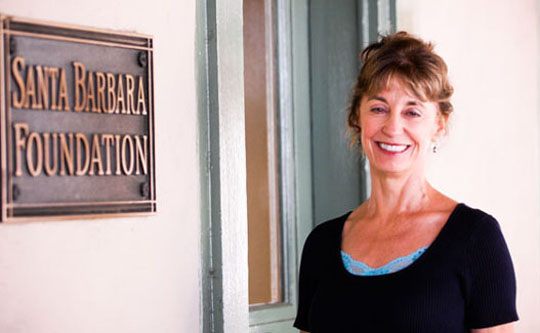
As Director of Communications, Suzanne Farwell is often the voice for the Santa Barbara Foundation, connecting all of us with information about the good work the foundation is doing in the community. Farwell connects with Leslie Dinaberg
to reflect on her work and her life, as she prepares to retire later this month.

Leslie Dinaberg: What will you miss the most about your job at the Santa Barbara
Foundation?

Suzanne Farwell: The people I work with. One of the reasons I like working there is because I
work with people who are passionate about what they do and helping people.

…The other thing I really like about my job is it has so many facets where I’m
gathering information, so I’m learning about many different things every day. …
I’m learning about different philanthropic groups that pop up through us. It’s the
whole canvas of interesting wonderful things that are positive. …

LD: That’s great. In many ways I think Santa Barbara Foundation seems like an
ideal nonprofit job in that you would never get bored because you’re dealing with
so many different types of things.

SF: And now there’s the added component of a new boss who is coming in (Ron
Gallo replaced Chuck Slosser as CEO this year) with fresh ideas and that’s also
very exciting.

LD: So what made you decide to retire now?

SF: Well a couple of things. The major reason is my daughter has a little boy who
is 14 months old and he is a sweetheart and I don’t get to see him much. And my
son is getting married and in every family there needs to be someone at the
center who doesn’t necessarily actually need to do anything but who is that
center and there’s much I can’t do with this job. … I hope to do some projects for
the foundation that I am intensely interested in, and I’m still young enough to be
able to open my mind to lots of other things and who knows. I’m trying to have a
fertile ground and so as things pop up they take root. But I can’t open it up
without cutting back on the work. But it seems like a good time. I’m also looking
forward to spending more time with my husband at home.

LD: I would imagine that’s its very demanding work.

SF: It is, but that’s what good about it is I use every brain cell.

LD: I know you worked on a lot of great programs while you were at the Santa
Barbara Foundation, but are there any that are particularly near and dear to your
heart?

SF: The first year I was there we were about to celebrate the Foundation’s 75th
anniversary. So there was a book, a history book for the anniversary project to
coordinate and then there was a gala performing arts presentation at the Lobero.
That was fantastic. Then there was a symposium about the future of
philanthropy. That was all in one year. That was really something. …

I think one of my favorites was a book about the blind doctor, Dr. Pearlman. … A
little old lady comes to us and she wants to leave us a million dollars part of the
deal is that we publish her manuscript. Well, you can imagine a little old lady’s
manuscript. What will we do with that? Well, you read it and it turned out to be a
really compelling human story so we shepherded that project, we got a local
publisher; the whole thing was really heartwarming. And it’s always nice to have
tangible evidence of what you’ve done because most of mine is ephemeral.

LD: I’ve seen that project and it’s very, very cool.

SF: Yes, and the idea that we would be following through on the donor’s wishes
which is always very important. And it’s a book that opens people’s eyes to what
it is like to be blind as a society, as a world society we could all that to
understand what it’s like to be in someone else’s shoes.

… It’s fascinating. I get something out of every single project. I know the
foundation’s history better than anybody.

LD: Do you have any trips planned or any immediate plans as soon as you’re
done?

SF: Everybody asks me that. … My husband and I have traveled a lot and I just
plan to stay home for a while and just be there. I live in a wonderful place. I want
to just sit on the porch, watch the birds and just still the mind a little bit because
I’m always thinking about philanthropy and this and that and it’s going to take a
while for that to go away because I’m always going at 60 miles an hour.

LD: What else do you do like to do with your spare time?

SF: Well I love to read. I’ve also been a professional dancer for 30 years and I
still do it two or three times a month. I’ve been with Chef Karim since he
started.

LD: I didn’t know that.

SF: So that’s in my blood. And I love to move, so it would be fun to explore
different forms of dance. I don’t know it’s mainly a stilling of the mind to allow
other things to come up. It sounds like I’m not going to do anything.

LD: You need a break, that’s what it sounds like to me.

SF: So I’m opening doors and letting things in.

LD: How did you get started with belly dancing?

SF: My husband and I were living at Married Student Housing at UCSB because
we were both graduate students. I was getting my masters in French and he was
getting a PhD in counseling psych and a woman moved in who was a belly
dancer, new to town. He was dabbling in photography at the time, she needed
photos, so they made a deal. He said I’ll take photos of you and why don’t you
give Suzanne some lessons. I was very annoyed. I was not consulted. I was
almost insulted.

So I went and I took a couple of lessons and said this is really weird. But then my
teacher put on a show with three other dancers and I went and I was hit in the
head by a bat. That proverbial light bulb was like, ah, that’s what I want. Yes. I
want to be that person on the stage. Because it’s so alluring and beautiful and
that was it I set on a path and my poor husband never imagined that this would
happen. And it became overwhelming. It changed my life because I learned to
relate to people in a different way. I was very British at the time, very shy and I
learned to handle myself. I did Belly Grams for years where I would go to offices,
homes, wherever and do a ten minute dance and congratulate the birthday
person and whatever it was and so I was in mansions in Montecito, barbecues on
Milpas, offices all over, it was fantastic, so I got a look at America that I never
would have had, and it was for me about Americans. A great education… It’s
added a spark to my life.

LD: Keeps you in shape too.

SF: It does. And like anybody else I’ve had experiences and I’ve taken from them
and learned and it’s made me who I am today, and I hope to have many more of
them…

LD: How did you go from getting your masters in French and becoming a belly
dancer to working in the nonprofit world?

SF: I was a stay at home mom and I took that very seriously. I spent a lot of time
with my kids educating them in every way that I could. When our daughter, the
younger of the two, went to high school, my husband said, “well you know, this is
a good time to get a job.” I was panicked because I had not ever really, really had
a job.

I’d worked as a caterer for many years and I worked at Jane Fonda’s ranch. … I
applied for a job at the museum and they hired me and then I thought to myself
as I sat at the desk the first day, what am I doing. This could be the shortest job
in history. Then I calmed down and I just applied the idea that what would I want
to know being Jill Six Pack on the street, because I didn’t know that much about
the museum and I went on from there and it all worked out very nicely.

Vital Stats: Suzanne Farwell

Born: January 30, in London, England to a French mother and a British
father

Family: Husband Larry Farwell; two grown children, Nick, who lives in Seattle,
and Lara, who lives in Palo Alto; and a grandson, Bennett, 14 months.

Professional Accomplishments: Masters Degree in French; Chef/Caterer at Jane
Fonda’s Ranch; Worked in communications for Santa Barbara Museum of
Natural History; Voiceover Artist, now voices the calendar on KDB radio station;
Professional Belly Dancer; Director of Communications for the Santa Barbara
Foundation.

Best Book You’ve Read Recently: Kate Wilhelm’s “Barbara Holloway” series of
mysteries and Orson Scott Card’s “Ender’s Game” series.

Little-Known Fact: “I think I’ve exposed all of the little known facts. The dancing, I
don’t bring that out that much. They are really two separate things. When they
intersect it’s interesting, but it’s not the first thing out of my mouth.”

Originally published in Noozhawk on June 7, 2009. To read it there click here.

Cantor Baby

Image by digitalart, courtesy of freeimages.net

Image by digitalart, courtesy of freeimages.net

December is one of the cruelest months for Jews.

Sure we have Hanukkah to celebrate our urge to shop, and latkes to indulge our genetic urge for carbs, and we can decorate in blue and silver to our hearts’ content, but the one thing we’re lacking in is carols. Let’s face it, other than “Oh Hanukkah,” and Adam Sandler’s “Hanukkah Song,” there aren’t a whole lot of Hanukkah hymns on the airwaves.

Rather than kvetch and whine about the lack of Chanukah chants this holiday season, I decided to do something about it. As with all things Jewish and musical, first I turned to my Cantor for inspiration.

Cantor Baby (to the tune of “Santa Baby)

Buh-bum.. buh-bum…

Cantor baby, slip a table under my knee, for me.

I’ve got an ache in my neck, Cantor baby, so hurry the masseuses tonight.

Cantor baby, a Jaguar convertible too, teal blue.

I’ll wait for you with the bells, and Sven and Nels.

Cantor baby, so hurry the masseuses tonight.

Think of all I’ve sacrificed, think of all the stuff I bought sale-priced. Next year I could be just as thrifty, if you’ll check off my Hanukkah listy,

Cantor baby, I wanna sunny vacation spot, oh yeah.

And really that’s not a lot, been an angel all year.

Cantor baby, so hurry the masseuses tonight.

Cantor honey, there’s one thing that I really do need, a maid, who can cook matzo ball soup, doo doop.

And clean up after my kid, which is a pain in my neck.

Oh heck.

So hurry the masseuses-I’m not talkin’ mezuzahs-hurry the masseuses tonight.

My own family did not inspire this next little ditty, I swear.

Let It Go, Let It Go, Let It Go (to the tune of “Let It Snow”)

Oh the fight we had last month was frightful.

But hashing it over is so delightful.

It’s finally time to end the row.

Let It Go! Let It Go! Let It Go!

It doesn’t show signs of stopping.

And I’ve bought some corn for popping.

So much for family drama.

Can you just let it go, mama.

My last nerve is about to blow.

Let It Go! Let It Go! Let It Go!

When we finally kiss goodnight.

How I’ll hate going home if you’re mad.

But what’s a holiday if there’s not a fight.

It’s what we call communication.

And venting our seasonal frustration.

But as long as you love me so.

Let It Go! Let It Go! Let It Go!

My family didn’t inspire that last one, but this one sure brings back memories. Of course all of the snow at my Grandmother’s house in Beverly Hills was fake and came from Niemans.

Noshing Through the Snow (to the tune of “Jingle Bells”)

Noshing through the snow, in a big safe Grand Marquis.

O’er the roads we go.

Driving so slowly.

Bells on cell phones ring.

Dad thinks of the gelt.

What fun it is to laugh and sing and watch the chocolate coins melt. Oh, Grandma Kvells, Grandma Kvells.

Futzing all the way.

Oh, what fun it is to ride in a family car all day, hey.

Grandma Kvells, Grandma Kvells.

Futzing all the way.

Oh, what fun it is to ride in the family car all day.

And finally, my personal favorite. I’m sure you’ll be hearing this on NPR soon, right after “Oy, Come All Ye Faithful” and “Little Drummer Goy.”

We Wish You a Merry Mazeltov (to the tune of “We Wish You a Merry Christmas”)

We wish you a Merry Mazeltov.

We wish you a Merry Mazeltov.

We wish you a Merry Mazeltov and a Happy New Year.

Good tidings we bring and a hot brisket too.

Good tidings for Hanukkah and some pastrami too.

Oh, bring us some lox and bagels.

Oh, bring us a smidge more kugel.

Oh, bring us some Matzo Ball Soup and a cup of Manischewitz.

We won’t go until we get full.

We won’t go until we get full.

We won’t go until we get full, so bring some more food!

We wish you a Merry Mazeltov.

We wish you a Merry Mazeltov.

We wish you a Merry Mazeltov and a Happy New Year.

==

Merry Mazeltov to all of you. Send your Hanukkah hymn suggestions to Leslie@LeslieDinaberg.com .

Originally appeared in the Santa Barbara Daily Sound on December 8, 2012.

Jungle Mom

Photo by Sura Nualpradid freedigitalphotos.net

Photo by Sura Nualpradid freedigitalphotos.net

I pity the first girl who stomps on my son’s heart.

I realized something about myself recently and it’s not very pretty. I may be an anti-violent, NPR-supporting, bleeding heart pacifist in theory, but when it comes right down to it-I would kill to prevent my son from suffering heartache.

I may not be a tiger mother, but I’m a jungle mom nonetheless. It stuns me how quickly I turn into Mama Bear when something threatens my cub.

When he was younger, I was mostly fixated on doing everything in my power to help my son avoid physical pain. Implanting a GPS tracking device and a boundary collar always sounded perfectly reasonable to me. It was only my husband’s mockery that prevented me from sending Koss out to play in full body armor. I would have wrapped him in Charmin from head to toe, like that kid in the old commercial who goes out to play football and practically tips over from all that cushiony padding.

I was always jealous of the mom in that commercial.

My imagination splinters into a million fearful little pieces whenever I think about anything bad happening to my son.

But now that Koss has successfully survived enough banged up knees and bruised elbows to keep the Band-Aid and Bactine business booming for years to come, it’s his emotional pain that keeps me up at night.

The fact is we’re still warming up to puberty, so at this point his hurt feelings dig much deeper into my overactive imagination than they do into his psyche. I will often still be reeling over some playground slight or hurt from weeks back when Koss wants to invite that very same kid I’ve been mentally murdering over to play.

Pesky old reality is no match for the mind of a mother.

Just thinking about the prospect of his many broken hearts to come is enough to make me growl.

I can’t help myself. Just thinking about that future girl who will someday make him cry drives me nuts. I want to kill her. I want to rip her to shreds. The mere thought of that girl transforms me into every single awful parent-of-an-only-child stereotype, though some might call me a murderous lunatic.

Gee, I hope his future girlfriends never read this column. That would be awful. Just awful.

Karma’s a bitch, and I certainly had my moments. As a former teenage girl, I know just how mean they can be.

Plus the fact that my genetic eggs are in this one and only one precious basket makes me guard it all the more zealously.

But here’s the rub. As a parent I’ve found that it’s almost impossible to try to comfort someone and develop their character at the time. With girlfriends and husbands, your job is just to listen and be supportive and hate whomever they hate at that moment. In those cases it’s easy to blame it on the other guy.

But when you’re comforting a child you sometimes have to fess up to the fact that it’s not always the other guy’s fault. Human relationships are complicated and they’re only just beginning.

Kind of makes me wish for the good old days when I would dream up tactical scenarios of how I would jump into the lion’s cage at the zoo to rescue my son.

When Leslie’s not busy cocooning her son in bubble wrap she can be reached at Leslie@LeslieDinaberg.com. For more columns visit www.LeslieDinaberg.com.  Originally published in the Santa Barbara Daily Sound on July 20, 2012.

Crazy Busy or Just Plain Crazy

jesadaphorn, freedigitalphotos.net

jesadaphorn, freedigitalphotos.net

As I write this first sentence, I’m on hold with my insurance company-again. I’m also listening to phone messages, soaking my whites in bleach, taping an episode of “Next Food Network Star,” stretching my quads, doing a few Kegel exercises and sipping my coffee, which I know is bad for me again this month, because I read it in “Prevention” while I was standing in line at Vons this morning.

It’s taken years of practice, but I’ve finally ratcheted my level of multitasking to “Rock Star,” and now I find out that there’s some new research that says multitasking actually slows you down. I had to push my 1:15 ’til 2:30 and ignore my email, but I managed to get myself to the library to get a peek at psychiatrist Edward Hallowell’s book, “Crazy Busy: Overstretched, Overbooked, and About to Snap! Strategies for Coping in a World Gone ADD.”

You don’t think I have time to actually buy and read a book about busyness, do you? But I skimmed it, for free, and I really tried to focus on the book, and only the book, during the 13 minutes I calculated it would take the meter maid to get to my illegally parked car.

The good doctor, who specializes in Attention Deficit Disorder (ADD), says that it is literally impossible to pay conscious attention to doing more than one thing at once. Instead, you end up paying conscious attention to several tasks in succession, and not doing any of them very well. When you switch your brain between tasks you end up wasting, rather than saving, precious time because your brain continually has to restart and refocus.

Are you kidding me? And here I was thinking it might be time to have another baby now that there’s a breast pump with a car adaptor (the Pump in Style) on the market. Just don’t drive over any bumps while you pump.

My husband-who would never dare to sully the experience of watching ESPN by matching a pair of socks, even when they accidentally whack him on the side of the head-has sworn by the do-one-thing-at-a-time-theory for years. Has hell finally frozen over? If not, he can’t possibly be right.

And yet, other experts also support the movement towards uni- tasking. A study at the University of Michigan found that multitasking leads to expensive “time costs.” Team leader Dr. David Meyer says that the additional time required to switch between one task and another tends to increase with the complexity of the chores involved. And that over the long run, the time required to make these switches may lead to a 20 to 40 percent decrease in actual productivity.

A 40 percent decrease? I can’t afford that. As much yammering as I do about how busy I am-and I am actually pretty busy-the reason that I need to multitask is to make sure that I also have time to read novels, catch a movie once in a while and take a long lunch with a friend.

Sometimes I’m almost embarrassed to admit that it’s more important to me have a social life than it is to have a clean house or actually bake the cookies myself. Sometimes there’s this undertone of bragging or one-upmanship when people, especially moms, talk about how busy they are. And I’m always a little self-conscious that I, as the mother of one, will never be as busy as my nut job friends who have four or more children. But I work! C’mon, give a girl a few points.

Of course the trouble with writing about busyness is that it makes you even more hyper-aware of how you spend each moment. It’s exhausting. If I didn’t have to change the laundry loads, write a speech, pick up the trash, and take out the kid, I might take a nap.

Why not find out if you can walk, chew gum, and send an email to Leslie@LeslieDinaberg.com at the same time? For more of Leslie’s columns visit www.lesliedinaberg.com.  Originally published in the Santa Barbara Daily Sound on June 22, 2012.

Eat, Drink and Be Married

Photo by Vichaya Kiatying-Angsulee, freedigitalphotos.net

Photo by Vichaya Kiatying-Angsulee, freedigitalphotos.net

Chatting with Author Rebecca Bloom

“What is it about wedding preparations that makes the ordinary tasks usually taking a woman from bed to bath, to bra, to base, to bagel, to bag, to butt-on-the-seat-of- the-car in 28 minutes flat, suddenly expand, exhale and evolve into hours upon hours of careful mirror observations and highly scrutinized tinkering?” writes Rebecca Bloom in her new novel, “Eat, Drink, and Be Married.”

I’m giggling as I read these words (So very true!) and laughing even more as I speak to their author, who is sneaking in our phone call during the precious naptime of her two-year-old son. Along with some of the laugh-out-loud-in-recognition scenes in her book, this is yet another thing about Rebecca Bloom that I can relate to.

Expecting her second child in the fall, Rebecca chats easily about writing, kids, tequila and the birth of “Eat, Drink, and Be Married,” her third novel. Here are some highlights:

Leslie Dinaberg: I really enjoyed the book. What was your inspiration?

Rebecca Bloom: I had been going to a lot of weddings and I was noticing that there is so much else that goes on around the wedding. There’s such a heightened sense of emotions for everybody. I wanted to write something that explored not just what the bride and groom were going through but what the guests themselves were going through. Weddings bring out a lot of different kinds of things for people and I wanted to explore those things.

LD: I was really struck by the coming together of the college friends who got back into their old dynamic so quickly and reverted to their old selves. Was that your experience?

RB: With my girlfriends from college, we have this shorthand that it doesn’t matter how long it has been since we’ve talked or how much has happened, the minute we’re together there’s not a lag, we don’t really have to catch up. There’s an instant repartee and there’s an instant sort of comfort and camaraderie. I wanted to put that in the book because I do think that in college you form such intense bonds because you’re with people 24/7 and you don’t really have time past college to ever really do that. … I wanted to capture that because I think it’s the case for a lot of people that the old friends sometimes are the ones that know you the best.

LD: A while back my husband and I were in that wedding a weekend phase and we sort of became the wedding critics. What do you think makes a really good wedding or a really not so good wedding?

RB: It is funny, when you write a wedding book everyone thinks you’re an expert on weddings but it’s sort of just your own opinion.

I think the best weddings are the weddings that really represent the bride and groom and you can tell that they really planned it for themselves and not for their moms and their friends. It’s really all about them. And those are often the most fun.

Our wedding had a lot of tequila and that really made it fun (Laughs). … I think the ones that are the best are the most relaxed and represent the couple-not just the bride.

LD: Were you married when you wrote this book?

RB: Actually I wrote this book, the first draft of it, when I was single. I wrote this wedding book and then I met my husband. So we’re sort of like that movie “Field of Dreams,” where the whole thing is like if you build it he will come. (Laughs)

LD: And now you have a husband, a young son and another on the way. How do you write and juggle all of that?

RB: Not as well as I would like. I am trying to start writing something new and it’s just hard. It’s hard to find the balance. … You just do the best you can. I can’t do everything all the time. And I can’t do it very well. My kids right now are the most important and that’s okay for me for right now.

LD: Not only are weddings fraught with drama, they’re also a huge business. Was that sort of marketing angle in your mind when you developed the story?

RB: I definitely knew … that there might be more avenues open maybe for publicity or marketing but I didn’t really think about that when I was writing it.

As I’ve gotten older though and as I end up starting my next book I’m thinking about that more because I want to make a living and I want it to sell and so I’m letting that come in a little bit. I have a bunch of ideas, so I am thinking which one is the most marketable and I’ll go with that.

But I’m not writing about zombies or anything (Laughs).

LD: I don’t know, a vampire, shades of grey, zombie wedding book with a historical twist could be huge.

For more information about Rebecca Bloom, visit www.rebeccabloom.com. For more columns visit www.LeslieDinaberg.com.  Originally published in the Santa Barbara Daily Sound on June 8, 2012.

The Neurotic Parent Comes to Santa Barbara

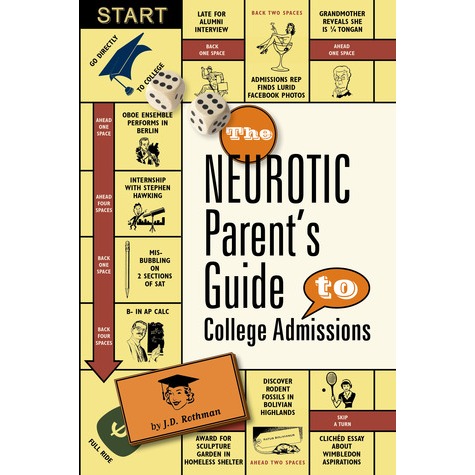
The Neurotic Parent's Guide to College AdmissionsSome people say that getting your kid through the college application process is a lot like childbirth-you have to experience it yourself to really understand it. Unlike with childbirth, where the endorphins kick in and make you forget most of the pain once you hold that precious baby in your arms, the only chemicals associated with getting your child into college are stiff drinks (for the parents) and plenty of aspirin. Luckily, we can now add a healthy dose of laughter to the college admission cocktail, thanks to J.D. Rothman’s new book, The Neurotic Parent’s Guide to College Admissions. With a sassy, sarcastic style that reminded me of The Official Preppy Handbook, Rothman does a spectacular job of skewering the collective craziness that overtakes otherwise rational people during this phase of their lives. At the same time, it’s not just funny but also provides valuable insights and incisive anthropological observations into the process. “There’s a collective neurosis kind of thing that takes place for parents during this time of their lives,” explains Rothman, who is an Emmy-winning television writer and lyricist in her other work life. After an eye-opening college tour with her older son (now a junior at Duke), she started the anonymous Neurotic Parent Blog as a way to reflect on the nutty parents who had “started their kids in college preparatory programs in the fifth grade,” as well as the “thousands of shockingly bright, polite, alert students, all of whom were vying for her son’s (or your daughter’s) spot.” Up until that trip, she had “no idea there was this level of insanity about the college admission process.” The blog quickly caught on and went viral after a post about Cornell’s hotel’s ugly bedspreads. Rothman admits that she too got caught up in the craziness. Some of the other students had out of this world accomplishments, like “discovering galaxies,” so she wondered how her son would ever compete. Like many parent trips, the first one you feel during the college application process is guilt. Rothman writes, “Clearly it is all your fault. While you were letting your child engage in normal activities like summer camp, babysitting and bowling, other kids were interning for their senators, training seeing eye-dogs and starting hedge funds in Sri Lanka. As a result, for every impressive kid, there are 50 even more outstanding ones.” She observes that even parents who were “not neurotic about other things like eating and sleeping still became neurotic about the college admission process. … Thankfully it is usually not both members of a couple,” she laughs. “Thankfully” is right. Though I often want to give therapy bonds as baby shower gifts, this book will make a pretty good substitute. Laughter is clearly the best therapy for Rothman, who offers up an amusing “prayer for the SAT” (please protect me from mis-bubbling and using passive voice, bless my number two pencils and protect their points), two pages of “haikus for the neurotic parent” and an entire chapter about “barista readiness” (a college degree is fine, but at the end of the day, they’d better know how to prepare a venti, sugar-free, nonfat, vanilla soy, double-shot, decaf, no foam, extra hot, peppermint white chocolate mocha). Asked if her current book tour has made her more or less neurotic, Rothman, who will appear at Chaucer’s on Sunday at 2 p.m., says, “definitely more, but now I’m neurotic about selling books.” Of course it doesn’t hurt that her younger son was recently accepted into his “dream school.” Unlike the rest of us there will be no more college applications for her to deal with in the future-unless the kids don’t like being baristas and want to go to graduate school. The upside? That might mean there’s another book in her future, and ours. Since my son’s only in seventh grade-and hasn’t, to my knowledge, written any symphonies or cured any diseases-this is definitely one book I plan to keep on my shelf for future reading. As Rothman says in her “orientation to college angst,” “whether you have a kindergartener or a 12th grader, may your child’s search be full of multiple acceptances, generous merit scholarships and chill roommates.” If they’re not, may you at least retain the ability to laugh at it all! = Spend your tax day in a lively reading and conversation about the insanity of modern college admissions at Chaucer’s Books, 3321 State St. Sunday, April 15 at 2 p.m.

When Leslie’s not stressing about her son’s lack of Olympic curling credentials, Mandarin language and Ethiopian cooking skills, she can be reached at Leslie@LeslieDinaberg.com. For more columns visitwww.LeslieDinaberg.com.  Originally published in the Santa Barbara Daily Sound on April 13, 2012.