Leslie Dinaberg Sits Down with Dr. Alois Zauner

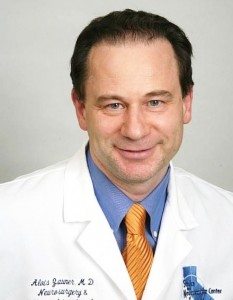
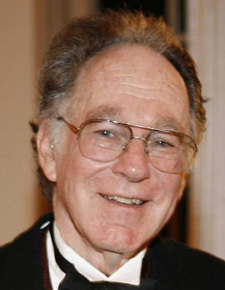
Dr. Alois Zauner (courtesy photo)

Dr. Alois Zauner (courtesy photo)

Strokes can be paralyzing and debilitating: There are 4.5 million strokes every year in the United States, making them the third leading cause of death and the number one cause of disability. But thanks to the addition of a new Neurovascular Center at Cottage Hospital, under the leadership of Dr. Alois Zauner, swift and less invasive treatment for strokes and other brain illnesses is now available right here in Santa Barbara.

Leslie Dinaberg: Tell me about the new Neurovascular Center at Cottage Hospital?

Alois Zauner: The idea is really to build up a Neuroscience Center. The first aspect was really the most difficult, to build the neurovascular service. It is like trauma service, your head injury needs to be treated right away and the same for stroke. …

The problem for this region is that centers are in Los Angeles (UCLA or USC or Cedars) and then the next places are in San Francisco (UCSF or Stanford) and basically for 500 miles there is nothing. … So frequently in the past a patient, let’s say in Ventura or Oxnard, has a bleeding aneurism or a stroke, and does not get on time to UCLA or some other place.

The idea is really to build, in partnership with other hospitals, a Neurovascular Center for this region, not just for Santa Barbara. …And also help some other hospitals to provide service, because not everybody has to come here. Some stroke patients can be treated in smaller hospitals.

LD: Is it more about having the doctors with the skills to perform those surgeries or is it also about having the equipment?

AZ: It’s kind of both. The key issue is that it’s the upfront investment in what is called a Neuro-angiography suite and also … the material we use is very expensive. So you need to have a certain infrastructure and tools to really do it and then you need the ICU critical care units. It takes quite a lot of infrastructure…Building the new hospital some of the focus is on the neurosciences and the neurovascular unit is the first major step towards that direction. We already do spine surgery, there is neurology here, but some other programs will be new. There will be treatment for Parkinson’s and we’ll do brain tumors and also child development and things like that.

LD: That’s interesting.

AZ: …One reason for me to come here me is also a closer collaboration with USCB, especially the neuroscience research institute.

LD: So they have a research institute even though they don’t have a medical school?

AZ: Yes, UCSB has a neuroscience research institute and they do have very fine engineering and a lot of what they’re working on is related to pre-clinical science. …We’re doing the fundraising right now. …

LD: Did the hospital have this vision and then go out and find you to run the center or did you come in with a vision and they’re now creating the center?

AZ: Very good questions. I think when I was a fellow at UCLA there was always the talk that Santa Barbara was unserved … that a lot of the patients don’t make it on time to the right place when they had a stroke… Then I think Cottage had a consulting company, … (they were making) a major investment and had to be sure that they were targeting what’s needed for this region. So they were told neurosciences and then somehow I got involved.

I think the initial vision of Cottage was more to have a stroke center, but you know I think it merges more with what neurosurgeons do; you cannot just have a stroke center because you have strokes but also the aneurisms … and a full spectrum of vascular diseases.

LD: It makes sense with our aging population.

AZ: Yes, in town but also everywhere, it’s not just for Santa Barbara, it’s for this region…One of things we’re doing is using a Robot in the ER and they can communicate with the people here. The Robots are made by a company here in SB called InTouch Health (www.intouchhealth.com), we have them here in the ICU … right now we have this at home, but the idea is that we’re partnering with other hospitals so they will have this in emergency rooms and assist the physicians who is not expert in say neuro, and discuss the films and can ask the patient questions and we can then decide how to treat them. … Critical care is also very important and I’ve spent a lot of time the last six months to work with the nurses and technicians because we do so much more to monitor the brain so that’s very important.

LD: How far away is the center from completion?

AZ: The neurovascular is in place, basically, but I think that the neuroscience center, that will take a while. …

LD: Can you explain the new minimally invasive techniques you are using?

AZ: A traditional way to treat an aneurism is do open surgery. So you do a craniotomy (where you surgically open the skull) and we go into your brain… we still do about 15-20% like that because the minimally invasive technology with the things we have right now we cannot do 100%, maybe 85%. In the case of neuroendovascular surgery a tiny little catheter goes into the brain…and we pull out the clot.

LD: In addition to being less invasive is there less chance of other complications?

AZ: … Less invasive does not mean that there’s less risk. Yes there’s less pain involved, they get to go home much quicker, the ICU care is much easier, like the aneurism we had today can go home in a few days. So yes, patients have less pain but it’s not always less risks.

LD: Is there a specific person that you’re working with at UCSB to make all this happen?

AZ: Matthew Tirrell is the Dean of Engineering. I think he’s the person who is really the key.

LD: Why did you choose to come to Santa Barbara to build this center?

AZ: What I wish is that we really can build this up, that we make a difference in the community. …It’s also I think very important for us to really be connected to UCSB to develop a center, because really what we do is so new that I think you cannot completely separate it from research or new ideas and I do hope that in a smaller hospital we can also work with researchers. It’s easier than in a big medical facility.

Vital Stats: Dr. Alois Zauner

Born: Austria

Family: Wife Teresa, son Alexander, age 10 (“they’ve only been here six weeks)

Professional Accomplishments: Medical degree from the University of Vienna; surgical internship and neurosurgical residency training at the Medical College of Virginia; combined fellowship in neuroendovascular surgery and diagnostic and interventional Radiology at UCLA; one of only 50 Neurosurgeons in the U.S. with training in neurointerventional radiology and endovascular techniques; director of Neuroendovascular Services at the University of Miami in Florida, and Assistant Professor in the Department of Neurological Surgery and Radiology; working to establish a new Neurovascular Center at Santa Barbara Cottage Hospital.

Little-Known Fact: “My family would like to have me back in Austria.”
Originally published in Noozhawk on January 14, 2008. Click here to read it on that site.

Goleta Native Has a New Story to Tell in Remote China

Sipping green tea while schmoozing in Mandarin with Chinese Communist Party officials is a long way from shooting the breeze with buddies after surfing the waves at UCSB’s Campus Point, but it’s all in a day’s work for John Wood.

A former Peace Corps volunteer, Wood and his wife Lousia recently started the Tree House Scholarship for university students in rural, northwestern China. In addition to assisting students with their education costs, these scholarships will also help fund post-graduate travel for students who would not otherwise have the resources to explore their own country. These students, who are studying to become teachers, will be lucky to earn about $25 a month if they secure jobs when they graduate.

Writing about their experiences is another component of the program. The students come from incredible poverty. One tells the story of the deep bloody cracks in his father’s hands from collecting trash, while another writes of being raised in a cave house by a grandmother with bound feet. “They have phenomenal stories to tell,” says Wood, now 30

The stories of rural China in the 20th and 21st centuries remain largely unknown, both inside China and abroad, but Wood is aiming to change that by improving his students’ abilities to communicate and helping to get their stories out to the world.

“Because of the way that the government is structured and with the way people relate with each other, a lot of those stories haven’t been told,” he says. Even within families. For example, Wood tells the story of a student saying she felt uncomfortable asking her parents to talk about their backgrounds. “She went so far as to tell me that she didn’t even know her mother’s given name, she only knew her as mother.”

Using their “crazy foreign teacher” as a scapegoat, students came back with fascinating accounts of their lives. “These are really remarkable stories that we’ll publish and distribute to donors,” Wood says. “The idea is that people who are interested in China or just people that are philanthropic in general will be interested to read these first-hand accounts of what it’s like in rural China.” (http://www.thetreehousescholarship.org/students.html)

It’s no surprise that these stories struck a strong chord in him. Growing up in Goleta, Wood had passions for both writing and social justice from a very young age. “When I was going to La Patera Elementary School I remember I wrote an editorial (on gun control) for the ‘Goleta Sun,’ says Wood, who went on to graduate from Dos Pueblos High School and UC Santa Cruz.

He began his professional life teaching high school in South Central Los Angeles, and worked as a journalist in London, Santa Barbara and Santa Monica before joining the Peace Corps, where he was assigned to teach at Long Dong University in the eastern portion of Gansu Province. “Despite the sophisticated timbre of its name, Long Dong University actually has nothing to do with the entertainment industry,” says Wood. Gansu is one of the poorest provinces in China, and it is regarded among Chinese people as a dusty and barren frontier land, a “backwards” place best to be avoided.

The newlyweds arrived in China in June 2005 with assignments to teach English to Chinese students studying to be teachers. “There are more people studying English in China right now than there are native English speakers in the rest of the world combined,” Wood says. “It’s incredible; everybody in China, every single student is studying English. It’s just wild.”

Considered development work, Wood explains that he was primarily “in a classroom with future teachers and working with them to improve their English and improve their teaching skills. Most of our students had extremely basic grasp of English…we found ourselves spending a lot of time on basic pronunciation, on classroom presence, on building vocabulary, just really basic, basic stuff. When people think, ‘Oh John was a University Professor in China,’ what they have in their mind is probably not exactly how it was.”

And what’s it like being a 6′ 4,” Santa Barbara surfer dude in China? “There is absolutely no blending in,” laughs Wood. When visitors ask what kind of clothes to pack, he says, “you could bring a pink tuxedo and wear that down the street and you would not be anymore out of place than you are already going to be.”

Even though he’s stared at everywhere he goes, Wood says, “One of the things I love about China and Chinese people, there’s so little apathy and so much interesting curiosity and enthusiasm because here is a country that’s been closed to the outside world for so long…people know very little about Western China, and Western Chinese people know very little about the rest of the world and so it’s really a fascinating place to be.”

While China is booming, it’s the China of the eastern seaboard, of Shanghai and Beijing, Hong Kong and Guangzhou that most westerners read about. Wood says, “The reality is that the vast majority of Chinese people do not live in these eastern hubs. Some two-thirds of the population (estimated at 1.3 to 1.5 billion) still works the land. Most of the rest live in cities scattered across the vast provinces, earning very little and enjoying few freedoms.”

One of the freedoms not enjoyed in China is access to the news. “We call it the great firewall of China,” Wood says. “The Communist Party spends an inordinate amount of money on controlling Internet news sites…it’s not the news, it’s the good news.” Wood says he will sometimes be in the middle of reading a breaking news story online, only to find it censored (access removed) before his very eyes.

Despite the challenges of navigating such a different culture, the Woods are definitely making the most of their time in China. Last summer they volunteered with the 2007 Special Olympics World Summer Games in Shanghai. With their Peace Corps service now complete, Louisa works as the Communications Director for the Special Olympics East Asia, and John does translations and works export an extremely fast-growing, sustainable type of soft wood developed to reduce the demand on old-growth cedar and redwood.

Prior to founding the Tree House Scholarship, they also helped to establish “the Tree House,” at Long Dong University, an English library, study and discussion room, complete with all sorts of books, magazines and reference materials, as well as movies, music and board games to help students master the English language. A team of about 24 student volunteers keeps the Tree House running, and the materials–almost all which were donated by foreign teachers, their friends and families–in order. For information about how to donate books visit http://www.thetreehousescholarship.org/donors.html

He’s excited about the initial response to the Tree House Scholarship: “It was huge…a dozen or more people have already said they’re sending in checks and we’re already getting donations people who want to contribute pro bono services. It’s exciting.”

The new scholarship program isn’t the only exciting thing going on in Wood’s life. Louisa is expecting their first child, due to be born in a very modern Western style hospital in China, on Cinco de Mayo, which seems very fitting for this adventurous pair.

“We always joke about how nothing western seems foreign anymore. Europe used to seem so exotic, and interesting … now if I see an Italian news story and I see a police car and it says “polizia,” I just say to myself what could that possibly mean, as opposed to scribble scribble dot dot dash circle,” laughs Wood.

“Coming to China was a very intimidating thing to begin with, but we really just committed ourselves to it and it’s paid off hugely,” he says. “Martin Luther King Jr. once said that injustice everywhere is a threat to justice everywhere. We feel something similar could be said of poverty. Poverty anywhere is a threat to wealth everywhere. There are no national borders. And while there are those in the United States who suffer very real hardships, all of them have some degree of mobility, some degree of access to support networks, however humbling or hard to obtain those may be. The same is not true in China. The Chinese poor live in a tightly controlled and politically charged environment, with shockingly little power to change their futures.”

Originally published in Noozhawk on January 8, 2008.

Leslie Dinaberg Sits Down With Nathan Rundlett

Nathan S. Rundlett, courtesy photo

Nathan S. Rundlett, courtesy photo

Sharing his passion for classical music is a labor of love for Nathan Rundlett. In 1994, he and his wife Marilyn Gilbert brought opera to town by founding the nonprofit Opera Santa Barbara. An accomplished baritone, now retired from his dual careers as a singer/high school chemistry teacher, Rundlett devotes much of his time these days to working with the nonprofit Santa Barbara Music Club, a group that presents free concerts and workshops to the community and provides musical education scholarships to young people.

Leslie Dinaberg: How did you get involved with the Santa Barbara Music Club?

Nathan Rundlett: I got interested in the club because it fulfilled a need that I felt when I moved to Santa Barbara (in 1981). I had sort of lost touch with my musical connections, which were in Los Angeles. Here was a great opportunity to perform the music that I loved. I wasn’t working as a musician anymore formally, so this was a great chance just once in a while to get something nice together and present it to an audience. …This club has been in existence, I think, 38 years.

LD: Prior to moving here, where did you perform in Los Angeles?

NR: … I sang in operas and shows and I taught and I sang in a large Methodist church. I also sang for a large Jewish synagogue. I also sang for an Italian restaurant. … We decided to come up to Santa Barbara and I just sort of cut all those ties and started going in a different direction. And got involved in the music club and did a few other odd little things, a few little shows and plays…Then my wife and I decided to fund the opera company.

There was no opera, there was no opera audience– so we created it. We raised money and set up a board, set up a 501(c) 3, gave it a name. Opera Santa Barbara was our baby. And after six years of running it we left it.

LD: So your wife, Marilyn Gilbert, is a singer as well?

NR: Yes, she’s a very fine singer.

LD: Is that how you met?

NR: Yes. I met her singing at Temple Sinai on Wilshire Boulevard. We met over the high holidays. … She is also an attorney, semi-retired now. She has sung has sung in music club, often, and we have sung together in the music club, duet programs and so on. It’s been very enjoyable.

LD: What are your responsibilities for the music club?

NR: My responsibility so far has been trying to pick up loose ends … what I want to do, as Vice President is development. Go into new areas, involve young people more and form better connections with schools. And also focus a lot more on the scholarship program. I think it’s our strong suit.

LD: Tell me about that.

NR: Our scholarship program has been there since almost the beginning. And we had some…distinguished, elderly music lovers, benefactors, teachers and lovers of music. One of them died and left us money and the other one just gave a lot of money and so we built up this nice fund to do scholarships with and now I’m hoping–this is just a wild idea–to turn it into an endowment, so we can live off the principal and keep it for many, many years… But I think that the scholarship program is one of the strongest things that we do, because that brings music ahead, classical music particularly, we’re interested in classical music. It brings it forward into the future and involves young people.

LD: And the scholarships go specifically toward instruction?

NR: Yes, it’s only instruction and the teacher and the student have to be residents of Santa Barbara County, so it’s local local, it’s only local which I like.

LD: What is your musical training?

NR: I was trained in college…I became interested in opera singing, briefly considered a career in it, and so I took private lessons in LA from an Italian teacher and I got involved in singing small productions and so on. I went to several coaches… I didn’t take a formal musical training. I wasn’t a music major or music minor. I was actually a chemistry major and a math minor.

LD: Oh wow, that’s probably very unusual, right?

NR: Yeah. But I love performing and I’ve done a lot of singing and acting.

LD: So have you always made your living in the arts or did you do something else?

NR: I taught high school chemistry for 30 years and I did all this other music kind of on the side.

LD: Where did you teach?

NR: I taught in Los Angeles, Granada Hills, Mission Hills, and in Camarillo.

LD: And you were performing at the same time?

NR: Yes, it worked out to be ideal because my school day was finished early and there were lots of rehearsals that didn’t start until late afternoon or evening … then the summers were free and the holidays, a lot of free time to do my music. For a while there I was making about equal amount of money teaching school and singing.

LD: Other than your performances with the music club, do you perform anywhere else in town?

NR: Ever since we left the opera company what we’ve been doing is putting on fundraisers. We put on a couple of Spanish operas for the Legal Aid Foundation… My wife and I did a series of two-person plays last year … For the Anti Defamation League we did performance of “Trial by Jury” by Gilbert and Sullivan. We did also Gilbert and Sullivan for the Santa Barbara Legal Aid Foundation. That was amazing. We did a big performance in the courthouse … the play is about a courtroom trial, so we did the trial in the courtroom …

LD: What else do you like to do?

NR: Well my second passion besides music is woodworking. I like making fine furniture, and cabinet making is my main passion. I took up carving recently and attended several seminars in Williamsburg, VA related to period furniture. …

LD: Do you have a favorite song or a favorite piece of music?

NR: My favorite piece of music to sing, of all time, was the prologue from the opera “Pagliacci.”

LD: How would you describe yourself?

NR: I love music and I love music performance. I enjoy life

I enjoy my family, particularly my great relationship with my wife. We have a wonderful marriage. So those are the important things I guess to me, music, life and my family and my wife.

Vital Stats: Nathan Rundlett

Born: Somerville, Mass; February 23, 1938

Family: Wife Marilyn Gilbert, children Anne, Kirsten, Steven, and Elisabeth (all in their 40s), 14 grandchildren

Civic Involvement: Santa Barbara Music Club, Legal Aid, Anti-Defamation League

Professional Accomplishments: Taught chemistry for 30 years, and developed new programs in field of education. Third place winner in Metropolitan Opera auditions for the west coast of the United States. Founder of Opera Santa Barbara.

Little-Known Fact: “At one time my passion was running, maybe nobody would know that looking at me now but in high school and college, track and field was a passion.”

Originally published in Noozhawk on January 7, 2008.

Designing Woman

DeNai Jones, courtesy photo

DeNai Jones, courtesy photo

Some girls dream of being princesses, but DeNai Jones dreamed of being a bag lady.

Piercing aquamarine eyes peeking through a wild tumble of blonde curls are the first things that strike you about DeNai Jones. From the funky flare of her vintage dress to the toes of her Betty Boop shoes, she looks every inch the fashion designer that she is, known in chic circles for her combinations of bold, sophisticated color and unusual textures and textiles.

It’s no surprise that her bags grace the arms of A-list stars like Julia Roberts, Kate Hudson, Salma Hayek, Gwen Stefani and Heidi Klum–but they’re more likely to be found wearing them on the playground than the haute couture runways. DeNai has won over the shoulders of women all over the world with her stylish line of diaper bags.

When DeNai–who wasn’t yet a mom at the time–set out to find a gift for a pregnant friend and found shelves full of “pastel colors, teddy bears and cutesy stuff,” she recognized a market for high-end, fashionable diaper bags. She sewed the first prototypes in her parents’ garage in Ventura, and paid homage to her father’s childhood nickname for her by naming the venture Petunia Pickle Bottom.

DeNai started her career as a kindergarten teacher, but says, “I was always sketching and painting. The arts were always my passion.” Her parents encouraged her to choose a more stable career path, but part of her attraction to teaching kindergarten was getting to do so many fun art projects in class.

Her husband, Braden Jones, dreamed of starting his own companies. Driving up the coast to Ventura from San Luis Obispo, where he had recently graduated from Cal Poly, the young couple had a heart-to-heart talk, and DeNai confided that she had always wanted to be a designer.

“It was kind of one of those ideas that you just carry in your mind with you,” she says. “We decided to travel a bit. We just started having those kinds of conversations. If you could do anything what would you do? We didn’t have a mortgage, we didn’t have children, no commitments besides ourselves.”

Braden encouraged DeNai to go after her dreams. She quit teaching to focus on developing her first samples. Within six to eight months, her bags were on the shelves of local stores.

The business quickly grew and they turned to DeNai’s best friend from Ventura High School, Korie Conant, for help. I was completely stunned,” when DeNai invited me to her parent’s cabin in Mammoth and showed me the bags, says Conant. She came on as a partner, taking on responsibility for marketing and brand development. Since then, the company has grown exponentially, with moms all over the world carrying their diapers Petunia-style.

Jones says that it’s still exciting to walk down the street and see someone carrying one of her bags. “I still kind of panic, my breath gets taken away and I usually will hide a little bit and … and follow them a little bit,” she says. “It’s still just as exciting as it was the first time I saw a bag on the street.”

Little details like the filigree on a staircase or a carved wooden pattern from a church eave inspire DeNai’s designs. Travel is high on her list for both relaxation and design inspiration. “I love to travel so much and experience all the different cultures that are out there. The world can be very small if you let it be,” she says.

Costa Rica is a favorite place for family time with Braden and their son Sutton, age two. They’re expecting another baby (it’s a boy) in March, and DeNai now has the flexibility–and additional staff–to focus on her children and come into the office just two days a week to concentrate primarily on design.

Living in Ventura, where she can walk to her salvaged brick office on Kalorama Street from her home downtown, helps to keep things real for DeNai. “I do love when we go out to New York for trade show and we come back it’s like, ‘Oh a breath of fresh air.’ It’s good to go for inspiration and shopping and looking around. All of those things are definitely imperative to developing the product. But I do really appreciate that we are kind of in our own microclimate here. We’re protected from a lot of the vindictive nature you see in the fashion world.”

And what’s it like to be in business with your best friend and her husband? “It’s easy actually. We all have different talents that we bring to the table with a common thread of creativity,” says Conant, who became a mom to Beckett in October. “There are no egos in the room which helps us survive. Ultimately, we are friends first, business partners second. We make it a practice to spend time with each other outside of the office on a weekly basis, that’s one of the keys to our business relationship–we truly are the best of friends.”

Braden says he’s learned a lot being in business with his wife. “Because we have a relationship on many levels, she never ceases to surprise me. … Although she considers herself risk adverse compared to me, she really does take every risk needed to be successful in life and business. However, she would probably be modest and tell you otherwise. It’s really the best of both worlds to share success on every level with the love of your life.”

“I love being at work with my husband and being able to see him in the office. Korie’s been my best friend since high school. It’s always nice for the three of us, even when we have to go to trade shows or take trips for the company, that we actually enjoy being together. It’s really been a dream, ” says DeNai.

A very sweet dream indeed.

Originally published in Ventana Monthly. Read the article here.

Leslie Dinaberg Sits Down With Janet Wolf

Janet Wolf, courtesy photo

Janet Wolf, courtesy photo

Issues like the environment, housing, transportation and social services usually top the agendas of county government, but women’s health is also high on the list of concerns for Second District Supervisor Janet Wolf, who celebrates her first year in office in January.

Leslie Dinaberg: I know health is a big concern of yours since you had a heart attack (in December of 2004). How do you manage to stay healthy with such a busy job?

Janet Wolf: I try to continue my daily exercise routine and eat healthy foods. I started a “walk and talk” program, so instead of meeting some people for lunch they would come and we would do a walk and talk downtown. I didn’t want to get into the habit of eating out all the time, so I kicked off this idea at the American Heart Association Wear Red Day last year.

LD: That’s a great idea.

JW: We’re going to do it again in February for the Heart Association.

LD: So you’ve become a heart health advocate partially in response to your own experiences.

JW: Yes. I went through a physical rehabilitation program and changed my diet. I went to a five-day program offered through the Mayo Clinic called Woman-Heart. Women who’ve experienced heart disease, not necessarily heart attacks but a whole myriad, were trained to become spokespersons for women and heart disease.

…I made a commitment that I was going to speak about it and talk about my experiences. They wanted women who did not have a medical background, so they could easily relate to other women about their experiences.

When I returned from the program I was incredibly motivated to get the word out because, as I’m sure you know, heart attacks are the number one killer of women.

… Lois Capps was the co-sponsor of a bill–Heart Disease Education, Research and Analysis, and Treatment (HEART) for Women Act–I was honored to be asked to go to Washington and testify for this bill. In a lot of ways it’s been a way for me to just speak out about something that I’m so passionate about. Talking to women who are moms about heart disease, diet and exercise can also have positive impacts on their children.

LD: Prior to your heart attack, had you ever been told to watch anything by your doctor?

JW: No. Everything was fine. …When this all happened, it just threw us all for a loop.

LD: I can imagine.

JW: I just felt extremely lucky to, first of all, live in Santa Barbara and get really top-notch care when I was in the hospital. But I think the thing and the message to women is prevention and then to know that when you feel that something is not right, don’t wait–take the initiative to get to the doctor or get to the emergency room.

LD: What did it feel like? It doesn’t sound like the dramatic thing that you see on TV.

JW: No. My husband said that, “you didn’t clench your heart and fall over.” It happened over time. I was having what felt like indigestion … (for several days) … I called my doctor… he prescribed medicine for indigestion, so I went and got the prescription filled and it didn’t help. … In the middle of the night I woke up and the pain was incredibly intense.

… By the time I got to the hospital I was having a massive heart attack. By that time the main artery was 100% occluded.

LD: I know this is a stereotype, but do you think that women are more likely to ignore their symptoms because they’re taking care of their families?

JW: I think that is partly true. When I was at the Mayo Clinic there was a woman who said she was having angina while she was at her son’s soccer game but she didn’t want to miss the soccer game. I am grateful that most women know about getting mammograms and colonoscopies … but we need to work harder about the letting people know about the increase of heart disease among women. We must be proactive.

LD: Switching gears a little bit, what’s like to be on the Board of Supervisors?

JW: It’s very exciting; it’s very challenging and rewarding.

LD: I know you served on the Goleta School Board for 12 years, how is it different?

JW: The obvious difference is that this is a full time job and the issues are broader, but I think a lot of the same skill set transfers over … For me it’s just really important to be prepared and on top of my game. And I find the meeting’s fascinating and engaging and it’s very interesting to deal with such a variety of issues. … Trying to have a really positive impact in our community. And that’s the rewarding part. And also meeting some incredible people. I’ve been very lucky to have a great staff.

… I think … we’ve taken care of outstanding issues that the county was dealing with like uniform rules, sphere of influence, and we have some issues that are coming before us like Goleta Beach and we’re also starting the Eastern Goleta PAC that’s going to be the planning document for our community. … I’ve got a great group of colleagues too to work with. Even though we certainly …don’t agree on everything and philosophically I have a point of view they may not share, but I think there is a mutual respect.

LD: That’s always good to hear. What do you think our biggest challenges are right now as a county?

JW: Right now I think it’s aligning our budget with our priorities or our fiscal challenges with our priorities.

LD: I keep hearing at the state level the budget is going to be so bad, how does it look in the county?

JW: There have been very conservative estimates on the impact on the county budget and because of the potential there’s been certain budget principles that have been put into place that are a little troubling to me. I think we will be impacted but there are also ways on the revenue side to try and enhance that. I have requested that the board hold a budget workshop in late February or early March to review the preliminary budget so that we can have input earlier on in the process.

… It’s certainly not a rosy picture but I also don’t think it’s total a bleak picture either. … If you have to make cuts, in my opinion, you look at the whole picture and you make them timely and wisely.

Vital Stats: Janet Wolf

Born: Los Angeles, May 17, 1954

Family: Husband Harvey, three daughters, Jessica (27), Stephanie (24), and Kim (20)

Civic Involvement: Alpha Resource Center, Planned Parenthood, National Charity League, League of Women Voters, Women’s Heart Health Advocate

Professional Accomplishments: Worked as a vocational rehabilitation counselor for more than 20 years; served on the Goleta School Board for 12 years; current member of the County Board of Supervisors

Little-Known Fact: “I love making necklaces. It’s a new hobby. I just discovered it.”

Originally published in Noozhawk on December 31, 2007.

Leslie Dinaberg Sits Down with Steven Crandell

Steven Crandell courtesy photo

Steven Crandell courtesy photo

Between his calming Kiwi accent and his towering 6-foot-6-inch presence, working with the Nuclear Age Peace Foundation for the abolishment of nuclear weapons seems a natural fit for Steven Crandell. There’s something soothing about spending time with this former Stanford basketball team captain, journalist, biographer and fund-raising consultant, who now devotes his days to working for peace.

Leslie Dinaberg: Tell me about the Nuclear Age Peace Foundation.

Steven Crandell: The Nuclear Age Peace Foundation has been working on the abolition of nuclear weapons for 25 years and it has a great reputation. (President and founder) David Krieger is well known; he has international relationships and reputation and yet the question that always comes back is, “What do you do?”

LD: So you’ve created this DVD about nuclear weapons to help explain. What are the main things you want to communicate?

SC: I have this story of three numbers, and if you know them you can take a big step toward awareness about nuclear issues.

How many nuclear weapons are there in the world? And the answer is 26,000. Most people don’t know that. Most people are pretty surprised that it’s that many.

The second question is how many nuclear weapons are on high alert, which means they can be fired in moments? 3,500 can be fired in moments.

OK, we’ve got two numbers: 26,000 nuclear weapons and 3,500 on high alert.

How many does it take to kill a million people? One.

And I think those numbers tell the story probably better than anything. We’ve got a weapon that’s so terrible it’s impossible to imagine it being used.

LD: Now of those 26,000, how many belong to the United States?

SC: About 10,000. Russia has a few more than we do and I think it’s around 90 percent are Russian or American.

LD: You have said previously that three-fourths of Americans are against nuclear weapons. What can we do to stop them?

SC: The first thing they can do is get informed … (We have a) new local program which is Santa Barbara Peace Community, and the basic goal of that is to train peace leaders in Santa Barbara. They’ll watch our DVD, and next year we’re adding a simple quiz so you’ll have the right answers. We’ll ask people to sign a pledge that says what we want the U.S. to take leadership for de-alerting weapons and no first use, getting back to working with other nations working toward the goal of a nonproliferation act and using the money, the billions of dollars — the U.S. alone spends $6 billion a year on nuclear weapons. Another step is e-mail five of your friends and ask them to watch the DVD, that’s something you can do right now on our Web site, which is www.wagingpeace.org. And the fifth step is you give to us. The sixth step is actually coming in here … they’ll get trained on how to present things to people and also more background information about nuclear weapons. And seventh is a very important step, especially for today’s peace leaders: They’ll come up with their own individual plan for who they want to approach.

… It’s kind of like a personal journey of development, if you like, except you are developing your knowledge about nuclear weapons and your ability to actually be involved and make a difference.

LD: I understand the work obviously is very admirable, but why did you choose this particular job?

SC: I’ve got four reasons and their names are Isaac, Luke, Josette and Nathaniel, my children. And I don’t try to, I’m far from an expert on nuclear weapons, but I don’t think you have to be. I think this is a legacy issue and by that I mean it’s an issue about what do we give to our kids, what world do we leave to them.

LD: Were you actively looking to go from being a consultant for a bunch of different organizations to working for a single organization?

SC: I think that was always a temptation. I had a great, great time as a consultant with my dad, we had our little company, the Crandell Company, the highlight was of course the book (Silver Tongue), which you’ve heard a lot about, which in itself was a fund raiser. But one of the things I felt as a consultant is that … fund raising is so strongly connected to the program, and when you get people who will give the time so that you can present the case, they want to know that you know it in and out and you believe in it. I think that makes a difference. And it’s not that I didn’t believe in the other charities I was helping, but I was helping a number of them and I was a consultant. Now there’s no question what I’m about and which team I’m on, and that makes my job easier in the end because I think that’s one of the things that I do probably better than other things, which is just speak from the heart.

LD: What do you like to do when you’re not working?

SC: I play the guitar and sing. I’ve been running with my brother, Michael, who is a marathoner. I can’t run that far but just to get away at lunch and go for a run by the beach is great. That’s the advantage of Santa Barbara. And I’ve got two little kids — 2 and 5 — who I spend a lot of time parenting when I’m not working.

LD: If you could be invisible anywhere in Santa Barbara, where would you go and what would you do?

SC: The whole invisibility thing isn’t all that attractive to me so. … I guess I’ve gained a lot of humility through life in various different ways, and I have a real sense of my own clay feet, so I don’t mind being myself. There’s an acceptance that has come with that, an acceptance of my foibles and more glaring faults as well, not as an excuse, just that I’m going to disappoint people in some ways somehow. But that’s not really the point of life. This point is, and I actually said this. John Zant interviewed me, or Mark Patton, when I was 18 and I was going away on a basketball scholarship and the headlines said, “He just wants to enjoy life.” … This is still me. I want to enjoy my life.

Vital Stats: Steven Crandell

Born: Feb. 15, 1959 in Harrisburg, Pa. Moved to Santa Barbara in 1960

Family: Wife Kathleen, children Nathaniel, 2; Josette, 5; Luke, 14; and Isaac, 18

Civic Involvement: “I do my best to my limited capability as a father and I think that, in the end, fathers and mothers are the key to community health. We don’t all have children but we all are children, all sons and daughters, and so that relationship is the key and often colors the relationships we choose for ourselves, how we approach life. My thought is if I’m going to invest time in anything I’m going to invest time in my kids.”

Professional Accomplishments: Author of Silver Tongue, about the life of his father, Larry Crandell; producer of the national news in New Zealand for 15 years; director of development/public affairs, the Nuclear Age Peace Foundation

Originally published in Noozhawk on December 24, 2007.

Card sharks up the ante at Christmas

courtesy pixbox77 at freedigitalphotos.net

courtesy pixbox77 at freedigitalphotos.net

It all started with Cady and Sting.

A few years back, Cady Huffman (whom some of you know from her sis-boom-bah’s as a cheerleader at San Marcos High School and some of you know from her va va vooms as Ulla on Broadway in The Producers) sent us a great Christmas card. It was a picture of her with her arms around Sting.

Yes, that Sting.

And the message was perfect: “Happy Holidays, Love Cady and Sting.”

Many laughs later we found out that she had taken the photo backstage at a concert and that Sting had no idea she was exploiting their 20-second friendship. Still it was the perfect holiday card, a simple message that reflects the sender’s personality (Cady knew she was going to be a star long before the critics ever heard of her) and brings a smile to the recipient.

Another favorite was my pal Kim Adelman and the Elvis impersonators. She had spent the previous year writing The Girls Guide to Elvis (still available at your local bookstore) and her holiday card was a virtual travelogue through her adventures in writing the book.

Another perfect card.

With two writers in the house you can imagine the pressure to come up with an annual Christmakkuh missive.

If that weren’t enough, as a Jew and a goy we have to be funny and secular too. Talk about mixed blessings, hmm … how would we illustrate Merry Mazeltov or Schlepping Through a Winter Wonderland?

See, it’s a lot of pressure.

Not that my husband and I haven’t had our moments in the holiday card hall of fame. One year, long before we were married or even thinking about children, we took a cliched family picture by the tree with our then-infant niece in my arms, and a one-year-old nephew on Zak’s knee. The card read: “Happy Holidays, Love Leslie, Zak, Mikey and Nicole.”

You should have seen all the emails we got and the belated baby congratulations from far flung friends.

Zak’s agent event got him extra money on a project because “this guy’s got two kids to support.” It’s nice when Hollywood people take the time to care.

A few years later when we actually had our own child to photograph, I thought we were home free on the holiday card thing.

Year One was an adorable naked baby wearing a Santa hat and holding a menorah.

Year Two was a sweet naked baby playing outside in the pool with some ornaments.

Year Three was a freezing naked baby writing holiday greetings in the sand.

You can only hide behind naked pictures of your child for so long before the police start knocking and you start thinking the therapy bond your friends gave at the baby shower wasn’t such a bad idea.

Thus, our quest for the perfect Christmakkuh card began again in earnest this year.

“We could all dye our hair green,” suggested my husband.

“A great idea, but the Taylor family already did it,” I reminded him.

“We could write a satire mocking all of those bragging holiday letters by telling people all of the terrible things that happened to our family this year,” he said.

“But we’ll never be able to out-bitter the one that Linda Stewart-Oaten did a few years back,” I said.

Good card ideas are hard to come by. Sometimes I think it takes a village to come up with one, which is why I’m asking for your help.

Send your best holiday cards to me at the Santa Barbara Daily Sound, 411 E. Canon Perdido, Suite 2, Santa Barbara, CA 93101.

You show me yours, and I’ll show you mine. That’s right, as a Christmakkwanza bonus, I’ll lay my own holiday cards on the table and send you whatever we come up with in the next few days.

Oy joy! And a very happy holiday to you and yours.

When she’s not spinning her wheels to top last year’s holiday card, Leslie can be found whirling around town doing some last minute shopping, or on email at email. For more columns visit www.LeslieDinaberg.com.

Originally appeared in the Santa Barbara Daily Sound on December 21, 2007.

One on one with Kate Parker

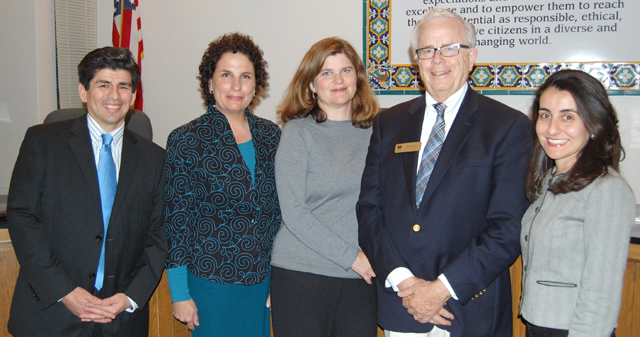
left to right): Santa Barbara School Board members Dr. Pedro Paz, Gayle Eidelson, Kate Parker, Ed Heron, Monique Limon (courtesy photo)

left to right): Santa Barbara School Board members Dr. Pedro Paz, Gayle Eidelson, Kate Parker, Ed Heron, Monique Limon (courtesy photo)

Coming up on the tail end of what she calls one of the most “fascinating and stressful years of her life,” the newest member of the Santa Barbara School Districts Board of Education, Kate Parker, took some rare time off to share her experiences.

Leslie Dinaberg: What’s it like to be on the Santa Barbara School Board? Are you the only elementary parent?

Kate Parker: I am. It’s a lot of meetings. It’s hard because I really feel like it’s important to have parents serve on our school boards. They can offer a really unique perspective, especially in Santa Barbara (where the secondary and elementary boards are combined) … but it’s really hard when you have young kids. … I couldn’t do it if my mother (Jan Wharton) didn’t help.

But … I’ve learned so much. I feel like I’m really contributing to our community and it’s just been a fascinating year, and it’s also been the most stressful year of my life.

LD: I would imagine it’s more challenging as the parent at an elementary school because it’s a smaller community.

KP: Once you get on the board, you really quickly get the perspective of the whole district, rather than me being just an Adams parent … when I came on it was really the toughest teacher negotiations that the district had in decades, and I was the only school board member that was on a campus every day picking up kids. So I was having a lot of direct contact with teachers, who are always so kind and respectful of me, but also had lots of questions and concerns.

LD: Did you feel like you knew what you were getting yourself into?

KP: I went to most meetings for two years, so … I understood the business of the board; I understood the way the board ran. What I didn’t anticipate, I think, is how emotional these issues are to so many people and so many people come to the board when there’s a problem. … We do have celebrations … there’s so many great things going on that people will come just for that moment and celebrate, but when they come to speak to the board it’s because they have a concern. … They come in with a lot of misconceptions, and that part I didn’t anticipate. … These people are really upset and I can’t make a decision that’s going to please everybody.

I have to always keep in mind what is best for the students even though that may make everybody unhappy. And so that has been the biggest challenge for me.

LD: There’s a vast difference in the resources that the different schools can bring with parent volunteers and fundraising, especially at the elementary level. Is the board involved in that?

KP: Right now it’s a site level thing, but we certainly have been looking at it, and I think that is a discussion for the coming year.

… You’re starting to create these schools that have very different feels to them. … For me personally it’s starting to feel quite uncomfortable to see this developing and seeing situations where parents will say I’m going to choose that school because look at how much money that they raise. … I don’t like to see that kind of disparity in this community but I’m not sure what the solution is at this point. It’s time to start that discussion.

LD: It’s very challenging, and I can see as an administration not wanting to discourage the generosity of families.

KP: No you don’t want to. What I would personally like to see is more going to the district level to be sure that students throughout Santa Barbara are able to have the same educational opportunities. It is hard enough for us to see because we have these Basic Aid Districts (where school dollars are tied directly to property values) in elementary level right next to us: Cold Spring, Montecito Union and Goleta, Hope District’s about to go. The interesting thing is Santa Barbara is also about to go, we’re probably about three years away from becoming Basic Aid, and that will be nice, but we’re never going to catch up to Montecito.

LD: What do you think are the biggest challenges right now for the district?

KP: For me I’m always trying to keep an eye on what are the goals of the district. The over-arching goal is an excellent education for students. The biggest issue that I see that we’re working with right now, and I feel like we’re working with it quite positively, is our budget. It’s hard enough to be in declining enrollment, but this has been an incredibly difficult year for me to come on the board and see that our business services department has a lot of problems and the budget was not accurate. I feel like I will feel so much better in January. Right now we’re going through a fiscal review with a company called School Services of California … I’m feeling so much better that this review is going on.

LD: What do you feel like has been your biggest accomplishment on the board so far?

KP: Everything feels like it’s so in process right now. That’s one of the things I’ve learned is that it’s actually really slow to make reform happen. … Pushing for the junior high electives to be restored once we knew that there was some money back … I really wanted to make sure that there were services in place for kids this year and not have them be completely eliminated and then we attempt to restore it the next year. … I’m glad that I was able to work with the rest of the board to restore elementary music.

LD: If you could be invisible anywhere in Santa Barbara, where would you go and what would you do?

KP: I would love to be invisible in a closed session of the City Council, see what’s really going on behind the closed doors.

Vital Stats: Kate Parker

Born: June 23, 1967, Clark Air Force Base, the Philippines

Family: Husband Ian, Adam (11), Simon (7) and Nicola (3)

Civic Involvement: Former Adams School PTA President; Current Board of Education Member, Santa Barbara School Districts

Professional Accomplishments: Assistant Librarian, Cate School

Little-Known Fact: Her father was in the Air Force and she lived in Taiwan for five years when she was in elementary school.


Originally published in Noozhawk on December 17, 2007: http://www.noozhawk.com/article/noozhawk_talks_leslie_dinaberg_sits_down_with_kate_parker/

Harmony, Hope Abound at La Casa de Maria

La Casa de la Maria, courtesy photo

La Casa de la Maria, courtesy photo

The halls were decked with boughs of holly and undeniable good cheer filled the air at La Casa de Maria’s holiday concert December 9th. Featuring Christmas carols from the Vocal Point Jazz Ensemble and a reading of the timeless holiday story, “The Gift of the Magi,” from Vicki Riskin and David Rintels, it was an afternoon in perfect harmony with the Montecito center’s peaceful surroundings.

“There is a timeless quality to this gathering and this place,” said Congresswoman Lois Capps about the 26-acre nonprofit interfaith retreat and conference center. Once thought to be holy ground by the Chumash nation, and formerly part of the San Ysidro Ranch, today La Casa de Maria offers a quiet destination for people of all faiths to escape the stress of everyday life and deepen their spirituality through individual and couples retreats in the intimate surroundings of the Immaculate Heart Center for Spiritual Renewal, or in group gatherings throughout La Casa’s campus.

“I’m always mindful, even when I’m far away, that this place is here and will always be here,” said Capps. She told the intimate gathering of La Casa supporters that the story of “The Gift of the Magi,” in which a woman sells her hair to buy her husband a watch chain for Christmas and the husband sells his watch to buy his wife hair clips, is one of her favorite stories. Its theme about the true meaning of gifts serves as a reminder of “what a gift we have in this place. I call it a sacred space,” said Capps, who first became involved with La Casa de Maria when she came to town 40 years ago.

La Casa de Maria is in the process of a $7.7 million capital campaign. Director Stephanie Glatt announced that they have now raised $550,000 toward a $1 million challenge grant, which will be used to pay off the property’s mortgage.

In addition, funds raised by the “Campaign to Preserve and Renew La Casa de Maria” will also be used to renew the conference center’s buildings in an environmentally sensitive manner and preserve their historical and architectural integrity. Along with preservation of buildings, funds will also be used to preserve the ecology of the site, including the creation of a sustainable agricultural site that protects native plants and development of an organic orchard/garden to provide the produce for the dining rooms, and improvement of the overall health of the citrus orchard and native Coast Live Oak grove. Funds will also go toward providing programs and retreats that address the spiritual, cultural and ecological needs of society, as well as building a fund to make scholarships available for programs and retreats.

To find out more about La Casa de Maria, or to donate to the capital campaign, call Stephanie Glatt at 969.5031 ext. 204 or visit lacasademaria.org.

Originally published in Noozhawk on December 16, 2007.

Dear Santa

cescassawin by freedigitalphotos.net

cescassawin by freedigitalphotos.net

Dear Santa,

I’m not sure if you remember me. It’s been a while since I’ve written. Truthfully, I was giving you the silent treatment, whether you realized it or not, because in all the years I did write to you, you never, ever, ever got me what I asked for.

I always thought it was because I was Jewish and we didn’t have a tree, until someone explained to me that saints couldn’t possibly be anti-Semitic.

But I just found this box of old letters in my parents’ garage, so now I realize that it wasn’t your fault. I’m sorry, Santa. I really am.

I owe you an apology for all those nasty thoughts I’ve had about you. Like when I didn’t get the pink Barbie convertible in 1970 and I drew a Hitler moustache on your picture. Or when you didn’t bring me a pony in 1974 or that purple Camaro in 1979 and I made those little kids cry when I told them you weren’t real. I feel especially bad for all those mean things I thought about you when Captain Awesome dumped me and took Princess Not-So-Nice to the Winter Formal in 1980, when I had already bought my red taffeta dress and everything. Those ex-lax brownies I left you the next year were truly unforgivable, but I’m asking you to forgive me anyway.

See, now I realize it wasn’t your fault. You didn’t get my letters because my mom never mailed them.

I’m sure my mom meant to mail my letters, but she just got busy. You know how it is. I certainly do. That’s actually why I’m writing to you now, and to apologize, of course. See, this year I really need something I can’t find in the stores, or even on the Internet. Believe me I’ve tried. What I really need this year is a clone of myself. I’m not kidding. There’s not enough of me to go around these days.

I can’t keep up with the whole Christmas comparathon competition. It’s bad enough that I’m losing in the cooking and crafting divisions, but then there are the cards. Those daily reminder letters about how perfect everyone else’s family is make me want to scream. “Matt and Karen’s fetus just received early admission to Harvard for 2025,” and my kid can’t even remember to take his backpack out of the car and hang it on the hook in his room! And he’s trying to remember, that’s the worst part.

I’m trying too. I’m trying my very best.

I’ve tried being in four or five places at the same time, but for some incredibly frustrating reason it just isn’t working. I’m always late and half the time, once I get somewhere, I forget what I’m supposed to be doing in the first place.

I’d love to know how you manage to visit every house on Christmas Eve, Santa. If you would share that one secret with me, then maybe I wouldn’t need to ask you for a clone.

Here’s a typical day, yesterday. I needed to go to Koss’s school early, to help with a fundraiser. This meant I had to wake myself up early and get him up and dressed early, none of which bodes well for the rest of the day. Especially since the mom who was supposed to bring the coffee apparently forgot. If anyone deserves a lump of coal…!

I also had an interview scheduled that morning, a doctor’s appointment, we were out of orange juice and it was laundry day, which means my socks didn’t match. Plus, my husband couldn’t find an address he needed and I really had to pee and he was still brushing his teeth.

The rest of a day went by in a similar whirl of stories to write, calls to make, gifts to buy, and emails to answer.

Then before I knew it, it was pickup time and the phone was ringing, and I forgot I was supposed to bring dessert for a board meeting, and Koss had a play date, but he also had basketball practice, said he was starving, couldn’t find his shoes, and I forgot that I was supposed to be at a completely different meeting that afternoon.

Then, just as I finally got him settled at practice and I had a few minutes to organize myself, the person I was supposed to interview the day before finally called me back. Where did I put my notes again? I seem to have misplaced my short-term memory. I know it was around here somewhere.

Anyway, Santa, if you’re still reading, you get the picture. I could really use some help around here. I just found a huge stack of last year’s thank you notes I forgot to mail, along with a letter that Koss wrote to you. I meant to mail it, I really did. But if you get him that puppy he asked for, then we’re really going to have some issues!

What’s on your Christmas wish list? Tell Leslie at email. For more columns visit www.LeslieDinaberg.com.
Originally appeared in the Santa Barbara Daily Sound on December 14, 2007.