Giving Back: Chuck Slosser

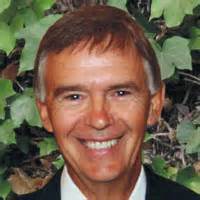
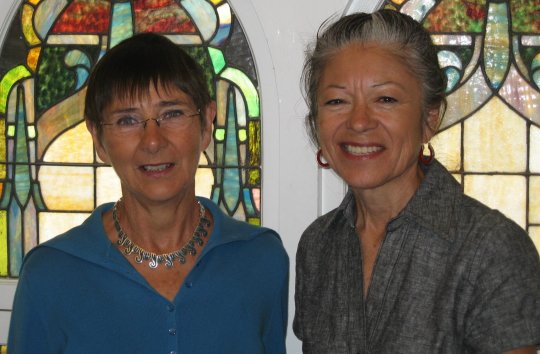
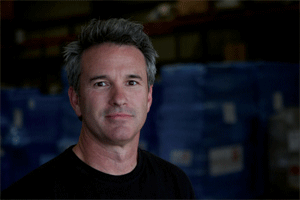
Chuck Slosser (courtesy photo)

Chuck Slosser (courtesy photo)

With the same engaging grin and focused attention that have pried philanthropic purse strings loose since he came to town in 1981, Chuck Slosser says he’s excited to tackle retirement after 18 years as executive director of the Santa Barbara Foundation.

What an amazing ride it has been. When Slosser, now 66 took the helm of the Santa Barbara Foundation–Santa Barbara County’s largest private source of funding for nonprofit programs–it had a staff of three, roughly $30 million in assets, and was giving out a few million in scholarships and grants a year.

Compare that to today’s foundation–under Slosser’s leadership, it now has a staff of 23, more than $300 million in assets, and donates about $27 million each year. He’s justifiably proud, but still ready for a slower pace, saying, “I thoroughly enjoyed the foundation and the work that we’ve done here and the great things that have happened in the community as a result. I’ve never objected to the 9 to 5, but it’s really the 5 to 9.”

Slosser and his wife of almost 38 years, Stephanie, who retired from UC Santa Barbara’s biology department three years ago, plan to travel, play golf and do yoga. He’s also interested in playing more basketball (he’s got a regular game at the Boys and Girls Club), taking Spanish lessons, picking up a guitar and a dissertation that have been collecting dust, and perhaps doing some consulting. He smiles. “I really do feel like a kid in a candy store. I want to do that, and I want to do that, and I can’t wait.”

Clearly, Slosser is a man with many interests, which is why the diverse Santa Barbara Foundation was “a dream job come true.” With an infinite variety of grant recipients–Music Academy of the West, Page Youth Center, Special Olympics, Council on Alcoholism & Drug Abuse, Santa Barbara Neighborhood Clinics, Red Cross, St. Vincent’s, Legal Aid, Transition House, Girls Inc. and Wildlife Care Network, to name a few — the foundation was a perfect place for this Renaissance man.

Originally published in Santa Barbara Magazine in January 2009.

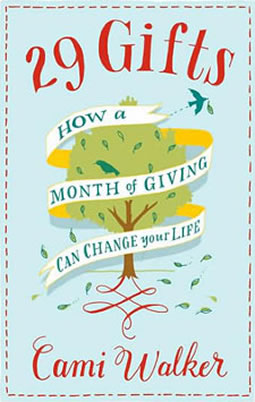
29 Gifts Bring Bountiful Blessings

29gifts-bgThe story is right out of a Lifetime movie, only this time it’s true.

Lovely 30-something Cami Walker was on top of the world. She had conquered addictions to alcohol and drugs–now her career was thriving and she just married the man of her dreams. Then, two weeks after her honeymoon, her whole world came crashing down around her. Her hands didn’t quite work, then one of her eyes stopped functioning, and she was diagnosed with multiple sclerosis.

Multiple sclerosis is an autoimmune disease that affects the brain and spinal cord. It isn’t fatal, but it can result in serious physical and cognitive disabilities, depending upon the form it takes. Soon after being diagnosed, Cami didn’t have the strength to keep working. Feeling desperate, hopeless and depressed, she decided to perform a simple ritual suggested by one of her spiritual teachers, a South African medicine woman named Mbali Creazzo. The idea was to take her mind off her disease–and herself–by focusing on helping others and giving something away each day for 29 days in a row.

“I thought the suggestion was crazy at first, but decided it couldn’t hurt to try it. Things couldn’t get much worse,” said Cami. “I was shocked by how quickly things turned around for me. For me personally it’s totally helped turn my health around in pretty miraculous ways. When I started this I was extremely sick and I was very lonely, I really had gotten to the point where I isolated myself from people. I was feeling totally alone, I was broke, I was so ill I hadn’t been able to work in months and I was very much in a downward spiral in my life.”

By day 14, Cami was able to walk without her cane, and was able to start working part-time again by day 29. “And my bank account was actually greatly improved because I was able to start working part time again and work just started showing up for me … it was crazy, like my phone just started ringing and clients just started showing up and it blew my mind. And, I think most importantly, I had reconnected with friends and family by the end and made some new friends as well,” she said.

Now in her ninth giving cycle, Cami was so inspired by the improvements in her life that she decided to turn the 29-Day Giving Challenge into a worldwide giving movement. Today www.29gifts.org has more than 3,200 givers in 38 countries, including–drum roll please-—yours truly.

“I have definitely been surprised by how quickly it’s grown,” said Cami.

I’m not that surprised because it’s fun and it’s mostly easy. Gifts can be as big or as little you like. The important thing is to make a mindful effort to do something nice for somebody else. One day I played 12 games of checkers in a row with my son, without a single grumble or complaint from me. Another day I bought lunch for a stranger without a single grumble or complaint from me. I’m pretty sure the not complaining part is important. It doesn’t matter what you do, but the website is full of great ideas for gifts of time, money, things, or kind words. In fact, so many great stories have been posted online that Cami got a book deal out of it. Her book will be coming out in the fall.

“I think one of the coolest stories that’s come out of the site is Operation Teddy Bear Care,” she said. “It started with a woman named Maureen Forbes who lives in the bush in South Africa with no electricity. She powers her computer with a solar panel that charges up a generator so that she can have two-three hours of light and use her computer. She posted on her blog that she had been visiting children in some of the remote AIDS clinics and she was just appalled by the conditions that they were living in and the level of poverty and that none of them had anything to call their own. She posted that she sews and she wanted to sew 100 teddy bears to give away but she only had enough fabric for 20.”

Flashes of the Hanukah story go through my mind, as Cami continues. “Someone on the U.S. side, his name is BJ in Georgia, he read her blog and said, ‘I’m going to help you out. We’re going to help you get enough materials to do 1,000 teddy bears.’ … One of my gifts was to help them create a website and an identity for themselves and get their organization functioning on its own. … Our goal is to help them give 1,000 gifts to South African children living in poverty by the 31st of December. And so far I think we’ve given almost 400 already, so we need about 600 more donation packages to be purchased. Go to teddybearcare.ning.com if you want to check them out.”

I went to the website, and guess what Day 25 was for me?

I asked Cami why she thinks the 29 gifts challenge has caught on. “It’s a time where I think a lot of people are tired of the negative messages they see in the media over and over, and feeling kind of scared and frustrated with the state of the economy and some of the other things. The reality is that there are a lot of problems that we’ve got to deal with, especially in America but pretty much everywhere. And I do think that part of the reason this has caught on is that people are looking for something positive that they can feel like they are part of.”

Sounds like a happy ending to me.

Originally published in the Santa Barbara Daily Sound on December 5, 2008.
If you’d like to be part of the 29 Gifts Challenge visit www.29gifts.org for more information, and tell Leslie you’re doing it at email. For more columns visit www.LeslieDinaberg.com.

Leslie Dinaberg Sits Down With Jamie Allison

Jamie Allison (photo by Lesley Hall)

Jamie Allison (photo by Lesley Hall)

Finding a way to combine fun, fitness and philanthropy was Jamie Allison’s goal when she founded Moms in Motion in Santa Barbara in 1999. Now she’s taking the show on the road, with 5,244 members in 140 cities, 45 states and four countries.

Leslie Dinaberg: How did Moms in Motion get started?

Jamie Allison: It was a hobby. We started with friends and family, there were14 of us who did the Triathlon team … For me it was about feeling overwhelmed with wanting to belong to a few charities, wanting to belong to a few social groups, wanting to belong to a few fitness teams that were already organized out there, and then feeling totally stressed out with the idea of how am I going to do that and be a mom and be a good wife and do it all.

… I started looking around for mommy/baby groups but that wasn’t really what I wanted either. I think there’s a really great purpose for that, especially for brand new moms to meet at the park with their babies, but after a while I wanted to move and get my fitness in and meet other women in the community that had those same interests. Yet at the same time I really wanted to be able to get everything in one place so I didn’t feel so maxed out and spread thin, and that’s when I thought about incorporating the charity part and then the social part.

Our whole foundation, our principles are fun, fitness, and philanthropy and in all of our groups locally and nationally those are the three principles they have to integrate into their programs. What I’m finding is that has set us apart as a unique niche. … It simplifies your life if you choose to just get everything in that one place.

LD: And the team leaders choose which nonprofits to support?

JA: Yes, it’s up to them. We’re kind of unique in Santa Barbara because we have multiple leaders here (Amanda Nicolato leads a bootcamp and weight training, Emily Watson leads a hiking team, Laura Francis leads the stand up paddle board team, Sean English leads the cycling team, Chrissy Lombardi leads the core conditioning and half marathon training teams, Ernesto Paredes leads the triathlon training team, and Mandy Burgess leads the surfing and conditioning team). … We meet every other month and talk about the different charities. Some leaders like to continue with the same charity year after year, some leaders like to mix it up, some leaders are getting new information about what’s out there each season but it’s their choice and the whole purpose is to constantly educate our members on what’s out there. So we give them a little taste of that charity and we either volunteer or we piggyback a fundraiser, or we create our own fundraiser and collectively we kind of do what we can to help that charity. So we invite the director to come and speak to us and kind of bring their wish list of wants and needs and then we as a group decide what we can do.

LD: It’s great to offer that opportunity because it’s hard to volunteer when you have young kids at home.

JA: Especially when your kids are little. Some members are so tapped out they can’t do anything and that’s okay, at least they’re getting the information about that charity. And there are others that are gung ho and are amazing with what they’re doing. A lot of those members, I’m thinking of Domestic Violence Solutions, have stayed on as independent volunteers and that’s when we really feel like we’ve contributed because yes, we’re adopted that charity for the season but when people continue on and that’s pretty awesome. And the triathlon team just raised money for Village Properties’ Teacher’s Fund and Computers for Families and so many of our members weren’t aware of those two opportunities, so it was pretty awesome.

LD: Do you train with one of the teams?

JA: I stepped out of the coaching arena, so yes now I get to enjoy doing that. And you know it’s hard to always take off that coaching hat completely. …Right now I’m running with Chrissy’s running group.

LD: really liked your blog just talking about training with the group from San Luis Obispo. There’s something really nice about being able to do that.

JA: The instant connection of it was so surreal for me because it was like closing your eyes and hearing the conversations I could have been here with our group, and it’s just connecting women and you’re at a kind of similar stage of life. I mean not everybody because we have 60 year olds running with us, we have mother-daughter duos, but for the most part where we are at this stage in life.

… When I was in San Luis we were talking to one of the moms who was a four-time marathon finisher, she was going through the empty nest syndrome. So she was talking to me about her kids had just left for college and it was really kind of fun because they kind of had a need to share why participating in Moms in Motion was nice for them.

I was feeling like I didn’t want to interrupt their practice but it was really wonderful to hear all of the different perspectives about why this is important to them, it’s fulfilling. That part of it is so great; it’s really what’s keeping me excited.

…When I was up in San Luis they wanted me to talk about how this all came to be and I was just talking about how important it is at this stage of life, I mean for me, to continue making friends along these lines that lift every body up. It’s a group that gets together to support each other and I was talking about all that, and I was saying how cool that is … how we’re building community and really that to me is what this is all about, building a sense of community and one of the members piped in she said, “but you forgot something think it’s like one of the most important things.” I was like what is it, what is it?

And she said “you know, when I leave for practice my girls are running around the house playing Moms in Motion.” And I thought wow. That gave me chills. This is really important for our kids to see mom taking care of herself because when she takes care of herself she’s taking care of the whole family.

LD: Is it hard for you to step out of the coaching and let local teams do their thing? Is that challenging for you at all?

JA: No, it’s not. … When I worked for the school district, my boss, Mike Couch, he was assistant superintendent and he brought me in as a reading coordinator for junior and senior high schools, to implement reading programs for kids who couldn’t read. I’ll never forget the way he led me. He said, “Jamie this is the program, you need to implement it. You just check in every week and tell me how it’s going.” And I thrived on that because I got to be creative, I got to make it my program, I didn’t have someone who was micro-managing me. I always thought gosh, that’s the way to lead. I mean obviously you’re going to have setbacks with people who try to take advantage of the situation and then you have to deal obviously with that, but for the most part I think with this I feel like if you set the structure and the model up and you provide that and you’re there for support and you have a pretty good sense of people that you bring in, my deal has always been let them lead. Get out of the way.

LD: You are sort of conspicuously absent from the Moms in Motion website. Is that intentional?

JA: Well sort of. I’ve always been a behind the scenes worker. It’s not really about me, it’s about them, and so I kind of put myself to the side. I’m there, if you want to find me you go to history and then there’s a place for me talking about all the little awards and all that good stuff, but I kind of feel that that’s not what Moms in Motion is really about–it’s really about connecting women to each other and developing that community.

LD: If you could be invisible anywhere in Santa Barbara, where would you go and what would you do?

JA: Onstage at the bowl with some of the musicians. I could be a backup singer and they wouldn’t even know it.

Vital Stats: Jamie Allison

Born: Santa Rosa, CA, January 21

Family: Husband Michael; daughters Kate (age 7) and Samantha (age 3).

Civic Involvement: “I really do that through my Moms in Motion groups.”

Professional Accomplishments: Teacher, Masters in Education from UCSB, Santa School Districts’ Secondary Reading Coordinator; Founder/CEO of Moms in Motion

Best Book You’ve Read Recently: A Map of the World, by Jane Hamilton

Little-Known Fact: “I studied with a Shaman in Peru for a few weeks.”

Originally published in Noozhawk on October 20, 2008. Click here to read it on that site.

Noozhawk Talks: Leslie Dinaberg Sits Down With Stephen Jacobsen

Stephen Jacobsen

Stephen Jacobsen

After serving 16 years as Senior Pastor at Goleta Presbyterian Church, Stephen Jacobsen recently took over as Executive Director of Hospice of Santa Barbara.

Leslie Dinaberg: Did you always want to go into this kind of work?

Stephen Jacobsen: No. … I was a history major at UCSB a long, long time ago, so that whole thing of where do things come from, why is the world the way it is, it’s interesting to me. … I think too, in my ministerial work, it had a focus within a congregation. I did get involved in the community in a number of things over the years, but here at Hospice of Santa Barbara it’s like there are no boundaries. I can be anywhere in town listening and learning, so that’s pretty fun. It feels like a big toy box.

LD: Is that unusual to go into a school like UCSB and then go into the ministry?

SJ: When I was at UCSB I had no interest at all in religious stuff. …There are friends of mine that still can’t believe I ever went into this. But I was there in 1970, the bank was still smoking and lots of smoke was in the air of all kinds, so in that whole milieu it was a pretty exciting time, a pretty fascinating and wonderful time. … I made some decisions that weren’t too good for my health psychically as well as physically, and out of that I came to a personal crisis and then found a little grace point out there in the universe that kind of turned me around.

… Later, that led me into a relationship with the woman who is now my wife and we started going to a church and I was like, “I’ll be darned, every time I go here it’s kind of like this experience I had.” Before I thought organized religion was the most dull thing there ever was, but this has actually been going on for thousands of years, these writings in any tradition, so that’s what got me into it. UCSB was the last place … I never took a religious studies class there. … Personally, it’s a wonderful kind of a wonderful grace to where I kind of screwed up my life there. Here I get to go back and be a tax paying, responsible kind of a person who’s trying to help, and in that sense, I never thought I’d get back to Santa Barbara. But here I am, and in that sense it’s kind of a circle that I feel I wouldn’t have ever dreamed of.

LD: I know you served on the board before becoming executive director. What initially drew you to become involved with Hospice of Santa Barbara?

SJ: I’ve been in ministry 27 years and wherever I was people had such reverence for the work of Hospice and I got on the board in the 80s in Ventura County, when I was working in Santa Paula and it was an interesting board to be on. … Often in our culture we’re kind of like whoa, keeping things at arms length, and going through those things (loss of a loved one) kind of slows us down a little bit and makes us a little more reverent. So I thought this is interesting chemistry to be around where it’s people who have gone through some tough things in life. …Gail (Rink, the retiring executive director of Hospice of Santa Barbara) and I would do occasional programs together and I just loved hearing her speak.

… So with all that then, what got me interested in the job was I just felt personally in my life, I am 55 and I’ve been doing what I had done for 27 years and it was wonderful, but I thought I would be open to something different. I have a great appreciation for what this organization does, but also a sense that at this point in Hospice of Santa Barbara’s growth it really wants to–in addition to doing all of the care giving it does for people–move to work with others in the community.

… There’ s a movement, the Alliance for Living and Dying Well … it has these two goals, to do kind of the nuts and bolts thing of how can we get all the services well integrated? How can we get advanced directives very available to people? But then there’s this second kind of a thing that the alliance is very much wanting to do, which is take this message, to form and articulate this message and take it into the culture in which we live.

There’s a saying that I really like by a guy named Matthew Fox, which is, “If we savor more we buy less.” And so instead of saying I should buy less, it’s like if I come to terms with the idea my life is limited, then I start to enjoy each detail more and then I just don’t feel like I have to buy quite as much because what I am doing is really awesome.

LD: It’s amazing how quickly we lose touch too. When you’re in that moment of something big happening you think I’m going to remember this forever and then it fades and you go on with your life.

SJ: Yeah, yeah absolutely.

LD: As you evolve from a board member into the executive director that sounds like that’s going to be one of your things you’ll emphasize.

SJ: Yes, I think of my job as internal and external. Internal is the usual things that an executive director does, supporting and helping to manage the volunteers and staff and in that sense I kind of feel like a guardian. I want to protect my people and give them what they need but on the other end is this kind of external community relations thing and we’re interested in doing a lot of community education and collaborative things.

… One of my favorite definitions of leadership is the interweaving of relationships, so there’s one thing about setting the vision but there’s another thing about just seeing how all the relationships at all the different kinds of levels can just be woven together all the time so it’s strong, it’s not just one person out there in front of a charge. So a lot of what I look at is how to keep weaving relationships between Hospice of Santa Barbara and the healthcare people in town, the educational groups, all kinds of stuff.

LD: What do you do when you’re not working?

SJ: I love the beach, bicycling, I love to swim, I love opera, I love baseball. I’m a big Dodger fan, and there are 31 people that work here, but I don’t think there’s anyone else that cares, so I had to learn that the first week. … I love to travel. I don’t think I’ll be doing as much traveling here, but in my previous job had two weeks every year and I could save them on account, so I went to Mexico City and I loved kind of spiritual journeying, going to see the world. Here a lot of the journeying will be here in town.

Vital Stats: Stephen Jacobsen

Born: Nov. 8, 1952, San Bernardino

Family: Wife Ann; daughters Autumn (30, lives in Seattle), Alegra (21, lives in Austin, Texas), and Aria (18, a freshman at UC Santa Cruz); grandson Asher; Sophie the dog; and two chickens, Scarlett Johansson and Keira Knightley

Civic Involvement: Walter H. Capps Center for the Study of Ethics, Religion and Public Life (UCSB) advisory group; board member Hospice of Santa Barbara andIsla Vista Youth Project; recent past president of the Interfaith Initiative of Santa Barbara County; former board member of La Casa de Maria Retreat House

Professional Accomplishments: Senior pastor at Goleta Presbyterian Churchfor 16 years; Visiting Scholar at the UCSB Religious Studies Department; taught courses in history and religious studies at Heritage University in Toppenish, Wash.; pastor at Community Presbyterian Church in Wapato, Wash.

Best Book You’ve Read Recently: La Sumida Nursery “smallest ripe tomato” competition

Originally published in Noozhawk on October 6, 2008. Click here to read it on that site.

Leslie Dinaberg Sits Down with Cecilia Rodriguez

Anna Kokotovic, left, former executive director of CALM (Child Abuse Listening & Mediation), gave new Executive Director Cecilia Rodriguez her start with the organization more than 20 years ago. (Jennifer Guess photo)

Anna Kokotovic, left, former executive director of CALM (Child Abuse Listening & Mediation), gave new Executive Director Cecilia Rodriguez her start with the organization more than 20 years ago. (Jennifer Guess photo)

Starting as a volunteer in 1984, CALM‘s (Child Abuse Listening & Mediation) new Executive Director Cecilia Rodriguez has proven her passion for protecting children from abuse. Now she wants to focus on prevention, reaching out to young families to help break the cycle of abuse.

Leslie Dinaberg: So you started as a volunteer at CALM?

Cecilia Rodriguez: Yes, when my own children were very little and I was trying to get away from my life as a full time mom. I wanted to be able to talk about something more than diapers and baby stuff, which is fine but when I got involved here at CALM as a volunteer, within minutes I realized that this was what I would do for the rest of my life. That’s why I warn volunteers when they come here, I say “beware this agency has a way of grabbing you.” The mission is just so compelling and we’re protecting the most vulnerable in our community and helping families to grow and change and break the cycle of abuse.

LD: So you went graduate school and became a marriage and family therapist.

CR: Yes and Dr. Anna Kokotovic, the executive director at the time, offered me a position doing intensive in-home therapy, doing treatment at people’s homes, in the streets, in schools. Wherever families hung out, that’s where I hung out.

… The wonderful thing about in-home work is that you really get a much clearer picture of what’s going on than you do when they come to the office. You rely here on what they tell you, but when you go there and you see the conditions that they are living under, the stressors that they are facing, the challenges, and the poverty. Then you realize that some of the things we innocently ask people to do in their homes are just not possible. So we have to adapt it so that it’s something that really will work for them.

LD: How willing are people to have this kind of an intervention of people coming into their homes?

CR: I am always so humbled–and I’m going to start crying because I always cry about this–that people trust us enough to allow us to come into their home. I am always so touched by that, and it just shows you the level of distress that they’re in, or they are seeking so much, they want support.

LD: What programs are you emphasizing now?

CR: … My focus now, as executive director, is to focus more on prevention than on trying to repair the problem after it has occurred. With teenagers it would be so much better not to get to that place. That’s why we’re really emphasizing preschool, emphasizing preschool aged children aged 0 to 5, the younger the better. And it’s not the children we’re focusing on, it’s the parents so that we can support them to be better families, to listen to their children to be supported themselves. You know, a lot of parents haven’t been supported, didn’t get optimum family situations and so they just repeat what was done. If in their family they were raised in a really punitive family environment, they will tend to do the same thing unless we can intervene. … We try to target young families, even before they have their babies. We get referrals from obstetricians and pediatricians and the Public Health Department when there are certain risk factors and then we begin working with them on bonding and attachment issues from day one.

…We have a whole team of home visitors called Great Beginnings, and they are the ones that go to homes of the very young children.

LD: You have a lot of different programs and a lot of things going on, but what is your perception of the needs of Santa Barbara County versus what you’re able to provide.

CR: Well, there’s always more need than we’re able to provide and again, the need is I think, because I’ve been doing this for a lot of years, and I’m tired of coming in after the fact when abuse has happened and then we react by wrapping our CALM services around the family. That’s why I want to focus on support and prevention efforts, teaching parents how to be better parents and families how to be there for one another. There are so many stressors in families’ lives these days and it’s getting even more challenging now, financial stressors, our economy, that’s adding another, and our families have always been stressed in that way because we work often with families of lower social economic class, so it’s always challenging for them, but then it’s even more challenging now.

LD: Obviously, there are people that have higher risk backgrounds than others, but in some ways everybody has that potential to go too far.

CR: Right. We all have the capacity to abuse given a certain set of circumstances, given certain life stressors I think we can, like you say, cross the line or lose sight of what we’re supposed to do with our children.

LD: In addition to earlier, is there anything else that you feel like is a shift from what’s been done in the past?

CR: Support for preschools. That’s also where I see that children who are experiencing neglect or are growing up in stressful situations where they are exposed to domestic violence, they are not ready to learn; they’re not ready for kindergarten. You know kids are getting kicked out of preschool, this is shocking to me … If you can’t make it in preschool oh my gosh. But you know, when kids are aggressive that’s an automatic “we can’t deal with you here” because they hurt other children. And not every preschool does that, kicks kids out, but there are some, and we see kids here who can’t make it in preschool setting. It is sad. So what we’re doing is we’re partnering with, for instance, Storyteller, and we’re offering support to children and the teachers so that we can help these children to be successful so they’re ready on day one in kindergarten they are ready to learn.

LD: That’s really important.

CR: Yes because what happens if they’re not ready and they’re disruptive from day one they get tagged, you know these kids they get tagged, even in preschool, as the problem kids and they’re going to be problem, problem, problem and they’re going to fail in school.

LD: That’s really sad.

CR: This is a great fact that I uncovered the other day. Do you know that our volunteers provide us with 10,000 hours a year of volunteer time? We have volunteers provide childcare. What our families tell us is one of the most helpful things that we do. When they come here for an appointment they can bring their kids and the kids will be taken care of.

LD: When you’re not working what do you like to do?

CR: I am a total gym rat. I’m an exercise junkie. I go to the Goleta Valley Athletic Club. What’s really important about this work is that it can be very stressful work, of course, you can take a lot home with you, and self-care is very important and I try to model that for the staff. We really stress the importance of when you’re not here when you’re not working, surrounding yourself with beauty, with culture, with laughter, good books, whatever it is that feeds your soul, that’s what you need to do when you’re not here.

So I work out because I’m a fanatic about it, just because it makes me feel good, and also I’m a gardener, My garden is my pride and joy. I love my garden so I’m always out there in my garden. And I have a really solid family, which also helps.

Vital Stats: Cecilia Rodriguez

Born: Los Angeles, November 25, 1957

Family: Husband Bob Stanley; two grown children, Tom who lives in Bellingham, WA, and Clare, who lives in Granada, Spain.

Professional Accomplishments: Art Teacher at Marymount in the 1970s, staff member at CALM for more than 22 years.

Best Book You’ve Read Recently: Kabul Beauty School by Deborah Rodriguez

Little-Known Fact: “I love Cheetos. That is my junk food of choice. About every six months I have a Cheetos attack and I just totally give into it.”

Originally published in Noozhawk in September 2008. Click here to read the story on that site.

Legacies: Storyteller

storytellerThe infectious chirping of children’s laughter greets visitors. Pigtails fly as a little girl rounds the playground on a tricycle, her smile as bright as the sun. This scene could take place at any of Santa Barbara’s high quality preschool programs, with one exceptional difference–this is Storyteller Children’s Center and these children are homeless.

Founded in 1988 by volunteers who pushed aside cots at Transition House to make space for a small group of children, Storyteller has a come a long way from those humble beginnings.

“We started out as a half-day program for about ten kids,” says Executive Director Terri Allison, who co-wrote the initial proposal to fund a childcare center for homeless children when she worked for the Community Action Commission. The children thrived and the program grew, incorporating in 1991 and moving to First Congregational Church, then to a dedicated center in 1999.

As the program matured, so did its goals. “In the beginning, the group was very focused on providing a safe space for kids,” says board president Jon Clark. “Now we’re looking in a more focused way at the children and their families and what they need. … In particular because of the living situations these children are in, it really is on Storyteller to provide educational experiences, nutrition and all those things that will help them grow.”

Most families are referred through word-of-mouth or from other agencies such as Transition House, Domestic Violence Solutions, St. Vincent’s, Department of Social Services and Child Protective Services.

“A teacher sits down with every family for at least an hour … to establish a level of trust with them and also to figure how we can help,” Allison says. In addition to early childcare and education services, offerings include on-site counseling, family services and case management; parent support groups and education workshops; mental health and disability services; health, vision and dental screenings and nutrition services.

“The teacher helps set goals with the parents and we monitor them on a monthly basis,” Allison says. “We know that the best way to affect change is through the whole family, so parents to have the skills that they need, as well as the children.”

“Parents who leave their children with us are expressing tremendous trust in the people that work at Storyteller,” says Clark. “Once that trusting relationship is developed, there is so much that we can do to help them deal with their family issues and parenting issues. That was a real eye-opener when we realized that the relationship between the organization and the families and the trust that developed was such a huge asset.”

Studies of graduates and their families show a marked improvement in their social and economic status and Storyteller is working with UCSB to research the longer-term impact of its programs. “What we’re trying to do is to make meaningful changes in the lives of children and their families that are going to play out over time,” says Clark.

“There is so much scientific evidence about the huge differences that quality preschool education can make in later years,” says Allison. Experts agree that investment in high quality education for young children has substantial economic payoffs–for every $1 invested, $3 to $16 is returned from decreased jail time and increased physical and mental health.

One of the biggest challenges for Storyteller is trying to focus on the depth of services to individual families and still offer a breadth of services to the community. The waiting list for children continues to grow. Allison cites research that there is only one licensed childcare space for every three eligible children in Santa Barbara County–regardless of a family’s ability to pay.

Still, Storyteller is doing its best to help more children. Celebrating its 20th anniversary this year, the organization opened a second facility, thanks in large part to the generosity of the Orfalea Foundation, who bought the building and is leasing it back to Storyteller rent-free for ten years, enabling Storyteller to mount a $3.2 million capital campaign for the expansion.

Last spring Storyteller was able to increase capacity from 29 to 50 children in the two preschools. By September of 2009 they expect to have 72 children enrolled.

“It’s really amazing to think of how far we’ve come,” says board member J.P. Sharp, a volunteer since 1994. “It was a real grassroots organization of helping children and helping parents and really teaching them how to parent. This is still a wonderful place to visit and volunteer.”

Originally published in Santa Barbara Seasons Magazine in Fall 2008.

Leslie Dinaberg Sits Down With Charles Caldwell

United Way’s Charles Caldwell has a lead role in the Power of Partnership Initiative for Santa Barbara, an ambitious, collaborative effort involving many community organizations. (Lou Fontana / Noozhawk photo)

United Way’s Charles Caldwell has a lead role in the Power of Partnership Initiative for Santa Barbara, an ambitious, collaborative effort involving many community organizations. (Lou Fontana / Noozhawk photo)

With a business card that touts his credentials as “Master of Mythology, Captain of Results,” it’s no surprise that United Way‘s Charles Caldwell has been tasked with heading up one of Santa Barbara’s “most ambitious and audacious” planning efforts to date.

Leslie Dinaberg: Can you explain what the Power of Partnership Initiative is?

Charles Caldwell: The Power of Partnership Initiative is a collaborative effort by many different organizations to see if we can create a long-term plan for children, seniors and families. Is there a way to work where we can come together and we can find some agreement and prioritize some of the most important things for us to focus on as we move down the road?

… For most organizations and individuals who work in the field, the future looks a little daunting or it looks challenging for a variety of different reasons. Less and less dollars … plus the very nature of the issues that are affecting children, families and seniors are growing more and more complex. Once upon a time you could have a single need or a single issue and then there would be one group that could fill that need and the child and the family would get back up on its feet and be ready to go. However, most of the systems we have in place were really built at a time of a more homogenous society where there weren’t the same kinds of needs as we have now.

LD: That’s an interesting way of looking at it.

CC: Our system as a whole has had some difficulty in being able to adapt and to focus on those changing needs, even though there have been Herculean efforts to do so.

… As funding is getting tighter … the pie is getting cut thinner, so as that happens, how is our community supposed to maintain its basic infrastructure and adapt to the changing future?

LD: So you initially addressed these issues as part of United Way’s internal planning with nonprofits and other stakeholders?

CC: Right. What they said is, “We think there needs to be some system for planning as a way of doing and we need a neutral facilitator who is helping with our strategic planning process.” … They said, “Somebody needs to get all these groups together so we can communicate as we look towards the future.”

And we said, “Who should do that?” The first person said, “United Way,” and then the next person said, “Yeah, United Way should do that,” and the next person said, “Yeah, United Way should do that.”

I was sitting in the back of the room with our president/CEO, Paul Didier, and we both looked up astonished because we weren’t holding these to jump into some giant community process.

… I get to the family session, very similar conversation. … Seniors same thing. So we went to our board and spoke to them, and they said, again, we weren’t looking to take this on, but it’s very interesting, go out and talk to community leaders, see what they think.

… It turned out, person after person–Bill Cirone, Brian Sarvis and Ron Werft– said, “this sounds like something our community really needs, what can I do to help?” We kept meeting with people and they kept saying the same thing. We met with Salud Carbajal, and Marty Blum and Paul Cordeiro down in Carpinteria and again and again they said, “this is audacious, this is challenging, but we need it in some way for approaching the future.”

LD: It sounds like an echo of what we’ve been hearing for years about the need to work together, but to actually take on the project is something else entirely.

CC: What became apparent from the beginning was that we needed to have a different kind of plan. We began to do research around the county … What began to become to become clear was that we needed to focus on a future plan that would be aspirational, that would be based on building on our community’s strengths rather than looking at what are the greatest needs, what are the greatest deficits, what are the gap based issues that we have to deal with.

…. United Way will pull the community together, but this is not a United Way plan, this is a community plan. To make that happen there had to be other funders and foundations who were willing to join in … pretty soon the Orfalea Fund came on board, the Santa Barbara Foundation, Hutton Foundation, the Bower Foundation, some of the real kind of proactive, great community foundations stepped up and said, “yeah, that’s great, let’s do this.”

LD: And one of the ways people can give their input is through filling out the community survey at http://www.partnershipsb.org/index.php?pr=Survey.

CC: Yes. And as we have that vision, we have those goals, then we begin to prioritize those goals and to develop strategies to achieve those goals, not over the next couple of years, but over ten years.

LD: It sounds really challenging.

CC: My conviction, as we’ve crafted this and we’ve talked to different individuals, is that the people out there, as well as the ones who work in the field, really want to believe that we can make measurable improvements on some of these issues.

Hopefully most people already know that there are so many wonderful different organizations and individuals that are just doing a tremendous amount of work in our community and that’s part of what makes our community so wonderful. … Yet literally billions of dollars are spent in the county, between private and public sources, to impact the lives of people and they do.

However when you step back and look at the broader picture, almost nobody that we’ve talked to has said that the basic conditions in our community are better than they were five-ten-15 years ago. What I have heard from individuals is if we’re doing all this activity, if we’re spending all this money, we’re impacting all these people and we’ve got the results to show that we’re doing it, all these groups do, and yet you look around and we’re not measurably improving some of these issues.

We need to rethink how we’re going about this–and that’s a little bit where we’re at.

LD: Has there been any discussion that this may entail some sacrifice?

CC: There has. I think that you’ve really put your finger on one of the greatest challenges for this initiative, which is can our community lift its viewpoint to those children and families or seniors and families that are out there and say what is the best thing for them? … People who work in the field said, “we understand that this is challenging and if we were able to do this, that there are some threats inherent to this. But you have to understand that those threats are already there. That funding is already being sliced thinner and thinner and thinner.”

… So it is absolutely a challenge and we as a community will be able to meet that challenge in direct relationship to the emphasis that we place on improving the lives of those people out there.

LD: That makes a lot of sense. This program is really interesting, but I also want to talk to you about yourself. Have you always worked in the nonprofit world?

CC: No, when I first came here I worked at the Earthling Bookshop; I was one of the managers of the Earthling Bookshop for about six, seven years.

LD: I miss the Earthling.

CC: I know. It still brings a sigh and a tear to almost everyone I talk to. And partly just for their feelings and partly for our changing community and that was an emblem in a sense of what Santa Barbara used to kind of hold a little bit more.

LD: What else do you do when you’re not working?

CC: A lot of my time is spent either through work or helping out with my mom, Doris, who is 82. She lives in town and she’s been living independently even after a heart attack and stroke. … I’ve been helping her out with a wide variety of needs. Outside of that, I have a close-knit group of friends that I’ve known for most of my time here.

LD: If you could pick three adjectives to describe yourself, what would they be?

CC: Passionate, original and authentic.

LD: If you could be invisible anywhere in Santa Barbara, what would you do?

CC: Go right up on stage at the bowl when one of my favorite bands or singers is performing…like Tony Bennett, Steely Dan, or the Raconteurs.

Vital Stats: Charles Caldwell

Born: August 19, 1963, in South Pasadena.

Family: Mother and brother both live in Santa Barbara.

Professional Accomplishments: Manager, Earthling Bookstore; Marketing Consultant, New York Times; Director of Special Projects, United Way.

Best Book You’ve Read Recently: The Passion of the Western Mind: Understanding the ideas that have shaped our worldview, by Richard Tarnas

Little-Known Fact: “I love to go fly-fishing in Montana!”

Originally published in Noozhawk on June 10, 2008. Click here to read the story on that site.

Leslie Dinaberg Sits Down With Sue Adams

Sue Adams (courtesy photo)

Sue Adams (courtesy photo)

Since moving to Santa Barbara in 1957 to attend UCSB, Sue Adams has made her mark on our town in a myriad of different ways. Whether fighting for the rights of the homeless, advocating for the preservation of historic landmarks or working to get discounted healthcare for the poor, Adams pours her passion and remarkable energy into everything she does.

Leslie Dinaberg: Your husband Sam had a 34-year career as a track and field coach at UCSB. What was that like?

Sue Adams: He was gone weekends and didn’t get home till seven at night because of the team’s efforts, endeavors, training, so I pretty much had control of the household. … Our daughter Wendy was born with a lot of physical anomalies. What people would call a handicap, for her they were just challenges and she had probably about nine serious things wrong, including cleft lip and palate, kidneys that wouldn’t work, a heart that was defective, a huge series of things that we had to be in the hospital a lot to reconstruct.

And so Wendy was in fact the bionic woman, she was just an amazing individual …our second child was born about 15 months later, and his name is John and he and Wendy were best friends. And continued to take care of each other all of their young adult lives until Wendy passed away when she was 34.

LD: Wow. And now you’re a caregiver for your husband, who has Alzheimer’s. How do you manage to still do so much volunteer work?

SA: I think that it’s really important that I continue to say yes because I think I will then have something left.

…I like my balance as far as community giving, being a preservationist, being concerned about the beauty of this community and preserving it, the growth and how it grows and also the social causes. Trying to keep this community balanced, from being grasping and greedy to giving back as much as people can give. I think this is the reason why this community has thrived.

LD: Now you’re involved with the Courthouse Legacy Foundation and Save the Missions, what else?

SA: In the preservation world, I’m always a member of Citizens Planning Association…I’m also a member of the Historic Landmarks Advisory Commission for the County (HLAC). I’ve been in that for years, struggling to keep landmarks from being demolished. …. So that part is one hat and the other hat is the social justice hat and that is what are we doing about our homeless. … I think we need to be a little bit more brotherly and sisterly towards those that are compromised. … I’m the Board of Casa Esperanza and truly believe in funding those institutions that are getting people back on their feet. To know that within the last month 64 people were taken out of homelessness and put into housing makes my day.

LD: That’s great.

SA: That is great. … Giving credit where credit is due is what my real theme is. It’s not me, it’s never me, it’s knowing the people who know how to get the job done. That’s who I am, is I know who to call. I know who to call, and that’s basically what this community is all about, it’s volunteerism. People who actually roll up their sleeves and do their work. … Along with that is the St. Cecilia Society, which is one of my fondest passions, and that is one of the oldest charities in Santa Barbara.

LD: And that’s healthcare?

SA: Providing payment for healthcare. Saint Cecilia was the patron saint of music … the women who founded the St. Cecilia Society had marvelous musical talent. … They all came to Santa Barbara as a result of the forming of Cottage Hospital and the Sansum Clinic … (they were the wives of the doctors) and they all loved music and they got together and would jam. … So they decided to have fundraisers. … And then they provided money for a bed at Cottage Hospital for the poor. That was how they began…and that tradition continues.

LD: That’s such a nice history.

SA: It’s wonderful. To be a part of that is absolutely wonderful. The humanitarianism of that is that when you make a phone call to a provider …and say, “I understand that you have a bill in collections that is $7,000. I would like to negotiate with you and pay the balance on that account. Would you consider a discount of 40%?” And they are saying are you out of your mind? … And about two days later they call me back and say you’ve got it for 50% off.

LD: Wow, that’s amazing.

SA: Isn’t that wonderful? Now it doesn’t happen all the, but it does happen with a lot of other people in the medical community. …We leverage our money a great deal by telling people how wonderful they can be.

LD: That’s great. And are volunteers making those kinds of phone calls?

SA: I make that call, but the board is the one who decides, they determine how many people we can help a month.

LD: Are you able to do that part of your volunteer work from home when you’re here with Sam? I would imagine you do have a fair number of meetings out of the house.

SA: Well at board meetings, Sam has become a fixture. … I do a lot of work for them and if those people cannot handle Sam in the room then there’s something wrong. They need to be aware of the fact that people are compromised and they are part of your community just as much as everybody else is.

LD: How active is he able to be?

SA: Every day I insist that we take a walk. …. It’s very important to keep him moving and … he needs to be dressed and bathed and his food prepared. He wouldn’t be able to get in and out of bed without support, so I’m very needed.

LD: I’m sure he wouldn’t have wanted you to be devoting yourself 100%.

SA: …Sam grew up with that ethic that nothing was as important as taking care of the house and his needs. He was an anachronism. … When I started my business back in 1978 (the Footnote shoe store) the dynamics of our family went crashing because Sam was furious that I was competing, that I had another life.

… One of the reasons why I needed to go to work was because we had tremendous medical bills with Wendy. She was in the hospital with probably 50 different surgeries.

LD: How long did you have the store?

SA: The Goleta store was 15 years and then we ended up in the Santa Barbara store and so that was really 19 years.

It was wonderful. I loved it. It was so great. I just really enjoyed it. People never forget it too.

LD: So did you sell the Footnote or close it?

SA: They say after the loss of a child, that you should stay in business or do what you’re doing for at least a year. … I stayed in business for a year, but Wendy, in the last month before her death she said, “Mom, retail is wonderful but it’s starting to tell on you. Get into something else. Do something else. Find another thing to do. You are loving being a part of something bigger.” That time I was part of the Coalition to Provide Support and Shelter to Santa Barbara’s Homeless, that was the precursor to Casa Esperanza, and so she said, “You really do well with that, mom.”

LD: That’s interesting that your daughter sort of nudged you in that direction.

SA: Yes, she definitely nudged me in that direction. I think you can count money for just so long and think that most often you’re not affected by the bottom line financial aspects of life and I’m a dreamer, I am who I am because I am a woman of dreams and to be grounded by money is not necessarily a good place for me. It is for many because they can handle it better than I, but I didn’t want to be focused only on money. It’s not good for my soul.

LD: Other than your book clubs, is there anything that you do that is really just for you?

SA: Gardening. Natural beauty reduces me to tears and if I can help promote it in my own backyard it’s an environment that gives me great pleasure

LD: If you could pick three adjectives to describe yourself, what would they be?

SA: Shy, insecure, and needing to help.

LD: It’s interesting to me that you describe yourself as shy but you’re pounding down the doors of insurance companies for other people.

SA: You can be courageous for others. But I still have to catch my breath right before I start talking.

Vital Stats: Sue Adams

Born: Oakland, CA, November 29, 1938

Family: Husband Sam, daughter Wendy (deceased), son John, daughter-in-law Aster and granddaughters Kaiya (age 4) and Mateya (age 2).

Civic Involvement: Pearl Chase Society; Courthouse Legacy Foundation; Citizens Planning Association; Save the Missions; Historic Landmarks Advisory Commission for the County; Casa Esperanza; St. Cecilia Society; CAMA; Community Kitchen.

Professional Accomplishments: Steno pool at UCSB; Preschool Teacher at El Montecito Early School; Owner of the Footnote shoe store.

Little-Known Fact: “In my next life, I would love to be a great dancer. I haven’t been given that this lifetime and I guess what I’m doing is dancing the best I can in another way.”

Originally published in Noozhawk on June 2, 2008. Click here to read the article on that site.

Smashing Success

Las Aletas 17th Annual Spring Smash Tennis Tournament

Las Aletas served up aces yet again with its 17th Annual Spring Smash Tennis Tournament Fundraiser. “I’m happy to say we raised almost $10,000,” said Heidi Stilwell, who co-chaired the event with Jan McGuire.

“This popular tournament, luncheon and fashion show–yes, it’s a pretty full day–is the group’s primary fundraiser, with all of the proceeds going to support philanthropic projects. “Two of the programs we fund are geared towards children,” explained Stilwell. They are Operation School Bell, which provides clothing for low-income children in the Goleta school district and Kids on the Block, which brings puppet performances to local schools to educate children about subjects such as safety, bullying and getting along with others.

“These programs are important since they target children, and will hopefully impart meaningful memories and lessons to our community of young citizens. As recipients, these kids are exposed to charitable acts and valuable societal lessons in their early and formative years. The hope is to not only provide them with much needed clothing, but also a lasting impression of kindness delivered in a very respectful manner,” Stilwell said.

Las Aletas’ third philanthropic project is Operation Bookshelf, which provides homebound patrons with books from the Goleta library. “Children are our hope for the future, but we can’t ignore the elderly who have already paid their dues to society, so we also nurture them by delivering books to elderly shut-ins that can’t get out on their own easily. The books are important to them, but the visit itself is often the highlight of their week. We recently were able to donate $5,000 to the Goleta Valley Library to help them purchase more large print and audio books for not only our use, but for anyone else in need,” Stilwell said.

Tennis competition was held at private courts around town, with the team of Janine Lambe and Tina Brown coming out on top of the A Division; Suzi Johnson and Sandy Thornburgh winning the A-2 Division; Carole Leiff and Marlene Beckerman taking the B Division title; and Jill Briggs and Julie Meynet winning the C’s.

After a morning of tough competition on the courts, the ladies were treated to a luncheon/fashion show at the Hope Ranch home of Kristi and Bill Parrish. Las Aletas/Assistance League members and family members Jeanette Brooks, Julie Cannata , Bianca Castro, Marisol Castro, Cathy Cox, Linda Edgar, Jack Gay, Tricia Hiemstra, Susan Miller , Kelby Pintard, Thea Sandrich, Lisa Stanich, Mary Stilwell, Tomi Topinko and Barb Walker modeled fashions from the Tennis Shop of Montecito and Natasha Boutique, while guests enjoyed a catered lunch from Savoir Faire Catering and wine donated by Fess Parker Winery.

Also “playing to serve” (the theme of the event) were committee members Patti Beal, Ann Brinker, Sherrie Burgher, Carolyn Callahan, Diana Chaves, Barb Kennedy, Linda Logan, Kathie McClure, Mary Minore, Harriet Phillips, Beryl Schoenfelder, Alyson Spann, Lisa Stanich (who also modeled) and Pam Vander Heide.

For more information about Las Aletas visit www.assistanceleaguesb.org.

Originally published in Noozhawk on May 9, 2008.

Leslie Dinaberg Sits Down With Thomas Tighe

Thomas Tighe (courtesy of Direct  Relief International)

Thomas Tighe (courtesy of Direct Relief International)

Since Thomas Tighe arrived in Santa Barbara to head up Direct Relief International eight years ago, the nonprofit humanitarian medical organization has made cash grants of more than $30 million and furnished over $850 million of essential medicines, equipment, and supplies to support health services for low-income people in 88 developing countries and all 50 United States. Clearly, this is a guy who gets things done.

LD: How has Direct Relief changed since you first came to town?

TT: I hope it’s better. Really what I was hired to do was to take it to the proverbial next level–but don’t mess up what’s good about it. …With Direct Relief we’ve tried to stay true to our roots and be what we always were, but bring it forward and apply some new tools and some new energy to, sadly, the same issue. There’s still poverty that is chronic and deep and oppressive. …. The expansion to helping out much more extensively in the United States was something that was really modeled on what had been. We had always tried to fill the gaps here in Santa Barbara, but not get in the way of government or get in the way of business. It’s the same thing. Those gaps are all over the place, including our own country, so it’s been helpful to be able to do more without really fundamentally changing your sense of what the organization is all about.

LD: You’ve certainly been successful.

TT: I’m really sensitive to the fact that Direct Relief is 60 years old. I’m just the most recent person in my particular job but the organization is something that others have built and many have contributed enormously to. It’s always a little unseemly for me to receive disproportionate thanks for work that thousands of people have done. To give people on the board their due, there are 60 board meetings a year here. It’s an enormous commitment of time. Stan Hatch, our chairman, I’m sure he’s putting in over a thousand hours of his time. … The quality of the commitment is just huge and has been for a long time.

LD: Does the idea of global citizenship seem like it’s more in people’s consciousness now than it was eight years ago?

TT: I think so. There’s a general consciousness of world events that is probably actually worse in some regards, because you only hear about foreign countries when something really bad happens. The attention-grabbing events tend to be bad and it tends to actually foster fear about what is going on out there. But I think underneath that there is a recognition that the world is getting smaller. We’re getting so stitched together through forces of globalization in an economic sense that there are winners and losers and I think an appreciation for the underlying human common element has emerged today.

LD: Direct Relief is this incredibly successful, wide-reaching global organization, yet it is located in a warehouse in Goleta. Does it feel like this organization could be anywhere other than where it is?

TT: I don’t think if you were going to start it today you would start it here, because it is not in the hub of global health or pharmaceutical stuff. But I think one of the many good things about being here is it is an intersection of all sorts of interesting people who either live here now or live here part-time who have an incredible depth of experience and insight into things in the world. There is no company in the United States that wouldn’t want to have our board of directors. These folks have really achieved remarkable success in their professional lives in all sorts of different walks of life. So Santa Barbara is the common element. Having that type of talent in such a small place is extraordinary and we’ve really benefited from the location.

And it’s a great place to have meetings because people will come to them. (Laughs)

LD: Did you always want to do humanitarian work?

TT: I really wanted to be major league baseball player, but I was not even close to being good enough to being a major college player. It was not a well-planned career path that I pursued, but it was much more a series of composite events that have led me to be doing what I’m doing now. First and foremost was probably just joining the Peace Corps after law school, which was a really bad career move. I finished law school and I passed the bar and then went to Thailand for a few years. … Then going back to Washington I was lucky enough to go from being a Peace Corps volunteer to a lawyer on a senate committee that dealt with the Peace Corps’ oversight. … I was lucky to have a series of jobs I really liked, found interesting and led to something else that I really like and found interesting and they’ve led me here– which I love and find really interesting.

… My best advice I give people is to write for their college daily newspaper. It’s the best training. … Really almost any job, any policy job, you need to communicate well in writing. There’s a discipline and a skilled kind of thought process that you have to go through before you can put the words down. You actually have to get it before you can write it.

LD: That’s funny because a few of my interns over the years have joined the Peace Corps.

TT: It’s great training … just think how many times (as a writer) you’re assigned to something and you have no idea about it, but you knew how to find out, and then you had to convey to people who were like you the day before and hadn’t heard about it and you had to get it right and you had to make it accessible without dumbing it down so much that it became devoid of meaning and that’s really a critical skill.

LD: I guess no matter what business you’re in; you’ve got to tell your story.

TT: You’ve got to make it accessible and without making it overly emotional or maudlin or anything. You’ve got to really do justice to the people we’re trying to help out because they’re great people, they’re not objects that should be pitied, they are just people who found themselves in a lousy situation. And the staff does it really well.

LD: Are you on the road very much?

TT: Maybe about 20 percent of the time … It’s a mixture of international travel, which is increasingly not as important because of the other folks in our organization are totally capable of representing the organization at any level of sophistication. … A lot of it is just talking to folks in companies or different organizations that might be interested in working with us or helping us out or figuring out a way that we can work together.

LD: Is it primarily people in the healthcare field or are there others that could potentially help out?

TT: It’s both. The healthcare companies have been great to Direct Relief for decades. Some of the companies that have really engaged with us in the past few years in an expansive way have been Google and Fed Ex. … I think we were one of the first nonprofit organizations that Google gave basically free advertising to on the Internet. So it’s allowed millions of people to find us that wouldn’t have found us because Google gave us an ad words campaign, and people find most of their information online.

Then Fed Ex has allowed us to get this incredible expansion to help out nonprofit clinics around the country, like we’d always tried to do with the Santa Barbara Neighborhood Clinic, fill gaps that arise in their program with resources that we could get donated. … So we’ve been able to expand that program now to all 50 states, it’s an over $100 million program run by Damon Taugher here on our staff. Fed Ex has delivered every shipment that we’ve sent domestically, free of charge, for the past three years. That’s been a few thousand individual shipments containing over four million full courses of prescription medicines for patients. Our costs of running that program are really low because Fed Ex has given us this incredible transportation subsidy.

So if we can find companies who are doing part of what we are trying to do and we can talk to them about doing it as an in-kind contribution, it sure keeps the need to raise money down. You know, we always need money to do something else with, but we don’t always need money to raise money to buy a good or a service.

LD: What you like to do when you’re not working?

TT: We have four kids, so spending time with my wife and four kids doing beach stuff or usually outdoor stuff. We like to spend time together and that’s such a treat in life to be able to spend time and particularly around here, there’s so much to do.

LD: If you could pick three adjectives to describe yourself, what would they be?

TT: Hopeful, graying rapidly and enthused.

Vital Stats: Thomas Tighe
Born: August 21 in Waukesha, Wisconsin

Family: Wife Carrie, and children Travis (14), Andrew (12), Griffin (10) and Megan (7).

Civic Involvement: Montecito Union School, Santa Barbara Middle School, Visiting Faculty Member at UCSB’s Masters Degree program in Global and International Studies.

Professional Accomplishments: Peace Corps Volunteer; Lawyer in the U.S. Senate, worked with Foreign Relations and Veterans Affairs Committees; Chief Operating Officer and Chief of Staff for the Peace Corps; President and Chief Executive Officer of Direct Relief International

Little-Known Fact: “I was a novice Buddhist Monk when I was in the Peace Corps for a very short time, for about a week.”

Originally published on Noozhawk on April 28, 2008.