
What’s your time worth?

Euro Coins Time Is Money Currency. maxpixel.freegreatpicture.com.

Euro Coins Time Is Money Currency. maxpixel.freegreatpicture.com.

Time and money are intricately linked and almost no one feels as if they have enough of either. While time spent working generally earns you money, increasingly people are investing that money to buy back some of the precious bits of their days.

The gateway to paying for convenience is often through the belly. Even people who wouldn’t dream of paying for a car wash or a manicure are willing to fork over the cash for pizza delivery.

“Our job’s basically to make your life easier,” said Pizza Mizza co-owner Sean Ebadi, whose company delivers beer, wine, ice cream, DVDs, diapers, cigarettes and other items along with pizzas. He estimates about 20 percent of his customers use the extended delivery services, with families as his largest clientele.

“I love all the delivery options in Isla Vista,” said Katie Davis, a mother of two who lives in nearby Storke Ranch. Her family also eats out a lot and when they do eat at home she often relies on prepared foods.

“When I’m busy, cooking is the first thing to go,” said Helen Evans, a single mother of two.

Eric Thomas, co-owner of Store 2 Door, has made a business out of shopping for other people. While the majority of his time is spent purchasing and delivering groceries, he’ll also pick produce at a Farmers Market, get prescriptions at drug stores and select gifts at department stores. Many of his customers began the service when they were sick or recovering from surgery, had new babies or other reasons they couldn’t leave their houses, then converted into regulars as they got hooked on the convenience of leaving the shopping to someone else.

Businesses are also taking advantage of these timesaving services. When Leslie A. Lund started Lundann Express more than 20 years ago, her business was primarily errands and deliveries. Over the years she’s picked up and/or delivered a bird from the veterinarian, a poodle from the groomer, urns of ashes from the airport, and even a six-pack of Budweiser (on doctor’s orders) to a patient at the hospital. Now, however, most of her revenue comes from businesses, which book her drivers for regular daily pickups of documents, mail and bank deposits.

“Companies don’t want to pay their secretary to do something we can do more efficiently,” said Lund.

Once considered a luxury, home-cleaning services are now moving into the realm of necessity, said Joanne Stafford, owner of the Cleaning Dolls. Over the past 14 years she’s seen a dramatic increase in business, more than 50 percent, she estimated.

“Stress has really played an extra role in people trying to keep all those balls in the air,” she said, adding that her service really increases the quality of life for people. “It frees them up to spend time with their kids.”

Davis agrees. “I resisted having a house cleaner at first, it was really hard to change,” she said. “But now I can’t imagine how I lived without it.”

Some cleaning services also provide laundry service, a temptation in itself.

“I try to buy all of the same kinds of socks, so I don’t have to match them and I send my shirts to the dry cleaners, so I don’t have to spend time ironing them,” said Dr. Michael Bordofsky, a father of four.

Several area dry cleaners also offer pickup and delivery service, making the process even more convenient. Davis takes laundry efficiency a step further by only buying wash-and-wear clothing. “No ironing, no dry cleaning, period,” she said. It’s survival of the fittest at her house. If a label says, “dry clean only” she’ll throw it in the washer and take her chances.

While most of us would love to stop doing laundry, sometimes even fun chores like walking the dog need to be delegated to others. That’s where Suzy Godsey comes in. Her company, the Happy Dog, will exercise dogs, housesit for them and occasionally even take them to the vet. She said her typical customers are working professionals who just need some help.

Paperwork is another time-consuming area some people are willing to pay to avoid. While CPA services are becoming standard at tax time, many people are also turning to automated bill pay or money managers to deal with their monthly expenses. Ph.D. Organizational Services, owned by Dawn Hampton, takes this service a step further by managing people’s health insurance claims for them.

Hampton’s clients are typically professional people who are extremely busy and want to make sure they are getting what they’re supposed to from their insurance.

“Life is so busy, you can’t read all the documents that come in the mail,” she said. “Having someone else to deal with it gives you piece of mind. … It’s definitely less stressful to just give it to me and let me worry about it.”

Talking dollars and cents with children

My grandpa used to tell me “money doesn’t grow on trees.” Now we have to teach our children it doesn’t grow from ATMs either. Here are some ways to help teach kids the value of money.

• Communicate with children as they grow about your values concerning money — how to save it, how to make it grow, and most important, how to spend it wisely.

• Help children learn the differences between needs, wants and wishes. This will prepare them for making good spending decisions in the future.

• Separate the concepts of investing and saving. Teach savings with the traditional piggy bank or passbook savings account. Don’t forget to add interest in the form of a few pennies for every quarter they save.

• Let your children make money decisions from an early age. Sit down and work out a budget based on necessities and discretionary choices.

• Make sure your child understands the connection between work and paychecks and taxes.

• When your child is at an appropriate age, encourage him or her to get some work experience.

Originally published in South Coast Beacon on September 23, 2004.

In search of community

Source: U.S. Census Bureau, courtesy Wikipedia Commons.

The rippling waves of the Pacific Ocean beckon South Coast residents to the beach on these warm fall evenings, but there’s another ripple effect going on around town: the effect of the commuter on our community.

As rising real estate values send more and more people to live away from where they work, the hours they spend on the freeways are hours they’re not spending coaching Little League, leading Girl Scout troops and otherwise engaged with their communities.

Is there a ripple effect of commuting on community involvement?

“Absolutely,” said Gracie Huerta of the Santa Barbara Fire Department. “That comes up all the time. We get asked to do some sort of volunteer work, even the firefighters vs. police softball game, that kind of stuff doesn’t happen as much anymore because people have to go home.”

It’s tough to participate in activities after work, agreed most commuters.

“I usually get there late and hungry,” said Joel Russell, who for the past nine years has lived in Oxnard and worked for Hispanic Business Magazine in Goleta.

“That hour and 15 minutes (his average one-way commute) is crucial if you want to participate in things like the PTA or Boy Scouts or those kinds of activities,” said the father of two. “Even like city government-kind of things … you’re kind of behind the starting gate.”

J.R. Frazier, who has commuted from Oxnard to Raytheon in Goleta for the past four and a half years, wishes he had more time to spend at his 7-year-old son’s school.

While Russell and Frazier both said they feel like “Oxnard is home,” others feel their loyalties divided.

“I kind of feel like I don’t have a community,” said Dave Ward, a Santa Barbara firefighter who lives in Santa Maria.

Battalion Chief John Ahlman, who’s been with the Santa Barbara Fire Department for 31 years, lamented the loss of some extracurricular activities.

“I played softball for probably 15 years for the fire department, and pretty soon we just didn’t have the people locally. They’re not going to drive in from Timbuktu to do a ball game, so that all goes kind of by the wayside,” he said. “Aside from retirement barbecues and things like that, where you can spend the night, you don’t have the interest. It’s just different, which is sad.”

“I feel like sometimes I do have a split home,” said Ron Lafrican, a father of two who commutes to Santa Barbara Cottage Hospital from Ventura. “I’m involved in so many different things here (in Santa Barbara), I do the pancake flip for the Kiwanis Club … I sometimes wish I could put some more energy into what goes on Ventura.”

Lafrican said he is more fortunate than many commuters, in that he has a supportive employer that gives him the flexibility to be able to do the things he needs to with his children.

He’s also one of a growing number of people who take advantage of the vanpool program offered by Traffic Solutions. His core group of fellow riders has been together for almost a year, and includes employees from Cottage, the Cancer Center, the Rehabilitation Institute at Santa Barbara and Sansum Clinic.

“I would encourage anybody to try it for a month,” he said, “because the traffic isn’t getting any better.”

Both Lafrican and Russell, who drives alone, said they would happily take advantage of a light rail or fast bus option if one existed.

“Light rail would be wonderful,” agreed Frazier.

“I could be a lot more productive,” Russell said.

When Russell started commuting nine years ago he was the exception.

“Now it seems like quite a few others also commute and come from even farther away than I do … Thousand Oaks, Agoura Hills, Van Nuys,” he said.

There’s a lot more traffic, Russell said, “but despite all the drawbacks, it’s a beautiful drive. It’s got to be one of the most beautiful commutes on the planet.”

Frazier was less positive about the experience. “Commuting is commuting, whether you’re by an ocean or by a cement wall. It’s something I don’t want to do but its something I have to do.”

Originally published in South Coast Beacon on September 16, 2004.

Back To School

Photo by Wokandapix, pixabay.com.

(To the tune of “Can, can, can you do the cancan”)

Can, can, can you pay attention

Do I have to mention

Everything I said I’ll say again

Can you hear me?

Listening is good for you

Pay attention

Maybe you’ll learn something new

– Song played after recess in a third-grade classroom at Santa Barbara Community Academy

If learning, as some experts claim, is about attention and repetition, what happens during the longest recess of all – summer vacation?

While research measuring the effectiveness of year-round schools vs. traditional calendars is inconclusive, parents, students and educators at year-round schools all said they think children learn better when they have shorter breaks.

“I find that they come back refreshed. Having only a couple weeks (off) they pick things up pretty quickly. I really like that,” said Heather Nicolas, who teaches third grade at Santa Barbara Community Academy.

“… Not only just remembering the facts and the educational academic aspects, but remembering how to be in a classroom, how to behave … you have to do your homework and you have to sit and listen for different parts of the day,” said Erin Cavazos, whose son is a third-grader at the academy.

Children, too, think they learn better.

“It’s easier to remember stuff because it’s not such a long break,” said Leo Adame, a fourth-grader at the academy.

They also recognize the behavioral benefits.

“You have to remember how to behave even though it’s only a three-week break, you still have to remember,” said Nayelhi Romerez, an academy sixth-grader.

While most local children won’t be heading back to school until after Labor Day, the academy is well into its summer session. Along with Cleveland School, it’s one of two year-round elementary schools in our area.

“The advantages are mainly for the students,” said academy principal Joan Jamieson. “Especially students that are at risk. They don’t have a chance to forget things. … The very best thing also is for English learners, they get a chance to get continuing reinforcement of that second language without losing it over a long break.”

A school of choice, meaning that any student in the Santa Barbara Elementary District can attend, the academy has other things that distinguish it, along with the year-round curriculum.

“The founding principles were core knowledge, year-round, uniforms, parent participation; those are probably the four cornerstones of the program,” said Jamieson.

While it’s not surprising that parents like the uniforms, some of the kids do, too.

The uniforms are good, said Leo. “Less clothes to wash,” he explained.

But not all of the children were fans of the regular blue and white and plaid outfits.

“I don’t like it,” said fifth-grader Camisha West.

“You don’t get to wear your cool shirts like this shirt,” said third-grader Destin Cavazos, pointing to his after-school dinosaur duds.

Parents are required to work at the school for six hours per quarter, with a variety of activities available to accommodate different schedules.

“I love the parent involvement,” said Valerie Banks, who has twins in the fifth grade. “I think education has to be with parents and teachers and children all together.”

Banks, an Eastside resident, took her children out of Vieja Valley School two years ago to attend the academy.

“I was equally happy with Vieja Valley, but … it was kind of a trek. The academy was more convenient for me and I really like the year round thing,” Banks said. “We have some excellent teachers, they’re great. They’re really consistent with the kids and I really like that. Parents are much more hands-on.”

Even single parents, like Teresa Culhain, who has two children and works two jobs, like the emphasis on parent participation.” I think it’s good,” she said. “Parents should be involved. … It is first and foremost the parents’ responsibility to know what’s going on with the teachers and at school.”

Cavazos agreed. “The parents are part of the school community, which I think makes a parent feel … like your child is wanted and the people there want to teach your children and they want to be a community within the larger community.”

So You Think You Know Your ABC’s…

By SALLY CAPPON and LESLIE DINABERG

A — Adams School begins technology education in kindergarten. By the time students leave Adams they have a keyboarding fluency of around 35 words per minute.

B — Backpacks. Studies show the average student carries about 22 percent of his or her weight in a backpack. The recommended maximum: 15 percent.

C — Cell Phones are now a common sight on school campuses.

D — Ding Dongs. Want to be popular at lunchtime? Bring along extras of these chocolate-covered cream-filled treats.

E — E-mail is now the preferred communication method for many teachers.

F — Free Lunch. More than 4,000 low-income students in Santa Barbara County received free lunches last year.

G — Groundhog Job Shadow Day, in which students shadow local professionals in the field of their choice, will kick off Feb. 2.

H — Hollister School students enjoy a fabulous art program, which culminates in an art show and a spring chalk drawing festival.

I — Isla Vista School has 17 different languages spoken in its student body.

J — Junior Highs on the South Coast include Carpinteria Middle School, Goleta Valley Junior High, La Colina Junior High, La Cumbre Junior High, Santa Barbara Charter Middle School and Santa Barbara Junior High.

K — Kellogg School’s playground was resurfaced this summer.

L — Lunch Boxes. Spider-Man, Barbie, the Power Puff Girls and Yu-Gi-Oh are among this year’s most popular designs.

M — McKinley School’s close proximity to Santa Barbara City College helps provide lots of classroom volunteers.

N — No. 2 Pencils. Get them out; we’re going to have a pop quiz.

O — Open Alternative School has its own organic garden.

P — Partners in Education is a group of local businesspeople working together with educators to support our schools.

Q — Quarter. Milk used to be nickel at school, but now it’s a quarter most places.

R — Recess. The highlight of our day.

S — School Supplies. Pee Chee folders, Elmer’s Glue and lined paper are among the list of school supply essentials.

T — Teacher’s Fund, administered by Village Properties, provides grants to teachers for specific school projects.

U — UCSB’s Gervitz Graduate School of Education has credentialed many local teachers, counselors and administrators.

V — Vending Machines. Last year there was a move to put healthier food selections in school vending machines.

W — Westmont College is known, among other things, for having great babysitters.

X — X-ing Guards help students cross streets safely.

Y — Year-Round Schools. There are two on the South Coast, Cleveland School and the Santa Barbara Community Academy.

Z — ZZZZZ … No sleeping in class!

Originally published in South Coast Beacon on August 12, 2004.

LOCALS ONLY

The tourists are coming! The tourists are coming!

There’s no need to fear, though. Our Sally Cappon and Leslie Dinaberg have the insiders’ story on what to do, where to go and how to just get around town at the height of summer. Follow their leads

Breakfast

East Beach Grill (1118 E. Cabrillo Blvd.) comes with a couple of disclaimers. First, it’s perilously close to tourist hotels, but you should be OK if you come early; tourists are not known as early risers. Another reason to get up and go: Parking is free up to 10 a.m. weekdays at adjacent city lots. You’ll probably see someone you know, especially if they’re part of the beachy athletic community. Tip: Try wheat germ pancakes. — S.C.

The Come Back Cafe (324 State St.) has toys and a play area for the kids, as well as Mickey Mouse-shaped pancakes in blueberry (my favorite), chocolate chip or any other flavor your heart desires. — L.D.

Judge for Yourself Cafe (1218 Santa Barbara St.) is another great local place for breakfast or lunch. It’s near the Courthouse but enough off the beaten track that you have to know where you’re going to find it. — L.D.

Lunch

Leslie’s Top 10 Places to Do Lunch Sans Tourists

1. Mexican on Milpas: La Super-Rica (622 N. Milpas St.) is always super-crowded with L.A. types, but Taqueria El Bajio (129 N. Milpas), Julian’s (421 N. Milpas) and Mexican Grill (730 N. Milpas, formerly Mr. Pancho’s) are equally good without the wait.

2. Padaro Beach Grill (3765 Santa Claus Lane). If you have kids, this is the place for you. A huge, outdoor picnic-type space, sand, toys and plenty of grass for cartwheel practice, plus the occasional train for entertainment. And the food’s not bad either.

3. Cucas (626 W. Micheltorena St. or 2030 Cliff Drive). Best shrimp enchiladas in town. In fact, it’s all pretty bueno.

4. Pierre La Fond (516 San Ysidro Road). The two downtown locales are great, in the winter. But go to the Montecito location year-round to avoid tourists. The salad bar is great, especially with the air fries.

5. Red’s (211 Helena Ave.). The Funk Zone’s favorite coffee house is also a great place for lunch.

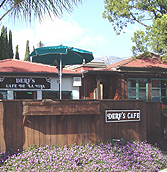
Derf's Cafe

Derf’s Cafe

6. Derf’s (2000 De la Vina St.). Good food at good prices, a great patio and great service, and lots of great memories.

7. Santa Barbara Chicken Ranch (2618 De la Vina St.). Owner Matt Benko says his busiest time of year is Fiesta, when the place is filled with locals trying to avoid the crowds. But the chicken, tri-tip and burritos are great year round.

8. Freebird’s (879 Embarcadero Del Norte, Isla Vista). The burritos are great — and big enough to split — and you can get exactly what you want in them.

9. Lazy Acres (302 Meigs Road). A wonderful salad bar and the soup are always terrific. Also worth trying is the turkey sandwich with sun-dried tomatoes.

10. El Sitio (7398 Calle Real, 2830 De la Vina St., 102 S. Fairview Ave., 138 S. Salinas St.). Try No. 14; it’s totally greasy; it’s totally unhealthy and one of the best things you’ll ever taste that’s not chocolate. I promise.

Dinner and Drinks

For atmosphere, you can’t beat Cold Spring Tavern (5995 Stagecoach Road). The historic stagecoach stop is tucked in the Santa Ynez Mountains just over San Marcos Pass. Great food in cozy rooms in a rustic, creekside setting. Menu features game and chili. Warning: It can look like a Harley convention on the weekends. — S.C.

The best oceanside dining is the Beachside Bar-Cafe (Goleta Beach County Park). Seafood is king at this restaurant where you can dine inside or out, overlooking the ocean. Best-seller night after night: Halibut stuffed with goat cheese and crab. Other favorites: Clam chowder and Caesar salad. Tip: Don’t even think about going here around UCSB graduation. — S.C.

Chuck’s (3888 State St.) is the ultimate locals place. Not the easiest place to find, but pop in almost any evening and you’ll run into an old friend. Famous for decades for steaks and service — and don’t miss the salad bar. — S.C. (Plus, you won’t find a better Mai Tai anywhere, even in Hawaii. — L.D.)

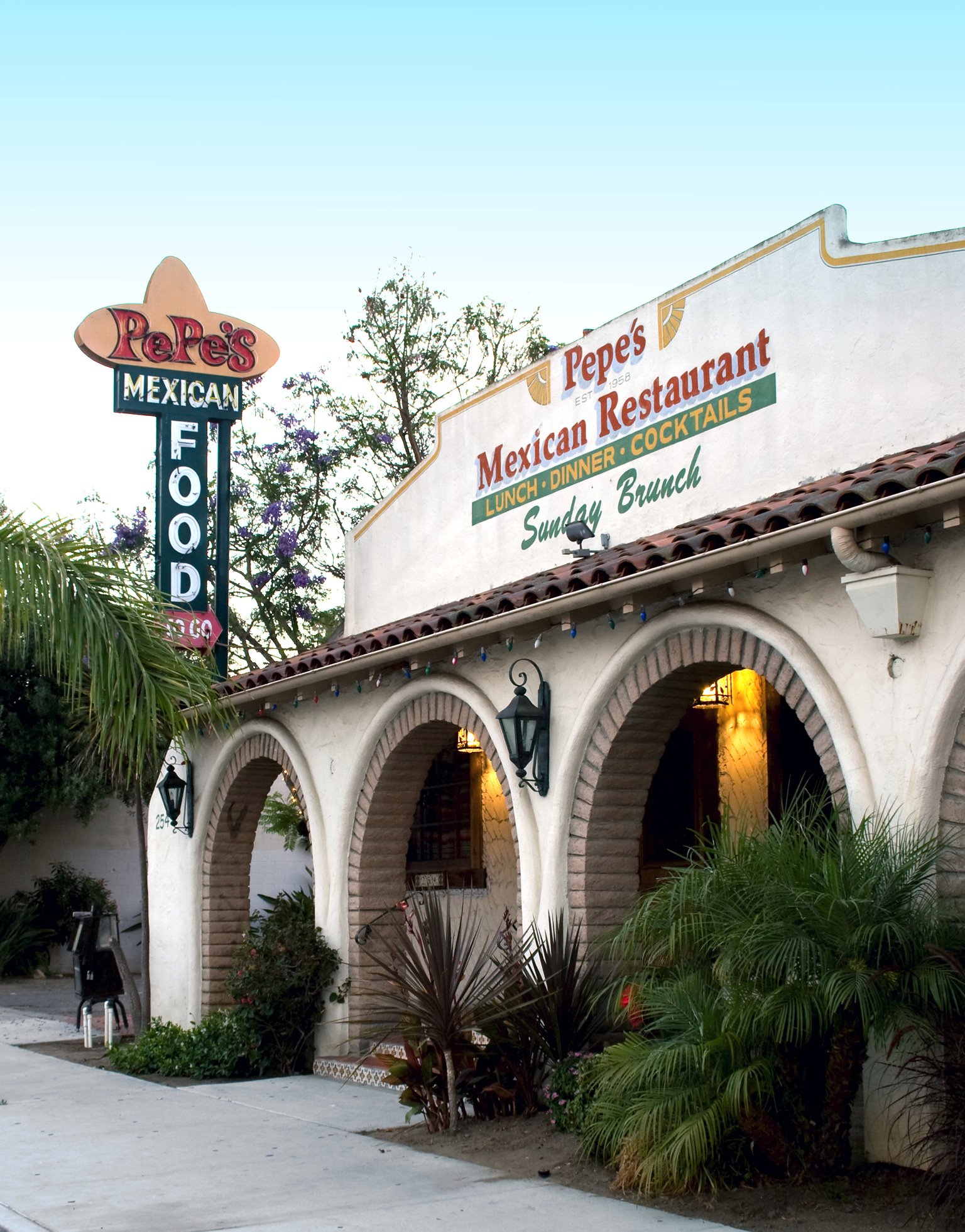
Pepe's Goleta (courtesy photo)

Pepe’s Goleta (courtesy photo)

Another great, nontouristy place is Pepe’s (254 Orange Ave.) in Old Town Goleta. It’s very kid-friendly, the margaritas are excellent, and you’ll never hear a patron talking about Michael Torena Street. There’s also a great patio for private parties or loud friends. — L.D.

Best Reflection

Mount Calvary Retreat House (Mount Calvary Road). For serenity, scenery and sublime R&R, nothing tops this monastery operated by the Episcopal Order of the Holy Cross. Perched off Gibraltar Road above Santa Barbara, it offers a spectacular panorama of the South Coast. Quiet rules, with silent times, and services that guests may attend if desired. A small bookstore sells arts and crafts made by brothers of this friendly community. — S.C.

Casa de Maria (800 El Bosque Road, 969.5031). It’s worth attending a program just to have access to the grounds of this Montecito treasure. — L.D.

Don’t Forget Dessert

McConnell's (courtesy photo)

McConnell’s (courtesy photo)

Want that creamy, cold, rich ice cream taste without the calories? In addition to its award-winning ice creams, McConnell’s (201 W. Mission St. or 7034 Marketplace Drive) also has a wonderful invention called Wow Cow, delicious frozen yogurt at only 9 calories an ounce. — L.D.

Next Week …

Recreation’s the game, with beaches, parks and shopping on our map.

Originally published in South Coast Beacon on June 3, 2004.

Where We Live

The South Coast’s housing prices have taken a toll on the community’s critical workforce. Leslie Dinaberg reports on the cost of spreading ourselves too thin.

We all know the South Coast’s cost of housing is skyrocketing, but what about the other “costs” that are incurred when our critical workforce can’t afford to live here?

Continue reading

The Generation X Homebuyer

Courtesy http://www.freestockphotos.biz/stockphoto/14938

Courtesy http://www.freestockphotos.biz/stockphoto/14938

Once pigeonholed as “slackers,” members of Generation X are now in their mid-20s to mid-30s and having a significant impact on home buying and building trends. Though the high cost of housing on the South Coast makes it difficult for Gen X to break into the market, when they are able to buy — through IPO bonuses, good old fashioned savings, 100 percent financing or help from mom and dad — they want different things than their parents did.

Quality is important. “They are happier with one good thing rather than three average things,” said Greg Nester, owner of Greg Nester Construction & Development and President of the Home Builders Association of the Central Coast. Their dream house might be smaller than their parents’ house, but not necessarily less expensive. “They want the best product they can get for the money they spend,” said Nester.

It’s all about value. This is a generation that has seen dot bombs and the stock market roller coaster. That uncertainty leads to more cautious spending. “Where wealthy boomers might brag about how much they pay for something, Gen Xers relish talking about how much they managed to save — and that applies even to those in the top income brackets,” said a recent survey by marketing-strategy firm Reach Advisors.

Homes should fit their lifestyles. “Gen X are goers, they’re not sitting at home. They come home in the evening and would prefer to have less of a burden as far as maintenance goes,” said Nester. For example, they don’t’ want elaborate kitchens because they say they don’t cook that often.

Flexible interior spaces. “They want media rooms and functional areas that replace the classic dining room and formal living rooms. Secondary to home theater and media rooms are rooms that are more computer and study oriented,” said Nester. They’re also not afraid to embrace new styles like concrete countertops instead of traditional tile. Stained and glazed concrete floors are becoming more common as well as more modern plumbing fixtures. Xers like to be able to customize their living spaces, said Nester.

They’re not running to the ‘burbs. “Many Xers prefer inner city living. … They are purchasing properties that may have mixed use with retail below and a condo above for residential,” said Nester. While many Santa Barbara suburbanites can’t understand why anyone would want to live above a business, this fits in well with city plans for infill development.

Originally published in South Coast Beacon on May 20, 2004.

Talking Kindness with Anita Roddick

anita-roddickA walking billboard for her belief that, “enthusiasm can’t be taught, it must be caught,” Dame Anita Roddick recently delivered a lecture on “Kindness as a Key to Humanity’s Future” to a crowd of about 200 UCSB students and people from the community.

“Kindness doesn’t have to be random … It can and should be practiced tenaciously, “said the founder of The Body Shop, who is a frequent speaker on corporate responsibility and social justice issues. Certainly a practitioner of kindness herself, Roddick said she believes that “We need to measure progress by human development, not GNP.” And she has walked the talk at The Body Shop for more than 28 years while spawning 1,980 stores and 77 million customers around the world, according to her website.

“I’m here not in the guise of a successful business person but as an activist for peace, said Roddick, a part-time Montecito resident who serves as a trustee for the Nuclear Age Peace Foundation, sponsor of the event.

Nonetheless, she’s managed to intertwine her business with her personal values in a way that few corporate leaders have. “We have to put human rights at the very, very center of every trade relationship. Gender balance is also essential. We need to involve women at all levels on an equal basis as men,” she said.

“Businesses must show more developed emotions than fear and greed. If business comes with no moral sympathy or honorable code of behavior, God help us all,” said Roddick.

She challenged the audience to imagine a world where institutions such as religion, the media and the legal system were required to be kind, in turn generating dialogue from the audience about the dynamic between truth and forgiveness, aggressive kindness and the role of the media in modernizing youth around the world.

Originally published in South Coast Beacon

Generations plug in

From womb to tomb, technology is changing how we communicate and connect with our families. Leslie Dinaberg boots up, logs in and decrypts the source code of our tech-savvy lives.

Image courtesy Wikipedia Commons.

Bonding before birth

Starting almost at conception, people bond with their children in ways they never used to in the early stages of pregnancy, said Sociocultural Anthropologist Francesca Bray, a professor at UCSB.

“Already at six weeks you knew if it was a boy or girl … you start to relate to it, you give it a name, you can circulate the ultrasound to all of your friends. How many people have an ultrasound pinned up to their fridge it’s the first picture of the baby,” said Bray, who has conducted extensive research on the roles on new technology in everyday life.

Babytech

When the baby’s born, the archive takes shape. “The social pressure that we had to get those photos up on the Internet for the grandparents and the in-laws was tremendous,” said a new mother. “And you have to keep those photos coming, really on a weekly basis, to keep them happy.”

Not only are those early childhood memories stored on the computer, they’re also on the television, thanks to camcorders, and in miniature form on cell phones and PDAs. Now that we’re spending more time in our cars than ever before, SUVs and other family-friendly cars come equipped with DVD players to keep the back seat peanut gallery constantly entertained.

Then there’s the “nanny cam” (a stuffed bear wired with a video camera), the technology of choice for freaked-out parents afraid to leave their little darling in another person’s care. Upscale daycare centers even offer 24-hour Internet surveillance for parents while they’re at work.

“Technologies are marketed to moms not as a fulfillment of desire but as a fulfillment of responsibility,” said Bray.

Keeping track of the kids

There’s a whole new set of perceived needs that have grown up around these new technologies, including the need to know where your family members are and what they’re doing every hour of the day.

“My 11-year-old daughter Kyle went on a play date last week and emailed me a picture of her and her friend all dressed up, and the picture was taken from a cell phone,” said Stacy DeBroff, author of The Mom Book and founder of momcentral.com.

“This last summer, my son Brooks (9) went to sleep-away camp in New Hampshire for seven weeks. He was completely fine with the separation, but I was a wreck,” said DeBroff. But every day, the camp took dozens of digital pictures of the campers and emailed the whole day’s worth to parents.

Teens lead the way

Teens often are the instigators of the family’s first foray onto the Internet and end up teaching other family members how to use it, according to research by the Pew Internet and American Life Project. “These new developments reverse the tradition of parents as teachers and children as learners and can play a beneficial role in family life as the teens gain in self-respect and show their competence to their parents,” found the study.

“Children have the most facility with new technologies but parents and grandparents are inexorably drawn in too because of their family roles. They have to learn to click a mouse,” observed Bray.

As the kids become more web-savvy, parents naturally develop concerns about the amount of time that their children spend online and about the people and material they encounter in cyberspace.

“Obviously one of the disadvantages of this amazing information technology is that you don’t know who your children are talking to. You don’t know where or what sites they’re downloading and trying to keep some degree of control over your children is something that a lot of parents feel very strongly about,” said Bray. Parental control software has developed to help address those concerns. In fact, MSN parental control software has joined the ranks of Clairol Nice ‘N Easy, Kellogg’s breakfast cereals and Campbell’s soup in earning the Good Housekeeping seal of approval.

Short attention span theater

Email is often billed as the “killer app” for the Internet. Many report their email use increases their communication with key family and friends and enhances their connection to them, but instant messaging or “IM” has attracted close to 13 million teenagers, according to the Pew study. “Talking to buddies online has become the information-age way for teens to hang out and beat back boredom.” Parents are also getting in on the act, with many claiming that it’s easier and more pleasant to type in “dinner’s ready” than it is to yell upstairs to the kids.

Similarly, as cell phones have become more pervasive, teenagers have been the first to embrace text messaging. According to an informal survey by researchers from Rutgers University, half of students with cell phone text-messaging capabilities have used them in class. It’s like passing notes, but harder to get busted.

In addition to altering how teens interact with their friends, technology is also introducing new dynamics into family life. Pew’s research found that in their overall judgment, parents think that the Internet’s role in their children’s lives beneficial. “More than half of parents of online youth believe the Net is generally a good thing for their children and only six percent believe it is bad for their children. Some 38 percent do not think it has had an effect on their child one way or the other.”

Connecting from college

As teenagers grow up and leave home, technology becomes even more critical in their communication with family. With time zone differences and late night hours kept by many college students, email is often the easiest way to reach mom and dad. In fact, the Pew survey found that Internet users in college are twice as likely to have online discussions compared to the overall online population.

Gran gets in the game

Technology has also made it easier to communicate with Grandma and Grandpa. “Even though many other online activities hold limited appeal to senior citizens, email has been completely embraced by Internet users over the age of 65,” found the Pew Survey. “Often encouraged by younger family members to start using email, wired seniors can be fervent message senders. In our surveys, their use of email has typically held steady or marginally surpassed the overall trend of all users.”

Tales from the grave

Reaching out to family through technology can also continue when the older generation is no longer around. For example, Memorypost.com was originally developed as a memorial site for company owner Tosh Bulger’s Great Aunt Sevelta when she passed away. “We decided to make a website where people could go and leave stories,” he said. Researching genealogy has also become a favorite online pursuit.

The big picture

Most of the new technologies are reinforcing existing social values, rather than transforming them, according to Bray. “What they do do is they extend the range of social bonding and of geographic distance that can be counted within our networks of intimacy,” she said. “Perhaps what they’re doing is not so much revolutionizing the way we think about families and technology and domestic relations so much as reinforcing them.”

Universal translator

Lost in cyberspace? Here’s a quiz to see how up you are on online speak.

1. IMHO means

a. I’m at home

b. I’m a lady of the evening

c. In my humble opinion

2. GTG stands for

a. The sorority, Gamma Theta Gamma

b. Golly, that’s great

c. Got to go

3. B/F

a. Big friggin deal

b. Beer and fries

c. Boyfriend

4. ITA

a. Internet time of arrival

b. I’m a teaching assistant

c. I totally agree

5. TTFN

a. Too tall for nerds

b. Talk to friends needlessly

c. Ta ta for now

The answers are all “c” IIRC (if I recall correctly).

FWIW (for what it’s worth) there are some great websites with smilies, acronyms and emoticons, including www.cknow.com/ckinfo/emoticons.htm and www.computeruser.com.

L8TR (later).

LOTA (lots of thundering applause).

Originally published in South Coast Beacon on February 9, 2004.

Screen Shots

Santa Barbara’s spot in the film festival food chain.

Local film geeks are salivating for this year’s film festival, but what about the industry crowd? Exactly what kind of Hollywood buzz is the Santa Barbara International Film Festival generating?

“I think it’s definitely coming into its own,” said producer/manager Andy Cohen, who has been involved in more than 40 films. “Since it’s in Hollywood’s back yard, it feels like a great place to have a film festival. Plus, half of Hollywood lives in Santa Barbara anyway.”

“For people in L.A. it is a must-attend film festival,” said Kim Adelman, who has produced 19 short films that have played at more than 150 film festivals. “At Sundance, people always complain they never get to eat because they’re always rushing from one thing to another. At Santa Barbara you have time to enjoy yourself. … You’re not having to ‘work’ the festival so much … it’s more of an enjoyable experience. Networking happens casually as opposed to maniacally.”

She is a big fan of Santa Barbara.

“These people really love films; it’s not just business for them,” said Adelman, whose book “The Ultimate Filmmaker’s Guide to Short Films” will come out in February. “When one of our filmmakers checked in for the film ’78, they said, ‘Oh I love your film’ and quoted some lines back. Totally made his day.”

In terms of ranking Santa Barbara against other film festivals, Adelman labeled it “very respectable,” similar in stature to the Chicago Film Festival.

“In the U.S. there are what I consider to be three different tiers of film festivals,” said Thomas Ethan Harris, founder of the Los Angeles Independent Film Festival and a film consultant who guided “The Blair Witch Project” along the festival circuit. The top group includes festivals like Sundance, Toronto, Seattle, Telluride and the New York Film Festival.

Top-tier festivals offer exposure for the filmmakers in three different areas. First, they offer the business community. Second, they offer quotable press for the filmmakers.

“The third thing they offer are fantastic public audiences, which are very, very important to actually move a film forward,” Harris said.

The next tier, the community festival circuit, is where Harris puts Santa Barbara.

“I rank it fairly high,” he said, noting it offers very, very good public audiences. “They offer not really quotable press, but regional press … They offer some business community. Santa Barbara does better than most because of where it’s positioned near L.A.”

In general, festivals are on the decline, Harris said. “Financing is drying up. Interest from the business community is drying up. The press has less interest. The one thing that seems to be on the rise … are festivals that take place in a resort town. If the business community (interest) is waning, at least you can get them to come to a beautiful place.”

The film industry itself is seeing a rise of really smart film festivals, of which Santa Barbara is one, Harris said.

“In my eyes, for many years Santa Barbara really tried to look like a mini Sundance. …If it continues to etch out its own personality (in terms of what kind of films it screens), it’s actually in the perfect part of the calendar year with hotels and shops and wonderful restaurants,” Harris said.

“The community film festivals that are going to survive are ones that have a niche and have a really nice atmosphere to offer.”

“These people really love films; it’s not just business for them,” said Adelman, whose book “The Ultimate Filmmaker’s Guide to Short Films” will come out in February. “When one of our filmmakers checked in for the film ’78, they said, ‘Oh I love your film’ and quoted some lines back. Totally made his day.”

In terms of ranking Santa Barbara against other film festivals, Adelman labeled it “very respectable,” similar in stature to the Chicago Film Festival.

“In the U.S. there are what I consider to be three different tiers of film festivals,” said Thomas Ethan Harris, founder of the Los Angeles Independent Film Festival and a film consultant who guided The Blair Witch Project along the festival circuit. The top group includes festivals like Sundance, Toronto, Seattle, Telluride and the New York Film Festival.

Top-tier festivals offer exposure for the filmmakers in three different areas. First, they offer the business community. Second, they offer quotable press for the filmmaker, said Harris.

“The third thing they offer are fantastic public audiences, which are very, very important to actually move a film forward,” Harris said.

The next tier, the community festival circuit, is where Harris puts Santa Barbara.

“I rank it fairly high,” he said, noting it offers very, very good public audiences. “They offer not really quotable press, but regional press … They offer some business community. Santa Barbara does better than most because of where it’s positioned near L.A.”

In general, festivals are on the decline, Harris said. “Financing is drying up. Interest from the business community is drying up. The press has less interest. The one thing that seems to be on the rise … are festivals that take place in a resort town. If the business community (interest) is waning, at least you can get them to come to a beautiful place.”

The film industry itself is seeing a rise of really smart film festivals, of which Santa Barbara is one, Harris said.

“In my eyes, for many years Santa Barbara really tried to look like a mini Sundance. …If it continues to etch out its own personality (in terms of what kind of films it screens), it’s actually in the perfect part of the calendar year with hotels and shops and wonderful restaurants,” Harris said.

“The community film festivals that are going to survive are ones that have a niche and have a really nice atmosphere to offer.”

Originally published in South Coast Beacon on January 29, 2004.

Cheap Thrills

We may scrimp to live here, but it doesn’t mean we have to sacrifice our rich lifestyles. From free concerts in the park to meal deals to wine buys to thrift shop clothing specials, Leslie Dinaberg can help you live well, beyond your means. FREE!

Cheap Thrills By Leslie Dinaberg, South Coast Beacon 

(Click on link above to read story as it originally appeared in print)

I knew it was going to be a good day when the woman in front of me in line at the new Starbucks in the Fairview Center Vons (175 N. Fairview Ave) said she had a 2-for-1 coupon and wanted to treat me to coffee. It’s good karma to start your day with a random act of kindness from a stranger, particularly when your assignment is to drive from Gaviota to Carpinteria to see what you can get for free.

Free latte in hand, off I went on Highway 101 toward Gaviota. I gave some serious thought to picking up a hitchhiker I saw just past Winchester Canyon. After all, giving someone a free ride would certainly fit in well with my story. But screaming visions of headlines like “Journalist Gives Life in Quest for Story” got the best of me. Sorry, dude.

It’s a long drive. People who commute from the North County must really love their houses! I’ll take my “five minutes away from everything, cozy little rental” any day.

Finally, I pull into the Gaviota rest area. It’s too cold and windy to enjoy my favorite free newspaper (ahem … The South Coast Beacon) outside, so I check out the rest stop. Did you know that Gaviota is Spanish for seagull? Apparently in 1769, soldiers killed a gull here. I wonder if a similar thing happened in Mammoth?

I ask the janitor for some free advice about what there is to do around Gaviota. I think he gave me directions to Gaviota State Park, but it was really hard to understand his English.

I check out the rest stop restroom. It’s clean, with plenty of toilet paper and soap. I approve. Clean restrooms on the road are something I would willingly pay for if only I could guarantee them. I’ve often thought about writing a book about recommended restrooms along Route 66.

I fantasize telling Oprah about the inspiration behind my bestselling Restful Restrooms as I drive south to Gaviota State Park. It’s beautiful here, but parking is $8. The 12-year-old ranger tells me there’s free dirt parking above the campground and hands me a free trail map. “Trespass Trail” sounds tempting, until I look down at my shoes. Maybe another day.

Next stop Refugio State Beach, also $8 parking. “Is it legal to park on the road?” I ask another 12-year-old ranger. “As far as I know, they don’t give tickets,” he offers. The beach is beautiful. I could stay here all day if I didn’t have so much ground to cover.

On to El Capitan State Beach, where I spent many fun high school weekends. The 15-year-old ranger gives me a 15-minute courtesy pass; otherwise parking is $8. I check out the store. Just the camping basics: firewood, pork rinds and wine coolers. I pick up a free copy of “the RV travel magazine of the West,” and go check out the beach. It’s smaller than I remember, but still pretty, with much more of a rugged Northern California look than the Santa Barbara coast.

Eager to begin work on Restful Restrooms, I check out the loo. It’s gross. This is exactly what I hate about camping. The floors are wet, the mirrors are made of scratched-up tin and it’s super cold. I wouldn’t think of setting foot, let alone derrière, inside.

Next stop is Haskell’s Beach, right next to Bacara Resort & Spa (1801 Hollister Ranch Road). Despite all the complaints about access from Goletans, this was the easiest beach to get to, had plentiful free parking and by far the best bathrooms this side of Gaviota.

For old times sake, I stopped by the Plaza Shopping Center (7127 Hollister Ave.), where The Beacon used to be headquartered. At the Ellwood Post Office, my son usually gets free rubber stamps on his hands but all they had for me was a free moving guide and some priority mail envelopes. Near Mojo Coffee I picked up some free magazines, Vision: Catalyst for Conscious and Living, The New Spirit. Wow, has Goleta gone New Age since The Beacon moved downtown? On to Albertsons, where I got free samples of Lubriderm Lotion (with premium oat extract no less), Neosporin and a free wedding advice booklet from the deli.

I also noticed that the Laundry Basket offered a free dry with two washes. I thanked goodness — once again — that I have a washing machine. Most of the big fights in my marriage have involved the laundromat.

With my stomach starting to grumble, it’s on to Costco (7095 Marketplace Drive) for what my dad likes to call “the cheapskate special.” You have to be a member to get in. Just for kicks, I pulled out my Blockbuster card. The attendant didn’t even blink as she waved me through.

Who says there’s no such thing as a free lunch? A 10-minute walk through the food section netted me free samples of Jennie-O-Turkey with tequila-lime marinade, chicken penne pasta Mexicana, a Tyson breaded chicken patty with Tony Roma barbecue sauce, frozen waffles, spinach and mozzarella tortellini, Chai tea, both green and regular, and crackers with jam.

If you bring a date you can hang out in front of the big screen TVs for dinner and a movie. Just don’t expect to ever need that Albertsons wedding advice booklet.

Still feeling thirsty I walked across the parking lot to Mika (7020 Marketplace Drive) for a free sample of the tea of the day. For the same price (zero), the Jasmine Exquisite Flower was a vast improvement over the Costco Chai.

Feeling kind of Zen-like after all that tea, I toyed with getting a free initial consultation from Restoration (7398 Calle Real), which bills itself as “natural alternative health care” and specializes in colonics, body detoxification, system and organ cleansing, weight loss and total health restoration by Dr. Gerry Thompson, N.D. Not knowing what “N.D.” stands for (Not a real Doctor?), I decided to pass.

I swung by the Goleta Public Library (500 N. Fairview Ave.) to see if it had Sue Grafton’s new book, R is for Ricochet. It was there all right, but with 285 names ahead of me on the “hold” list, she’ll be up to Z is for Zealot by the time they get to me. Instead I picked up a few Walter Mosley mysteries (Black Betty, Blue Light) and wondered if if he’d run out of colors before Sue ran out of letters.

Knowing I still had a long journey ahead, I inflated my tires with free air from Fairview Shell Auto Center (55 N. Fairview Ave.) then had my glasses adjusted for free at Goleta Valley Optical (5124 Hollister Ave.).

I had more ground to cover at La Cumbre Plaza. Seven minutes later I sampled lipsticks at the Lancôme counter at Robinsons-May (3805 State St.) and contemplated a free makeover. Weighing my afternoon options, I decided to pass on the makeup and instead stopped by See’s Candy (a girl’s got to set priorities) for a free sample of a milk chocolate Bordeaux. Then I was on to McDonald’s (3940 State St.) for a free pixie-sized kid ice cream cone. Ooof, any more free food and I’ll have to go back to “Not a real Doctor” for colonic consult.

Back on the 101 South. Why is it that almost any time of day, there’s still a slowdown where the traffic lights used to be, even though Caltrans removed them in 1991 — making it a free freeway. By the time I got to Summerland I was ready to stop at The Nugget (2318 Lillie Ave.) for Restful Restrooms research purposes, and of course, the free popcorn.

Next it’s on to Carpinteria State Park. The 100-year-old ranger counsels me to avoid the $8 parking fee by going to nearby two-hour free street parking on Linden Avenue. I stroll along the beach for a while. It’s afternoon by now, and decidedly more crowded than my earlier excursions north of Goleta.

More free advice: a woman says there’s a Farmer’s Market “downtown” that afternoon, so I go on over to get delicious, free samples of strawberries, peaches, avocados and that small town Carp flavor.

There’ also the Coffee Grinder (910 Linden Ave.) where they had free wireless Internet access. Since I was laptopless that day, I passed.

Next stop was the Carpinteria Valley Museum of History (956 Maple Ave.) a terrific free museum where kids of all ages can actually get up close to, or even touch, most of the exhibits, including playing a player piano.

On the way back to the office I stopped by Metro Comics (6 W. Anapamu St.), where it wasn’t free comic book day anymore, but there still were leftover Archie’s to give away. Later that night I astounded my son with my knowledge of the ins and outs of Riverdale High, while enjoying the background jazz of the Lao Tizer Band, courtesy of the Santa Barbara Parks & Recreation Department’s free concerts at Chase Palm Park. Of course, I used my annual waterfront parking permit (a bargain for any regular beachgoer at $60 a year) and saved the $3 parking fee.

Tired from my long day of penny-pinching, I handed the reporter’s notebook and pen I stole from my office to an energetic intern, Micah Barber, who planned to explore the South Coast’s free nightlife.

If I could actually do this free thing every day, maybe I could save up enough money for a down payment on a one-bedroom shack in Goleta — by 2050.

Originally published in South Coast Beacon