We’ll save you money in 30 Steps

Follow these tips to keep money in your pockets

Who isn’t looking for ways to save some cash? Here’s a month’s worth of money-saving tips — some big, some not so big — to start developing good financial habits.

1. Pay off credit weekly. Credit-card companies accrue interest daily, so if the minimum amount due is $100, send $25 weekly instead of paying at the end of the month to save money on interest.

2. Claim the child tax credit on your return, advises Babytalk Finance Guide. Depending on your income, this credit can shave as much as $1,000 from your taxes.

3. Get a “family share” cell-phone plan. A regular 400-minute plan is about $40 a month, but share an 800-minute plan with your spouse for just $70 and you save $10.

4. Hector A. Jimenez of West Coast Mortgage recommends comparing points, costs and interest rates when refinancing. “You may have to pay a higher interest rate over the life of the loan if you get a ‘no point’ loan,” he said. “Always ask your broker if rebate pricing is involved on your loan.”

5. When searching for the cheapest airline tickets, shop early in the morning. According to Consumer Credit Counseling Service, most airlines and travel sites introduce their promotional fares in the middle of the night.

6. CCCS also suggests you consider adjusting your withholding allowances to cover what you owe and no more. The average income tax refund in 2003 was more than $2,000, so Uncle Sam got to use that $166 each month instead of you.

7. To shave years off of your mortgage and save thousands of dollars in interest, send in one extra principal payment each year, advises CCCS. Or, divide your monthly payment by 12, and add that amount to each payment, noting that it is for principal only.

8. Want to transfer your tax basis under Proposition 60, but the home you’re buying is more than your current residence? Jon Mahoney of Coldwell Banker suggests paying all or part of real estate commissions separately, thereby reducing the purchase amount. “This can save you thousands of dollars every year,” he said.

9. The online forum, wwww.savingadvice.com, recommends participating in a child-care flexible spending account if your employer has one. This is a special Internal Revenue Service account that allows you to set aside money for child-care expenses with pre-tax dollars.

To save money on college expenses, savingadvice.com offers these tips:

10. Although application deadlines for most college scholarships aren’t due until senior year, start searching for grants and scholarships freshman year. By finding potential awards when your child begins high school, he or she can choose classes and participate in activities that will provide a better chance of getting free cash.

11. Education IRAs (Coverdell Education Savings Accounts) are no longer just for college. You may contribute up to $2,000 a year per beneficiary, and the money may now be used for elementary and secondary school costs as well as college expenses.

12. Reduce your college expenses by earning as many college credits outside the classroom as possible. Advanced Placement tests, internships, public service and job- training programs are a few examples of ways you can trim tuition costs by earning college credit outside the classroom.

13. There are some 750,000 college scholarships available to qualified students. While many of these are financial need- and grade-based, many others aren’t. Don’t let household income or grades stop you from searching for scholarships.

14. You’re allowed to pay any amount for an unlimited number of people’s college tuitions — not room and board or school supplies — without owing any gift taxes. For the tuition payments to qualify, you must pay the tuition directly to the college.

15. Signing up for a 401(k)? “Be sure to review the company benefit, and if there is a match, contribute the full amount necessary to take full advantage,” recommended Rich Schuette, senior advisor for TS Capital Group. “If you don’t, it’s like leaving free money on the table and can cost you tens of thousands of dollars over your working career.”

16. Consider a high deductible health insurance plan if available and save the difference in premium into an HSA (health savings account), advises Schuette. The money is tax deductible and will grow tax deferred, giving you the possibility of paying for many medical needs with tax-free money.

17. If you own rental property, consider working for your own property management company and start an additional retirement plan for yourself, lowering your tax liability and growing your retirement assets, suggests Schuette.

18. Pat Veretto of Frugal Living recommends: “Raise your auto insurance deductible and your premium will drop. If you now have $100 deductible, raise it to $500 or even $1,000 if you can do it and your insurance company allows it. Put that amount in a savings account and leave it to earn interest. If you don’t have an accident, it’ll still be yours and you’ll be making a little money on it. Even if you do have an accident, you’ll have the money to pay up. You won’t have lost anything because the difference in the premium will probably already have made up for any amount you have to pay on your own.”

19. Go digital. If you take 48 pictures a month, a digital camera can save you $20 a month, plus you don’t have all those not-up-to-par prints sitting around in boxes.

20. If you don’t keep good records, you’re probably not claiming all of your allowable income tax deductions and credits, advises Deborah Fowles in Your Guide to Financial Planning. “Set up a system now and use it all year. It’s much easier than scrambling to find everything at tax time, only to miss items that might have saved you money.”

21. “You’ve probably heard of the famous real estate mantra ‘location, location, location,’ but do you know the financial mantra ‘tracking, tracking, tracking?’ It is the single most important thing you can do — and the first step — to put you in the driver’s seat of your own life,” according to Linda Starr of Budget-Tools-and-Tips.com.

22. You may lower the price of a round-trip airfare by as much as two-thirds by making certain you stay over a Saturday evening, and by purchasing the ticket in advance, recommends Starr.

23. In these days of rising gas prices, she also suggests you can save money on gas by keeping your engine tuned and your tires inflated to their proper pressure.

Don’t just look to the present when it comes to finance, Candace Bahr and Ginita Wall, authors of It’s More Than Money-It’s Your Life: The New Money Club for Women, advise teaching children about financial decision-making by:

24. Starting allowances early, around age 5 or 6. Don’t let your children get in the habit of asking you for cash rather than choosing responsibly how to save and spend their own money.

25. Teach children how credit cards work. If children know how the cards work before they get one, they may be able to handle the responsibility better than teens who get a card and know nothing about them.

26. Starting a family Money Club. Your older teens may benefit from being included in a Money Club where they can report to other family members about money issues and help make group decisions.

Save money at the grocery store with these tips from www.grocerysavingstips.com.

27. When a product is on sale like “two for $5” you can almost always purchase just one of the items for the sale price (which in this case would be $2.50). In other words, you do not have to purchase two, or three, or four, or whatever else the sale sign says.

28. Don’t be brand loyal. Try to buy only what’s on sale. Sometimes a name brand can even be on sale for the same price as the store brand, or less, so read those tags carefully.

29. If you have a magazine you tend to keep picking up each month while you’re at the grocery just subscribe to the darn thing and save yourself $20!

30. In case these financial tips are coming a little too late and you need to file for bankruptcy, Ira and Linda Distenfield recently published We The People’s Guide to Bankruptcy, which helps consumers file for bankruptcy as affordably and painlessly as possible, before new federal laws go into effect in October.

Beacon intern Katherine Manning contributed to this report.

Originally published in the South Coast Beacon.

Working Girl

I Have A Quick Update To Share by stockimages, freedigitalphotos.net

I Have A Quick Update To Share by stockimages, freedigitalphotos.net

“I don’t know what inspiration is, but when it comes I hope it finds me working.” -Pablo Picasso

Just about every college bound kid I know has an impressive record of digging ditches in Cambodia, planning the prom, singing on stage and scoring soccer goals. According to one admissions counselor friend, the extracurriculars are a dime a dozen, “If you want to distinguish yourself as a high school student these days, what you really need to do is get a job.

Many kids seem to think J-O-B is a four-letter word, but my parents had an ingenious method of motivating my sister and I to go to work: they refused to buy us all of the things that we wanted.

We had to earn our own cash if we wanted to keep ourselves in Ditto jeans, Bonnie Bell Lip Smackers and John Hughes movies. Thus began my own intricately tailored vocational education program.

I started out babysitting for families in my neighborhood, a surreal experience since we lived on a block of almost identical tract houses. There’s something very disconcerting about snooping through the drawers in a bedroom exactly like your mother’s, only to find compromising pictures of your current employers.

Rule number one in the quest for the perfect job: it can’t be anything that tempts you into embarrassing behavior.

Next I handed out food samples-Gorp, Country Time Lemonade and Pringles were among the products I peddled to shoppers at the old Santa Cruz Market on the Mesa, which has since been yuppified into Lazy Acres. It was fun flirting with the box boys and peeking in people’s carts, but I wasn’t allowed to sit down on this job, not even for a minute.

Rule number two: you don’t come home from the perfect job with aching feet.

My next job was working at Harvey’s Tennis Shop on upper State Street, now the home of BB’s Knits. This was a great gig. I mostly remember giggling, trying on clothes and getting lunch at Petrini’s … until the owners got wise and figured out that they really didn’t need two teenage girls (me and my best friend) working all day Saturdays to service just a handful of customers.

Rule number three: make sure your employer is going to stay in business.

I was now addicted to trying on clothes, so when the tennis shop closed I jumped at the chance to work at Rumor’s in Piccadilly Square (the precursor to Paseo Nuevo). Little did I know that my future husband was toiling away nearby at Hot Biscuits, I was too distracted by my job in fashion heaven. My entire paycheck–and then some–seemed to go back to my employer, but that was definitely my best-dressed year ever.

Rule number four: it’s great to work for love, but you do need to take home some money.

As a waitress at the Lobster House (now that fake lighthouse on Cabrillo Blvd. with a Rusty’s Pizza Parlor) I learned some important lessons from the manager: you balance a tray from the inside out; the customer is always right, even that old lady who tips you in pennies; Frank Sinatra has a song for almost any situation; and most importantly, even when you do get good tips, it’s hard to appreciate them in a clam chowder-stained yellow polyester uniform and white nurses’ shoes.

Rule number five: the perfect job will include the perfect outfit–comfortable and cute.

My next job was working at the snack bar at Cathedral Oaks Tennis Club (now Cathedral Oaks Athletic Club) followed by a stint behind the desk. It was a lot of fun, but I was envious seeing my friends playing tennis, while I supplied their Gatorade and court assignments.

Rule number six: the perfect job should make others jealous, (i.e. “You really get to sit around and write all day?”) but not me!

Speaking of envy-worthy gigs, one of the best ones I had was working security at the County Bowl. That’s right, I was one of those girls in the attractive yellow windbreakers looking through your purse. But unlike the courteous crew they now have–who send you to the office to check in your illegal cans, bottles and alcohol–in those days we confiscated it all for the post-party.

Rule number seven: beer before wine makes you feel fine, but confiscated liquor makes you feel sicker.

Basically all of these pre-college jobs taught me more about what I didn’t want to do than what I did. Looking back at all my jobs, I only wish that when I was applying to colleges they had put more weight on my employment history. With a resume like mine, I definitely would have gotten into Oxford.

When Leslie’s not working for a living-actually even when she is-she can be reached at Leslie@LeslieDinaberg.com. For more columns visit www.LeslieDinaberg.com. Originally published in the Santa Barbara Daily Sound on September 10, 2010.

History in the Making

Boehm Family Photo by V. Smith, courtesy Boehm Group

Boehm Family Photo by V. Smith, courtesy Boehm Group

Eric Boehm & Family

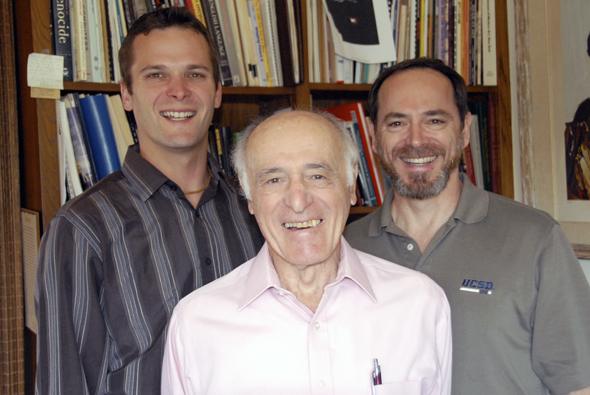
Honoring the past while looking toward the future has been a recurring theme throughout the 92 years of Eric Boehm’s life and his most recent venture, Boehm Biography Group, brings together three generations of his own family-son Steven, 49, and grandson Jeff, 25-to help others preserve their heritage and create meaningful legacies.

Boehm’s brush with history began just before World War II in 1934, when his German-Jewish parents’ prescient concerns about their son’s future stirred them to ship 16-year-old Eric from Hof, Germany, to live with his aunt and uncle in Youngstown, Ohio. “If you have to leave home, my suggestion is the time to leave is when you’re 16 years old, because you are young enough to adapt and old enough to be looking for adventure,” twinkles Eric, as he recalls his early life in America.

By the time his parents and brother had escaped Germany in 1941, Eric had received a B.A. from the College of Wooster and was working on his M.A. from Tufts University’s Fletcher School of Law and Diplomacy. Those diplomatic skills came into play almost immediately, when he served a critical role in helping dissolve the Supreme Command of the Luftwaffe in Germany at the end of World War II. In a life with many high points, this experience stands out as one of the most significant, says Eric, whose work as an intelligence officer and interrogator is detailed in a new book, The Enemy I Knew (Zenith Press, 2009) by Steven Karras.

After leaving the military, Eric continued to work for the U.S. government in Germany as part of the press scrutiny board, reviewing German newspapers to glean information. While there, he met his wife, Inge Pauli. His cocker spaniel puppy played matchmaker for the couple. ” I took him to work with me every once in a while and he would disappear. He kept going upstairs looking and seeing if Fraulein Pauli was there,” laughs Eric. “She had been feeding him.”

The couple married in a double wedding ceremony with Eric’s brother and sister-in-law in Blake Wood, Illinois in 1948 and worked together until Inge died a decade ago. They had four children: two girls that died as children and two sons, Ronald and Steven, who live in Santa Barbara. If not for an encounter with anti-Semitism from a chemical company, Eric might have become a chemist rather than a historian. He was shattered after losing a job he thought was a sure thing. His history professor pulled some strings, and, unbeknownst to Eric at the time, created a job for him at the University of Massachusetts. While completing his doctoral studies at Yale, Eric published a collection of personal accounts of survival in Nazi Germany.

This passion for preserving knowledge led Eric and Inge to found historical bibliography company ABC-CLIO in 1955. The family and the company moved to Santa Barbara in 1960, soon after they spotted the while town en route to Los Angeles for a vacation. “We said you know, this is a nice place. On our way back let’s stop,” says Eric. “Then we took a hotel room by the beach … and one night here turned into two nights and three nights and four nights and while we were here we looked at houses.” The rest, as they say, is history.

Son Ronald now runs what has grown to become an international academic publishing enterprise.

About five years ago, the family founded Boehm Group. “At 87, I was too young to retire, but I was too old to spell bibliography, so I spelled biography,” smiles Eric, who credits his health and longevity mostly to good genetics. “My father died at 98, and I had a great grandfather who died at 98. The name of one of my ancestors is Liverecht, which translates to ‘live right,’-that’s what I try to do.”

In addition to producing individuals’ biographies to preserve family stories and institutional biographies, such as an upcoming coffee table book commemorating the 100th anniversary of Santa Barbara City College, Boehm Group plans to develop an online program that will offer college degrees in biography, explains Jeff, who is responsible for the technical project management.

“I see huge potential and it’s in the family business-plus I get to spend time with my grandfather and my father,” says Jeff, who affectionately calls his “Opa” (German for grandpa) Eric only when they’re in work mode. “I thought that I’d want to spend time doing something on my own, but this is something exciting that they’re starting new and I’m creating it with them.”

“The idea of working together, making it a family enterprise had meaning to me that I enjoyed,” says Eric. “What greater thing could you have than having a grandfather working with his son and grandson? It’s a real joy.”

Originally published in Santa Barbara Magazine In Spring 2010.

I Wish I’d Thought of That

Image by Stuart Miles, freedigitalphotos.net

Image by Stuart Miles, freedigitalphotos.net

Jon Stewart had a guy on the other night named William Rosen who wrote a book called, “The Most Powerful Idea in the World: A Story of Steam, Industry, and Invention.”

The most powerful? Seriously? Not that I have anything against steam engines but I highly doubt that they were the most powerful idea in the world, if that’s what the book is about. I’m assuming it is because what else would it be about? Steaming your cappuccino? The invention of the steam bath? I’m guessing saunas, while pleasant enough, aren’t that big a deal.

Anyway, I didn’t actually watch Jon Stewart’s interview with this guy because I was really tired from catching up on episodes of “The Colbert Report” because of the whole DirecTV, DVR, time-shifting your TV watching thing. Now that’s a powerful invention. Being able to watch “Mad Men” at 7 p.m. while the rest of your Facebook friends are still talking about how they can’t wait to see what happens to Don and Betty Draper later that night and you already know. Talk about feeling drunk with power, knowledge, wealth and overall superiority. Muahaha! Now that’s the kind of thing I want to invent.

Like this website I heard about recently, www.runpee.com, which does the research in advance so you come to the theater already knowing the best time to go to the bathroom when you’re at the movies. Brilliant. There’s nothing worse than sitting through an endless piece of family entertainment, such as “The Karate Kid” remake-which could have lost an entire hour without losing a single second of its entertainment value-while wiggling in your seat for 30 minutes because you think that the movie has to be over any minute now, for the last 30 minutes.

Another great idea is Switch Gear Jewelry (www.switchgearkit.com). I won a set of these mix and match earrings and they’re one of those simple genius ideas that make you think, “Wow, I should have thought of that.” Basically, it is a kit that gives you tons of options to create your own earrings on the spot (no tools) using various combinations of interchangeable hoops, chains, and funky architectural materials such as metal, rubber and tortoise shell. It’s totally fun and super easy. Again, why didn’t I think of that?

Then there’s the Java Log (www.pinemountainbrands.com) for your fireplace. Hello? What a great idea this is. Every time I throw out my coffee grounds I think I should do something with these. I can’t believe I didn’t think of this idea before Rod Sprules, the guy who’s now making millions selling these green firelogs that not only divert 12 million pounds of coffee grounds from landfills each year, they also make great smelling fires, and give you a caffeine buzz to boot!

Probably my favorite new invention of all is from Daniel Wright, the author of “Patently Silly” and proprietor of the website www.patentlysilly.com. This guy is a college engineering major turned comedian, who now makes his living making fun of other people’s inventions. His website and book feature zany ideas-all of which have real patents-such as an Apparatus for Cat’s Cradle Game, a Hip Hop Aerobic Exercise Doll and a Thong Diaper. Talk about a patently obviously brilliant idea. He didn’t even have to invent anything, he just had to write about silly things that other people invented!

I wish I’d thought of that.

Share your invention ideas with Leslie@LeslieDinaberg.com. For more columns visit www.LeslieDinaberg.comOriginally published in the Santa Barbara Daily Sound on July 30, 2010.

Noozhawk Talks: Leslie Dinaberg Sits Down With Michael Wyrsta

Michael Wyrsta at Opal Restaurant. Photo by Lara Cooper, Noozhawk.

Michael Wyrsta at Opal Restaurant. Photo by Lara Cooper, Noozhawk.

Attacking complicated problems is nothing new to chemist Michael Wyrsta. The
“Gaucho purebred”—who received both his BS and PhD at UCSB—lends his
considerable talents to developing vaccines, solar energy cells, green carbon
technology and eco-friendly building materials and making natural gas into
gasoline and green carbon technology. Now he’s turning his talents to creating
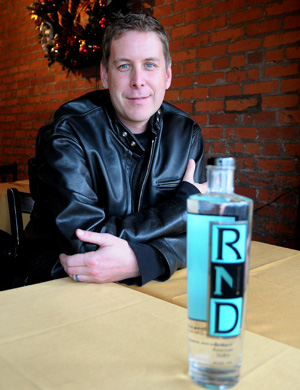
RND Vodka (www.RNDVodka.com), which hit the shelves of Santa Barbara restaurants and
retailers this summer.

Leslie Dinaberg: How on earth did you decide to start this vodka
company?

Michael Wyrsta: (Laughs) That is a really good question. … I was in a liquor store
looking at all the stuff on the shelf and I thought it was pretty unfortunate that all
of the brands on the shelf were pretty much imports.

I mean the good stuff.

… I was like, “why don’t we have something up there that people like or …
people respect or just think that there is some kind of cachet to it?” … So then I
went to lunch with my friend Mark Collins and I said, “You know this is lame. We
should have our own great American vodka.”

He said, “Yeah we should, let’s do it.”

Seriously it was a snap decision.

LD: To try to do it on your own.

MW: Yeah. I wrote a check right there and we just started working on it.

LD: Wow.

MW: We didn’t know anything about making vodka at that time and then we
quickly learned about it. For me as a chemist it’s easy to understand the
chemistry part of it. … But in terms of how do you put a package together, how
do you do all of this stuff we had a lot of stumbling blocks in the
beginning.

Then we got our art director, Kim Kavish involved and she’s great. … She really
helped right the ship and corrected a lot of the mistakes we’ve made in terms of
the design. Then there was a long process of licensing.

LD: So about a year ago you came up with the idea. Did you start developing the
product itself at the same time you started developing the
identity?

MW: Exactly. We have a distillery in Colorado that we worked on our formulation
with.

… What we actually do is ferment our sugar source which comes from corn, and
then go the whole process, fermentation, distillation, purification. We use really
good Colorado Spring water. It’s really clean, it’s really pure and we do our own
filtration, so we do the whole process from grain to bottle.

Then it became a logistic thing. We had to develop the identity, develop the
formulation and then develop the logistics to support all that because we wanted
it to be a unique bottle.

LD: It’s definitely a unique shape. I can also see where this would stand out in a
bar. A lot of vodkas have really pretty designs but they’re just
white.

MW: Exactly. They fade. We call that snoozing on the shelf.

LD: It seems like you’re getting a lot of recognition, including a piece in Sunset
Magazine, especially for how early in the process it is.

MW: Yes, we just launched end of July/early August.

LD: What part of your time is this endeavor?

MW: It does take a lot of my time right now … I have two other companies. A
CO2 company and I also am the CEO and president of a vaccine company up in
San Diego, so I have quite a bit of responsibility with that and I’m really busy.
That’s okay; I like doing all that stuff. For us it’s just something we have to do
until we get up to speed. My wife Inez and my best friend Lindy Lindstrom really
help a lot too.

LD: With high-end vodka is the push more on being in bars and restaurants
versus liquor stores and grocery stores?

MW: We have to be in all of them. We have to be everywhere basically because
they both support each other. … We are an ultra premium vodka, we’re
handmade, so we have more costs, we don’t do mega-scale, which a lot of
people do. So in that respect we’re focused on higher end stores, higher end
restaurants just because of the clientele.

It’s not different than a bottle of wine, if you get a good bottle of wine from Santa
Barbara it’s really expensive but you’re getting something that’s really high
quality.

I’m a scientist, so what I’d like to do is when this thing gets up to speed and we
get some real money coming in and profits, part of our goal is to donate some of
our profits to science education here in Santa Barbara.

LD: That’s great.

MW: Which would be probably through UC Santa Barbara or at that
level.

LD: I was thinking about that because I do a lot of fundraising for the elementary
schools and I can see people objecting to donations from a liquor
company.

MW: And that’s okay, I wouldn’t be against doing anonymous donation because I
understand there’s a perception issue and we wouldn’t want to be encouraging
kids to drink vodka at all. This is isn’t a 9 a.m. vodka; this is a high end sipping
vodka. We’re not promoting that lifestyle so if we were to go that route we would
definitely do something in a more low key, anonymous route.

But for me at least, science is really important and it is to the company too. In a
philosophical sense to us science is one of the few things that has been giving us
answers. We look to it when there is trouble. For example, whether or not it’s
global warming we’re looking towards a whole bunch of solutions but obviously
science plays a part in that. For example, look at the swine flu; we’re looking for a
vaccine to help us out or a drug. People to look to science for answers for really
discrete problems … it’s just sort of a way of thinking about problems and how to
solve them. It’s not about displacing any other belief system or a way of living just
taking stock on how we look at the world and addressing problems head on. I
think that’s important for us and if this is a vehicle to help do that, that’s
great.

LD: Absolutely.

MW: If we can give something back that would be great. That’s how we’re trying
to position it and work it. I live here, Mark lives here, Kim lives here. … We’re
always supporting local events; we did the museum nights for example. We like
to support the arts too, we’ve done Santa Barbara Trustees and the Alumni
Association at UCSB, so we try to be involved in all that stuff.

LD: My best gauge of how good a vodka is, is usually how I feel the next day.
How does one tell a good vodka from a not so good one in terms of taste?

MW: For me-I’m not a heavy drinker and I’m kind of a wimp when it comes to
hard alcohol-so for me I wanted the smoothest, easiest drink of vodka because
ultimately if it’s going to go in a mix, or if you’re going to drink it straight, you want
it to be able to mix well with everything and you want to be able to drink it on the
rocks or with just a little bit of something.

… It has to be really smooth and it has to have a really low burn and really light
feeling … It’s an interesting spirit because it’s very neutral in a lot of ways but
what most people don’t notice there’s a harsh feeling, a burn with a lot of lower
end vodkas and that’s a function of what’s in it. There are other molecules that
are in vodka typically that produce that feeling.

We’ve come up with a formulation that allows up to have a smoother, lighter
feeling. Sunset Magazine recently described it as ethereal and that’s a good way
of describing it.

LD: You’re launching in Santa Barbara at a really good time. There’s this trend of
Farmer’s Market cocktails where people are using all of these fresh ingredients
and sort of the sweet with the sour with the savory, all of this kind of wild stuff
that is pretty new.

MW: I think it’s great. It follows that whole foodie trend so they want high quality
drinks with really fresh ingredients.

LD: I have the list of where it’s sold locally-Roy’s, Opal. Elements, Lazy Acres,
Gelson’s, Liquor and Wine Grotto and on and on. You must have a marketing
person that’s on that.

MW: It’s just me really.

LD: That’s a big job.

MW: Yeah, I know.

LD: How did you come up with the RND Vodka name?

MW: … RND fit a lot with my background in science and markets and also
funding science. It’s a play on research and development, clearly, but it’s also I
always thought it was cool because on your gearbox in a car it’s always RND,
reverse, neutral and drive. So I always thought that was a cool little thing with
both the science and the way you see it every day in your car.

… We wanted to make it a little bit more ambiguous versus just research and
development where you would use an ampersand typically. People might be able
to come up with their own names for it: Rebels Never Die, or Restores Natural
Desires. There are so many things that people have come up with, we have a
bunch of them on our Facebook site. (http://www.facebook.com/pages/RND-
Vodka/102416823144?ref=search&sid=1443134086.1675449040..1)

LD: When you came here for college from Rochester, New York, did you think
you were going to stay?

MW: No. When I first got here for college I was like, “Oh my God where am I?” I
had no idea. It was a different universe. It took me a year to used to it. But then
you adapt. It is really different, I mean it’s almost like a different country, … but
once you figure it out it’s a great place-I love it.

LD: What else do you do when you’re not working?

MW: I love mountain biking; I surf if there’s surf. … I love the ocean and the
mountains so I take advantage of both of those.

LD: If you could pick three adjectives to describe yourself, what would they
be?

MW: Oh no. Three adjectives. Oh God. Busy, really busy. I also think I’m creative
and hopeful.

Vital Stats: Michael Wyrsta

Born: In Rochester, New York, July 6, 1974

Family: Wife Inez

Civic Involvement: Donates to a number of organizations including UCSB Alumni
Association, CALPIRG, Santa Barbara Museum of Art, Acts of Love-Autism
Speaks and the Trustee Association of Santa Barbara.

Professional Accomplishments: Graduated from UCSB in 1996 with a BS in
Microbiology and received a PhD in Materials from UCSB in 2002. Chemist for
start-up ventures, including GRT, Inc, SBA Materials, and BioSolar, Inc;
President and Founder, RND Spirits, Inc.

Best Book You’ve Read Recently: Fooled by Randomness by Nassim Nicholas
Taleb.

Little-Known Fact: “I’ll give you two. I went to a Jesuit High School and I had
long, blond dreadlocks right before I got my PhD.”

Originally published in Noozhawk on December 13, 2009. To read the article on that site click here.

My Santa Barbara | Fred Benko

By Leslie Dinaberg

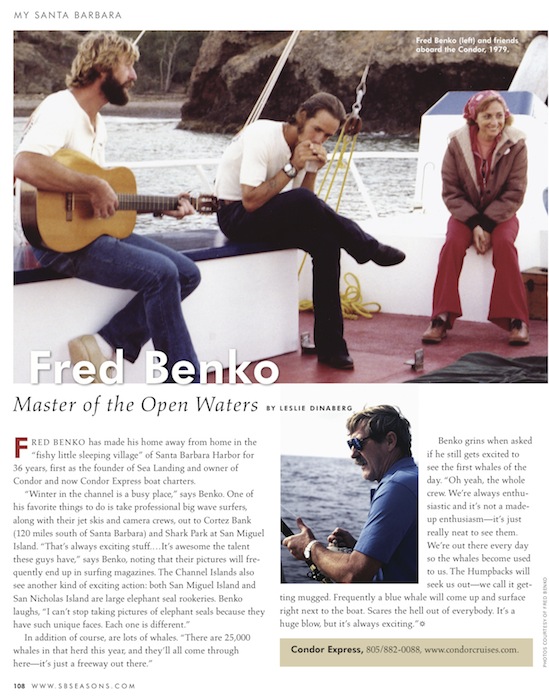
Fred Benko has been making his home away from home in the “fishy little sleeping village” of the Santa Barbara Harbor, for 36 years, first as the founder of Sea Landing and as the owner of the Condor and now the Condor Express boat charters.

“Winter in the channel is a busy place, says Benko. One of his favorite things to do is take professional big wave surfers, along with their jet skis and camera crews, out to Cortez Bank (120 miles south of Santa Barbara) and Shark Park at San Miguel Island. “That’s always exciting stuff. … It’s awesome the talent these guys have,” says Benko, noting that their pictures will frequently end up in surfing magazines. The Channel Islands also sees another kind of exciting action: both San Miguel Island and San Nicholas Island are large elephant seal rookeries. Benko laughs, “I can’t stop taking pictures of elephant seals because they have such unique faces. Each one is unique.”

In addition there are, of course, lots of whales. “There are 25,000 whales in that herd this year and they’ll all come through here. … It’s just a freeway out there. …

Benko grins when asked if he still gets excited to see the first whales of the day. “Oh yeah, the whole crew. We’re always enthusiastic and it’s not a made up enthusiasm—it’s just really neat to see them. … The neat thing is we’re out there every day so the whales become used to us. The Humpbacks will seek us out—we call it getting mugged. … Frequently a blue whale will come up and surface right next to the boat, just within 50 feet or so right next to the boat. Scares the hell out of everybody. It’s a huge blow, but it’s always exciting.”

Originally published in the Winter 2009/10 issue of Santa Barbara Seasons Magazine. Link to PDF here.


Noozhawk Talks: Leslie Dinaberg Sits Down With Ann Peyrat

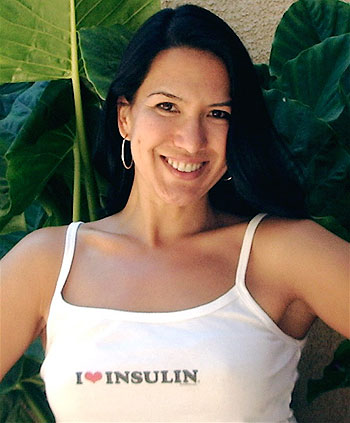
Ann Peyrat has lived with diabetes since she was 16. Rather than give in to the disease, she was inspired to create an apparel line that would help others — particularly girls — feel better about themselves. (Betes Babe photo)

Ann Peyrat has lived with diabetes since she was 16. Rather than give in to the disease, she was inspired to create an apparel line that would help others — particularly girls — feel better about themselves. (Betes Babe photo)

Diagnosed with diabetes as a teenager, Ann Peyrat didn’t like the sound of the word diabetic-especially the “die” part-and quickly declared herself a “betes babe” instead. Now she’s developing a fun and fashionable line of accessories called Betes Babe (www.betesbabe.com) to help others wear their “betes” in style.

Leslie Dinaberg: Tell me about your business.

Ann Peyrat: I was16 when I was diagnosed. I remember that because for most people it’s their sweet sixteen, but for me it was my no more sweet sixteen. I was always looking for products, new things to manage my disease and everything that was out there was either black or a steel kind of cold hard medical look and that’s not me. I’m pink and girly and match my outfits and I just didn’t see anything out there that was beyond this kind of utilitarian look. So in the back of my mind I was always searching for something and then got to the point where I said, “well, why don’t I just make something that I like?”

It blossomed from there, but I never really had the big push to go out and do something as a business for other people until everything that happened with the News-Press went down. All of a sudden I knew I couldn’t work there anymore … so that was kind of the push to say, “Hey, let’s dig in your heels and this is the time.”

LD: So were you making things for yourself?

AP: Yes and just designing. I like to sketch or do little drawings, so I have a journal of all these ideas that I want to do. Some of them I don’t have the technical know how to do. But for me that is one of the challenges. I’ve never run my own business before I don’t know all the steps … but to me, it’s more satisfying to figure it out myself rather than just having to pay somebody to do everything for me. … I started out with just some small graphic design things, some t-shirts and things that are at CafePress.com, so I didn’t have the overhead of having a warehouse … I’ve gotten responses from all over the place. … I’ve got orders from New York, Illinois, Michigan, just all over.

LD: Teenagers and young girls seem like a natural market for your products.

AP: Yes, I actually have a young friend, a school mate of mine, her daughter who is in third grade was just diagnosed and so I took her out just to be sort of a betes buddy, just so that she would know somebody else who had it who was maybe a girl. …I think girls and boys go through different things and especially girls with hormones. It’s a different animal to have girls.

LD: I also think girls, for whatever reason, are so much more fashion conscious. What are all your products?

AP: Right now I have t-shirts and bumper stickers and I’ve got a messenger bag, a canvas tote bag and all of these things have different messages on them, like “I heart insulin” or “I try not to be too sweet, it’s a betes thing.” I’ve got a tank top, I’ve got a golf t-shirt, you can check them out online at www.cafepress.com/betesbabe. And then I j have a few things for people who do want to wear their medical alert. I have a charm bracelet and I have a few different charms that can be put on it just to give maybe a little bit more attention to it. They don’t have any writing on it, but they have a red cross type of medical symbol on them, and what I like about them is they’re silver but they all have kind of a stamp indentation on them, so if you want to change the color or you want to match your outfit, I’m sure a real jeweler would tell you not to do this, but I just use nail polish. … I also have some bracelets that have a satin ribbon and a felted wool flower on it.

LD: Those are really cute and they don’t look like a medical thing at all.

AP: And because I am manufacturing them myself, I can customize them. We make those specific to your disease, so if you have asthma, I can put asthma on there instead of diabetes.

LD: What is the best seller?

AP: Actually it’s been one of my very basic “I heart insulin” shirts.

LD: Ultimately what is your goal with the business?

AP: My goal is definitely to grow it into a really big business and then sell it to somebody and maybe remain the face of it or help out in some capacity. But it just always really appealed to me to have something that was my own and to see it happen and if I have an idea to see that come to fruition. … But I got a part time job because I need health insurance.

…I did go through the WEV (Women’s Economic Ventures) program so that did help a little bit with getting going but I still don’t know a lot.

LD: It’s a new market, so that makes it harder to figure out how to do things.

AP: Exactly. And because I have diabetes myself it makes it more personal to me and I think that I’m maybe more passionate about it than somebody else might be. It’s really one of those things where even if it’s slow at first, I’m not going to drop this idea just because it’s hard. I really want this and I want to do this for the diabetic community at large and that’s inspirational to me to keep going.

LD: I know it’s hard sometimes with a chronic illness. Do you have any advice for somebody that was recently diagnosed with diabetes?

AP: Don’t be afraid to talk about it. You’ll be less alone if you’re able to talk about it. I think a lot of people are really interested. Nobody is going to make fun of you. I think people are sometimes afraid to be different. But especially with my business and having something cute that you can carry, I want people to feel like okay maybe you are special but it’s not special bad it’s special good. And again, for me being really open about things, I think it just starts a conversation. Somebody sees me carrying a cute bag and says, “Hey where did you get that bag?” That’s an opportunity for me to educate them a little bit and tell them a little bit more about what diabetes is, that you don’t have to be scared of it, you don’t have to worry too much.

Also I think going along with talking about it is finding a support group or finding other people that you can talk to if you’re feeling alone, believe me you’re not.

LD: What else do you do when you’re not working?

AP: I wear many different hats and one of them is dog walking and dog sitting. I actually just got my first dog three years ago and I can’t believe I didn’t do it before that. There was no life before I had my dog. … I like to go to movies; I like to go out for food. … I’ve got a group of friends we do Bunko every month and then I’ve got a group of friends we go out to dinner once a month and then I’ve got a book club we do once a month, things like that.

LD: If you could pick three adjectives to describe yourself, what would they be?

AP: I guess optimistic would be a good one. Not always, but usually. I hope that I’m a good friend, that’s really important to me, friends and family, and I’m creative.

Vital Stats: Ann Peyrat

Born: October 7th, at Goleta Valley Cottage Hospital

Family: Parents Adrian and Gloria Peyrat and brother Alan.

Civic Involvement: Volunteers at Fund for Santa Barbara and Sansum Diabetes Research Institute, donates money to others.

Professional Accomplishments: Santa Barbara News-Press Public Square Editor,

Special Sections Editor, and editor of Woman Magazine; UCSB, Assistant to Chancellor Henry Yang; Santa Barbara Cottage Hospital Foundation Development Coordinator; Founder of Betes Babe.

Best Book You’ve Read Recently: Naked by David Sedaris

Little-Known Fact: “When I was 29 I lived in a van for a year to save money.”

Local Resources for Diabetics

Diabetes Resource Center of Santa Barbara County

http://www.sbdrc.org/

Carpinteria Childhood Obesity Prevention Initiative

http://www.sbdrc.org/programs_drc.htm

Betes Babe

http://www.betesbabe.com/index.html

Sansum Diabetes Research Institute

http://www.sansum.org/

Originally published in Noozhawk on December 21, 2008. Click here to read the story on that site.

Leslie Dinaberg Sits Down with Leslie Westbrook

Leslie Westbrook

Leslie Westbrook

Building on her lifelong interests in travel, fine art, and antiques, longtime local writer and editor Leslie Westbrook recently went public with her treasures, opening up a storefront, Leslie A. Westbrook, Art & Antiques, in Montecito’s upper village.

Leslie Dinaberg: Tell me about your new business venture?

Leslie Westbrook: I used to have an antique shop 20 years ago on Coast Village Road (Basement Antiques). So when I travel, I’ve been a travel writer for a long time, I’ve bought things and brought them back and sold them, sort of to supplement my income, but not in a big way.

LD: So you took your air miles and went to Brazil.

LW: I thought I’ll go down and I’ll buy some stuff and I’ll bring it back and I can sell it to collectors and/or consign it or sell it to shops. My area of interest and emphasis has always been art, but from South American “Santos,” because I’ve always liked them and been interested in them. So I went down there, I spent four days going to flea markets and a couple of antique dealers down there that I know and I bought a bunch of stuff. And I have a friend, sort of like my Brazilian son, he speaks Portuguese and helps me. Then I went off to Argentina and I said “here’s the money, ship this off DHL.”

LD: Now I know you and Miguel Fairbanks (who runs a wedding, event and portrait photography business in the back studio) are old friends.

LW: Yes and I just happened to say to him, “what are you doing with this space?” And he said, “You know, I need to rent it. Do you want to rent it?” … I wrote a check.

Three days later customs went on strike and held all of my goods and they’re still down there. … All of the sudden I had an empty shop, so I thought, I’d better get creative. I had a few pieces from the previous shipment…. and then I have more art than I have wall space in my house, so I brought in a Toulouse Lautrec and a Manet and I sort of started tearing things off the walls. Then I looked for a couple of contemporary artists who were local but who weren’t really showing here, like sculptor Jim Martin (www.jimmartinsculpture.com) and mixed media artist Barbara Bouman Jay (www.barbaraboumanjay.com and Ed Lister, who is an English artist who lives in Montecito but still doesn’t show here. … And then I took some things on consignment so and I bought a few other things. But I’m still waiting for my stuff to come from Brazil.

LD: How is business?

LW: Little by little the word is getting out. It’s picking up. What is really good for me is the decorators and designers are discovering me.

LD: That’s great. It seems like this is kind of antiques area in the upper village. How does this business fit in with your writing?

LW: Well, interestingly enough, I’ve been writing for California Home for about ten years and I also contribute to Traditional Homes and I wrote years ago for Art and Antique newspaper, I was the west coast editor, so I’ve always had an interest in art and antiques and design and I spent years scouting houses and writing about people’s gorgeous houses, so that ties in nicely. I am very open if someone is either decorator or they have a beautiful home and they want to bring me a disk of photos to look at for submission because I actually sit here and write all day. I’m here with my laptop and pity the poor customer if I’m lost in reverie, I have to tear myself away and become a salesperson. But it’s really kind of like a writing studio with a lot of stuff around me for sale is what it’s kind of turned into. And it’s nice to be writing here as opposed to being home alone–here I have more human contact. People come by which is really nice. So I have a shingle.

LD: I can definitely see where that would work. Do you think you’re still going to be traveling for your writing?

LW: I kind of tied myself down here. It’s a little bit of a dilemma. All of a sudden life I went oops, but I will have to go on buying trips if and when things get here and I have to replace them so in that event I’ll either get someone to sit here or I’ll close the door for a week and say gone buying. So right now I don’t have any travel plans but probably in October I’ll go back down to South America.

I wish I could clone myself so I could travel and be here. It’s a shift. Or if I do well enough at some point I could hire someone. I’m not in that position yet.

LD: When did you come to Santa Barbara?

LW: About 35 years ago. I came here to live on a hippie farm; Lambert Farm There’s a story I wrote about it in the new Carpinteria Magazine (http://carpinteriamagazine.com/). It was about 1973.

…. I grew up in Santa Monica but I used to come here in the summers. My best friend, her grandparents had Stewart Orchids, so we used to come up and stay at her grandparents’ house in Hope Ranch and that was when I was about 11 or 12,and then I met this boy at the Renaissance Faire and he lived on a farm called Lambert Farm with Kenny and Kathy Bortolazzo, they were married, and all these other people, so I moved up to live with him on this farm. It was this really cool place and it was all artisans and everybody had their own little Hobbity houses, outdoor bathrooms.

The romance was a summer romance but I fell in love with Santa Barbara and the love affair lasted with Santa Barbara.

LD: Were you always a writer?

LW: I always wrote. When I was first here after the hippie thing I worked as a cook on this estate and I made a documentary film and tried a lot of different things and I worked in advertising, and did headline writing and copywriting and then I turned into a travel writer. … I was an art major in college. I never finished school but I always loved to write and just 25 years later here I am, journalist, girl reporter. It’s fun to be interviewed though because I know when I’m interviewing people sometimes I want to share stories too.

LD: If you could pick three adjectives to describe yourself, what would they be?

LW: Gregarious or outgoing, compassionate, and honest.

LD: If you could be invisible anywhere in Santa Barbara, where would you go and what would you do?

LW: I would probably want to be in Oprah’s house (laughs), see what she needs and see where I could fill in a few holes.

Vital Stats: Leslie Westbrook

Born: Pasadena, June 14.

Family: “Mom, sister, dad, I don’t have a husband, I’m single, I don’t have any children, however I’m a fairy godmother.”

Civic Involvement: “I like to volunteer for different organizations every year, most recently I worked with Recording for the Blind and Dyslexic and the Art Museum Council. Lately I’ve been looking into bipolar people and working with FACT (families advocating for compassionate treatment).”

Professional Accomplishments: Journalist for 25 years; owns and operates Leslie A. Westbrook, Art & Antiques at 1482 East Valley Road, Suite 36, Montecito (805-969-4442).

Best Book You’ve Read Recently: Truth and Beauty by Ann Patchett

Little-Known Fact: “The men in my life all died, dumped me or went to jail!”

Originally published in Noozhawk on August 3, 2008. Click here to read the story on that site.

Leslie Dinaberg Sits Down With Larry Kreider

Larry Kreider (Noozhawk photo)

Larry Kreider (Noozhawk photo)

Beer is more than just a passion for Larry Kreider; it’s also a business. Before he discovered the pleasures of fine craft made beer, Kreider had endless campfire debates over the superiority of Budweiser to Miller and Coors. Now he’s spreading the joys of pairing homemade food with handcrafted hops at Goleta’s Hollister Brewing Company.

Leslie Dinaberg: When did you first develop an interest in beer?

Larry Kreider: It was kind of an epiphany. I was working as a manager for Home Depot in Torrance, and I had to approve checks. I kept approving these checks that said Manhattan Beach Brewing Company, and I finally asked the guy, “What’s the Manhattan Beach Brewing Company? Do you make coffee, soda, what do you do?” He said, “No, we brew beer.”

… I had never heard of that before. It was close by, so I went and visited it and it was just oh my God, this is like nirvana.

… For a couple of years I was just so pissed at Budweiser that they had brainwashed me into thinking that that was the best beer. … But then after I started brewing some beer myself, you start having an appreciation for the technologically perfect beer that they are able to make, especially with breweries located in different parts of the country.

So I’ve kind of come full circle. To their credit, they do take a big part in getting people to drink more beer period. … For the past three or four years the growth of beer consumption has been pretty stagnant, but craft brewed beer has earned double digit increases in consumption.

LD: How did you get started in the restaurant business?

LK: I moved to Santa Barbara in 1995 with the intent of opening up the Santa Barbara Brewing Company. I had some partners from the South Bay area … the three of us were middle-aged bachelors, had never worked in a restaurant, never brewed beer before but we knew someone in common that had opened other brew pubs and could help us. … Our naivete kind of helped us. …That’s right when lower State Street was starting to become a little gentrified. … We were in the right place at the right time

… That’s where I met my current partner, Eric Rose. I hired him to be a part-time brewer assistant. … We worked together there for about four years and then I sold my interest in the brewing company to my partners who are still there and still doing well. I moved on and at that time I was becoming involved with Elements.

I knew, from the very first week I met Eric that at some point in his life he was going to open up a brewpub on his own, professionally. We stayed in contact for four years in that interim where I was trying to get Elements off the ground, and he was still at the brewing company perfecting his profession, brewing better beers.

(Eventually) Eric and his father (Marshall Rose) started putting together a business plan, and they contacted me and wanted to know if I was still interested in doing a project. And I said, “absolutely.”

LD: Even though there are a lot of restaurants, it still feels like Goleta has room for more.

LK: People have been extremely supportive and we’re flattered and humbled by the response that we got when we came out here. There was a pent up desire for people to go to locally owned and operated restaurants without having to go downtown.

LD: Is the beer you brew only sold here?

LK: We have the ability with our type of license to self distribute beer. But not to sound smug or anything, but we’ve been so busy trying to keep up with the demand here that we haven’t pursued that avenue yet. We have beer on tap at one place and it’s the Hungry Cat. We’ve developed a nice relationship with the chefs that work there, and they’re willing to put different beers of ours on tap and then create dishes around it.

LD: Can people buy beer to take home?

LK: We have the growlers only; we don’t sell it in kegs.

LD: Do you have a favorite beer?

LK: The one that’s in front of me. (Laughs)

LD: I know you’re here full time but you still own part of Elements?

LK: Yes, but it has nothing to do with the partnership that owns Hollister Brewing Company. That’s just me personally. My partner there, Andy, knew that at some point I was going to get back in the beer business. Fortunately for me my wife Tina is able to keep our interest going in Elements.

LD: She mentioned to me that you guys get a little competitive.

LK: Yes we do. We check sales with each other on a daily basis and see who is doing what. We’ve even tried to get some synergy a little bit out of it, if they need employees or if we need employees we’ll see if they have people available, stuff like that. But it’s a completely separate entity.

LD: Does whether or not UCSB is in session affect your crowd very much?

LK: Everyone said when we were building the place, “oh brew pub right by a university, that’s going to be busy,” and people had this pre-conceived notion it would be filled with these undergrad students drinking beer. We’re not that kind of a place. We make a craft made product so it’s a little more expensive.

.. I think anyone would be naïve to say that the university doesn’t affect every business in Goleta. It does; there’s a huge population increase, but we’ve been able to keep to our core demographic of the people who live and work here in Goleta and not just the students who tend to be a little more transient from year to year.

… It’s so funny, the three busiest weekends that we have are graduation, move-in and parents visitor’s week. So for 49 weeks a year the students go to Albertsons, and whatever is on sale they buy, but the three weekends that mom and dad are in town they bring them in here to foot the bill (Laughs).

LD: What else do you do when you’re not working?

LK: As you know, I have two young kids, so that takes up pretty much all of the time that I’m not here. I have to give credit to Tina — you know, trying to run two restaurants with two young kids is not the easiest thing to do and we’ve been able to. Our partners are very cognizant of that also … I try to take Sunday off regardless of what’s going on and that’s kind of our family day.

LD: Looking down the road, would you ever want to open another Hollister Brewing Co.?

LK: I could see opening a different variation of this. This was our first shot together and most of the menu design, the beer design, the food pairings, came from Eric. He’s got the most sophisticated palate. This site lends itself more toward the volume that we have to do and we’ve been very fortunate that we have that, but if you really want to get into a palate driven place you need a little bit smaller place. So we can see doing that at some point in the future. Maybe a smaller venue where we could still supply it from here, not necessarily brew it there, but have a really nice palate-driven, food-driven, foodie place with really nice wines, really good beers, pairing with more entrée-type foods and things like that.

LD: It sounds like an amalgamation of your two businesses.

LK: Exactly. Something like that maybe sometime but there’s no immediate plan. I mean, we’re still pounding the turf here and trying to get this going. But we’re well ahead of what our scheduled business plan said. Thank you to the people in Goleta that they have been very supportive, and we do thank the people from Santa Barbara, too, who come all the way out here to Goleta. (Laughs) I swear people think they have to cancel their newspaper subscription and cancel their mail just to go to Goleta.

Vital Stats: Larry Kreider

Born: Aug. 30, 1958, in Martinsburg, Pa., “with a population of more cows than people.”

Family: Wife Tina, son Jake (8) and daughter Claire (4)

Civic Involvement: Santa Barbara MissionWashington School

Professional Accomplishments: Manager at Home Depot; co-owner of Santa Barbara Brewing Co.; current co-owner of Hollister Brewing Co. and Elements.

Little-Known Fact: “People look at me as the beer person since I’m out here, but I mean, If I go into a restaurant and I don’t like the beer selection they have, I’ll order a Budweiser … It’s the best of that style of beer. … We just don’t like the fact that they market to get people to think that that’s the only style of beer there is.”

Originally published in Noozhawk on September 7, 2008.

Noozhawk Talks: Leslie Dinaberg Sits Down With Amy Kovarick

Amy Kovarick (courtesy photo)

Amy Kovarick (courtesy photo)

As a wife, mother and life coach, Amy Kovarick is a master of multitasking, and she’s helping others find balance in their lives, too.

By Leslie Dinaberg

Wife, mother, life coach, counseling psychologist, radio host and author of Baby on Board: Becoming a Mother Without Losing Yourself, Carpinteria-based Amy Kovarick knows a lot about multi-tasking.

Leslie Dinaberg: So you got started as a life coach after leaving the corporate world?

Amy Kovarick: Yes. I got married at 39 and Matt was born when I was 40, so it was a tremendous change. And finding where the ambitious kind of career Amy fit now with all of these other hats was part of my journey. One company I have, Empowered Motherhood, (Empoweredmotherhood.com) is very much about that. How do you keep close to yourself and true to who you are and yet bring your best to your kids?

… that’s kind of the heart of coaching, whether it’s Empowered Motherhood where it’s a mother community … or my private coaching practice (Amykcoaching.com) where I work with people across the country. The coaching part, no matter who I’m working with, is looking at that balance across your life.

… I’ve got folks who come for career issues, relationship issues, health issues, really right across the board. But it always comes down to balance, which one is falling off the load and have you even stopped to think about where you fit in and what you want, what’s interesting to you nowadays?

LD: It sounds like we could all use some of that.

AK: (Laughs) I think the best coaches are the ones that truly believe they don’t have answers for someone. They think you know deep down inside what’s best for your life and are good at just bringing out who you are. But the tricky part or the tough part about coaching is that there’s all that self-reflection and kind of the touchy feely part, coupled with a bunch of accountability and action items. That’s what drew me to coaching was the combination of the soft side with the no nonsense lets move side.

LD: What kinds of people typically come to you?

AK: A good example is the owner of this restaurant (Corktree Cellars in Carpinteria). She didn’t need to be fixed, she didn’t have a problem, she had a goal … I’ve worked with a lot of entrepreneurs, both men and women and a bunch of executives. I do corporate contracts where the corporation is paying me to coach some of their top leadership in reaching their peak performance if you will. But what I love about that is it is still the same, it’s one on one, there’s nobody there on the phone but them and I’m not working with their board of directors or their boss, it’s still weaves in issues from across their life.

I have a new woman that took on her first president role and so she’s been VP, she’s been this and that, but she’s a mom, she’s got two kids and she’s got all of the issues with that, plus she’s a new female president, in a new company that she doesn’t know these people, a bunch of men that are working for her and reporting to her and the coaching with her is full of all of the things you would imagine.

There are a lot of practical business things but there is the okay, how do you show up and be your full self and be as bold as you want to be and don’t be afraid of stepping on toes, but yet be effective. That’s what I love about my work.

One of my favorite long-term clients was a young girl going through college in New York and her father was footing the bill because he wanted her to be very successful. There’s a different kind of pace of just really working through her journey of becoming an adult and she’s graduated and is down in Australia at the Great Barrier Reef, she’s a conservation biologist.

… So the dreams differ, one wants to be the best leader, one wants to open a restaurant, one wants to be a marine biologist, so it sounds very different, different ages and walks of life, but it is all the same thing of who are you, what do you want to do, how are you going to get there–and that’s what fascinates me. That’s what keeps me in it is every person is different and no two coaching sessions look alike.

LD: In a way it sounds like what writing does, you sort of get to live other lives because you’re finding out so much about what other people are doing.

AK: Yes. And I get I thrive on one on one, real conversations, not a lot of superficial stuff. I’m terrible at networking or parties where you have to just chitchat. That’s my worst thing. So when I get to do my coaching, these people share a lot. And they come pretty unguarded, even my tough male executives.

LD: Do you get people that are motivated to change something?

AK: Yes. Change, grow. It’s people who even though they all look so different on the surface, the common thread is this desire to grow, to not just be successful because it’s not always about people wanting monetary success, it’s this almost fierce desire to not be static, to not stay the status quo. They want to keep pushing out their barriers, and some people for sure come with a problem, come with I’m really unhappy at work, I’m really unhappy in my relationship, I would like to meet someone, I would like to lose 50 pounds. Sometimes there is a very specific problem and they are all willing to look at themselves to take responsibility. By the nature of no one is going to hire me and pay my fees if they are a victim. … People who show up and want to work with me, they’re serious about their life.

… Often I get asked, well how is this different than therapy … the big difference is therapy often is about healing or fixing and it often goes into the past and the whys. How did I get here? Whereas coaching is about where are you now. Coaching is much more about present and future and very seldom do I go to the whys or what happened with your parents. That’s just not part of the conversation even though that’s really valuable but it’s not what I do.

LD: If you could be invisible anywhere in Santa Barbara, where would you go and what would you do?

AK: If I could get into my husband’s head. He’s a very private guy and as he said last night, “you know more about me than anyone in my entire life has every known.” But it’s like pulling teeth.

Vital Stats: Amy Kovarick

Born: Newport, Rhode Island, April 23

Family: Husband Mike Musson; Stepdaughters Layla, 20; Fina, 18 ; and Meli, 15; and son Matt, 2-1/2.

Professional Accomplishments: Author of “The Empowered Mother,” host of the radio show “Empowered Mother,” MA in Counseling Psychology, PCC (Professional Coach Credential), member of the International Coach Federation, has worked with hundreds of people in North America helping them reach their dreams.

Best Book You’ve Read Recently: Age of Turbulence, by Allen Greenspan

Little-Known Fact: I was in the Air Force and worked at the Pentagon.

Originally published in Noozhawk in July 2008. (Click here to read the story online.)