Noozhawk Talks: Leslie Dinaberg Sits Down With Teri Coffee McDuffie

When it comes to women’s self-defense, you can’t beat confidence — and a well-timed poke under the Adam’s apple.
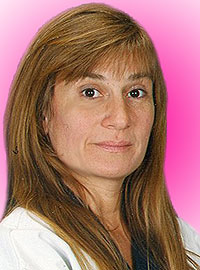
Teri Coffee McDuffie, courtesy photo

Teri Coffee McDuffie, courtesy photo

“One of the most important things women need to know about their safety is that there are ways you can help avoid being picked as an intended victim,” says Teri Coffee McDuffie, owner and founder of Santa Barbara Women’s Self-Defense. McDuffie talks with Leslie Dinaberg about how she learned to be capable, confident and in control-and how she’s teaching others to do the same thing.

Leslie Dinaberg: How did you get started with Santa Barbara Women’s Self-Defense?

Teri Coffee McDuffie: I’ve been training in martial arts for 26 years. After about five or six years, I realized that the majority around me were men … and I thought, why is that? Women need it far more than men … so why aren’t more women doing this?

I realized it’s because we have much more commitment in life to family, to our husbands, to what’s going on with children and life. Fulltime careers kind of envelop us, and there’s not much time to fully commit to martial arts.

So I thought, how can I take this program that I’m doing in martial arts and take snippets of the best of what I’m learning and create a small program that will be basic and simple and make it something they can do in a short period of time? I designed it about 20 years ago.

LD: Obviously safety is the number one thing, but what about physical fitness?

TCM: Anybody can do it. … We’ve trained people that are 87 years old, kids that are ten years old; we’ve done people with physical disabilities in every way.

… At the Braille Institute because we are teaching the senior citizens over there and some of the people do have sight disability. …. In the fall, we had a class of ten and we’re going back in the springtime. And we volunteer there, that is a lot of fun.

LD: How long is the course?

TCM: In general we have an eight-hour course, and it’s divided numerous ways for people’s convenience.

LD: It sounds like you’re working with a wide variety of ages.

TCM: Yes, but the most frequent group that comes in here are in their 40s and 50s because they seem to be the group that truly understands the need for it in their lives in terms of feeling more completely and fully balanced.

… It’s really hard to get actually the target group for victimization, which is the college age. …We can’t get them to recognize that they can be one of those victims.

LD: I think in the college atmosphere the perception of strangers is different than anywhere else too.

TCM: Absolutely. … But 90 percent of people that are attacked, it’s done by somebody that they’ve met or know.

LD: Really?

TCM: It’s a friend or somebody that they’ve been acquainted with, like somebody bumping into them every day, saying hello, somebody that drops off their mail, somebody that they meet in the grocery store that’s bagging their groceries, that says hi to them, that they have some comfort level with.

LD: That totally flies against my assumptions, because you would think I would know where to find that person and identify them.

TCM: It has to be somebody that’s going to have that kind of vulnerability and the more vulnerable people are going to not react when they are attacked, they are going to be more fearful, they are going to be the victim.

… Everybody can be a target. It’s not about how cute you look. They’re looking for attitude, appearance and how you’re walking around. It’s about how you’re presenting yourself out there in terms of vulnerability. That’s what they’re looking for. It can be anybody.

LD: There’s such a fine line, as a parent, you want to teach your children to be strong and self-confident and cautious, but at the same time you don’t want them to be completely scared of every stranger that talks to them.

TCM: Great, now what you just said right there is what we battle against because we have so many mothers out there saying, “I’m not sure if I can have my daughter take your course because what I’m worried about is she’s going to end up paranoid.”

And we say “No, if your daughter takes this course, she will feel so much more in control because instead of feeling fearful that things will happen to her, she’s going to reverse that and take control of more of her life and take control of situations so things don’t happen to her.

LD: What are some of the things you teach?

TCM: We tell people they have so many different choices. What we start out doing is just showing just a simple strategy. If someone walks up to them and they feel uncomfortable because they’ve violated their space, we give them an option such as saying, “stop” in a big voice, or they just step back instead of stepping forward and put their hands up and use their voice.

LD: How long does it typically take for people until it the strategies become instinctual?

TCM: I think very quickly because we do it frequently during the class.

LD: There’s certain element, at least in my own thought process, of embarrassment. What if that person wasn’t really walking toward me?

TCM: We talk about that it’s okay to be embarrassed and be wrong but be safe. Listen to your instincts, it’s important, and if you’re wrong you’re safe.

… When you’re choked, this one is just a good one to know, you find someone’s Adam’s apple and then right under the Adam’s apple you just take your fingers and expand it straight in. It doesn’t hurt them, but it does make them extremely uncomfortable. No matter how powerful they are, no matter how big they are, they will back off to that. It doesn’t take any strength whatsoever.

LD: That’s also not intimidating. I think some people can’t picture themselves jumping around, but poking someone in the Adam’s apple seems doable.

TCM: Yeah and if somebody jumped on you and all of a sudden they’re choking you, you can reach out in the dark and find the Adam’s apple. We do different scenarios like that. … The things that scare you in your mind, that are so big in your mind and you can have a visual release from that.

LD: You mentioned doing some mobile training where you go into businesses?

TCM: We go into places of business and we do whatever structure works for them. … It’s really good for the employees in terms of morale boosting, because they feel better getting in their cars at night and it’s just a safer environment for everybody.

LD: Do you go to martial arts competitions?

TCM: Yes. I go to national competitions all the time. … It’s wonderful because you get to meet people from all around … year after year you become bonded with those people. We’re one huge family. …I’m going to Korea this year to test for sixth degree in the fall.

LD: If you could be invisible anywhere in Santa Barbara, where would you go and what would you do?

TCM: When the women leave here and have taken the course-if I was invisible, so I didn’t have to be a voyeur-I would like to follow them around a little bit and see how they’re walking around in terms of their attitude and empowerment. How they are looking out in the world.

LD: Can you recognize from the posture of somebody that has been trained in self-defense?

TCM: You bet. From the first day they’ve been in this course to the last day they’ve been in this course, they are like night and day … it’s just amazing.

Vital Stats: Teri Coffee McDuffie

Born: San Francisco, CA; November 13, 1959

Family: Husband, Ian McDuffie

Civic Involvement: Braille Institute, Obama Campaign

Professional Accomplishments: Owner/founder of Santa Barbara Women’s Self-Defense; Five-time national champion, fifth degree black belt; Certified martial arts instructor.

Best Book You’ve Read Recently: Gift of Fear by Gavin DeBecker.

Little-Known Fact: “I’m very shy. A lot of people wouldn’t think I’m very shy but that’s probably what has really driven me to do all of these other things that I’ve done is because I am moving in the opposite direction of what I want to do, which is just curl up and hide in the corner, which is absolutely what I want to help people not do.”

Originally published in Noozhawk on February 15, 2009.

Noozhawk Talks: Leslie Dinaberg sits down with Maria Herold

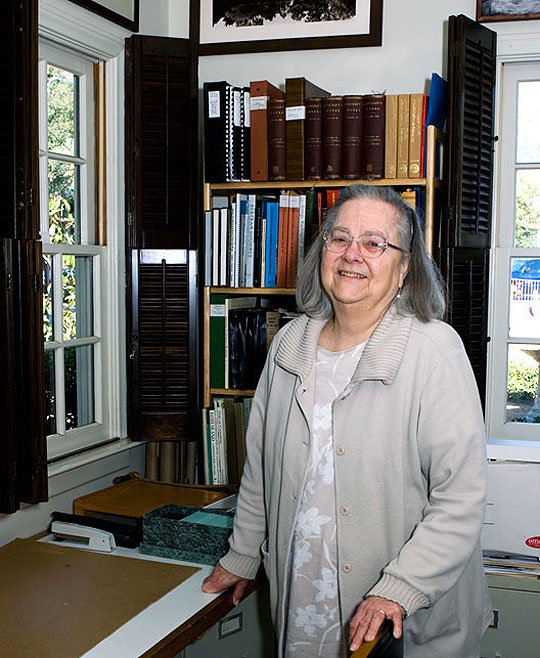
Maria Herold, longtime curator of the Montecito Association’s history committee, is an enthusiastic resource for those conducting obscure research or exploring land-use background. (Elite Henenson / Noozhawk photo)

Maria Herold, longtime curator of the Montecito Association’s history committee, is an enthusiastic resource for those conducting obscure research or exploring land-use background. (Elite Henenson / Noozhawk photo)

As longtime curator of the Montecito History Committee, Maria Herold knows-
literally-where the bodies are buried and the tales behind some of the most
storied families and legendary estates. Here she sits down with Leslie Dinaberg
to discuss some of her own history.

Leslie Dinaberg: How did you get involved with the Montecito History Committee?

Maria Herold: When I retired I decided that I would like to do something useful and I looked
around. I first looked into Recording for the Blind and Dyslexic, and I wasn’t quite
ready for their structure. I had heard that somebody was needed up here, so I
dropped in and have been here ever since. (Laughs) I just showed up!

LD: And when was that?

MH: I think about 1991.

LD: What did you retire from before that?

MH: Well, immediately before that I took care of babies … I wasn’t looking for a
job, but people asked me to take care of their babies because the hours were
perfect, my husband was a teacher and most of the people who asked me to
take care of their babies were teachers.

LD: Has history always been an interest of yours?

MH: Absolutely, because of the fact that my family has been involved with the
history of California and that has always been in the back of my mind. My
grandfather immigrated to America in 1873 and first worked in Sonoma County
and then settled in Northern Santa Barbara County and worked as a supervisor
on an old Spanish land grant.

He went back to Switzerland after he had worked here for 30 years. I was born in
Switzerland, and then I came to America when I was 16. He came when he was
15 and I came when I was 16. He came walking over the Isthmus of Panama and
I came on a freighter through the Panama Canal-so that’s history.

LD: Did you come with your family?

MH: Yes. The whole family came. … (My father) decided that instead of going to
the Santa Maria area, where he was born … he looked for the nearest place that
had a college and at that time there was a little college up on the Riviera so we
came here because of the college on the Riviera. I was the oldest child and he
wanted to be able to send me to college locally.

LD: You have an interesting history so I can see where your interest comes from.
What kinds of things do people come to the Montecito History Committee to
research?

MH: Everything from what is the story of my house or who is the architect or how
come my house is the way it is, to I heard about the Para Grande, or I heard
about the San Ysidro Ranch. Or I heard about somebody from New York who is
following a history of a person who started out in Europe, went to New York and
then ended up dying in Santa Barbara and inspiring a story of the ghost of a
countess in a local house. It gets that elaborate.

Then, of course, people who want to know the history of a street or of a property
that they want to buy. Or there is a legislation or development and, if they’re
smart, they come here and see what the history is. There are very few people
who are smart, but they manage to keep me busy, very, very busy.

I wish more people would come in because it is always ignorance that causes
problems, legal and otherwise. And in the community it creates a great deal of
problems where people are really not well informed on the history of Montecito.
And the same thing in Santa Barbara, the same thing in Goleta. If people knew
the histories there would be much less confrontation.

LD: Do you have a favorite project you’ve been involved with?

MH: I love it that the Pearl Chase Society once gave a mandate to a lady that
they were giving grants to look into part of the history of Montecito. And they
funded this lady, not me because I’m a volunteer, I don’t take money, except for
as a gift to the History Committee. But they funded this lady to work with me in
putting together a history of a particular section. We picked this section of
Montecito and looked into it in detail, starting with a map from 1871 and then
following the history of that section up to the present time. It was a fascinating
project. It took us months and literally months and months but it ended up in two
ring books of information with lots of pictures and everything else.

LD: What part of Montecito did you look at?

MH: We looked at the area between Jameson Lane (south), San Ysidro Road
(west), Hixson Road and Santa Rosa Lane (east) and Santa Rosa Lane (north).
That encompassed old farmland that had been well known farms in the 1870s
and 1880s and 1890s and also included one of the two most historic parts of
Montecito, which is Romero Hill. So we got all kinds of background with Romero
Hill and with the farming community and now having developments, so we have
everything there on how it developed since 1871.

LD: Do the other local libraries know about your resources?

MH: It depends on who they talk to at the library … I do know that UCSB is
aware of us, the Santa Barbara Historical Society sends us people all the time,
people who come into the library and say what should I do to find out about this
and that and something else, the librarians here (at the Montecito Library) send
me people all the time. So between the Santa Barbara Historical Society and the
local library we have a lot of referrals. Also there seems to be somehow people
seem to have become aware somewhere on the Internet of our existence
because I’ve had calls from all over the continent.

LD: What is the oldest structure in Montecito?

MH: What they call the Monsignor Adobe, which is a misnomer, but everybody
calls it the Monsignor Adobe. It’s a two-story Monterey and was built long before
the Monterey Adobe was built … The Monsignor Adobe is the most classic
building, I adore it. And yet it is the oldest building that’s still excellent.

LD: And what street is it on?

MH: It’s on the bottom of Sheffield Lane where Sheffield runs into North Jameson
Lane and it’s a land marked house.

LD: This sounds like very fun and very interesting work for you.

MH: Yes, but a lot of work. I would dearly adore having a helper.

LD: It seems like there should be a college student that would be
interested.

MH: Well, you know, people keep telling me that I should get involved with
Westmont students, etc. but the thing is they leave after a year, so all that is lost.
The continuity is shot down. What I need is an apprentice who will take over
because I’m not going to last forever.

LD: You’re still going strong, though.

MH: I’m 76 years old. Start counting (laughs).

LD: What else do you do like to do when you’re not volunteering at the historic
committee?

MH: For a long while I worked at Recording for the Blind and Dyslexic, which I
adored, just adored. But I can’t do it anymore. I’ve had several operations for
cancer so this is quite a trip. I used to work hours and hours over there and I just
loved it, but I can’t do it anymore. Then I’m involved with music all the time, I
always have been. I’ve been an accompanist and stuff like that. I’m still a
member of a choir, I sing with a group every Sunday but this is strictly amateur
music, but I’ve always done music.

LD: So is your group you sing with a church choir?

MH: No, it’s just a group that gets together, we all can read music, we get
together and we sing what is called early music, a capella early music and we
don’t perform, we do it for the fun of exploring early music.

LD: That’s really fun. That’s a great little local activity. If you could pick three
adjectives to describe yourself, what would they be?

MH: Old-fashioned, excitable, and enthusiastic.

Vital Stats: Maria Herold

Born: August 14, 1932, in Zurich, Switzerland.

Family: Husband George Herold; six grown children, Ann Herold, Matthew
Herold, Tina DaRos, Mark Herold, Monica Christensen, and Joseph Herold; eight
grandchildren and one great grandchild.

Civic Involvement: Volunteer curator with the Montecito History Committee, very
active with Mount Carmel Church, former volunteer for Recording the Blind and
Dyslexic.

Professional Accomplishments: Runs the Montecito History Committee archives;
formerly took care of babies in her home.

Best Book You’ve Read Recently: The Zookeeper’s Wife, by Diane
Ackerman.

Originally published in Noozhawk on January 12, 2009. Click here to read the story on that site.

The science of happiness

Stuart Miles, freedigitalphotos.net

Stuart Miles, freedigitalphotos.net

If you can get a grant to pay for the research, then just about any topic is ripe for scientific analysis. Once the province of poets and playwrights, happiness is now emerging as a significant field of academic inquiry.

Psychologists, ethicists, scientists and researchers all over the world have been working diligently to dig up hard data on a question philosophers have been pondering for years: What exactly is it that makes us happy?

There are lots of books on the subject–with sexy titles like, Happiness: Unlocking the Mysteries of Psychological Wealth, The How of Happiness: A Scientific Approach to Getting the Life You Want, Happier: Learn the Secrets to Daily Joy and Lasting Fulfillment, and Thanks! How the New Science of Gratitude Can Make You Happier–but I decided that buying and reading all those books wouldn’t actually make me happier.

Instead I read an article in “Yes” Magazine by someone named Jen Angel (Is that a perfect name or what?) who read the books, thereby demonstrating the first of my scientific rules for happiness (hereafter known as Leslie’s Science of Happiness Rule #1)–You’ll be happier if you let someone else do the heavy lifting.

Here are some other scientifically proven strategies for finding happiness, according to “Yes.”

Savor Everyday Moments

This is pretty good advice and I do try to follow it. For example, tonight after we lit the Hanukah candles and my son swung his new Rugby Shirt around the room as though it were the Howler Monkey he was secretly hoping to unwrap, and he barely missed knocking over my wine glass onto a pile of clean white laundry I had yet to fold and he didn’t set anything on fire when he knocked over the menorah, I paused, took a sip of wine and a deep breath and simply savored the moment.

Leslie’s Science of Happiness Rule #2–Hold onto your wine glass, it’s going to be a bumpy ride.

Avoid Comparisons

It’s tough to avoid comparing yourself to other people, and trying to keep up with the Joneses in a wealthy town like Santa Barbara is downright impossible. The scientist’s advice: “instead of comparing ourselves to others, focusing on our own personal achievement leads to greater satisfaction.” This makes sense, but I’ve found that being married to someone with a huge ego is another way to do this. My husband’s delusions of grandeur almost never fail to make me smile, or at least feel better about myself by comparison.

Leslie’s Science of Happiness Rule #3–Marry someone who makes you laugh.

Put Money Low on the List

People who put money high on their priority list are more at risk for depression, anxiety, and low self-esteem, according to research. Obviously I would never have gone into journalism if money were high on my list. Although I can’t say that NOT having much money has ever made me particularly happy, NOT selling my soul for a paycheck certainly has made me happy in my professional life

Leslie’s Science of Happiness Rule #4–Get a job you like.

Have Meaningful Goals

“As humans, we require a sense of meaning to thrive. People who strive for something significant, whether it’s learning a new craft or raising moral children, are far happier than those who don’t have strong dreams or aspirations,” say researchers Ed Diener and Robert Biswas-Diener. This is why I put “keep Koss alive,” “sleep,” “eat chocolate,” and “breathe” at the top of my to do list every day–not only does checking them off make me happy, it also gives me a sense of satisfaction and accomplishment of my goals each and every day of my life.

Leslie’s Science of Happiness Rule #5–Sleep, eat chocolate, breathe, and try to keep your kid alive.

Make Friends, Treasure Family

Happier people tend to have good families, friends, and supportive relationships, say Diener and Biswas-Deiner. But we don’t just need relationships; we need close ones that involve understanding and caring. It’s science, baby.

Leslie’s Science of Happiness Rule #6–Besides wine, chocolate and a husband that makes you laugh, the secrets to happiness are having family in town to baby sit for nights out with your friends.

Smile Even When You Don’t Feel Like It

A wise friend of mine once told me to “smile like you mean it until you actually do mean it.” Oddly enough, she was right. I’ve found that smiling works wonders. It’s really hard to be mad when you smile and it’s really hard for someone else to be mad at you when you smile at them.

Leslie’s Science of Happiness Rule #7–Keep smiling and don’t forget to floss and check for lipstick on your teeth. (And by the way, if I have lipstick on my teeth, would you please tell me.)

Say Thank You Like You Mean It

People who keep gratitude journals on a weekly basis are healthier, more optimistic, and more likely to make progress toward achieving personal goals, according to Robert Emmons. And people who write “gratitude letters” to someone who made a difference in their lives score higher on happiness, and lower on depression–and the effect lasts for weeks, according to Martin Seligman.

Leslie’s Science of Happiness Rule #8–I couldn’t have said this one better myself. Thank you for reading my columns week in and week out. Have a wonderful New Year.

Share your own science of happiness with Leslie at email.
Originally published in the Santa Barbara Daily Sound on December 27, 2008.

Noozhawk Talks: Leslie Dinaberg Sits Down With Ann Peyrat

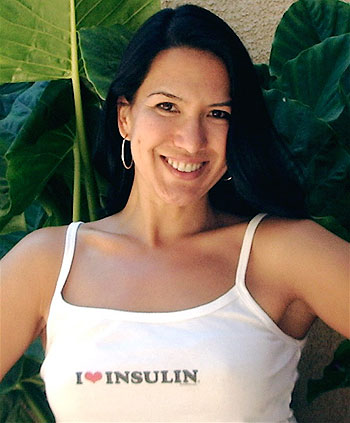
Ann Peyrat has lived with diabetes since she was 16. Rather than give in to the disease, she was inspired to create an apparel line that would help others — particularly girls — feel better about themselves. (Betes Babe photo)

Ann Peyrat has lived with diabetes since she was 16. Rather than give in to the disease, she was inspired to create an apparel line that would help others — particularly girls — feel better about themselves. (Betes Babe photo)

Diagnosed with diabetes as a teenager, Ann Peyrat didn’t like the sound of the word diabetic-especially the “die” part-and quickly declared herself a “betes babe” instead. Now she’s developing a fun and fashionable line of accessories called Betes Babe (www.betesbabe.com) to help others wear their “betes” in style.

Leslie Dinaberg: Tell me about your business.

Ann Peyrat: I was16 when I was diagnosed. I remember that because for most people it’s their sweet sixteen, but for me it was my no more sweet sixteen. I was always looking for products, new things to manage my disease and everything that was out there was either black or a steel kind of cold hard medical look and that’s not me. I’m pink and girly and match my outfits and I just didn’t see anything out there that was beyond this kind of utilitarian look. So in the back of my mind I was always searching for something and then got to the point where I said, “well, why don’t I just make something that I like?”

It blossomed from there, but I never really had the big push to go out and do something as a business for other people until everything that happened with the News-Press went down. All of a sudden I knew I couldn’t work there anymore … so that was kind of the push to say, “Hey, let’s dig in your heels and this is the time.”

LD: So were you making things for yourself?

AP: Yes and just designing. I like to sketch or do little drawings, so I have a journal of all these ideas that I want to do. Some of them I don’t have the technical know how to do. But for me that is one of the challenges. I’ve never run my own business before I don’t know all the steps … but to me, it’s more satisfying to figure it out myself rather than just having to pay somebody to do everything for me. … I started out with just some small graphic design things, some t-shirts and things that are at CafePress.com, so I didn’t have the overhead of having a warehouse … I’ve gotten responses from all over the place. … I’ve got orders from New York, Illinois, Michigan, just all over.

LD: Teenagers and young girls seem like a natural market for your products.

AP: Yes, I actually have a young friend, a school mate of mine, her daughter who is in third grade was just diagnosed and so I took her out just to be sort of a betes buddy, just so that she would know somebody else who had it who was maybe a girl. …I think girls and boys go through different things and especially girls with hormones. It’s a different animal to have girls.

LD: I also think girls, for whatever reason, are so much more fashion conscious. What are all your products?

AP: Right now I have t-shirts and bumper stickers and I’ve got a messenger bag, a canvas tote bag and all of these things have different messages on them, like “I heart insulin” or “I try not to be too sweet, it’s a betes thing.” I’ve got a tank top, I’ve got a golf t-shirt, you can check them out online at www.cafepress.com/betesbabe. And then I j have a few things for people who do want to wear their medical alert. I have a charm bracelet and I have a few different charms that can be put on it just to give maybe a little bit more attention to it. They don’t have any writing on it, but they have a red cross type of medical symbol on them, and what I like about them is they’re silver but they all have kind of a stamp indentation on them, so if you want to change the color or you want to match your outfit, I’m sure a real jeweler would tell you not to do this, but I just use nail polish. … I also have some bracelets that have a satin ribbon and a felted wool flower on it.

LD: Those are really cute and they don’t look like a medical thing at all.

AP: And because I am manufacturing them myself, I can customize them. We make those specific to your disease, so if you have asthma, I can put asthma on there instead of diabetes.

LD: What is the best seller?

AP: Actually it’s been one of my very basic “I heart insulin” shirts.

LD: Ultimately what is your goal with the business?

AP: My goal is definitely to grow it into a really big business and then sell it to somebody and maybe remain the face of it or help out in some capacity. But it just always really appealed to me to have something that was my own and to see it happen and if I have an idea to see that come to fruition. … But I got a part time job because I need health insurance.

…I did go through the WEV (Women’s Economic Ventures) program so that did help a little bit with getting going but I still don’t know a lot.

LD: It’s a new market, so that makes it harder to figure out how to do things.

AP: Exactly. And because I have diabetes myself it makes it more personal to me and I think that I’m maybe more passionate about it than somebody else might be. It’s really one of those things where even if it’s slow at first, I’m not going to drop this idea just because it’s hard. I really want this and I want to do this for the diabetic community at large and that’s inspirational to me to keep going.

LD: I know it’s hard sometimes with a chronic illness. Do you have any advice for somebody that was recently diagnosed with diabetes?

AP: Don’t be afraid to talk about it. You’ll be less alone if you’re able to talk about it. I think a lot of people are really interested. Nobody is going to make fun of you. I think people are sometimes afraid to be different. But especially with my business and having something cute that you can carry, I want people to feel like okay maybe you are special but it’s not special bad it’s special good. And again, for me being really open about things, I think it just starts a conversation. Somebody sees me carrying a cute bag and says, “Hey where did you get that bag?” That’s an opportunity for me to educate them a little bit and tell them a little bit more about what diabetes is, that you don’t have to be scared of it, you don’t have to worry too much.

Also I think going along with talking about it is finding a support group or finding other people that you can talk to if you’re feeling alone, believe me you’re not.

LD: What else do you do when you’re not working?

AP: I wear many different hats and one of them is dog walking and dog sitting. I actually just got my first dog three years ago and I can’t believe I didn’t do it before that. There was no life before I had my dog. … I like to go to movies; I like to go out for food. … I’ve got a group of friends we do Bunko every month and then I’ve got a group of friends we go out to dinner once a month and then I’ve got a book club we do once a month, things like that.

LD: If you could pick three adjectives to describe yourself, what would they be?

AP: I guess optimistic would be a good one. Not always, but usually. I hope that I’m a good friend, that’s really important to me, friends and family, and I’m creative.

Vital Stats: Ann Peyrat

Born: October 7th, at Goleta Valley Cottage Hospital

Family: Parents Adrian and Gloria Peyrat and brother Alan.

Civic Involvement: Volunteers at Fund for Santa Barbara and Sansum Diabetes Research Institute, donates money to others.

Professional Accomplishments: Santa Barbara News-Press Public Square Editor,

Special Sections Editor, and editor of Woman Magazine; UCSB, Assistant to Chancellor Henry Yang; Santa Barbara Cottage Hospital Foundation Development Coordinator; Founder of Betes Babe.

Best Book You’ve Read Recently: Naked by David Sedaris

Little-Known Fact: “When I was 29 I lived in a van for a year to save money.”

Local Resources for Diabetics

Diabetes Resource Center of Santa Barbara County

http://www.sbdrc.org/

Carpinteria Childhood Obesity Prevention Initiative

http://www.sbdrc.org/programs_drc.htm

Betes Babe

http://www.betesbabe.com/index.html

Sansum Diabetes Research Institute

http://www.sansum.org/

Originally published in Noozhawk on December 21, 2008. Click here to read the story on that site.

29 Gifts Bring Bountiful Blessings

29gifts-bgThe story is right out of a Lifetime movie, only this time it’s true.

Lovely 30-something Cami Walker was on top of the world. She had conquered addictions to alcohol and drugs–now her career was thriving and she just married the man of her dreams. Then, two weeks after her honeymoon, her whole world came crashing down around her. Her hands didn’t quite work, then one of her eyes stopped functioning, and she was diagnosed with multiple sclerosis.

Multiple sclerosis is an autoimmune disease that affects the brain and spinal cord. It isn’t fatal, but it can result in serious physical and cognitive disabilities, depending upon the form it takes. Soon after being diagnosed, Cami didn’t have the strength to keep working. Feeling desperate, hopeless and depressed, she decided to perform a simple ritual suggested by one of her spiritual teachers, a South African medicine woman named Mbali Creazzo. The idea was to take her mind off her disease–and herself–by focusing on helping others and giving something away each day for 29 days in a row.

“I thought the suggestion was crazy at first, but decided it couldn’t hurt to try it. Things couldn’t get much worse,” said Cami. “I was shocked by how quickly things turned around for me. For me personally it’s totally helped turn my health around in pretty miraculous ways. When I started this I was extremely sick and I was very lonely, I really had gotten to the point where I isolated myself from people. I was feeling totally alone, I was broke, I was so ill I hadn’t been able to work in months and I was very much in a downward spiral in my life.”

By day 14, Cami was able to walk without her cane, and was able to start working part-time again by day 29. “And my bank account was actually greatly improved because I was able to start working part time again and work just started showing up for me … it was crazy, like my phone just started ringing and clients just started showing up and it blew my mind. And, I think most importantly, I had reconnected with friends and family by the end and made some new friends as well,” she said.

Now in her ninth giving cycle, Cami was so inspired by the improvements in her life that she decided to turn the 29-Day Giving Challenge into a worldwide giving movement. Today www.29gifts.org has more than 3,200 givers in 38 countries, including–drum roll please-—yours truly.

“I have definitely been surprised by how quickly it’s grown,” said Cami.

I’m not that surprised because it’s fun and it’s mostly easy. Gifts can be as big or as little you like. The important thing is to make a mindful effort to do something nice for somebody else. One day I played 12 games of checkers in a row with my son, without a single grumble or complaint from me. Another day I bought lunch for a stranger without a single grumble or complaint from me. I’m pretty sure the not complaining part is important. It doesn’t matter what you do, but the website is full of great ideas for gifts of time, money, things, or kind words. In fact, so many great stories have been posted online that Cami got a book deal out of it. Her book will be coming out in the fall.

“I think one of the coolest stories that’s come out of the site is Operation Teddy Bear Care,” she said. “It started with a woman named Maureen Forbes who lives in the bush in South Africa with no electricity. She powers her computer with a solar panel that charges up a generator so that she can have two-three hours of light and use her computer. She posted on her blog that she had been visiting children in some of the remote AIDS clinics and she was just appalled by the conditions that they were living in and the level of poverty and that none of them had anything to call their own. She posted that she sews and she wanted to sew 100 teddy bears to give away but she only had enough fabric for 20.”

Flashes of the Hanukah story go through my mind, as Cami continues. “Someone on the U.S. side, his name is BJ in Georgia, he read her blog and said, ‘I’m going to help you out. We’re going to help you get enough materials to do 1,000 teddy bears.’ … One of my gifts was to help them create a website and an identity for themselves and get their organization functioning on its own. … Our goal is to help them give 1,000 gifts to South African children living in poverty by the 31st of December. And so far I think we’ve given almost 400 already, so we need about 600 more donation packages to be purchased. Go to teddybearcare.ning.com if you want to check them out.”

I went to the website, and guess what Day 25 was for me?

I asked Cami why she thinks the 29 gifts challenge has caught on. “It’s a time where I think a lot of people are tired of the negative messages they see in the media over and over, and feeling kind of scared and frustrated with the state of the economy and some of the other things. The reality is that there are a lot of problems that we’ve got to deal with, especially in America but pretty much everywhere. And I do think that part of the reason this has caught on is that people are looking for something positive that they can feel like they are part of.”

Sounds like a happy ending to me.

Originally published in the Santa Barbara Daily Sound on December 5, 2008.
If you’d like to be part of the 29 Gifts Challenge visit www.29gifts.org for more information, and tell Leslie you’re doing it at email. For more columns visit www.LeslieDinaberg.com.

Noozhawk Talks: Leslie Dinaberg sits down with Clay Nelson

Clay Nelson walks workshop clients through the steps necessary to achieve purpose, personal and business planning, fun, effective delegation through team management, and accountability. (Clay Nelson Life Balance™ photo)

Clay Nelson walks workshop clients through the steps necessary to achieve purpose, personal and business planning, fun, effective delegation through team management, and accountability. (Clay Nelson Life Balance™ photo)

Life Coach Clay Nelson has been working with businesses and individuals to improve lives for more than 25 years. Starting this week, he’ll share with Noozhawk readers his time-tested techniques for helping people and companies fulfill their potential, maximize profits, and make themselves, their clients, and their families happier.

Leslie Dinaberg: What are some of the basic ideas that you teach with Clay Nelson Life Balance(tm)?

Clay Nelson: … I’ve been teaching people for 25 years to take care of themselves first and to put their family first and to have a billing system that serves them and they understand, and to understand what margins are and to understand marketing and to understand the value of writing down what you want so you can create what’s next, just not store what you already know.

…Family comes first. Think about that. You’re on your deathbed; money can’t hug you, number one. Number two, I doubt any of your previous clients will be there, so you have to really be looking at what’s really important, and that’s family. Then who are we the roughest on? And that’s family. So I’ve been getting people straight.

A lot of what I speak on in my speaking endeavors and my radio show and my newsletter and my blog and my “Just a Thought” email bulletins is all about communication and all about hugs and all about effective listening and all about having a plan and all about getting what you want first so you can teach others.

… Plus if you’re over 40 years old nowadays, whether you like it or not, you’re a leader, everybody’s watching you. So if you’re broke, bent over, tired and your truck’s all dirty, who is going to want to follow you? So you’ve got to be healthy, you’ve got to be able to forgive on your feet, you’ve got to be able to dance with the future, you’ve be able to stand around and say “I don’t know but let’s get it on because that’s what we do.” Then everybody dies at the end. (Laughs).

LD: It seems like now, as opposed to 25 years ago, people are starting to get that idea that it’s not just about how you are in the office, it’s about how you are in life. But I would imagine when you started out that was not something that everybody bought into.

CN: No, 25 years ago people would listen to me and go what planet did you come from? But now people want to hear what I have to say. My speaking career has tripled in the last 15 months. And you know the truth is what I’m saying now just has a different title, but what I’m saying I said 25 years ago, and it’s not about how cool Clay is, it’s just what human beings need to be with each other.

I mean stop being jerks. And if you don’t like what you’ve got, plan to have something different. And if somebody’s got something more than you got, take them to lunch, ask them how they did it and then be quiet. They’ll tell you.

LD: So what will the column for Noozhawk be about?

CN: The column is going to be talking about how you can have what you want, talking about planning, talking about forgiveness, talking about health, talking about how we merge all of it together, your spiritual side, your financial side, your family side and everything else all together because that’s what it’s all about.

… Life is all about the choices that you make. Everybody talks about how they were influenced one way or another and the truth is you may be influenced but the choice you made was yours … You are the only person that has a say in how your life turns out. So if you don’t have what you want or if you don’t have the health you want or if you don’t have the relationship you want or if you don’t have the money you want, you can change it because you did it.

… There is no past eraser, all you can do is learn from it and if it felt good and didn’t hurt anybody, do it again. (Laughs) If it didn’t feel good or it hurt somebody, say you’re sorry and don’t do it again. And that’s life. There isn’t anything else.

LD: That’s powerful.

CN: I mean what else can you do? You know if you want to live from feeling bad for what you did, okay. But it’s in the past, you can’t change it. You can only learn from it.

LD: It sounds like what you’re talking about would have an application for almost anybody.

CN: Anybody. If you’re over eight and you can read, all the way up to 80 and you still want to read. I don’t care who it is, male or female, we’re all the same.

LD: And when you’re preparing to speak to a group of teenagers versus a group of contractors, are the basics the same or are they different?

CN: I think where I want to leave them is the same, in that they are the only person that has a say in how their life turns out, and if there’s something driving them from their past they have to forgive it, make room for it, if they don’t whatever stays in their conscious mind the longest they become.

… My biggest problem with the talks I give is I’ll get in trouble either with the Fire Marshall, because there are too many people who want in the room, or I get in trouble with the next speaker that is coming in because nobody wants to leave. They come up to me and say the same thing; you were talking just to me.

LD: That’s great that you can connect with people in that way.

CN: Yeah. They get that I’ve lived where they are and I’m not telling them to go change or fix anything, I’m saying, “hey, if you don’t have what you want, choose something and get moving. ”

… The human mind is a wonderful tool, but it’s designed to keep you safe, and safe lives in something you’ve already done. Or the past. So if your mind is designed to keep you in the past, if you think about stuff do you think your mind is going to let you step out there and do something you haven’t done? No, your mind’s going to say you’re going to die, your mom’s going to be mad at you, you’re going to prison, you’ll have to eat worms, your pants are going to drop off. (Laughs). I don’t know, whatever it is, whatever it takes to stop you your mind will do. So I live my life with enough fear in it so that the hair stands up on my arms all the time, but not so much fear that I get stopped. So I want to have just enough fear to feel alive, but not so much fear that I have to be stopped. And if there isn’t enough fear to have my hairs stand up on my arms, I go make some because that’s life.

Also it keeps me from bending my elbow and putting too much food in my mouth.

LD: I can’t wait to see what you do on Noozhawk. How long have you been in Santa Barbara?

CN: For 31 years.

LD: What else do you do when you’re not working?

CN: I love to go fishing and not talk. … I have a Harley that I ride and you don’t talk on the phone when you’re on that thing. … I love to garden. … I have Hitch, my new 9-month-old English bulldog who is my best friend. No matter what I do it’s okay with him. We go to the beach two and three times a week so it gets me out more and away from the telephone and I get to play with him. I’ve been married for 24 years, living together for 30 years and I’ve almost lived through the hormone change. I get to know whether I’m going to live or die first thing in the morning. That’s supposed to be humorous.

LD: It’s too close to be humorous. If you could pick three adjectives to describe yourself, what would they be?

CN: Intuitive, unstoppable, energized-that assumes I know what an adjective is, by the way.

Vital Stats: Clay Nelson

Born: “On April 28, 1944 in El Paso, Texas in an airplane with my twin sister. My mom was flying from the East Coast to the West Coast; my dad was building Camp Roberts. … They had to put the plane down in El Paso because the twins were born on the plane.”

Family: Wife Susan Oyloe Nelson; Audre, age 36, lives in Santa Cruz, and is getting her Ph.D. in psychology; Elizabeth, age 22, attended Fashion Institute of Design and Merchandising and is now working for Jacqua Beauty in Carpinteria; C.J., age 17, is a senior at Dos Pueblos, and taking classes at SBCC.

Civic Involvement: His own 501(c)3 Transforming America’s Youth (TAY), Special Olympics, Unity Shoppe, Safe Harley Riders, Toys for Tots Ride

Professional Accomplishments: 30 years of corporate leadership, founder of Clay Nelson Life Balance(tm), a division of Consulting Services Network LLC.

Little-Known Fact: “My secret desire is to build a go-cart out of a Harley engine I have in my garage.”

Originally published in Noozhawk on November 11, 2008. Click here to read the article on that site.

Leslie Dinaberg Sits Down With Jamie Allison

Jamie Allison (photo by Lesley Hall)

Jamie Allison (photo by Lesley Hall)

Finding a way to combine fun, fitness and philanthropy was Jamie Allison’s goal when she founded Moms in Motion in Santa Barbara in 1999. Now she’s taking the show on the road, with 5,244 members in 140 cities, 45 states and four countries.

Leslie Dinaberg: How did Moms in Motion get started?

Jamie Allison: It was a hobby. We started with friends and family, there were14 of us who did the Triathlon team … For me it was about feeling overwhelmed with wanting to belong to a few charities, wanting to belong to a few social groups, wanting to belong to a few fitness teams that were already organized out there, and then feeling totally stressed out with the idea of how am I going to do that and be a mom and be a good wife and do it all.

… I started looking around for mommy/baby groups but that wasn’t really what I wanted either. I think there’s a really great purpose for that, especially for brand new moms to meet at the park with their babies, but after a while I wanted to move and get my fitness in and meet other women in the community that had those same interests. Yet at the same time I really wanted to be able to get everything in one place so I didn’t feel so maxed out and spread thin, and that’s when I thought about incorporating the charity part and then the social part.

Our whole foundation, our principles are fun, fitness, and philanthropy and in all of our groups locally and nationally those are the three principles they have to integrate into their programs. What I’m finding is that has set us apart as a unique niche. … It simplifies your life if you choose to just get everything in that one place.

LD: And the team leaders choose which nonprofits to support?

JA: Yes, it’s up to them. We’re kind of unique in Santa Barbara because we have multiple leaders here (Amanda Nicolato leads a bootcamp and weight training, Emily Watson leads a hiking team, Laura Francis leads the stand up paddle board team, Sean English leads the cycling team, Chrissy Lombardi leads the core conditioning and half marathon training teams, Ernesto Paredes leads the triathlon training team, and Mandy Burgess leads the surfing and conditioning team). … We meet every other month and talk about the different charities. Some leaders like to continue with the same charity year after year, some leaders like to mix it up, some leaders are getting new information about what’s out there each season but it’s their choice and the whole purpose is to constantly educate our members on what’s out there. So we give them a little taste of that charity and we either volunteer or we piggyback a fundraiser, or we create our own fundraiser and collectively we kind of do what we can to help that charity. So we invite the director to come and speak to us and kind of bring their wish list of wants and needs and then we as a group decide what we can do.

LD: It’s great to offer that opportunity because it’s hard to volunteer when you have young kids at home.

JA: Especially when your kids are little. Some members are so tapped out they can’t do anything and that’s okay, at least they’re getting the information about that charity. And there are others that are gung ho and are amazing with what they’re doing. A lot of those members, I’m thinking of Domestic Violence Solutions, have stayed on as independent volunteers and that’s when we really feel like we’ve contributed because yes, we’re adopted that charity for the season but when people continue on and that’s pretty awesome. And the triathlon team just raised money for Village Properties’ Teacher’s Fund and Computers for Families and so many of our members weren’t aware of those two opportunities, so it was pretty awesome.

LD: Do you train with one of the teams?

JA: I stepped out of the coaching arena, so yes now I get to enjoy doing that. And you know it’s hard to always take off that coaching hat completely. …Right now I’m running with Chrissy’s running group.

LD: really liked your blog just talking about training with the group from San Luis Obispo. There’s something really nice about being able to do that.

JA: The instant connection of it was so surreal for me because it was like closing your eyes and hearing the conversations I could have been here with our group, and it’s just connecting women and you’re at a kind of similar stage of life. I mean not everybody because we have 60 year olds running with us, we have mother-daughter duos, but for the most part where we are at this stage in life.

… When I was in San Luis we were talking to one of the moms who was a four-time marathon finisher, she was going through the empty nest syndrome. So she was talking to me about her kids had just left for college and it was really kind of fun because they kind of had a need to share why participating in Moms in Motion was nice for them.

I was feeling like I didn’t want to interrupt their practice but it was really wonderful to hear all of the different perspectives about why this is important to them, it’s fulfilling. That part of it is so great; it’s really what’s keeping me excited.

…When I was up in San Luis they wanted me to talk about how this all came to be and I was just talking about how important it is at this stage of life, I mean for me, to continue making friends along these lines that lift every body up. It’s a group that gets together to support each other and I was talking about all that, and I was saying how cool that is … how we’re building community and really that to me is what this is all about, building a sense of community and one of the members piped in she said, “but you forgot something think it’s like one of the most important things.” I was like what is it, what is it?

And she said “you know, when I leave for practice my girls are running around the house playing Moms in Motion.” And I thought wow. That gave me chills. This is really important for our kids to see mom taking care of herself because when she takes care of herself she’s taking care of the whole family.

LD: Is it hard for you to step out of the coaching and let local teams do their thing? Is that challenging for you at all?

JA: No, it’s not. … When I worked for the school district, my boss, Mike Couch, he was assistant superintendent and he brought me in as a reading coordinator for junior and senior high schools, to implement reading programs for kids who couldn’t read. I’ll never forget the way he led me. He said, “Jamie this is the program, you need to implement it. You just check in every week and tell me how it’s going.” And I thrived on that because I got to be creative, I got to make it my program, I didn’t have someone who was micro-managing me. I always thought gosh, that’s the way to lead. I mean obviously you’re going to have setbacks with people who try to take advantage of the situation and then you have to deal obviously with that, but for the most part I think with this I feel like if you set the structure and the model up and you provide that and you’re there for support and you have a pretty good sense of people that you bring in, my deal has always been let them lead. Get out of the way.

LD: You are sort of conspicuously absent from the Moms in Motion website. Is that intentional?

JA: Well sort of. I’ve always been a behind the scenes worker. It’s not really about me, it’s about them, and so I kind of put myself to the side. I’m there, if you want to find me you go to history and then there’s a place for me talking about all the little awards and all that good stuff, but I kind of feel that that’s not what Moms in Motion is really about–it’s really about connecting women to each other and developing that community.

LD: If you could be invisible anywhere in Santa Barbara, where would you go and what would you do?

JA: Onstage at the bowl with some of the musicians. I could be a backup singer and they wouldn’t even know it.

Vital Stats: Jamie Allison

Born: Santa Rosa, CA, January 21

Family: Husband Michael; daughters Kate (age 7) and Samantha (age 3).

Civic Involvement: “I really do that through my Moms in Motion groups.”

Professional Accomplishments: Teacher, Masters in Education from UCSB, Santa School Districts’ Secondary Reading Coordinator; Founder/CEO of Moms in Motion

Best Book You’ve Read Recently: A Map of the World, by Jane Hamilton

Little-Known Fact: “I studied with a Shaman in Peru for a few weeks.”

Originally published in Noozhawk on October 20, 2008. Click here to read it on that site.

Battle of the blab is a draw

51tKTrr+gaLConventional wisdom says that women talk more than men, and up until recently there was relatively conclusive research to back that up. Women use 55 percent more words per day than men do, according to a book called The Female Brain.

I don’t know about their findings, but in my own extremely scientific, highly controlled experiment, I found that women use 100 percent more words per day than men do.

I told my husband about this very exciting scientific breakthrough.

Me: ” I think women talk about talk twice as much as men. What do you think?”

Husband: “Huh?”

Me: “See. I have to repeat everything I say.”

Husband: “What?”

Nothing like a true-life example to prove my theory.

But that was last week. It’s even quieter at my house this week. My husband is away on business, and my son’s at school, then soccer, then homework, and then he’s too exhausted to be much of a conversationalist. So Chatty Cathy (a.k.a. Loony Leslie) has mainly been chatting with herself.

With no one to talk to at home, I was trolling around the Internet for entertainment (not that kind of entertainment, get your minds out of the gutter) when I came across a University of Arizona study that found–unbelievably–that women don’t talk more than men, after all.

Oops.

In tracking the number of words used by male and female college students by equipping them with digital voice recorders, researchers found that statistically, men and women were just about even.

So the battle of the blab is a draw. I can hardly believe it. I’m practically speechless. You would think we’d hear more about the death of another enduring male-female stereotype. I’m guessing it’s because these were college students. The guys hadn’t gotten married yet, so they were in courtship mode and had to at least pretend that they would continue speaking after the wedding– kind of like women and sex.

But even if you buy into the research that men and women speak about the same number of words–which certainly wasn’t done at my house–they definitely don’t speak the same words.

Based on my own carefully documented research, men rarely utter the words “accessorize,” “size zero,” “cellulite” or “Botox,” unless they happen to be actors. Nor do you hear them describe someone as “unconventionally attractive,” or having “emotional intelligence.” “Grocery store,” “laundry” and “birthday card” also seem to be off limits.

On the other hand, men are 77 times more likely to use the word “fine” than women are. As in, “Okay, fine” to end an argument, when he really means, “You’re wrong but I’m tired and don’t want to talk about it anymore.” Or “You look fine,” when you’ve finally accessorized the 17th outfit you’ve tried on and he’s showing his emotional IQ by urging you to get out of the house.

Men will also say, “I’m fine,” rather than reveal weakness, say, when being tortured or held up at gunpoint.

Just the other day I came home and asked my husband how his day was. He said, “Fine.” But I know darn well what he really meant was “I know you want to talk about my day and all my relationships with my colleagues and boss (if I actually had relationships with any of them) but I just want to drink a beer, eat a bag of chips and zone out on CNN.”

At least we understand each other.

Originally published in the Santa Barbara Daily Sound on October 3, 2008.

When Leslie’s not repeating herself, talking to herself, or changing her clothes, she’s usually on her computer, answering emails at email. For more columns visit www.LeslieDinaberg.com.

Leslie Dinaberg Sits Down with Leslie Westbrook

Leslie Westbrook

Leslie Westbrook

Building on her lifelong interests in travel, fine art, and antiques, longtime local writer and editor Leslie Westbrook recently went public with her treasures, opening up a storefront, Leslie A. Westbrook, Art & Antiques, in Montecito’s upper village.

Leslie Dinaberg: Tell me about your new business venture?

Leslie Westbrook: I used to have an antique shop 20 years ago on Coast Village Road (Basement Antiques). So when I travel, I’ve been a travel writer for a long time, I’ve bought things and brought them back and sold them, sort of to supplement my income, but not in a big way.

LD: So you took your air miles and went to Brazil.

LW: I thought I’ll go down and I’ll buy some stuff and I’ll bring it back and I can sell it to collectors and/or consign it or sell it to shops. My area of interest and emphasis has always been art, but from South American “Santos,” because I’ve always liked them and been interested in them. So I went down there, I spent four days going to flea markets and a couple of antique dealers down there that I know and I bought a bunch of stuff. And I have a friend, sort of like my Brazilian son, he speaks Portuguese and helps me. Then I went off to Argentina and I said “here’s the money, ship this off DHL.”

LD: Now I know you and Miguel Fairbanks (who runs a wedding, event and portrait photography business in the back studio) are old friends.

LW: Yes and I just happened to say to him, “what are you doing with this space?” And he said, “You know, I need to rent it. Do you want to rent it?” … I wrote a check.

Three days later customs went on strike and held all of my goods and they’re still down there. … All of the sudden I had an empty shop, so I thought, I’d better get creative. I had a few pieces from the previous shipment…. and then I have more art than I have wall space in my house, so I brought in a Toulouse Lautrec and a Manet and I sort of started tearing things off the walls. Then I looked for a couple of contemporary artists who were local but who weren’t really showing here, like sculptor Jim Martin (www.jimmartinsculpture.com) and mixed media artist Barbara Bouman Jay (www.barbaraboumanjay.com and Ed Lister, who is an English artist who lives in Montecito but still doesn’t show here. … And then I took some things on consignment so and I bought a few other things. But I’m still waiting for my stuff to come from Brazil.

LD: How is business?

LW: Little by little the word is getting out. It’s picking up. What is really good for me is the decorators and designers are discovering me.

LD: That’s great. It seems like this is kind of antiques area in the upper village. How does this business fit in with your writing?

LW: Well, interestingly enough, I’ve been writing for California Home for about ten years and I also contribute to Traditional Homes and I wrote years ago for Art and Antique newspaper, I was the west coast editor, so I’ve always had an interest in art and antiques and design and I spent years scouting houses and writing about people’s gorgeous houses, so that ties in nicely. I am very open if someone is either decorator or they have a beautiful home and they want to bring me a disk of photos to look at for submission because I actually sit here and write all day. I’m here with my laptop and pity the poor customer if I’m lost in reverie, I have to tear myself away and become a salesperson. But it’s really kind of like a writing studio with a lot of stuff around me for sale is what it’s kind of turned into. And it’s nice to be writing here as opposed to being home alone–here I have more human contact. People come by which is really nice. So I have a shingle.

LD: I can definitely see where that would work. Do you think you’re still going to be traveling for your writing?

LW: I kind of tied myself down here. It’s a little bit of a dilemma. All of a sudden life I went oops, but I will have to go on buying trips if and when things get here and I have to replace them so in that event I’ll either get someone to sit here or I’ll close the door for a week and say gone buying. So right now I don’t have any travel plans but probably in October I’ll go back down to South America.

I wish I could clone myself so I could travel and be here. It’s a shift. Or if I do well enough at some point I could hire someone. I’m not in that position yet.

LD: When did you come to Santa Barbara?

LW: About 35 years ago. I came here to live on a hippie farm; Lambert Farm There’s a story I wrote about it in the new Carpinteria Magazine (http://carpinteriamagazine.com/). It was about 1973.

…. I grew up in Santa Monica but I used to come here in the summers. My best friend, her grandparents had Stewart Orchids, so we used to come up and stay at her grandparents’ house in Hope Ranch and that was when I was about 11 or 12,and then I met this boy at the Renaissance Faire and he lived on a farm called Lambert Farm with Kenny and Kathy Bortolazzo, they were married, and all these other people, so I moved up to live with him on this farm. It was this really cool place and it was all artisans and everybody had their own little Hobbity houses, outdoor bathrooms.

The romance was a summer romance but I fell in love with Santa Barbara and the love affair lasted with Santa Barbara.

LD: Were you always a writer?

LW: I always wrote. When I was first here after the hippie thing I worked as a cook on this estate and I made a documentary film and tried a lot of different things and I worked in advertising, and did headline writing and copywriting and then I turned into a travel writer. … I was an art major in college. I never finished school but I always loved to write and just 25 years later here I am, journalist, girl reporter. It’s fun to be interviewed though because I know when I’m interviewing people sometimes I want to share stories too.

LD: If you could pick three adjectives to describe yourself, what would they be?

LW: Gregarious or outgoing, compassionate, and honest.

LD: If you could be invisible anywhere in Santa Barbara, where would you go and what would you do?

LW: I would probably want to be in Oprah’s house (laughs), see what she needs and see where I could fill in a few holes.

Vital Stats: Leslie Westbrook

Born: Pasadena, June 14.

Family: “Mom, sister, dad, I don’t have a husband, I’m single, I don’t have any children, however I’m a fairy godmother.”

Civic Involvement: “I like to volunteer for different organizations every year, most recently I worked with Recording for the Blind and Dyslexic and the Art Museum Council. Lately I’ve been looking into bipolar people and working with FACT (families advocating for compassionate treatment).”

Professional Accomplishments: Journalist for 25 years; owns and operates Leslie A. Westbrook, Art & Antiques at 1482 East Valley Road, Suite 36, Montecito (805-969-4442).

Best Book You’ve Read Recently: Truth and Beauty by Ann Patchett

Little-Known Fact: “The men in my life all died, dumped me or went to jail!”

Originally published in Noozhawk on August 3, 2008. Click here to read the story on that site.

Noozhawk Talks: Leslie Dinaberg Sits Down With Stephen Jacobsen

Stephen Jacobsen

Stephen Jacobsen

After serving 16 years as Senior Pastor at Goleta Presbyterian Church, Stephen Jacobsen recently took over as Executive Director of Hospice of Santa Barbara.

Leslie Dinaberg: Did you always want to go into this kind of work?

Stephen Jacobsen: No. … I was a history major at UCSB a long, long time ago, so that whole thing of where do things come from, why is the world the way it is, it’s interesting to me. … I think too, in my ministerial work, it had a focus within a congregation. I did get involved in the community in a number of things over the years, but here at Hospice of Santa Barbara it’s like there are no boundaries. I can be anywhere in town listening and learning, so that’s pretty fun. It feels like a big toy box.

LD: Is that unusual to go into a school like UCSB and then go into the ministry?

SJ: When I was at UCSB I had no interest at all in religious stuff. …There are friends of mine that still can’t believe I ever went into this. But I was there in 1970, the bank was still smoking and lots of smoke was in the air of all kinds, so in that whole milieu it was a pretty exciting time, a pretty fascinating and wonderful time. … I made some decisions that weren’t too good for my health psychically as well as physically, and out of that I came to a personal crisis and then found a little grace point out there in the universe that kind of turned me around.

… Later, that led me into a relationship with the woman who is now my wife and we started going to a church and I was like, “I’ll be darned, every time I go here it’s kind of like this experience I had.” Before I thought organized religion was the most dull thing there ever was, but this has actually been going on for thousands of years, these writings in any tradition, so that’s what got me into it. UCSB was the last place … I never took a religious studies class there. … Personally, it’s a wonderful kind of a wonderful grace to where I kind of screwed up my life there. Here I get to go back and be a tax paying, responsible kind of a person who’s trying to help, and in that sense, I never thought I’d get back to Santa Barbara. But here I am, and in that sense it’s kind of a circle that I feel I wouldn’t have ever dreamed of.

LD: I know you served on the board before becoming executive director. What initially drew you to become involved with Hospice of Santa Barbara?

SJ: I’ve been in ministry 27 years and wherever I was people had such reverence for the work of Hospice and I got on the board in the 80s in Ventura County, when I was working in Santa Paula and it was an interesting board to be on. … Often in our culture we’re kind of like whoa, keeping things at arms length, and going through those things (loss of a loved one) kind of slows us down a little bit and makes us a little more reverent. So I thought this is interesting chemistry to be around where it’s people who have gone through some tough things in life. …Gail (Rink, the retiring executive director of Hospice of Santa Barbara) and I would do occasional programs together and I just loved hearing her speak.

… So with all that then, what got me interested in the job was I just felt personally in my life, I am 55 and I’ve been doing what I had done for 27 years and it was wonderful, but I thought I would be open to something different. I have a great appreciation for what this organization does, but also a sense that at this point in Hospice of Santa Barbara’s growth it really wants to–in addition to doing all of the care giving it does for people–move to work with others in the community.

… There’ s a movement, the Alliance for Living and Dying Well … it has these two goals, to do kind of the nuts and bolts thing of how can we get all the services well integrated? How can we get advanced directives very available to people? But then there’s this second kind of a thing that the alliance is very much wanting to do, which is take this message, to form and articulate this message and take it into the culture in which we live.

There’s a saying that I really like by a guy named Matthew Fox, which is, “If we savor more we buy less.” And so instead of saying I should buy less, it’s like if I come to terms with the idea my life is limited, then I start to enjoy each detail more and then I just don’t feel like I have to buy quite as much because what I am doing is really awesome.

LD: It’s amazing how quickly we lose touch too. When you’re in that moment of something big happening you think I’m going to remember this forever and then it fades and you go on with your life.

SJ: Yeah, yeah absolutely.

LD: As you evolve from a board member into the executive director that sounds like that’s going to be one of your things you’ll emphasize.

SJ: Yes, I think of my job as internal and external. Internal is the usual things that an executive director does, supporting and helping to manage the volunteers and staff and in that sense I kind of feel like a guardian. I want to protect my people and give them what they need but on the other end is this kind of external community relations thing and we’re interested in doing a lot of community education and collaborative things.

… One of my favorite definitions of leadership is the interweaving of relationships, so there’s one thing about setting the vision but there’s another thing about just seeing how all the relationships at all the different kinds of levels can just be woven together all the time so it’s strong, it’s not just one person out there in front of a charge. So a lot of what I look at is how to keep weaving relationships between Hospice of Santa Barbara and the healthcare people in town, the educational groups, all kinds of stuff.

LD: What do you do when you’re not working?

SJ: I love the beach, bicycling, I love to swim, I love opera, I love baseball. I’m a big Dodger fan, and there are 31 people that work here, but I don’t think there’s anyone else that cares, so I had to learn that the first week. … I love to travel. I don’t think I’ll be doing as much traveling here, but in my previous job had two weeks every year and I could save them on account, so I went to Mexico City and I loved kind of spiritual journeying, going to see the world. Here a lot of the journeying will be here in town.

Vital Stats: Stephen Jacobsen

Born: Nov. 8, 1952, San Bernardino

Family: Wife Ann; daughters Autumn (30, lives in Seattle), Alegra (21, lives in Austin, Texas), and Aria (18, a freshman at UC Santa Cruz); grandson Asher; Sophie the dog; and two chickens, Scarlett Johansson and Keira Knightley

Civic Involvement: Walter H. Capps Center for the Study of Ethics, Religion and Public Life (UCSB) advisory group; board member Hospice of Santa Barbara andIsla Vista Youth Project; recent past president of the Interfaith Initiative of Santa Barbara County; former board member of La Casa de Maria Retreat House

Professional Accomplishments: Senior pastor at Goleta Presbyterian Churchfor 16 years; Visiting Scholar at the UCSB Religious Studies Department; taught courses in history and religious studies at Heritage University in Toppenish, Wash.; pastor at Community Presbyterian Church in Wapato, Wash.

Best Book You’ve Read Recently: La Sumida Nursery “smallest ripe tomato” competition

Originally published in Noozhawk on October 6, 2008. Click here to read it on that site.