I Feel Mad About My Neck

© Andresr | Dreamstime Stock Photos & Stock Free Images

© Andresr | Dreamstime Stock Photos & Stock Free Images

The older I get the harder it is to have heroes.

I still haven’t forgiven Molly Ivins for dying, Gwyneth Paltrow for that ill-fitting pink, Shakespeare in Love Oscar night dress, or Bill Clinton for that blue, slightly stained one. (By the way, a little club soda will clear that right up, or so I’ve heard.)

But today I’m mad at Nora Ephron.

I used to love Nora. How could I not love a woman who still makes me laugh every time I order a sandwich in a deli, thanks to that wonderful scene in When Harry Met Sally? And how could I not love a woman who “fictionalized” the story of her divorce–in Heartburn –by giving her husband a beard and making his cat into a hamster? When I divorce my first husband, I’m going to make him 4’9″ and bald, with extra toes.

Talk about a perfect hero for me. She writes that most of her mistakes turned out to be things she “survived, or turned into funny stories, or, on occasion, even made money from.”

But now I’m really mad at Nora. Thanks to her recent book of essays, I Feel Bad About My Neck: And Other Thoughts on Being a Woman, I too feel bad about my neck, and that makes me really, really mad.

It’s hard enough to go through life with a disproportionately large behind, gigantic feet, and unpolished fingernails. Now I have to worry about my friggin’ neck?

There are days when the only solace I can find when I look in the mirror is at neck level. While my hair is still thick and thankfully low maintenance, the grays in my tresses are beyond the plucking stage and I know I’ll give in and start coloring them soon. My son is voting for green.

The laugh lines around my mouth are looking more and more like crow’s feet, and when I remember to put on lipstick, it invariably ends up decorating my teeth a lovely shade of coral. The same teeth that I now have to remember to use two different kinds of toothpaste for every day: Sensodyne in the morning, for my aging gums, and a teeny tiny prescription tube of $29 super-fluoride toothpaste at night, that will supposedly help prevent me from needing another $7,000 worth of dental work this year.

And my eyes, oh my eyes. My vision is getting so bad that I gave myself 47 new wrinkles last night, from squinting down at my 4’6″ husband and asking, “You want me to do what?”

But until I read this book, I was okay with my neck. It has kept my head in the right place for a long time.

Sure, it wasn’t dripping with the diamonds I once fantasized about. And okay, it’s not usually holding up a tiara. And it’s never worn an Olympic gold medal, or even a bronze. But I was okay with my neck until I read this book. To tell you the truth, I didn’t really give it much thought. If anything, I thought maybe the sagging boobs made it look longer, more elegant.

Now, I can’t stop thinking about my neck and I can’t stop looking at everybody else’s. I’ve become obsessed with looking at the necks of the other women at school, at Little League, at the grocery store, and at the gym.

The other day I was watching Grey’s Anatomy on TV, and I had to pause it so I could go put my nose right up next to the TV where I could see and stare at Kate Walsh’s neck. She’s supposed to be 40 on the show but I counted the rings around her neck and I don’t think she’s quite that old in real life.

Or maybe she is that old, and 40 just looks a lot younger than it used to, even on TV. It’s not that I never thought about these things before I read the book, but I never thought about aging in terms of necks. I never even noticed before how many women in their 50s and 60s wear turtlenecks on sunny days, or mandarin collars when they have to dress up. Cowards.

But now I notice. Everywhere I look there are necks, and thanks to Nora, I have this irresistible compulsion to rubberneck and check them out. I can’t stop myself.

What a pain in the … you know what.

Originally appeared in the Santa Barbara Daily Sound on May 25, 2007

In Search of my Inner Audrey

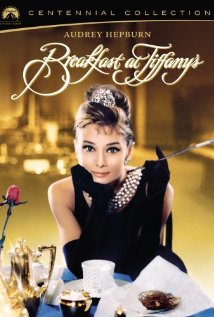
Breakfast at Tiffany'sShe was elegance, glamour, sophistication, and charm personified. She taught us the meaning of the word “gamine,” and was the epitome of boyish beauty. It’s been 14 years since her death and almost 30 years since her last major film role, but Audrey Hepburn is still an icon. Today would have been her 78th birthday, and it’s in her honor that I’ve spent the week channeling my inner Audrey.

Day 1

I immerse myself in all that is Audrey by watching “Breakfast at Tiffany’s,” “Roman Holiday,” “Charade,” “Sabrina” and “My Fair Lady,” while gracefully sipping champagne and delicately nibbling on Bon Bons. When my husband asks, “What’s for dinner?” I laugh charmingly and say, “Love darling, we’ll dine on love.” He looks hungry and annoyed.

Day 2

I consider getting a pixie haircut, but it’s taken forever to grow the layers out, and I don’t think I have the cheekbones to pull it off. Instead, I buy an enormously stylish hat, which they still sell at Nordstrom. Since I don’t have access to the Ascot Race, I wear it to a Little League game instead. Everything goes with jeans, right? Bad news: my hat blocks the view of the five people behind me. Good news: it stops a foul ball from denting my skull, plus I get a 50 cent coupon to use at the snack bar. Thanks, Audrey.

Day 3

I need a dashing man to accessorize my outfit, but Cary Grant, Humphrey Bogart, and Rex Harrison are all dead. My husband dresses in shorts and Hawaiian shirts, so he won’t do. I settle on the ticket taker at the Arlington. He’s a snappy dresser, and in the motion picture business.

Day 4

Trying to make my speech more ladylike, I walk around Paseo Nuevo with marbles in my mouth mumbling, “the rain in Spain stays mainly in the plain,” and “wouldn’t it be loverly.” Bad news: I choke on a marble and have to be Heimliched by a group of tourists. Good news: I’m Heimliched with grace and style.

Day 5

I buy myself a swanky cigarette holder, fill it with licorice, and fling it around saying (sans marbles) ” I do well on trips to the powder room. Any gentleman will give a girl $50 for the powder room.” My husband says, “Yeah. What’s for dinner?” What’s this guy’s problem?

Day 6

I do my best to lose the sarcasm. Audrey once claimed, “I could never be cynical. I wouldn’t dare. I’d roll over and die before that.” I do quite well until 7:30 a.m. when my son wakes up. Yeah, like I’m going to spend a whole day not being sarcastic.

Day 7

I try to emulate Audrey’s saintly side by volunteering to read to the blind, sing for the deaf, and walk for the wounded. I get a little discouraged when the news crews don’t show up, and can’t believe that no one brings me Bon Bons. Can I be Audrey? I’ll never fit into those skinny black pants, and her stylish flats make my feet look like U-Boats.

Instead I decide to embrace the one Audrey legacy I can actually live up to: “The most important thing is to enjoy your life –to be happy–that’s all that matters.” To celebrate her birthday I have her quote etched on a champagne glass. I toast my emaciated husband. Cheers to the inner Audrey in all of us.

Originally appeared in the Santa Barbara Daily Sound on May 4, 2007

Little League, big laughs

© Artproem | Dreamstime Stock Photos & Stock Free Images

© Artproem | Dreamstime Stock Photos & Stock Free Images

My son finally graduated from T-Ball to Mini Minors Little League this season and I haven’t stopped laughing. As a mom, I don’t have a whole lot of ego invested in my son’s sports career. Most dads are another story.

My experience with dads who volunteer to coach is that they fall into a few major types: the “Super Dad,” who wants the kids to learn a little bit and have fun; the “Winning is the Only Thing Dad,” who feels he’s a failure if he doesn’t make everyone cry at least once; the “I Coulda Been a Contender Dad,” who plants all of his unrealized athletic ambitions onto his kid, and never takes him out of the game; “The Clueless Wonder Dad,” who thinks that he knows all about a sport despite all evidence to the contrary; and the “Dad on the Prowl,” who only picks the kids with the best-looking moms. My husband would never volunteer to coach, but if he did he would definitely fall into this last category, and wouldn’t even pick our own kid for his team.

Despite our child’s lackluster tryout performance, somehow we managed to get a “Super Dad” coach who lives and breathes baseball. Excellent. Maybe Koss–who has never actually seen an entire baseball game–can be the first one in our family to actually take to baseball. He certainly has the long, slow, sluggish pace of the sport down, especially when it’s time to go to school in the morning.

At our first practice we got the list of equipment. Pants, shirt, hat–check. Belt, socks, spittable snacks–check. Mitt, cleats, cup–check. Huh? Cup? A Dixie Cup or a Big Gulp?

When I bought it I felt like a teenage boy buying condoms–on my way toward the checkout stand I grabbed some freeze dried camping food and golf tees, just so that the Champro Youth Athletic Cup wouldn’t look so lonely in my basket.

Speaking of baskets, my next challenge was how to put the darn thing on. Did it go inside or outside of the underwear? Was it really supposed to be made of plastic? My husband was absolutely useless in this regard–apparently the Water Polo team didn’t wear cups either.

Koss tried it on.

“What if I have to go wee wee?” he asked. Wee wee? What kind of sissy expression is that? I may not have any brothers but I know enough to know that wee wee is for T-Ball players, baseball players have to take a piss.

“If you’re going to teach to say, ‘take a piss,'” argued my husband, “you should really go for it. Take a wicked rhinoceros piss.”

Koss ended up hating the cup and not wearing it. Apparently, none of the kids did. I heard that one of the boys wouldn’t wear it because it “made him look too big down there.” All of the dads laughed when they heard this–and none of the boys could ever find their cups again.

Cupless, we were ready for first game–except nobody told us they were 12 hours long. We spent five of those hours trying to decipher a sign that said, “Alcoholic Beverages or Softball Playing.” We were very close to choosing alcoholic beverages when someone pointed out the “No” that had faded from the top of the sign.

The 17th inning started off extra slowly–apparently because they were dressing my child in a Star Wars Stormtrooper outfit so he could play catcher. I guess a full body cup is better than nothing.

“What’s he doing?” I asked my husband, Zak, as the other parents started to giggle. Apparently when the coach told him to “get down behind home plate,” Koss took him literally and did just that. I was laughing too hard to yell to him to stand up. He played the entire inning on his knees, even chasing after balls. Does Knee-Ball come after T-Ball?

We really should take that kid to a Dodger game or something.

It was finally his turn to be up at bat. At the coach’s urging, he took a practice swing that actually looked pretty good. Then all of the sudden he started to do a little dance I recognized. “What’s he doing?” asked one of the moms. Oh dear. Koss dropped the bat and yelled to his coach, “I have to pee,” and ran to find the bathroom.

It brought down the house. Talk about comedic timing. It was my proudest sports moment to date.

“At least he could have said ‘like a rhinoceros,'” said his father, the “Coulda Been a Contender” comedian.

Originally appeared in the Santa Barbara Daily Sound

Everybody Loves Leslie

© Jiristastny | Dreamstime Stock Photos & Stock Free Images

© Jiristastny | Dreamstime Stock Photos & Stock Free Images

My Life as a Sitcom

Wine, chocolate, and naps are indispensable tools in my “how to deal with life” arsenal, but sometimes fantasy is the only narcotic that does the trick. As a kid I thought that life at the Brady house or singing “Hello World” with the Partridge Family looked a lot more fun than anything my family had to offer. At the very least, it seemed like my little sister should have been recast in the third season.

And now, I’ve had just about enough of this “Life with Leslie” reality show. I want to my life to be a sitcom, where no matter how monumental my problems, they can always be happily resolved in 23 minutes.

It would go something like this:

Monday: My long-lost identical twin, Lisa Dimebag, shows up at my door. It’s teacher conference week, which means I’ve only got an hour left before pick-up time to write an article, return seven phone calls, read 57 emails and watch yesterday’s Oprah. The phone rings and its my crotchety but loveable husband reminding me about baseball practice, which starts right in the middle of basketball practice.

Lisa accidentally deletes all of my emails, falls into the pool, and volunteers to drive carpool. Amusingly clumsy, but what a lifesaver. She’s so helpful and friendly; I’m going to love having a twin around.

That night, when I return a call from Kyle’s Dad at school he says something about “taking me up on my very interesting offer” in a way that makes me think my twin may be a little bit TOO friendly. I sit her down and explain, in a very older-sisterly way, that she can’t act too slutty when she’s pretending to be me. We hug. She leaves and we never hear from her or Kyle’s Dad again. My crotchety but loveable husband seems oddly depressed.

Tuesday: Koss and I enter the parent-child talent show at school. The kids all laugh at our attempt to dance like the stars. Koss can’t even do any of the lifts, even though they worked fine when we practiced by the pool.

I cry because I’m so embarrassed by my dancing. Koss tells me to “man up, mom.”

We win first place in the talent show for our beautiful singing act. We hug. Koss cries because he’s so happy. I tell him to “man up.”

Wednesday: We go on a disastrous field trip to the zoo, where the kids are treated to the unfortunate spectacle of two otters mating, and my crotchety husband makes jokes that are completely inappropriate for the eight o’clock hour. Driving back to school, I accidentally sideswipe a police car because I’m yelling at the kids to quit saying, “Why, I otter…”

When I show Officer Bud my insurance card, Koss realizes that I don’t actually have the $10 million insurance policy that the school requires to drive a bunch of seven year olds around (probably because I’ve spent all my money on dance lessons instead of real estate). Busted. My own son tells Officer Bud to arrest me.

Officer Bud, a parent himself, arrests my son instead. Koss learns an important lesson about speaking out of turn. We hug. I make him finish all of his prison dinner before I bail him out.

Thursday: I accidentally TIVO last week’s news and find out I picked all six Super Lotto Plus numbers a week late. I fantasize about what I’d do with my millions.

Dripping with diamonds, I swoop out of my limo and hire a private detective to track down my twin sister and Kyle’s Dad. I have him put Lisa Dimebag in deep freeze in case I ever need any of her body parts. My crotchety but loveable husband seems oddly happy.

I hang out at the country club and drink martinis while I pay other people to golf for me. My now-spoiled rotten son has a fit when I won’t let him buy the Miramar. He tells me I was a better mommy before we got rich. I realize he was right. We hug and we’re right back in our living room watching TV again. We didn’t win the lottery but it’s still a wonderful life and “A Christmas Carol” is on TV.

Friday: We sit at a little league game for an entire episode, with no commercial breaks and no alcohol allowed. My crotchety but loveable husband is extra crotchety.

Saturday: I get bonked on the head when a bottle of wine falls off the top of my refrigerator. I contract temporary amnesia and we run Tuesday’s episode again in fast motion. My dancing doesn’t improve, but I’m blown away by own singing voice. Hey, it’s my fantasy.

Sunday: Clip show — television-ese for “day of rest.”

Originally appeared in the Santa Barbara Daily Sound

Confessions of a Choc-Slut

chocolate heartI have a confession to make: I’m not just a garden-variety chocoholic. I don’t just “like” chocolate, I am truly, madly, deeply, absolutely, completely and totally addicted to it. And I don’t have particularly high standards when it comes to chocolate. See’s Candy is great, but chocolate chips will do in a pinch, and so will that last finger-full of canned frosting.

I admit it. My name is Leslie, and I am a choco-slut.

Seriously, I can’t get enough of it. When I’m having a bad day (or, let’s face it, a good day, or an average day, or just a day), I put a piece of chocolate in my mouth, close my eyes and melt as the delicious flavor of cocoa spreads warmly over my mouth, caressing my tongue with its deep, rich essence.

Plus, chocolate is a lot cheaper than therapy and I don’t need to make an appointment. And I finally have science on my side. A recent study at Johns Hopkins University found that a little chocolate every day can cut the risk of heart attack.

You can imagine my excitement when I heard there was going to be a chocolate festival in Ventura. Scrumptiously delicious visions of chocolate rivers, waterfalls, dancing Oompa Loompas and magic glass elevators danced in my mind, as we drove to our destination. The festival’s website said we could help build a giant castle out of chocolate bars. I could just picture Count Chocula overseeing the towers by wielding a fudge-filled scepter over us minions.

By the time we arrived I was drooling with anticipation.

Unfortunately, there’s no way to sugarcoat this: the festival was a bittersweet bust.

Maybe my expectations were just too high. After all, I’ve been known to dance around the aisles of Vons when I spot the first itsy bitsy seasonally-attired Hershey Bars of each holiday season–and I can’t for the life of me figure out why they don’t do them up in red, white and blue for the Fourth of July, Memorial Day and Veteran’s Day.

A little chocolate usually goes a long way with me. And like I said before, the choco-slut in me isn’t all that particular.

But in the case of this particular festival, it was a little chocolate and a whole lot of tchotchkes.

For every Churro dipped in chocolate (which wasn’t as good as it sounds) there were at least three vendors pushing decorative loaves of soap and two selling animal-themed wind chimes. For every super-anti-oxidant dark chocolate menopause cure (which tasted exactly like it sounds), there were at least three Balinese clothing importers and two old ladies selling knitted purses.

Nothing says chocolate like bankruptcy lawyers, life insurance salesmen, and Jacuzzi vendors. At least give me some chocolate with my junk mail, guys.

Sure, there were thick slabs of generously frosted cake, chocolate chip cookies up the wazoo, and thousands of tons of varieties of fudge by the pound–but there were no chocolate castles, no chocolate rivers, no chocolate waterfalls and no friggin Oompa Loompas.

Quite frankly, I felt a bit betrayed.

I walked through three pavilions and I still had money in my wallet and a shirt that was relatively free of chocolate stains. Talk about a disappointment!

Then I came across a scroll, with the “The Rules for Chocolate” on it. The author is unknown, but I feel quite certain she (and these were most certainly written by a woman) wouldn’t mind if I shared them with you:

-If you’ve got melted chocolate all over your hands, you’re eating it too slowly.

-Clearly, chocolate is a vegetable. Chocolate is derived from cacao beans. A bean is a vegetable. Sugar is derived from either sugar cane or sugar beets. Both are plants, which places them in the vegetable category. Therefore, chocolate is a vegetable.

-Chocolate-covered raisins, cherries, oranges, and strawberries all count as fruit. Eat as many as you want. Fruits are an important part of the Food Pyramid.

– Eat a chocolate bar before each meal. It’ll take the edge off your appetite and you’ll eat less.

-If calories are an issue, store your chocolate on top of the fridge. Calories are afraid of heights, and they will jump out of the chocolate to protect themselves.

-Chocolate has many preservatives. Preservatives make you look younger, therefore, chocolate is therapeutic.

-Put “eat chocolate” at the top of your list of things to do today. That way, at least you’ll get one thing done.

-A nice box of chocolates can provide your total daily intake of calories in one place. Isn’t that handy?

And finally,

-If you can’t eat all your chocolate, it will keep in the freezer. But if you can’t eat all your chocolate, what’s wrong with you? Send it to me.

Originally appeared in the Santa Barbara Daily Sound

How about a cookie with bite?

© Karcich | Dreamstime Stock Photos & Stock Free Images

© Karcich | Dreamstime Stock Photos & Stock Free Images

I consider myself a connoisseur of all things take-out.

When I got married my mother’s friends (my fairy godmothers of wishful thinking) gave me a recipe shower, where each of them contributed a recipe and a kitchen item to start me off on my merry married way. It’s now almost 13 years later and the only card that is even a teeny-tiny bit grease-splattered is the one from my sister-in-law, which lists the “recipe” to call for take-out at Empress Palace, China Pavilion, Madame Wu, Pick Up Stix, and Jimmy’s House of White Rice and Brown Sauce.

In other words, we eat a lot of Chinese food at my house.

While the Kung Pao quality and the Won Ton worth can vary from place to place and night-to-night, one thing remains consistent in all of my experiences with Chinese food–the fortune cookie fortunes almost always bite.

First of all, 97.37% of the time they aren’t even fortunes, they’re sappy little aphorisms like, “The sun will come out tomorrow,” or “A rolling stone gathers no moss.” Things that make you go “duh,” even when you try to spice them up by adding “between the sheets.”

And on the rare 7.59% chance that you do get a fortune that actually aspires to tell you something about the future, it’s inevitably something uninspiring, like, “You won’t win any math contests,” or “A pleasant surprise is in store for you.” A “pleasant” surprise doesn’t exactly conjure up fantasies of “You won the lottery,” or “You’re really the long-lost princess of Kamchatka.” A “pleasant” surprise is more like, “My son’s shirt has very few bodily fluids on it,” or “Look, his aim is improving.”

Let’s face it, fortune cookies have become kind of, well, vanilla.

Imagine how different things would be if after you’ve had your fill of Moo Goo Gai Pan, your cookie read: “You lack social skills, and your skull is oddly shaped.”

Sure, after you stopped laughing you might be a wee bit insulted when you friends don’t stop nodding their heads, but you’d certainly be riveted by the next guy’s fortune. Especially if it read, “That wasn’t really chicken,” or “If you leave us a tip we’ll stop peeing in your food, dude.”

I think that mixing in some of these misfortune cookies with fortunes like the one my husband once got, “You will meet a handsome stranger,” would make getting Chinese food a lot more fun. Just think of the fortune cookie pairing possibilities.

One person cracks open their cookie to find, “Your true love awaits you–at Match.com,” while their dining companion gets, “Someone will find great prosperity and happiness by stealing your identity.”

At the next table over, a group of friends reads, “You are very loving,” “Your girlfriend is sleeping with Tom,” and “Are you Tom? Cut it out.” Talk about some interesting post-dinner conversation.

Of course there is a downside (“Confucius says, “there is always a downside to every great idea”) to mixing up the fortune cookies with the misfortune cookies. Do we really want to give our waiters and waitresses that much control over our destinies? What if they use x-ray vision into your wallet and see that you don’t have enough cash on you for more than the used-to-be-standard-but-is-now-considered-cheap 15% tip? Do you really want to risk opening up a cookie that says, “You will have good luck for the rest of your life, as long as you do not break the cookie.”

Maybe that boring, old, non-future predicting fortune cookie advice– “Ideas are like children; there are none so wonderful as your own”– wasn’t so bad after all.

What’s the best “misfortune cookie” you ever got? Email Leslie@LeslieDinaberg.com.

Originally appeared in the Santa Barbara Daily Sound

The Katherine Harvey Fellows Program

There is no doubt that Santa Barbara has a robust philanthropic community. Last year the National Center for Charitable Statistics reported 1,891 registered nonprofits in the county and more than $2 billion in revenue. But there is also no doubt that these organizations are getting a bit, ahem, gray around the temples.

So how do you ignite young do-gooders in a community where the high cost of housing and the low availability of well-paying jobs make it struggle for many to take care of their own needs, let alone the needs of others? Where will the next generation of charitable leaders come from?

The Santa Barbara Foundation is planting the seeds for future boards with the Katherine Harvey Fellows program, designed to cultivate philanthropic leaders for the community. With graduates like Santa Barbara City Councilwoman Helene Schneider, the Santa Barbara Bowl Foundation’s Scott Brittingham, and the Community Environmental Council’s Sigrid Wright already making their marks around town, the program, established in 1999, is already having an impact.

Funded by the late Katherine Harvey, a former Santa Barbara Foundation trustee, the invitation only fellowship program provides a forum for a select group of young professionals to explore ways to make a significant, lasting impact in the community.

The class of 2006/07–Katya Armistead, Magda Arroyo, Greg Bartholomew, Christine Brooks, Jeff Forster, Geoff Green, Colette Hadley, Nina Johnson, Vincent Martinez, Rachael Steidl, Michael Takahara, and Travis Wilson–began their 18-month journey last year by participating in all aspects of the work of the Santa Barbara Foundation, including agency research, community relations and fundraising.

Class members take turns chairing and organizing the monthly meetings, gaining valuable experience in keeping the lively group on task. Members of the board of trustees also serve as mentors to the “Fellows,” offering leadership, insight, and access on a personal level.

Steidl, founder of SBParent.com and a board member for the Teddy Bear Cancer Foundation, praised her mentor, County Superintendent of Schools Bill Cirone. “They matched me with someone who was a great fit for my business and a great link for my personal interests as well.”

In addition to partnering with board members and sitting in on the foundation’s grant making committees, the “Fellows” also work closely together.

In addition to meeting monthly, they do personal interviews within the group to help develop one-on-one skills, as well as public speaking skills, when they present their interviewees to the group.

“The most valuable aspect of this experience has been meeting people from sectors other than education and sharing with them the passion of philanthropy and making a difference,” says Armistead, a Red Cross board member who runs UCSB’s Visitor Center and is Assistant Director for the Office of Admissions.

After the first year, the education portion of the program winds down a bit and the “Fellows” get to create, implement, and evaluate some grants of their own.

The foundation allocates $30,000 for this purpose, but like the “Fellows” before them, this class has decided to raise additional funds to give away. At press time they had already secured $5,000 in challenge grant funds from the Hutton Foundation and were working on appeal letters to raise even more.

Following a spirited debate about where to give the money, foundation board member and former “Fellow” Ken Saxon offered, “This discussion … is the meat of this program. …(The foundation) could have set up a process about how you make these decisions. We’ve chosen not to, and have decided to let each class struggle with this. It’s hard, it’s frustrating, it’s cool, it’s creative, but it’s not easy.”

“It’s amazing to have put all of these strangers in a room almost a year ago and to see how comfortable everyone has gotten with each other and the dialogue that now takes place with the group,” says Steidl, adding that her fellowship experience has already helped her professionalize her charity work.

“I know that I am now a better board member because of the experience,” says Armistead, who along with her colleagues–who range in age from 27 to 42–are becoming just the kind of young philanthropists that Katherine Harvey had envisioned.

==

To donate or request more information about the Katherine Harvey Fellows program, contact the Santa Barbara Foundation, 1111 Chapala St.., Santa Barbara, CA 93101, 805/963-1873.

Originally published in Coastal Woman

Reaching Out: UCSB a vibrant source for community spirit, partnership and pride

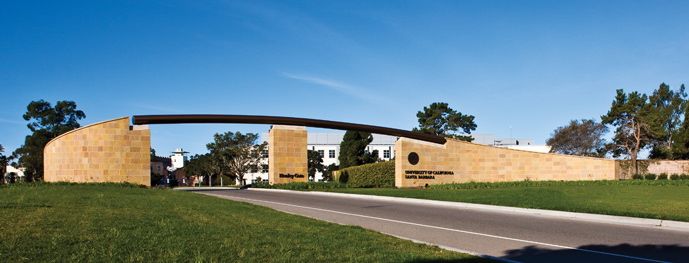
UCSB (courtesy photo)

UCSB (courtesy photo)

Goleta’s proximity to UCSB helps enrich the community in a myriad of ways. As Santa Barbara County’s largest employer, with almost 10,000 people on staff, the University obviously brings tremendous financial resources to the area. UCSB provides at least five percent of the county’s economy and more than eight percent of the South Coast’s economy, according to Bill Watkins, Executive Director of the UCSB Economic Forecast Project.

A critical point about the dollars that UCSB brings to the community, Watkins says, is that “it’s not a volatile source of economic activity… Agriculture can be volatile, certainly manufacturing can, lots of industries can be very cyclical, and for the most part this is not particularly cyclical and it also has a fair number of pretty well-paying jobs.”

But the dollars UCSB brings in are just a small part of its contributions to Goleta.

“In addition to being a leading research university recognized around the world, UC Santa Barbara is an integral part of our community,” says Chancellor Henry Yang. ” Our public service mission includes working with our local partners to develop programs and projects to enhance the quality of life in this region. Our reach extends into many areas of activity, from educational outreach and economic forecasting to community health and technology transfer.”

Yang continues: “We feel fortunate to be located in such a special, beautiful place, and our community is very supportive of our mission. In return we offer community members a rich variety of activities to sample and enjoy, from lectures and performances to athletic events, recreational programs and facilities, extension courses, and personal development classes.”

As Vice Chancellor John M. Wiemann explains, “We are part of this community. We’re here, we’re your neighbors, just like you’re our neighbors…we breathe the same air, drive on the same roads, our kids go to the same schools. So we’re really part of the community. We’re people who coach Little League teams, participate in PTA’s, do all the things that everybody else does who have other jobs, we just happen to work at the University.”

Wiemann continues, “… probably the best thing we do is we bring 20,000 really smart, interesting kids here every year that contribute in a variety of ways to the local area, just by being who they are. They volunteer here. …Students also provide a work force for local businesses, especially local merchants and hotels.”

UCSB also brings wonderful cultural resources to the community. Itzak Perlman, Jon Stewart, Gary Trudeau, Bobby McFerrin, Amy Tan, and Yo Yo Ma are just a few of the talents who will perform this year as part of the UCSB Arts & Lectures series.

“It is just a stunning list of people that otherwise wouldn’t be in Santa Barbara,” says Wiemann. “No matter what your intellectual interest is, you can find somebody at UCSB talking about it every month…”

In addition, the University and the UCSB Affiliates bring a wealth of enrichment out into the community. Recent programs include: Health Care, Mortality, and Obesity” “Nuclear Nations,” “Sustainability,” and visits to the Los Angeles Opera.

Sports are also a big draw for the public, with thousands of fans cheering UCSB on to winning the national championship NCAA Division 1 title for men’s soccer in November. The school also fields teams in women’s soccer and softball, and men’s and women’s basketball, cross country, golf, swimming, tennis, track & field, volleyball and water polo, as well as men’s golf and baseball. Along with the full spectrum of spectator sports, the UCSB Recreation Center is the workout site of choice for many Goleta residents with its swimming pools, gymnasiums, weight rooms, squash courts, racquetball courts and climbing wall. The University also runs several after-school and summer recreation programs for children, including community athletic coaching, aquatics classes, gymnastics school, junior lifeguards and surf & kayak camp.

With all of the vibrancy, energy and resources that UCSB brings to Goleta, the University also shares in one of the community’s biggest challenges–the high cost of housing.

“The most pressing issue for the campus is the issue of faculty and staff housing, explains Marc Fisher, Associate Vice Chancellor for Campus Design and Facilities. “We are anticipating about 400 retirements over the next 10 years …of course we’ll have some new hires as well. But that’s a big number.”

“If you think about the housing situation in Santa Barbara and Goleta, when those faculty members retire or go on to another position, the house that they purchased when they purchased it would be unaffordable to incoming faculty. We need to have a supply of housing that’s available for faculty and staff that is affordable so we can make sure that we can continue to retain high quality faculty and staff,” he says.

” It’s a recruiting issue,” agrees Wiemann. “Just like any other company in town will tell you, it’s tough to recruit people into a community where the median house price is over a million dollars.”

With the goal of affordable housing for employees in mind, Fisher and his team of architects, designers and planners have developed an extensive long-term plan for potential housing sites at the University.

The primary goal is “to use campus properties effectively to assist in resolving some of the University’s most pressing problems: the need for affordable work-force housing for faculty and staff, and for expansion of the stock of housing for students,” explains the document, which goes on to acknowledge that booming regional real estate prices have made it “extremely difficult for the University to recruit and retain high quality faculty and staff” so long as employees alone bear the housing burden.

The principles that will guide future housing decisions include: building affordable housing to recruit and retain faculty and staff; building diverse housing types (including for-sale single-family houses, condos, and townhouses, and for-rent apartments) for faculty, staff, and students; incorporating principles of sustainability so that new buildings will meet or exceed LEED (Leadership in Energy and Environmental Design) Silver Standards; building neighborhoods, not projects; preserving and celebrating the environment; and minimizing car dependency.

“I think the thing that this study showed is that we have quite a bit of additional capacity on site and that before we really went out and purchased property we would try to use what we have already,” says Fisher. “We think it’s the most sustainable model.”

Fisher continues” There’s a wonderful term, self-mitigating, you know the way that lets the campus be here and work very closely with the community but lets the campus keep a lot of its impacts very close to the community. We think that actually has the potential to turn into a very rich academic community in and around the campus.”

The Coastal Commission (which has to approve all construction projects on the UCSB campus) recently approved one such housing project. The North Campus faculty and Sierra Madre family housing developments will eventually supply a total of 323 units. The two projects are north and east of Ocean Meadows Golf Course.

Currently under construction is an additional student housing project, San Clemente Housing. Graduate students will be the first ones eligible to live in one of the 327 apartments along El Colegio Road. “We’ll be occupying that in summer 2008,” says Fisher.

While Goleta has had its share of arguments about growth, Fisher says the community has been generally supportive of the University’s need to create more housing. “I think because it is very thoughtful. The idea that you’re building close to work, we’re not building on open space or building on areas that aren’t already developed, we’re not taking the agricultural lands, all the things the community seems to want to do, preserve most of the open space, preserve and protect agricultural land, build on existing sites at higher densities, all those things. And plus the housing is really close to work, so it’s kind of an ideal model in terms of development … I think it’s going to be a very strong community, frankly. There has been generally a pretty good reaction to it.”

He adds, “I think it’s good for the students too because it brings in faculty and staff with the student population, and its going to make it a richer environment, a more traditional college town.”

Also popping up soon–in March 2007–is the new Moser Alumni House. “I think it’s going to be a fantastic building,” says Fisher. Designed by local architect Barry Berkus–a former UCSB student who was named by Residential Architect Magazine as one of the 10 top residential architects of the twentieth century–the project takes full advantage of its spectacular location at the formal entrance to the campus on Mesa Road. “On the roof of that building it has 180 degree views, you can look down to Hope Ranch, you can see the ocean, you can see the bluffs from one direction, and you look around to the north edge and then the west and you can see the full sweep of the mountains all the way out to Gaviota. … It’s pushed out so far from the north edge of campus that it really has sweeping views. It’s quite striking,” says Fisher.

Expected to break ground in February is the first fully donor-funded complex at UCSB, the new Carsey-Wolf Center for Film, Television and New Media. It will be connected with two new academic other buildings, a social science building and the Gevirtz graduate school of education. Located right across from Robb Gym in parking lots 20 and 21, those three buildings constitute about $100 million worth of work, according to Fisher.

There are also several projects nearing completion on Pardall Road, including a parking structure on the west side of campus, a student resource building and a new theatre and dance building, says Fisher.

“The master plan really tries to build buildings in a very logical fashion,” he explains. It tries to build better social breezes between the buildings and a much richer landscape, and I think we’ve done that. There’s a nice open plaza we just put in, and it’s a much different entry sequence from Isla Vista into the campus now. Now you come in it’s not just a parking lot, it’s actually a very pleasant walkway into campus.”

He adds, “starting next fall we’re going to make an addition to the engineering two building. … We have about $870 million worth of work on the campus. It’s quite a package of construction.”

Indeed it is a lot of construction. There are also some renovations of existing buildings taking place, with UCSB’s strong commitment to environmentalism leading the charge behind the University’s recent agreement with the U.S. Green Building Council to use the LEED standards for Existing Building rating system in 25 of its existing buildings over the next five years. LEED is the national benchmark for high performance green buildings.

UCSB has already completed one successful LEED for Existing Building project in Girvetz Hall, and plans to eventually make all of its existing buildings LEED certified. Not only does the University have a strong commitment to the environment, but also “the Chancellor is hugely supportive of this,” says Fisher.

Bren Hall, home of the Donald Bren School of Environmental Science and Management, is a leading example of sustainable architecture and is the only laboratory building in the country to receive the U.S. Green Building Council’s Platinum Leadership in Energy and Environmental Design accreditation. It sets the highest standard for sustainable buildings for the future and is being used as a model for facilities and operations throughout the state.

The Marine Sciences Building is UCSB’s second LEED for New Construction certified building. It features ultra low water use fixtures, preserves natural landscapes and habitat, and is 25 percent more energy efficient than mandated by California’s strict building codes. The Student Resource Building, which is nearing completion, will also be LEED certified.

Within those buildings, the University’s connection to its environment is even more evident.

“The local environment presents us with some really interesting teaching and research opportunities and we try to take advantage of that,” says Wiemann. “We have a very strong marine science program, strong ecology in various places all over the campus, the students, like the rest of our community, are very concerned about the environment and so we have a lot of environmental programs.”

He continues, “We try to take advantage of environment, and take advantage of the unique opportunities that the channel islands and the channel specifically presents for researchers. It’s interesting and in some way, unique geologically, and in terms of the ocean currents and the like it presents some really good research opportunities…we have built a very strong undergraduate environmental studies program. We have the Bren, School which is one of the three best in country.”

Explains Wiemann, “The Bren School was started by a group of scientists and biologists in different departments who were interested in environmental issues and they wanted to create a professional school that was training people at the master’s level to go and work in environmental areas, giving them the training and credentials to work either for government or nonprofits or industry.”

Many of UCSB’s professors are also involved in Goleta’s local industries, particularly the high tech sector. “We have a very entrepreneurial faculty,” says Wiemann, ” especially in science and engineering.” Many of them have started companies or developed technologies that have gone out and been commercialized.”

Indeed UCSB Faculty, Staff, Students and Alumni have been fundamental in the development of the Central Coast Region’s high technology economy. According to the Technology Management Program, which is a business program within the College of Engineering, more than $650 Million in venture capital funding for UCSB spin-offs has been generated in the past 36 months and during that same time period more than $7 billion in mergers and acquisitions has come from UCSB spin-offs. More than 30 percent of the UCSB engineering faculty are entrepreneurs and more than 175 UCSB alumni or faculty have founded high tech companies, primarily in Goleta and adjacent areas.

Thanks to its academic, environmental, athletic and entrepreneurial accomplishments, UCSB is becoming more and more prestigious all over the world. “People are recognizing the quality of this place,” says Wiemann. “It’s always been very good, but our reputation is catching up with our reality.”

“I think it’s fair to say that UC Santa Barbara’s presence is a vital part of this region’s well-deserved reputation as one of the most desirable living and working environments in the country,” says Chancellor Yang.

Originally published in Goleta Magazine

The Handwriting is on the Wall

By wikipedia:en:user:Sotakeit (w:Image:Cursive.JPG) [Public domain or Public domain], via Wikimedia Commons

By wikipedia:en:user:Sotakeit (w:Image:Cursive.JPG) [Public domain or Public domain], via Wikimedia Commons

In case you’ve missed the writing on the wall, cursive writing is going the way of eight-track tapes. Today’s students will almost certainly be the last generation to learn handwriting, and I’m not sure that this is a bad thing.

Until the 1970s, penmanship was a separate daily subject taught through sixth grade, but a recent survey of primary-grade teachers found that most now spend 10 minutes a day or less on it. Even kindergarteners are learning keyboarding instead of handwriting. And while we used to celebrate a National Handwriting Week, today marks the celebration of National Handwriting Day. There’s not even a parade, despite the fact that it’s also John Hancock’s birthday today, for which my husband and I usually exchange the traditional gift of fountain pens and parchment paper.

So much for the longevity of longhand.

After all, effective communication is the ultimate goal, so why bother with a time-consuming, archaic method of communicating when so many high-tech, high-speed methods are available? Anyone out there who is worried about the development of the next generation’s communication skills should watch how skillfully the average13-year-old wields the text message function on his cell phone. Of course spelling will be the next part of the curriculum to go, but that iz a topic 4 anoth col.

Sure, I’m a little dependent on my laptop–OK, I was semi-suicidal the day my wireless card stopped working–but that doesn’t mean I have anything personal against handwriting. Until recently, I took a certain amount of pride in my penmanship. It’s extremely legible, which is the point of writing. The other cool thing about it is that in defiance to all of the handwriting experts who say that they can predict your personality traits by looking at something you’ve written, my sister and I have almost indistinguishable handwriting and distinctly different personalities. It’s eerie when I get something in the mail from her. Cue the Twilight Zone music: “I don’t remember writing that.”

I used to wonder if my son’s writing would look the same as ours did. Would genetics kick in, the shape of our hands perhaps? With two professional writers for parents, it was no great surprise that our son was an extremely verbal, great natural communicator. He started out this way on the page too, filling his kindergarten journals with imaginative stories about silver-tongued aliens and basketballs that could fly five zillion feet in the air and return with the snap of his fingers.

Then came the dreaded D’Nealian Alphabet.

Bearing only a slight resemblance to the loopy cursive writing style that I was taught in elementary school–and have barely used since–the D’Nealian Alphabet is designed to be a bridge between printing and cursive writing, adding curves and slants to the traditional circle and stick printing that children learn first.

Sounds simple enough. Almost logical.

Not for Koss. His previously legible printing quickly curved and slanted its way into oblivion. Before we knew it, none of us knew what the heck he was writing about. His sentences became shorter and less and less coherent. There was so much red ink when he got his papers back that I thought he might have had another bloody nose. The poor kid was thinking and worrying so much about his handwriting that he forgot what he was trying to say.

His well-intentioned first grade teacher gave him extra handwriting homework. Just imagine how much fun it is for a six-year-old kid to do an extra two pages of letterforms a night. A-A-A-A, B-B-B-B, C-C-C-C, D-D-D-D, just shoot us now and take us out of our D’Nealian misery! Talk about D’wasting D’time.

But his motor development is fine. You should see him put together those Bionicle pieces. What he suffers from is called dysgraphia, otherwise known as “bad handwriting.” Luckily, we’re living in an age where it doesn’t really matter that much in the larger scheme of things.

I’m doing a little happy dance because Koss’s teacher this year is letting him use a computer for some of his writing assignments.

I’m sure my own second grade teacher is rolling over in her retirement home. I can just hear her say, “Penmanship is extremely important. Don’t you know that the health of at least 1 in 10 Americans is endangered by the poor handwriting of their physicians?”

To which I’ll say, “So what. By the time Koss graduates from medical school there won’t be any more prescription forms, we’ll have prescription chips embedded in our bodies.”

And she’ll reply, “But did you know that up to $95,000,000 in tax refunds are not delivered because of unreadable tax-forms.”

And I’ll say, “Haven’t you ever heard of Quicken?”

To which she’ll reply, “But more than $200,000,000 in time and money is lost because poor handwriting results in phone calls made to wrong or non-existent numbers.”

I could tell her about cell phones and email, but at this point it seems more merciful to send her a little hand-written note, thanking her for teaching me how to write…or just transfer her to voicemail.

Originally appeared in the Santa Barbara Daily Sound

An Interview with Arcelia “Chello” Gladden

Home ownership means the fulfillment of a dream for many, but for Arcelia “Chello” Gladden, buying her first home also gave her an injection of self-confidence.

“I’m so pleased with myself, because I did it on my own. I didn’t have a husband. So I really did this on my own and with all the help of Coastal Housing Partnership (CHP) and my work,” she says. At the time she bought her first home in Lompoc, in 2003, Gladden had been working at Raytheon in Goleta for 29 years and renting the same home in Santa Barbara for 15 years.

Her rental unit was sold and the new landlord raised the rent considerably, which made Gladden think that it might be time for her to become a homeowner.

She went to an employer-sponsored CHP seminar and came away convinced that it was time for her to take the plunge. “I listened to them and they just put a bug in my ear. I just thought to myself, I’ve got to do something. I’m going to end up probably homeless. Because we weren’t getting any raises and my rent was going up, up, up. It was not a good thing,” she says.

Gladden looked around, but she was reluctant to move to Lompoc, even though it was more affordable than Santa Barbara. “I hated the idea, but I needed to invest my money.”

CHP sent her to speak with a loan officer at Santa Barbara Bank and Trust, who helped lead the way. Gladden used her pension money to purchase the four-bedroom home for “a little under $300,000.” Shortly after her first seminar with CHP, Gladden, her recently divorced daughter and grandchildren moved in.

Two years later, in 2005, the house’s value had increased by more than $100,000. Now an enthusiastic believer in real estate investments, Gladden refinanced the house using CHP benefits and used that money to buy a second house in Lompoc that she rents to her daughter.

Gladden has nothing but praise for CHP and frequently urges her colleagues to take advantage of their services. “I found them very, very helpful to me. I wouldn’t have done it without them.”

Originally published in the Coastal Housing Partnership Newsletter