The “W’s” of Working Out

stockimages, freedigitalphotos.net

stockimages, freedigitalphotos.net

The symphony of treadmills and weight machines always gets a little louder this time of year-whether it’s a New Year’s resolution to lose weight, a few too many latkes or too much eggnog, or the gift of a gym membership-getting fit is one of the most popular goals at the start of each year. Here are some options to suit every workout style.

Who: The Gym Rat

What: Santa Barbara Athletic Club has awesome equipment and a vast variety of workout options, including Pilates, Spinning, indoor and outdoor weight rooms, swimming, squash and racquetball.

When: Monday – Thursday: 5:00 am – 10:30 pm; Friday: 5:00 am – 10:00 pm; Saturday: 6:00 am – 8:00 pm and Sunday: 7:00 am – 8:00 pm.

Where: 520 Castillo Street.

Wear: For a guilt-free, post workout treat, head to the new supplement/protein bar at Montecito Athletic Club (40 Los Patos Way, Montecito).

Who: The Mom

What: Enlist with “General” Stacey Cooper on a BootyCampSB mission to “raise your fitness level and your booty to new heights.”

When: Kids work out for free at the Parent-Child Booty Camp every Monday from 4:30 to 5:30 p.m.

Where: Girsh Park, 7050 Phelps Road, Goleta.

Wear: Head to Eddie Bauer (130 S. Hope Ave., La Cumbre Plaza) for the “essential daypack bottle” loaded with all the gear you’ll need to survive a day with the kids.

Who: The Beach Babe

What: Try Moms in Motion’s Stand Up Paddle Board team for “the most fun you can have on the water-while improving your balance, upper body and core strength.”

When: Sundays at 8 a.m.

Where: Leadbetter Beach, Shoreline Drive and Loma Alta.

Wear: You can rent equipment or splurge on a Kialoa -Nalu Stand Up Surf Paddle from Paddle Sports of Santa Barbara (Santa Barbara Harbor).

Who: The Couch Potato

What: Try a Jazz Dance or Hip Hop Class at Santa Barbara Dance Arts (formerly Santa Barbara Jazz Dance Academy). You’ll have so much fun you won’t even realize you’re working out till the pounds start sweating off.

When: Jazz Mondays at 6:45 p.m.; Beginning/Intermediate Hip Hop Wednesdays at 7 p.m.; Advanced Hip Hop Thursdays at 7 p.m.

Where: 1 N. Calle Cesar Chavez #100.

Wear: Pick up your dancing shoes at Harlequin’s Theatrical Supply (17 W. Gutierrez St.).

Who: The Yogini

What: Yoga Soup has a fun variety of classes, with owner Eddie Ellner’s good karma philosophy of “pay what you can,” for his eclectic “soupy mix” of classes.

When: Tuesdays at 5 p.m.; Tuesdays; Wednesdays, Thursdays and Fridays at 6:30 p.m.; Saturdays at 10:30 a.m.; and Sundays at 8:30 a.m. and 5:30 p.m.

Where: 28 Parker Way.

Wear: Head to Drishti (130 E. Canon Perdido St.) for a Manduka eKO eco-friendly yoga mat and a comfy pair of their “Beyond Yoga” pants or capris that are so stylish you’ll want to wear them all day long.

Who: The Jock

What: At Dr. Bob Wilcher’s Killer B Fitness, this Chiropractor/Personal Trainer will whip-we mean motivate-you into shape whether your goal is to run a marathon or sweat off a few sizes in his few frills, no mercy private gym.

When: By appointment, call 805-448-2222 for information.

Where: 126 Powers Ave.

Wear: Lucy (3825 State St., La Cumbre Plaza) offers a new “core power collection” of tops stay soft, comfortable and dry, no matter how much you sweat.

Who: The Hiker

What: The Santa Barbara Sierra Club offers a variety of hikes for every fitness level from the occasional hiker to the diehard backpackers.

When: Hikers meet weekly on Wednesday nights at 6:30 p.m. and Friday nights at 6:15 p.m., destination are chosen at the meeting points.

Where: Santa Barbara Mission, Laguna and Los Olivos Streets. Also visit www.santabarbarahikes.com for additional hikes scheduled every weekend from a variety of locations and terrains.

Wear: Head to Santa Barbara Oufitters (1200 State St.) to pick up one of Ex Officio’s “Insect Repellent” hats, which are great for those sunny, buggy hikes on the beach. Plus, rain or shine, you can take a trek up their indoor climbing wall.

Originally published in Santa Barbara Magazine in 2009.

Noozhawk Talks: Leslie Dinaberg Sits Down With Dave Davis

Dave Davis

Dave Davis

After almost 25 years as the City of Santa Barbara’s Community Development Director and a City Planner, Dave Davis now brings his expertise to the Community Environmental Council (CEC), where he serves as CEO/Executive Director.

Leslie Dinaberg: Did you ever think you would end up working for the CEC after retirement?

Dave Davis: The simple answer is no … but it’s great. It was taking all the things I had
learned for 30 years and applying them from a community standpoint of being an
advocate for positive change. … It was liberating for me to really focus on what
needs to be done.

LD: It sounds like a very unique opportunity.

DD: It really was. So did I ever envision it, no. But boy it slapped me upside the
head and there was no denying that yeah, I want to do this. I want to put my
effort behind it.

LD: That’s terrific. What are some of your priority programs?

DD: Starting the energy program … to create a blueprint for Santa Barbara
County. We found a nice little jingle, “Fossil free by ’33.”

… We basically set the priorities. They are really simple. Within in this region
focus on energy efficiency, personal energy efficiency and building energy
efficiency, secondly transportation efficiency, and that includes everything from
hybrid cars to mass transit and so forth, alternative fuels, building as many
literally, renewable projects within the region as possible.

LD: What do you mean by that?

DD: Wind, solar, wave. What this blueprint does is it actually inventories the
potential for any of those categories here in Santa Barbara. When you look at the
state of California and …the amount of land that you can actually do major wind
projects boils down to a very, very small area, two or three spots, and we happen
to be one of them. In and around the Lompoc Point Conception area, and
offshore outside of the islands, there is a significant potential for wind
development over the years that could supply major amounts of energy-not just
for Santa Barbara, much more than we would ever use-that we would be
supporting the energy use of Southern California.

… The big solar projects for us are inland, Cuyama Valley those areas out there,
that’s where the potential is. But there is on top of essentially almost every
significant rooftop the opportunity to do major solar distributing to the community.

… Financing is just so expensive, so one of the things we’re working on …
there’s been recent legislation which allows cities and counties to float low
interest revenue bonds which are then paid off by people who want the solar on
their houses and their payments go onto their property taxes over 30 years.

… Lastly when it comes to renewables there, is potential within the region for
wave energy. This is really new technology, … but again when you get off of
Point Conception area, the wave frequency, wave height, again we have a
resource potential there which outstrips our usage here.

LD: So you’re got this blueprint and you’ve got these plans …

DD: … so the last thing here is to move this out into the community and public
policy. … We formed a coalition with the architects, the American Institute of
Architects, the AIA; the Santa Barbara Contractors Association, the Sustainability
Project and Built Green Santa Barbara, and we went to the city and challenged
them to work with us to develop the most energy efficient ordinance in California,
if not the country, and we did. And adopted it. And it’s been in effect and we’re
going to the county in the very term to move that policy also out into the
county.

LD: In the county, because of the fires, there’s a lot more building going on now
than we would have ever thought.

DD: Now let’s go into another example. So the fire happened and we were all
affected in one way or another, emotionally if not physically. …Again, we pulled
together our same coalition …We held a community forum up at Montecito
Covenant Church and we had 250 people.

Our coalition, led by us, went to the city and the county and said we want to
develop a plan not just to fast track these guys, but to basically put them on a
whole other process that they avoid the pitfalls of rebuilding. So we worked …
that if in fact they come in and they want to build better, they don’t go down
through that whole process of boards and committee and reviews, so they have
an independent review to look at those architectural, energy, and fire resistance
improvements and that they would move, not just to the head of the line, they
would go on consent calendar, that they would move directly on to the consent
calendar of the design review board so that they can go immediately into building
their house.

LD: It seems like incredible timing for that.

DD: Yes. …If you went in and tried to retrofit those big old houses it’s really
complicated. But now people can actually think was that the best place to put the
building. Did it need to be over here? Did the road need to be wider? Did the
materials need to be fire resistant? And while I’m doing this could the materials
basically save me money energy efficiency wise?

And I must tell you, the night we set up this forum it was one month to the day of
the fire we held the forum, which was pretty quick to get people out, organization,
everybody there. Not knowing how traumatized people would be …we really
actually hit a nerve. … People came up to me and said this is the first time since
the fire that I felt any sense of help. I teared up because it was really personal. …
This was just a great opportunity for the community to come together.

LD: What do you think would be the single thing that we, as a community, could
do to improve our energy efficiency?

DD: There isn’t one, there’s really two. They are at the heart of what I’ve been
talking about. On the South Coast, the biggest things that we can do is one,
make our buildings more energy efficient. … The second thing … if we could
develop aggressive social carpooling techniques, it would be significant. …
Young people, they’re geared to do it. Generationally, they’re going to do it, if we
can give them the tools and encourage it, then you start pushing it up to old folks
like me, we could go a long way.

LD: That’s actually a great use of technology.

DD: The other thing too, if we build the freeway, … that third lane being an HOV
(high occupancy vehicle) lane and running buses from Ventura like they’re doing.
They’re going through the roof with their subscriptions and carpooling of three
people per car. It would make a difference not just on the freeway but on the city
streets and in the parking lots.

LD: That has a good synergy with your work as a board member at MTD
too.

DD: Oh absolutely. To my glee I found with my retirement that I could pull
together all the good things that I wanted to accomplish and do them. Not bad.
(Laughs).

LD: If you could pick three adjectives to describe yourself, what would they
be?

DD: Clearly I’m passionate, and that goes from my avocations to my vocation;
knowledgeable, both from the standpoint that I’m now a community elder, and
that I have basically always loved to seek knowledge and continue to. You know
the thing that I loved about my job with the city was that it brought me into
contact with so many different fields of expertise and knowledge. …. The other
one I would say is basically I’m happy, that Joie de Vivre, let the good times
roll.

Vital Stats: Dave Davis

Born: New Orleans, Louisiana, July 15, 1948

Family: wife Jean, son Jesse (30) and daughter Nora (27)

Civic Involvement: Board member, Metropolitan Transit District, board member,
UCSB Economic Forecast Project; CEO/Executive Director, Community
Environmental Council

Professional Accomplishments: City of Santa Barbara’s Community Development
Director and City Planner for almost 25 years; taught planning and environmental
studies at UCLA and Moorpark College; Downtown Organization Citizen of the
Year; Citizens Planning Association Planner of the Year, American Planning
Association National Social Advocacy Planner of the Year; Lifetime Achievement
Award, Santa Barbara American Institute of Architects; Jacaranda Award for
Lifetime Achievement, Santa Barbara Beautiful.

Best Book You’ve Read Recently: “Three Cups of Tea” by Greg Mortenson and
David Oliver Relin

Little-Known Fact: Until a few years ago Davis was an avid surfer, and once
surfed 20-foot waves in Kaui’s Hanalei Bay.

Originally published in Noozhawk on February 17, 2009. Click here to read the article on that site.

Noozhawk Talks: Leslie Dinaberg Sits Down With Kendre Sanborn

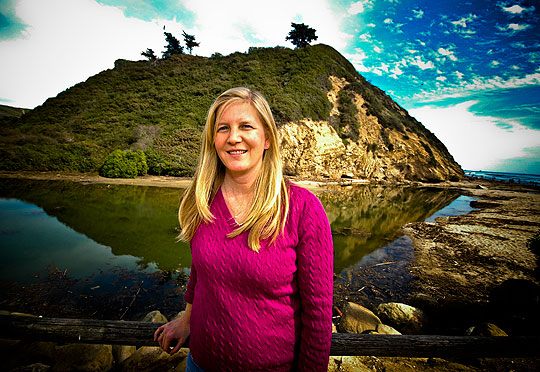
Kendre Sanborn, pausing for a quick reflection at Arroyo Burro Beach, is about as an involved school parent as one can be. (Michelle J. Wong / Noozhawk photo)

Kendre Sanborn, pausing for a quick reflection at Arroyo Burro Beach, is about as an involved school parent as one can be. (Michelle J. Wong / Noozhawk photo)

As president of both the Santa Barbara Area PTA Council and the Hope School
District Educational Foundation, not to mention the busy mother of three children,
Kendre Sanborn certainly has her hands full. Here she tells Leslie Dinaberg
about how she juggles it all.

Leslie Dinaberg: How did you get involved with the area council PTA?

Kendre Sanborn: When I was the Vieja Valley PTA president I hadn’t been on the board before. I knew nothing but wanted to get involved. I thought the best way to learn about PTA was to go through all the trainings that PTA offers and so I kept
seeing the same volunteers over and over again. And when there were issues
going on with our PTA they were really helpful and came to my aid whenever I
needed anything.

LD: And now you’re heading up the whole thing. What area does that
include?

KS: There are 27 schools currently, from Montecito all the way to Goleta. I don’t
know everything that it entails yet because I’m still kind of learning everything,
but we basically meet to make sure that everyone is up to their standards, …
they have all these criteria that they need to follow to be in good standing. It’s our
board’s job to make sure that all those groups are in good standing. Then
another thing the area council does is send out information to the presidents
about legislation that is going on. There are a lot of areas that we cover; we’re
giving information constantly to these PTA presidents.

LD: Is there anything interesting legislatively that is going on?

KS: Right now they are really pushing that the governor doesn’t cut budgets to
schools. They’re also looking at the stimulus package and they’re really keeping
an eye on that, because if each individual state gets money then PTA really
wants to make sure that the schools get money.

LD: You’re also president of the Hope School District Educational Foundation.
What does that group do? (Laughs) <Editor’s Note: Leslie Dinaberg is also on the
board of the Hope School District Educational Foundation>

KS: We do fundraising to enrich the educational programs at Hope, Monte Vista
and Vieja Valley Elementary Schools. And we also work to encourage
collaboration and communication among the three campuses. Right now we’re
working on our Fourth Annual Golf Classic, which will be held May 15th at Glenn
Annie Golf Course.

LD: And what is that fundraiser for?

KS: Well, the state and federal budget cuts have forced our school district to cut
funding for our library program in half. So the golf tournament money will be
used to help restore the library program.

LD: Great cause. Now you also volunteer at your kids’ schools, right?

KS: Yes, my two older kids go to Santa Barbara Middle School and I volunteer
once a week to help serve lunch and then I was helping as an ambassador,
where we talk to potential parents.

LD: What do you do at Vieja Valley?

KS: Wow talking about the things I do makes me realize I have a lot on my
plate. I count and deposit PTA money, volunteer in the classroom once a week,
and I’m on the committee for the honorary service awards. We will soon be in the
process of finding people to honor at our school.

LD: What about the area council event?

KS: The area council usually has a Reflections reception, which is a really neat
thing. They usually put on a reception for all the winners for our area. (The
National PTA Reflections Program is an arts recognition and achievement
program for students, which provides opportunities for students to express
themselves creatively and to receive positive recognition for original works of art.)
Then there’s also an honorary service award event held once a year. This is an
event for all the volunteers who are recognized at their schools to also be
recognized at a community level.

And also with Reflections, if you’re a winner for the area, then the district has a
reception as well, so all of those people attend, and it’s really neat to be
recognized.

LD: Let’s shift a little bit to talk about you. I know you’re really busy with volunteer
work now, but what did you do professionally before you had kids?

KS: I finished my master’s in clinical psychology and I was working on my hours,
you have to complete a certain amount of hours to be certified. During that time I
got married and had my first child. I was fortunate enough to be able to stay
home with him. I really wanted to stay home and be with my baby. So from then
on I stayed home.

LD: I know you’ve traveled a lot. What are some of your favorite trips?

KS: Africa. And more specifically I really like Kenya and Tanzania; also going to
the Artic was really neat. We’ve been to Japan, which was pretty cool. Next week
we’re on our way to Antarctica. I haven’t been before but that’s one of my
husband’s favorite places. … We took Andrew on his first international trip to
Australia and New Zealand when he was 14 months old, and he traveled so well
it made me realize, “wow, we can take him anywhere.” Then the other two just
grew up doing it. They learned how to behave on a plane.

LD: And so do you guys take a big trip every summer?

KS: Yeah. … The funniest thing. Eric was traveling a lot for business at one point
and he had a lot of miles, and he was taking Andrew to some places to help gain
a lot of miles. During the early 90s, a lot of airlines said if you fly here you get
triple the miles, so he would take Andrew to Japan for the weekend just to get
miles, and of course to see Japan. He ended up acquiring a lot of miles.

One time Andrew and I were on a trip and we were coming through Atlanta on
our way home and I was checking in at the counter and the agent said, “Okay our
flight is really full but we can upgrade Andrew, but you’ll be in coach.” And I said,
“okay fine, as long as I’m kind of close to first class.” And they said “fine, so
where is Andrew? And I said, “He’s down here.” He was seven or something and
he was so low to the ground they couldn’t see him. The agent was laughing
saying “oh my gosh; the flight attendants are going to love this. Will he be okay
by himself?” And I said, “oh absolutely”. Our kids have traveled a lot.

… For spring break we’re going to go to Bhutan and Nepal.

LD: Is there any place you’ve never been that you’ve always wanted to go
to?

KS: Yeah, I want to go to India.

LD: Do you guys totally have it down in terms of what to pack? Five people is a
lot of people.

KS: You would be shocked. When we check into hotels people are like “oh, is
this everything?” And we say yes and they are amazed. We totally have it down.
Usually we travel with about two suitcases.

LD: That would impress my husband.

KS: And two backpacks. Now it took a while to get to that (laughs) but when you
start traveling a lot you learn a lot of tricks. For instance you only pack for about a
week, and then you learn to find a place to do laundry and obviously you want to
find the least expensive places to do your laundry, especially with five people.
But sometimes you have to pay high prices but it’s a great way to not over pack. I
definitely miss my shoes when I’m gone.

Vital Stats: Kendre Sanborn

Born: December 5, Santa Monica, California

Family: Husband Eric, children Andrew (13), Emily (11) and Claira (9)

Civic Involvement: Area council PTA President, HSDEF President, Volunteer
Vieja Valley School, Santa Barbara Middle School

Professional Accomplishments: “I’ve definitely seen how organizations work
and what it is like going into an organization and being able to know what I need
to do and get it done. And also being able to get along with people and be
respectful of their issues.”

Best Book You’ve Read Recently: “I love to read. I’m reading ‘The Shack.’ It’s
really interesting because it’s kind of religious but not in a dominating way, it is
not pushing one particular religion. It’s about a way to live your life and relate to
other people.”

Little-Known Fact: “My husband and I have made more than 2,000 loans to
individuals and their families all around the world who are in less fortunate
circumstances than our own – mostly through KIVA.org, a San Francisco based
micro lender.”

Originally published in Noozhawk on February 17, 2009. Click here to read the article on that site.

Noozhawk Talks: Leslie Dinaberg Sits Down With Teri Coffee McDuffie

When it comes to women’s self-defense, you can’t beat confidence — and a well-timed poke under the Adam’s apple.
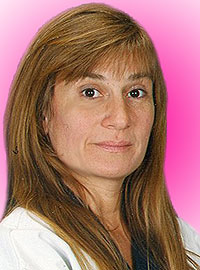
Teri Coffee McDuffie, courtesy photo

Teri Coffee McDuffie, courtesy photo

“One of the most important things women need to know about their safety is that there are ways you can help avoid being picked as an intended victim,” says Teri Coffee McDuffie, owner and founder of Santa Barbara Women’s Self-Defense. McDuffie talks with Leslie Dinaberg about how she learned to be capable, confident and in control-and how she’s teaching others to do the same thing.

Leslie Dinaberg: How did you get started with Santa Barbara Women’s Self-Defense?

Teri Coffee McDuffie: I’ve been training in martial arts for 26 years. After about five or six years, I realized that the majority around me were men … and I thought, why is that? Women need it far more than men … so why aren’t more women doing this?

I realized it’s because we have much more commitment in life to family, to our husbands, to what’s going on with children and life. Fulltime careers kind of envelop us, and there’s not much time to fully commit to martial arts.

So I thought, how can I take this program that I’m doing in martial arts and take snippets of the best of what I’m learning and create a small program that will be basic and simple and make it something they can do in a short period of time? I designed it about 20 years ago.

LD: Obviously safety is the number one thing, but what about physical fitness?

TCM: Anybody can do it. … We’ve trained people that are 87 years old, kids that are ten years old; we’ve done people with physical disabilities in every way.

… At the Braille Institute because we are teaching the senior citizens over there and some of the people do have sight disability. …. In the fall, we had a class of ten and we’re going back in the springtime. And we volunteer there, that is a lot of fun.

LD: How long is the course?

TCM: In general we have an eight-hour course, and it’s divided numerous ways for people’s convenience.

LD: It sounds like you’re working with a wide variety of ages.

TCM: Yes, but the most frequent group that comes in here are in their 40s and 50s because they seem to be the group that truly understands the need for it in their lives in terms of feeling more completely and fully balanced.

… It’s really hard to get actually the target group for victimization, which is the college age. …We can’t get them to recognize that they can be one of those victims.

LD: I think in the college atmosphere the perception of strangers is different than anywhere else too.

TCM: Absolutely. … But 90 percent of people that are attacked, it’s done by somebody that they’ve met or know.

LD: Really?

TCM: It’s a friend or somebody that they’ve been acquainted with, like somebody bumping into them every day, saying hello, somebody that drops off their mail, somebody that they meet in the grocery store that’s bagging their groceries, that says hi to them, that they have some comfort level with.

LD: That totally flies against my assumptions, because you would think I would know where to find that person and identify them.

TCM: It has to be somebody that’s going to have that kind of vulnerability and the more vulnerable people are going to not react when they are attacked, they are going to be more fearful, they are going to be the victim.

… Everybody can be a target. It’s not about how cute you look. They’re looking for attitude, appearance and how you’re walking around. It’s about how you’re presenting yourself out there in terms of vulnerability. That’s what they’re looking for. It can be anybody.

LD: There’s such a fine line, as a parent, you want to teach your children to be strong and self-confident and cautious, but at the same time you don’t want them to be completely scared of every stranger that talks to them.

TCM: Great, now what you just said right there is what we battle against because we have so many mothers out there saying, “I’m not sure if I can have my daughter take your course because what I’m worried about is she’s going to end up paranoid.”

And we say “No, if your daughter takes this course, she will feel so much more in control because instead of feeling fearful that things will happen to her, she’s going to reverse that and take control of more of her life and take control of situations so things don’t happen to her.

LD: What are some of the things you teach?

TCM: We tell people they have so many different choices. What we start out doing is just showing just a simple strategy. If someone walks up to them and they feel uncomfortable because they’ve violated their space, we give them an option such as saying, “stop” in a big voice, or they just step back instead of stepping forward and put their hands up and use their voice.

LD: How long does it typically take for people until it the strategies become instinctual?

TCM: I think very quickly because we do it frequently during the class.

LD: There’s certain element, at least in my own thought process, of embarrassment. What if that person wasn’t really walking toward me?

TCM: We talk about that it’s okay to be embarrassed and be wrong but be safe. Listen to your instincts, it’s important, and if you’re wrong you’re safe.

… When you’re choked, this one is just a good one to know, you find someone’s Adam’s apple and then right under the Adam’s apple you just take your fingers and expand it straight in. It doesn’t hurt them, but it does make them extremely uncomfortable. No matter how powerful they are, no matter how big they are, they will back off to that. It doesn’t take any strength whatsoever.

LD: That’s also not intimidating. I think some people can’t picture themselves jumping around, but poking someone in the Adam’s apple seems doable.

TCM: Yeah and if somebody jumped on you and all of a sudden they’re choking you, you can reach out in the dark and find the Adam’s apple. We do different scenarios like that. … The things that scare you in your mind, that are so big in your mind and you can have a visual release from that.

LD: You mentioned doing some mobile training where you go into businesses?

TCM: We go into places of business and we do whatever structure works for them. … It’s really good for the employees in terms of morale boosting, because they feel better getting in their cars at night and it’s just a safer environment for everybody.

LD: Do you go to martial arts competitions?

TCM: Yes. I go to national competitions all the time. … It’s wonderful because you get to meet people from all around … year after year you become bonded with those people. We’re one huge family. …I’m going to Korea this year to test for sixth degree in the fall.

LD: If you could be invisible anywhere in Santa Barbara, where would you go and what would you do?

TCM: When the women leave here and have taken the course-if I was invisible, so I didn’t have to be a voyeur-I would like to follow them around a little bit and see how they’re walking around in terms of their attitude and empowerment. How they are looking out in the world.

LD: Can you recognize from the posture of somebody that has been trained in self-defense?

TCM: You bet. From the first day they’ve been in this course to the last day they’ve been in this course, they are like night and day … it’s just amazing.

Vital Stats: Teri Coffee McDuffie

Born: San Francisco, CA; November 13, 1959

Family: Husband, Ian McDuffie

Civic Involvement: Braille Institute, Obama Campaign

Professional Accomplishments: Owner/founder of Santa Barbara Women’s Self-Defense; Five-time national champion, fifth degree black belt; Certified martial arts instructor.

Best Book You’ve Read Recently: Gift of Fear by Gavin DeBecker.

Little-Known Fact: “I’m very shy. A lot of people wouldn’t think I’m very shy but that’s probably what has really driven me to do all of these other things that I’ve done is because I am moving in the opposite direction of what I want to do, which is just curl up and hide in the corner, which is absolutely what I want to help people not do.”

Originally published in Noozhawk on February 15, 2009.

Praising the pusher

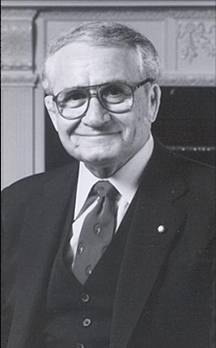
Dr. John Bonica

Dr. John Bonica

Epidural.

During your childbearing years, no four syllables have more power to start arguments than that one, simple word.

They are designed to take away pain, but epidurals also bring on rationalizing, pontificating, preaching, complacency, guilt, self-righteousness, ambivalence, and flat out fear. That syringe is full of much more than simple anesthetic. For many women, it’s a shot of undiluted shame, a guilt-ridden admission that they couldn’t take the pain.

I say so what. Pain is NOT everybody’s friend, and that’s where this wonderful invention comes in. I say we simply celebrate the wonderful man who invented the epidural.

How fitting it is that as Valentine’s Day approaches, we can salute the birthday of the dearly departed Dr. John Bonica, the man who pioneered this wonderful invention for his wife, Emma, who nearly died giving birth to their first daughter.

Forget the diamond- and ruby-studded push presents that are all the rage in certain circles. Can you imagine a more romantic gift than a husband who hands you a large needle full of medicine that will take all the pain away?

Oh baby. I swoon just thinking about it.

Now don’t get me wrong. I know all about the advantages of natural childbirth. After reading a million books on the subject of birth and the importance of having a “birth plan” -not realizing then that my time would have been MUCH better spent reading about parenting-I was planning on going drug free. I really was.

For one thing, needles always give me the heebie jeebies. I have to close my eyes just to get my blood tested, otherwise I worry I might faint from the wooziness.

Plus, I had been through a few surgeries and medical complications at that point, and had always been told I had a high threshold for pain.

I figured natural childbirth would be a snap.

Okay, maybe I’d need to squeeze that tennis ball extra hard and grunt a few times, but how hard could it be?

I was begging for drugs before I even had the hospital gown on.

My fear of needles was absolutely nothing compared to the blazing pain in my back when the contractions started. I would have gladly shot a thousand needles into my body-with my eyes wide open-to make the pain stop.

When the anesthesiologist finally came to give me my epidural, he was handsomer than George Clooney and Brad Pitt combined. And let me tell you, no offense to my husband, but that epidural was better than the sex that got me pregnant in the first place. And because I finally stopped squeezing his hand from the pain, he agreed.

Nothing makes you value human life more than giving birth to a 15-pound baby with a 21-inch-wide head-unless of course it’s trying to do it without an epidural.

Thank you Dr. Bonica.

It’s been a lot of years since Leslie’s epidural, but she still remembers it fondly. Share your labor pains with email . Originally published in the Santa Barbara Daily Sound on February 6, 2009.For more columns visit LeslieDinaberg.com.

Noozhawk Talks: Leslie Dinaberg sits down with Maria Herold

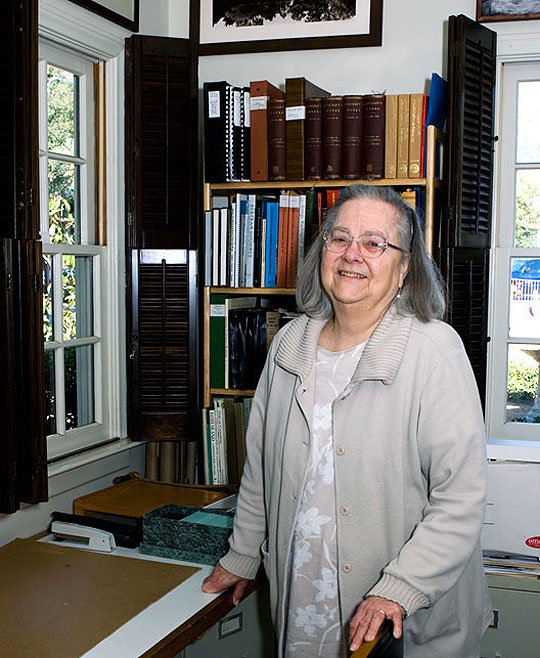
Maria Herold, longtime curator of the Montecito Association’s history committee, is an enthusiastic resource for those conducting obscure research or exploring land-use background. (Elite Henenson / Noozhawk photo)

Maria Herold, longtime curator of the Montecito Association’s history committee, is an enthusiastic resource for those conducting obscure research or exploring land-use background. (Elite Henenson / Noozhawk photo)

As longtime curator of the Montecito History Committee, Maria Herold knows-
literally-where the bodies are buried and the tales behind some of the most
storied families and legendary estates. Here she sits down with Leslie Dinaberg
to discuss some of her own history.

Leslie Dinaberg: How did you get involved with the Montecito History Committee?

Maria Herold: When I retired I decided that I would like to do something useful and I looked
around. I first looked into Recording for the Blind and Dyslexic, and I wasn’t quite
ready for their structure. I had heard that somebody was needed up here, so I
dropped in and have been here ever since. (Laughs) I just showed up!

LD: And when was that?

MH: I think about 1991.

LD: What did you retire from before that?

MH: Well, immediately before that I took care of babies … I wasn’t looking for a
job, but people asked me to take care of their babies because the hours were
perfect, my husband was a teacher and most of the people who asked me to
take care of their babies were teachers.

LD: Has history always been an interest of yours?

MH: Absolutely, because of the fact that my family has been involved with the
history of California and that has always been in the back of my mind. My
grandfather immigrated to America in 1873 and first worked in Sonoma County
and then settled in Northern Santa Barbara County and worked as a supervisor
on an old Spanish land grant.

He went back to Switzerland after he had worked here for 30 years. I was born in
Switzerland, and then I came to America when I was 16. He came when he was
15 and I came when I was 16. He came walking over the Isthmus of Panama and
I came on a freighter through the Panama Canal-so that’s history.

LD: Did you come with your family?

MH: Yes. The whole family came. … (My father) decided that instead of going to
the Santa Maria area, where he was born … he looked for the nearest place that
had a college and at that time there was a little college up on the Riviera so we
came here because of the college on the Riviera. I was the oldest child and he
wanted to be able to send me to college locally.

LD: You have an interesting history so I can see where your interest comes from.
What kinds of things do people come to the Montecito History Committee to
research?

MH: Everything from what is the story of my house or who is the architect or how
come my house is the way it is, to I heard about the Para Grande, or I heard
about the San Ysidro Ranch. Or I heard about somebody from New York who is
following a history of a person who started out in Europe, went to New York and
then ended up dying in Santa Barbara and inspiring a story of the ghost of a
countess in a local house. It gets that elaborate.

Then, of course, people who want to know the history of a street or of a property
that they want to buy. Or there is a legislation or development and, if they’re
smart, they come here and see what the history is. There are very few people
who are smart, but they manage to keep me busy, very, very busy.

I wish more people would come in because it is always ignorance that causes
problems, legal and otherwise. And in the community it creates a great deal of
problems where people are really not well informed on the history of Montecito.
And the same thing in Santa Barbara, the same thing in Goleta. If people knew
the histories there would be much less confrontation.

LD: Do you have a favorite project you’ve been involved with?

MH: I love it that the Pearl Chase Society once gave a mandate to a lady that
they were giving grants to look into part of the history of Montecito. And they
funded this lady, not me because I’m a volunteer, I don’t take money, except for
as a gift to the History Committee. But they funded this lady to work with me in
putting together a history of a particular section. We picked this section of
Montecito and looked into it in detail, starting with a map from 1871 and then
following the history of that section up to the present time. It was a fascinating
project. It took us months and literally months and months but it ended up in two
ring books of information with lots of pictures and everything else.

LD: What part of Montecito did you look at?

MH: We looked at the area between Jameson Lane (south), San Ysidro Road
(west), Hixson Road and Santa Rosa Lane (east) and Santa Rosa Lane (north).
That encompassed old farmland that had been well known farms in the 1870s
and 1880s and 1890s and also included one of the two most historic parts of
Montecito, which is Romero Hill. So we got all kinds of background with Romero
Hill and with the farming community and now having developments, so we have
everything there on how it developed since 1871.

LD: Do the other local libraries know about your resources?

MH: It depends on who they talk to at the library … I do know that UCSB is
aware of us, the Santa Barbara Historical Society sends us people all the time,
people who come into the library and say what should I do to find out about this
and that and something else, the librarians here (at the Montecito Library) send
me people all the time. So between the Santa Barbara Historical Society and the
local library we have a lot of referrals. Also there seems to be somehow people
seem to have become aware somewhere on the Internet of our existence
because I’ve had calls from all over the continent.

LD: What is the oldest structure in Montecito?

MH: What they call the Monsignor Adobe, which is a misnomer, but everybody
calls it the Monsignor Adobe. It’s a two-story Monterey and was built long before
the Monterey Adobe was built … The Monsignor Adobe is the most classic
building, I adore it. And yet it is the oldest building that’s still excellent.

LD: And what street is it on?

MH: It’s on the bottom of Sheffield Lane where Sheffield runs into North Jameson
Lane and it’s a land marked house.

LD: This sounds like very fun and very interesting work for you.

MH: Yes, but a lot of work. I would dearly adore having a helper.

LD: It seems like there should be a college student that would be
interested.

MH: Well, you know, people keep telling me that I should get involved with
Westmont students, etc. but the thing is they leave after a year, so all that is lost.
The continuity is shot down. What I need is an apprentice who will take over
because I’m not going to last forever.

LD: You’re still going strong, though.

MH: I’m 76 years old. Start counting (laughs).

LD: What else do you do like to do when you’re not volunteering at the historic
committee?

MH: For a long while I worked at Recording for the Blind and Dyslexic, which I
adored, just adored. But I can’t do it anymore. I’ve had several operations for
cancer so this is quite a trip. I used to work hours and hours over there and I just
loved it, but I can’t do it anymore. Then I’m involved with music all the time, I
always have been. I’ve been an accompanist and stuff like that. I’m still a
member of a choir, I sing with a group every Sunday but this is strictly amateur
music, but I’ve always done music.

LD: So is your group you sing with a church choir?

MH: No, it’s just a group that gets together, we all can read music, we get
together and we sing what is called early music, a capella early music and we
don’t perform, we do it for the fun of exploring early music.

LD: That’s really fun. That’s a great little local activity. If you could pick three
adjectives to describe yourself, what would they be?

MH: Old-fashioned, excitable, and enthusiastic.

Vital Stats: Maria Herold

Born: August 14, 1932, in Zurich, Switzerland.

Family: Husband George Herold; six grown children, Ann Herold, Matthew
Herold, Tina DaRos, Mark Herold, Monica Christensen, and Joseph Herold; eight
grandchildren and one great grandchild.

Civic Involvement: Volunteer curator with the Montecito History Committee, very
active with Mount Carmel Church, former volunteer for Recording the Blind and
Dyslexic.

Professional Accomplishments: Runs the Montecito History Committee archives;
formerly took care of babies in her home.

Best Book You’ve Read Recently: The Zookeeper’s Wife, by Diane
Ackerman.

Originally published in Noozhawk on January 12, 2009. Click here to read the story on that site.

Giving Back: Chuck Slosser

Chuck Slosser (courtesy photo)

Chuck Slosser (courtesy photo)

With the same engaging grin and focused attention that have pried philanthropic purse strings loose since he came to town in 1981, Chuck Slosser says he’s excited to tackle retirement after 18 years as executive director of the Santa Barbara Foundation.

What an amazing ride it has been. When Slosser, now 66 took the helm of the Santa Barbara Foundation–Santa Barbara County’s largest private source of funding for nonprofit programs–it had a staff of three, roughly $30 million in assets, and was giving out a few million in scholarships and grants a year.

Compare that to today’s foundation–under Slosser’s leadership, it now has a staff of 23, more than $300 million in assets, and donates about $27 million each year. He’s justifiably proud, but still ready for a slower pace, saying, “I thoroughly enjoyed the foundation and the work that we’ve done here and the great things that have happened in the community as a result. I’ve never objected to the 9 to 5, but it’s really the 5 to 9.”

Slosser and his wife of almost 38 years, Stephanie, who retired from UC Santa Barbara’s biology department three years ago, plan to travel, play golf and do yoga. He’s also interested in playing more basketball (he’s got a regular game at the Boys and Girls Club), taking Spanish lessons, picking up a guitar and a dissertation that have been collecting dust, and perhaps doing some consulting. He smiles. “I really do feel like a kid in a candy store. I want to do that, and I want to do that, and I can’t wait.”

Clearly, Slosser is a man with many interests, which is why the diverse Santa Barbara Foundation was “a dream job come true.” With an infinite variety of grant recipients–Music Academy of the West, Page Youth Center, Special Olympics, Council on Alcoholism & Drug Abuse, Santa Barbara Neighborhood Clinics, Red Cross, St. Vincent’s, Legal Aid, Transition House, Girls Inc. and Wildlife Care Network, to name a few — the foundation was a perfect place for this Renaissance man.

Originally published in Santa Barbara Magazine in January 2009.

The science of happiness

Stuart Miles, freedigitalphotos.net

Stuart Miles, freedigitalphotos.net

If you can get a grant to pay for the research, then just about any topic is ripe for scientific analysis. Once the province of poets and playwrights, happiness is now emerging as a significant field of academic inquiry.

Psychologists, ethicists, scientists and researchers all over the world have been working diligently to dig up hard data on a question philosophers have been pondering for years: What exactly is it that makes us happy?

There are lots of books on the subject–with sexy titles like, Happiness: Unlocking the Mysteries of Psychological Wealth, The How of Happiness: A Scientific Approach to Getting the Life You Want, Happier: Learn the Secrets to Daily Joy and Lasting Fulfillment, and Thanks! How the New Science of Gratitude Can Make You Happier–but I decided that buying and reading all those books wouldn’t actually make me happier.

Instead I read an article in “Yes” Magazine by someone named Jen Angel (Is that a perfect name or what?) who read the books, thereby demonstrating the first of my scientific rules for happiness (hereafter known as Leslie’s Science of Happiness Rule #1)–You’ll be happier if you let someone else do the heavy lifting.

Here are some other scientifically proven strategies for finding happiness, according to “Yes.”

Savor Everyday Moments

This is pretty good advice and I do try to follow it. For example, tonight after we lit the Hanukah candles and my son swung his new Rugby Shirt around the room as though it were the Howler Monkey he was secretly hoping to unwrap, and he barely missed knocking over my wine glass onto a pile of clean white laundry I had yet to fold and he didn’t set anything on fire when he knocked over the menorah, I paused, took a sip of wine and a deep breath and simply savored the moment.

Leslie’s Science of Happiness Rule #2–Hold onto your wine glass, it’s going to be a bumpy ride.

Avoid Comparisons

It’s tough to avoid comparing yourself to other people, and trying to keep up with the Joneses in a wealthy town like Santa Barbara is downright impossible. The scientist’s advice: “instead of comparing ourselves to others, focusing on our own personal achievement leads to greater satisfaction.” This makes sense, but I’ve found that being married to someone with a huge ego is another way to do this. My husband’s delusions of grandeur almost never fail to make me smile, or at least feel better about myself by comparison.

Leslie’s Science of Happiness Rule #3–Marry someone who makes you laugh.

Put Money Low on the List

People who put money high on their priority list are more at risk for depression, anxiety, and low self-esteem, according to research. Obviously I would never have gone into journalism if money were high on my list. Although I can’t say that NOT having much money has ever made me particularly happy, NOT selling my soul for a paycheck certainly has made me happy in my professional life

Leslie’s Science of Happiness Rule #4–Get a job you like.

Have Meaningful Goals

“As humans, we require a sense of meaning to thrive. People who strive for something significant, whether it’s learning a new craft or raising moral children, are far happier than those who don’t have strong dreams or aspirations,” say researchers Ed Diener and Robert Biswas-Diener. This is why I put “keep Koss alive,” “sleep,” “eat chocolate,” and “breathe” at the top of my to do list every day–not only does checking them off make me happy, it also gives me a sense of satisfaction and accomplishment of my goals each and every day of my life.

Leslie’s Science of Happiness Rule #5–Sleep, eat chocolate, breathe, and try to keep your kid alive.

Make Friends, Treasure Family

Happier people tend to have good families, friends, and supportive relationships, say Diener and Biswas-Deiner. But we don’t just need relationships; we need close ones that involve understanding and caring. It’s science, baby.

Leslie’s Science of Happiness Rule #6–Besides wine, chocolate and a husband that makes you laugh, the secrets to happiness are having family in town to baby sit for nights out with your friends.

Smile Even When You Don’t Feel Like It

A wise friend of mine once told me to “smile like you mean it until you actually do mean it.” Oddly enough, she was right. I’ve found that smiling works wonders. It’s really hard to be mad when you smile and it’s really hard for someone else to be mad at you when you smile at them.

Leslie’s Science of Happiness Rule #7–Keep smiling and don’t forget to floss and check for lipstick on your teeth. (And by the way, if I have lipstick on my teeth, would you please tell me.)

Say Thank You Like You Mean It

People who keep gratitude journals on a weekly basis are healthier, more optimistic, and more likely to make progress toward achieving personal goals, according to Robert Emmons. And people who write “gratitude letters” to someone who made a difference in their lives score higher on happiness, and lower on depression–and the effect lasts for weeks, according to Martin Seligman.

Leslie’s Science of Happiness Rule #8–I couldn’t have said this one better myself. Thank you for reading my columns week in and week out. Have a wonderful New Year.

Share your own science of happiness with Leslie at email.
Originally published in the Santa Barbara Daily Sound on December 27, 2008.

Noozhawk Talks: Leslie Dinaberg Sits Down With Ann Peyrat

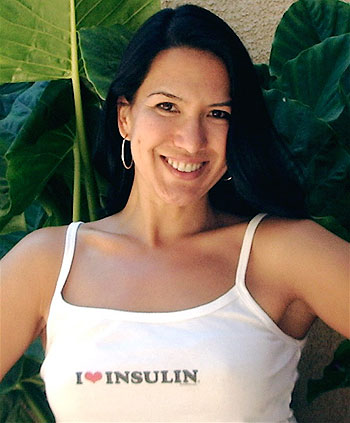
Ann Peyrat has lived with diabetes since she was 16. Rather than give in to the disease, she was inspired to create an apparel line that would help others — particularly girls — feel better about themselves. (Betes Babe photo)

Ann Peyrat has lived with diabetes since she was 16. Rather than give in to the disease, she was inspired to create an apparel line that would help others — particularly girls — feel better about themselves. (Betes Babe photo)

Diagnosed with diabetes as a teenager, Ann Peyrat didn’t like the sound of the word diabetic-especially the “die” part-and quickly declared herself a “betes babe” instead. Now she’s developing a fun and fashionable line of accessories called Betes Babe (www.betesbabe.com) to help others wear their “betes” in style.

Leslie Dinaberg: Tell me about your business.

Ann Peyrat: I was16 when I was diagnosed. I remember that because for most people it’s their sweet sixteen, but for me it was my no more sweet sixteen. I was always looking for products, new things to manage my disease and everything that was out there was either black or a steel kind of cold hard medical look and that’s not me. I’m pink and girly and match my outfits and I just didn’t see anything out there that was beyond this kind of utilitarian look. So in the back of my mind I was always searching for something and then got to the point where I said, “well, why don’t I just make something that I like?”

It blossomed from there, but I never really had the big push to go out and do something as a business for other people until everything that happened with the News-Press went down. All of a sudden I knew I couldn’t work there anymore … so that was kind of the push to say, “Hey, let’s dig in your heels and this is the time.”

LD: So were you making things for yourself?

AP: Yes and just designing. I like to sketch or do little drawings, so I have a journal of all these ideas that I want to do. Some of them I don’t have the technical know how to do. But for me that is one of the challenges. I’ve never run my own business before I don’t know all the steps … but to me, it’s more satisfying to figure it out myself rather than just having to pay somebody to do everything for me. … I started out with just some small graphic design things, some t-shirts and things that are at CafePress.com, so I didn’t have the overhead of having a warehouse … I’ve gotten responses from all over the place. … I’ve got orders from New York, Illinois, Michigan, just all over.

LD: Teenagers and young girls seem like a natural market for your products.

AP: Yes, I actually have a young friend, a school mate of mine, her daughter who is in third grade was just diagnosed and so I took her out just to be sort of a betes buddy, just so that she would know somebody else who had it who was maybe a girl. …I think girls and boys go through different things and especially girls with hormones. It’s a different animal to have girls.

LD: I also think girls, for whatever reason, are so much more fashion conscious. What are all your products?

AP: Right now I have t-shirts and bumper stickers and I’ve got a messenger bag, a canvas tote bag and all of these things have different messages on them, like “I heart insulin” or “I try not to be too sweet, it’s a betes thing.” I’ve got a tank top, I’ve got a golf t-shirt, you can check them out online at www.cafepress.com/betesbabe. And then I j have a few things for people who do want to wear their medical alert. I have a charm bracelet and I have a few different charms that can be put on it just to give maybe a little bit more attention to it. They don’t have any writing on it, but they have a red cross type of medical symbol on them, and what I like about them is they’re silver but they all have kind of a stamp indentation on them, so if you want to change the color or you want to match your outfit, I’m sure a real jeweler would tell you not to do this, but I just use nail polish. … I also have some bracelets that have a satin ribbon and a felted wool flower on it.

LD: Those are really cute and they don’t look like a medical thing at all.

AP: And because I am manufacturing them myself, I can customize them. We make those specific to your disease, so if you have asthma, I can put asthma on there instead of diabetes.

LD: What is the best seller?

AP: Actually it’s been one of my very basic “I heart insulin” shirts.

LD: Ultimately what is your goal with the business?

AP: My goal is definitely to grow it into a really big business and then sell it to somebody and maybe remain the face of it or help out in some capacity. But it just always really appealed to me to have something that was my own and to see it happen and if I have an idea to see that come to fruition. … But I got a part time job because I need health insurance.

…I did go through the WEV (Women’s Economic Ventures) program so that did help a little bit with getting going but I still don’t know a lot.

LD: It’s a new market, so that makes it harder to figure out how to do things.

AP: Exactly. And because I have diabetes myself it makes it more personal to me and I think that I’m maybe more passionate about it than somebody else might be. It’s really one of those things where even if it’s slow at first, I’m not going to drop this idea just because it’s hard. I really want this and I want to do this for the diabetic community at large and that’s inspirational to me to keep going.

LD: I know it’s hard sometimes with a chronic illness. Do you have any advice for somebody that was recently diagnosed with diabetes?

AP: Don’t be afraid to talk about it. You’ll be less alone if you’re able to talk about it. I think a lot of people are really interested. Nobody is going to make fun of you. I think people are sometimes afraid to be different. But especially with my business and having something cute that you can carry, I want people to feel like okay maybe you are special but it’s not special bad it’s special good. And again, for me being really open about things, I think it just starts a conversation. Somebody sees me carrying a cute bag and says, “Hey where did you get that bag?” That’s an opportunity for me to educate them a little bit and tell them a little bit more about what diabetes is, that you don’t have to be scared of it, you don’t have to worry too much.

Also I think going along with talking about it is finding a support group or finding other people that you can talk to if you’re feeling alone, believe me you’re not.

LD: What else do you do when you’re not working?

AP: I wear many different hats and one of them is dog walking and dog sitting. I actually just got my first dog three years ago and I can’t believe I didn’t do it before that. There was no life before I had my dog. … I like to go to movies; I like to go out for food. … I’ve got a group of friends we do Bunko every month and then I’ve got a group of friends we go out to dinner once a month and then I’ve got a book club we do once a month, things like that.

LD: If you could pick three adjectives to describe yourself, what would they be?

AP: I guess optimistic would be a good one. Not always, but usually. I hope that I’m a good friend, that’s really important to me, friends and family, and I’m creative.

Vital Stats: Ann Peyrat

Born: October 7th, at Goleta Valley Cottage Hospital

Family: Parents Adrian and Gloria Peyrat and brother Alan.

Civic Involvement: Volunteers at Fund for Santa Barbara and Sansum Diabetes Research Institute, donates money to others.

Professional Accomplishments: Santa Barbara News-Press Public Square Editor,

Special Sections Editor, and editor of Woman Magazine; UCSB, Assistant to Chancellor Henry Yang; Santa Barbara Cottage Hospital Foundation Development Coordinator; Founder of Betes Babe.

Best Book You’ve Read Recently: Naked by David Sedaris

Little-Known Fact: “When I was 29 I lived in a van for a year to save money.”

Local Resources for Diabetics

Diabetes Resource Center of Santa Barbara County

http://www.sbdrc.org/

Carpinteria Childhood Obesity Prevention Initiative

http://www.sbdrc.org/programs_drc.htm

Betes Babe

http://www.betesbabe.com/index.html

Sansum Diabetes Research Institute

http://www.sansum.org/

Originally published in Noozhawk on December 21, 2008. Click here to read the story on that site.

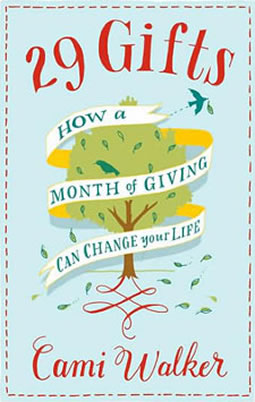
29 Gifts Bring Bountiful Blessings

29gifts-bgThe story is right out of a Lifetime movie, only this time it’s true.

Lovely 30-something Cami Walker was on top of the world. She had conquered addictions to alcohol and drugs–now her career was thriving and she just married the man of her dreams. Then, two weeks after her honeymoon, her whole world came crashing down around her. Her hands didn’t quite work, then one of her eyes stopped functioning, and she was diagnosed with multiple sclerosis.

Multiple sclerosis is an autoimmune disease that affects the brain and spinal cord. It isn’t fatal, but it can result in serious physical and cognitive disabilities, depending upon the form it takes. Soon after being diagnosed, Cami didn’t have the strength to keep working. Feeling desperate, hopeless and depressed, she decided to perform a simple ritual suggested by one of her spiritual teachers, a South African medicine woman named Mbali Creazzo. The idea was to take her mind off her disease–and herself–by focusing on helping others and giving something away each day for 29 days in a row.

“I thought the suggestion was crazy at first, but decided it couldn’t hurt to try it. Things couldn’t get much worse,” said Cami. “I was shocked by how quickly things turned around for me. For me personally it’s totally helped turn my health around in pretty miraculous ways. When I started this I was extremely sick and I was very lonely, I really had gotten to the point where I isolated myself from people. I was feeling totally alone, I was broke, I was so ill I hadn’t been able to work in months and I was very much in a downward spiral in my life.”

By day 14, Cami was able to walk without her cane, and was able to start working part-time again by day 29. “And my bank account was actually greatly improved because I was able to start working part time again and work just started showing up for me … it was crazy, like my phone just started ringing and clients just started showing up and it blew my mind. And, I think most importantly, I had reconnected with friends and family by the end and made some new friends as well,” she said.

Now in her ninth giving cycle, Cami was so inspired by the improvements in her life that she decided to turn the 29-Day Giving Challenge into a worldwide giving movement. Today www.29gifts.org has more than 3,200 givers in 38 countries, including–drum roll please-—yours truly.

“I have definitely been surprised by how quickly it’s grown,” said Cami.

I’m not that surprised because it’s fun and it’s mostly easy. Gifts can be as big or as little you like. The important thing is to make a mindful effort to do something nice for somebody else. One day I played 12 games of checkers in a row with my son, without a single grumble or complaint from me. Another day I bought lunch for a stranger without a single grumble or complaint from me. I’m pretty sure the not complaining part is important. It doesn’t matter what you do, but the website is full of great ideas for gifts of time, money, things, or kind words. In fact, so many great stories have been posted online that Cami got a book deal out of it. Her book will be coming out in the fall.

“I think one of the coolest stories that’s come out of the site is Operation Teddy Bear Care,” she said. “It started with a woman named Maureen Forbes who lives in the bush in South Africa with no electricity. She powers her computer with a solar panel that charges up a generator so that she can have two-three hours of light and use her computer. She posted on her blog that she had been visiting children in some of the remote AIDS clinics and she was just appalled by the conditions that they were living in and the level of poverty and that none of them had anything to call their own. She posted that she sews and she wanted to sew 100 teddy bears to give away but she only had enough fabric for 20.”

Flashes of the Hanukah story go through my mind, as Cami continues. “Someone on the U.S. side, his name is BJ in Georgia, he read her blog and said, ‘I’m going to help you out. We’re going to help you get enough materials to do 1,000 teddy bears.’ … One of my gifts was to help them create a website and an identity for themselves and get their organization functioning on its own. … Our goal is to help them give 1,000 gifts to South African children living in poverty by the 31st of December. And so far I think we’ve given almost 400 already, so we need about 600 more donation packages to be purchased. Go to teddybearcare.ning.com if you want to check them out.”

I went to the website, and guess what Day 25 was for me?

I asked Cami why she thinks the 29 gifts challenge has caught on. “It’s a time where I think a lot of people are tired of the negative messages they see in the media over and over, and feeling kind of scared and frustrated with the state of the economy and some of the other things. The reality is that there are a lot of problems that we’ve got to deal with, especially in America but pretty much everywhere. And I do think that part of the reason this has caught on is that people are looking for something positive that they can feel like they are part of.”

Sounds like a happy ending to me.

Originally published in the Santa Barbara Daily Sound on December 5, 2008.
If you’d like to be part of the 29 Gifts Challenge visit www.29gifts.org for more information, and tell Leslie you’re doing it at email. For more columns visit www.LeslieDinaberg.com.