About lesliedinaberg

When she's not busy working as an editor on a variety of magazine and book projects, Leslie Dinaberg writes feature articles, columns and grocery lists.

Noozhawk Talks: Leslie Dinaberg sits down with Maria Herold

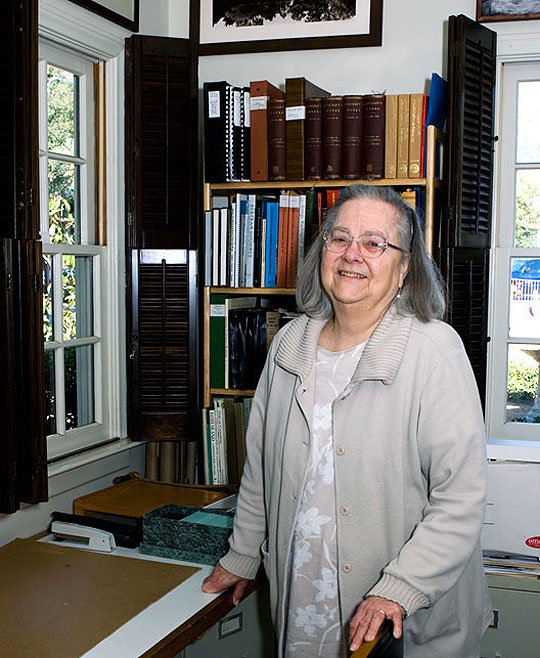
Maria Herold, longtime curator of the Montecito Association’s history committee, is an enthusiastic resource for those conducting obscure research or exploring land-use background. (Elite Henenson / Noozhawk photo)

Maria Herold, longtime curator of the Montecito Association’s history committee, is an enthusiastic resource for those conducting obscure research or exploring land-use background. (Elite Henenson / Noozhawk photo)

As longtime curator of the Montecito History Committee, Maria Herold knows-
literally-where the bodies are buried and the tales behind some of the most
storied families and legendary estates. Here she sits down with Leslie Dinaberg
to discuss some of her own history.

Leslie Dinaberg: How did you get involved with the Montecito History Committee?

Maria Herold: When I retired I decided that I would like to do something useful and I looked
around. I first looked into Recording for the Blind and Dyslexic, and I wasn’t quite
ready for their structure. I had heard that somebody was needed up here, so I
dropped in and have been here ever since. (Laughs) I just showed up!

LD: And when was that?

MH: I think about 1991.

LD: What did you retire from before that?

MH: Well, immediately before that I took care of babies … I wasn’t looking for a
job, but people asked me to take care of their babies because the hours were
perfect, my husband was a teacher and most of the people who asked me to
take care of their babies were teachers.

LD: Has history always been an interest of yours?

MH: Absolutely, because of the fact that my family has been involved with the
history of California and that has always been in the back of my mind. My
grandfather immigrated to America in 1873 and first worked in Sonoma County
and then settled in Northern Santa Barbara County and worked as a supervisor
on an old Spanish land grant.

He went back to Switzerland after he had worked here for 30 years. I was born in
Switzerland, and then I came to America when I was 16. He came when he was
15 and I came when I was 16. He came walking over the Isthmus of Panama and
I came on a freighter through the Panama Canal-so that’s history.

LD: Did you come with your family?

MH: Yes. The whole family came. … (My father) decided that instead of going to
the Santa Maria area, where he was born … he looked for the nearest place that
had a college and at that time there was a little college up on the Riviera so we
came here because of the college on the Riviera. I was the oldest child and he
wanted to be able to send me to college locally.

LD: You have an interesting history so I can see where your interest comes from.
What kinds of things do people come to the Montecito History Committee to
research?

MH: Everything from what is the story of my house or who is the architect or how
come my house is the way it is, to I heard about the Para Grande, or I heard
about the San Ysidro Ranch. Or I heard about somebody from New York who is
following a history of a person who started out in Europe, went to New York and
then ended up dying in Santa Barbara and inspiring a story of the ghost of a
countess in a local house. It gets that elaborate.

Then, of course, people who want to know the history of a street or of a property
that they want to buy. Or there is a legislation or development and, if they’re
smart, they come here and see what the history is. There are very few people
who are smart, but they manage to keep me busy, very, very busy.

I wish more people would come in because it is always ignorance that causes
problems, legal and otherwise. And in the community it creates a great deal of
problems where people are really not well informed on the history of Montecito.
And the same thing in Santa Barbara, the same thing in Goleta. If people knew
the histories there would be much less confrontation.

LD: Do you have a favorite project you’ve been involved with?

MH: I love it that the Pearl Chase Society once gave a mandate to a lady that
they were giving grants to look into part of the history of Montecito. And they
funded this lady, not me because I’m a volunteer, I don’t take money, except for
as a gift to the History Committee. But they funded this lady to work with me in
putting together a history of a particular section. We picked this section of
Montecito and looked into it in detail, starting with a map from 1871 and then
following the history of that section up to the present time. It was a fascinating
project. It took us months and literally months and months but it ended up in two
ring books of information with lots of pictures and everything else.

LD: What part of Montecito did you look at?

MH: We looked at the area between Jameson Lane (south), San Ysidro Road
(west), Hixson Road and Santa Rosa Lane (east) and Santa Rosa Lane (north).
That encompassed old farmland that had been well known farms in the 1870s
and 1880s and 1890s and also included one of the two most historic parts of
Montecito, which is Romero Hill. So we got all kinds of background with Romero
Hill and with the farming community and now having developments, so we have
everything there on how it developed since 1871.

LD: Do the other local libraries know about your resources?

MH: It depends on who they talk to at the library … I do know that UCSB is
aware of us, the Santa Barbara Historical Society sends us people all the time,
people who come into the library and say what should I do to find out about this
and that and something else, the librarians here (at the Montecito Library) send
me people all the time. So between the Santa Barbara Historical Society and the
local library we have a lot of referrals. Also there seems to be somehow people
seem to have become aware somewhere on the Internet of our existence
because I’ve had calls from all over the continent.

LD: What is the oldest structure in Montecito?

MH: What they call the Monsignor Adobe, which is a misnomer, but everybody
calls it the Monsignor Adobe. It’s a two-story Monterey and was built long before
the Monterey Adobe was built … The Monsignor Adobe is the most classic
building, I adore it. And yet it is the oldest building that’s still excellent.

LD: And what street is it on?

MH: It’s on the bottom of Sheffield Lane where Sheffield runs into North Jameson
Lane and it’s a land marked house.

LD: This sounds like very fun and very interesting work for you.

MH: Yes, but a lot of work. I would dearly adore having a helper.

LD: It seems like there should be a college student that would be
interested.

MH: Well, you know, people keep telling me that I should get involved with
Westmont students, etc. but the thing is they leave after a year, so all that is lost.
The continuity is shot down. What I need is an apprentice who will take over
because I’m not going to last forever.

LD: You’re still going strong, though.

MH: I’m 76 years old. Start counting (laughs).

LD: What else do you do like to do when you’re not volunteering at the historic
committee?

MH: For a long while I worked at Recording for the Blind and Dyslexic, which I
adored, just adored. But I can’t do it anymore. I’ve had several operations for
cancer so this is quite a trip. I used to work hours and hours over there and I just
loved it, but I can’t do it anymore. Then I’m involved with music all the time, I
always have been. I’ve been an accompanist and stuff like that. I’m still a
member of a choir, I sing with a group every Sunday but this is strictly amateur
music, but I’ve always done music.

LD: So is your group you sing with a church choir?

MH: No, it’s just a group that gets together, we all can read music, we get
together and we sing what is called early music, a capella early music and we
don’t perform, we do it for the fun of exploring early music.

LD: That’s really fun. That’s a great little local activity. If you could pick three
adjectives to describe yourself, what would they be?

MH: Old-fashioned, excitable, and enthusiastic.

Vital Stats: Maria Herold

Born: August 14, 1932, in Zurich, Switzerland.

Family: Husband George Herold; six grown children, Ann Herold, Matthew
Herold, Tina DaRos, Mark Herold, Monica Christensen, and Joseph Herold; eight
grandchildren and one great grandchild.

Civic Involvement: Volunteer curator with the Montecito History Committee, very
active with Mount Carmel Church, former volunteer for Recording the Blind and
Dyslexic.

Professional Accomplishments: Runs the Montecito History Committee archives;
formerly took care of babies in her home.

Best Book You’ve Read Recently: The Zookeeper’s Wife, by Diane
Ackerman.
Originally published in Noozhawk on January 12, 2009. Click here to read the story on that site.

Giving Back: Chuck Slosser

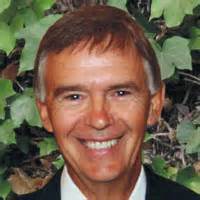
Chuck Slosser (courtesy photo)

Chuck Slosser (courtesy photo)

With the same engaging grin and focused attention that have pried philanthropic purse strings loose since he came to town in 1981, Chuck Slosser says he’s excited to tackle retirement after 18 years as executive director of the Santa Barbara Foundation.

What an amazing ride it has been. When Slosser, now 66 took the helm of the Santa Barbara Foundation–Santa Barbara County’s largest private source of funding for nonprofit programs–it had a staff of three, roughly $30 million in assets, and was giving out a few million in scholarships and grants a year.

Compare that to today’s foundation–under Slosser’s leadership, it now has a staff of 23, more than $300 million in assets, and donates about $27 million each year. He’s justifiably proud, but still ready for a slower pace, saying, “I thoroughly enjoyed the foundation and the work that we’ve done here and the great things that have happened in the community as a result. I’ve never objected to the 9 to 5, but it’s really the 5 to 9.”

Slosser and his wife of almost 38 years, Stephanie, who retired from UC Santa Barbara’s biology department three years ago, plan to travel, play golf and do yoga. He’s also interested in playing more basketball (he’s got a regular game at the Boys and Girls Club), taking Spanish lessons, picking up a guitar and a dissertation that have been collecting dust, and perhaps doing some consulting. He smiles. “I really do feel like a kid in a candy store. I want to do that, and I want to do that, and I can’t wait.”

Clearly, Slosser is a man with many interests, which is why the diverse Santa Barbara Foundation was “a dream job come true.” With an infinite variety of grant recipients–Music Academy of the West, Page Youth Center, Special Olympics, Council on Alcoholism & Drug Abuse, Santa Barbara Neighborhood Clinics, Red Cross, St. Vincent’s, Legal Aid, Transition House, Girls Inc. and Wildlife Care Network, to name a few — the foundation was a perfect place for this Renaissance man.

Originally published in Santa Barbara Magazine in January 2009.

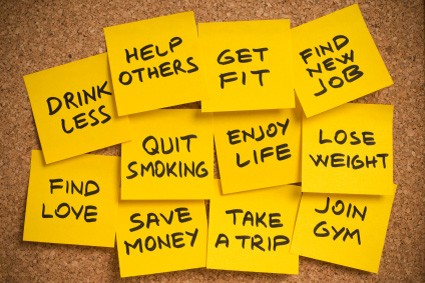
This year I resolve to

resolutionsI make my New Year’s resolutions daily. I just strive to be a better person and I always believe in karma.Jay-Z

Cheers to a new year and another chance for us to get it right. Oprah Winfrey

A New Year’s resolution is something that goes in one year and out the other.Leslie Dinaberg’s South Coasting Column, 2004

Like many ridiculously optimistic and otherwise rational people, I always take some time at the end of December to reflect on my accomplishments of the past year and set goals for the next one. The idea is to come up with a list of goals that will help transform me into a kinder, nicer, more organized, healthier, richer person with a better figure, a well-behaved family, and a much cleaner house.

Okay, so maybe my 2008 accomplishments weren’t all that stellar, but a look back at the history of my New Year’s resolutions tells me that at least I’m continuing to make some progress every year.

Resolution #1

1988: I will get back to the weight on my Driver’s License.

1997: I will get back to my weight when I got married.

2005: I will follow my new diet religiously until I get back to my pre-pregnancy weight.

2009: I will try to develop a realistic attitude about my weight, focus on getting healthy, buy myself pretty clothes and develop my personality. (Confession: I’d like to take credit for this line, but truthfully it’s what my father said about me the first time he saw me when I was an hour old.)

Resolution #2

1992: I will not spend my money frivolously and save enough money to put a down payment on a small house in Santa Barbara.

1998: I will not spend any money at all on anything, under any circumstances, and save enough to put a down payment on a small house in Isla Vista, with the help of my parents and anyone else who might want to invest.

2003: I will not spend my money frivolously and save enough to put a down payment on a small used car.

2006: I will stop buying so many new pairs of shoes.

2008: I will try to keep my expenses below 110 percent of my income.

2009: I will stop crumpling my tax deductible receipts into teeny tiny balls of paper that raise my husband’s blood pressure every year come April.

Resolution #3

2003: I will stop smoking.

2004: I will stop smoking.

2005: I will stop smoking.

2006: I will stop smoking.

2007: I will stop smoking.

2008: I will stop smoking.

2009: I will stop smoking. (Confession: I never started smoking in the first place, but I always like to give myself one easy thing that I know I can accomplish to make myself feel better about this whole New Year’s resolution thing.)

Resolution #4

2003: I will spend more time with my family.

2006: I will spend more quality time with my family.

2008: I will redefine quality time with my family to mean that we all have to be awake, with no one yelling, but not necessarily doing the same activity in the same room at the same time.

December 22, 2008: Screw the family. I will carve out some quality time for myself, by myself, and not feel guilty about it. (Written immediately after disembarking from a five-day cruise with my extended family.)

2009: I will spend more quality time with my family and my dear friends, but only after spending enough quality time with myself to not be grumpy.

Resolution #5

1998: I will treat my body as a temple and eat only healthy, organic foods.

2000: I will only order out for pizza once a week.

2003: I will remember that Chuck’s Mai Tais do not count as a serving of fruit, even though they come with an orange slice and a maraschino cherry. The celery in a Brophy Brother’s Bloody Mary doesn’t count as a vegetable either.

2006: I will sit down with my family and eat a healthy, balanced meal at least once a week.

2008: I will eat a piece of dark chocolate and I will drink a glass of red wine every night, but only for the good of my health.

2009: Ditto.

Resolution #6

1982: I will write a book before I’m 30.

1995: I will write a book before I’m 40.

2005: I will read at least 10 books a year whose titles I’m not embarrassed to talk about.

2007: I actually wrote a few books. So what If they’re shorter than this column and the graphics are kind of cheesy. I have my own ISBN numbers.

2008: I co-authored a book and it’s actually pretty good. I will do my best to help sell “Hometown Santa Barbara” so I can actually make some money this year.

2009: I will write a novel before I’m 50.

Resolution #7

1993: I will not fight with my boyfriend about household chores.

1994: I will not fight with my husband about household chores.

1999: My husband will stop pretending he knows how to fix the car and I will stop pretending I am the least bit competent in the kitchen.

2007: My husband will stop pretending he doesn’t see the pile of laundry that needs to be folded and I will stop pretending I don’t know how to plunge the toilet and pump my own gas.

2009: My husband will make sure I have gas in my car if I give him enough warning when the tank is low and I will stop making New Year’s resolutions on behalf of other people.

Resolution #8

2003: I will not fight with Koss about cleaning up his toys.

2005: I will not fight with Koss about doing his chores.

2006: I will not fight with Koss about his homework, doing his chores and cleaning up his dirty sweat socks.

2007: I will not fight with Koss about his homework, doing his chores and cleaning up his dirty sweat socks and his sweaty t-shirts.

2008: I will not fight with Koss about his homework, doing his chores, cleaning up his dirty sweat socks and his sweaty t-shirts, and how much time he spends on the computer.

2009: Koss will be responsible for his own homework, his own chores and his own dirty clothes. But I am still his mother and I can make resolutions for him if I want to!

Resolution #9

2008: I will put away money that I would have spent on lattes in a little jar every day and maybe when I retire I’ll be able to afford an R.V. that I can park somewhere in Santa Barbara.

2009: Who am I kidding? I can’t live without lattes. Pass the Equal, and the wine and chocolate while you’re at it.

Cheers to a New Year and may all your troubles last as long as my New Year’s resolutions.

Share your resolutions with Leslie by emailing email . Originally published in the Santa Barbara Daily Sound on January 2, 2009.

The science of happiness

Stuart Miles, freedigitalphotos.net

Stuart Miles, freedigitalphotos.net

If you can get a grant to pay for the research, then just about any topic is ripe for scientific analysis. Once the province of poets and playwrights, happiness is now emerging as a significant field of academic inquiry.

Psychologists, ethicists, scientists and researchers all over the world have been working diligently to dig up hard data on a question philosophers have been pondering for years: What exactly is it that makes us happy?

There are lots of books on the subject–with sexy titles like, Happiness: Unlocking the Mysteries of Psychological Wealth, The How of Happiness: A Scientific Approach to Getting the Life You Want, Happier: Learn the Secrets to Daily Joy and Lasting Fulfillment, and Thanks! How the New Science of Gratitude Can Make You Happier–but I decided that buying and reading all those books wouldn’t actually make me happier.

Instead I read an article in “Yes” Magazine by someone named Jen Angel (Is that a perfect name or what?) who read the books, thereby demonstrating the first of my scientific rules for happiness (hereafter known as Leslie’s Science of Happiness Rule #1)–You’ll be happier if you let someone else do the heavy lifting.

Here are some other scientifically proven strategies for finding happiness, according to “Yes.”

Savor Everyday Moments

This is pretty good advice and I do try to follow it. For example, tonight after we lit the Hanukah candles and my son swung his new Rugby Shirt around the room as though it were the Howler Monkey he was secretly hoping to unwrap, and he barely missed knocking over my wine glass onto a pile of clean white laundry I had yet to fold and he didn’t set anything on fire when he knocked over the menorah, I paused, took a sip of wine and a deep breath and simply savored the moment.

Leslie’s Science of Happiness Rule #2–Hold onto your wine glass, it’s going to be a bumpy ride.

Avoid Comparisons

It’s tough to avoid comparing yourself to other people, and trying to keep up with the Joneses in a wealthy town like Santa Barbara is downright impossible. The scientist’s advice: “instead of comparing ourselves to others, focusing on our own personal achievement leads to greater satisfaction.” This makes sense, but I’ve found that being married to someone with a huge ego is another way to do this. My husband’s delusions of grandeur almost never fail to make me smile, or at least feel better about myself by comparison.

Leslie’s Science of Happiness Rule #3–Marry someone who makes you laugh.

Put Money Low on the List

People who put money high on their priority list are more at risk for depression, anxiety, and low self-esteem, according to research. Obviously I would never have gone into journalism if money were high on my list. Although I can’t say that NOT having much money has ever made me particularly happy, NOT selling my soul for a paycheck certainly has made me happy in my professional life

Leslie’s Science of Happiness Rule #4–Get a job you like.

Have Meaningful Goals

“As humans, we require a sense of meaning to thrive. People who strive for something significant, whether it’s learning a new craft or raising moral children, are far happier than those who don’t have strong dreams or aspirations,” say researchers Ed Diener and Robert Biswas-Diener. This is why I put “keep Koss alive,” “sleep,” “eat chocolate,” and “breathe” at the top of my to do list every day–not only does checking them off make me happy, it also gives me a sense of satisfaction and accomplishment of my goals each and every day of my life.

Leslie’s Science of Happiness Rule #5–Sleep, eat chocolate, breathe, and try to keep your kid alive.

Make Friends, Treasure Family

Happier people tend to have good families, friends, and supportive relationships, say Diener and Biswas-Deiner. But we don’t just need relationships; we need close ones that involve understanding and caring. It’s science, baby.

Leslie’s Science of Happiness Rule #6–Besides wine, chocolate and a husband that makes you laugh, the secrets to happiness are having family in town to baby sit for nights out with your friends.

Smile Even When You Don’t Feel Like It

A wise friend of mine once told me to “smile like you mean it until you actually do mean it.” Oddly enough, she was right. I’ve found that smiling works wonders. It’s really hard to be mad when you smile and it’s really hard for someone else to be mad at you when you smile at them.

Leslie’s Science of Happiness Rule #7–Keep smiling and don’t forget to floss and check for lipstick on your teeth. (And by the way, if I have lipstick on my teeth, would you please tell me.)

Say Thank You Like You Mean It

People who keep gratitude journals on a weekly basis are healthier, more optimistic, and more likely to make progress toward achieving personal goals, according to Robert Emmons. And people who write “gratitude letters” to someone who made a difference in their lives score higher on happiness, and lower on depression–and the effect lasts for weeks, according to Martin Seligman.

Leslie’s Science of Happiness Rule #8–I couldn’t have said this one better myself. Thank you for reading my columns week in and week out. Have a wonderful New Year.

Share your own science of happiness with Leslie at email.
Originally published in the Santa Barbara Daily Sound on December 27, 2008.

Noozhawk Talks: Leslie Dinaberg Sits Down With Ann Peyrat

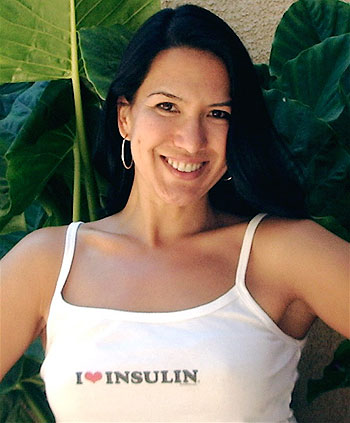
Ann Peyrat has lived with diabetes since she was 16. Rather than give in to the disease, she was inspired to create an apparel line that would help others — particularly girls — feel better about themselves. (Betes Babe photo)

Ann Peyrat has lived with diabetes since she was 16. Rather than give in to the disease, she was inspired to create an apparel line that would help others — particularly girls — feel better about themselves. (Betes Babe photo)

Diagnosed with diabetes as a teenager, Ann Peyrat didn’t like the sound of the word diabetic-especially the “die” part-and quickly declared herself a “betes babe” instead. Now she’s developing a fun and fashionable line of accessories called Betes Babe (www.betesbabe.com) to help others wear their “betes” in style.

Leslie Dinaberg: Tell me about your business.

Ann Peyrat: I was16 when I was diagnosed. I remember that because for most people it’s their sweet sixteen, but for me it was my no more sweet sixteen. I was always looking for products, new things to manage my disease and everything that was out there was either black or a steel kind of cold hard medical look and that’s not me. I’m pink and girly and match my outfits and I just didn’t see anything out there that was beyond this kind of utilitarian look. So in the back of my mind I was always searching for something and then got to the point where I said, “well, why don’t I just make something that I like?”

It blossomed from there, but I never really had the big push to go out and do something as a business for other people until everything that happened with the News-Press went down. All of a sudden I knew I couldn’t work there anymore … so that was kind of the push to say, “Hey, let’s dig in your heels and this is the time.”

LD: So were you making things for yourself?

AP: Yes and just designing. I like to sketch or do little drawings, so I have a journal of all these ideas that I want to do. Some of them I don’t have the technical know how to do. But for me that is one of the challenges. I’ve never run my own business before I don’t know all the steps … but to me, it’s more satisfying to figure it out myself rather than just having to pay somebody to do everything for me. … I started out with just some small graphic design things, some t-shirts and things that are at CafePress.com, so I didn’t have the overhead of having a warehouse … I’ve gotten responses from all over the place. … I’ve got orders from New York, Illinois, Michigan, just all over.

LD: Teenagers and young girls seem like a natural market for your products.

AP: Yes, I actually have a young friend, a school mate of mine, her daughter who is in third grade was just diagnosed and so I took her out just to be sort of a betes buddy, just so that she would know somebody else who had it who was maybe a girl. …I think girls and boys go through different things and especially girls with hormones. It’s a different animal to have girls.

LD: I also think girls, for whatever reason, are so much more fashion conscious. What are all your products?

AP: Right now I have t-shirts and bumper stickers and I’ve got a messenger bag, a canvas tote bag and all of these things have different messages on them, like “I heart insulin” or “I try not to be too sweet, it’s a betes thing.” I’ve got a tank top, I’ve got a golf t-shirt, you can check them out online at www.cafepress.com/betesbabe. And then I j have a few things for people who do want to wear their medical alert. I have a charm bracelet and I have a few different charms that can be put on it just to give maybe a little bit more attention to it. They don’t have any writing on it, but they have a red cross type of medical symbol on them, and what I like about them is they’re silver but they all have kind of a stamp indentation on them, so if you want to change the color or you want to match your outfit, I’m sure a real jeweler would tell you not to do this, but I just use nail polish. … I also have some bracelets that have a satin ribbon and a felted wool flower on it.

LD: Those are really cute and they don’t look like a medical thing at all.

AP: And because I am manufacturing them myself, I can customize them. We make those specific to your disease, so if you have asthma, I can put asthma on there instead of diabetes.

LD: What is the best seller?

AP: Actually it’s been one of my very basic “I heart insulin” shirts.

LD: Ultimately what is your goal with the business?

AP: My goal is definitely to grow it into a really big business and then sell it to somebody and maybe remain the face of it or help out in some capacity. But it just always really appealed to me to have something that was my own and to see it happen and if I have an idea to see that come to fruition. … But I got a part time job because I need health insurance.

…I did go through the WEV (Women’s Economic Ventures) program so that did help a little bit with getting going but I still don’t know a lot.

LD: It’s a new market, so that makes it harder to figure out how to do things.

AP: Exactly. And because I have diabetes myself it makes it more personal to me and I think that I’m maybe more passionate about it than somebody else might be. It’s really one of those things where even if it’s slow at first, I’m not going to drop this idea just because it’s hard. I really want this and I want to do this for the diabetic community at large and that’s inspirational to me to keep going.

LD: I know it’s hard sometimes with a chronic illness. Do you have any advice for somebody that was recently diagnosed with diabetes?

AP: Don’t be afraid to talk about it. You’ll be less alone if you’re able to talk about it. I think a lot of people are really interested. Nobody is going to make fun of you. I think people are sometimes afraid to be different. But especially with my business and having something cute that you can carry, I want people to feel like okay maybe you are special but it’s not special bad it’s special good. And again, for me being really open about things, I think it just starts a conversation. Somebody sees me carrying a cute bag and says, “Hey where did you get that bag?” That’s an opportunity for me to educate them a little bit and tell them a little bit more about what diabetes is, that you don’t have to be scared of it, you don’t have to worry too much.

Also I think going along with talking about it is finding a support group or finding other people that you can talk to if you’re feeling alone, believe me you’re not.

LD: What else do you do when you’re not working?

AP: I wear many different hats and one of them is dog walking and dog sitting. I actually just got my first dog three years ago and I can’t believe I didn’t do it before that. There was no life before I had my dog. … I like to go to movies; I like to go out for food. … I’ve got a group of friends we do Bunko every month and then I’ve got a group of friends we go out to dinner once a month and then I’ve got a book club we do once a month, things like that.

LD: If you could pick three adjectives to describe yourself, what would they be?

AP: I guess optimistic would be a good one. Not always, but usually. I hope that I’m a good friend, that’s really important to me, friends and family, and I’m creative.

Vital Stats: Ann Peyrat

Born: October 7th, at Goleta Valley Cottage Hospital

Family: Parents Adrian and Gloria Peyrat and brother Alan.

Civic Involvement: Volunteers at Fund for Santa Barbara and Sansum Diabetes Research Institute, donates money to others.

Professional Accomplishments: Santa Barbara News-Press Public Square Editor,

Special Sections Editor, and editor of Woman Magazine; UCSB, Assistant to Chancellor Henry Yang; Santa Barbara Cottage Hospital Foundation Development Coordinator; Founder of Betes Babe.

Best Book You’ve Read Recently: Naked by David Sedaris

Little-Known Fact: “When I was 29 I lived in a van for a year to save money.”

Local Resources for Diabetics

Diabetes Resource Center of Santa Barbara County

http://www.sbdrc.org/

Carpinteria Childhood Obesity Prevention Initiative

http://www.sbdrc.org/programs_drc.htm

Betes Babe

http://www.betesbabe.com/index.html

Sansum Diabetes Research Institute

http://www.sansum.org/

Originally published in Noozhawk on December 21, 2008. Click here to read the story on that site.

Not buying it

Stockimages at freedigitalimages.net

Stockimages at freedigitalimages.net

Like my shopaholic foremothers, I usually indulge in the “one for you, one for me” method of gift buying. Not only does this help the economy, but it also motivates me to cheerfully take on the majority of family shopping duties, for which my husband is eternally grateful.

But as you can imagine, Chrismukkah season is a huge challenge for my wallet. My family celebrates both Hanukah and Christmas, with multiple events and multiple present buying requirements, then there are hostess gifts to buy, and birthdays this month, plus it’s my parent’s anniversary. Also, the displays in all the stores are so cute and everywhere you look everything is on sale. There are almost too many shopping opportunities for my microscopic MasterCard limit–not to mention our dwindling 201-K account–to bear.

No wonder I feel overwhelmed and underfunded.

When I read about Andrea Tringo and Steven Posusta’s pledge to refrain from buying anything new for a year, the story hit me right in the purse strings–an area where I was already hurting. If this Colorado couple was able to go without buying anything but essentials for almost a year (they started the challenge on January 1, 2008) surely I could go for a week in December without buying anything for myself.

That doesn’t sound so hard, right?

You’d be surprised.

Monday-I wake up inspired. Getting out of the retail rat race this holiday season will be a piece of cake. I’ll make homemade gifts for the majority of my list, so I won’t even be tempted to buy anything for myself. Okay, maybe someday I’ll use that Creative Versa-Tool I bought on a wood burning or soldering project for myself someday, but right now it’s all about giving. Expenses: $97.50 at Michael’s for “miscellaneous supplies.” At least I had a coupon.

Tuesday-I forgot a few things, so I still haven’t started those hand tooled leather ID bracelets I’m making for everyone in my family. It’s back to Michael’s to celebrate, “At Least Twice Tuesday,” an annual holiday event where I go to the same store at least twice to comb through the same items in the same aisles to find the thing I forgot that I needed, but I pay double the original price because I’ve already used my coupon. Expenses: $17.97 on more “miscellaneous supplies.” If you don’t count that pack of sugarless gum I threw in at the last minute–and I certainly don’t think anything under $1 should count–then I spent nothing on myself.

Wednesday-Oh dear, I can’t avoid it any longer. My son insists that his cousins will think my handcrafted presents are “totally bogus.” If I want to buy and ship my gifts out to them, then today’s the day I have to go to the mall. I try to confine my purchases to toys and sporting goods, since neither of them is particularly tempting to me. Unfortunately they had purple slippers on sale at Big Five. PURPLE on SALE! I wish I could say I was virtuous and walked away without a giving those adorably comfy purple slippers a second thought, but the truth is they didn’t have my size. However, I did walk away without asking them to call other stores to see if they had the slippers in my size, so I think I should get some credit for that. Expenses: $237.83 on gifts for other people, $250 to ship them.

Thursday-A workday, so it should be easy to avoid spending money on myself. Except, I work out of a home office, so if I interview someone in town, we usually go out for coffee, which costs money. Hmm…I go out on a limb and ask my interviewee if she’d be willing to go for a walk on the beach. She’s game, the interview goes well, and I save myself the eight bucks I would have spent on lattes. Expenses: zero. Joy of feeling virtuous: priceless.

Friday-Otherwise known as “Freak Out Friday,” when I realize that none of my craft projects are complete, and even if I stay up till 2 a.m. every night until Christmas, I still don’t have a snowball’s chance in hell of finishing them. I panic and decide to both bake and craft my gifts. It’s too crowded to park at Vons, so I go to Gelson’s and spend twice as much money but the shelves are much neater. Expenses: $42.57, all I buy for myself is a Diet Coke and a new muffin pan.

Saturday-Spending money forms much of our social life. Our house is too small to entertain in, so if we want to meet friends, we go out for dinner, which involves spending money on myself. I talk my friends into going somewhere inexpensive, and then justify the expense because it’s not much more than eating at home. I’m feeling great until M wants to do some holiday shopping afterward. I agree, hoping she wants to go to Abercrombie, where nothing fits my body or my budget. Nope. Urban Outfitters is having a sale on these really cute purses. I decide to buy one for myself “from Santa,” and throw in some cute scarves, hats and gloves that may or may not be for gifts. That doesn’t count, right? Expenses: zero for me; $159.27 for Santa.

Sunday-This is my final, self-deluded day to attempt outlandish holiday crafts and baked goods, knowing full well there isn’t enough time, talent, sugar, glitter or glue sticks in the world for all of the ambitious projects I have planned. I feel like a complete and utter shopping failure, about to gift everyone on my list with gift cards once again.

But then I re-read the story about Andrea and Steven and realized that their pledge to buy nothing had more to do with living a greener, more socially responsible life than saving money.

That’s when I get the brilliant idea to save the gas and the plastic and the time required to give gift cards and just give out cash instead. What could be greener than that?

Plus I did save money by passing up those purple UGG boots.

When Leslie’s not avoiding the retail rut, she can be reached at Leslie@LeslieDinaberg.com. Originally published in the Santa Barbara Daily Sound on December 19, 2008.

The naked truth about communication

Stockimages, freeimages.net

Stockimages, freeimages.net

Communication is complicated, especially when it involves men and women.

Men don’t understand our obsessions with the shoe department at Nordstrom, our friend’s relationships, and Grey’s Anatomy. And we don’t remotely understand their fascinations with remote control anything, video games, or the Three Stooges. I’ve also yet to meet a woman who has figured out why men take so long in the bathroom when they’re not putting on makeup or drying their hair.

Luckily, my careful research into the male species has enabled me to compile this translation guide, “the naked truth about communication.”

Keep in mind, as relationships evolve, so does the conversational code. Here are some clues for the beginning stages, when you first meet.

The guy you’re flirting with says: “So maybe we could get together or something?

You hear: “I like you, but not enough to ask you out.”

He really means: “I really want to ask you out, but I’m too chicken to say so.” Also, “I’d like to see you naked.”

Or in the beginning stages, another loaded question when you meet a man is, “What do you do?”

What he hears you say is, “Are you making enough money to support me in the style I’d like to become accustomed to? Then you can see me naked.”

Of course you really mean nothing more than “What do you do?” but a safer question might be “What do you like to do?” If he makes up an answer that sounds sophisticated and smart (“I like to go wine tasting in the Valley or read Yeats by the fireplace at my house on Padaro Lane”), he’s lying, but at least you know he’s trying, and he probably likes you. Milk this, because he’ll actually converse with you during this courtship period.

Once you start dating regularly, you may have months or even years of “What do you want to do?” “I don’t know, what do you want to do?” conversations ahead of you, so don’t be afraid to take over the social planning. You can be pretty sure he’s happy if your plans involve his seeing you naked. And if he really doesn’t want to do something, don’t worry; he’ll let you know with a grunt or sometimes even a funny face or an audible noise.

Once you’re married, you may be less apt to be naked, but that doesn’t mean communication gets any easier. Here’s an example.

Wife gets home late from work. Husband’s eyes are glued to the TV. “Hi, honey. How was your day?”

He barely looks up. “Hi.”

Wife: “Are you okay?”

He says, “Fine.”

You hear: “Leave me alone. There are lines around your eyes and you look fat.”

He really means … “God, I know you want to talk about my day and all my relationships with my colleagues and boss but I just want to drink a beer, eat a bag of chips for dinner and zone out on the Three Stooges.” Also, “I’d like to see you naked.”

Here are a few more things I’ve learned about how to talk to a man so he understands you.

Men–and nine-year-old boys–can only take directions one at a time. So, if you have a 104-degree fever and you want him to go into the kitchen and get you a drink of water, make it a two-part request. Pictures and props are also useful. Your Charades techniques can also come in handy here.

When men bother to use words instead of gestures or grunts, it’s to inspire action. If a guy insults another guy, he automatically thinks he wants to fight, unless they’re friends, and then its in lieu of a kiss and a hug hello. And if you say you like his shirt, he thinks, “Cool, she wants to see me naked!”

A man will say, “I’m fine,” even when being tortured or held up at gunpoint. It’s not in his nature to reveal weakness because that betrays vulnerability. It’s an evolutionary thing. I found this same tough guy mentality also goes for little boys (but only if there are other little boys around). Keep in mind that he’s not fine if he’s bleeding, his face is wet around his eyes, the Gaucho’s just lost or he has to pay for parking.

Otherwise he’s probably fine–just don’t ask him about it–unless of course you’re naked.

Little by little, Leslie is becoming fluent in guy speak. Share your insights at Leslie@LeslieDinaberg.com.

Originally published in the Santa Barbara Daily Sound on December 12, 2008.

29 Gifts Bring Bountiful Blessings

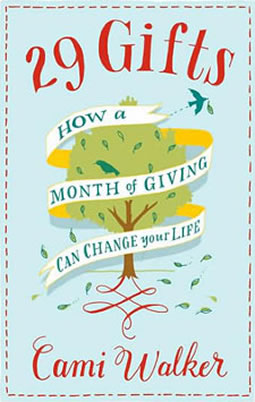
29gifts-bgThe story is right out of a Lifetime movie, only this time it’s true.

Lovely 30-something Cami Walker was on top of the world. She had conquered addictions to alcohol and drugs–now her career was thriving and she just married the man of her dreams. Then, two weeks after her honeymoon, her whole world came crashing down around her. Her hands didn’t quite work, then one of her eyes stopped functioning, and she was diagnosed with multiple sclerosis.

Multiple sclerosis is an autoimmune disease that affects the brain and spinal cord. It isn’t fatal, but it can result in serious physical and cognitive disabilities, depending upon the form it takes. Soon after being diagnosed, Cami didn’t have the strength to keep working. Feeling desperate, hopeless and depressed, she decided to perform a simple ritual suggested by one of her spiritual teachers, a South African medicine woman named Mbali Creazzo. The idea was to take her mind off her disease–and herself–by focusing on helping others and giving something away each day for 29 days in a row.

“I thought the suggestion was crazy at first, but decided it couldn’t hurt to try it. Things couldn’t get much worse,” said Cami. “I was shocked by how quickly things turned around for me. For me personally it’s totally helped turn my health around in pretty miraculous ways. When I started this I was extremely sick and I was very lonely, I really had gotten to the point where I isolated myself from people. I was feeling totally alone, I was broke, I was so ill I hadn’t been able to work in months and I was very much in a downward spiral in my life.”

By day 14, Cami was able to walk without her cane, and was able to start working part-time again by day 29. “And my bank account was actually greatly improved because I was able to start working part time again and work just started showing up for me … it was crazy, like my phone just started ringing and clients just started showing up and it blew my mind. And, I think most importantly, I had reconnected with friends and family by the end and made some new friends as well,” she said.

Now in her ninth giving cycle, Cami was so inspired by the improvements in her life that she decided to turn the 29-Day Giving Challenge into a worldwide giving movement. Today www.29gifts.org has more than 3,200 givers in 38 countries, including–drum roll please-—yours truly.

“I have definitely been surprised by how quickly it’s grown,” said Cami.

I’m not that surprised because it’s fun and it’s mostly easy. Gifts can be as big or as little you like. The important thing is to make a mindful effort to do something nice for somebody else. One day I played 12 games of checkers in a row with my son, without a single grumble or complaint from me. Another day I bought lunch for a stranger without a single grumble or complaint from me. I’m pretty sure the not complaining part is important. It doesn’t matter what you do, but the website is full of great ideas for gifts of time, money, things, or kind words. In fact, so many great stories have been posted online that Cami got a book deal out of it. Her book will be coming out in the fall.

“I think one of the coolest stories that’s come out of the site is Operation Teddy Bear Care,” she said. “It started with a woman named Maureen Forbes who lives in the bush in South Africa with no electricity. She powers her computer with a solar panel that charges up a generator so that she can have two-three hours of light and use her computer. She posted on her blog that she had been visiting children in some of the remote AIDS clinics and she was just appalled by the conditions that they were living in and the level of poverty and that none of them had anything to call their own. She posted that she sews and she wanted to sew 100 teddy bears to give away but she only had enough fabric for 20.”

Flashes of the Hanukah story go through my mind, as Cami continues. “Someone on the U.S. side, his name is BJ in Georgia, he read her blog and said, ‘I’m going to help you out. We’re going to help you get enough materials to do 1,000 teddy bears.’ … One of my gifts was to help them create a website and an identity for themselves and get their organization functioning on its own. … Our goal is to help them give 1,000 gifts to South African children living in poverty by the 31st of December. And so far I think we’ve given almost 400 already, so we need about 600 more donation packages to be purchased. Go to teddybearcare.ning.com if you want to check them out.”

I went to the website, and guess what Day 25 was for me?

I asked Cami why she thinks the 29 gifts challenge has caught on. “It’s a time where I think a lot of people are tired of the negative messages they see in the media over and over, and feeling kind of scared and frustrated with the state of the economy and some of the other things. The reality is that there are a lot of problems that we’ve got to deal with, especially in America but pretty much everywhere. And I do think that part of the reason this has caught on is that people are looking for something positive that they can feel like they are part of.”

Sounds like a happy ending to me.

Originally published in the Santa Barbara Daily Sound on December 5, 2008.
If you’d like to be part of the 29 Gifts Challenge visit www.29gifts.org for more information, and tell Leslie you’re doing it at email. For more columns visit www.LeslieDinaberg.com.

Drive Through Ditch

Photo by David Castillo Dominici, freeimages.net

Photo by David Castillo Dominici, freeimages.net

The golden rule has always seemed a little selfish to me.

I love to do things for other people in part because there’s a buzz I get when I do volunteer work, for example, that makes me feel good about myself. It’s not selfless at all. It’s intentional kindness and I always feel like I get just as much out of it when I volunteer or do something nice as the people I’m trying to help–maybe even more.

But this time I wanted to try to be randomly kind and anonymous.

I sometimes tell my son, it’s easy to do a nice thing when adults are watching, but you show your true character when you do a nice thing and no one’s watching. It was time for me to walk the walk and not just talk the talk, and do some nice things for other people without getting anything in return.

But what could I do? There are almost no parking meters for me to feed in my town and besides; I read somewhere that it’s illegal to put money in someone else’s parking meter. Go figure. When I helpfully tried to gather up the stray grocery carts in the Ralph’s Supermarket parking lot, the box boy on duty accused me of “trying to put him out of work.” So much for that idea.

This anonymous do-gooderness was getting to be frustrating. I couldn’t catch a break trying to give someone a break.

Then I saw this thing on the news, where the drive though Starbucks in Loveland, Colorado reported that a customer wanted to pay for her own drink and also buy one for the person in the car behind her. That person then passed on the gift to the next car and on and on, cycling through 109 cars in a row, each willing to pass on the freebie to the next person. Like ding dong ditch, only the opposite. Drive through ditch, where you leave something good for the next person instead of leaving a bag of dog poop on their doorstep. I loved that idea!

Unfortunately there’s no drive-through Starbuck’s where I live, and there’s always a line, so no chance for me to buy someone’s morning coffee anonymously. But we do have a drive through McDonald’s, so I decided to buy my coffee there the next day and drive through ditch the person behind me.

I looked nervously through my rear view mirror at the elderly man in the big white car. He looked sort of grumpy, but hopefully my gesture would put a smile on his face. The brown-capped McDonald’s girl who took my money looked confused–after all, it was 8 a.m. and she probably hadn’t had her coffee yet either–but she eventually understood me after I repeated myself three times and included some hand signals.

I drove away quickly, as I imagined the man in the white car with a smile on his face.

Later that day I drove through the Carl’s Junior line, this time for a Diet Coke, and I only had to tell the guy working twice that “I’m doing a drive through ditch” meant I wanted to buy the person behind me lunch. There was no one behind me yet, which confused him a bit, but I was less nervous that time, so I think I explained myself a little better.

Again, I drove away quickly, fantasizing about the harried mom or cash-strapped teenage boy who would drive through next and receive my drive through ditch gift.

I got my caffeine fixes–and my drive through kindness attempts–a few more times that week at various drive through windows, always anonymously.

It was a slow news week, and every morning I half expected to see a headline about the random acts of kindness that were popping up at drive through windows around town. Nope, nada, nothing. Not even a passed on story from a friend about how some nice person had treated her to coffee in the drive through.

By my tenth attempt at a random act of kindness in the drive through line I started to wonder–how could this not be catching on? Were the people in snowy Loveland, Colorado more gracious than those in my sunny hometown of Santa Barbara, California? It was hard for me to believe. Still I continued with my drive through ditches in the lines at In and Out Burger, Jack and the Box and even Burger King. Still, it didn’t seem to be catching on.

I swore off fast food for a while and had almost forgotten about my drive through ditches until this week, when I found myself in a drive through line once again. I pulled out a twenty and told the guy to buy the person behind me lunch with the change. This time I didn’t even glance in the rear view mirror to check out who would be the recipient this time. I drove away smiling and teary-eyed and feeling better than I had in a long time. Who cares if drive through ditches aren’t catching on the way I thought they would? It’s a nice thing to do anyway, and wasn’t that the point?

Later that day when I picked up my son from school, one of the moms had a big grin on her face. She told me a story about how someone had treated her to coffee that morning in the drive through line. “What a great idea,” I said, with a great big, anonymous, not-so-selfless smile on my face. “I’ll have to do that for someone sometime.”

Originally published in the Santa Barbara Daily Sound on November 28, 2008.

Don’t Lock the Libraries

Photo by Stoonn, freedigitalphotos.net

Photo by Stoonn, freedigitalphotos.net

“Libraries are not safe places, and the reason for that is there are ideas to be found.” –John Bookman

“You know the republic will survive when there is new money for libraries.” –Denis Hamill

A lot of the people I grew up with were surf rats or skate rats or gym rats. I was a library rat. From the first time I signed my name on a card at the public library downtown, I was addicted to being around all those books.

But my obsession with libraries really began when I was nine years old. I had just transferred to Harding School. Sherry Thompson was the librarian.

“Where are the books about the CIA?” I asked her. “I want to learn about them because I think I might make a good spy when I get older.”

And her magic answer: “Let me show you how to find them yourself.”

She led me to the card catalog–for you youngsters who have never heard of such a thing, the cards were like Pokemon cards, only with less information on attack points, and more information on how to find a book–and she showed me how it worked.

Not only did I learn about the CIA, the FBI and James Bond that day, I finally solved the mystery of who that Sarah Bernhardt lady was that my grandma was always comparing me to when I’d get a bit dramatic.

All of those cliches about libraries opening doors came true for me that day. I was hooked. It wasn’t about falling in love with reading; I had caught that bug years before. My mom was a teacher, so I certainly didn’t need a librarian to encourage me to read. But Mrs. Thompson introduced me to research, and I dove right in with vigor, the beginning of a new life-long love.

Learning how to find information, to answer questions all by myself, gave me such a sense of sovereignty over my world. Learning to explore the world of information was just as important to me as learning how to flirt with boys or learning how to swim. I felt like I had harnessed the powers of Wonder Woman, Nancy Drew and Batgirl (a librarian in disguise). I could solve just about any mystery in the world by wielding my magical powers over the Dewey decimal system. What could be better than that?

Mrs. Thompson became my concierge into the world of information. She was always encouraging me to try to find out the answers by myself, but keeping an eye on my progress–and always right there when I needed help. For me she was the perfect kind of teacher.

I keep thinking about Mrs. Thompson when I read about all the budget cuts in the elementary schools. Our libraries have already been hit hard and they’re threatened with being hit even harder. I can’t imagine what my elementary school years would have been like without the library–and the librarian–to rely on.

Mrs. Thompson noticed my preference for fiction and promised me a lunch at the Yacht Club if I could read every biography in the school library. To this day, that was still the best burger I’ve ever had.

Mrs. Thompson was the first person I ever knew that died. I was 13 and knew enough to do some research about cancer, thanks to her.

I know the public schools are in a budget crisis, but asking a school, “an institution of learning,” to cut their library programs seems absurd to me, like asking someone whether they’d rather have an arm cut off or a leg. Cutting off our kids from such an important resource seems just as awful. There has got to be a better way.

“A library that is not accessible out of business hours is of as little value as gold horded in a vault and withdrawn from circulation,” said Alexander Graham Bell. I looked it up–at the library.

When Leslie’s not researching obscure quotes at the library, she’s online writing them at Leslie@LeslieDinaberg.com. For more columns visit www.LeslieDinaberg.com or read Leslie’s columns every Friday in the Santa Barbara Daily Sound.

Originally published in the Santa Barbara Daily Sound on November 21, 2008.