Todd Rogers + Four Seasons Resort The Biltmore = An Exclusive Extraordinary Experience

Olympic Gold Medalist Todd Rogers, courtesy Four Seasons The Biltmore Santa Barbara

Olympic Gold Medalist Todd Rogers, courtesy Four Seasons The Biltmore Santa Barbara

Olympic Gold Medalist Todd Rogers, courtesy Four Seasons The Biltmore Santa Barbara

Olympic Gold Medalist Todd Rogers, courtesy Four Seasons The Biltmore Santa Barbara

Looking for the summer adventure of a lifetime (or the perfect gift for the man or woman who has everything)?  Four Seasons has a new collection of exclusive Extraordinary Experiences, one of which takes place right here in our own backyard.

Looking to improve your sky ball and finally master that serve? How about a beach volleyball workshop with USA Olympic gold medalist Todd Rogers as your personal coach? Spend a day on the sand sharpening your beach volleyball skills with the two time Olympian, gold medalist and Santa Barbara native as your personal coach. You’ll meet at East Beach, where Rogers will share the tips he’s picked up in 19 years as a professional player. If you ask nicely, he may even let you touch his gold medals!

Then, when you’re ready to show off your new skills, join Rogers for a friendly match. When the sand settles, sit back and enjoy a delicious beach picnic catered by Four Seasons The Biltmore Santa Barbara, while you recap the morning’s highlights and hear about Roger’s journey to becoming one of the most decorated male American players.

This experience can be tailored to any age, skill level, and interest to include lesson, match play, or advanced training for already skilled players. In addition, to enhance the experience for single players and families, Rogers can also arrange for additional players to participate, whether training partners or his own family (all volleyball players in their own rights).

For reservations call 805/565-8291. The experience may be booked through the resort concierge.

—Leslie Dinaberg

Originally published in Santa Barbara SEASONS on July 21, 2014.

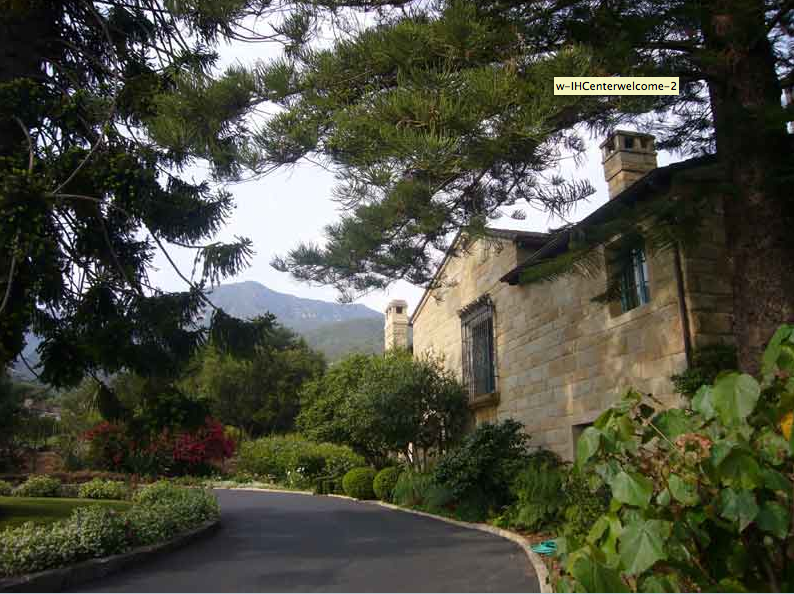
If these walls could talk: The hallowed history of La Casa de Maria’s stone house

Photo courtesy immaculateheartcenter.org.

Photo courtesy immaculateheartcenter.org.

In the Montecito hills, off of El Bosque Road, sits a bastion of peace and serenity in today’s busy world. Heading up the oak tree-lined driveway to the grand stone house at the center of La Casa de Maria, one can’t help but be overcome with feelings of calm and tranquility, as if driving into the distance brought one back to a quieter, simpler time.

This property was originally part of the San Ysidro Ranch, owned by Taylor Goodrich and John Harleigh Johnston. Richard Hogue, of Montana, purchased 20 acres of the ranch in 1886, and named it El Prado Rancho (the meadow). At the time there was an orange orchard on the property, but a few years later Hogue obtained road access and water rights and created the first lemon orchard in the area. Some of those old lemon trees can still be seen in front of the stone estate house that now resides on the property.

In 1924, Hogue sold the property to Emmor J. Miley, a building contactor and one of the pioneers in Kern County oil development. As an oilman, Miley made a sizeable fortune, some of which he planned to show off in his new estate.

Renaming the property Rancho El Bosque (the woodlands), Miley hired architectural designer Mary Craig to design a showpiece house.

Craig was the widow of architect James Osborne Craig, who succumbed to tuberculosis in 1922 at the age of 33. In his short career Mr. Craig played a large role in the development of Spanish Colonial architecture in Santa Barbara, including designs for El Paseo downtown and the Bernard Hoffmann House on the Riviera. Though she did not have any formal design training, Mary had worked at her husband’s side and took over his practice when he died, going on to become a notable architect in her own right, designing Plaza Rubio, the group of cottages below the Santa Barbara Mission; the W.C. Logan Building arcade (222 E. Carrillo Street); the Anacapa Annex to El Paseo; and many private homes in the area.

The 13,000 square-foot Miley home, which remains mostly intact today, features hand-carved teak ceilings, nine distinctive Italian stone fireplace mantels, and courtyard tiles from Spain and Czechoslovakia. It was Miley who put in the monkey tree and star pine tree that now highlight the entrance to the property, and most notably, it was Miley who commissioned hand hewn stone quarried from the fields and banks of nearby San Ysidro Creek for the house and walls around the estate.

“ Mr. Miley used to come up every weekend to see how the work was progressing,” recalls Mary Skewes-Cox, daughter of Mary and James Osborne Craig. “We would go to church on Sunday morning and then from church we went to the Miley’s. They were living in a house on the property and we would go and have breakfast with them and then my mother would go over the work with Mr. Miley. I was just a little girl at the time,” says Skewes-Cox, who is now 87.

“I remember driving around the property. They quarried all that stone for the house on the property. But all of the stonework came right off of that land,” she says.

According to Maria Herold of the Montecito History Committee, “You will see in the inside hall that there are vertical striations of stone. On the inside staircase is where you can see it best. This is a very time-consuming and therefore very expensive treatment of stone that you don’t really need to do, but they went to all the trouble of doing this very special treatment. And of course, the outside is spectacular because of the way the stone is cut. It’s a masterpiece.”

“The beautiful stonework in which the local sandstone was quarried from the place and cut by hand was not done by any particular firm of stone masons, Instead it was done by individuals and very fine stone masons engaged by (building contractors) Snook and Kenyon,” according to a 1985 letter from John de Blois Wack, who later purchased the property.

Pamela Skewes-Cox, the granddaughter of Mary and James Osborne Craig, is working on a book about their lives, along with co-author Robert Sweeney, an architectural historian. In researching Mary Craig, Skewes-Cox found that “she wasn’t outspoken and she didn’t advertise herself in an aggressive way at all, she sort of just kept her nose to the grindstone and she met people and she was very social and people liked her. But it was unusual for a woman in that time to be professionally-oriented.”

She continues, “My mother remembers going up to property with her mother to discuss building this very, very elegant house. They had no lack of money at the time that they were discussing the design and she had free reign to do this elaborate and very expensive home and they were not nervous about it at all because they had money and money to spend and they really wanted a showplace.”

Unfortunately, Miley ran into financial difficulties with the stock market crash and the onset of the Great Depression in 1929, and he was forced to sell the estate before his dream house was completed.

“He literally had to just stop construction,” says Pamela Skewes-Cox. “Fortunately Mary Craig had a mechanic’s lien on the property which meant that if Miley forfeited she and her draftsman, Ralph Armitage, owned the property until they were paid for their work.”

In 1932 John and Ethel de Blois Wack purchased the estate for $100,000.  John was a successful Wall Street investor who had come to the area to raise horses and play polo at the Bartlett field in Montecito and the Fleischmann fields in Carpinteria. He later became president of the Santa Barbara Polo Association. His father was the co-founder of Field and Stream magazine and as a young man he was an editor there. John and Ethel were both avid aviators who flew their private plane all over North America, often checking in on their cattle operation in Arizona.

Soon after the purchase, the Wack’s hired architect Chester L. Carjola to finish the estate house. There has been some debate over how “finished” the house was at this point.

Pamela Skewes-Cox would like to set the record straight. “We have determined by looking at the drawings, my co-author and I, that the great majority of the house was completed, even though the Miley’s had not moved in yet. The working drawings that were done later for Mr. Wack by the architect Carjola, those show basically a finished house and you can see on the drawing where it says unfinished. We studied those pretty carefully and so a great deal of the detail, even the ceilings, were conceived by Mary Craig with Mr. Miley’s input. A lot of people say, ‘well it wasn’t finished and Carjola finished it.’ It’s Mary Craig’s house, there’ s absolutely no hesitancy in my saying that.”

Mr. de Blois Wack’s 1985 letter also states, “it is my feeling that Mrs. Craig should be looked upon as the architect.”

“Mary Craig wasn’t asked by the Wack’s to finish it, for whatever reason, but she was friends with the Wack’s,” says Pamela Skewes-Cox.

When the house was completed in 1933, the property included a swimming pool and tennis courts, as well as additional structures, including a little cottage for Mr. Wack’s mother, Mrs. Lillian Wack, which is now called Santa Teresita; the Browning house for Mr. Wack’s piano accompanist and his family; a garage, stables, and a gardener’s cottage later named the Bayberry House. There was also a large studio called the study, which has since burned, where Mrs. Wack, an accomplished artist, painted portraits in oil.

The Wack’s plunged into the local social scene with gusto and became known for their parties. They were music aficionados—Mr. Wack had even done some professional singing—and one of the wings looking out on the rear court was used as a music room with stone walls, high-beamed ceilings and balcony for an orchestra.  Many famous musicians performed at the Wack’s parties, including conductor Leopold Stokowski, who did Walt Disney’s Fantasia;  Ozzie Nelson and his swing band; Victor Trucco, assistant conductor of the Metropolitan Opera, and the great baritone John Charles Thomas, who served for a year as director at the Music Academy of the West.

Mary Skewes-Cox recalls grand parties at the Wack’s house. “I was in my teens when the Wack’s owned it. They had a coming out party for their daughter Ethel and it was a lovely, lovely party with things going on all throughout the house. I remember the tables were set up on the tennis court and there was music and dancing and it was a wonderful party.”

Held in August of 1941, Ethel Wack’s debutante party had 700 guests; the Royal Hawaiian Orchestra played on the tennis court, which was converted into a terrace for dining and dancing; Ozzie Nelson’s band was in the art studio for more dancing; and there was a sit-down dinner for all of the guests.

The estate was also a site for Pearl Chase’s garden tours. In addition to the citrus orchards and spacious lawns, both Miley and Wack had imported many exotic plants. There was also a “sun garden” with rose and camellia bushes, and a “shade garden” with begonias and ferns.

After a decade in the house, Mr. Wack found that his growing numbers of thoroughbred horses didn’t have enough room on the estate, and the grounds were too rocky for his horses, so in 1942 he put the place up for sale and moved to Hope Ranch to open Yolo Breeding Stables on a 42-acre parcel.

Meanwhile, Mother Eucharia, Mother Superior of the Sisters of the Immaculate Heart in Hollywood, asked her cousin, realtor Charles Dunn, to help her find a quiet place for a novitiate, to train their novice nuns. Dunn first looked at the estate ,which later became Marymount School on the Riviera before recommending the Wack estate in Montecito, which the sisters purchased in December of 1942. Because it was during World War II and many estates were up for sale, the sisters were able to purchase the estate for $32,500. On Easter Monday 1943, four sisters moved in, one of them sister Regina McPartlin, and 12 aspiring novices.

They made the upstairs of the main house into a dormitory by dividing the rooms up with freestanding metal frames and curtains, thus the walls and hardwood floors were never marred. “When we stayed in those rooms, because we just had those little cells, we never saw what the whole room looked like. Even though in the morning after we got up and made our beds and got dressed we were supposed to open the cell curtains, when you were in there your curtain was closed. It was really funny because many years later we returned and the cell curtains had all been removed and everything. People were like, ‘Whoa, look at that beautiful ceiling. Was that there when we were here?’ And that was kind of a common experience. All of those teak ceilings,” says Stephanie Glatt, a former novice who is now the director of La Casa de Maria.

“I guess we were busy learning to be nuns and being spiritual and praying and we didn’t spend a lot of time in there. It’s just that it was so strange because everybody felt like the house had been remodeled and it hadn’t, it was just our perception.”

All of the novices (aspiring nuns) and postulants (aspiring novices) had chores assigned to them. Glatt recalls working on the vegetable porch. “There was a big cutting board out there … and of course, we’re supposed to be working in silence. They used to bring the vegetables in newspapers and at that time we’re supposed to be totally sequestered from the world, so we weren’t supposed to read the newspapers. … They would always put the newspapers upside down so we couldn’t read them. It was kind of funny because your eye would catch a part of a headline and you’d kind of try to see what’s going on out there, and then somebody would read the headline and say, ‘Did you see that?’ (Laughs) when we were all supposed to be working in silence.”

The number of postulants and novices continued to increase and under the guidance of Sister Regina the stables were renovated with two dormitories upstairs and two downstairs. A two-story extension was added to the art studio (which burned in 1972) with a recreation and sewing room upstairs and two classrooms downstairs.

The basement entertainment room was transformed into a refectory, where the women would eat all of their meals. “On feast days we decorated tables. Decoration meant the tables, which had blue linoleum tops, and we would get rolls of white butcher paper and roll the roll down and tape it on the underneath side, and then put flowers on. I’m sure every year some group was asked to decorate the tables and every year some group went out and cut poison oak, not knowing it was poison oak because of the lovely color,” laughs Glatt. “They would put it in vases and then someone would go, ‘Oh my god, you got poison oak.’”

The ballroom became a chapel and the musician’s balcony became a choir loft. “You should have heard 90 of us singing in there,” says Glatt. “The choir loft that was pointless because there were 90 of us in the chapel. But the sisters that taught at Mount Carmel lived there and some other visitors would come and they couldn’t fit in the chapel, so they all kind of huddled up there.”

While the aspiring nuns pursued religious life on La Casa’s grounds, the peaceful surroundings were also gaining a reputation in Hollywood. Stars like Irene Dunne, Loretta Young, and Ricardo Montalban came for retreats, holding prayer services in the Novitiate by day, while staying overnight at the Biltmore. In 1955, La Casa de Maria Retreat House formed on the property and became the first retreat center for Catholic married couples.

During the 1960s, there were conflicts between James Francis McIntyre, the Cardinal Archbishop of Los Angeles who oversaw the Immaculate Heart community and the sisters. They eventually shed their habits in 1970 and became the Immaculate Heart Community, an ecumenical group of men and women. Since 1974, the community has operated the Immaculate Heart Center for Spiritual Renewal in the historic old stone house, opening its doors for private retreats for people of all faiths.

With its long and storied history, the grand house still has new stories to tell. “I always feel that somehow that spirit is still there, you know that all those prayers everybody said there weren’t lost,” says Glatt. “It’s like they’re still hanging out.”

=

Special thanks to Pamela Skewes-Cox and Maria Herold of the Montecito History Committee for their assistance in researching this story.

Originally published in Montecito Magazine, Fall 2008.

Cocktail Corner: Miró’s—and Nanette’s—Ticket to Paradise

Miró restaurant bartender Nanette Rapuzzi muddles cucumbers for her new cocktail, "Ticket to Paradise." Photo by Leslie Dinaberg.

Miró restaurant bartender Nanette Rapuzzi muddles cucumbers for her new cocktail, “Ticket to Paradise.” Photo by Leslie Dinaberg.

A spirited toast to all things alcoholic! By Leslie Dinaberg

Five years ago, Miró restaurant bartender Nanette Rapuzzi came with big dreams from her native Peru—where she trained at the front desk of another five-star resort—to work at the Bacara Resort in Santa Barbara.

“I love working with people. I always have. People on vacation, or enjoying themselves at a beautiful resort, are always so happy,” says the bubbly blonde, who started out at the Bacara’s front desk but soon asked for opportunity to train as a bartender. Her goal, generously supported by hotel management, is to work in many different aspects of the hotel business and ultimately to own and run her own resort in Peru.

“But I want something a bit smaller than the scale of the Bacara,” she laughs.

Currently enrolled in the Santa Barbara City College School of Culinary Arts and Hotel Management Program, a unique local program which develops skills and competencies for positions in the hospitality industry and is recognized nationally as a leading center for hospitality training, Rapuzzi is on her way to making her long-term dream come true.

Meanwhile, she has a smaller, but still impressive ambition: to win Restaurant Hospitality’s Best Cocktail in America Contest.

Miró restaurant bartender Nanette Rapuzzi and two versions of her new cocktail, "Ticket to Paradise."

Miró restaurant bartender Nanette Rapuzzi and two versions of her new cocktail, “Ticket to Paradise.”

“You know how Cosmopolitans are so popular … I’d like for my drink to be the next Cosmopolitan,” says Rapuzzi. “But I think people are ready for something a little less sweet and more refreshing, that was my inspiration for this drink.”

The “Ticket to Paradise,” whose name was inspired by the glorious panoramic view of the Pacific Ocean, which is always visible from her perch at Miró Bar, is the one that Rapuzzi hopes will be her ticket to national cocktail fame and glory. The cocktail is made with muddled cucumbers, Hendricks Gin, St. Germain and a splash of fresh lime juice, and served either straight up in a Martini glass or on the rocks.

The cheese plate at Miro is almost as beautiful as the ocean view. Photo by Leslie Dinaberg.

The cheese plate at Miro is almost as beautiful as the ocean view. Photo by Leslie Dinaberg.

We tried it both ways. I preferred the rocks and my husband liked it straight up. Either way, the drink is absolutely delicious and refreshing! Gin isn’t usually my spirit of choice, but the cucumber, citrus and St. Germain balance it out perfectly. Try the Ticket to Paradise with the museum-worthy fruit and cheese plate, featuring edible flowers and a pretty Pistachio emulsion—it was almost too lovely to eat (but somehow we managed).

Meanwhile our fingers—and swizzle sticks—are crossed that Rapuzzi’s drink brings home big honors. We’ll keep you posted.

Cheers!

Click here for more cocktail corner columns.

Leslie Dinaberg

Leslie Dinaberg

When she’s not busy working as the editor of Santa Barbara SEASONS, Cocktail Corner author Leslie Dinaberg writes magazine articles, newspaper columns and grocery lists. When it comes to cocktails, Leslie considers herself a “goal-oriented drinker.”

Nonprofits Wow and Woo at Fast Pitch SB

(L-R) Chief Energy Officer Seth Streeter, Mayor Helene Schneider, Fast Pitch SB Winner Bethany Markee of Solvang Viking Kitchen, Jose Hutton of Hub 81, courtesy photo

(L-R) Chief Energy Officer Seth Streeter, Mayor Helene Schneider, Fast Pitch SB Winner Bethany Markee of Solvang Viking Kitchen, Jose Hutton of Hub 81, courtesy photo

Organizers from Social Venture Partners say inaugural event will become an annual opportunity for local nonprofits to gain exposure, refine messages and win money.

Thursday night’s inaugural Fast Pitch SB—a Shark Tank style competition for nonprofits to make three-minute pitches to a panel of judges and a live audience for cash awards was an exciting, successful event for all concerned, but Solvang Viking Cafe was the big winner of the night. Founder Bethany Markee—a former professional chef who took over the lunch program at the local elementary school cafeteria at Solvang School—now has an additional $26,000 in prizes to expand her program to feed more students.

Social Venture Partners Santa Barbara (SVPSB) chose the ten finalists out of  a field of more than 100 applications from nonprofits looking to receive personal coaching and communications training from experts in the field.

Enthusiastic Fast Pitch audience, courtesy photo

Enthusiastic Fast Pitch audience, courtesy photo


The award winners are:

$5,000 Mission Award: Angels Foster Care

$5,000 State Award: A Different Point of View

$10,000 Audience Award: Solvang Viking Café

$15,000 Grand Prix Award: Solvang Viking Café

Plus, each of the ten finalists received a $1,000 SVP Award:

A Different Point of View

AHA!

Angels Foster Care of Santa Barbara

Talented teen Jamey Geston entertained the crowd. Photo by Leslie Dinaberg

Talented teen Jamey Geston entertained the crowd. Photo by Leslie Dinaberg

CASA of Santa Barbara County

Museum of Contemporary Art Santa Barbara

Santa Ynez Fruit and Vegetable Rescue (“Veggie Rescue”)

Sarah House Santa Barbara

Solvang Elementary School’s Viking Cafe

The Center for Urban Agriculture at Fairview Gardens

Sanctuary Centers of Santa Barbara

For more information about the program click here.

—Leslie Dinaberg

Originally published in Santa Barbara SEASONS on May 17, 2014.

Sandra Tsing Loh Dishes on Menopause, Marriage and “The Madwoman in the Volvo”

Sandra Tsing Loh will appear on Thursday, May 8 at UCSB Campbell Hall

Sandra Tsing Loh will appear on Thursday, May 8 at UCSB Campbell Hall (courtesy photo)

Humorist/memoirist will appear at UCSB Campbell on Thursday, May 8

By Leslie Dinaberg

Chatting with Sandra Tsing Loh—whose new book, The Madwoman in the Volvo, focuses on what she calls Generation Triple M  (Middle-Aged Moms in Menopause)—is a lot like reading one of her essays. Her level of frankness is engaging, enlightening and charming, kind of like catching up with long-lost friend. It’s also a little bit disarming, like looking in one of those magnifying mirrors and seeing your pores for the first time.

She calls it like she sees it, and her countless fans wouldn’t have it any other way. Count me among them. Here’s a brief snippet of our conversation last week.

Leslie Dinaberg: I’m excited about your new book, The Madwoman in the Volvo. Will your discussion at UCSB be a reading from the book or the one-woman show that’s themed around the book?

Sandra Tsing Loh: The show is still being developed, so it will be a bit of a combo. It will be a bit of a reading from it and then discussion, so reading, chat, conversation, that sort of thing. The one-woman show I’m still developing it, and I’m going to be workshopping it in New York later in May. That’s still in development, but there’s going to be some overlap.

Did writing about menopause and researching it and sort of immersing yourself in it make you feel better or worse about actually going through menopause?

Well, at first it made me feel worse and that’s partly why I wrote the book. … For me it was the huge depression spikes, just out of proportion to anything I’d ever felt. It kind of felt like my chemistry was changing and somebody said, “Have you been counting your periods? You could be in this.”

So, of course, it was a huge relief to go maybe I’m not just going nuts but something is happening to me that is biological and label-able. But then when I started getting into the menopause books, I found most of them were totally unhelpful! All of the advice was like, “just cut out alcohol, sugar and caffeine, drink eight glasses of water day, eat more kale, have walks, do yoga stretches before bed and you’ll be fine. Don’t take any Ambien or antidepressants.”

So all the advice is just to lead a more healthy life and eat many smaller meals—which a meal is like two unsalted almonds. (Laughs). So at a time when things are really crazy, the advice is like kale and water will solve it. It was just really unhelpful. I think that’s kind of like the health advice for women … calm down, listen to soothing music, clean out your sock drawer. I mean the advice is just really not helpful at all.

…As I was writing the book I sort of thought I knew where it started and ended, but during the process of writing it [menopause] was still continuing. So there was new material that came into the book—me just really hitting rock bottom.

Sandra Tsing Loh's latest book, "The Madwoman in the Volvo," takes on menopause.

Sandra Tsing Loh’s latest book, “The Madwoman in the Volvo,” takes on menopause.

It was one Sunday morning waking up and I’ve been trying to exercise and eat healthy and do all of these things that are keeping me balanced and I just couldn’t do it anymore. I was just at my wits end, really depressed with my girls at home. It’s also a moment described in the article where you go, “how can I raise these children, I can’t even like look at them anymore and their voices just are too high-pitched. I can’t even face going down and making breakfast for them. I just feel too old to be doing any of this and I just want to be alone and just stay in bed.”

You obviously came out of that. Your doctor helped.

I finally got to the gynecologist … she gave this great speech … where she says,  “there are the Chinet girls and paper plate girls. Chinet girls can put a lot on them and they won’t break, and paper plate girls, you just put one carrot on and they shatter.”

And she says, “I think you’re at heart a Chinet girl but right now you’re having a psychological reaction to physiological phenomenon, so take a break. If you want to take antidepressants you can, if you want to take some hormones you can, if you don’t want to take anything just be aware of when these huge waves of depression and emotion and hot flashes wash over you that it’s temporary, you can do that. And it’s up to you.”

It was great speech. It was actually very helpful. Because usually the advice is God forbid you tell your husband or a man about it, who will try to solve it immediately, rather than just saying either you’re going through a lot but you’re also pretty strong and you can have all of these options are fine. That was just really useful.

Do you feel like you’re still immersed in menopause because you’ve written the book and now you’re almost reliving it because you’re starting to talk about it again?

No I think I’m actually over the worst of it. Probably tomorrow something else will happen, but I think I am. And I have heard a lot of women have said, “You know what it will get better. I remember that time, but it will get better.”

I know that it will. Also, I remember my sister described turning 50 and then everything suddenly evening out, like you’d gone through all of this turbulence and then you’re in the smooth air and it’s oh so much better and I think I feel that way now at 52. I can get up and the sun is shining and the birds are singing and I’m having a normal response, which is to say, oh the sun feels good. This is a nice day. As opposed to a time where I everything seemed too hard to do and too terrifying. Like when you go oh my God, there’s the laundry basket, it’s unsorted, I have to go back to bed. (Laughs.) Where you can’t cope with stuff that’s on your plate.

… I ended up in that book actually going back to the gynecologist speech and she says, “now there are two things we are going to do. One is to take stuff off your plate and the second is to strengthen the plate.”

I think with women it’s a pretty good metaphor in terms of all the stuff we’re trying to juggle right now, especially at this age. This used to be an age where in tribes the women would go to a cave to be a crone and now we have these kids. We have like my father who is 93 and just keeps living on and on. We have tons of stuff on our plates right now, on top of working and writing and making money and paying bills and then also we are supposed to do Pilates and really be slim now too. It’s just a little bit beyond my abilities. (Laughs.) We have to do ten roles while doing this that are somewhat incompatible.

That’s a very honest and reassuring message. 

It’s a lot. I certainly like Sheryl Sandberg (Facebook COO and author of Lean In), I respect her and am totally happy with all these books coming out but it’s like oh my God! I must also look fantastic in a suit and be a best selling author and have really good work ethics!

I think there are some super human role models that are out there and that’s fine, but it’s hard to compare ourselves to that too. I mean I know I’m going off, but I love that Oprah can be really successful and still her weight goes up and down and she can wear these awesome pantsuits—that sounds good to me! Maybe I’m just on this today because I feel so bloated, but go ahead.

You may not be superwoman but you are certainly a busy lady. I had no idea about your science essays [Loh hosts the Loh Down on Science, a daily radio show] until I started doing some research. Let’s talk a little bit about the arts and sciences.  I would guess that not a lot of people who go to Caltech [she has a degree in physics] end up going into the arts. Have you ever felt like you needed to fight getting pigeonholed?

I’m the daughter of an Asian father, a Chinese father, so given my family background there was huge pressure to go into science because that was the only place where you could get a job was his real belief. And to a certain extent I still think about with my kids, like study computer engineering, don’t go into the arts. So I started that way, but since I went to Caltech, which is a very intense experience, the beauty of that was that it showed me that I was really not geared for a life in science in the long term. So I think of that as a blessing. But over the years it’s come back because I did finish my degree and it’s not that I’m uninterested in science. I think sort of a left brain and right brain combination is really useful to have.

I think, for instance, when you’re writing books sort of a left brain approach to art can really help you, because you structure things and sort of taking care of business and looking at things objectively. And the right brain is the free associative roaming thing.

Just this semester I started teaching two courses at UC Irvine: one was communicating science, which is kind of like the right brain side, and one was art and aesthetics to undergraduates, so that’s kind of left brain approach to art. It was a really fun combination. I’m really into combining the two wherever possible. Instead of STEM (science, technology, engineering and math) they have these STEAM programs (science, technology, engineering, art and math) or art and design in the middle, and I think that’s a really useful way. I’m happy to combine both hemispheres. … The science show is sort of a perfect combination of the two. We try to make science really understandable in 90 seconds and that itself is quite an art. I work with a really good staff to do it.

Given that much of what you write about comes from your own life and your own personal experiences, do you feel like that part of your mind that writes stories is always turned on?  Do you ever feel like you’re not working or this is not going to be something I write about?

I’m lucky, at the Atlantic I have an editor, Ben Schwartz, who really kept a firm hand on the tiller in that he would assign things and he would encourage one to go off on riffs for long periods of time. He was great on the phone you could call him up and … he would help you frame it … Even though my job is to kind of speak from my own life, it’s really kind of structured and molded a certain way so that it has a context.

I think with this particular book, because I rewrote it like five times … if anything she had me put more stuff in which was personal. The core of what happened in this section of my life was that I had an extra-marital affair and blew up my marriage and my boyfriend’s marriage and it was a really cataclysmic time. That’s sort of the core of the story that triggers all of this stuff, which I think is very much part of the journey I was going through in my forties.

The first time I wrote the book, I think I don’t even mention—and I’m living with my partner—I don’t even mention how I got there until like the last paragraph (Laughs). Because I wanted to write about it from the point of view of I’m just your average next-door neighbor, suburban mom, this is totally relatable. We all have menopausal symptoms, high five here are a few jokes. This is fun.  But then if you really start admitting some of the things that you did and your failings, your mistakes, you open yourself up to a lot of criticism.

But in the end, the book didn’t make sense unless I actually said what happened and my choices and the damage that it caused.

If you’re a humorist like I am, there’s very much an urge to just stay on the surface and just have it be funny. I had a lot of jokes that she cut. … But really my urge as a writer is to entertain and be funny and be likeable. That’s my urge as a writer. It is not to just spill everything, it really isn’t. But in this book I sort of had to because it didn’t make sense otherwise. And in my one-woman show that I’m developing at the Sundance Theater Lab, it’s even more personal.

How do your kids feel when you write about personal stuff?

My daughters are now 12 and 13 and … they’re pretty durable, but they’ve gone through a lot of changes ever since they were babies and that’s also a little bit described in the book. … They were being carried around in baby car seats through airports because both their dad who is a musician, would be on tour, and I would be doing theatre and often my sister was the glue that would watch them. … Then when they were about one and three my brother, his wife, collapsed of a cardiac arrest at 38, it was very traumatic. So the girls and I moved in with him for about two years when they were little.

They’re sort of used to a transient life and not just two families but a big tribe of people that are there, so they’ve adjusted. I would say they’ve adjusted pretty well … Of course the mother is the last to know, not until they write their own memoir, but it seems like it is a fairly stable situation at this point.

Not a lot of moms with daughters that age would say that, no matter what the external circumstances.

Yeah and I could go off on theories about that. That’s a whole other thing about when kids go back and forth; as long as there isn’t rancor between the parents there are sort of some pluses when they get two houses. Especially in this age going to one parent with a secret that the other doesn’t know—even though we all know.

What’s something most people would be surprised to learn about you? Since we feel like we know a lot. Is there anything that people would be surprised to hear?

I would say I make a really excellent quesadilla (Laughs). My cooking is pretty bad but I’m praised for that … I just got a Prius, used, my Volvo died. … I guess maybe the surprise would be that I write about my own life and pretty much it seems fairly hysterical most of the time, but I think I’m a good and sensible friend and I think I’m actually a very good listener. … People seek me out because I’m happy to listen for two or three hours.  And that’s probably where I get some of my material.

Now you’ve done the book tour circuit a few times, is it fun? Is it work or is it a little bit of both?

I think it’s both. It’s fantastic for writers who sort of live alone in their cave to go out, and it’s always amazing to see if anyone has ever read any of your stuff at all. And when they show up it’s amazing to meet anyone who has read your book or will read it! That’s really always a shock every time. … Typically when you have a book it’s a little bit fraught because you’re going out, your publisher is saying … how many people came to your reading or something like that. But overall I think it’s a happy time and I feel really privileged anytime I get to be out there and connect with people. It’s a pretty great thing to do and one is lucky to be in this position and the older I get the more I really appreciate it.

… As soon as you hear anybody else’s story it sort of validates why you wrote it in the beginning.  And usually that’s what happens. All the people start telling me what they’ve been going through and I love that part.

 I would imagine with what you write people, tell you all kinds of stuff.

Oh God, yes, totally. Yeah. I’ve had people on the plane … one time I was traveling and a lady was going to celebrate her 40th birthday and I said I was finishing a book. … I told her the core of it, and suddenly she turns to me and said, “I have never told anyone this before.”

And she had been telling me about her great husband and her perfect children and they were giving her a weekend off and how awesome and amazing her life was. And then as soon as I told her [about me] she said, “I’ve never told anyone this before, but I had an affair last month and I don’t know what to do. I’m thinking about this guy all the time.”

Suddenly the mask flew off. People do start to tell you, there are some messy lives that people lead and they have desires or thoughts and emotions that don’t really fit into what their life looks like from the outside. And that’s interesting.

Indeed it is.

Sandra Tsing Loh will be in Santa Barbara on Thursday, May 8 at 8 p.m. at Campbell Hall in a UCSB Arts & Lectures presentation. For more information and tickets click here.

Originally published in Santa Barbara SEASONS on May 6, 2014.



Huguette M. Clark Family Treasures to be Auctioned at Christie’s

Notable artwork from the estate of the late Huguette M. Clark—whose Bellosguardo Estate in Montecito was donated to the people of Santa Barbara as a center for “the fostering and promotion of the arts” and is in the process of being developed—will be presented at Christie’s New York beginning early next month.

According to a release from Christie’s, “Four masterworks by Claude Monet and Pierre-Auguste Renoir will be presented in the evening sale of Impressionist & Modern Art at Christie’s New York on May 6, followed by a dedicated sale titled An American Dynasty: The Clark Family Treasures on June 18. Highlights of the collection will be shared with the public through a series of preview exhibitions around the globe in the coming weeks, beginning with an unveiling of the Impressionist and Modern works at Christie’s London that runs through February 4, 2014. The total collection is expected to realize in excess of $50 million.”

Among the pieces up for auction May 6 are:

Nymphéas by Claude Monet, courtesy Christie's

Nymphéas by Claude Monet, courtesy Christie’s

Nymphéas by Claude Monet | Estimate: $25,000,000-35,000,000

Huguette Clark purchased Claude Monet’s Nymphéas in 1930 in New York from the Durand-Ruel Galleries, whose Paris branch had jointly acquired the work with the Galerie Bernheim-Jeune directly from the artist ten years earlier. A splendid example of the artist’s pre-eminent theme – his beloved lily pond at Giverny – Clark’s Nymphéas was painted in 1907, during an intense creative period in Monet’s career. The artist had enjoyed a celebrated career in Paris as the leading artist of the Impressionist movement when he moved with his family to the small farming community of Giverny in 1883 and began working on the elaborate gardens that would inspire him for the last two decades of his life. Between 1905 and 1908, Monet worked feverishly to complete more than 60 increasingly abstract views of the pond, equivalent to about one every three weeks. The painting is distinguished by its strong color contrasts, aggressive brushwork, and novel vertical format. One contemporary critic enthused about the Nymphéas series, “There is no other living artist who could have given us these marvelous effects of light and shadow, this glorious feast of color.” Since entering the collection of Huguette Clark, the present Nymphéas has remained out of the public eye. The international tour in anticipation of the May auction will be the first time the painting is publicly exhibited since 1926.


Jeunes filles jouant au volant by Pierre-Auguste Renoir, courtesy Christie's

Jeunes filles jouant au volant by Pierre-Auguste Renoir, courtesy Christie’s

Jeunes filles jouant au volant by Pierre-Auguste Renoir| Estimate: $10,000,000-15,000,000

Renoir painted Jeunes filles jouant au volant circa 1887, after a three-year period of intense questioning of Impressionist methods and experimentation with his own techniques. Renoir reintroduced traditional notions of draftsmanship into his art. Seeking to give the human form a more monumental presence, he focused increasingly on contour, which he used to silhouette his figures sharply against the background. Jeunes filles jouant au volant is among the most complex compositions from this period of Renoir’s work, depicting five contemporary female figures playing a racquet sport in a rural landscape. The result is an intentional hybrid of timelessness and modernity, the idyllic and the everyday, which gives the painting its particular power.


Chrysanthèmes by Pierre-Auguste Renoir, courtesy Christie's

Chrysanthèmes by Pierre-Auguste Renoir, courtesy Christie’s

Chrysanthèmes by Pierre-Auguste Renoir| Estimate: $3,500,000-5,500,000

Pierre-Auguste Renoir’s Chrysanthèmes was purchased in November 1929 by Huguette Clark and her mother, Anna Eugenia La Chapelle, just two weeks after the Wall Street Crash that would begin the Great Depression. The painting, executed circa 1876-1880, is one of five large-scale paintings of chrysanthemums that Renoir produced by 1884. In the early 1880s, Renoir painted a sequence of elaborate floral compositions that number among the boldest and most fully resolved still-lifes of the artist’s career. Renoir relished the opportunity to depict still-lifes, as they allowed him to paint more freely and develop his techniques. While part of the appeal of chrysanthemums for Renoir was surely practical (the flowers are hardy and do not wilt easily), they also carried a potent iconographic significance. Chrysanthemums had strong associations with East Asia in the artist’s day, and Renoir, being well aware of the vogue for japonisme, may have chosen this particular flower to heighten the appeal of his paintings to collectors.


Femme à l’ombrelle by Pierre-Auguste Renoir, courtesy Christie's

Femme à l’ombrelle by Pierre-Auguste Renoir, courtesy Christie’s

Femme à l’ombrelle by Pierre-Auguste Renoir| Estimate: $3,000,000-5,000,000

Renoir’s Femme à l’ombrelle was painted in 1873, a critical point in both the artist’s career and in the history of the Impressionist movement; this was the same year Renoir helped found the Société Anonyme Coopérative des Artistes, Peintres, Sculpteurs, Graveurs, etc., a group which later came to be known as the Impressionists. Throughout the 1870s, one of Renoir’s favorite subjects was the contemporary young woman in a secluded garden oasis, often holding a parasol, a crucial accoutrement for the bourgeois woman. Few of his sitters, however, have the arresting presence of the young woman in Femme à l’ombrelle, who may in fact be Monet’s wife, Camille. In addition to having an art historical significance, the work also has noteworthy provenance, having first been owned by Erwin Davis, one of the pioneering collectors of Impressionism in the United States.

For more information about the auction click here.

—Leslie Dinaberg

Originally published in Santa Barbara SEASONS on April 15, 2014.

Craftcation is “Craft Heaven” for Entrepreneurs

Photo courtesy Craftcation

Photo courtesy Craftcation

More than 350 crafty entrepreneurs (along with yours truly) gathered in Ventura last week to ignite their entrepreneurial business spirits and strengthen their skills in a creative (and fun!) three-day conference on all things makeable and saleable. With a schedule packed with panel discussions and DIY workshops with leading industry professionals in art, craft and food-centered small business, there was an embarrassment of riches to choose from.

Craftcation presenter Nancy Soriano, photo by Leslie Dinaberg

Craftcation presenter Nancy Soriano, photo by Leslie Dinaberg

One of the best workshops I attended was by Nancy Soriano, former editor of Country Living Magazine, co-founder (with Jo Packham, another dynamo who was also at Craftcation) of the Creative Connection Event, publishing director for craft at F+W Media, and currently an editorial/content strategy and brand architect consultant for media, commerce, and creative businesses, with clients like One Kings Lane and Etsy. The title was “Launching a Creative Business,” but much of her advice was equally useful for those who are already in a creative business.

The number one thing—which seems painfully obvious but surprisingly isn’t,  is “love what you do.” Soriano advises, “to be successful in business you have to differentiate. Know your market, engage them and tell your story.” She also covered topics like finances, pricing, market research, marketing and social media, legal business structure, branding, the importance of creating a supportive network of friendships and colleagues, daily schedules, and most importantly, staying focused! All in all it was an impressive amount of useful information in just a couple of hours.

Creativity was on display everywhere at Craftcation, including the beverage offerings from Joia Natural Soda, photo by Leslie Dinaberg

Creativity was on display everywhere at Craftcation, including the beverage offerings from Joia Natural Soda, photo by Leslie Dinaberg

Also interesting was a panel discussion titled “Backstories Behind Successful Entrepreneurs,” where life coach and author and “the when I grow up coach” Michelle Ward talked about topics like knowing it was time to ditch the dreaded day job (“trust yourself and your own passion and motivation”) and DIY home decor website Curbly.com owner Chris Gardner suggested getting rid of debt if you want to go into business for yourself. “Think about how little money you think you can get by on,” he advises. Nicole Stevenson—co-founder of Craftcation as well as the Patchwork Show and her own clothing line—suggests bartering for services early on. But the biggest thing in running your own business, she says, “is knowing yourself and what you feel comfortable with.”

Photo courtesy Craftcation

Photo courtesy Craftcation

Keynote speaker Lisa Congdon—an author and illustrator whose clients include the Museum of Modern Art, Martha Stewart Living Magazine, Chronicle Books, the Land of Nod, Harper Collins Publishing, the Obama campaign and Simon & Schuster, among others—gave a very inspiring talk titled “Embrace the Abyss and Other Lessons.”

There were also plenty of opportunities for people who weren’t interested in business to spend the entire Craftcation weekend cooking, sewing, cheese making, canning, preserving, playing with washi tape and jewelry making with crafty celebrities like the Food Network‘s Aida Mollenkamp, Mighty Ugly creator Kim Werker and epicuring.com co-founder Susie Wyshak, among others.

Craftcation, photo by Leslie Dinaberg

Craftcation, photo by Leslie Dinaberg

The conference plans to be back next spring, so stay tuned for details. Meanwhile, for more information visit craftcationconference.com.

—Leslie Dinaberg

.Originally published in Santa Barbara SEASONS on April 9, 2014.

José Eber Salon Opens at the Biltmore

José Eber Salon at Four Seasons Resort The Biltmore Santa Barbara (courtesy photo)

José Eber Salon at Four Seasons Resort The Biltmore Santa Barbara (courtesy photo)

Beverly Hills glamour has a new home on the American Riviera with opening of José Eber Salon at Four Seasons Resort The Biltmore Santa Barbara last week. A world renowned stylist known for his iconic personal style, Eber has tended to Hollywood’s most famous tresses for four decades in Beverly Hills and now has a unique second salon at the luxurious oceanfront property in Santa Barbara.

Eber’s 1,000-sq.-ft. space near the resort’s lobby has been fully re-imagined and transformed into a sophisticated and calming oasis where guests will enjoy the ultimate in modern luxury and service. The new salon’s design is heavily inspired by the location in Beverly Hills, including the front desk, a striking replica handmade of antique mirrors in the same Art Deco style conceived by designer Waldo Fernandez for Eber’s flagship salon.

Soft lighting and soothing nature hues in the chinoiserie wall panels, neutral charcoal wood floors and eye-catching blown-glass chandelier in shades of blue—custom designed by acclaimed artist Dale Chihuly—reflect Santa Barbara’s coastal environs, beachy aesthetic and natural beauty. Windows looking onto the garden terrace have been added, bathing the salon in natural light. Twelve thoughtfully designed work stations feature handmade tabletops inlaid with cracked glass, individually lighted oval mirrors and Italian-made soft blue swivel chairs. The overall result is a welcoming, residential feel balanced by sleek design and stylish accents, such as the pop of a cushy leopard print chair or a single striking blue orchid.

Courtesy photo

Courtesy photo

“José is not only brilliantly accomplished but he is dedicated to providing the same level of first-class service and the ultimate luxury experience that is synonymous with the Four Seasons brand,” says Karen Earp, general manager, Four Seasons Resort The Biltmore Santa Barbara. “We feel fortunate to partner with him and are extremely excited to welcome our out-of-town guests and the local community into this beautiful new space.”

The salon offers a full spectrum of services to cater to locals, Resort guests and bridal parties, including haircuts, color and highlights, blowdrys and styling and updos. Eber will be personally available for both haircuts and consultations on a regular basis, along with his team of talented stylists who have been trained in the most innovative methods and cutting edge techniques. The latest technology and equipment, from three customizable, massaging shampoo stations to advanced heaters that help produce perfect color, further enhance the experience. Professional makeup application, makeup lessons, lash application and brow shaping are also available. The salon carries Phyto hair care products and will soon also feature the José Eber signature line of products and professional tools.

In celebration of the new salon, the Resort is offering a special “931 Package” for locals who live in a zip code beginning with 931. The package includes a night in a beautifully refurbished guest room for $395, two complimentary cocktails at Ty Lounge and 20% off spa treatments and hair services at the brand new José  Eber Salon.

José Eber Santa Barbara is open Tuesday through Sunday from 10 a.m. to 6 p.m. For appointments call 805/770-3000. Four Seasons Resort The Biltmore Santa Barbara and José Eber Santa Barbara are located at 1260 Channel Dr.

—Leslie Dinaberg

Originally published in Santa Barbara SEASONS on March 31, 2014.


Fast Pitch Santa Barbara Semi-Finalists Announced

Fast Pitch SBFast Pitch SB—a Shark Tank style competition for nonprofits to make three-minute pitches to a panel of judges and a live audience for cash awards, including a $25,000 Judges award and two $10,000 Coaches awards—is off and running.

Social Venture Partners Santa Barbara (SVPSB) has chosen the following semi-finalists out of  a field of more than 100 applications from nonprofits looking to receive personal coaching and communications training from experts in the field:

A Different Point of View, whose mission is to engage, inspire and transform underserved youth using flight lessons as a launching pad.

AHA! is dedicated to the development of character, imagination, emotional intelligence, and social conscience in teenagers.

American Indian Health & Services is committed to empowering our community delivering accessible, socially responsive, and culturally appropriate health care.

Angels Foster Care of Santa Barbara places infants and toddlers in loving homes throughout Santa Barbara County.

C.A.R.E.4Paws works to reduce pet overpopulation and keep animals out of shelters in Santa Barbara County.

CASA of Santa Barbara County: The mission of Court Appointed Special Advocates (CASA) of Santa Barbara County is to assure a safe, permanent, nurturing home for every abused and/or neglected child by providing a highly trained volunteer to advocate for them in the court system.

Family Care Network, Inc. operates family-based treatment programs as an alternative to group home or institutional care for children and youth and  serves over 1,400 children, youth and families annually in San Luis Obispo and Santa Barbara counties.

Girls Incorporated of Carpinteria provides programs for girls 6 to 18 years old that focus on science, math, and technology; health and sexuality; economic and financial literacy; sports skills; leadership and advocacy; and media literacy.

Hospice of Santa Barbara, whose mission is to care for anyone experiencing the impact of life-threatening illness or grieving the death of a loved one.

Just Communities advances justice by building leadership, fostering change, and dismantling all forms of prejudice, discrimination and oppression.

Leading From Within provides leadership development for the nonprofit community offering programs for executive directors, emerging nonprofit leaders, and helping to build the capacity of the nonprofit sector, nurture and sustain committed community leaders, and develop the next generation of engaged and involved citizens.

Museum of Contemporary Art Santa Barbara, which advances creativity and inspires critical thinking through meaningful engagement with the art of our time.

Sama Group, a family of impact enterprises dedicated to ending poverty and promoting social and economic justice.

Santa Barbara Bicycle Coalition, a countywide advocacy and resource organization that promotes bicycling for safe transportation and recreation.

Santa Ynez Fruit and Vegetable Rescue (“Veggie Rescue”) redirects or “gleans” local produce from farms, farmers markets, home gardens, and orchards  and deliver it to charitable organizations and school lunch programs in Santa Barbara, Santa Ynez and Santa Maria—all at no charge.

Sarah House Santa Barbara, which provides a home and end-of-life care for people with low income.

Solvang Elementary School’s Viking Cafe,  a brand new lunch program that is reforming the old school re-heated foods into farm fresh organic fruits and vegetables.

Teddy Bear Cancer Foundation, which provides financial and emotional support to families of children with cancer living in Santa Barbara, Ventura, and San Luis Obispo counties.

The Center for Urban Agriculture at Fairview Gardens works to preserve and operate Fairview Gardens, the historic and educational farm in Goleta.

Sanctuary Psychiatric Centers of Santa Barbara has been providing a distinctive continuum of care for mentally ill and co-occurring disorders adults since 1976.

The ten finalists will be announced on May 9.

Those groups will present their three-minute “fast pitch” to a panel of judges at the Music Academy of the West on May 15. There will be a live audience populated with potential investors, donors and community members, as well as satellite voting and viewing locations set up throughout Santa Barbara. 

For more information about getting involved with Fast Pitch SB click here. To read a Santa Barbara SEASONS story about Fast Pitch SB click here.

—Leslie Dinaberg

Originally published in Santa Barbara SEASONS on March 28, 2014.

Archstone Foundation Grant Supports Hospice of Santa Barbara

Hospice of Santa Barbara logoThe Archstone Foundation recently donated $80,000 to support Hospice of Santa Barbara’s Spiritual Care Program in three areas: advance the integration of spiritual care into HSB’s non-medical, community-based programs that serve people with life-threatening illness and bereavement needs; decrease the spiritual suffering & isolation of residents of long-term care facilities in the greater Santa Barbara area; extend the reach of HSB’s trained spiritual care volunteers into long-term care facilities. In addition, a key component of the grant is funds for in-depth research on the impact of the program with the goal of publishing the findings in appropriate journals. This is the third year in a row Hospice of Santa Barbara has received this award, with the amount increasing from $50,000 in 2012 to $80,000 this year.

For more information about Hospice of Santa Barbara, including volunteer opportunities, call 805/563-8820 or visit www.hospiceofsantabarbara.org.

—Leslie Dinaberg

Originally published in Santa Barbara SEASONS on March 15, 2014.